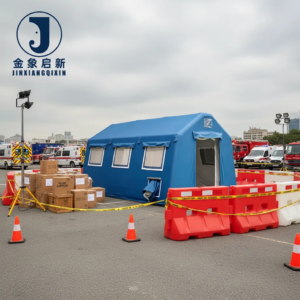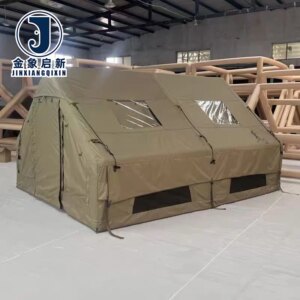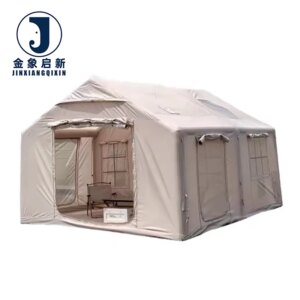
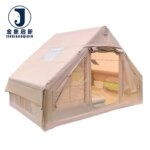
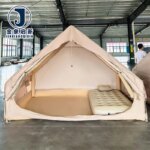
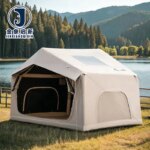
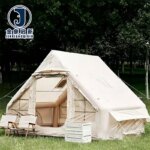
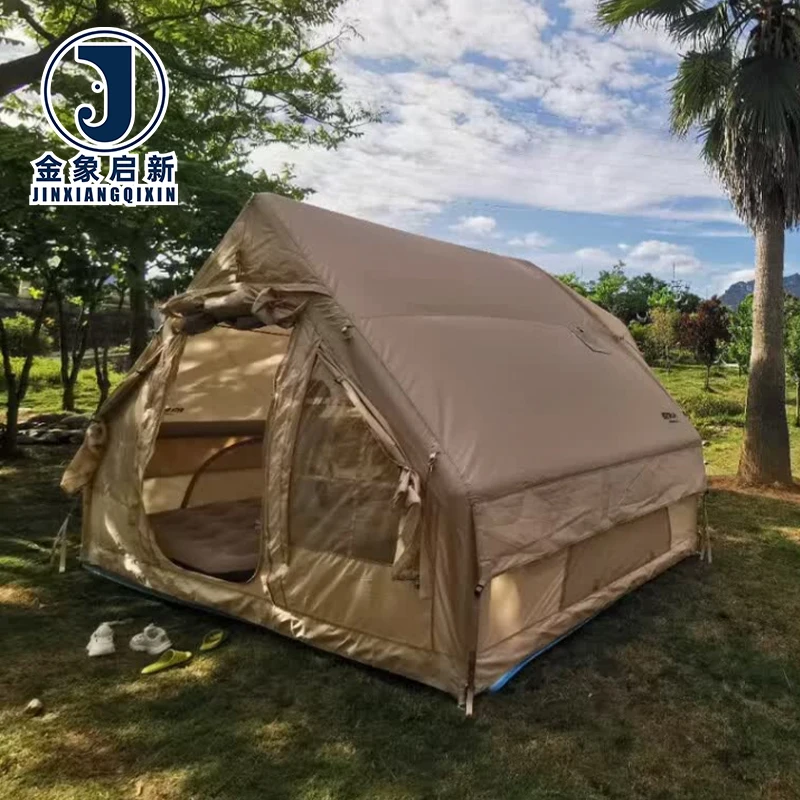
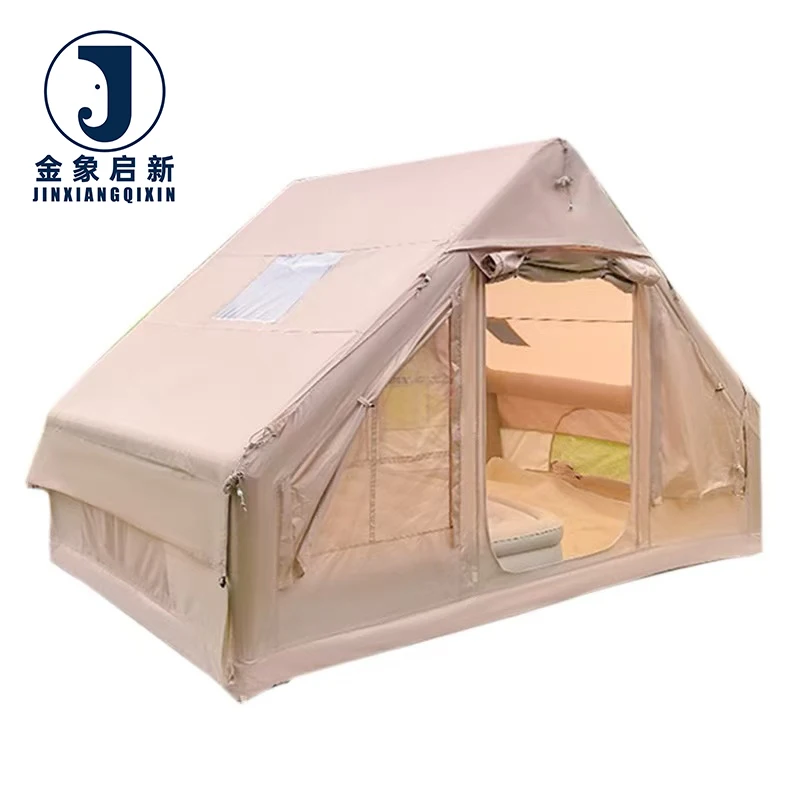
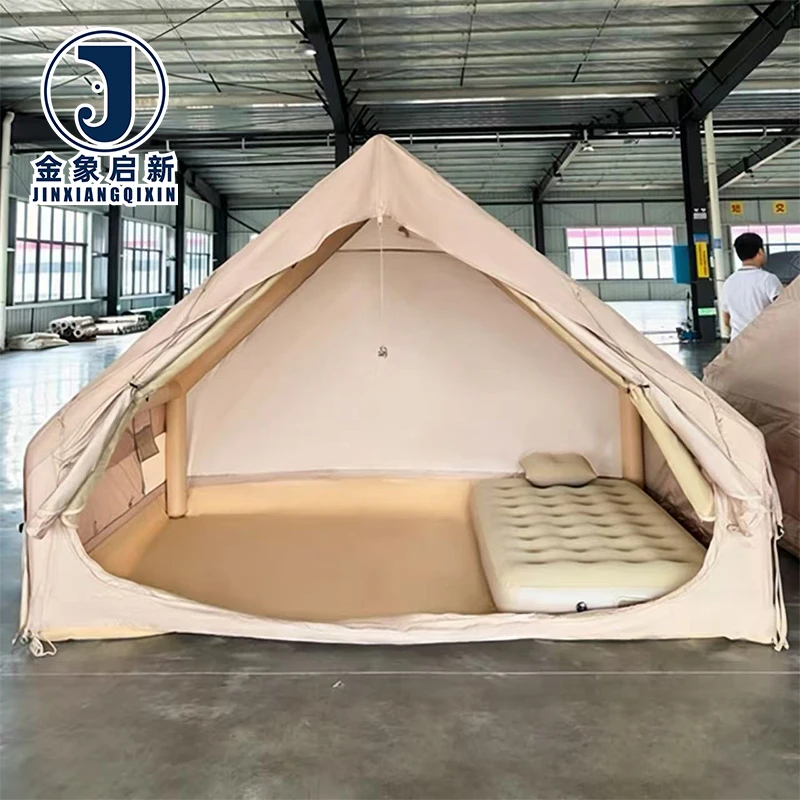
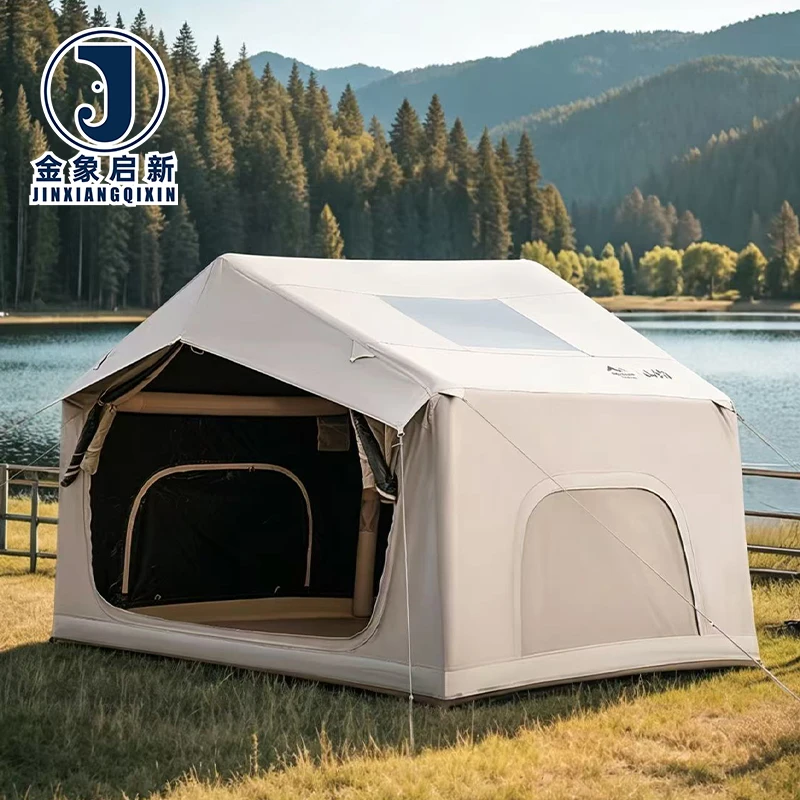
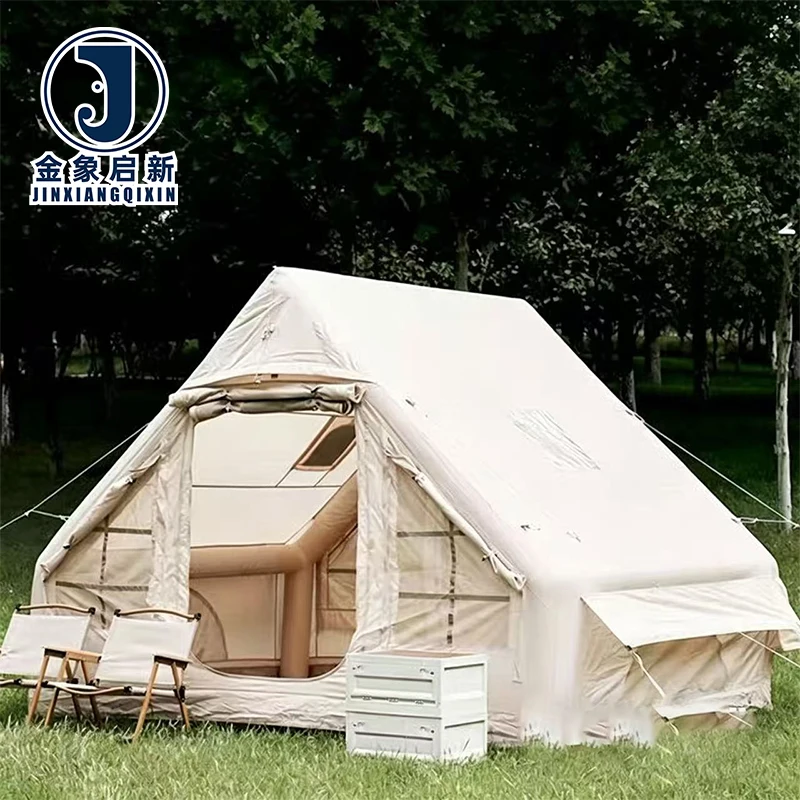
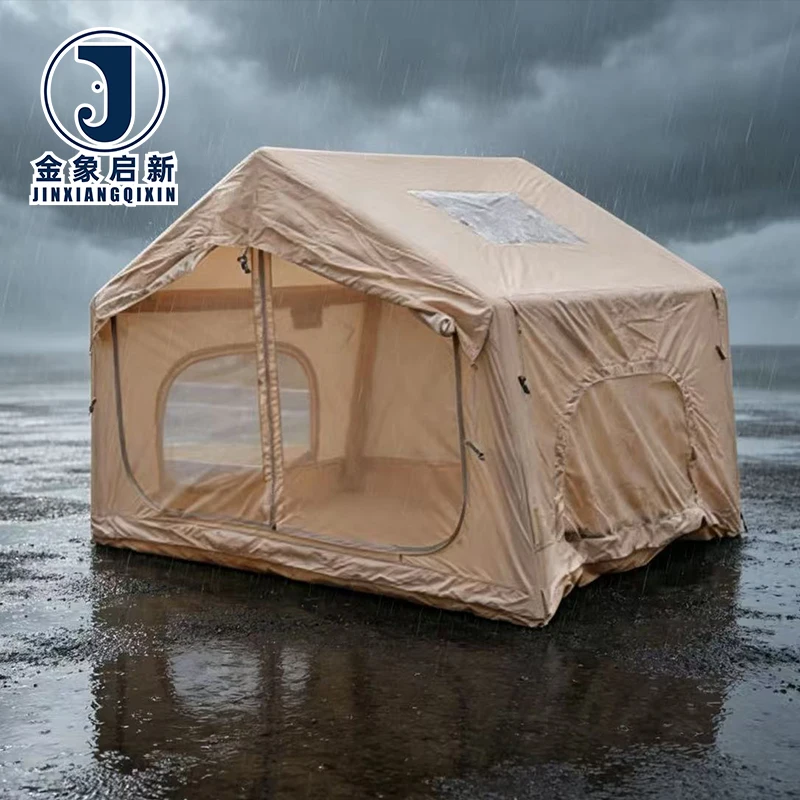
Precision Coating Control — Three full production lines and 36 sets of professional equipment maintain batch-to-batch coating weight consistency for fire-retardant and anti-static inflatable tent PVC fabric orders.
Technical Specifications
| Parameter | Value |
|---|---|
| Product Type | Inflatable Tent |
| Core Material | PVC tarpaulin |
| Construction | Single layer PVC tarpaulin |
| Waterproof Rating | ≥2000mm water column |
| UV Stability | 500 hours exposure (source value — verify against manufacturer catalog) |
| Tear Resistance | ≥300N |
| Fire-Retardant Treatment | Available in fire-retardant grades — confirm the grade required for your market |
| Anti-Static Treatment | Available in anti-static grades — confirm the standard required for your market |
| Customization Service | OEM & ODM (sample customization, pattern printing, material selection, product design) |
| Prototype Lead Time | 7-10 business days |
| Standard Order Lead Time | 15-20 days |
| Standards | ISO9001, ISO14001, ISO45001, CE |
Application Suitability
| Application | Exposure & Requirement |
|---|---|
| Mining and tunnelling inflatable shelters | Continuous underground deployment, fire-retardant compliance mandatory, anti-static surface required in explosive atmospheres |
| Aviation and industrial site inflatable enclosures | Exposure to fuel vapours and static-generating environments, anti-static certification necessary for site approval |
| Commercial camping inflatable tent product lines | Four-season weather exposure, UV degradation from prolonged sun contact, repeated inflation and deflation cycles causing flex fatigue at seams |
| Temporary event and festival structures | High foot traffic abrasion, rapid deployment and strike cycles, wind load stress on welded seams and anchor points |
Why Inflatable Tent Fabric Fire Retardant Certified Is Not Just a Marketing Phrase
Certification without a batch-matched test report is paperwork, not proof.
Many fabric buyers specify a fire-retardant grade at the quotation stage and receive material that was tested once, years ago, on a formulation that no longer matches the current production run. When the local fire marshal or mine safety inspector asks for documentation tied to the specific roll installed on site, a generic certificate does not close the gap. The inflatable tent fabric fire retardant certified material shipped from this facility carries test reports aligned to the production batch, so the compliance trail is complete from coating line to finished structure [NEED_CITE: fire classification standards for temporary structures in mining and public assembly].
Airflow, Pressure and the Fabric That Holds It All Together
Inflatable structures depend entirely on the airtight integrity of the coated fabric. A single pinhole in the PVC coating or a poorly bonded weld seam means the blower runs continuously, burning power and shortening its service life. The single-layer PVC tarpaulin construction used here is designed to hold inflation pressure across the full surface area, with a waterproof rating of ≥2000mm water column verified across production batches.
Static Build-Up in Environments Where Sparks Are Unacceptable
In mining galleries and aviation fuel-handling zones, static discharge on a fabric surface can ignite airborne particulates or vapours. Anti-static treatment is available for this inflatable tent PVC fabric, and the applicable standard must be confirmed at the specification stage. The R&D team works with the buyer to identify which anti-static benchmark the end-use site demands, then formulates the coating accordingly and documents the result per batch.
Reading the Specification Sheet Beyond the Headline Numbers
Tear resistance rated at ≥300N indicates how the base fabric weave resists propagation once a cut or puncture occurs. In an inflatable structure, the fabric is under constant biaxial tension from internal air pressure, so a small nick from a sharp rock or tool edge must not zip open across the panel. The tear value is a function of yarn denier and weave density in the base fabric, not the coating weight alone — a heavier coating does not automatically mean higher tear resistance if the base cloth is loosely woven.
Waterproof performance at ≥2000mm water column means the coating resists hydrostatic pressure equivalent to that water column height before penetration begins. For camping and event tents, this level handles sustained heavy rain and wind-driven moisture. The coating method — whether knife-over-roll, dip, or calender — determines how uniformly the PVC fills the weave interstices, which directly affects both waterproofing and the peel strength at welded seams [NEED_CITE: coating methods and peel strength relationship for PVC tarpaulins].
The Cost of Overlooking Batch-to-Batch Consistency
A buyer who sources inflatable tent PVC fabric from multiple suppliers across different production runs often encounters subtle coating weight variation. One roll may weld at a certain temperature setting, while the next scorches or fails to bond at the same parameters. This inconsistency forces the fabrication shop to re-calibrate heat welders between rolls, slowing production and increasing reject rates. Batch-consistent coating weight from a single-source supplier eliminates that variable and keeps the welding window stable [NEED_CITE: heat welding parameter sensitivity to coating weight variation in PVC fabrics].
Colour shift between rolls is another hidden cost. If two panels cut from different rolls show a visible tint difference once inflated side by side, the entire structure looks defective to the end user, even though the material performs identically. Tight colour control at the compounding stage prevents this rework.
Why Technical Buyers Source This Material Here
Ten dedicated R&D technicians handle material selection, formulation adjustment, and sample development, so custom fire-retardant grades and anti-static specifications are developed in-house rather than outsourced. Prototype samples for inflatable tent applications are ready within 7-10 business days, allowing fabrication trials before full production commitment.
Three full production lines running 36 sets of professional equipment deliver the volume capacity needed for container-load orders without compressing lead times. Standard orders ship within 15-20 days once samples are approved. Every roll passes through a dedicated QA and QC inspection at each production stage, with 100% pre-shipment inspection covering coating adhesion, surface defects, and dimensional accuracy.
Full OEM and ODM support covers pattern printing, custom sizing, and product design, enabling outdoor gear brands to launch private-label inflatable tent lines without managing multiple suppliers for fabric and finishing.
Documentation & Verification
- Material specification sheet stating GSM, base fabric denier, coating type, and colour reference for each roll
- Test report for fire-retardant and anti-static grades matched to the specific production batch
- Pre-shipment inspection record covering coating adhesion, surface quality, and airtightness spot checks
- UV stability exposure test documentation available for batches with UV-resistant treatment
- Certificate of origin and customs documentation for export clearance
Fabrication, Handling & Storage
- Heat weld temperature and dwell time must be calibrated to the single-layer PVC tarpaulin coating weight before production runs begin
- Store rolls vertically on pallets in a dry, shaded area to prevent flat-spot deformation of the PVC coating
- Avoid dragging cut panels across abrasive surfaces during assembly to protect the coating surface finish
- Use PVC-compatible plasticizer-safe cleaners for field maintenance to prevent coating softening or delamination
- Allow cold-stored rolls to reach ambient temperature before unrolling to prevent coating cracking at low temperature
- Seam design should distribute inflation load across a generous weld overlap area rather than concentrating stress at a single stitch line
What to Include in Your Inflatable Fabric Enquiry
Provide the end-use environment — mining gallery, aviation hangar, or commercial campsite — so the correct fire-retardant grade and anti-static standard can be matched to your market’s regulatory requirements. Specify the required fabric width, estimated annual volume, and whether you need rolls only or finished cut-and-welded panels. If colour matching or pattern printing is part of the product design, submit reference samples or Pantone codes with your initial enquiry to accelerate the prototype phase.
Frequently Asked Questions
Q: What fire-retardant grades are available and how do they map to different market codes?
A: The material is available in multiple fire-retardant grades. The specific grade must be confirmed against your target market’s fire safety code — mining sites, public event venues, and consumer camping products each follow different classification systems. Provide your compliance requirement at enquiry stage and the R&D team will match the formulation and supply a batch-specific test report.
Q: How is anti-static performance verified for mining and tunnelling applications?
A: Anti-static treatment is applied during the coating compounding stage and tested against the standard specified by the end-use site operator. Mining and tunnelling contractors typically require surface resistivity below a defined threshold. Confirm the applicable standard with your site safety officer, and the test result will be included in the shipment documentation.
Q: How can I verify the material GSM when the rolls arrive at my facility?
A: Each shipment includes a specification sheet stating the agreed GSM, base fabric, and coating details. You may cut a measured sample from the roll edge and weigh it on a calibrated scale upon arrival. Any discrepancy should be reported immediately so the QA team can review the pre-shipment inspection record for that batch.
Q: What are the key considerations for heat welding this single-layer PVC tarpaulin?
A: Welding temperature, pressure, and dwell time must be set to match the coating formulation. Run test welds on scrap from the same roll before starting production. The seam overlap width should be sufficient to distribute inflation load evenly, and welded seams should be inspected for continuous bond without voids or edge lift.
Q: Can custom dimensions and pattern printing be handled within a single order?
A: OEM and ODM services cover custom width, length, pattern printing, and branding. Prototype samples are produced within 7-10 business days for approval before full production. Standard order lead time is 15-20 days after sample sign-off, depending on order volume and customisation complexity.