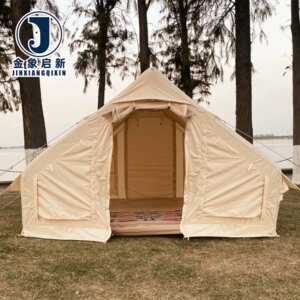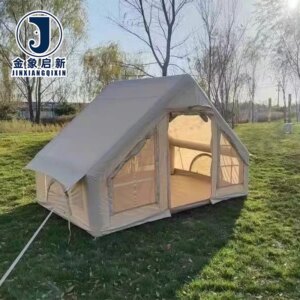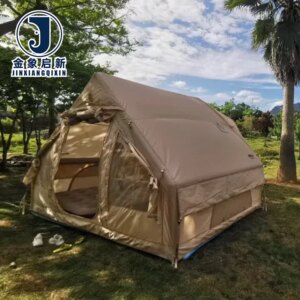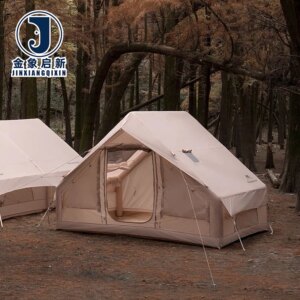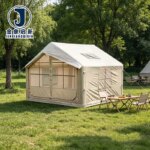
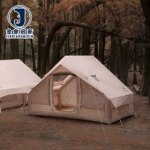
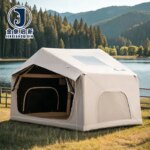
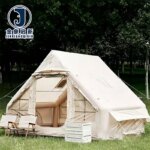
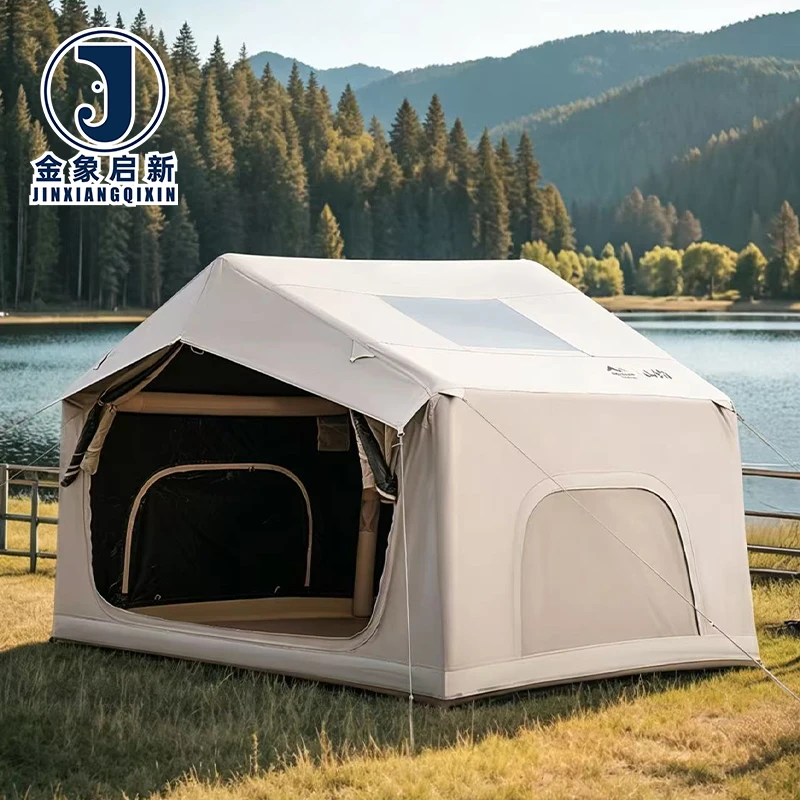
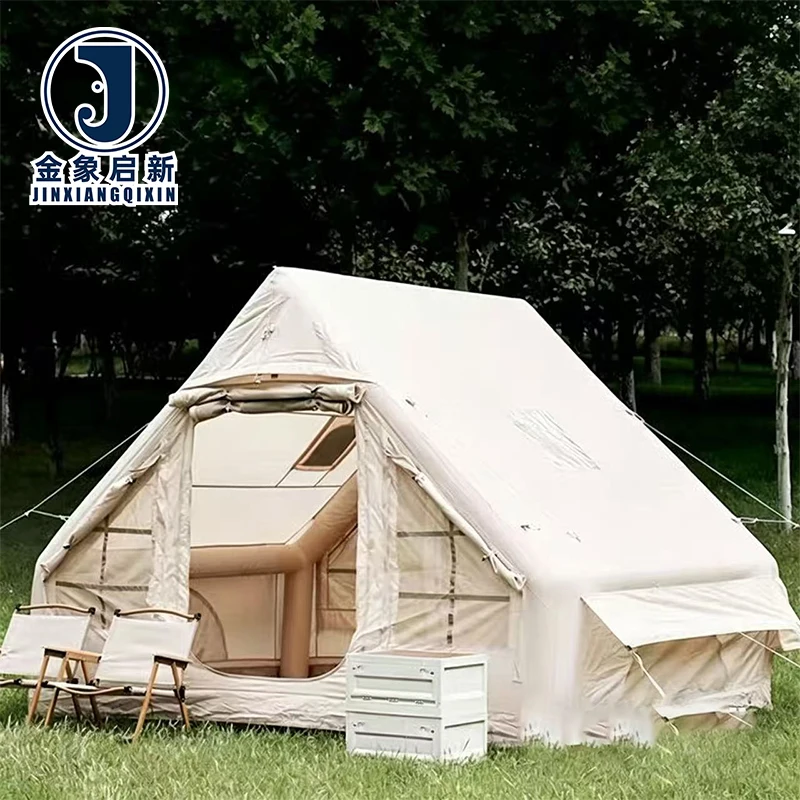
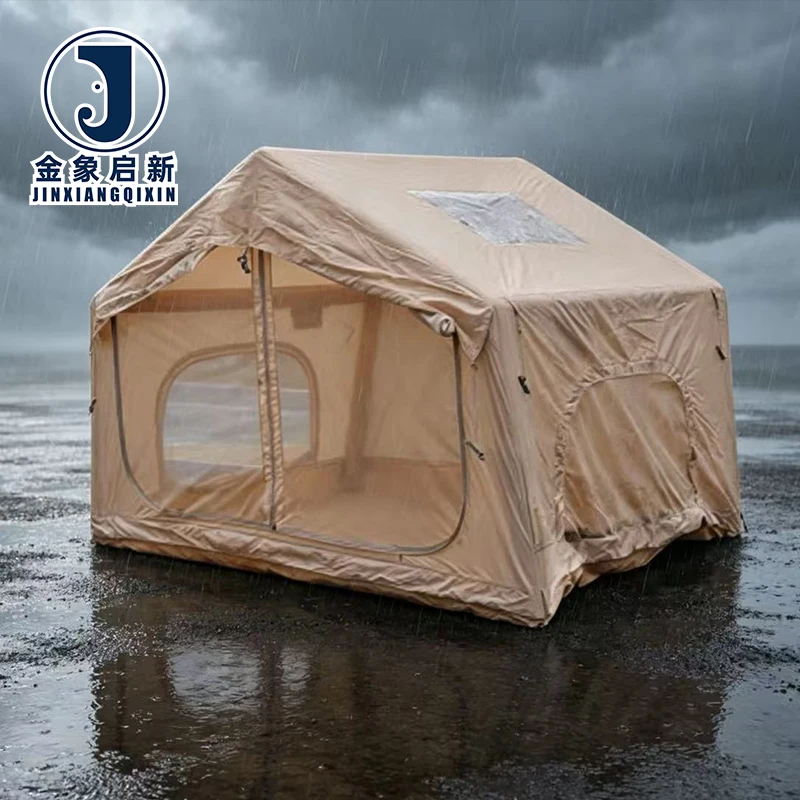
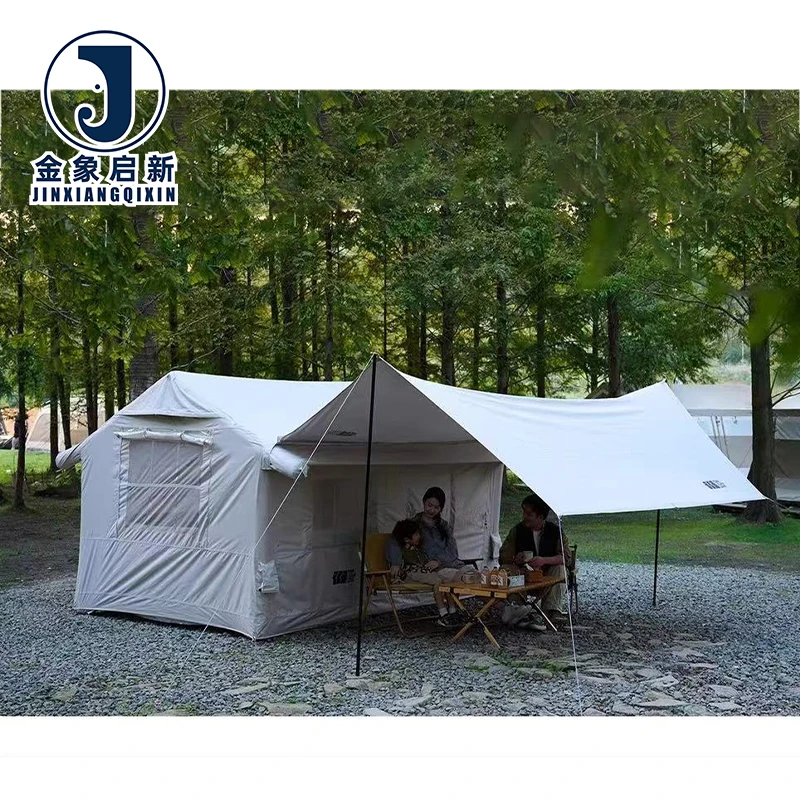
Coated Fabric Mastery — nearly three decades focused on PVC coating adhesion and seam integrity, ensuring inflatable structures retain air and meet site-specific fire safety standards.
Technical Specifications
| Parameter | Value |
|---|---|
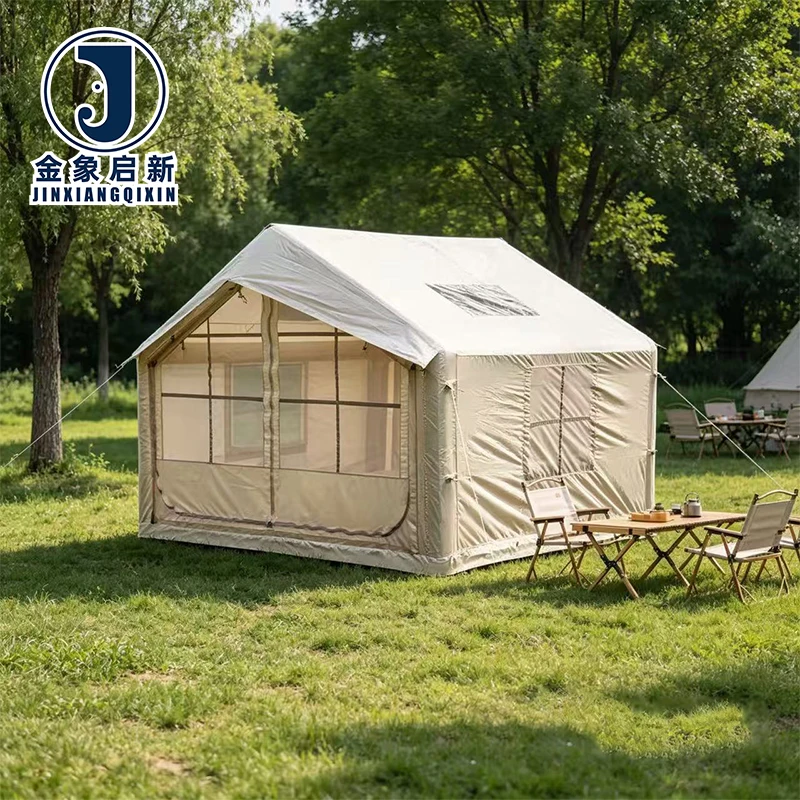
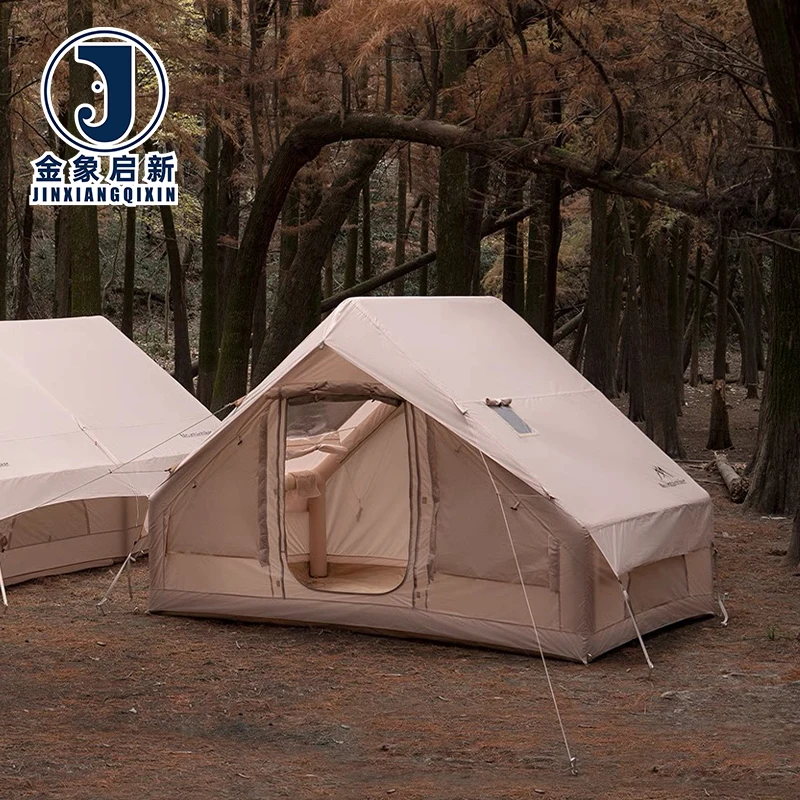
| Product Type | Inflatable Tent |
| Core Material | PVC tarpaulin |
| Capacity | 4-6 Person |
| Season Rating | Four-season |
| Construction | Single-layer, inflatable frame |
| Opening Mechanism | Quick automatic opening |
| Waterproof | Yes (grade available on request) |
| UV-Resistant | Available with UV treatment — confirm grade required for your market |
| Tear-Resistant | Tear-resistant construction (test basis available on request) |
| Flame Retardant | Available in flame retardant grades — confirm the grade required for your market |
| Anti-Static | Available with anti-static treatment — confirm surface resistance standard required |
| Production Facility | 9,180 m² with 3 full production lines |
| Processing Equipment | 36 sets |
| R&D Team | 10 technicians |
| Customization | OEM & ODM (sample customization, pattern printing, custom dimensions, material thickness adjustments) |
| Standards | ISO9001, ISO14001, ISO45001, CE |
Application Suitability
| Application | Exposure & Requirement |
|---|---|
| Mining and tunnelling crew shelters | Continuous underground or remote exposure; mandatory fire-retardant and anti-static compliance for site safety audits |
| Remote construction project housing | Multi-week outdoor deployment; wind load, UV exposure, and rapid deployment required under tight project timelines |
| Aviation ground operations | Proximity to fuel and sensitive electronics; anti-static and flame-retardant documentation needed for airfield access |
| Large-scale outdoor event enclosures | High foot traffic and public assembly; local fire marshal approval contingent on certified flame-retardant grades |
| Beach commercial deployments | Salt-laden air, sand abrasion, and intense solar radiation; coating adhesion and UV stability critical |
What "Fire Retardant" Means Without a Certified Grade Behind Your Inflatable Structure
A flame-retardant claim is only as strong as the test report that backs it on your job site.
I have visited project sites where inflatable shelters were rejected at inspection because the fabric supplier provided a generic "fire resistant" statement instead of a grade-specific certificate mapped to local building or occupational safety codes. The contractor had already deployed the structure, paid for crew mobilisation, and now faced a full teardown. The delay cost far more than the fabric itself. [NEED_CITE: site safety compliance for temporary structures]
When sourcing a custom inflatable tent fabric for industrial deployment, the procurement conversation must begin with the specific fire classification your destination market demands — whether that is a European reaction-to-fire class, an NFPA standard for temporary assembly structures, or a mining-specific flame propagation limit. Without naming the grade in the purchase specification, you are leaving compliance to chance.
Air Retention and Coating Adhesion Under Inflation Pressure
Inflatable structures depend entirely on the coating’s bond to the base fabric. If adhesion is weak, the material delaminates at stress points — particularly where the inflatable frame bends or where panels join. This failure mode is not gradual; once a micro-separation starts under sustained air pressure, it propagates quickly and the structure loses rigidity.
Our PVC tarpaulin core material is produced with controlled coating weight and adhesion parameters developed over nearly 30 years of coated fabric processing. The 10-technician R&D team adjusts material thickness and coating formulation to match the inflation pressure and structural geometry of your specific inflatable tent design, ensuring the fabric holds air reliably throughout the deployment cycle.
Fire-Retardant and Anti-Static Compliance for Regulated Sites
Industrial sites — particularly mining, tunnelling, aviation, and petrochemical environments — do not accept generic material claims. The site safety officer will ask for the test report before the inflatable shelter is erected. If the documentation does not match the specified grade, the structure does not go up.
We supply PVC inflatable tent fabric with fire-retardant and anti-static treatment options, each accompanied by the corresponding test documentation. The specific grade must be confirmed during the specification phase so that the correct additive package is compounded into the coating before production begins. Retrofitting fire performance after coating is not possible. [NEED_CITE: fire classification standards for temporary industrial structures]
Reading the Specification Sheet: What Actually Determines Structural Performance
The base fabric denier and weave density determine how the material resists tearing once a puncture or cut occurs — a critical factor for inflatable frames that operate under constant internal pressure. A high-denier yarn in a tight weave stops tear propagation more effectively than a lighter base, regardless of coating thickness.
Coating weight and method directly affect both air retention and weld behaviour. Heavier coatings improve impermeability but change the thermal window for hot-air welding; the weld temperature, speed, and pressure must be matched to the specific coating formulation to avoid burning through or creating a cold weld that peels under flex load.
Surface finish — whether glossy or matte — influences how the fabric handles in fabrication and how it performs in the field. Glossy surfaces shed water and dirt more readily but can be more slippery during handling and welding; matte surfaces offer better grip and print adhesion for branding or safety markings.
The interplay between these parameters means that a single number — whether GSM or denier — tells only part of the story. The full specification sheet must be read as a system.
The Cost of Specifying on Price Alone
When inflatable tent fabric is specified primarily on cost per square metre, the shortcuts appear later. A lighter base fabric may pass the initial tensile test but fail at the welded seam after repeated inflation and deflation cycles, because the coating-to-yarn bond cannot sustain the flex stress at the joint. [NEED_CITE: coated fabric weld failure analysis]
Similarly, flame-retardant additives that are under-dosed to save material cost may pass a laboratory ignition test but fail the after-flame and after-glow limits required by the site safety standard. The structure passes the supplier’s quality check but fails the inspector’s audit on site — and by then, the entire shipment is already deployed.
Batch-to-batch colour inconsistency is another consequence of cutting formulation corners. When two rolls from the same order show a visible shade difference once inflated side by side at a commercial event, the visual impact undermines the professional image the structure was meant to project.
Why Industrial Buyers Source This Fabric Here
The 10-person R&D team develops samples against your exact inflatable structure geometry, adjusting material thickness and coating formulation before bulk production begins — eliminating guesswork at the welding table.
Three full production lines and 36 sets of processing equipment provide the capacity to deliver large-volume orders on schedule, with each roll produced under consistent process parameters.
Dedicated QA and QC staff inspect every production stage, and 100 percent pre-shipment inspection ensures that the fabric leaving the facility matches the specification sheet you approved. [NEED_CITE: quality inspection protocols for coated technical fabrics]
Full documentation — including material specification sheets, test reports for fire-retardant and anti-static grades where applicable, ISO and CE certificates, and packing records — ships with every order, ready for customs clearance and site inspector review.
Custom dimensions, pattern printing, and branding are handled in-house, meaning your inflatable tent fabric arrives as a project-ready material rather than a generic roll that requires further conversion.
Documentation & Verification
- Material specification sheet stating base fabric, coating weight, and treatment parameters for each batch
- Fire-retardant and anti-static test reports matched to the grade specified in your purchase order
- ISO and CE certificates included for customs and site compliance review
- Pre-shipment inspection record verifying roll dimensions, colour, and surface quality before dispatch
- Packing list and certificate of origin for international shipment traceability
Fabrication, Handling & Storage
- Hot-air weld temperature and speed must be calibrated to the specific PVC coating formulation before joining inflatable frame panels
- Reinforce all valve and air-port openings with additional PVC layers to distribute inflation stress beyond the cut edge
- Store rolls upright on pallets in a dry, shaded environment to prevent compression marks on the coated surface
- Allow cold-stored rolls to acclimatise to workshop temperature before unrolling to avoid coating cracking at low temperatures
- Use PVC-compatible cleaners only; solvent-based products can degrade the coating surface and compromise weld adhesion on repairs
How to Structure Your Inquiry for a Fast, Accurate Quote
To move from initial enquiry to sample development efficiently, share the specific fire-retardant grade and anti-static standard required by your destination market or project site. Include the target dimensions for the inflatable structure, the expected inflation pressure, and whether you need rolls for your own fabrication or finished cut-and-welded panels.
If branding or pattern printing is part of the design, provide artwork files and colour references early so the R&D team can confirm print adhesion against the chosen surface finish. Confirming these parameters upfront reduces the sample revision cycle and keeps your project timeline on track.
Frequently Asked Questions
Q: What fire-retardant grades are available for inflatable tent fabric, and how do they map to local site safety regulations?
A: We offer PVC inflatable tent fabric in multiple flame-retardant grades depending on your project requirement. The specific grade must be confirmed during specification so the correct additive package is compounded into the coating. We supply the corresponding test report with each shipment, mapped to the standard your site inspector or local fire authority requires.
Q: How is anti-static performance verified, and what documentation accompanies the shipment?
A: Anti-static treatment is applied during the coating stage and verified through surface resistance testing. The test report stating the measured value and the standard applied ships with your order. Confirm the surface resistance range required by your site safety specification so we match the correct formulation to your inflatable structure application.
Q: Can material thickness and dimensions be customised, and how long does sample development take?
A: Yes. Our 10-technician R&D team adjusts material thickness, coating weight, and cut dimensions to match your inflatable structure design. Samples are developed within days of specification approval, allowing you to validate weld behaviour, air retention, and physical fit before committing to full production volume.
Q: What compliance documentation is included with each order for customs and site inspection?
A: Every shipment includes the material specification sheet, relevant fire-retardant and anti-static test reports, ISO and CE certificates, a pre-shipment inspection record, packing list, and certificate of origin. This package supports both customs clearance and on-site safety audits for mining, aviation, and construction deployments.
Q: How is batch-to-batch consistency ensured across large-volume inflatable tent fabric orders?
A: All production runs are controlled through standardised coating parameters and in-process quality checks at each stage. Dedicated QA and QC staff conduct 100 percent inspection before shipment, and inspection records are included with the delivery. This ensures every roll in a multi-roll order meets the same specification you approved at the sample stage.