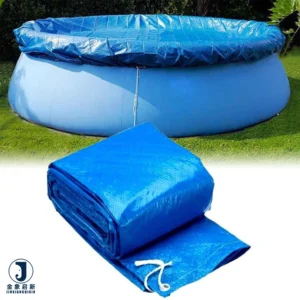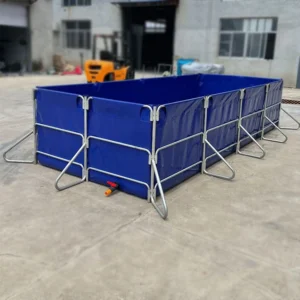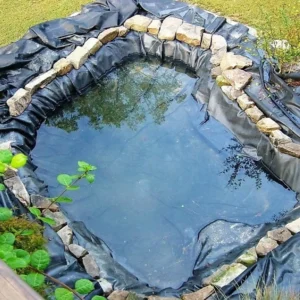


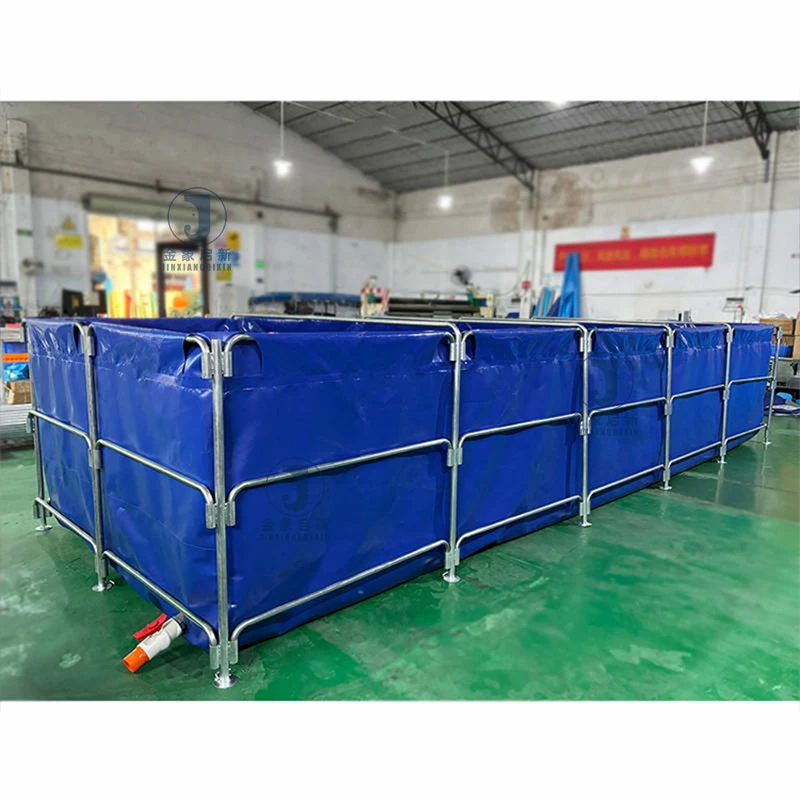
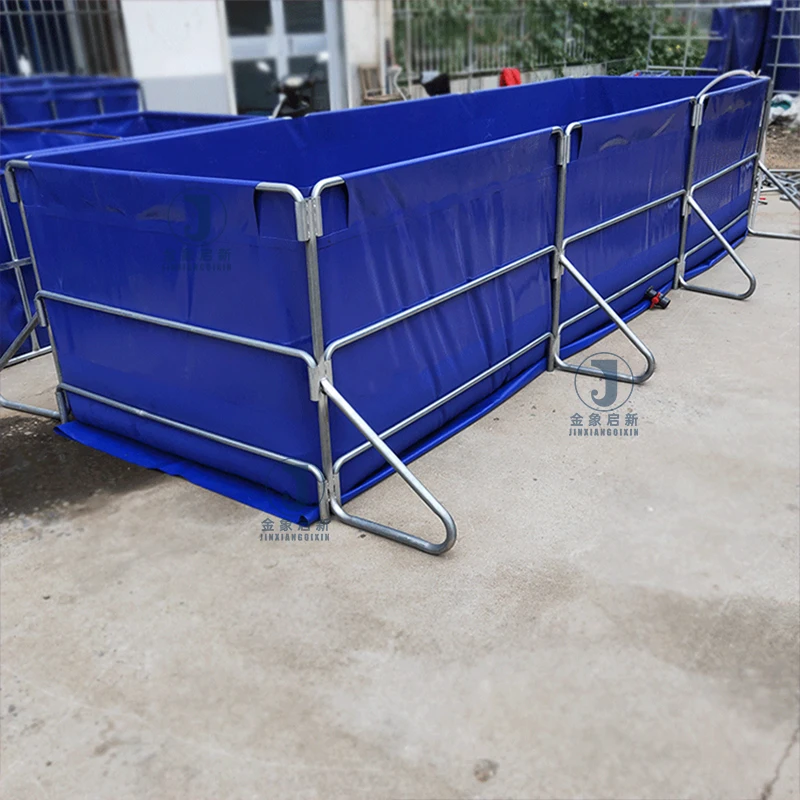
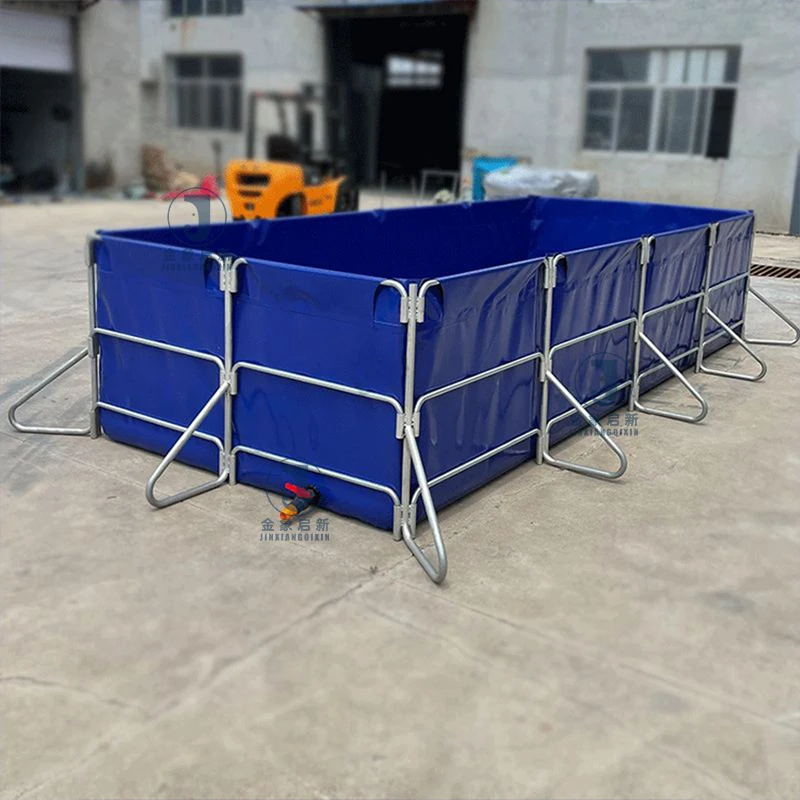
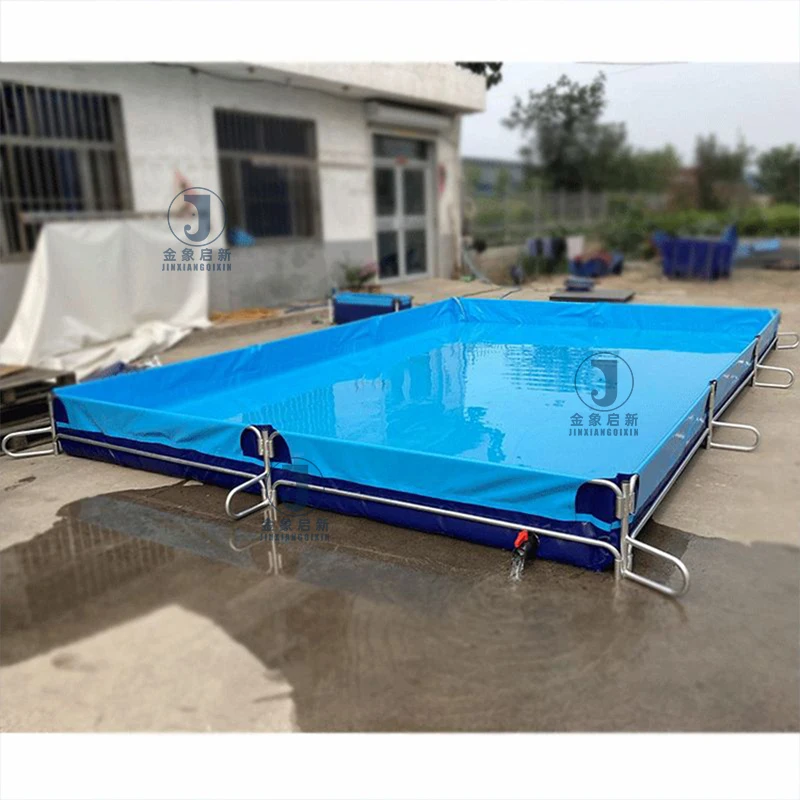
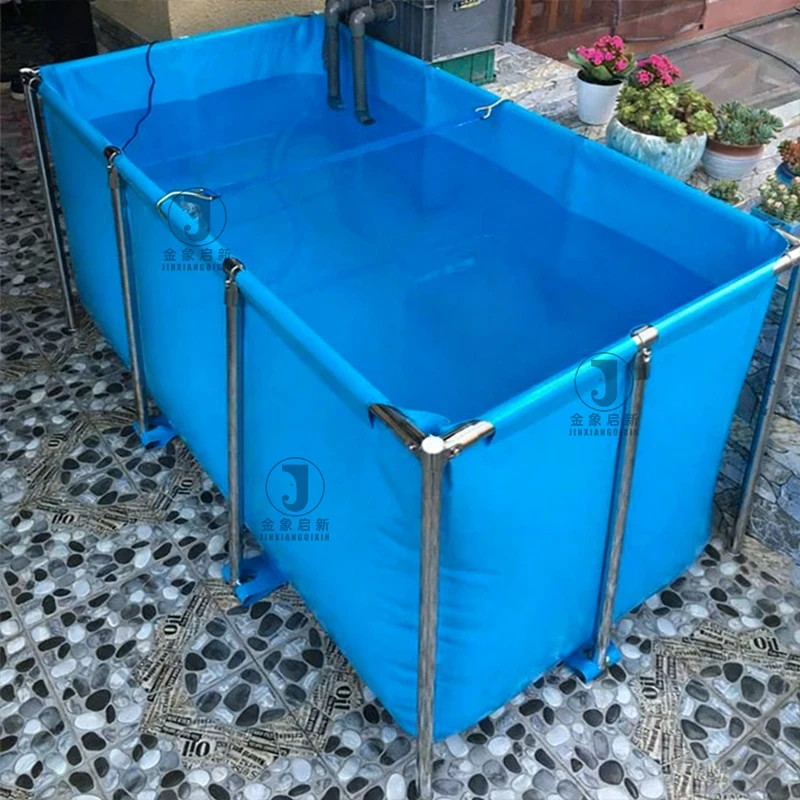
Process-Controlled Coating — Nearly 30 years of PVC coating expertise applied to aquaculture containment, where every roll undergoes 100% pre-shipment inspection before fabrication into certified pond liners.
Technical Specifications
| Parameter | Value |
|---|---|
| Product Type | PVC Fish Pond Liner |
| Material | PVC Coated Polyester |
| Base Fabric Denier Options | 500D×840D, 500D×1000D, 1000D×1000D, 1000D×1300D, 1300D×1300D, 1000D×2000D |
| Weight Options | 350 GSM, 400 GSM, 420 GSM, 500 GSM, 600 GSM, 650 GSM, 750 GSM, 900 GSM |
| Total Thickness | 0.29mm (350 GSM) to 0.65mm (900 GSM) |
| Mesh Count | 30×19, 20×20, 30×15 (varies by GSM grade) |
| Tensile Strength Warp | Up to 3900 N at 900 GSM (test basis not stated in source) |
| Tensile Strength Weft | Up to 3500 N at 900 GSM (test basis not stated in source) |
| Key Features | Water Resistant, Waterproof, Anti-UV (grade not stated), Flame Retardant (grade not stated) |
| Shape Configuration | Foldable, Circular, Rectangular |
| Fabrication | Custom cut and heat-welded to pond dimensions |
| Standards | ISO, CE |
Application Suitability
| Application | Exposure & Requirement |
|---|---|
| Commercial aquaculture grow-out ponds | Permanent water immersion, livestock contact, substrate puncture risk, continuous UV exposure |
| Hatchery and nursery tanks | Frequent draining and refilling, chemical treatment contact, lightweight containment needs |
| Agricultural water reservoirs | Large-volume static water pressure, soil chemistry exposure, seasonal temperature variation |
| Recirculating aquaculture systems (RAS) | Controlled environment integration, documented fire-retardant compliance for indoor installations |
| Above-ground circular fish ponds | Structural water load on vertical walls, wind exposure, seam stress at flex points |
Why Certified PVC Fish Pond Liner Documentation Matters More Than Claims
A fire-retardant rating means nothing without the test report to back it up at the site inspection.
Aquaculture installations in regulated environments increasingly require documented material compliance. When a PVC fish pond liner arrives on site, the contractor needs to present certificates to inspectors, insurance assessors, or facility managers — not verbal assurances from a supplier. The gap between a datasheet claim and a verifiable test report is where projects stall and materials get rejected [NEED_CITE: fire classification standards for coated fabrics in agricultural structures]. I have seen coated fabric orders delayed at commissioning because the flame-retardant grade stated on the quotation did not match the standard the local authority required. This is a procurement failure, not a material failure, and it is entirely preventable with the right documentation chain.
Fire-Retardant and Anti-Static Grades for Regulated Aquaculture Sites
Indoor recirculating aquaculture systems and greenhouse-based fish farming operations often fall under building material fire classification requirements. The PVC fish pond liner is available in flame retardant grades — confirm the grade required for your market, whether that is M2, B1 per DIN 4102, or NFPA 701. Anti-static treatment options are also available for controlled environments where surface resistivity must meet specific thresholds. The critical step is specifying the exact standard your installation requires at the inquiry stage, so the test report can be prepared and matched to the batch before dispatch.
Heat-Welded Seams That Match the Fabric Service Life
The most common failure point in fabricated pond liners is the welded seam, not the body of the material. PVC coated polyester construction supports hot-air welding, which fuses the coating layers into a continuous bond rather than relying on adhesive or mechanical fasteners. For circular and rectangular pond geometries, welded seams at stress points and flex zones must be specified with the same rigour as the base fabric selection [NEED_CITE: seam strength testing methods for coated fabrics per ISO 1421]. On-site repair is also possible with standard hot-air equipment, meaning installation damage does not require panel replacement.
Reading the Specification Sheet Beyond GSM
GSM alone tells you weight per square metre, but it does not tell you how that weight is distributed between base fabric and coating, or how the yarn denier and mesh count interact to deliver tensile and tear performance. A 650 GSM liner built on 1000D×1300D polyester with a 30×15 mesh count behaves differently under load than a 650 GSM liner on a lighter base with heavier coating. The PVC fish pond liner range spans deniers from 500D×840D up to 1000D×2000D, allowing technical buyers to match base fabric strength to the actual water pressure and structural demands of the installation. Coating weight and adhesion to the base fabric determine weldability and long-term flexibility — properties that are controlled through the coating process, not just the final GSM figure. Thicker coating layers improve puncture resistance against substrate irregularities but reduce foldability for transport and on-site handling.
The Hidden Cost of Specifying Without Verification
When GSM is stated on the quotation but not verified on arrival, the material can be lighter than agreed — thinner coating, lower tensile values, and reduced puncture resistance that only reveals itself after the pond is filled and under pressure. When flame-retardant treatment is claimed without a test result, the installation may pass initial setup but fail at the compliance audit, forcing costly liner replacement or retroactive certification attempts [NEED_CITE: consequences of non-compliant fire-retardant materials in agricultural installations]. Batch colour variation between rolls in the same order becomes visible once liners are installed side by side in adjacent ponds, creating an aesthetic issue that signals inconsistent production control to the end client. Welded seams that fail before the fabric does — typically at the point the load flexes most — turn a capital investment into a recurring repair cycle.
Procurement Advantages for Technical Buyers
Nearly 30 years of focused coated fabric production means deep process control over coating weight and adhesion, which directly affects weld quality and seam integrity on every PVC fish pond liner we fabricate. Three full production lines and 36 sets of professional equipment support bulk capacity with reliable on-time delivery, so aquaculture contractors can plan installation schedules around confirmed lead times. A dedicated 10-person R&D team handles material selection, custom sizing, and sample development, allowing pond geometry and fabrication details to be resolved before full production begins. QA/QC is applied at every production stage with 100% inspection before shipment, and samples are developed within days for custom requirements so approval cycles do not delay the project timeline.
Documentation & Verification
- Material specification sheet stating exact GSM, base fabric denier, and coating weight for each pond liner order
- Test report for UV and flame-retardant grades provided where applicable, with stated standard referenced
- ISO and CE certificates supplied alongside pre-shipment inspection record for each dispatch
- Certificate of origin and customs documentation prepared for export shipments
- Roll packing list matched to fabricated panel dimensions for site receiving verification
Fabrication, Handling & Storage
- Hot-air welding parameters must be matched to the specific GSM grade and coating thickness of the PVC fish pond liner
- Circular pond fabrication requires radial panel layout planning to minimise waste and ensure uniform wall thickness
- Folded liners should be stored flat and avoid compression stacking to prevent permanent crease marks in the PVC coating
- On-site seam repair uses standard hot-air equipment compatible with PVC coated polyester construction
- Unfold heavy-grade liners in moderate temperatures to avoid coating stiffness and cracking at fold lines
- Clean with neutral pH agents only; abrasive cleaners will damage the PVC coating surface layer
What to Include in Your Inquiry
Provide the pond dimensions, water depth, and whether the installation is above-ground or in-ground, as this determines the GSM grade and base fabric denier required. Specify any fire-retardant or anti-static compliance standards your local authority or insurance provider requires, so test documentation can be prepared with the batch. Confirm whether you need finished fabricated panels with welded seams or roll stock for on-site cutting and welding.
Frequently Asked Questions
Q: Which fire-retardant standard applies to PVC pond liners in my region’s aquaculture regulations?
A: Fire-retardant grades are available in multiple classification systems. The applicable standard depends on your local building code and whether the installation is indoor or outdoor. Confirm the required classification — such as M2, B1, or NFPA 701 — at the inquiry stage so the correct treatment and test documentation can be prepared for your order.
Q: How is GSM verified before shipment, and what documentation comes with each order?
A: Every roll undergoes weight verification against the stated GSM during pre-shipment inspection. A material specification sheet and inspection record accompany each dispatch, documenting the actual measured values. This ensures the PVC fish pond liner you receive matches the quoted specification, not just the product family range.
Q: Can pond liner seams be repaired on-site if damaged during installation?
A: Yes. The PVC coated polyester construction supports hot-air welding for both factory fabrication and field repair. Standard hot-air equipment fuses the coating layers at the damage point, restoring waterproof continuity without requiring panel replacement. Weld parameters should match the specific GSM grade.
Q: What anti-static treatment options are available for controlled aquaculture environments?
A: Anti-static treatment is available for installations requiring specific surface resistivity thresholds, such as indoor RAS facilities. The applicable standard and target resistance value should be confirmed at inquiry so the treatment can be applied and tested against your compliance requirement before dispatch.
Q: How does anti-UV treatment affect above-ground pond liner service life?
A: Anti-UV treatment is available across the PVC fish pond liner range to address continuous sun exposure on above-ground installations. The treatment grade and test basis should be confirmed for your specific climate and exposure conditions. Request the UV test report with your order documentation to verify the treatment applied.