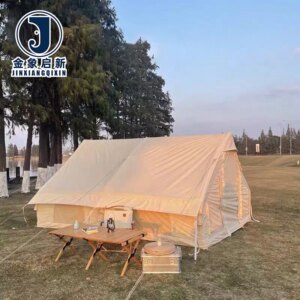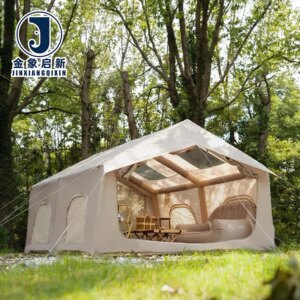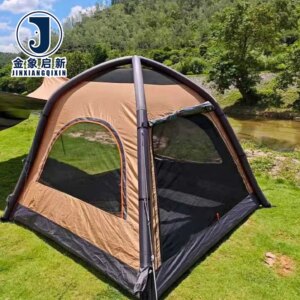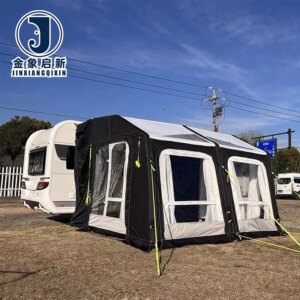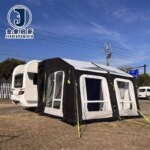

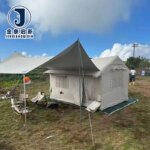
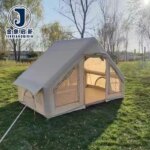
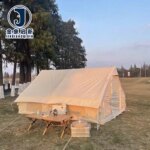
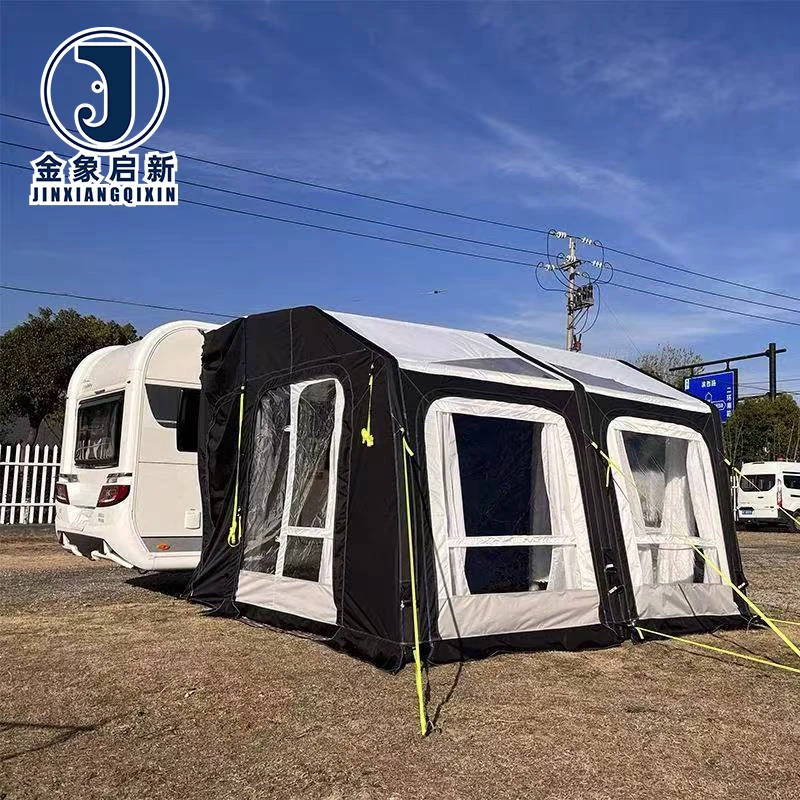
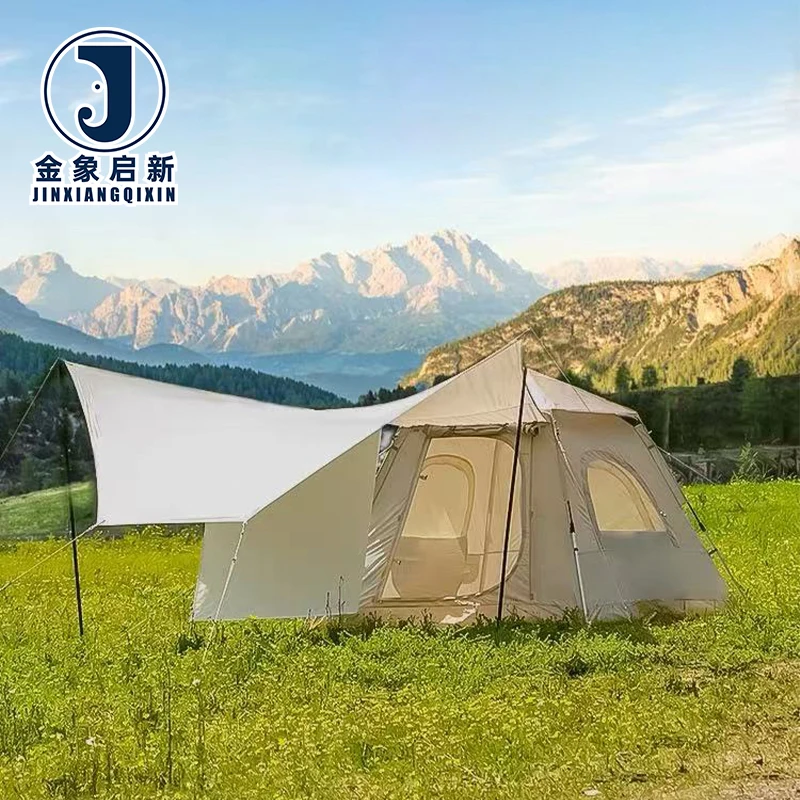
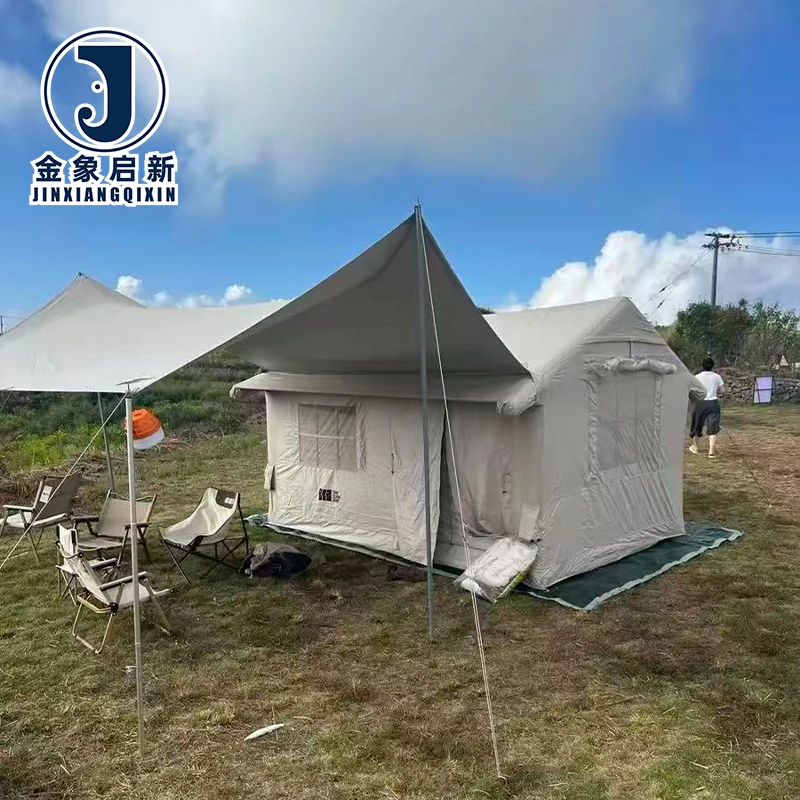
Proven Coating Expertise — Nearly 30 years of PVC tarpaulin manufacturing applied to inflatable shelter systems, with full-process QA/QC and ISO-certified production supporting reliable emergency deployment.
Technical Specifications
| Parameter | Value |
|---|---|
| Product Type | PVC Inflatable Tent |
| Core Material | PVC Tarpaulin |
| Product Forms | Extended Type, Single Layer Construction |
| Key Performance | Waterproof, UV-resistant (test basis not stated), Tear-resistant |
| Customization | OEM & ODM — custom sizing, sample customization, pattern printing |
| Production Facility | 9,180 m² with 3 full production lines |
| Processing Equipment | 36 sets of professional equipment |
| R&D Team | 10 technicians |
| Quality Control | Full-process inspection with dedicated QA&QC staff |
| Certifications | ISO 9001, ISO 14001, ISO 45001, CE |
Application Suitability
| Application | Exposure & Requirement |
|---|---|
| Emergency response centers | Rapid deployment, all-weather shelter, frequent relocation |
| Temporary storage facilities during disaster recovery | Waterproof enclosure, dust protection, secure equipment housing |
| Mobile command posts for engineering projects | Extended outdoor exposure, interior workspace for personnel and equipment |
| Auxiliary workspace for outdoor industrial operations | Wind resistance, UV exposure, repeated inflation cycles |
| Construction sites and logistics hubs | Abrasion from ground contact, heavy foot traffic, debris impact |
| Remote industrial installations | Isolated deployment, limited maintenance access, seasonal temperature swings |
What Happens When Emergency Shelters Lack Verified Compliance Documentation
Certified manufacturing eliminates the gap between procurement paperwork and on-site audit requirements.
In disaster response and industrial project environments, inflatable shelters often arrive on site without the fire-retardant or anti-static certification that safety inspectors demand. The consequence is not a delayed shipment — it is a halted operation. [NEED_CITE: site safety compliance requirements for temporary structures in mining and construction] Sourcing teams discover too late that the inflatable tent manufacturer they selected cannot produce the documentation their regulatory framework requires. This PVC inflatable tent for disaster relief is produced under ISO 9001, ISO 14001, and ISO 45001 management systems with CE marking, meaning the certification package travels with every shipment.
Air-Beam Structural Design for Immediate Operational Readiness
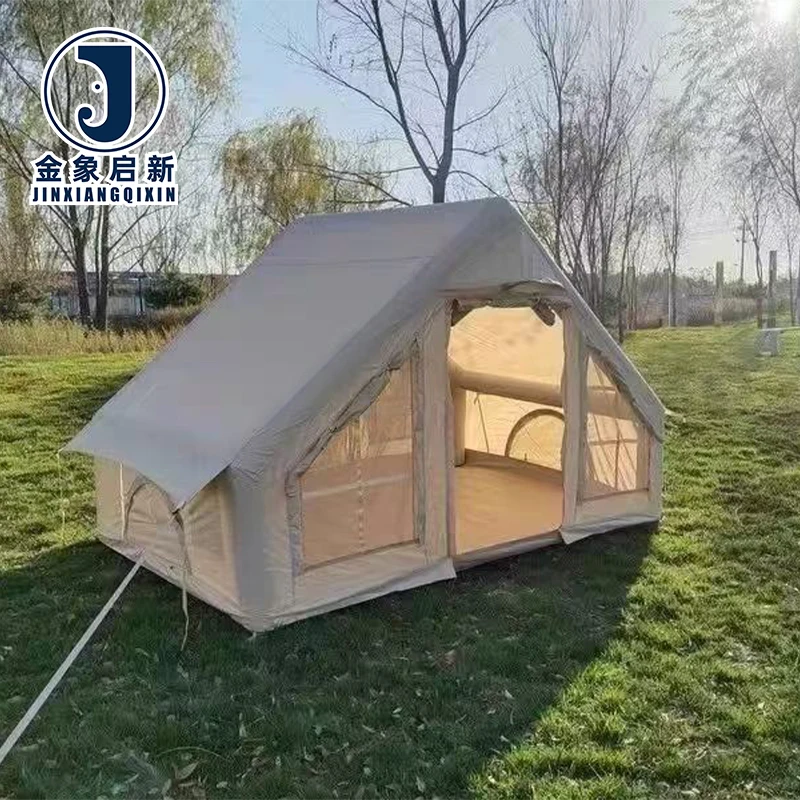
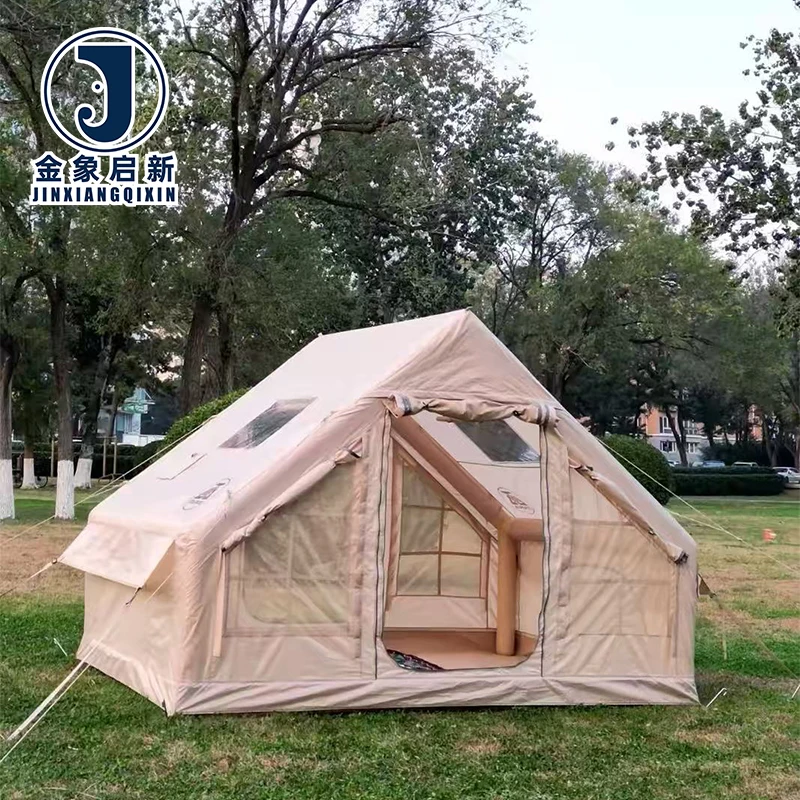
The inflatable shelter relies on PVC tarpaulin air beams that achieve full structural rigidity within minutes of inflation, removing the dependency on pole assemblies and ground anchoring that slow conventional tent deployment. For emergency response teams arriving at disaster zones, this rapid automatic opening capability translates directly into operational hours saved during the critical first response window. The custom inflatable shelter design supports repeated inflation and deflation cycles without compromising seam integrity at the beam junctions.
Single Layer Extended Form Balancing Volume and Transport Weight
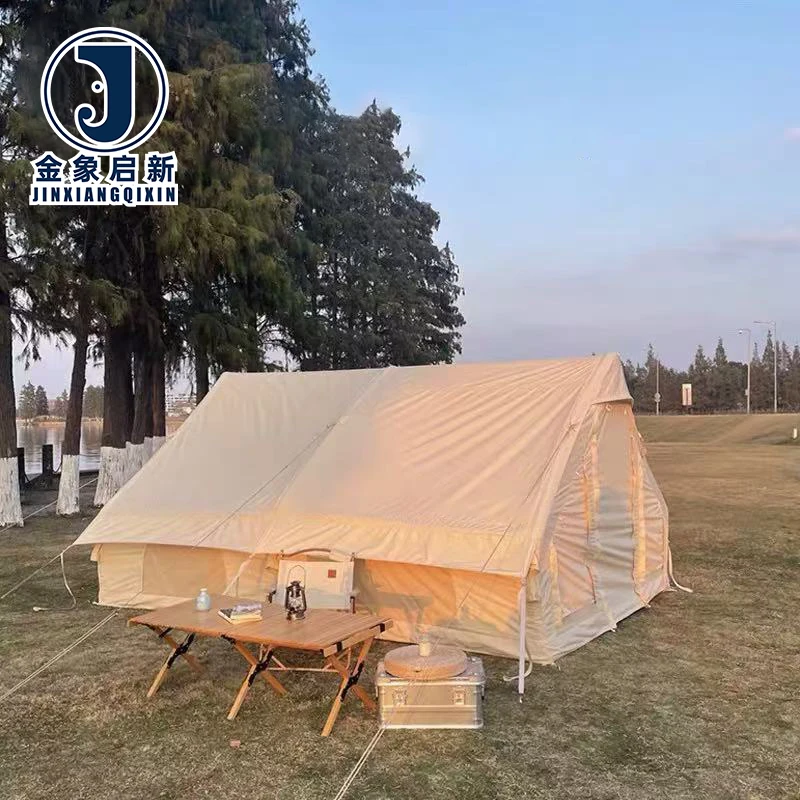
The single layer construction keeps the packed weight manageable for transport to remote sites while the extended type form factor provides sufficient interior volume for command post equipment, temporary medical stations, or crew rest areas. This balance matters in logistics chains where every kilogram of air freight capacity counts. [NEED_CITE: load planning considerations for emergency relief air transport] The PVC tarpaulin membrane delivers waterproof and tear-resistant performance across the entire envelope, so interior operations remain protected regardless of external conditions.
Reading the Material Specification Beyond Marketing Claims
The PVC tarpaulin used in these inflatable structures combines a base fabric with a coating layer that together determine the membrane’s behaviour under stress. The base fabric’s denier and weave density govern tear propagation resistance — a critical factor when the inflatable beams flex under wind load or when the shelter skin contacts sharp ground debris. The coating weight and method determine waterproof integrity and the surface’s ability to hold printed identification markings. UV-resistant treatment is available — confirm the test basis required for your market’s outdoor exposure standards before placing the order. Waterproof performance depends as much on seam welding quality as on the membrane itself, which is why full-process QA/QC inspection covers every welded joint before the inflatable tent leaves the production floor.
The Hidden Cost of Unverified Material in Emergency Procurement
When an inflatable emergency shelter fails in the field, the root cause is rarely a single catastrophic event — it accumulates from specification gaps that compound under operational stress. [NEED_CITE: failure modes in temporary inflatable structures under environmental loading] A membrane that lacks verified tear resistance will develop small rips at stress concentration points around beam connections, and those rips propagate with each inflation cycle. Colour inconsistency across rolls becomes visible when multiple shelters are deployed side by side at a relief camp, undermining the professional appearance that aid organizations require for donor and media visibility. Weld seams that fail before the fabric itself does leave the structure unable to hold pressure, turning a command post into an unusable shell within days of deployment.
Why Procurement Teams Source Inflatable Shelters Here
The 10-person R&D team develops custom inflatable tent samples within days, allowing buyers to validate dimensions, beam configuration, and pattern printing before committing to full production runs. Three full production lines and 36 sets of professional equipment provide the capacity to fulfil large-scale emergency preparedness orders without extending lead times beyond what disaster planning timelines allow. Every PVC inflatable tent undergoes 100% pre-shipment inspection with dedicated QA and QC staff checking weld integrity, inflation performance, and surface quality. The OEM and ODM capability extends from custom sizing to project-specific branding, so identification markings and colour schemes align with the procuring organization’s visual standards. Documentation including material specification sheets, inspection records, and certification packages ships with every order — no follow-up requests required.
Documentation & Verification
- Material specification sheet detailing PVC tarpaulin base fabric, coating composition, and performance characteristics
- Batch-specific quality inspection report covering weld seams, inflation integrity, and surface finish
- Pre-shipment 100% inspection record documenting individual unit verification before dispatch
- ISO 9001, ISO 14001, ISO 45001, and CE certificates included in the shipping documentation package
- UV and flame-retardant test reports supplied where applicable grades are specified at order stage
Fabrication, Handling & Storage
- Heat-weld seams at manufacturer-recommended temperature and dwell time to match the PVC tarpaulin coating thickness
- Store inflated units deflated and flat-folded in dry conditions to prevent permanent creasing of the single layer membrane
- Avoid dragging the extended type shelter base across abrasive ground surfaces during deployment to protect the PVC tarpaulin underside
- Clean the PVC tarpaulin surface with mild detergent only — solvent-based cleaners degrade the coating adhesion
- Field repairs require compatible PVC patch material and hot-air welding equipment matched to the membrane coating weight
- Pattern printing areas should be cleaned with water only to preserve ink adhesion on branded panels
Preparing Your Enquiry for Accurate Quotation
To receive a specification recommendation that matches your deployment environment, provide the intended application scenario, expected exposure conditions including wind and temperature ranges, and the number of units required for your programme. Specify whether your market requires fire-retardant or anti-static certification, and include any pattern printing or colour requirements for organizational identification. Confirm whether you need sample units for field testing before full production, and indicate your target delivery timeline so the production schedule can be planned accordingly.
Frequently Asked Questions
Q: What custom sizing options are available and what are the minimum order requirements?
A: The R&D team develops inflatable shelter samples to your specified dimensions, beam configuration, and interior layout requirements. Minimum order quantities depend on the complexity of the custom design and the number of production line setups required. Submit your dimensional drawings or describe the operational space you need, and the team will confirm feasibility and minimums before sample development begins.
Q: Is UV resistance supported by test data, and what outdoor service life can we expect?
A: UV-resistant treatment is available for the PVC tarpaulin membrane — confirm the specific test basis required for your market and deployment duration. The expected outdoor service life depends on local solar radiation intensity, seasonal temperature ranges, and whether the shelter remains inflated continuously or is deployed intermittently. The team will advise on suitable UV treatment grades once your deployment environment is confirmed.
Q: Can pattern printing and branding be applied for emergency response identification?
A: OEM and ODM customization includes pattern printing on the PVC tarpaulin surface for organizational logos, identification markings, and safety signage. Print durability depends on the surface finish of the membrane and the ink system selected. Provide your artwork files and colour references during the sample development stage so print placement and adhesion can be verified before mass production.
Q: Are fire-retardant and anti-static certifications available for mining and tunnelling compliance?
A: Fire-retardant grades are available — specify the certification standard required by your site safety framework when submitting your enquiry. Anti-static treatment can be incorporated for environments where combustible dust or gas presence demands static dissipation. The applicable test reports and certification documents ship with the order, so confirm your compliance requirements early in the specification process.
Q: What is the sample development timeline and how does the approval process work?
A: The 10-person R&D team produces custom inflatable shelter samples within days of receiving your confirmed specifications. Once the sample reaches you, evaluate inflation performance, dimensional accuracy, weld quality, and surface finish against your deployment requirements. Approve the sample or request modifications before full production begins — no mass production starts without buyer sign-off on the physical sample.