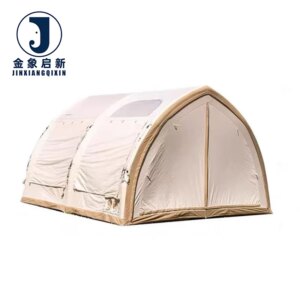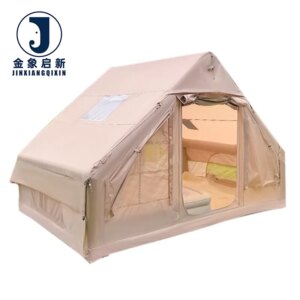

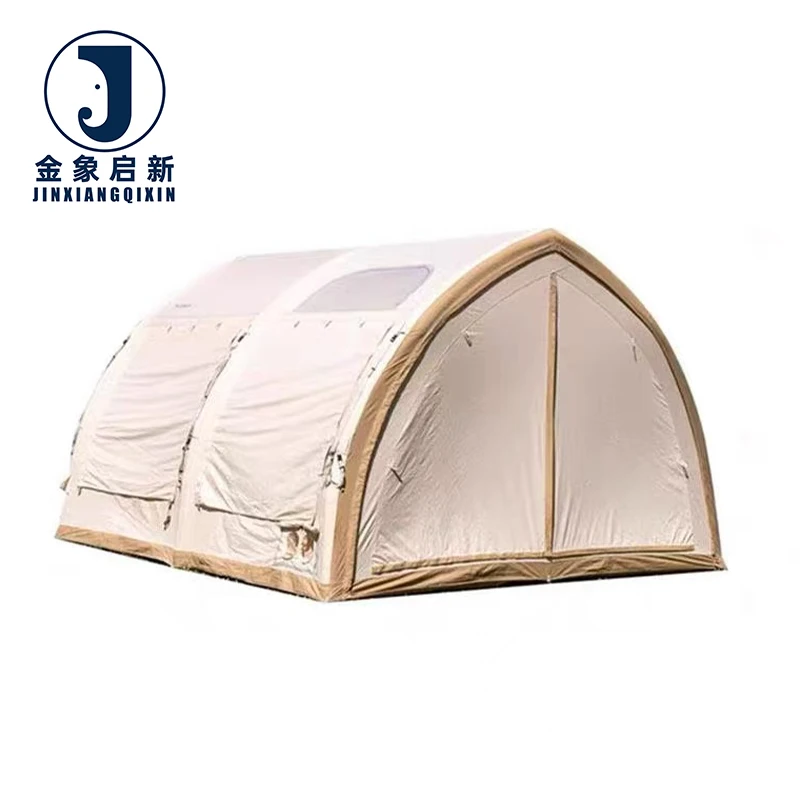
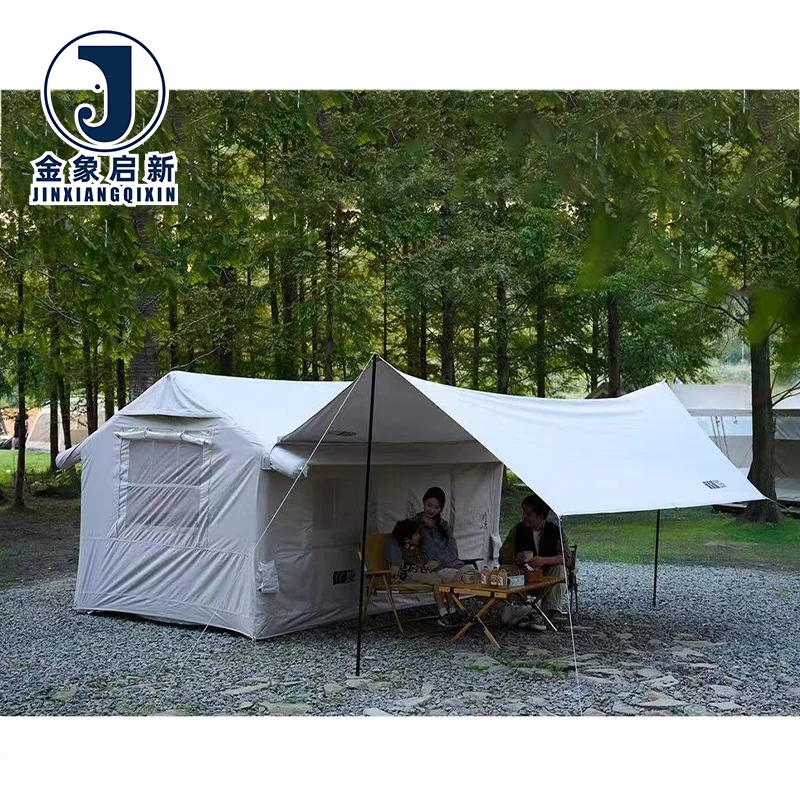
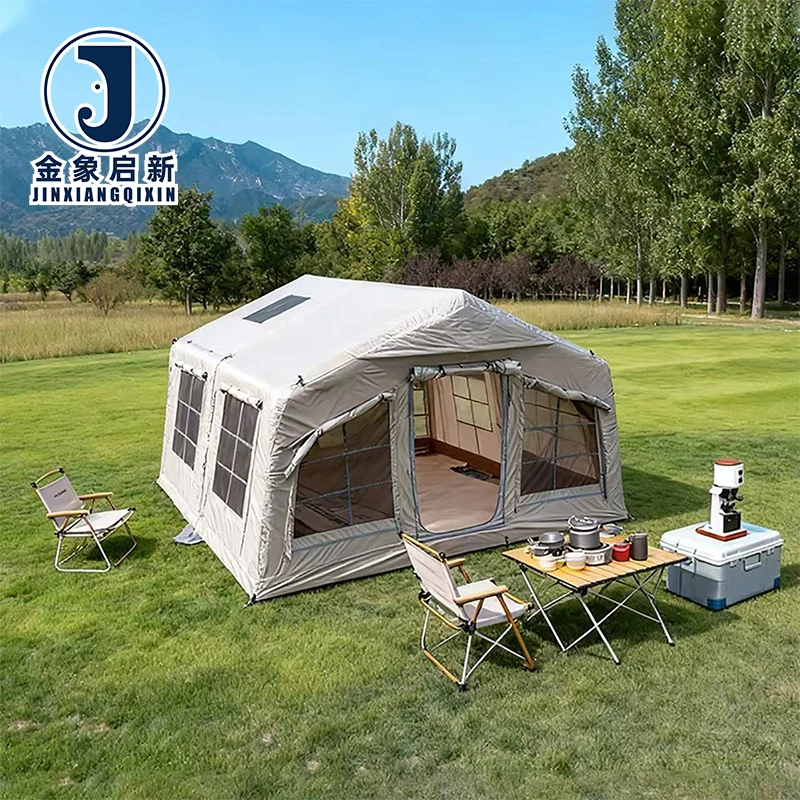
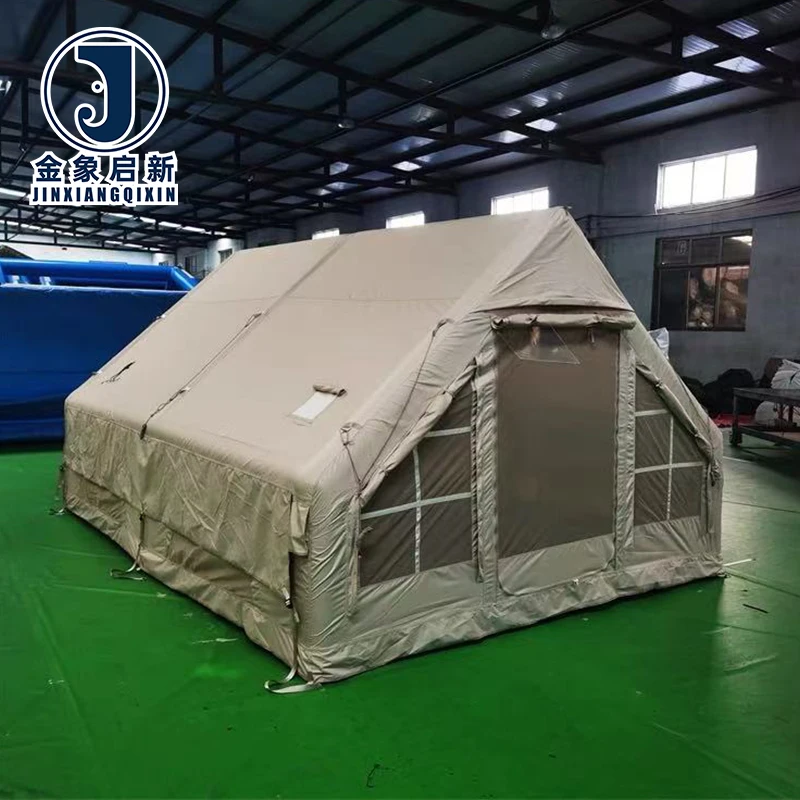
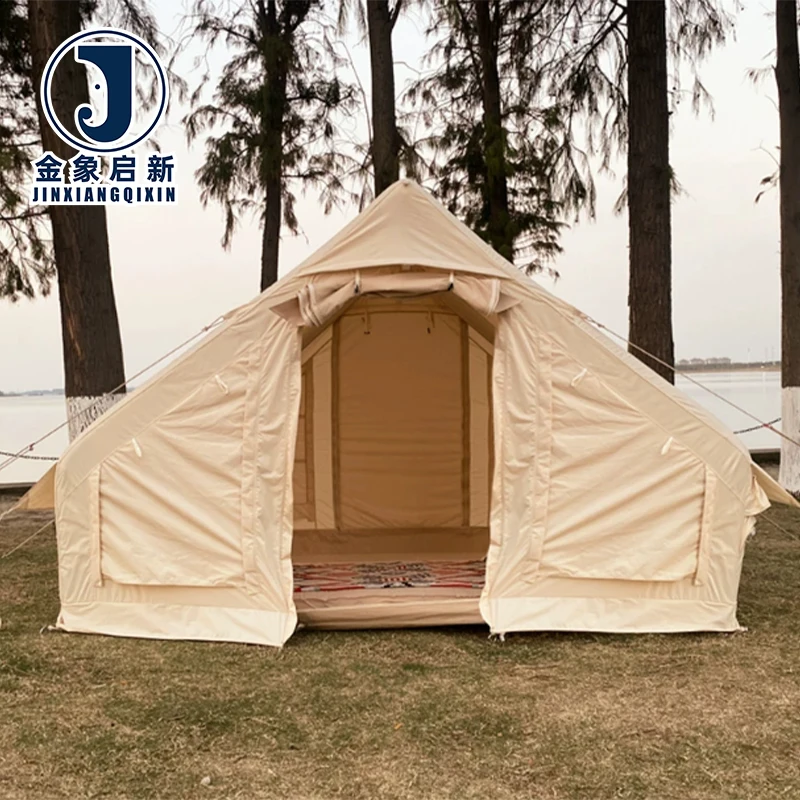
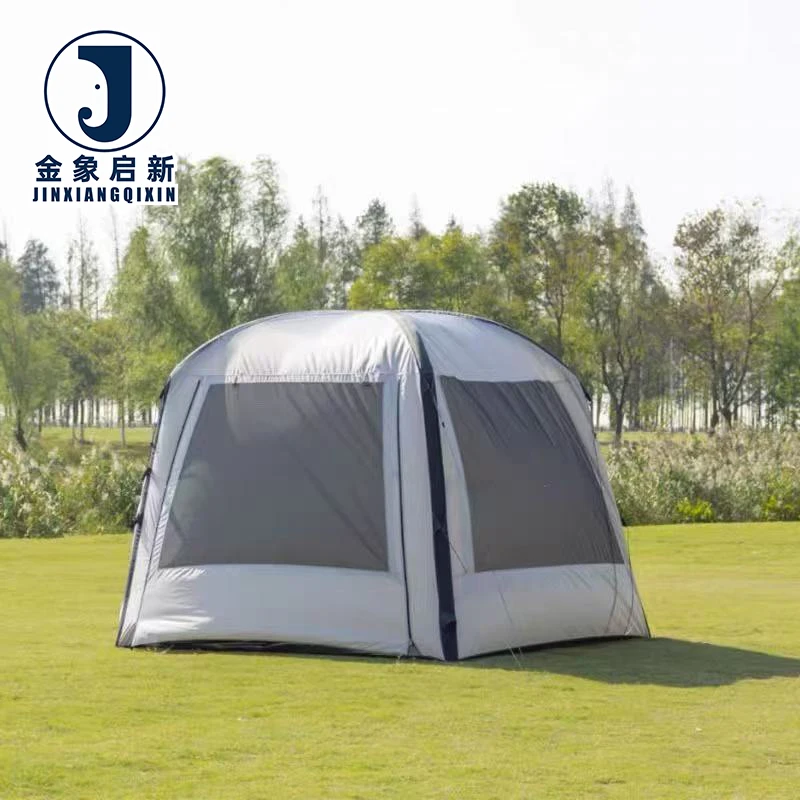
Precision-Controlled Coating — every batch of inflatable tent fabric passes dedicated QA checkpoints against stated specification before leaving the facility.
Technical Specifications
| Parameter | Value |
|---|---|
| Product Type | Inflatable Tent |
| Core Material | PVC Tarpaulin |
| Key Performance | Waterproof, Tear-resistant |
| Fire-Retardant Grade | Available in fire-retardant grades — confirm the grade required for your market |
| UV Resistance | UV-resistant (test basis not stated in source) |
| Anti-Static Property | Anti-static (standard not stated in source) |
| Product Forms | Single Layer Construction, Extended Type |
| Customization Service | OEM & ODM with sample customization and pattern printing |
| Certifications | ISO 9001, ISO 14001, ISO 45001, CE |
Application Suitability
| Application | Exposure & Requirement |
|---|---|
| Emergency disaster relief shelters | Rapid deployment, extreme weather, high occupant density requiring fire-safe materials |
| Mining and tunnelling temporary structures | Underground or confined site exposure, mandatory fire-retardant compliance, abrasive dust |
| Aviation and industrial inflatable enclosures | Static discharge risk in fuel or chemical proximity, anti-static surface control |
| Construction site temporary workspaces | UV and rain exposure, equipment storage, repeated inflation and deflation cycles |
| Outdoor industrial event coverings | High wind load, public access demanding certified fire performance |
What Compliance Documentation Actually Reaches the Site With Your Inflatable Tent Fabric
We ship batch-specific fire-retardant and anti-static test documentation matched to your order number, not generic data sheets.
Procurement teams sourcing inflatable tent fabric fire retardant anti-static certified for mining, aviation or disaster relief projects frequently receive material that lacks the specific certification the site safety officer demands. The fabric may perform adequately, but without traceable test data tied to the batch delivered, the structure fails the site audit and the entire deployment stalls. [NEED_CITE: fire safety compliance requirements for temporary membrane structures in mining operations]
This gap between stated performance and documented proof is where most compliance breakdowns happen. Buyers specify a fire-retardant grade in the inquiry, receive a quotation that references it, yet the dispatch documentation never confirms which test standard was applied to the specific rolls shipped. The consequence is not a material failure — it is a paperwork failure that stops work on site.
Compliance-Ready Membrane Fabric for Rapid-Deploy Structures
Inflatable tent fabric fire retardant anti-static certified serves a narrow but critical segment of the coated fabric market: structures that must deploy fast, stand unattended in harsh conditions, and pass a safety audit on the first inspection. The PVC tarpaulin core provides the dimensional stability and tear resistance that inflatable beams and walls demand during inflation and under wind load. Fire-retardant and anti-static treatments are available in grades suited to different regulatory environments — confirming the exact standard your destination market requires before production begins eliminates the most common documentation gap.
Single Layer and Extended Type Construction Options
The single layer construction balances low packed weight with sufficient insulation for short-term emergency deployment, while the extended type form provides the interior volume needed for equipment staging and operational workspace. Both forms rely on the coated fabric maintaining airtight integrity at heat-welded seams throughout repeated inflation cycles. The R&D team develops samples within days for custom dimensions, allowing you to verify seam behaviour and inflation characteristics before committing to a full production run. [NEED_CITE: airtight seam performance standards for inflatable membrane structures]
How PVC Coating Weight and Base Fabric Interact in Inflatable Applications
The structural behaviour of an inflatable tent depends on the relationship between PVC coating weight, base fabric denier, and weave density rather than any single value. A heavier coating increases stiffness and airtightness but adds packed weight and reduces flexibility during deployment in cold conditions. The base fabric’s warp and weft density determines how tear propagation is arrested once a puncture occurs — critical for inflatable beams that carry the entire structural load. Fire-retardant additives interact with the PVC plasticiser system, which can shift the low-temperature flexibility boundary; this is why cold-weather deployment testing matters when specifying grades for disaster relief in varying climates. Anti-static treatment modifies surface resistivity without altering the mechanical properties of the base fabric, but the standard against which surface resistance is measured must align with the site safety specification.
When Specification Gaps Surface After Deployment
A tent fabric that passes the initial visual inspection can still fail the site safety audit weeks later when the documentation does not match the batch on the ground. Fire-retardant grades vary by market — a grade accepted in one jurisdiction may not satisfy the mining safety authority in another, and generic certificates do not resolve the mismatch. Anti-static performance claimed without a stated surface resistivity standard leaves the site engineer without a defensible basis for approval. Batch-to-batch variation in coating weight can shift inflation pressure requirements between production runs, creating inconsistency across a multi-unit relief deployment. [NEED_CITE: impact of coating weight variation on inflatable structure performance]
Why Technical Buyers Source Inflatable Membrane Fabric Here
Nearly 30 years of focused coated fabric production gives the process team direct control over PVC coating weight and adhesion at every stage. Three full production lines and 36 sets of processing equipment support bulk output while maintaining the batch consistency that large-scale relief deployments demand. A 10-technician R&D team handles material selection, pattern printing and custom sizing — developing samples within days rather than weeks. Dedicated QA and QC staff inspect every production stage, and 100% pre-shipment inspection ensures the documentation matches the material in the container. ISO 9001, ISO 14001, ISO 45001 and CE certifications underpin the quality system without substituting for batch-specific test data.
Documentation & Verification
- Material specification sheet confirming PVC coating formulation and base fabric construction per order
- Fire-retardant test report matched to batch number when applicable grade is confirmed at inquiry
- Anti-static surface resistivity data documented against stated standard upon request
- Pre-shipment inspection record with dimensional verification and coating weight check
- ISO and CE certificates included with every dispatch for site compliance filing
- Certificate of origin and customs documentation supporting international shipment clearance
Fabrication, Handling & Storage
- Heat-weld seams using temperature and dwell settings matched to the PVC coating weight to prevent delamination
- Store rolls upright on end caps to avoid compression creasing that weakens the coated surface
- Clean with mild detergent only — solvent-based cleaners can degrade the fire-retardant additive layer
- Allow fabric to acclimatise before cold-weather inflation to maintain PVC flexibility at seams
- Repair punctures with compatible PVC patch material heat-bonded to match the base coating chemistry
- Plan cutting layout to minimise transverse seams in high-stress inflatable beam sections
Specifying Your Inflatable Tent Fabric Order
Provide the deployment environment, anticipated temperature range, and the specific fire-retardant or anti-static standard your site authority requires. Confirm whether you need rolls for your own fabrication or finished panels with heat-welded seams and pattern printing. State your target dimensions, colour preference and annual volume so the quotation reflects the correct production line allocation and lead time.
Frequently Asked Questions
Q: What fire-retardant grade and test standard applies to this inflatable tent fabric?
A: Fire-retardant grades are available to match different market requirements. Specify the standard your site authority mandates — such as a local mining safety code or building material classification — and the production team will confirm the applicable grade and provide batch-matched test documentation with your order.
Q: How is anti-static surface resistance verified and documented?
A: Anti-static treatment is applied based on the surface resistivity standard your application requires. Once the standard is confirmed at inquiry, test data measuring surface resistance is generated for the production batch and included in the dispatch documentation package for your compliance records.
Q: What customization options are available for size, printing and construction type?
A: Both single layer and extended type constructions are available with OEM and ODM customization. The R&D team develops samples for custom dimensions and pattern printing within days. Confirm your required sizes, branding artwork and construction preference to receive a sample for approval before mass production.
Q: How do you control batch-to-batch consistency for large-scale relief deployments?
A: Every production stage passes through dedicated QA and QC checkpoints, with 100% pre-shipment inspection verifying coating weight, dimensional accuracy and visual consistency. For multi-unit deployments, all units in a single order are produced from matched material batches to ensure uniform performance across the entire shipment.
Q: What documentation accompanies each shipment for site compliance?
A: Each dispatch includes a material specification sheet, pre-shipment inspection record, and ISO and CE certificates. Fire-retardant and anti-static test reports matched to the batch number are provided when these treatments are specified. Certificate of origin and packing list support customs clearance and site audit filing.