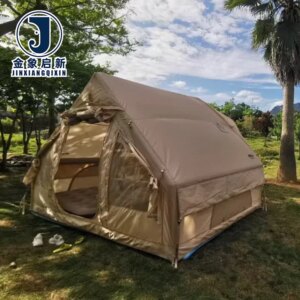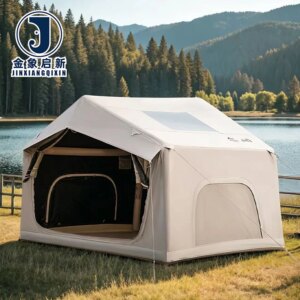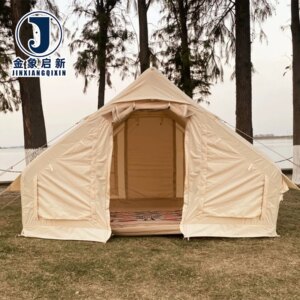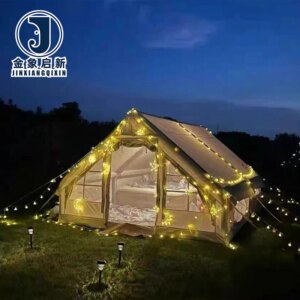




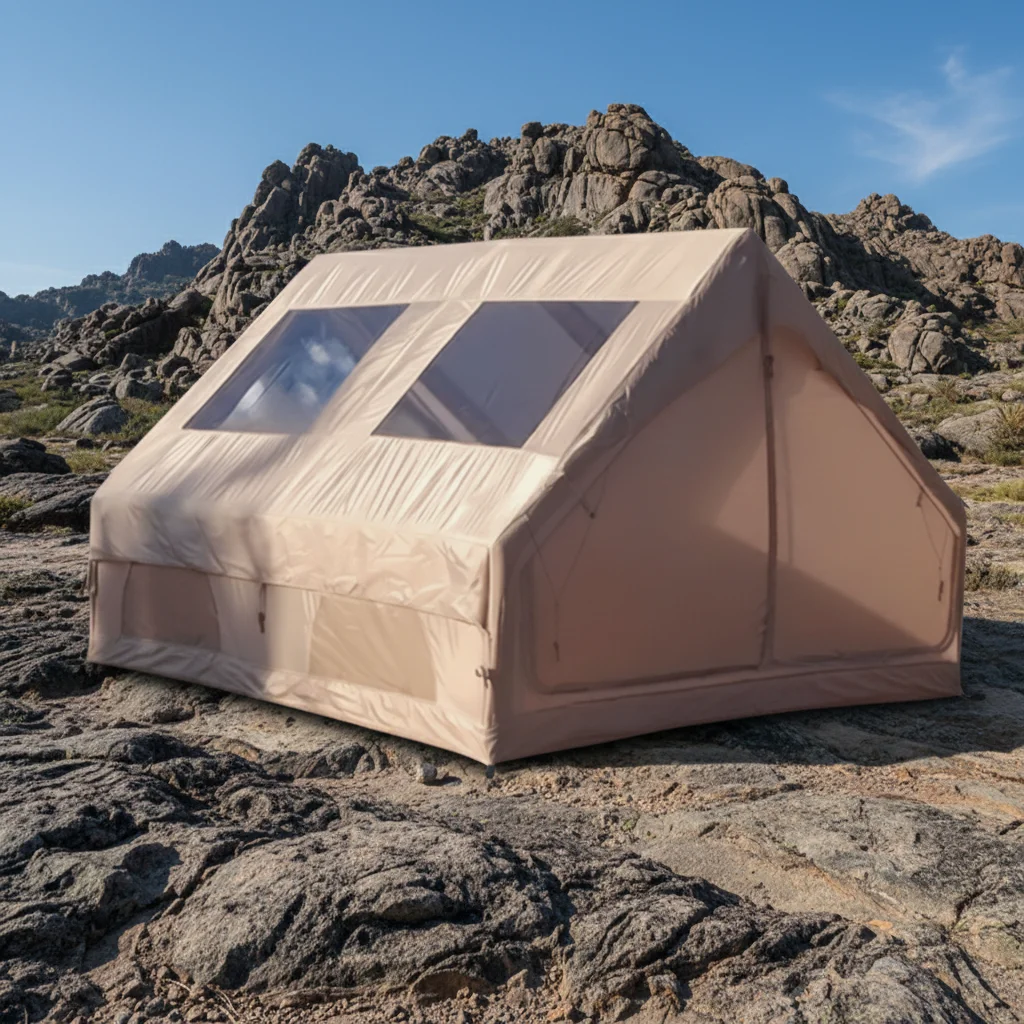
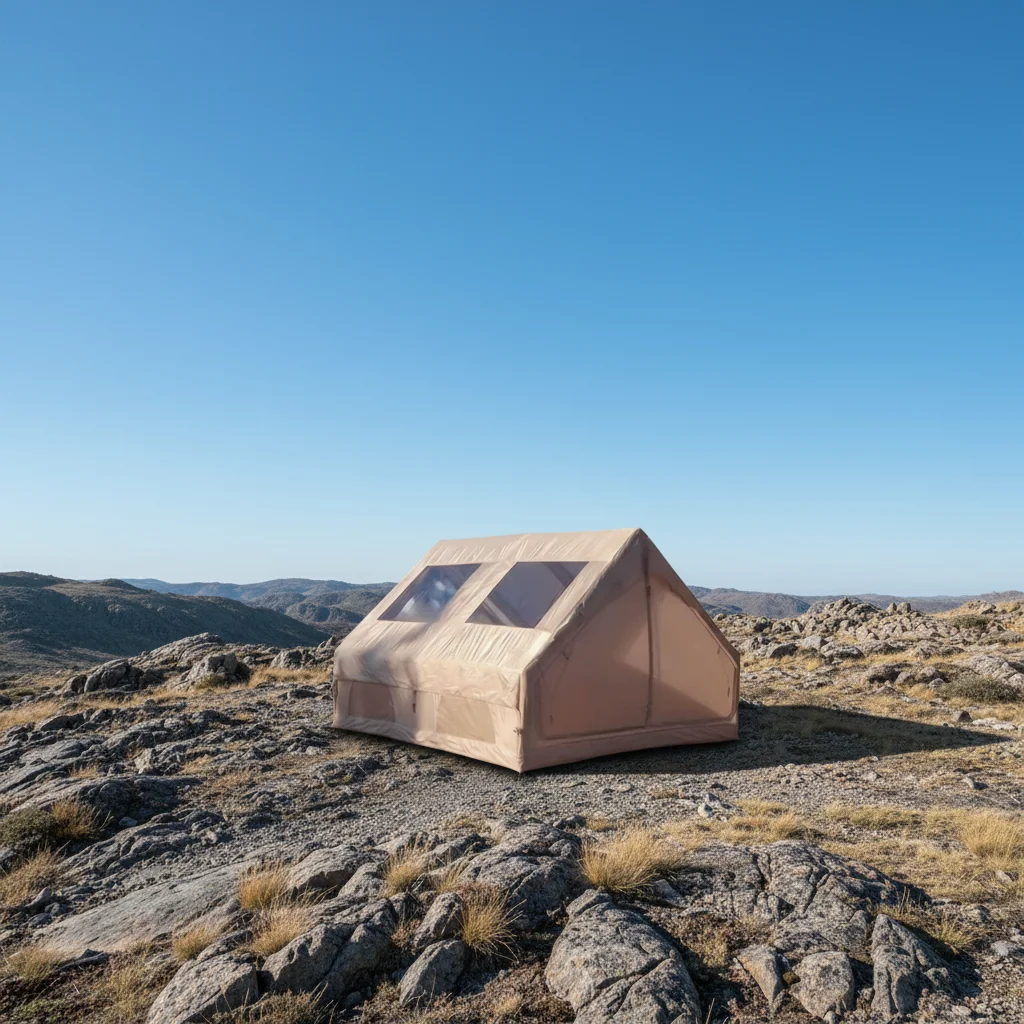
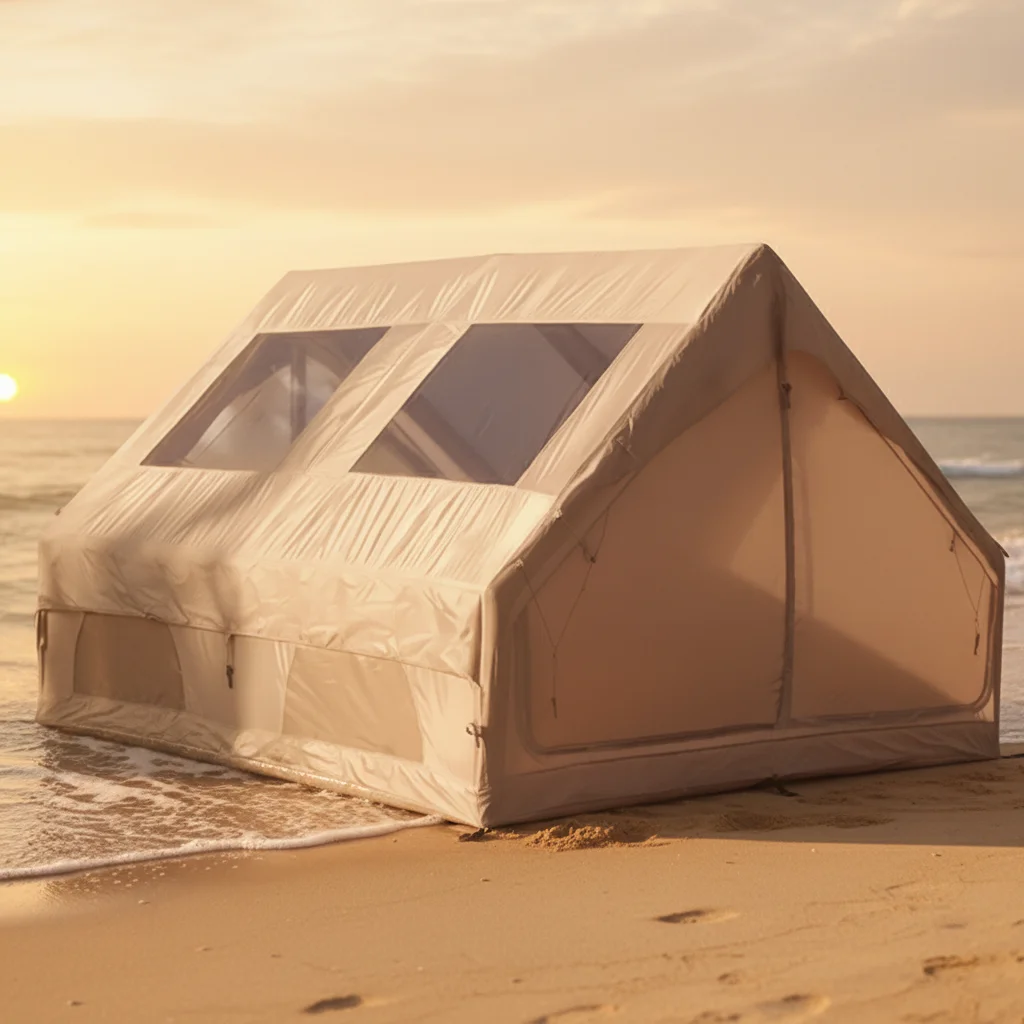
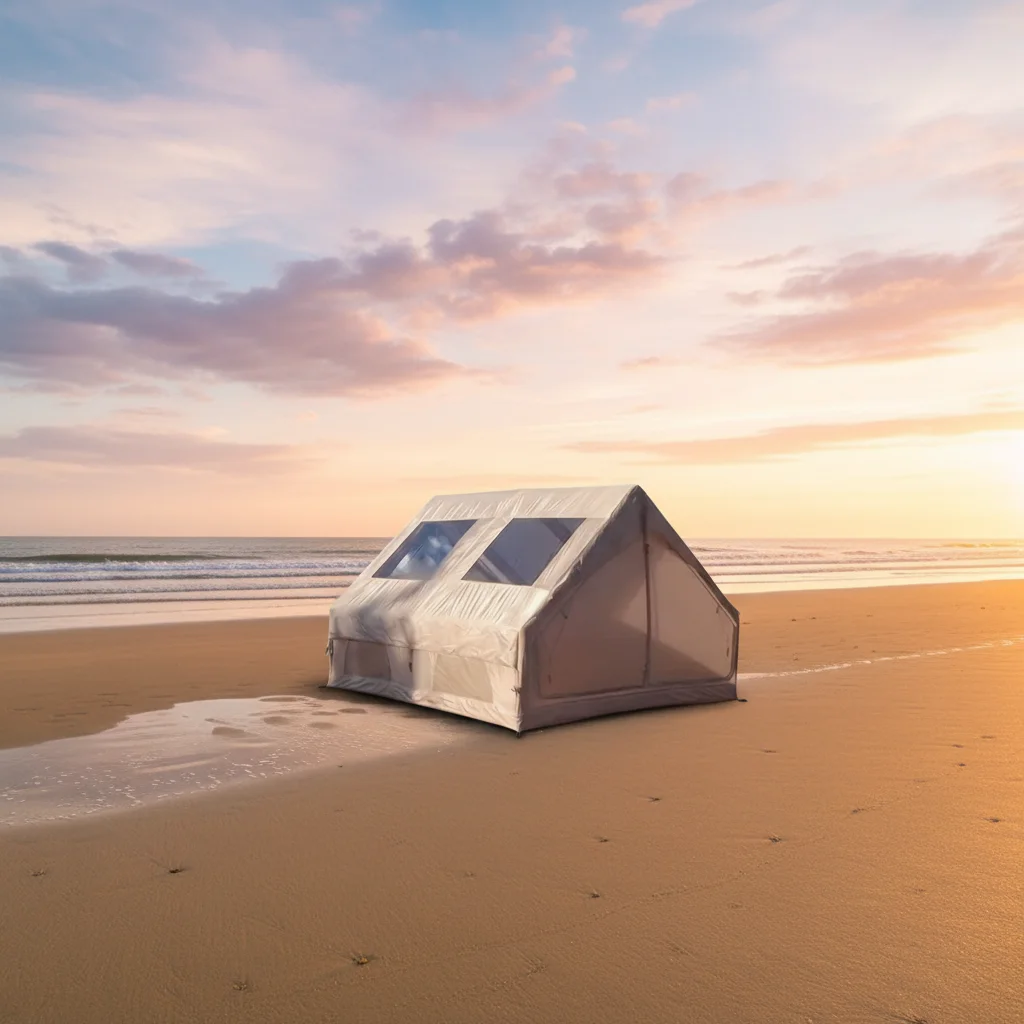
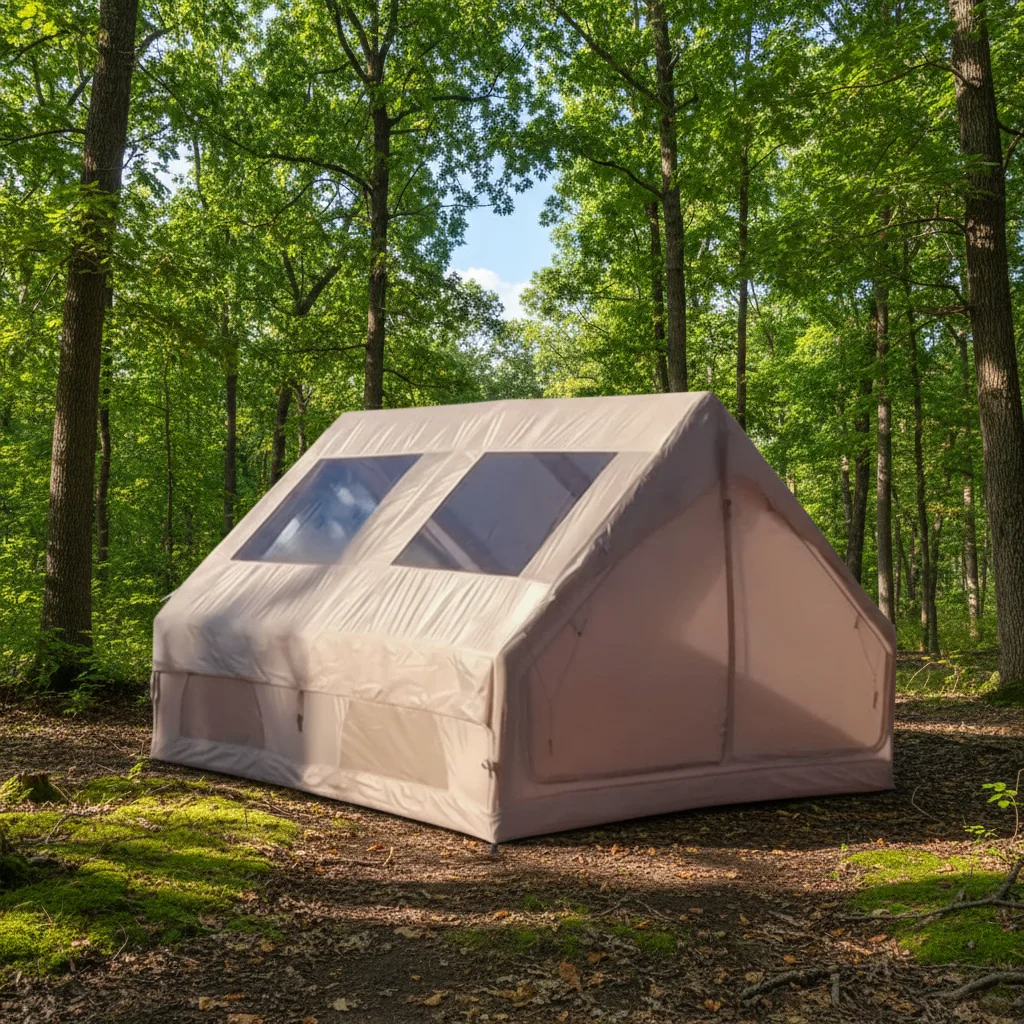

Precision-coated inflatable structure fabric — engineered for mining, aviation and emergency deployment where fire-retardant and anti-static compliance must be verified per batch, not assumed at quotation.
Technical Specifications
| Parameter | Value |
|---|---|
| Product Type | Inflatable Tent |
| Core Material | PVC Tarpaulin |
| Waterproof | Yes, fully coated construction |
| Tear-resistant | Yes |
| UV-resistant | Available — confirm test basis required for your market |
| Fire-retardant | Available — confirm the grade required for your site specification |
| Anti-static | Available — confirm the surface resistance standard applicable to your project |
| Product Form | Inflatable structure with quick automatic opening mechanism |
| Certifications | ISO 9001, ISO 14001, ISO 45001, CE |
| Customisation | OEM & ODM — sample customisation, pattern printing, material selection, product design |
| R&D Support | 10-person technical team |
Application Suitability
| Application | Exposure & Requirement |
|---|---|
| Mining & tunnelling temporary shelters | Confined underground environments, mandatory fire-retardant certification, dust and moisture exposure |
| Aviation ground support enclosures | Sensitive avionics nearby, electrostatic discharge risk, rapid deployment between operations |
| Emergency relief field shelters | All-season weather, rough handling during transport, single-person rapid inflation |
| Remote industrial staging areas | Prolonged UV and wind exposure, repeated inflation-deflation cycles, abrasive ground contact |
| Expedition & outdoor adventure bases | Sub-zero to high-temperature swings, high-altitude UV load, lightweight portability |
What Happens When Inflatable Shelter Fabric Lacks Certified Fire and Static Compliance
A structure that inflates in minutes can halt an entire project if its fabric documentation does not match the site specification.
Procurement teams regularly receive inflatable tents and ventilation-adjacent shelters with material certificates that reference generic PVC properties rather than the fire-retardant grade or anti-static standard written into the project contract. The structure passes visual inspection, inflates correctly, and is deployed — only for a site safety audit to flag the missing or mismatched test report weeks later. Rework at that stage means dismantling, resourcing compliant PVC inflatable tent aftermarket supplier inventory, and absorbing schedule penalties. [NEED_CITE: fire classification standards for temporary industrial structures] The gap between a quotation that says "flame retardant" and a test report that proves the exact grade is where most compliance failures originate.
Compliance Documentation That Travels With Every Roll
Each batch of inflatable structure fabric ships with a material specification sheet stating base fabric denier, coating weight, and the specific fire-retardant or anti-static treatment applied. Test reports are issued against the production batch — not carried over from a previous run — so the compliance paperwork matches the rolls arriving at your site. For mining and tunnelling contractors, this means the PVC inflatable tent aftermarket supplier documentation aligns with the safety officer’s audit checklist before the first tube is inflated.
Matching Fabric Treatment to the Deployment Environment
Anti-static treatment matters in aviation ground support where electrostatic discharge near fuel systems or avionics creates unacceptable risk. Fire-retardant grades vary between markets: a specification written for Australian mining will reference a different standard than one for European event staging. Our technical team reviews your project specification and recommends the treatment grade before sampling, so the PVC inflatable tent fabric selected is the one your compliance team will approve — not one that requires substitution after delivery. [NEED_CITE: anti-static surface resistance testing standards for industrial fabrics]
How Base Fabric and Coating Weight Define Structural Behaviour
The tensile and tear performance of an inflatable shelter depends on the base fabric denier and weave density together, not on coating weight alone. A heavier PVC coating improves abrasion resistance and waterproofing but adds stiffness that affects how the tube folds and re-inflates in cold conditions. Knife-coated PVC achieves higher peel strength between coating and yarn, which matters at welded seams where inflation pressure concentrates stress. The relationship between base fabric count and coating adhesion determines whether a seam holds through repeated inflation cycles or begins to delaminate at the flex point. Specifying GSM without reference to the base fabric construction can result in a material that meets the weight target on paper but tears along the weld under operational load.
The Hidden Cost of Specifying Fabric on Weight Alone
When an inflatable shelter is specified only by PVC weight, the base fabric construction and coating adhesion method are left to the supplier’s discretion. This leads to rolls that meet the stated GSM but use a lower-denier yarn with higher coating fill, producing a material that punctures more easily under ground contact and delaminates at heat-welded seams after repeated inflation. For emergency relief deployments, a seam failure in the field means the shelter is non-functional until a replacement arrives — a delay measured in days, not hours. In mining applications, specifying fabric without confirming the fire-retardant test standard can result in an entire batch being rejected at the site gate, forcing emergency resourcing at premium lead times. [NEED_CITE: tensile and tear test methods for coated fabrics per ISO 1421]
Why Technical Buyers Source Inflatable Fabric Here
Three full production lines and 36 sets of processing equipment allow us to hold batch consistency across large-volume inflatable fabric orders without splitting production across multiple runs. A 10-person R&D team handles material selection, pattern printing, and geometry-specific sampling so you evaluate the exact fabric against your tube design before committing to bulk. Dedicated QA and QC staff inspect every production stage — coating weight, adhesion, treatment application — with 100% pre-shipment inspection and a documented record per roll. We develop samples within days for custom fire-retardant or anti-static requirements, giving you physical material to test against your inflation rig and compliance checklist before the order enters production. Nearly 30 years of coated fabric process control means coating weight and adhesion parameters are managed at the line, not adjusted after the fact to meet a price point.
Documentation & Verification
- Material specification sheet stating base fabric, coating weight, and treatment per batch
- Fire-retardant test report issued against the specific production run
- Anti-static surface resistance report matched to order batch number
- ISO and CE certificates available for download and independent verification
- Pre-shipment inspection record with 100% QC coverage before dispatch
- Certificate of origin and customs documentation for cross-border shipment
Fabrication, Handling & Storage
- Heat-weld seams at manufacturer-recommended temperature to maintain PVC coating adhesion on inflatable tubes
- Store rolls upright on pallets to prevent permanent creasing of the coated surface
- Allow cold-stored fabric to reach ambient temperature before unrolling to avoid coating crack
- Use compatible PVC adhesive for field patch repairs on punctured inflatable tube sections
- Plan cutting layout to minimise transverse seams across high-stress inflation zones
Preparing Your Inflatable Fabric Enquiry
Provide your project specification including the fire-retardant grade and anti-static standard required by the site safety authority. Specify the inflatable tube diameter and overall structure geometry so we can recommend base fabric denier and coating weight suited to the inflation pressure and deployment cycle frequency. Indicate whether you require raw roll stock for your own fabrication or finished cut-and-welded panels ready for assembly.
Frequently Asked Questions
Q: Which fire-retardant grade does my inflatable shelter project require and how is it verified?
A: The required grade depends on your jurisdiction and application — mining, aviation and event staging each reference different standards. We review your project specification, recommend the applicable grade, and issue a batch-specific test report so your compliance team can verify the fabric before installation. Confirm the standard early in the sampling stage to avoid substitution delays.
Q: How is anti-static performance measured for inflatable structure fabric?
A: Anti-static performance is assessed by measuring surface resistance against the standard applicable to your operating environment. Aviation and mining sites typically require different threshold values. We treat the PVC coating to meet the specified range and provide a test report tied to the production batch for your safety audit documentation.
Q: What documentation ships with each batch for site compliance audits?
A: Every shipment includes a material specification sheet, fire-retardant or anti-static test report matched to the batch, pre-shipment inspection record, and relevant ISO or CE certificates. These documents are prepared per order rather than carried from previous runs, ensuring the paperwork matches the physical material arriving at your site.
Q: Can inflatable structure fabric be customised for specific tube or membrane geometries?
A: Yes. Our R&D team supports OEM and ODM customisation including material selection, custom width, pattern printing, and product design. We develop physical samples for your evaluation against the specific inflation geometry and pressure requirements before the bulk order enters production, reducing the risk of fitment issues at fabrication stage.
Q: How do I validate seam integrity for inflatable applications before committing to bulk?
A: Request a sample panel with heat-welded seams produced to the same parameters as bulk production. Test inflation cycles and peel strength at the weld line to confirm the seam holds under your operating pressure. We provide fabrication parameter guidance with each sample so your production team can replicate consistent weld quality at scale.