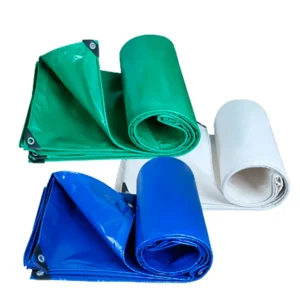

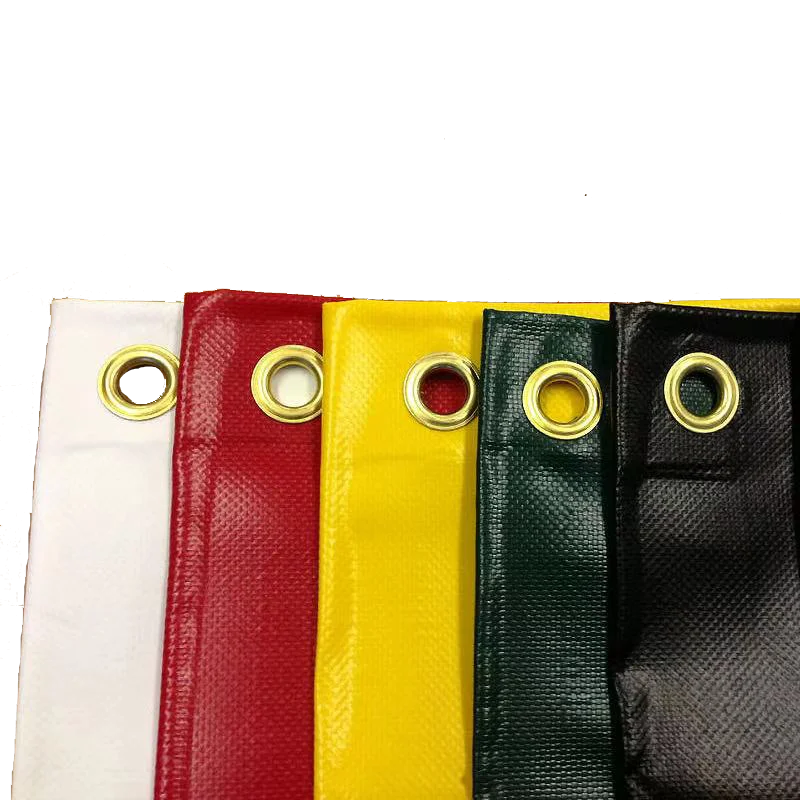
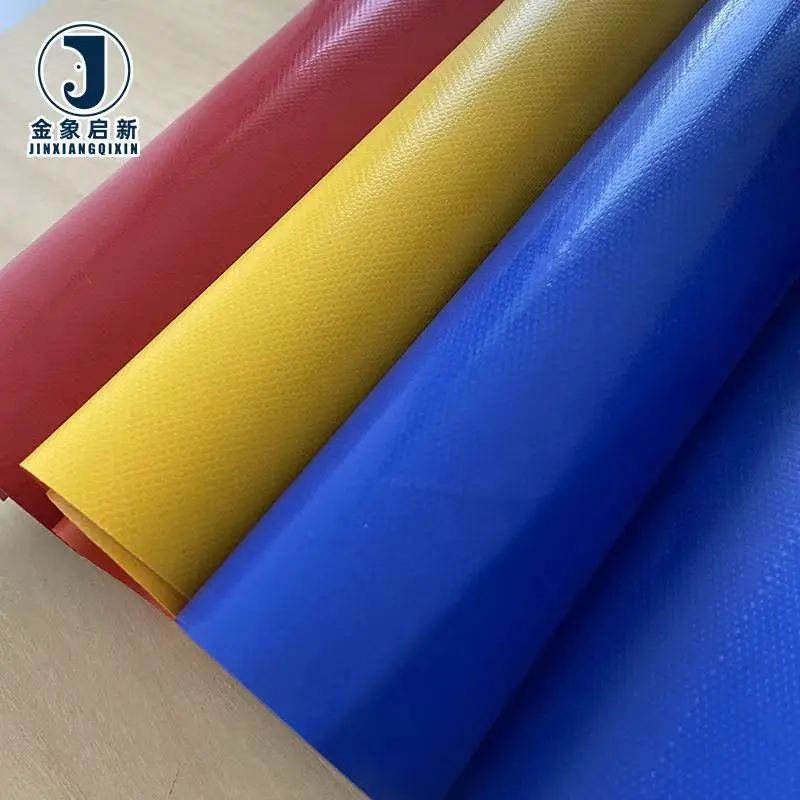
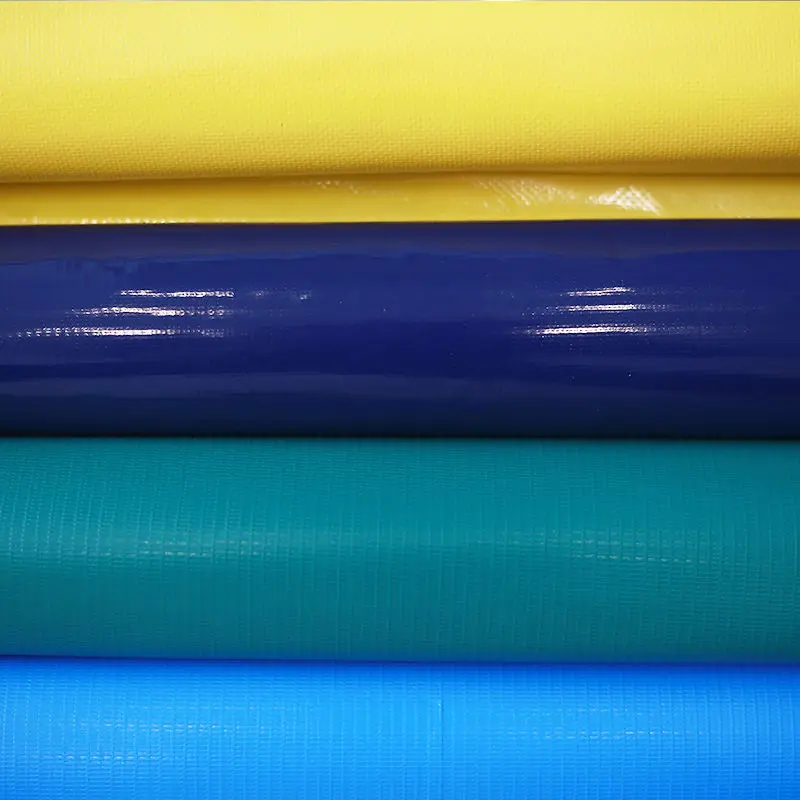
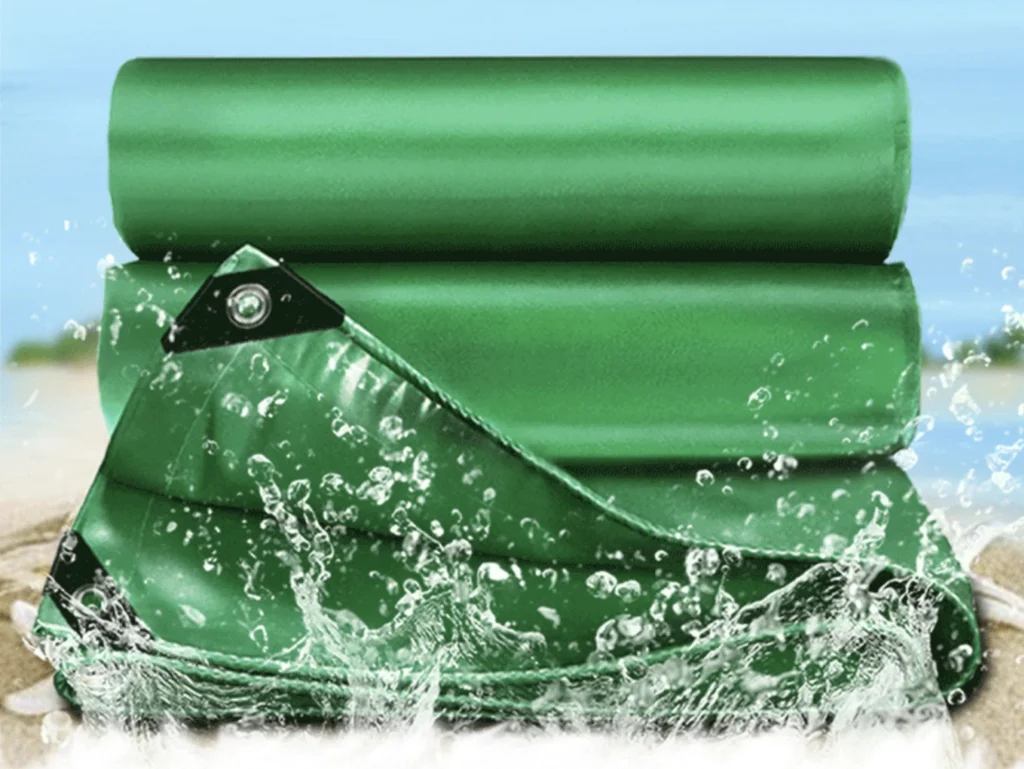
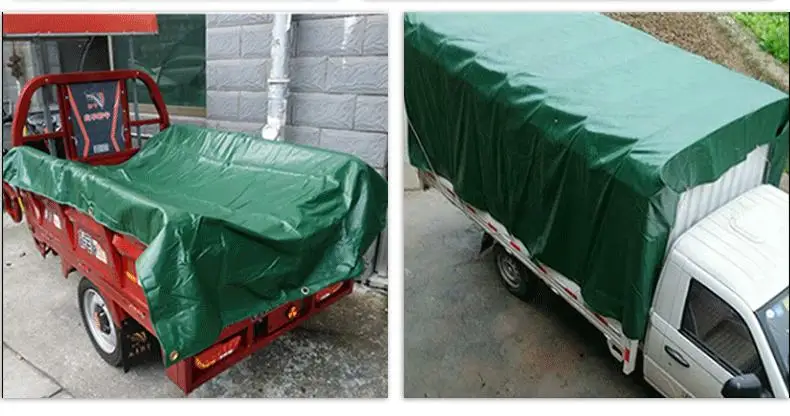
Coating Weight Control — Every roll of 300-600gsm PVC Knife Coated Tarpaulin passes through dedicated QA checkpoints where GSM, coating adhesion and treatment verification are confirmed against the material specification sheet before dispatch.
Technical Specifications
| Parameter | Value |
|---|---|
| Product Type | PVC Knife Coated Tarpaulin |
| Weight Range | 300-600 GSM (confirm the grade for this item) |
| Coating Method | Knife Coated |
| Coating Material | PVC |
| Base Fabric Reference | 1000×1000 |
| Flame Retardant | Available (grade not stated — confirm required standard) |
| Anti-Static | Available (surface resistance specification not stated) |
| Anti-Cold | Available |
| Anti-Mildew | Available |
| UV Treatment | Anti-UV (test basis not stated) |
| Waterproof | Yes |
| Oilproof | Yes |
| Tear Resistance | Tear-Resistant (test standard not stated) |
| Form | Roll or Customization |
| Certifications | ISO, CE |
Application Suitability
| Application | Exposure & Requirement |
|---|---|
| Mining ventilation duct | Continuous airflow, dust loading, mandatory fire-retardant and anti-static compliance |
| Tunnelling ventilation duct | High humidity, confined space, certified flame retardant required |
| Aviation ground-support ducting | Fuel-vapour proximity, anti-static specification, frequent repositioning |
| Inflatable structures | Internal pressure cycling, UV exposure, repeated inflation and deflation flex |
| Membrane structures | Long-term tensioning, wind load, weather and UV exposure |
What "Fire-Retardant" Means Without a Grade Behind It
A fabric is only fire-retardant if the test report matches the standard your site inspector is enforcing.
Ventilation ducts in mining and tunnelling environments require certified compliance — not marketing claims. When a duct arrives on site without a matching test report, work halts, the inspector rejects the installation, and the contractor faces delays and replacement costs. PVC knife-coated fabric can be treated to meet various flame-retardant grades, but the treatment must be specified by the standard your project demands. Confirming the applicable grade before ordering prevents costly re-supply situations [NEED_CITE: fire classification standards for ventilation duct materials in mining and tunnelling].
Coating Adhesion Under Duct Flexing Cycles
Ventilation ducts undergo constant flexing as airflow pressure fluctuates and the fabric shifts along support rings. PVC knife-coated fabric engineered for this application must maintain coating-to-base-fabric adhesion through thousands of flex cycles. Knife coating forces PVC paste directly into the base fabric weave, creating a mechanical bond that resists delamination far better than laminated alternatives. When adhesion fails, the coating separates from the base fabric at flex points, exposing the yarn structure to moisture and abrasion.
Anti-Static Treatment for Confined Environments
Mining and tunnelling ducts operate in environments where static charge accumulation presents an ignition risk. Anti-static treatment on PVC knife-coated fabric reduces surface resistivity, allowing charge to dissipate rather than build to a discharge point. The required surface resistance value depends on your local mining or tunnelling regulations. Request the anti-static test certificate that corresponds to your site’s compliance framework before placing a production order.
Reading the Specification Beyond GSM
Weight alone tells you nothing about how a duct fabric will perform under tension or flex. The 1000×1000 base fabric reference indicates the warp and weft yarn count per unit area — a denser weave distributes load across more yarns, reducing the chance of tear propagation from a single cut or puncture. Knife coating adds PVC weight to both faces, so a higher GSM may simply mean thicker coating rather than a stronger base fabric. For duct applications, the balance between base fabric denier and coating weight determines weld seam integrity: too much coating relative to yarn thickness means the heat-weld fuses the PVC layer but not the fabric underneath, creating a joint that fails before the body of the material does [NEED_CITE: tensile and tear test methods for coated fabrics per ISO 1421].
The Hidden Cost of Underspecified Duct Fabric
When a ventilation duct tears at a weld seam three months into a tunnelling project, the direct replacement cost is only the beginning. The crew must halt face advance, remove the damaged section, splice in a repair, and document the incident for the safety record. Duct fabric specified solely on price per metre — without verifying coating adhesion, base fabric density, or treatment certification — tends to fail at exactly the stress concentration points where flex is greatest. Batch-to-batch inconsistency in coating weight compounds the problem: one roll welds cleanly, the next peels apart at the seam [NEED_CITE: common failure modes in flexible ventilation duct installations].
Why Source This PVC Knife-Coated Fabric Here
Three full production lines and 36 sets of professional equipment handle bulk roll orders with consistent on-time dispatch, so multi-roll duct or membrane projects stay on schedule. A 10-person R&D team supports material selection and sample development for projects that demand a specific fire-retardant grade or anti-static surface resistance. Dedicated QA/QC at every production stage — with 100% pre-shipment inspection covering weight, coating adhesion, and treatment verification — means the roll you receive matches the specification you approved. Custom widths and lengths are produced to order, reducing on-site waste and splice joints in long duct runs.
Documentation & Verification
- Material specification sheet stating GSM, base fabric denier, coating method, and applicable treatment grade
- Fire-retardant test report matched to your site’s required standard, provided per order
- Anti-static surface resistance certificate for mining or tunnelling duct applications where applicable
- Pre-shipment inspection record covering roll weight, coating adhesion, and colour consistency
- Certificate of origin and customs documentation for export shipments
- Roll packing list detailing roll count, weight, and dimensions per shipment
Fabrication, Handling & Storage
- Heat-weld parameters must account for the PVC coating thickness across the 300-600 GSM range to ensure full seam fusion
- Store rolls upright on end-caps to prevent flat-spot deformation of the knife-coated surface
- Allow cold-stored rolls to reach ambient temperature before unrolling to avoid coating micro-cracking
- Use compatible PVC solvent or hot-air welding for field repairs on duct seams and membrane joints
- Plan cutting layouts around roll width to minimise offcuts and weld joints in large membrane panels
- Clean coated surfaces with neutral-pH detergent to preserve anti-UV and anti-static treatment integrity
Requesting a Quotation
Provide your project’s ventilation duct diameter, run length, and the specific fire-retardant or anti-static standard your site inspector enforces. Include required roll width if you are fabricating ducts in-house, or supply duct dimensions if you need finished sections. Confirming the applicable compliance standard upfront ensures the correct treatment grade is applied and documented.
Frequently Asked Questions
Q: Which fire-retardant grade does my mining or tunnelling project require, and can you supply the matching test report?
A: The required grade depends on your local mining authority or tunnelling specification. We offer flame-retardant treatment options and can supply the corresponding test report once you confirm which standard applies to your project. Share the relevant regulation with your inquiry so we match the treatment and documentation accordingly.
Q: How is anti-static performance measured and certified on the finished duct fabric?
A: Anti-static performance is evaluated by measuring surface resistance of the coated fabric. We provide a test certificate stating the measured value once the applicable standard for your site is confirmed. Specify your mining or tunnelling regulation at inquiry stage so the correct treatment and certification are applied.
Q: Can you fabricate the duct to our diameter and length, or do you supply roll stock only?
A: We supply PVC knife-coated fabric in roll form and can also provide custom-sized panels or finished duct sections. Share your duct diameter, length, and connection method with your inquiry, and we will recommend the most efficient supply format for your installation.
Q: How do you ensure batch-to-batch colour and coating consistency across large ventilation duct orders?
A: Every production run passes through in-process QA checkpoints covering coating weight, colour, and adhesion. A 100% pre-shipment inspection verifies roll-to-roll consistency before dispatch. For multi-roll orders, request the inspection record to confirm uniformity across your batch.
Q: What GSM and base fabric denier do you recommend for flexible air duct versus membrane structure applications?
A: Flexible ducts generally use lighter grades that flex easily around support rings, while membrane structures call for heavier grades that sustain long-term tension. Share your application, span, and exposure conditions so we recommend the appropriate grade from the 300-600 GSM range.