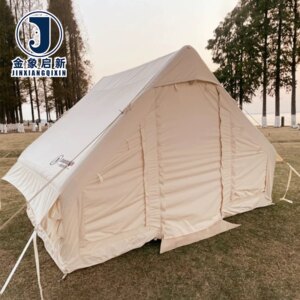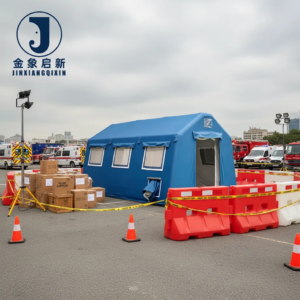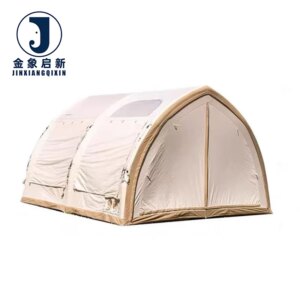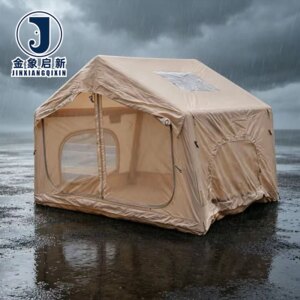
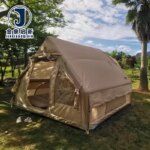
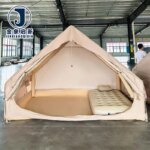
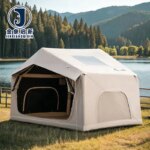
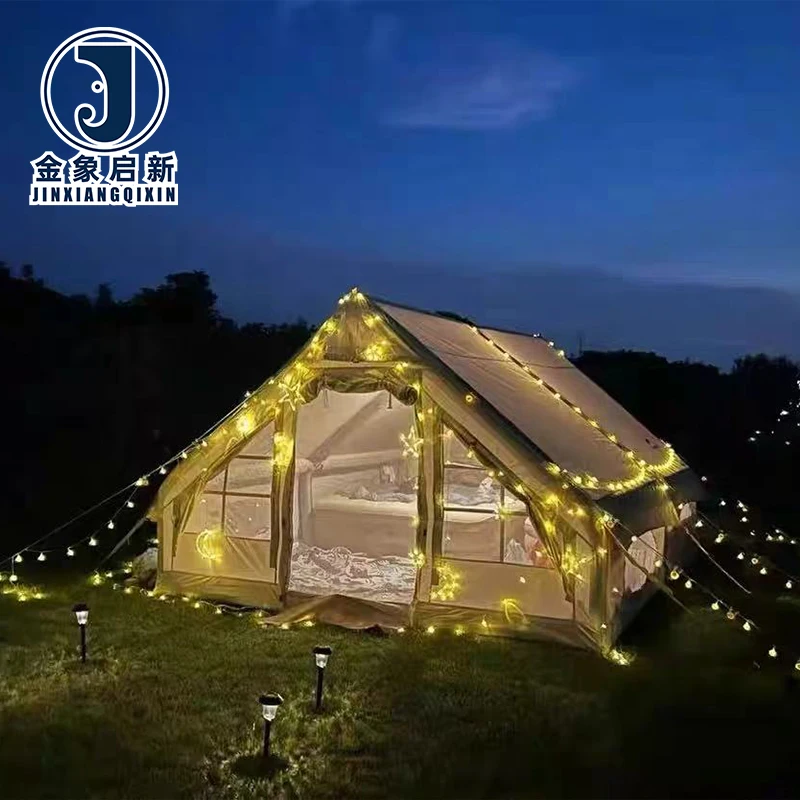
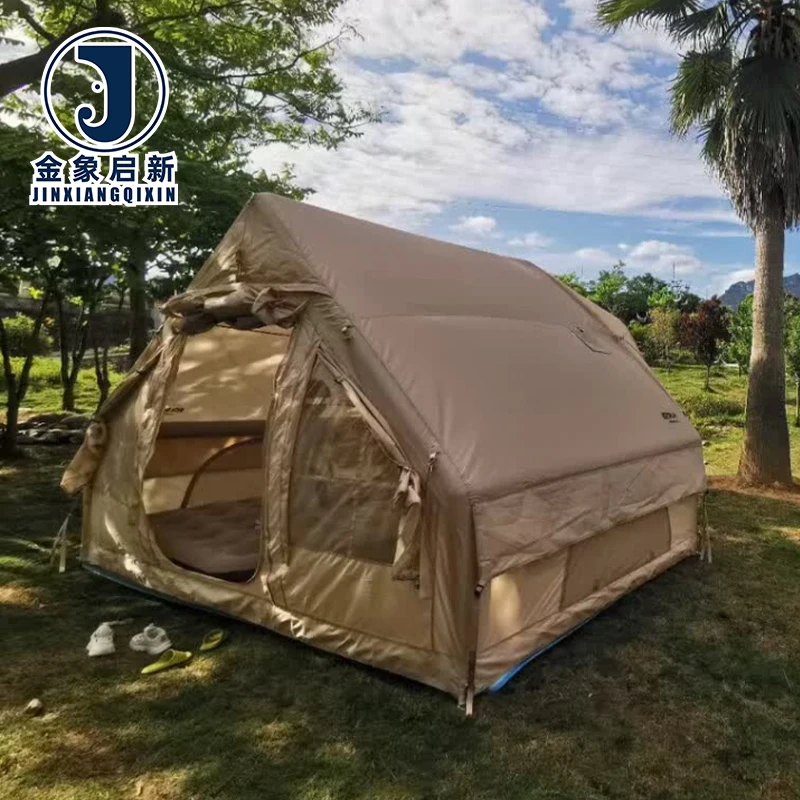
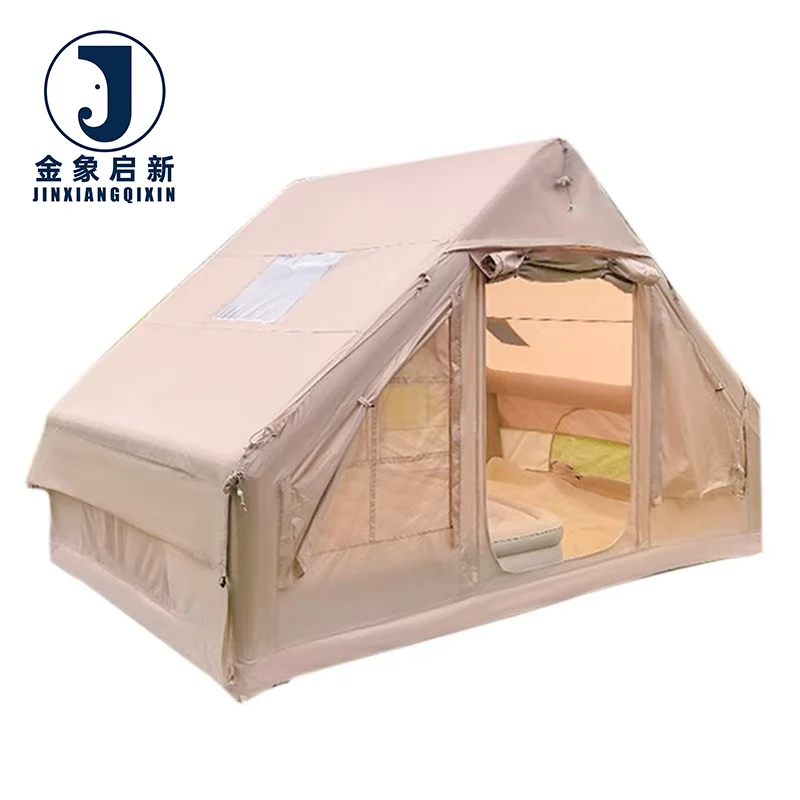
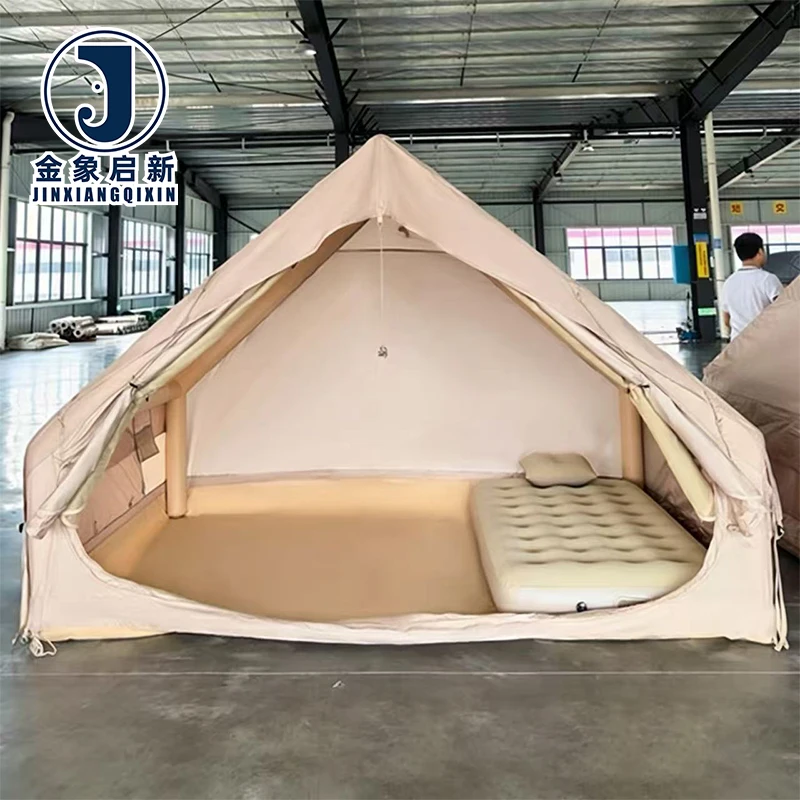
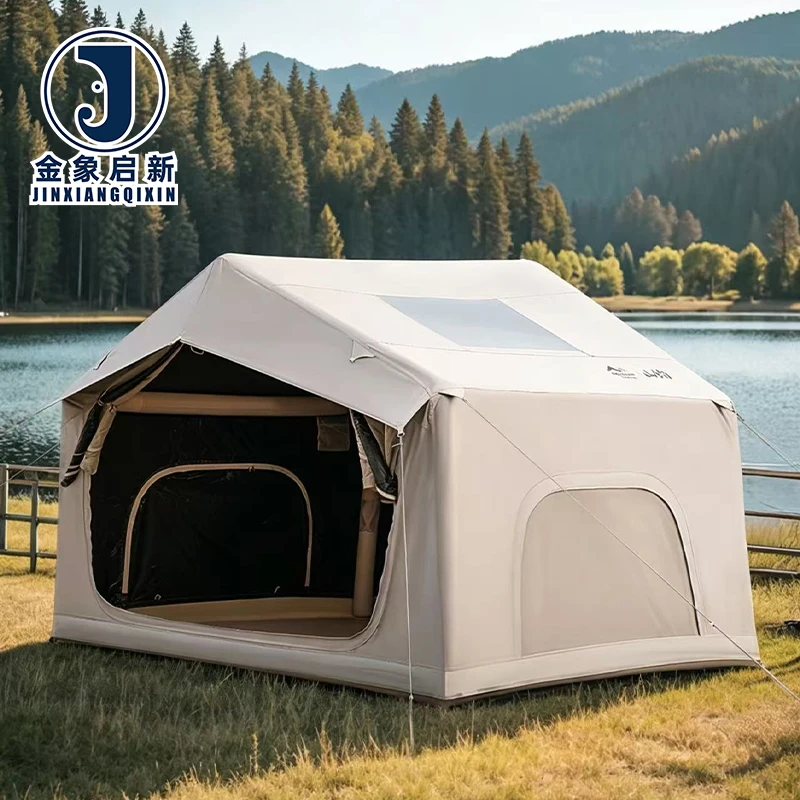
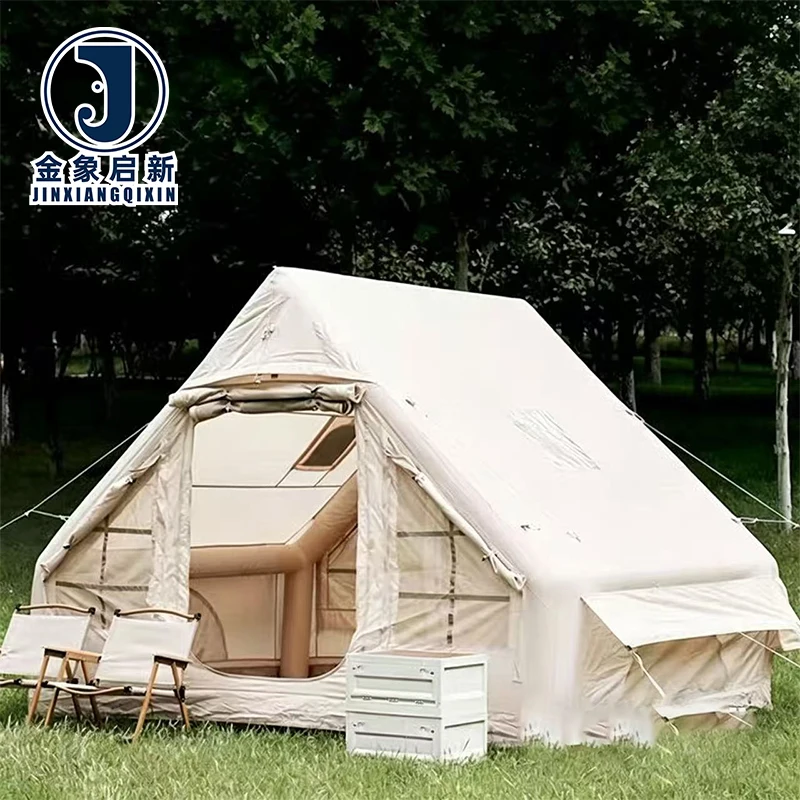
Proven coating adhesion — nearly 30 years of PVC formulation control ensures each inflatable tent fabric roll ships with verified fire-retardant and anti-static certification documentation.
Technical Specifications
| Parameter | Value |
|---|---|
| Product Type | Inflatable Tent |
| Core Material | PVC tarpaulin |
| Waterproof Performance | Fully coated, waterproof construction |
| UV Resistance | UV-resistant treatment (test basis not stated — confirm grade for your market) |
| Fire Retardancy | Fire-retardant PVC formulation (grade not stated — available in tested grades on request) |
| Anti-Static Performance | Anti-static treatment (standard not stated — confirm requirement for your project) |
| Tear Resistance | Tear-resistant fabric construction |
| Capacity | 4–6 Person |
| Opening Mechanism | Quick Automatic Opening |
| Customization | OEM & ODM, sample customization, pattern printing |
| Production Lines | 3 full production lines |
| Processing Equipment | 36 sets of professional equipment |
| R&D Team | 10 technicians |
| Quality Control | Full-process QA & QC with dedicated on-site staff |
| Certifications | ISO 9001, ISO 14001, ISO 45001, CE |
Application Suitability
| Application | Exposure & Requirement |
|---|---|
| Mining and tunnelling inflatable shelters | Enclosed confined spaces requiring fire-retardant and anti-static compliance, frequent relocation |
| Aviation ground support inflatable structures | Certified technical fabric documentation for regulatory handover, wind and weather exposure |
| Specialist membrane and inflatable structures | Documented material performance, structural loading during inflation cycles |
| Commercial recreational inflatable tent production | Bulk consistency across production runs, waterproof and UV-resistant performance in summer conditions |
Why "Fire Retardant" Without a Certified Grade Is a Compliance Risk
Certified inflatable tent fabric must ship with batch-specific test reports — a claim on a data sheet is not enough for site acceptance.
Purchasing teams for mining, tunnelling and aviation projects routinely receive fabric described as fire retardant, only to discover at site inspection that no test report accompanies the shipment. The inflatable tent fabric fire retardant anti-static certified specification you require must match the compliance framework enforced on your project, whether that is a local building code, a mine safety regulation or an aviation ground-handling standard. Without documented proof tied to the specific batch delivered, the structure fails inspection and the contractor absorbs the delay and replacement cost [NEED_CITE: fire classification standards for temporary membrane structures].
What Certification Documentation Actually Covers on Site
When a mining contractor specifies inflatable tent fabric fire retardant anti-static certified material for an underground refuge chamber, the site safety officer checks two things: the flame-spread classification on the test report and the surface resistivity value for anti-static compliance. Both must reference the batch number matching the roll labels on site. Our material specification sheet states the PVC coating formulation, the base fabric construction and the treatment type, so your compliance team can cross-reference the delivered rolls against the project specification before inflation testing begins.
How Anti-Static Performance Is Verified Before Dispatch
Anti-static treatment in inflatable tent fabric fire retardant anti-static certified applications matters wherever enclosed structures accumulate charge from airflow, occupant movement or dry atmospheric conditions. The relevant surface resistance standard varies by jurisdiction and by the hazard classification of the installation environment [NEED_CITE: surface resistivity test methods for anti-static coated fabrics]. We supply batch-specific test data showing the measured surface resistance so your engineering team can confirm the material meets the threshold required by your site safety plan before the structure is erected.
Reading the Specification Sheet Beyond the Headline Claims
The PVC tarpaulin base fabric provides the structural backbone of any inflatable tent, and its performance depends on the relationship between the base fabric denier, the weave density and the coating weight applied to each side. A heavier coating does not automatically mean higher tear strength — if the base fabric is loosely woven, the coating fills the gaps without adding meaningful resistance to tear propagation. The knife-over-roll or calender coating method selected for each production run determines the coating adhesion strength, which directly affects how well the material withstands repeated inflation and deflation cycles without delamination. Fire-retardant grades are formulated into the PVC compound during the coating stage, and the specific grade must be confirmed against the market requirement — a grade accepted in one jurisdiction may not satisfy the classification demanded in another. UV-resistant additives are similarly compounded into the coating, and their effectiveness depends on the concentration and the stabiliser system used [NEED_CITE: ISO 1421 tensile and tear test methods for coated fabrics]. The waterproof performance of the finished fabric is a function of full surface coating coverage with no pinholes or thin spots, validated through our in-process quality checks at every production stage.
The Hidden Cost of Specifying on Price Per Kilogram Alone
When inflatable structure fabric is selected primarily on cost per kilogram, the material that arrives often carries a lighter coating than the quotation suggested, because the supplier compensated for the lower price by reducing coating weight. The result is a fabric that passes the initial inflation test but develops pinhole leaks after repeated setup cycles, or a fire-retardant claim that cannot be substantiated when the site inspector asks for the test certificate. Welded seams on under-coated fabric tend to fail before the body of the material does, because there is insufficient PVC mass at the overlap to form a reliable bond [NEED_CITE: welded seam peel strength on coated PVC tarpaulin]. Batch-to-batch colour variation is another consequence of cost-driven production — rolls from different batches installed side by side on a large inflatable structure show visible shade differences that compromise the professional appearance of the finished installation.
Why Technical Buyers Source This Fabric Here
Three full production lines and 36 sets of processing equipment give us the capacity to fulfil large inflatable structure orders within typical multi-week lead times without splitting your order across multiple facilities. Our 10-person R&D team develops custom samples within days, adjusting material thickness, pattern printing and colour to your exact specification before mass production begins. Dedicated QA and QC staff inspect every roll at every production stage, not just at final packing, so coating weight, colour consistency and treatment verification are checked continuously through the run. Full-process quality inspection with 100% pre-shipment verification means the rolls you receive match the specification you approved, with documentation to prove it. Nearly 30 years of focused coated fabric production gives us the process depth to maintain adhesion and coating consistency across the volumes that commercial inflatable structure projects demand.
Documentation & Verification
- Material specification sheet stating GSM, base fabric denier, coating weight and treatment type for each roll
- Batch-specific test reports for flame retardancy and anti-static surface resistance shipped with each order
- ISO 9001, ISO 14001, ISO 45001 and CE documentation for customs clearance and project compliance filing
- Pre-shipment inspection record with 100% QA/QC verification logged before dispatch
- Roll packing list with batch traceability for on-site material reconciliation
Fabrication, Handling & Storage
- Heat-weld seams at temperature and speed settings matched to the PVC coating weight for reliable bond strength
- Store rolls upright on pallets to prevent permanent creasing in the PVC tarpaulin coating layer
- Allow cold-transported rolls to reach ambient temperature before unrolling to avoid coating cracking
- Use PVC-compatible cleaners only to protect the UV-resistant and fire-retardant treatment on the surface
- Plan panel cutting layout to minimise welded seams at high-stress inflation points on the structure
What We Need to Prepare Your Quotation
To specify the right inflatable tent fabric for your application, share the installation environment — underground, aviation apron, or open-air recreational — and the fire-retardant or anti-static classification your project demands. Confirm the required roll width, annual volume and whether you need sample yardage for welding trials before committing to full production. If pattern printing or custom colour matching is part of your design, provide the reference files so our R&D team can prepare a production sample for your approval.
Frequently Asked Questions
Q: What fire-retardant grade does the inflatable tent fabric carry and does it meet my site compliance requirement?
A: Our PVC tarpaulin is available in fire-retardant grades, and the specific grade is confirmed per batch with a test report. Share the standard or classification required by your site authority, and we will supply the corresponding test documentation with your shipment.
Q: How is anti-static performance measured and what surface resistance standard applies?
A: Anti-static performance is measured as surface resistivity, and the applicable threshold depends on your installation hazard classification. Provide the standard reference required by your project, and we will include batch-specific surface resistance data with the delivery documentation.
Q: Can I receive batch-specific test data for UV resistance and tensile strength before committing to full production?
A: Yes. We supply batch-specific test data covering UV resistance, tensile strength and other performance parameters on request. Confirm which test methods your engineering team requires, and we will prepare the documentation before mass production begins.
Q: What OEM and ODM customisation options are available for this inflatable tent fabric?
A: We offer sample customisation, material thickness adjustment, custom width and pattern printing. Our R&D team develops a production sample for your approval before full-order manufacturing, ensuring the finished fabric matches your design and performance specification.
Q: How do you ensure roll-to-roll colour and coating consistency across a large inflatable structure order?
A: Every roll passes through dedicated QA and QC checkpoints during production, with coating weight and colour checked continuously. A 100% pre-shipment inspection verifies consistency across the entire order before dispatch, and the inspection record ships with your documentation.