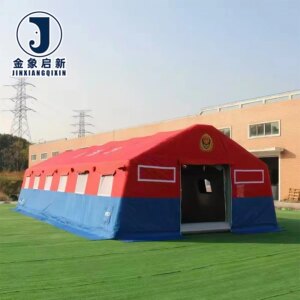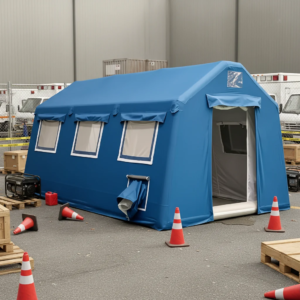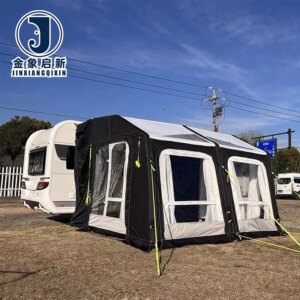


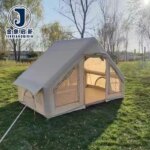
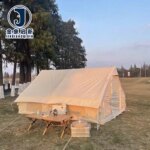
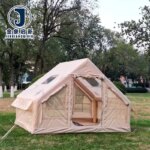
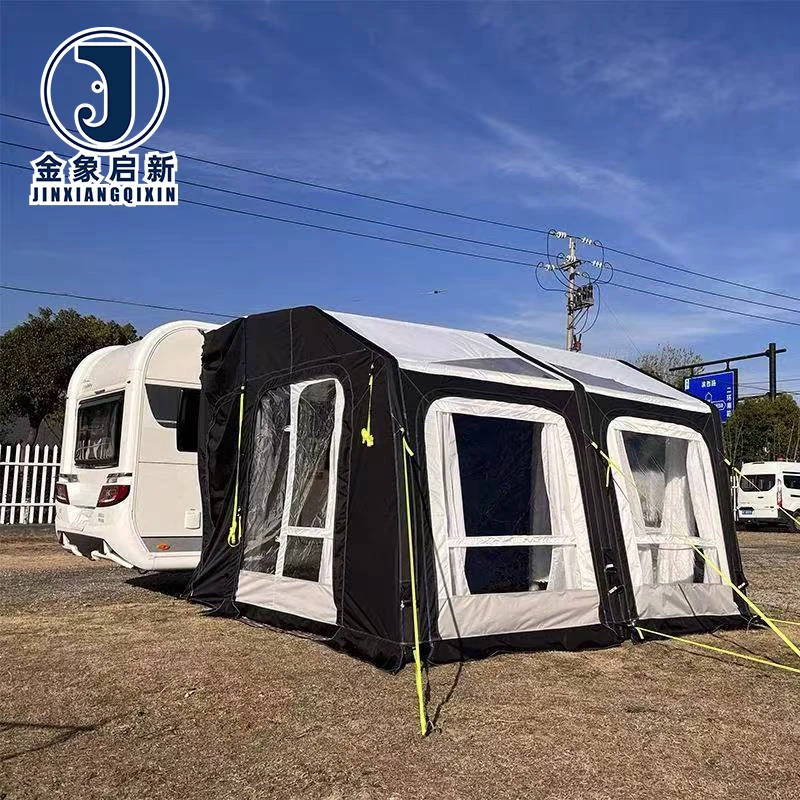
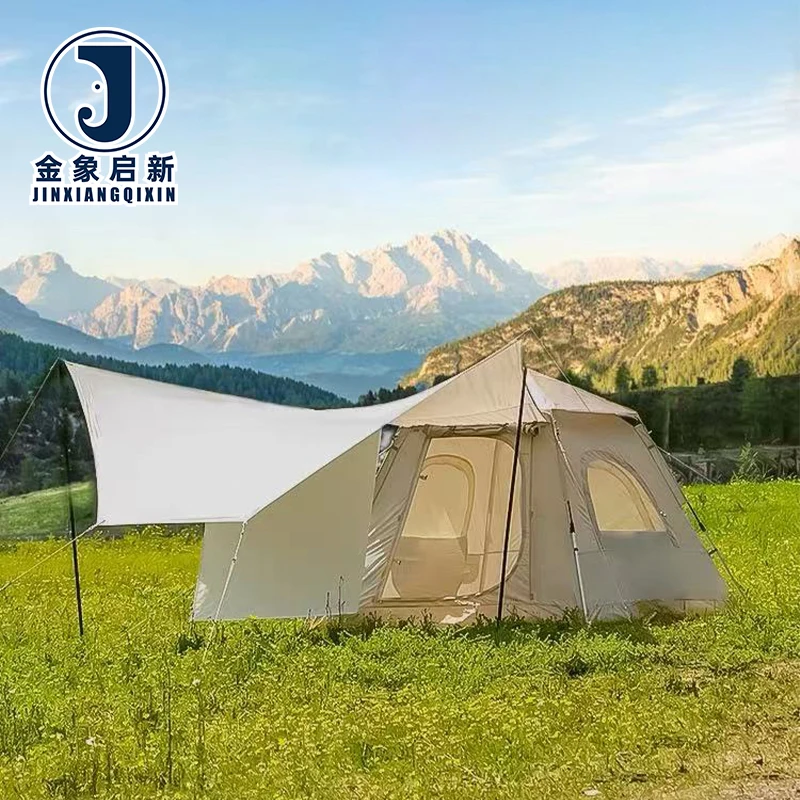
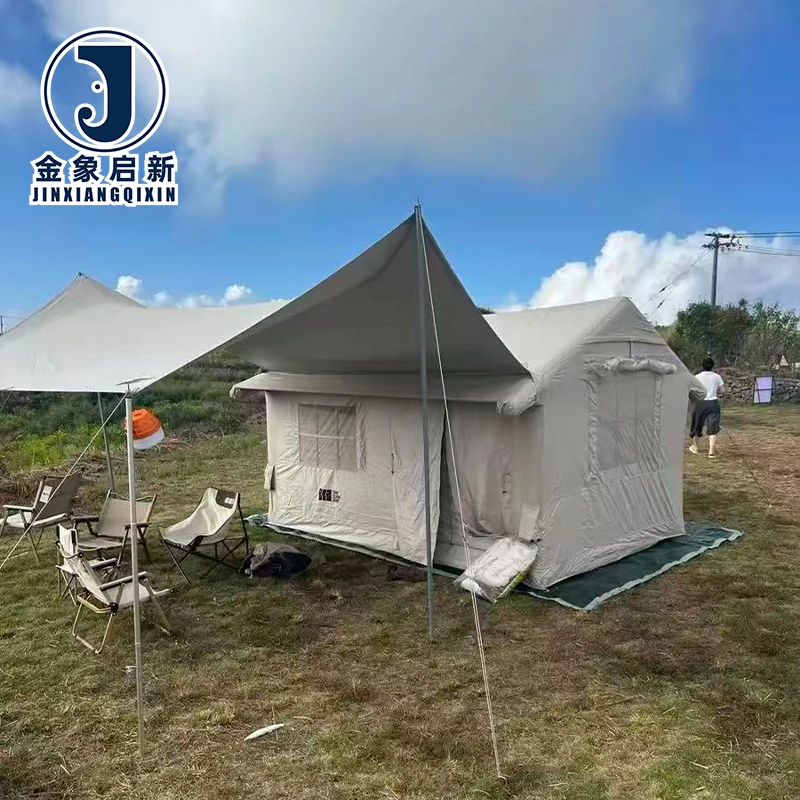
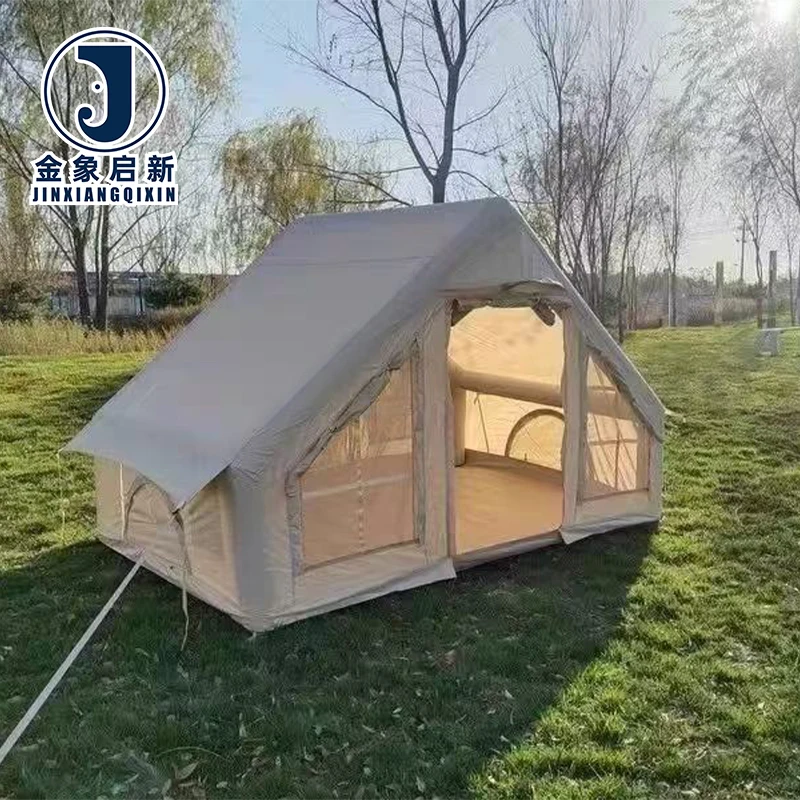
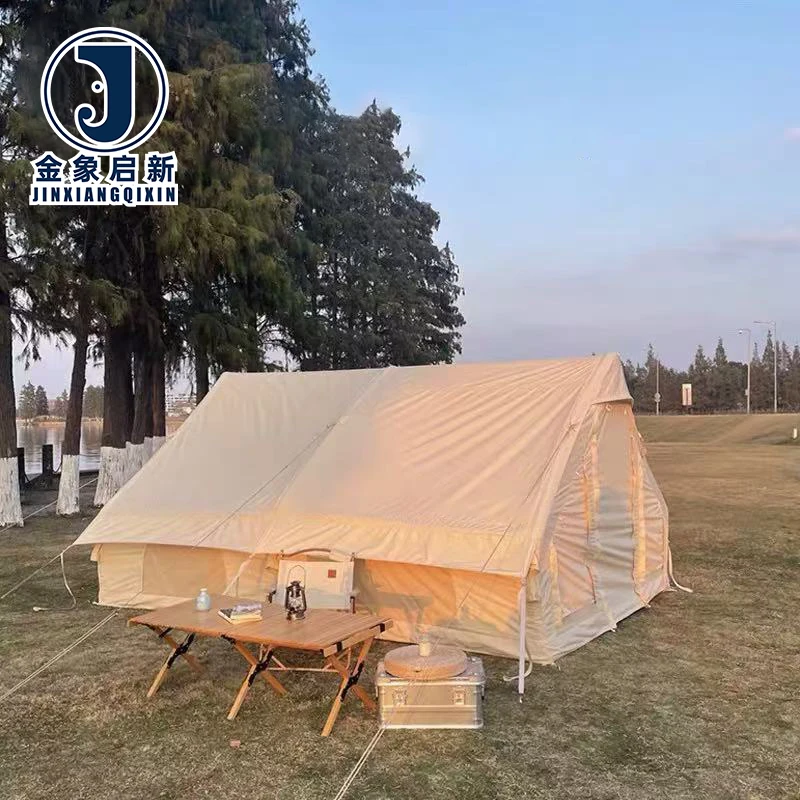
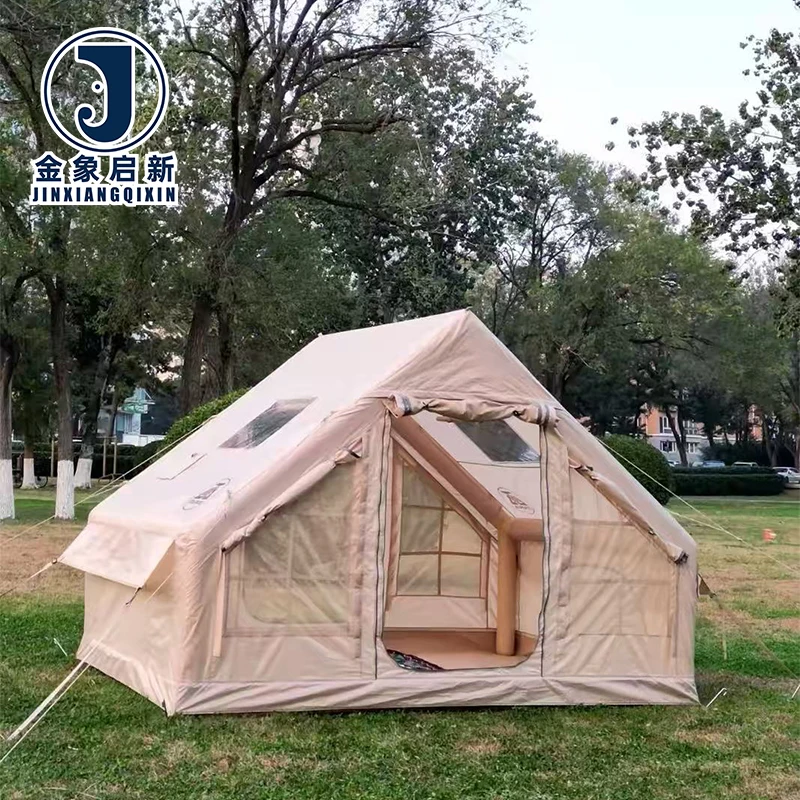
Certified Fabric Engineering — ISO-audited production lines delivering batch-verified inflatable tent fabric with full documentation traceability for emergency and industrial shelter projects.
Technical Specifications
| Parameter | Value |
|---|---|
| Product Type | Inflatable Tent |
| Core Material | PVC Tarpaulin |
| Key Performance | Waterproof, UV-resistant (test basis not stated in source), Tear-resistant (test standard not stated in source) |
| Product Forms | Extended Type, Single Layer Construction |
| Flame Retardant Grade | Available in flame retardant grades — confirm the grade required for your market |
| Customization | OEM & ODM (sample customization, pattern printing) |
| Certifications | ISO9001, ISO14001, ISO45001, CE |
Application Suitability
| Application | Exposure & Requirement |
|---|---|
| Disaster relief staging areas | Rapid deployment, continuous weather exposure, frequent relocation |
| Temporary command posts on construction sites | Wind loading on inflatable frame, abrasion from ground contact, UV degradation |
| Mobile equipment shelters in remote installations | Prolonged solar exposure, dust and chemical contact, structural integrity under inflation pressure |
| Logistics hub auxiliary workspace | Heavy foot traffic, forklift proximity, repeated inflation-deflation cycles |
| Emergency response centers in severe climates | Thermal fluctuation, precipitation, need for fire safety compliance in occupied spaces |
Why Inflatable Structures Fail Inspection Before They Ever Inflate
Compliance documentation gaps halt projects at the gate, not the fabric itself.
When a mining contractor orders inflatable shelters for a remote site, the safety officer checks the fire-retardant certificate before the structure is unpacked. Without the correct grade stated on the material specification sheet, the entire shipment is quarantined. I have seen emergency shelter deployments delayed because the fabric supplier could not produce a test report matching the jurisdiction’s fire safety classification [NEED_CITE: fire classification requirements for temporary occupied structures]. The inflatable tent fabric was perfectly serviceable — the paperwork was not.
Ventilation and Structural Integrity Under Continuous Inflation
An inflatable shelter relies on sustained internal air pressure to maintain its geometry. The PVC tarpaulin used for the envelope must resist creep and elongation under constant stress, particularly at heat-welded seams where the inflation tubes connect. Single-layer construction reduces overall weight for transport, which matters when disaster response teams are airlifting shelter kits to areas with damaged infrastructure. The tear-resistant properties of the base fabric prevent a small puncture from propagating into a structural failure mid-deployment.
Fire Safety in Occupied Temporary Shelters
Inflatable tents used as command posts or medical staging areas are occupied spaces, which means fire safety requirements are more stringent than for unoccupied storage covers. Available flame retardant grades must align with the target market’s classification system — some jurisdictions require specific test standards while others reference national building codes for temporary structures [NEED_CITE: fire safety standards for temporary occupied shelters]. Confirming the required grade before sampling prevents costly re-orders and project delays. Anti-static treatment may also be mandatory in mining and tunnelling environments where combustible dust is present.
How Coating Method and Base Fabric Determine Real-World Performance
The relationship between PVC coating weight and base fabric density determines whether the inflatable tent fabric will hold welds under inflation pressure. A heavier coating on a loosely woven base will delaminate at the seam before the fabric itself fails. Knife-coated PVC generally achieves higher peel strength than laminated alternatives, which directly affects how well the heat-welded joints on inflation tubes and structural ribs withstand repeated pressurisation cycles. The denier of the yarn and the warp-weft density of the base fabric control tear propagation — a critical factor because a single ground anchor point concentrating stress can initiate a tear that spreads across the entire panel if the base fabric is underspecified [NEED_CITE: tensile and tear test methods for coated fabrics per ISO 1421]. UV treatment must be verified through testing because visual inspection cannot distinguish treated from untreated material once the fabric is coated and rolled.
What Happens When the Inflatable Envelope Specification Is Wrong
Selecting an undersized fabric for an inflatable structure does not produce an immediate failure — it produces a slow one. The shelter inflates correctly on day one, but the coating begins to crack at flex points where the frame bends during wind gusts. After a season of inflation-deflation cycles, the heat-welded seams along the main air beams start to peel, and the structure loses pressure faster than the blower can compensate. I have observed inflatable shelters pulled from service because the seam strength was not matched to the operating pressure the design required [NEED_CITE: weld strength versus inflation pressure in coated fabric structures]. Batch-to-batch inconsistency in coating weight compounds the problem: one roll performs well, the next fails at the same stress point, and the buyer cannot identify which shelter was built from which roll without traceability documentation.
Why Industrial Buyers Source Inflatable Shelter Fabric Here
Three full production lines and 36 sets of processing equipment handle bulk orders for inflatable tent fabric without compressing lead times, keeping emergency preparedness procurement on schedule. A 10-person R&D team manages material selection and sample development, allowing project-specific customisation — whether that means adjusting coating weight for a higher inflation pressure or developing a custom colour for a branded disaster relief fleet. Full-process quality inspection by dedicated QA and QC staff means every roll is checked before dispatch, not sampled after the fact. OEM and ODM capability extends to pattern printing for identification markings on emergency shelters. ISO9001, ISO14001, ISO45001 and CE certification frameworks govern the production environment, and the documentation package travels with the shipment rather than being requested separately.
Documentation & Verification
- Material specification sheet stating base fabric denier, coating type and confirmed performance properties
- Test report for UV or flame retardant grades where applicable, matched to the batch supplied
- ISO9001, ISO14001, ISO45001 and CE certificates included in the dispatch package
- Pre-shipment inspection record with roll-by-roll verification notes
- Certificate of origin and customs documentation prepared per destination country requirements
Fabrication, Handling & Storage
- Heat-weld PVC tarpaulin seams at temperatures matched to coating thickness to avoid delamination at inflation tube joints
- Reinforce all anchor and tie-down points with additional PVC patches to distribute concentrated loads on the single-layer construction
- Store rolls horizontally on pallets to prevent permanent creasing that compromises air-holding performance after inflation
- Allow fabric to acclimatise before fabrication in cold conditions to prevent coating micro-cracking during handling
- Use PVC-compatible cleaners only — solvent-based products degrade the coating surface and reduce UV treatment effectiveness
What We Need to Quote Your Inflatable Shelter Project
Provide the intended application, deployment environment and expected inflation pressure so the correct base fabric density and coating specification can be matched to your design. If the structure will be occupied, confirm the fire safety classification required by your local jurisdiction and whether anti-static treatment is needed for mining or tunnelling use. Specify any custom sizing, colour or printed identification markings, along with estimated annual volume and whether you require sample approval before production.
Frequently Asked Questions
Q: What fire safety grades are available for inflatable tent fabric used in occupied shelters?
A: PVC inflatable tent fabric is available in multiple flame retardant grades. The correct grade depends on the fire safety classification required by your jurisdiction for temporary occupied structures. Provide your target market and application context during inquiry, and the appropriate test-standard grade will be specified and documented with the shipment.
Q: Can the fabric be treated for anti-static compliance in mining environments?
A: Yes, anti-static treatment can be applied to inflatable tent fabric for use in mining, tunnelling and other environments where combustible dust is present. Surface resistance requirements vary by regulation. State your site’s compliance standard during the specification stage so the correct treatment is confirmed and tested before production.
Q: How is batch-to-batch consistency verified for large emergency preparedness orders?
A: Each production batch undergoes full-process inspection by dedicated QA and QC staff. Rolls are checked for coating weight consistency, colour match and surface quality before packing. A pre-shipment inspection record accompanies the documentation package, providing traceability from raw material to dispatched roll.
Q: What is the sampling process for custom-sized inflatable shelter fabric?
A: Samples are developed within days of specification confirmation, covering custom sizing, colour and any required treatment grades. Approval is required before mass production proceeds. This ensures the fabricated inflatable tent meets design pressure and durability requirements without committing to a full production run first.
Q: What certifications ship with the fabric order?
A: Every dispatch includes ISO9001, ISO14001, ISO45001 and CE certificates alongside the material specification sheet and pre-shipment inspection record. Flame retardant or UV test reports are included where applicable, and a certificate of origin is prepared based on the destination country.