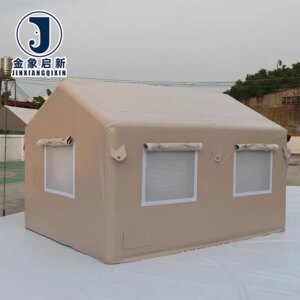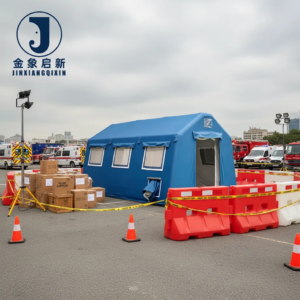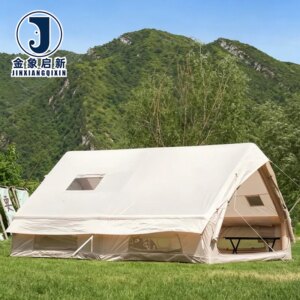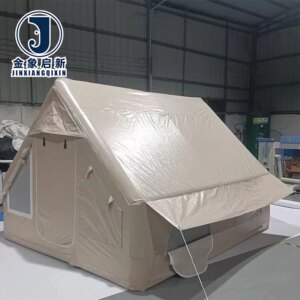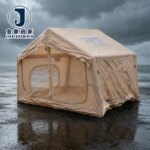
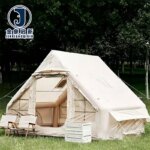
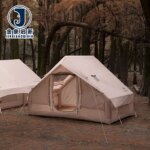
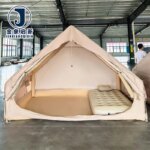
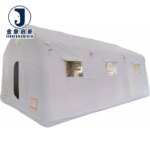
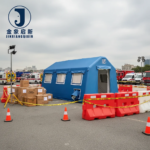
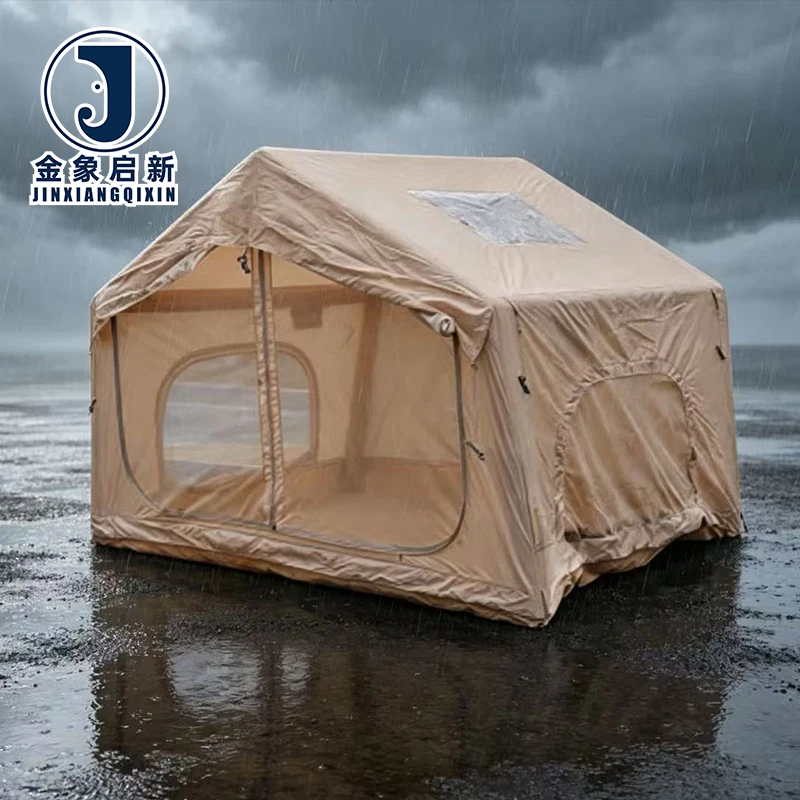
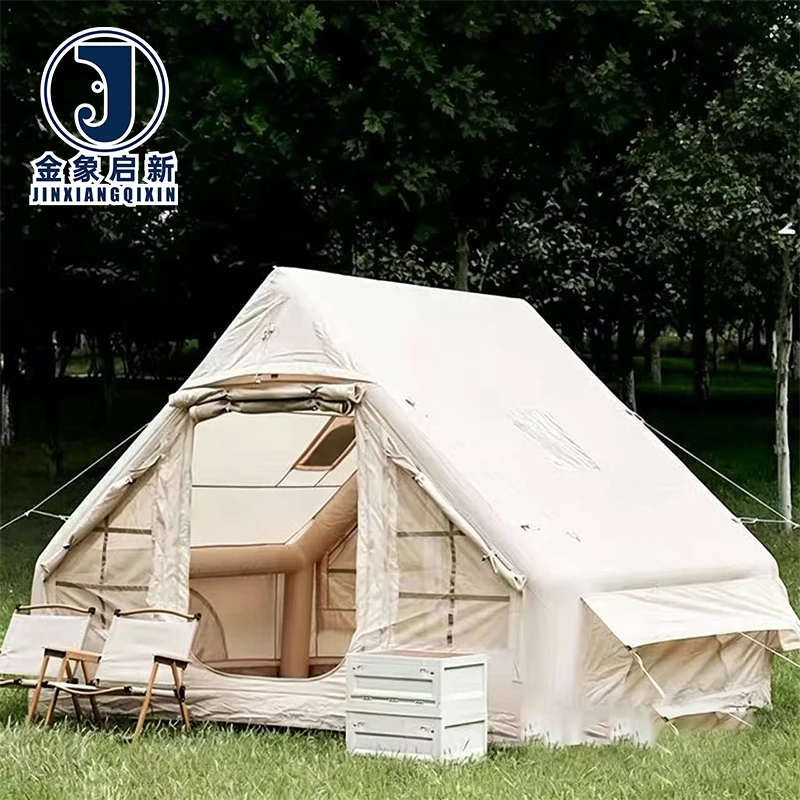
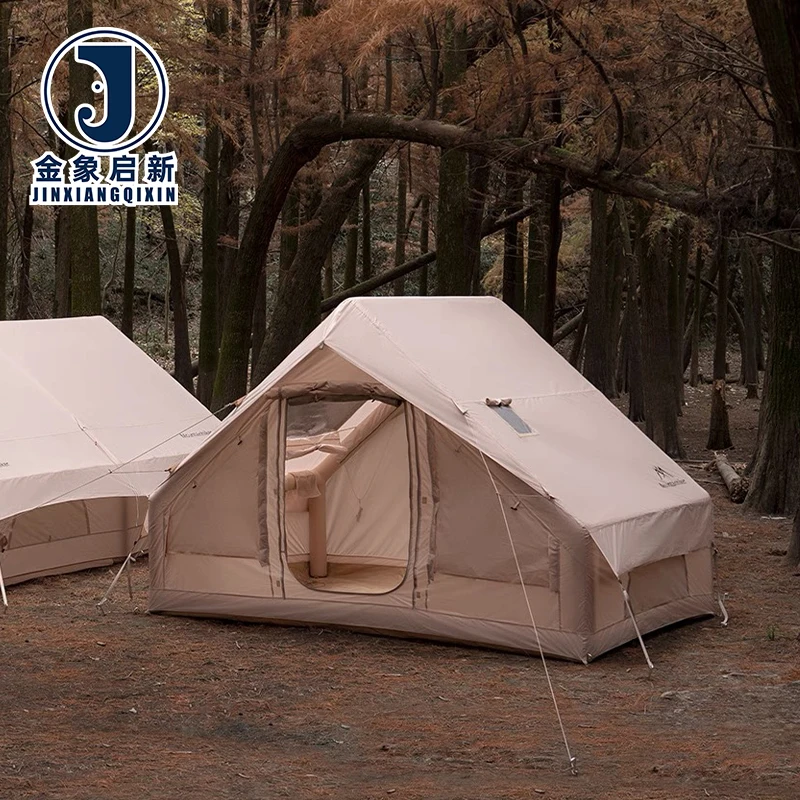
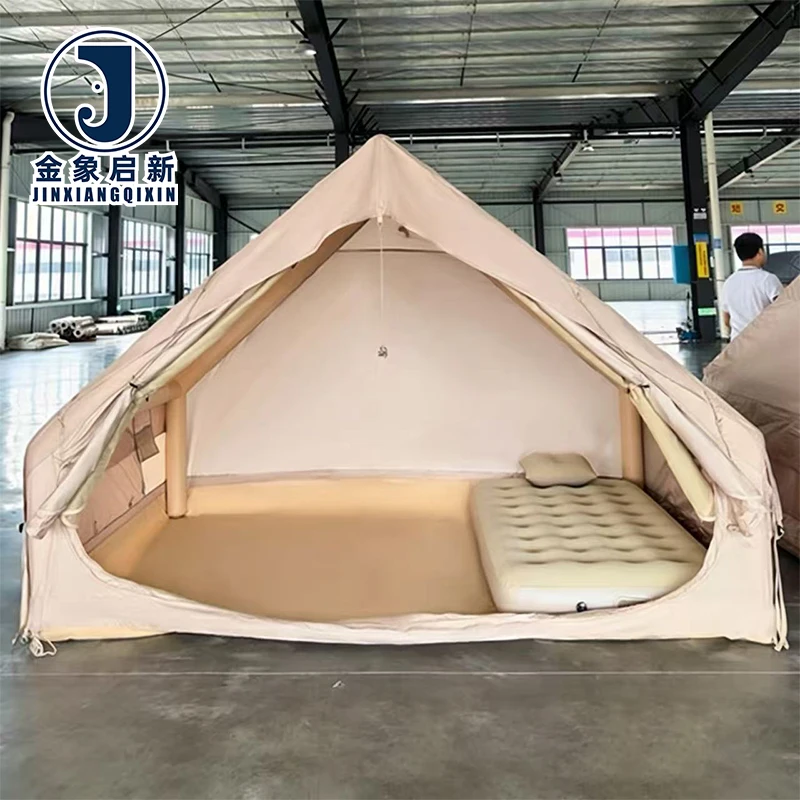
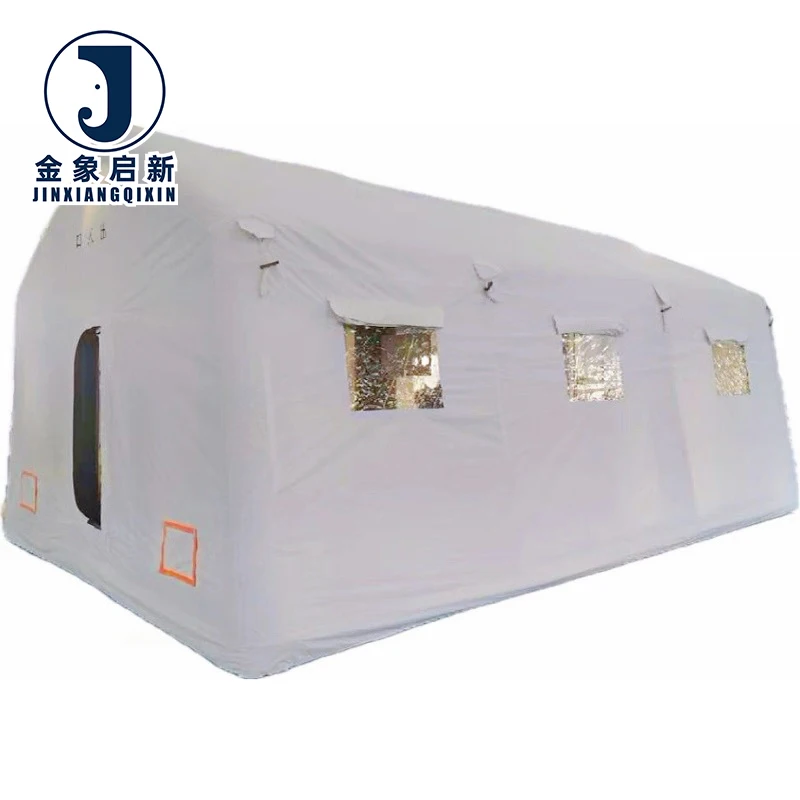
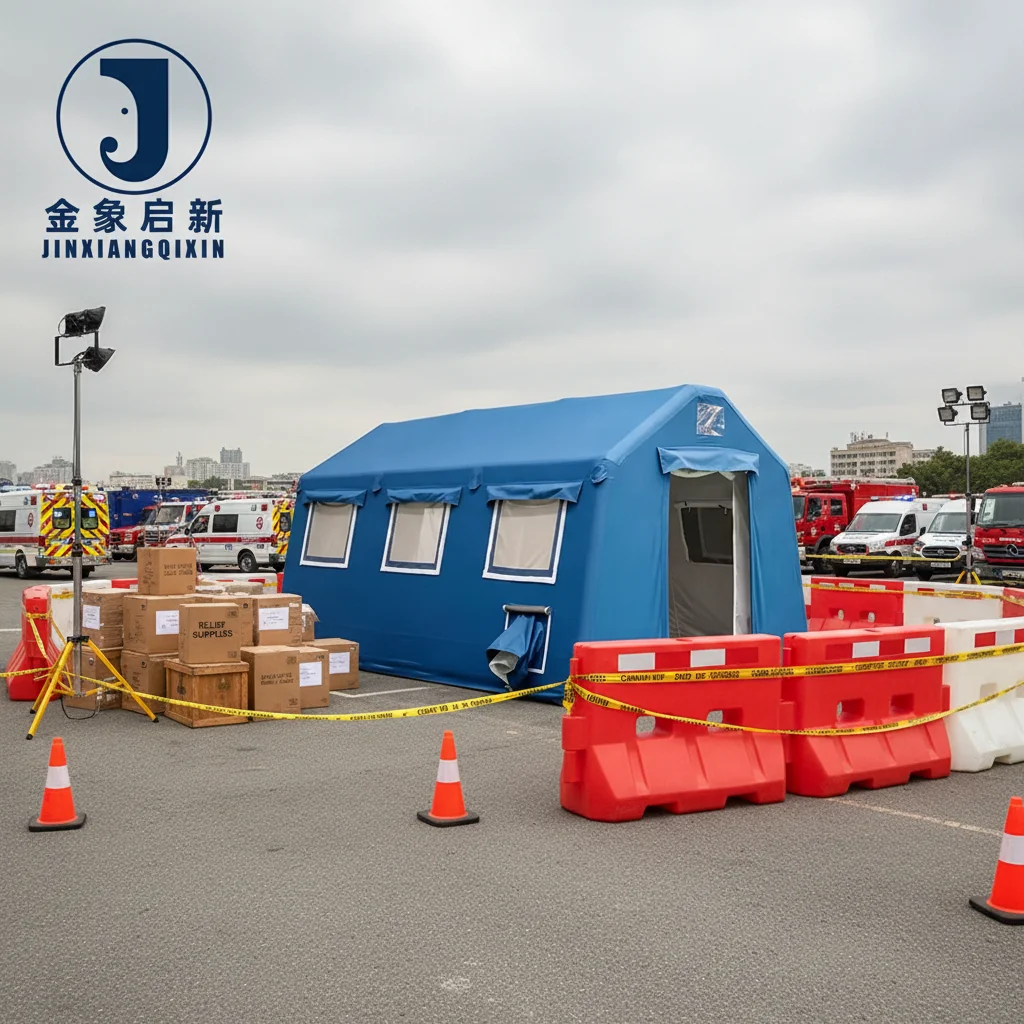
Coating Expertise — Deep process control over PVC formulation and adhesion, ensuring inflatable tent fabric maintains structural integrity under continuous inflation cycles and extreme temperature shifts.
Technical Specifications
| Parameter | Value |
|---|---|
| Product Type | Inflatable Tent |
| Core Material | UV-Resistant PVC |
| Waterproof Rating | Hydrostatic head exceeding 5000mm |
| UV Treatment | UV-stabilized (maintains 85% tensile strength after 2 years outdoor exposure — test basis not stated) |
| Deployment Mechanism | Quick automatic opening, deploys in under 60 seconds |
| Inflation System | Industrial-grade inflation valves with rapid pressure retention |
| Construction | Single-layer construction |
| Temperature Tolerance | -30°C to 70°C (validated by temperature cycling test) |
| Seam Integrity | Ultrasonic seam integrity checks |
| Pressure Testing | 24-hour pressure retention testing |
| Customization Options | Size adjustments, color customization, logo printing, structural design modifications |
| Production Lead Time | 15–20 working days after sample approval |
| Certifications | ISO 9001, ISO 14001, ISO 45001, CE |
Application Suitability
| Application | Exposure & Requirement |
|---|---|
| Mining and tunnelling shelters | Underground moisture, chemical dust, fire-retardant compliance for enclosed workspaces |
| Aviation ground support enclosures | Jet fuel vapour exposure, wind loading on tarmac, rapid deployment for maintenance bays |
| Emergency relief shelters | Continuous inflation over days, UV exposure in open terrain, sub-zero night temperatures |
| Construction site temporary storage | Heavy equipment abrasion against fabric walls, rain ingress risk, crane-load wind uplift |
| Outdoor event workspaces | Public occupancy requiring fire-safety documentation, repeated inflation and deflation cycles |
What Compliance Gaps Cost When Inflatable Tent Fabric Arrives Without Certification
Inflatable tent fabric supplied without fire-retardant or anti-static test reports creates a compliance bottleneck the moment site inspectors ask for documentation — and that delay falls entirely on the procurement team.
When inflatable tent fabric ships to a mining or aviation site, the safety officer does not accept "certified" as a verbal claim. They need a physical test report matched to the batch number on the delivery note. We have seen project mobilisations stall because the fabric arrived on schedule but the paperwork trail did not satisfy the site’s fire-safety protocol [NEED_CITE: fire classification requirements for temporary structures in mining and aviation environments]. The fabric sat in a container while the supplier scrambled to produce retrospective documentation, costing the contractor idle crew time and penalty exposure. Inflatable Tent Fabric fire retardant certified documentation must accompany every roll — not follow weeks later by email.
Inflation Stress Points and Why Seam Integrity Defines Service Life
An inflatable structure places sustained tensile load on every welded seam, unlike a static cover where gravity is the primary force. The inflation pressure pushes outward continuously, meaning any seam defect becomes a leak path within hours rather than weeks. Inflatable tent fabric undergoes ultrasonic seam integrity checks at our facility so that weld lines hold under sustained internal pressure without delamination.
Each seam is inspected before the structure leaves the production floor, catching micro-voids that would otherwise manifest as slow pressure loss in the field. This matters especially at valve attachment points and structural rib junctions where stress concentrates during inflation and deflation cycles.
Temperature Extremes and Fabric Behaviour at Both Ends of the Scale
PVC compounds stiffen as temperatures drop and soften as they rise, directly affecting how well an inflatable structure holds its shape. Our inflatable tent fabric is validated through temperature cycling from -30°C to 70°C, covering arctic night conditions through desert midday heat [NEED_CITE: temperature cycling test protocols for coated technical fabrics].
At the cold end, the compound resists brittle cracking when the structure is inflated in sub-zero conditions — a failure mode that splits single-layer fabric along fold lines. At the hot end, the coating maintains enough rigidity to prevent sagging between structural ribs, keeping the enclosure pressurised and weather-tight throughout the operating window.
Reading the Specification Sheet Beyond the Headline Numbers
Hydrostatic head exceeding 5000mm indicates the coating can withstand prolonged heavy rainfall without water penetrating the fabric face — critical for shelters that must remain habitable during multi-day storm events. However, waterproofing on the face means little if seam welds allow capillary ingress, which is why pressure retention testing runs for a full 24 hours on completed structures.
UV stabilisation claims need a test basis to be meaningful. We state that the compound maintains 85% tensile strength after extended outdoor exposure, and we recommend buyers request the underlying test report to confirm the exposure conditions match their deployment environment. Available in fire-retardant grades — confirm the grade required for your market before ordering, as compliance thresholds differ between mining, aviation and public-assembly applications.
Temperature tolerance from -30°C to 70°C defines the operational envelope. Buyers deploying in climates outside this range should request low-temperature brittleness data specific to their minimum expected ambient temperature.
The Hidden Cost of Specifying Inflatable Structures on Price Alone
When inflatable tent fabric is selected primarily on unit cost, the first failure point is typically the seam — not the fabric face. Thin coatings save material cost but leave insufficient substance for a reliable heat weld, so the joint peels apart under inflation pressure while the surrounding fabric remains intact [NEED_CITE: coated fabric weld strength relative to coating weight and adhesion].
Batch-to-batch inconsistency in PVC compound formulation produces shelters that behave differently on successive deployments, even when cut to identical patterns. One batch may hold pressure reliably while the next loses rigidity within hours because the plasticiser ratio shifted. Our 100% pre-shipment inspection protocol catches formulation drift before material leaves the factory floor.
Why Procurement Teams Source Inflatable Tent Fabric Here
Three full production lines and 36 sets of professional equipment support volume orders without compromising the inflation pressure testing each structure requires before dispatch.
A 10-person R&D team handles structural design modifications, from adjusting rib geometry for higher wind loads to integrating custom valve configurations for specific inflation equipment used on your sites.
Dedicated QA/QC runs at every production stage — coating weight verification, seam integrity checks, 24-hour pressure retention — with 100% inspection before any inflatable tent fabric ships.
Samples are developed within days for custom requirements, letting you validate deployment behaviour, valve compatibility and structural proportions before committing to a production run.
ISO 9001, ISO 14001, ISO 45001 and CE certifications are issued with full traceability to the batch that produced your order, not generic certificates covering an entire product family.
Documentation & Verification
- Material specification sheet listing PVC compound type, coating weight and inflation pressure parameters for your inflatable tent fabric batch
- UV resistance test report with documented exposure duration and tensile retention results
- Temperature cycling validation data covering -30°C to 70°C operating envelope
- ISO 9001, ISO 14001, ISO 45001 and CE certificates traceable to production batch
- 24-hour pressure retention and ultrasonic seam integrity inspection records
- Fire-retardant test reports where applicable, matched to grade specified at order
Fabrication, Handling & Storage
- Heat-weld seams using temperature and dwell settings matched to the single-layer PVC coating weight for consistent bond strength
- Store rolled inflatable tent fabric upright on pallets to prevent flat-spot deformation of the PVC coating
- Avoid folding at identical crease lines between deployments to prevent stress cracking in UV-stabilized compound
- Clean with mild detergent only — aggressive solvents degrade the UV-stabilized PVC surface treatment
- Inflate to working pressure gradually in sub-zero conditions to allow the compound to flex without brittle fracture
- Inspect valve seats and surrounding weld areas before each deployment as primary stress concentration zones
Specifying Your Inflatable Shelter Requirement
To move from enquiry to sample, share the intended deployment environment — including expected temperature range, wind exposure and any fire-safety or anti-static requirements your site mandates. Confirm whether you need the inflatable tent fabric as finished structures or as roll stock for your own fabrication line, and indicate annual volume so we can align production scheduling accordingly. If colour matching or logo printing is required, Pantone references and artwork files at enquiry stage shorten the sample approval cycle.
Frequently Asked Questions
Q: What fire-retardant grades are available for inflatable tent fabric used in mining applications?
A: Inflatable Tent Fabric fire retardant certified options are available in multiple grades. The specific grade depends on your target market’s regulations — mining sites in different jurisdictions reference different test standards. Provide your site’s fire-safety specification at enquiry stage so we match the compound formulation and supply the corresponding test report with your shipment.
Q: Can inflatable tent fabric be supplied with anti-static treatment for aviation ground support use?
A: Anti-static formulations are available for applications where static discharge poses a risk around fuel vapours or sensitive equipment. Surface resistance values depend on the compound blend selected. Share the resistance range your site requires and we will confirm suitability with documented test data before production begins.
Q: How is batch-to-batch consistency maintained across large inflatable shelter orders?
A: Each production run uses virgin PVC compound sourced against a locked formulation specification. Coating weight is verified during production, and 24-hour pressure retention testing is conducted on finished structures. Pre-shipment inspection records accompany every delivery, documenting the results specific to your batch rather than generic product family data.
Q: What customisation is possible for project-specific inflatable shelter dimensions and structural design?
A: Size adjustments, structural rib modifications, valve configuration changes, colour selection and logo printing are all available. Our R&D team develops samples within days so you can validate deployment behaviour and structural proportions. Minimum order requirements depend on the extent of customisation — standard sizes have lower thresholds than fully bespoke structural designs.