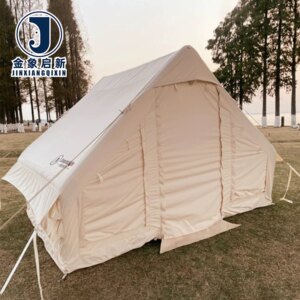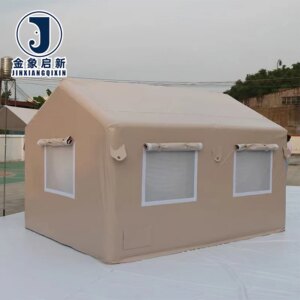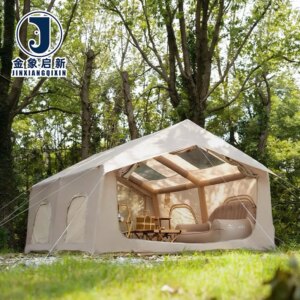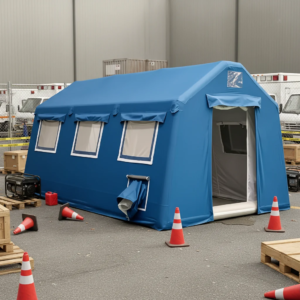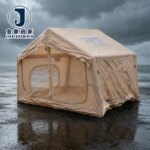
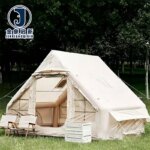
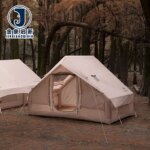
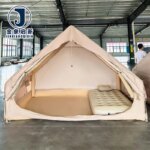
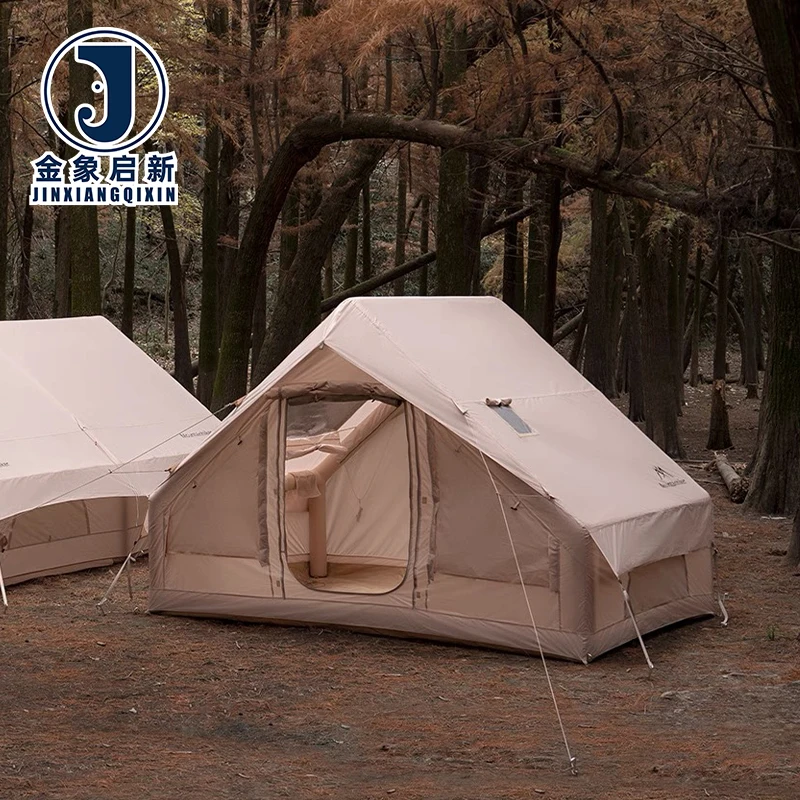
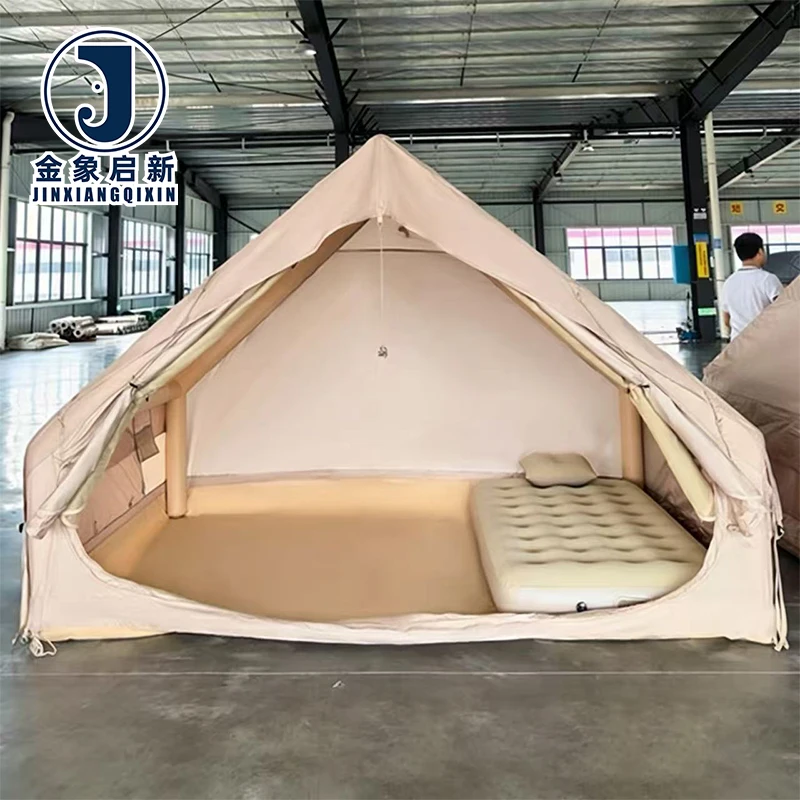
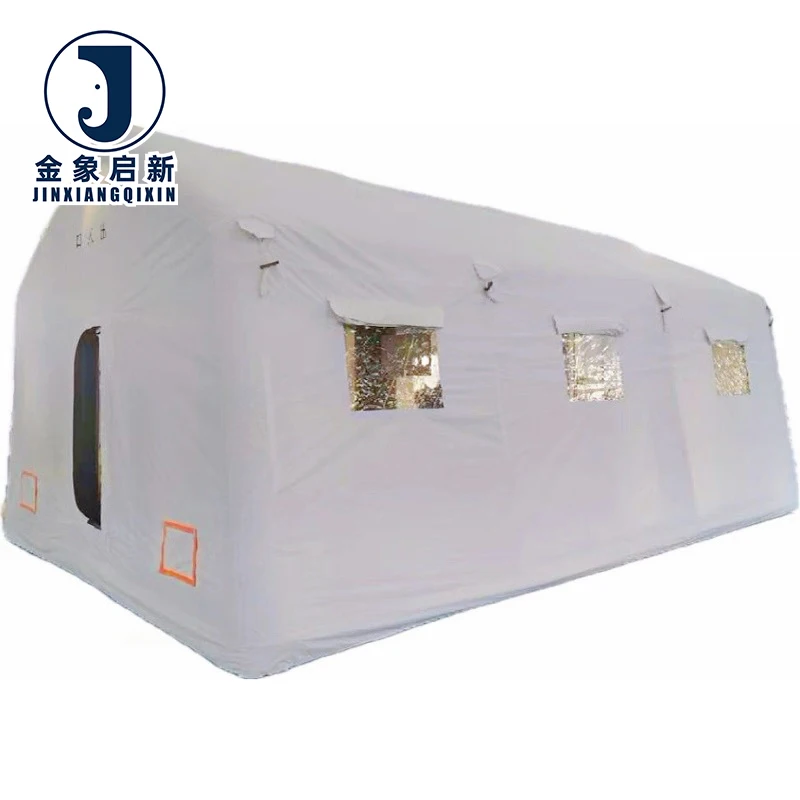
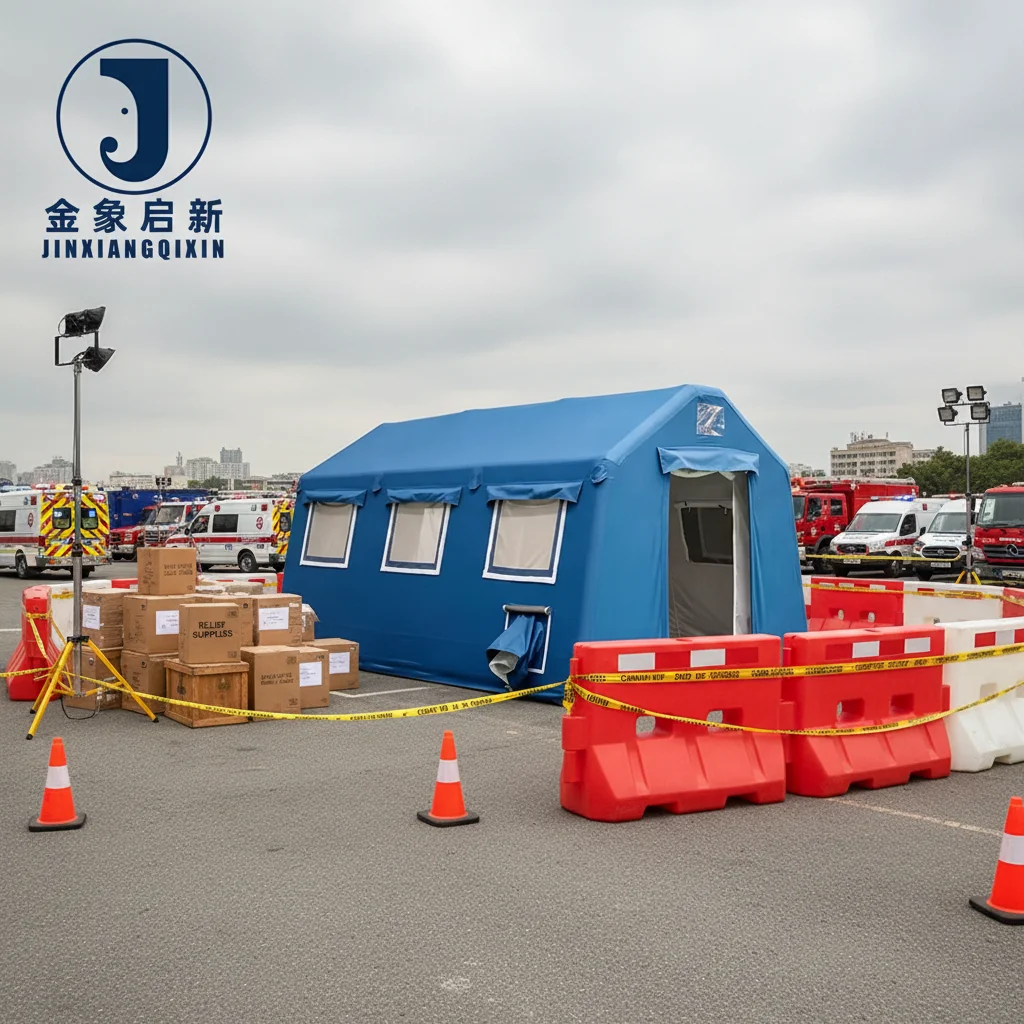
Proven Process Control — Nearly 30 years focused on coated fabric engineering, with deep process oversight from PVC compounding through finished shelter assembly, ensuring every inflatable unit meets the compliance documentation your site audit demands.
Technical Specifications
| Parameter | Value |
|---|---|
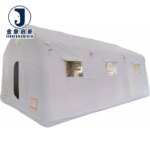
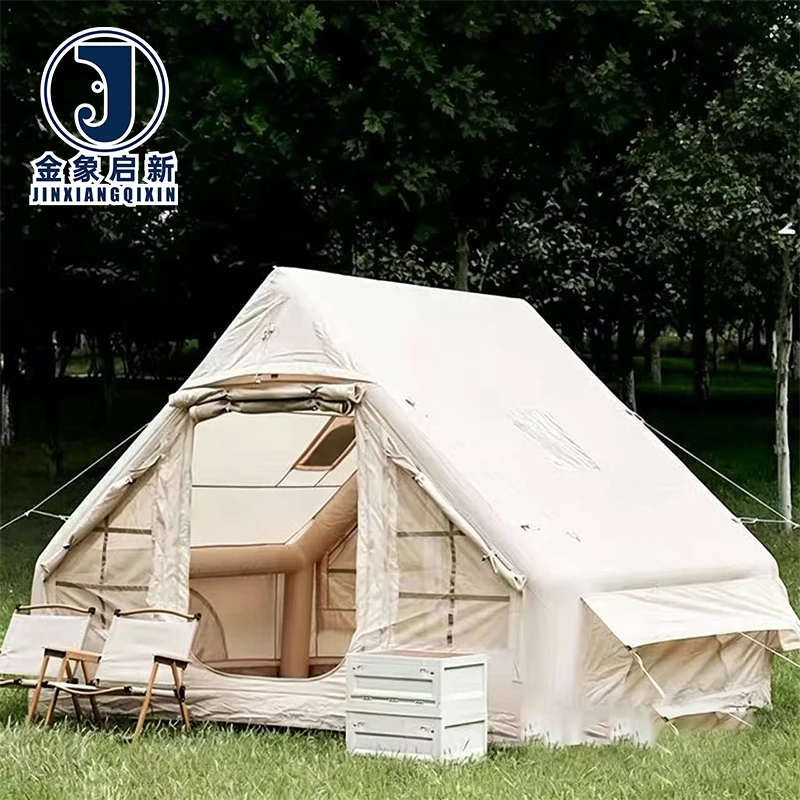
| Product Type | Inflatable Tent |
| Core Material | UV-Resistant PVC |
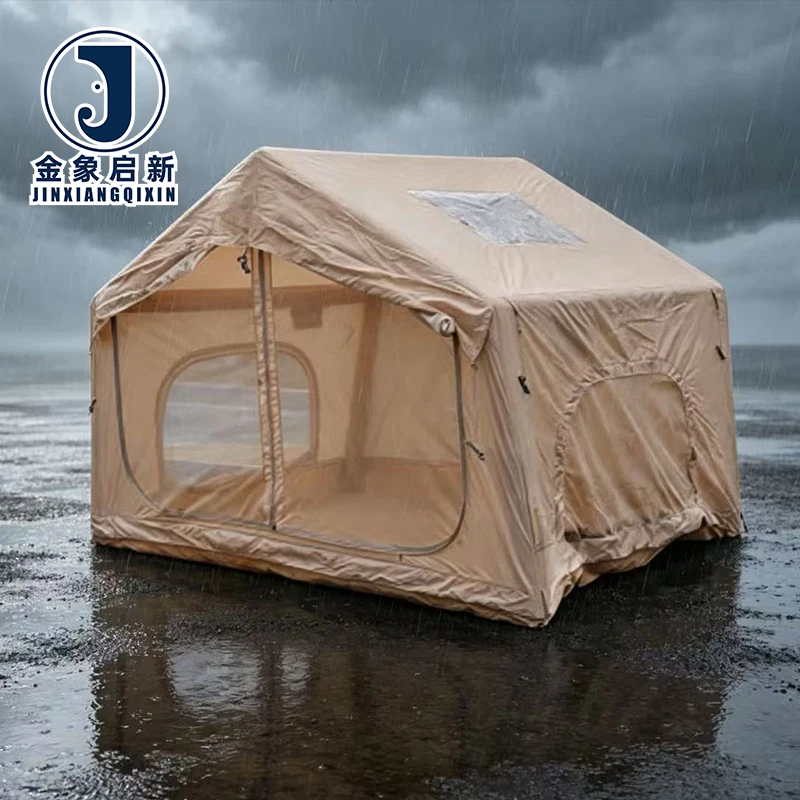
| Waterproof Rating | Hydrostatic head exceeding 5000mm |
| UV Treatment | UV-resistant (test basis not stated) |
| Deployment Mechanism | Auto-opening, deploys in under 60 seconds |
| Construction | Single-layer |
| Inflation System | Industrial-grade inflation valves with rapid pressure retention |
| Temperature Tolerance | -30°C to 70°C (validated by internal temperature cycling test) |
| Production Facility | 9,180 m² with 3 full production lines |
| Processing Equipment | 36 sets of professional equipment |
| R&D Team | 10 technicians |
| Customization | OEM & ODM — size, color, logo printing, structural design modifications |
| Quality Control | 12 inspection points, 24-hour pressure retention testing, ultrasonic seam integrity checks |
| Certifications | ISO9001, ISO14001, ISO45001, CE |
Application Suitability
| Application | Exposure & Requirement |
|---|---|
| Mining and tunnelling temporary shelters | Fire-retardant compliance, dust ingress, ventilation integration, rapid relocation between faces |
| Aviation ground support enclosures | Anti-static specifications, fuel vapour zones, wind loading on open aprons |
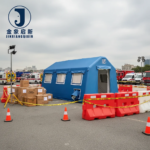
| Construction site emergency relief shelters | Weather protection, rapid deployment without heavy equipment, multi-day occupancy |
| Logistics mobile equipment enclosures | UV exposure during yard storage, abrasion from loading operations, repeated inflation cycles |
| Specialist membrane structure contractors | Certified fabric sourcing, structural load calculations, custom geometry fabrication |
Why Certified Inflatable Tent Fire Retardant Compliance Matters More Than Fabric Weight Alone
A shelter that passes your site safety audit requires documented test results, not a supplier promise.
Mining and tunnelling contractors regularly specify fire-retardant inflatable shelters for underground and surface operations, yet many units arrive without the test documentation the site safety officer needs to sign off. The inflatable tent fire retardant grade must match the regulatory framework of your jurisdiction — whether that references DIN 4102, NFPA 701, or a local mining code. Without a traceable test report tied to the specific batch of fabric used in your shelter, compliance verification stalls and the unit sits idle on site. [NEED_CITE: fire classification standards for temporary structures in mining and construction]
Ventilation, Fire Safety and the Inflatable Shelter Interface
Industrial inflatable shelters in mining and tunnelling environments must integrate with forced ventilation systems while maintaining fire-retardant integrity at every duct penetration point. The certified inflatable shelter fabric must resist ignition from welding sparks, equipment exhaust, and electrical faults common in confined site conditions. Each inflation valve and structural seam represents a potential failure point where flame propagation could compromise the entire enclosure. Our 10-person R&D team engineers duct interfaces and valve placements that maintain compliance continuity across the full shelter envelope.
Anti-Static Performance for Aviation and Fuel-Adjacent Operations
Ground support operations on aviation aprons and fuel farm perimeters demand inflatable enclosures with verified anti-static properties to prevent discharge ignition in vapour-rich zones. The PVC compound formulation must dissipate static charge accumulation generated by wind friction and personnel movement inside the shelter. Anti-static compliance is verified through surface resistivity testing, and the results must be documented per batch to satisfy aviation safety auditors. [NEED_CITE: anti-static test methods for PVC-coated fabrics in hazardous zones]
Decoding the Material: What UV Resistance and Temperature Range Mean in the Field
The UV-resistant PVC formulation is engineered to withstand prolonged sunlight exposure across seasons, though the specific UV test standard should be confirmed for your regional compliance requirements. Temperature tolerance validated from -30°C to 70°C through internal cycling tests indicates the fabric maintains flexibility in arctic deployment and does not soften or deform under direct solar loading in equatorial sites. The hydrostatic head exceeding 5000mm ensures waterproof integrity during sustained rainfall, critical for emergency relief shelters that must remain occupied through multi-day storm events. Single-layer construction reduces weight and packed volume while the industrial-grade inflation valves maintain pressure without continuous pump operation.
The Hidden Cost of Skipping Batch-Level Compliance Documentation
Shelters that arrive without fire-retardant or anti-static test reports create a compliance gap that halts site operations until documentation is resolved. The inflatable tent fire retardant certification cannot be retrofitted — if the fabric batch was not tested, the shelter cannot be approved for use in regulated environments. We have seen projects delayed when site safety officers reject enclosures that lack batch-specific test documentation, forcing contractors to source replacement shelters on emergency timelines. Ultrasonic seam integrity checks and 24-hour pressure retention testing catch construction defects before dispatch, but compliance paperwork gaps can only be prevented through disciplined documentation at the coating stage. [NEED_CITE: documentation requirements for fire-retardant temporary structures on regulated sites]
Why Specialist Contractors Source Certified Inflatable Shelters Here
Every certified inflatable shelter ships with material specification sheets detailing PVC compound composition, coating weight, and base fabric construction — no guessing at what your fabric actually contains. The 12-point inspection protocol includes 24-hour pressure retention testing and ultrasonic seam verification, catching inflation system failures before they reach your site. Custom structural design modifications are engineered by a dedicated 10-person R&D team that understands load calculations for membrane structures and duct integration for ventilation systems. Fire-retardant and anti-static test reports accompany batch inspection documentation, giving your safety officer the paperwork needed for immediate site approval. OEM and ODM capability covers size adjustments, color specifications, and logo printing with sample approval before production commitment.
Documentation & Verification
- Material specification sheet stating PVC compound, coating weight, and base fabric denier
- Fire-retardant and anti-static test reports matched to fabric batch production records
- ISO9001, ISO14001, ISO45001, and CE certificates included with every shipment
- Pre-shipment inspection records covering pressure retention and ultrasonic seam test results
- Certificate of origin and customs documentation for cross-border project logistics
Fabrication, Handling & Storage
- Heat-weld seams using temperature profiles matched to the single-layer PVC construction thickness
- Store deflated shelters flat or loosely rolled to prevent permanent creasing in the UV-resistant coating
- Inflate gradually in sub-zero conditions to allow PVC compound to reach operating flexibility
- Clean with mild detergent only — abrasive compounds degrade the UV-resistant surface treatment
- Repair field punctures with compatible PVC patch kits matched to the single-layer fabric weight
- Allow full 24-hour pressure stabilization before loading structural attachments or duct penetrations
Before You Request a Quote
Provide your site compliance requirements including the specific fire-retardant or anti-static standard your jurisdiction mandates, along with deployment environment details such as wind loading, temperature extremes, and ventilation integration needs. Specify whether you require finished shelters with inflation systems or fabric-only supply for your own structural assembly. Share target dimensions, color requirements, and annual volume projections so we can structure production planning and sample development accordingly.
Frequently Asked Questions
Q: What fire-retardant grade and test standard does the inflatable tent fabric meet?
A: Fire-retardant grades are formulated to match your market requirements, which may reference DIN 4102, NFPA 701, or local mining regulations. Confirm the specific standard your site safety plan mandates, and we will supply the corresponding test report with batch documentation. Available grades should be verified against your compliance framework before production.
Q: How is anti-static compliance verified for mining and aviation applications?
A: Anti-static performance is validated through surface resistivity testing on the PVC compound used in your production batch. Test results are documented and shipped with the order, providing traceable evidence for aviation ground support and mining safety audits. Specify your required resistivity range during the inquiry stage.
Q: What certifications and documentation ship with each order?
A: Every shipment includes ISO9001, ISO14001, ISO45001, and CE certificates alongside batch-specific material specification sheets, pre-shipment inspection records, pressure retention test results, and applicable fire-retardant or anti-static test reports. Certificate of origin and customs support documentation are provided for international logistics.
Q: Can structural design be modified for specific load or environmental requirements?
A: Yes — OEM and ODM services cover size adjustments, structural geometry modifications, ventilation duct integration, and inflation valve placement tailored to your deployment conditions. Our R&D team reviews your load calculations and environmental parameters, then produces samples for approval before committing to production.
Q: What is the production lead time for certified custom inflatable shelters?
A: Lead times depend on customization complexity, certification requirements, and order volume. Standard configurations move through our three production lines on predictable schedules, while custom structural designs and specific fire-retardant grades require additional sample development and testing cycles. Confirm your timeline during the quotation stage.