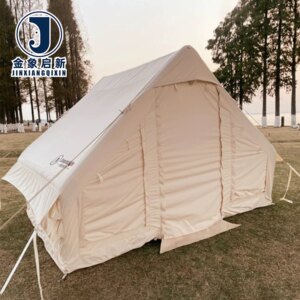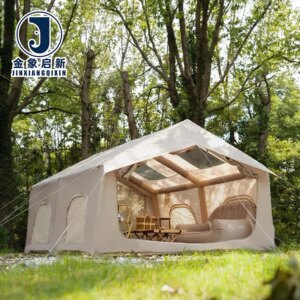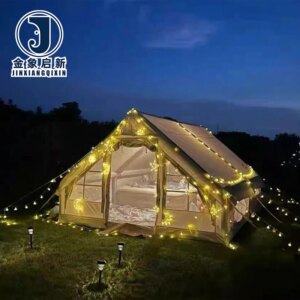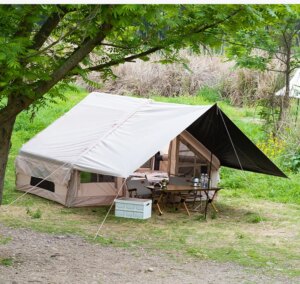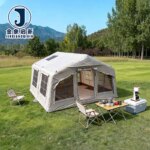
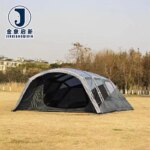
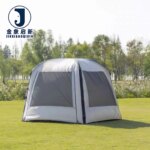
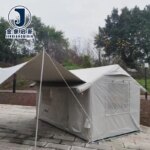
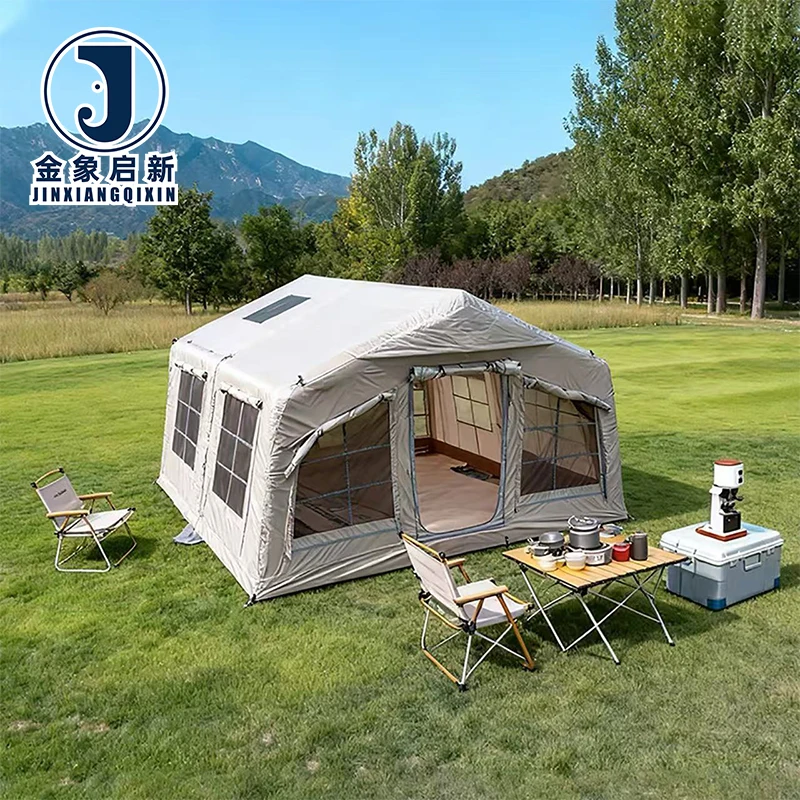
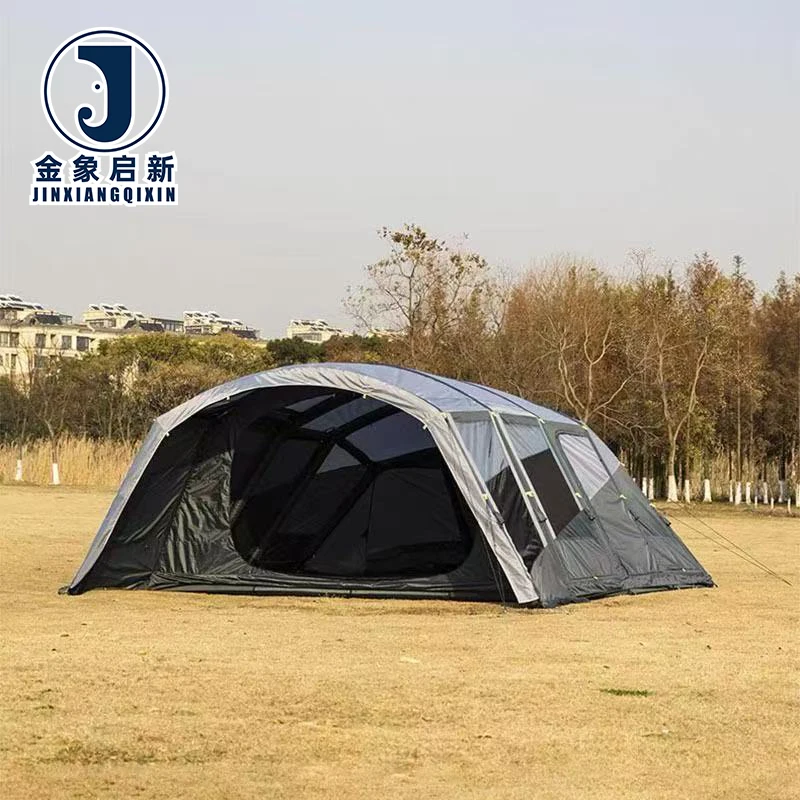
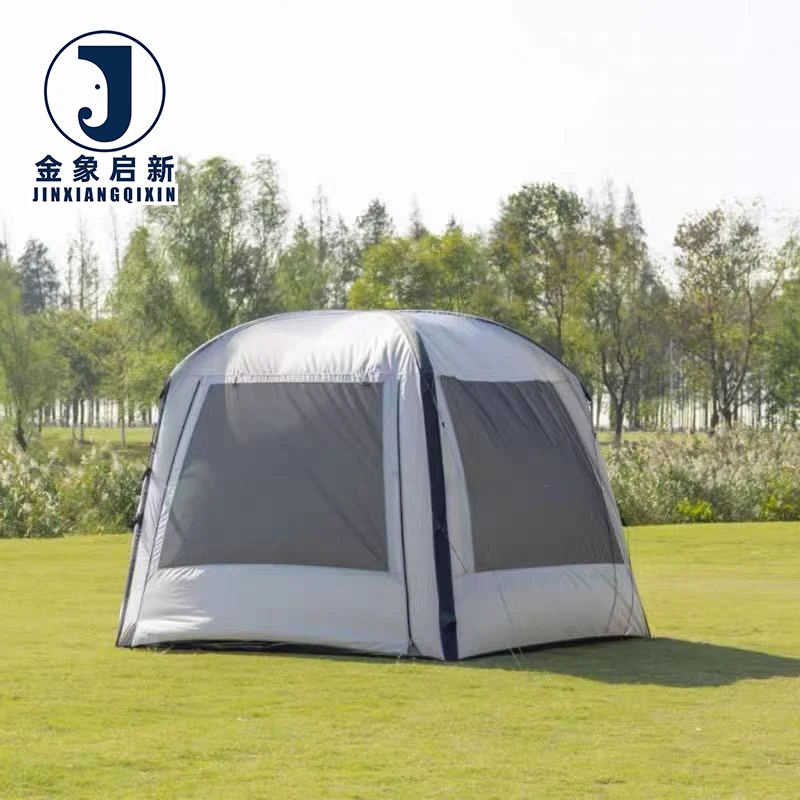
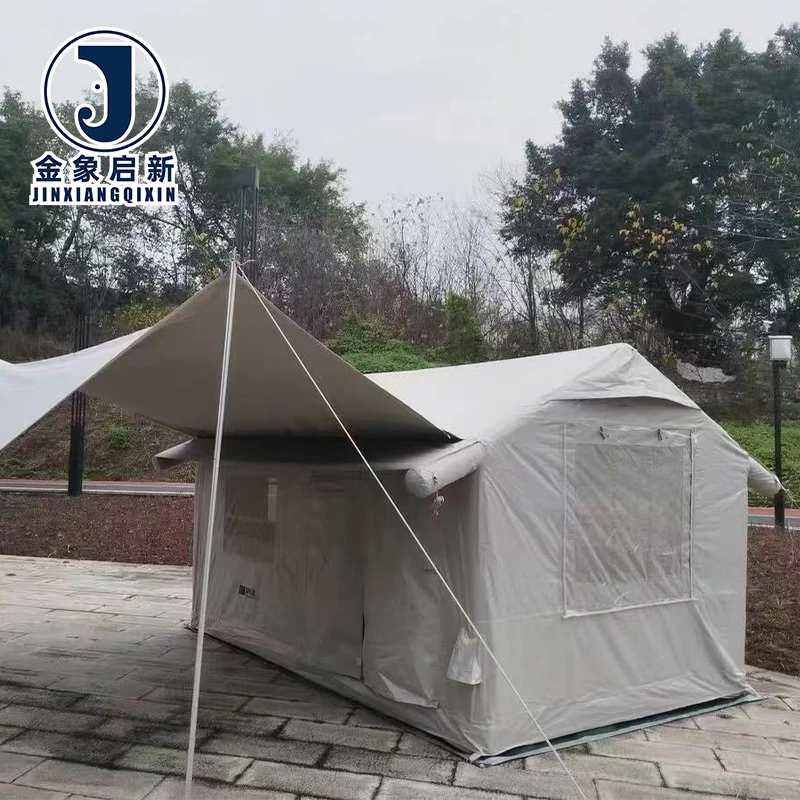
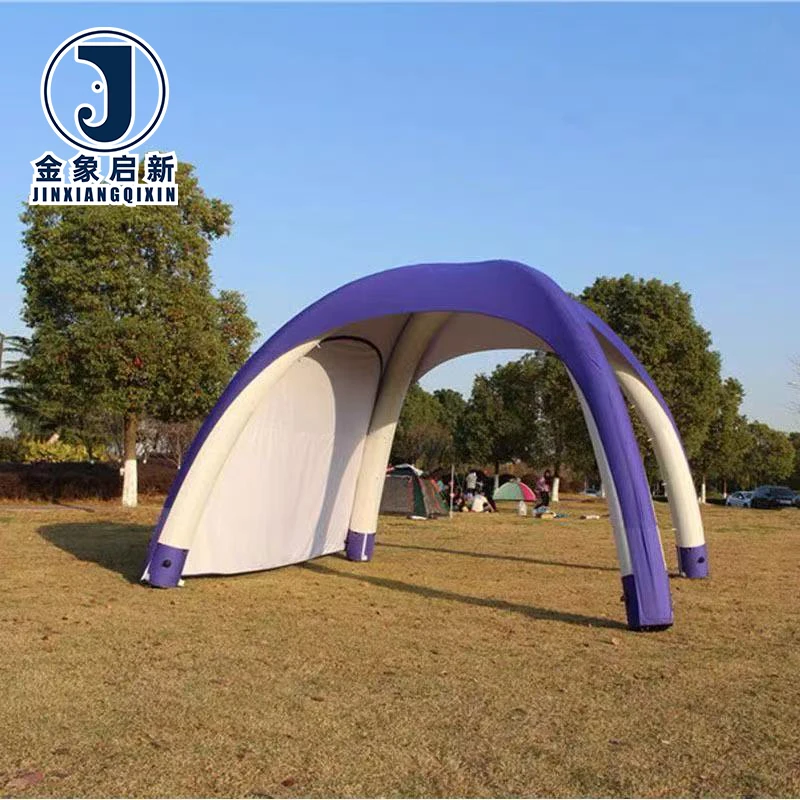
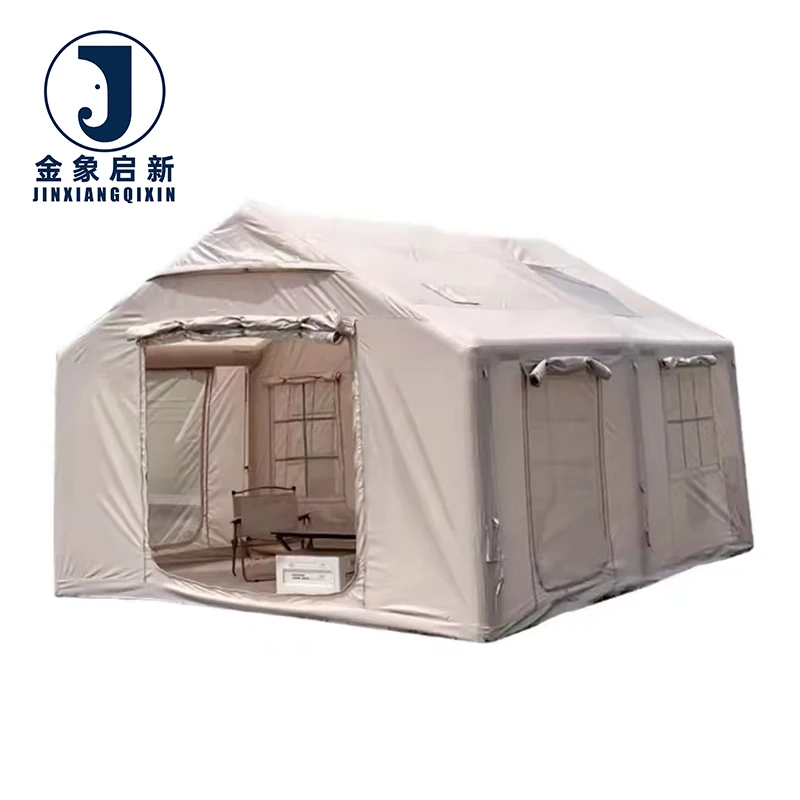
Specialist Fabric Compliance — Fire-retardant and anti-static inflatable tent fabric is produced on dedicated lines with real-time QA at every processing station, ensuring each roll meets the safety documentation requirements of your site.
Technical Specifications
| Parameter | Value |
|---|---|
| Product Type | Inflatable Tent |
| Core Material | PVC tarpaulin |
| Structure | Single-layer PVC tarpaulin |
| Waterproof Rating | Waterproof (grade not stated in source) |
| UV Treatment | UV-resistant (test basis not stated in source) |
| Flame Retardant | Fire-retardant (grade not stated in source) — confirm the grade required for your market |
| Anti-Static | Anti-static (surface resistance or standard not confirmed) — request test report before order |
| Tear Resistance | Tear-resistant (test standard not stated in source) |
| Opening Mechanism | Quick automatic opening |
| Season Rating | 4-season |
| Customization | OEM & ODM — sample customization, pattern printing, size adjustments, material thickness modifications |
| Quality Control | 24-hour pressure testing before shipment; real-time tests for tensile strength, coating adhesion, and seam integrity |
| Certifications | ISO9001, ISO14001, ISO45001, CE |
Application Suitability
| Application | Exposure & Requirement |
|---|---|
| Commercial glamping resorts | Continuous outdoor weathering, guest safety compliance, 4-season temperature cycling, fire code adherence |
| Outdoor event venues | Rapid deployment and teardown cycles, crowd safety regulations, UV exposure during multi-day events |
| Temporary hospitality facilities | Frequent reconfiguration, wind load on membrane structures, documented flame retardancy for permits |
| Mining and tunnelling camp structures | Underground or remote-site safety codes, anti-static requirements, ventilation compatibility |
Why Inflatable Tent Fabric Fire Retardant Certified Matters Beyond the Label
A certificate on file means nothing if the grade it covers does not match the fire safety code enforced at your installation site.
Commercial operators regularly receive inflatable tent fabric described as "fire-retardant" only to discover at inspection that the test standard cited does not satisfy local building or event permit requirements. The fabric may pass one classification while failing the specific standard your fire marshal or site auditor enforces [NEED_CITE: fire classification standards for temporary membrane structures]. Anti-static properties carry a similar risk — surface resistance values must fall within a defined range to prevent discharge hazards in sensitive environments, yet many shipments arrive with no measured value documented. The gap between a supplier’s claim and a verified, grade-specific test report is where projects stall and compliance costs escalate.
Documented Compliance for Membrane and Inflatable Structures
Specifying inflatable tent fabric fire retardant certified to the correct grade starts with matching the test standard to your market’s regulatory framework. Different jurisdictions reference different classification systems, and a material that satisfies one code may not satisfy another. Our approach is to supply the test report alongside the material specification sheet so you can confirm alignment before production begins.
Each batch of PVC inflatable tent fabric undergoes real-time testing for tensile strength, coating adhesion, and seam integrity across 36 processing stations. This in-process quality control means deviations are caught during manufacturing rather than after the finished structure fails a site inspection [NEED_CITE: tensile and tear test methods for coated fabrics per ISO 1421]. The 24-hour pressure test on every completed inflatable tent verifies that welded seams and air chambers hold under sustained load before dispatch.
Anti-Static and Fire-Retardant Integration in Single-Layer PVC
Integrating anti-static treatment into a single-layer PVC tarpaulin structure requires balancing surface resistance with the fabric’s other performance properties. The treatment must remain effective after repeated inflation cycles, UV exposure, and cleaning without degrading the waterproof coating or reducing tear resistance. We formulate the compound to maintain these properties within a defined performance window.
For operators in aviation, mining, or any environment where static discharge poses a hazard, the anti-static value must be documented with a measured surface resistance figure. We recommend requesting this data point during the sampling stage so you can validate it against your site’s safety threshold before committing to bulk volume. Our R&D team of 10 technicians supports this validation with sample development and material adjustments to match your compliance target.
How Coating Weight and Base Fabric Interact in Inflatable Applications
The structural behaviour of an inflatable tent depends on the relationship between the PVC coating weight and the base fabric’s denier and weave density. Coating weight alone does not determine tensile strength — a heavier coating on a loosely woven base may resist water penetration but tear more easily under wind load than a lighter coating on a tighter weave [NEED_CITE: relationship between coating weight and base fabric denier in coated textiles]. For inflatable structures, where the membrane must hold internal pressure while resisting external forces, both parameters must be specified together.
The single-layer construction used in this inflatable tent fabric eliminates the delamination risk inherent in multi-layer bonded fabrics. Welded seams on single-layer PVC rely on coating-to-coating fusion, which when properly controlled produces a joint that matches the parent material in flexibility. Surface finish — whether glossy or matte — affects how the fabric responds to field cleaning and how well printed branding adheres over repeated setup cycles.
The Cost of Undocumented Material Properties
Receiving inflatable tent fabric without verified fire-retardant or anti-static documentation creates downstream costs that far exceed the material price difference between suppliers. A failed fire inspection at a commercial glamping site can shut down operations until replacement fabric arrives and is reinstalled. Event venues operating under temporary permits face even tighter windows — if the fabric on site does not match the certificate submitted with the permit application, the event may not proceed.
Batch-to-batch inconsistency in flame retardant loading means that a re-order placed months later may not perform identically to the original delivery. Without batch-specific inspection records, this variability goes undetected until a compliance audit surfaces the discrepancy [NEED_CITE: batch consistency requirements for fire-retardant coated fabrics]. Colour variation between rolls installed side by side on a large inflatable structure is immediately visible to guests and undermines the professional appearance a commercial operator depends on.
Why Operators Source This Fabric Here
Nearly 30 years of focused coated fabric production provides process control over coating weight consistency and adhesion quality that newer operations cannot match. Three full production lines and 36 sets of professional processing equipment deliver the capacity to fulfil bulk inflatable tent fabric orders while maintaining real-time QA oversight at every station.
The 10-person R&D team handles material selection, custom sizing, pattern printing, and sample development — enabling OEM and ODM projects to move from specification to approved sample within days rather than weeks. Dedicated QA and QC inspection at every production stage, culminating in a 100 percent pre-shipment inspection, ensures that the fabric leaving the facility matches the specification sheet you approved. The 9,180 square metre production facility operates under ISO9001, ISO14001, ISO45001, and CE management systems, providing the certification framework that commercial and specialist structure contractors require for audit trails.
Documentation & Verification
- Material specification sheet stating PVC base fabric type, coating method, and available fire-retardant and anti-static options
- Fire-retardant test report citing the specific grade and standard — request before order confirmation
- Anti-static surface resistance measurement report with test method identified
- Pre-shipment inspection record covering tensile strength, coating adhesion, and seam integrity results
- 24-hour pressure test record for each completed inflatable tent verifying structural stability
- ISO9001, ISO14001, ISO45001, and CE certificates included with shipment documentation
Fabrication, Handling & Storage
- Hot-air welding temperature and speed must be calibrated to the single-layer PVC coating thickness to achieve full seam fusion without scorching
- Store rolls vertically in a climate-controlled area to prevent permanent creasing in the PVC coating layer
- Allow cold-stored inflatable tent fabric to reach ambient temperature before unrolling to avoid coating micro-cracking
- Use PVC-compatible cleaners only — solvent-based products may dissolve the fire-retardant and anti-static surface treatment
- Field repairs require compatible PVC repair compound and heat activation matching the original coating formulation
- Plan cutting layouts to minimise transverse seams, which concentrate stress during inflation cycles
Request a Specification Match for Your Project
Provide your installation environment, the fire safety code or anti-static standard your jurisdiction enforces, and the annual volume or project quantity you are sourcing. If your project requires custom dimensions, pattern printing, or material thickness adjustments, share your design drawings or reference samples so our R&D team can prepare a matched specification and sample for your approval.
Frequently Asked Questions
Q: What fire-retardant grade does the inflatable tent fabric carry, and does it meet my target market’s fire safety code?
A: The fabric is produced with fire-retardant treatment, but the specific grade depends on the compound formulation selected for your order. We supply the test report citing the exact standard and classification achieved. Share your market’s required code during inquiry so we can confirm alignment before production begins.
Q: How is anti-static performance measured and documented for this fabric?
A: Anti-static performance is characterised by surface resistance measured under a defined test method. We provide the measured value and the test standard used on the quality documentation accompanying your shipment. Request this data during sampling to validate it against your site’s safety threshold.
Q: Can I receive a material specification sheet and test report before committing to a bulk order?
A: Yes. We provide a full material specification sheet covering base fabric, coating type, and all treatment options alongside relevant test reports. These documents are issued during the sampling stage so you can verify compliance with your project requirements before authorising bulk production.
Q: How do you ensure batch-to-batch consistency in fire-retardant and anti-static properties across large orders?
A: Every production run undergoes real-time in-process QA covering tensile strength, coating adhesion, and seam integrity. Batch-specific inspection records document these results, and completed inflatable tents receive a 24-hour pressure test. This protocol ensures each delivery matches the approved sample specification.
Q: What customization options are available, and how do they affect compliance certification?
A: OEM and ODM services cover size adjustments, material thickness modifications, pattern printing, and sample customization. Any modification that alters the fabric composition or structure is validated against the relevant fire-retardant and anti-static standards, and updated test documentation is provided with the order.