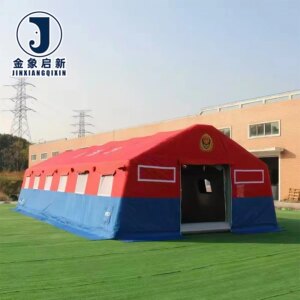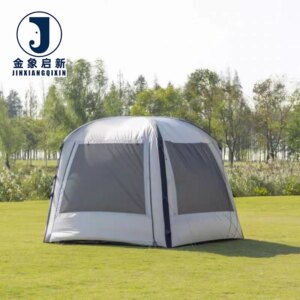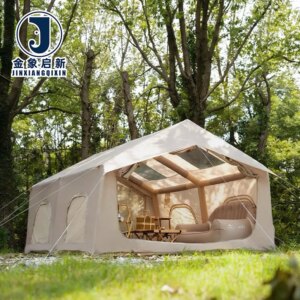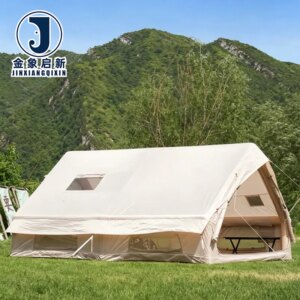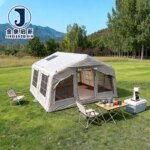
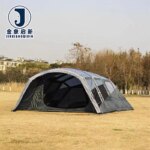
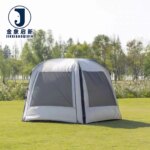
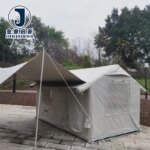
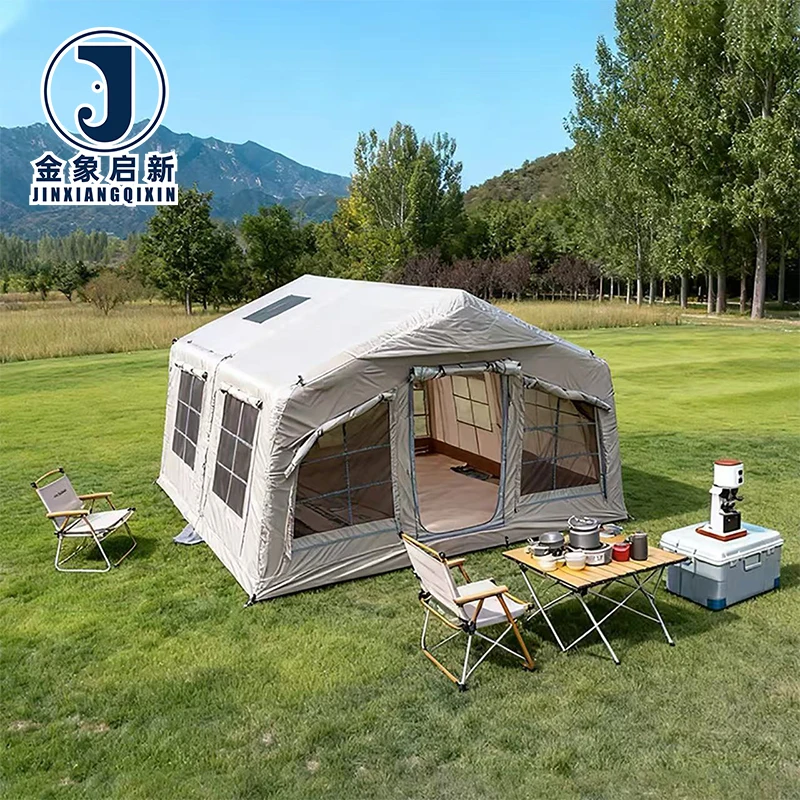
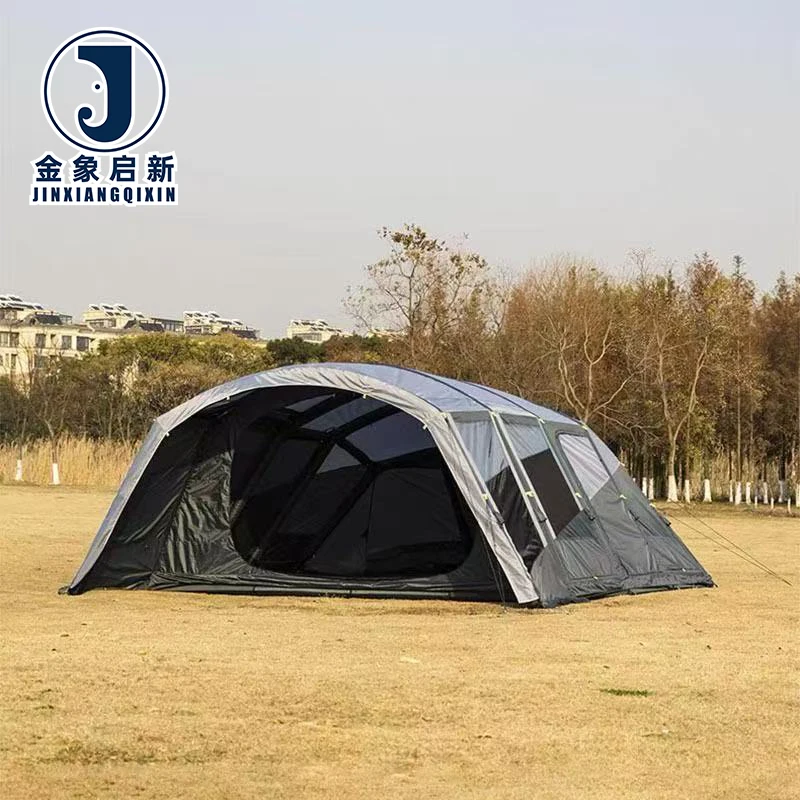
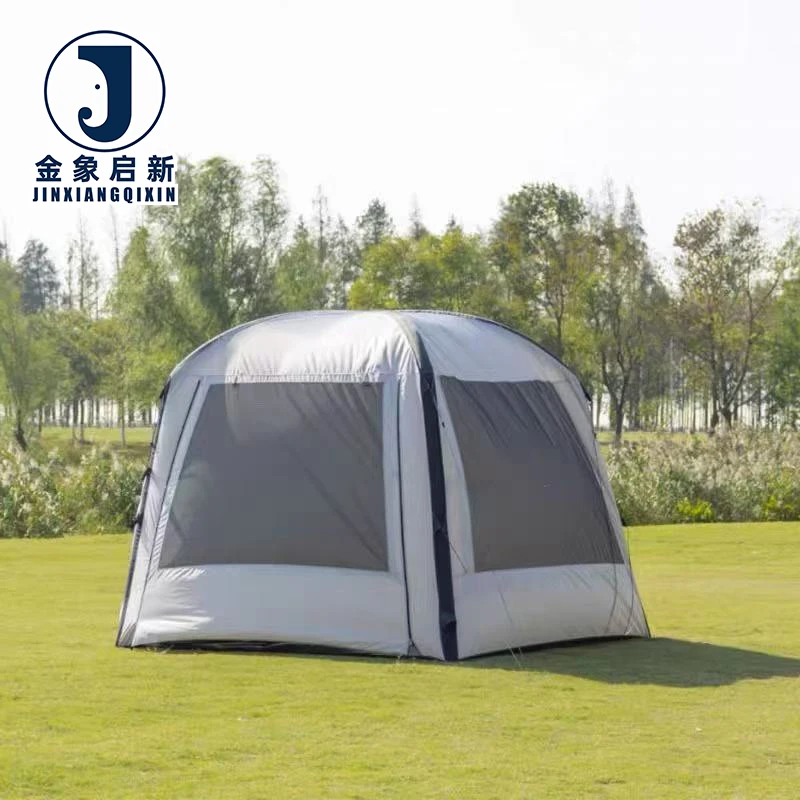
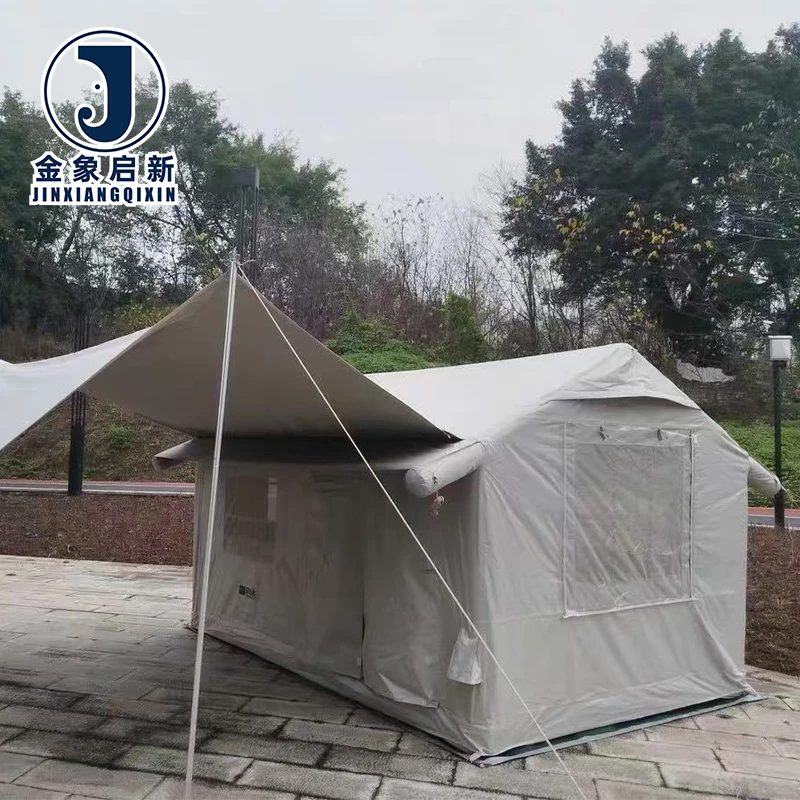
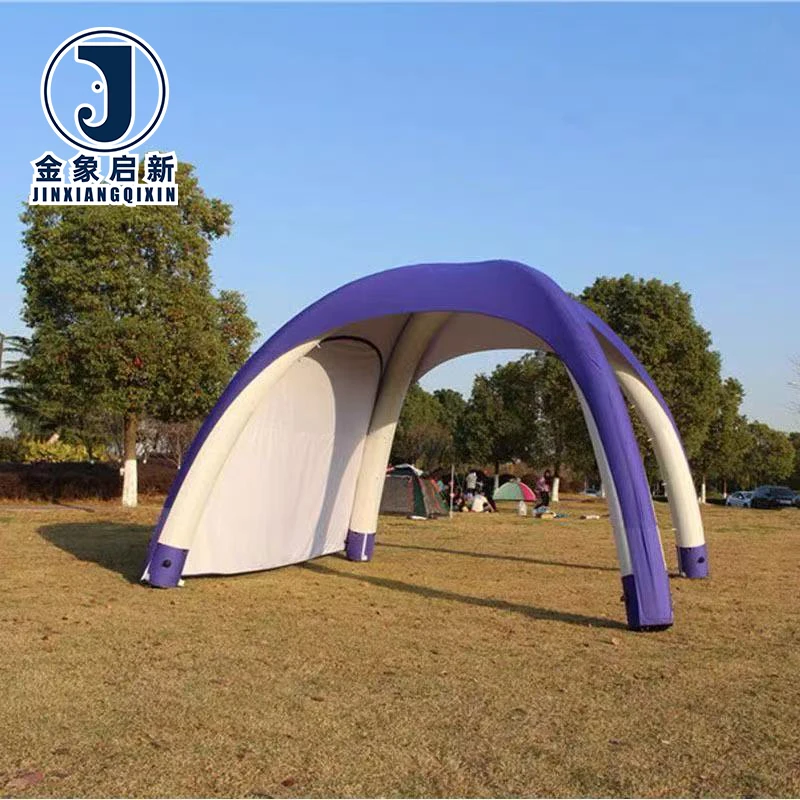
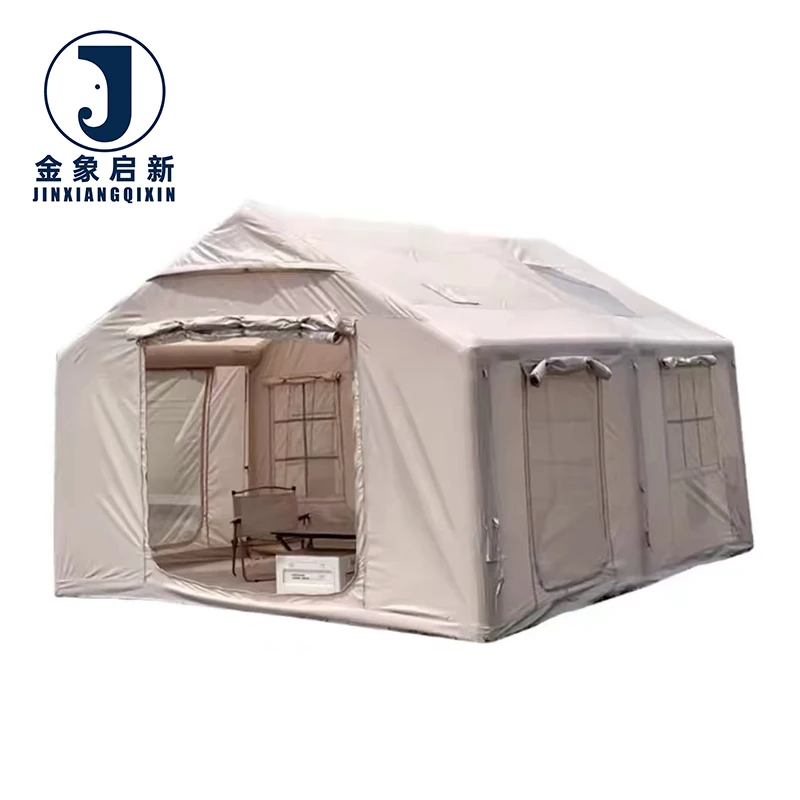
Certified Technical Compliance — every inflatable tent fabric order ships with fire-retardant and anti-static test reports cross-referenced to your site’s regulatory framework, backed by 30 years of coated fabric process control.
Technical Specifications
| Parameter | Value |
|---|---|
| Product Type | Inflatable Tent |
| Core Material | PVC tarpaulin |
| Structure | Single-layer PVC tarpaulin |
| Waterproof Performance | Fully waterproof coated construction |
| UV Resistance | UV-resistant additives (test basis available on request) |
| Fire Retardancy | Fire-retardant treatment (grade not stated — confirm grade required for your market) |
| Anti-Static Property | Anti-static treatment (standard not stated — confirm standard required for your site) |
| Tear Resistance | Tear-resistant PVC construction |
| Customization | OEM & ODM: sample customization, pattern printing, size configuration |
| Quality Control | Full-process QA/QC with 24-hour pressure testing before shipment |
| Certifications | ISO 9001, ISO 14001, ISO 45001, CE |
Application Suitability
| Application | Exposure & Requirement |
|---|---|
| Commercial glamping resorts | Year-round weather exposure, guest safety compliance, fire-retardant certification for permanent semi-permanent structures |
| Outdoor event venues | Rapid deployment and teardown cycles, UV exposure during extended installations, crowd safety standards |
| Temporary hospitality facilities | Seasonal reconfiguration, wind load resistance, fire code compliance for public occupancy |
| Specialist inflatable structure contractors | Certified technical fabric documentation for aviation, mining, and construction site approvals |
Why Inflatable Tent Fabric Without Certification Creates Site Liability
Specified fire-retardant and anti-static inflatable tent fabric that arrives without matching documentation fails inspection before it ever gets inflated.
Commercial glamping operators and event venue contractors routinely specify certified technical fabric for inflatable shelters, only to receive material with generic claims and no test report tied to a recognized standard. When the local fire marshal or site safety officer asks for the grade, the conversation stops. The tent stays in its packaging while the project timeline slips. [NEED_CITE: fire safety compliance requirements for temporary membrane structures]
Fire-Retardant Grades and What They Actually Mean on Site
Not every fire-retardant claim carries the same weight. Inflatable tent fabric used in commercial glamping must align with the specific classification your jurisdiction enforces — whether that references DIN 4102, NFPA 701, or a local building code adaptation. Our PVC tarpaulin is treated for fire retardancy, and we supply the test report that states the grade achieved. Before you commit to a production run, confirm the exact classification your site requires so the documentation matches the specification on arrival.
Anti-Static Performance in Inflatable Membrane Structures
Static charge accumulation on inflatable tent surfaces creates attraction of dust and particulate matter, and in certain environments poses a discharge risk near sensitive equipment. Anti-static treatment in our inflatable tent fabric addresses this through the PVC coating formulation. The relevant standard for your project — whether mining ventilation adjacency, aviation maintenance hangars, or general commercial use — determines which test method applies. [NEED_CITE: anti-static testing standards for coated technical fabrics] Request the specific test report that corresponds to your compliance framework before finalizing the order.
Reading the Specification Sheet Beyond the Headline Numbers
Single-layer PVC tarpaulin construction in inflatable tent applications balances structural rigidity against transport weight. The coating weight and base fabric denier work together: a heavier coating without sufficient base fabric density produces a stiff panel that cracks at fold lines during repeated inflation cycles, while a dense base fabric with insufficient coating mass leaves the weave exposed to moisture ingress. UV-resistant additives are compounded into the PVC layer to slow degradation from prolonged sun exposure — request the test basis to verify performance expectations against your installation’s latitude and seasonal UV index. The 24-hour pressure test applied before shipment confirms that welded seams and panel joints hold under sustained inflation, which is where most field failures originate when process control is absent.
The Hidden Cost of Undocumented Technical Properties
When fire-retardant or anti-static claims lack a grade or standard reference, the buyer absorbs all the risk. A tent that passes visual inspection but fails a site flame test must be removed, returned, and replaced — often during the peak season when the glamping resort or event venue cannot afford downtime. [NEED_CITE: cost implications of non-compliant membrane structure removal] Batch inconsistency in anti-static treatment across a multi-tent order means some units pass while others do not, creating a patchwork of compliant and non-compliant shelters on the same site. These failures trace back to coating formulation control and in-process verification, not to the base fabric itself.
Why Technical Buyers Source Inflatable Tent Fabric Here
Our 10-person R&D team develops inflatable tent fabric formulations against your site’s specific compliance requirements, producing sample panels with documented fire-retardant and anti-static values before bulk production begins. Three full production lines and 36 sets of professional processing equipment support volume orders while maintaining batch-to-batch consistency in coating weight and additive distribution. Dedicated QA and QC staff conduct in-process inspection at every coating and welding stage, not just final visual checks. The 24-hour pressure test on every completed tent verifies seam integrity under sustained load — a step that catches weld defects before they become field failures. ISO 9001, ISO 14001, ISO 45001, and CE certifications are maintained across our management systems and available for audit review.
Documentation & Verification
- Material specification sheet stating PVC coating weight, base fabric construction, and colour reference for each roll
- Fire-retardant test report with grade classification matched to your site’s regulatory requirement
- Anti-static test report referencing the specific standard applicable to your operating environment
- 24-hour pressure test record for each inflatable tent unit confirming seam and panel integrity
- ISO 9001, ISO 14001, ISO 45001, and CE certificates current at the time of dispatch
- Pre-shipment inspection record covering dimensional accuracy and surface quality verification
Fabrication, Handling & Storage
- Heat-weld PVC tarpaulin panels using temperature and dwell settings matched to the single-layer coating weight to avoid burn-through or cold joints
- Store rolled inflatable tent fabric on flat racks away from point loads that create permanent crease marks in the PVC coating
- Use compatible PVC solvent cleaners only — aggressive chemical agents degrade the fire-retardant and anti-static surface treatment
- Allow cold-stored fabric to reach ambient temperature before inflation to prevent low-temperature stiffness cracking at welded seams
- Plan panel cutting layout against the roll width to minimize welded seam count and maximize material utilization
What We Need to Quote Your Inflatable Tent Project
Provide the fire-retardant classification and anti-static standard your site mandates so we can match the coating formulation and prepare the corresponding test documentation. Specify the tent dimensions, inflation pressure range, and whether you require finished units or fabric rolls for your own fabrication. Confirm colour references, pattern printing requirements, and annual volume to establish production scheduling and batch consistency parameters.
Frequently Asked Questions
Q: What fire-retardant grade does the inflatable tent fabric carry, and does it match my site’s regulatory requirements?
A: Our PVC inflatable tent fabric is produced with fire-retardant treatment and shipped with a test report stating the achieved grade. Because regulatory frameworks vary by jurisdiction — DIN 4102, NFPA 701, or local building codes — we need your specific classification requirement before production to ensure the formulation and documentation align with your site’s compliance obligations.
Q: How is anti-static performance measured and certified for inflatable structures?
A: Anti-static properties in our inflatable tent fabric are achieved through the PVC coating formulation and verified by test methods appropriate to your application environment. Mining, aviation, and general commercial sites reference different standards. Request the test report corresponding to your compliance framework during the sample approval stage so the certification matches your site documentation requirements.
Q: What does the 24-hour pressure test cover, and can I receive the test report with my shipment?
A: Each completed inflatable tent undergoes continuous inflation for 24 hours under monitored conditions to verify welded seam integrity and panel stability. This test identifies coating adhesion failures, weld defects, and valve leaks before dispatch. The pressure test record for your specific units ships with the order documentation package.
Q: What OEM customization options are available for size, pattern printing, and material configuration?
A: Our R&D team handles OEM and ODM development including custom tent dimensions, pattern printing for branding, and PVC tarpaulin thickness adjustments. Sample panels are produced for approval before bulk runs. All customization parameters — dimensions, print specifications, coating weight — are documented on the parameter sheet that accompanies your shipment.
Q: What documentation ships with each inflatable tent order?
A: Every shipment includes a material specification sheet, fire-retardant and anti-static test reports, 24-hour pressure test records, pre-shipment inspection documentation, ISO and CE certificates, and a packing list. Certificate of origin and customs support documents are provided for export orders upon request.