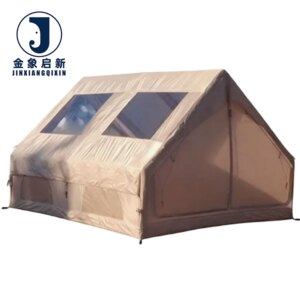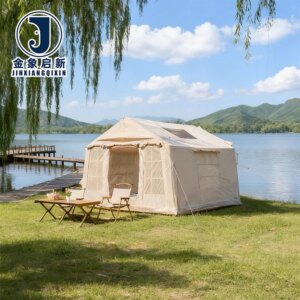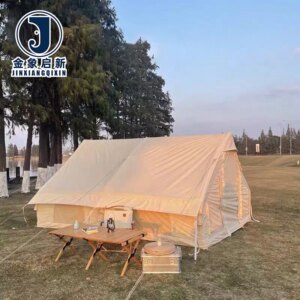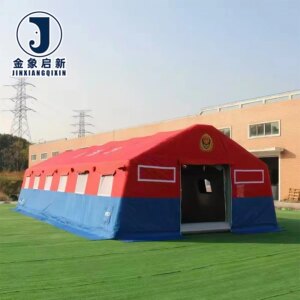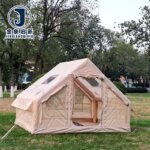
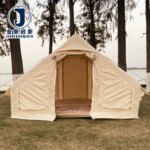
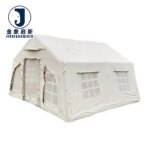
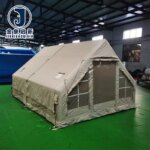

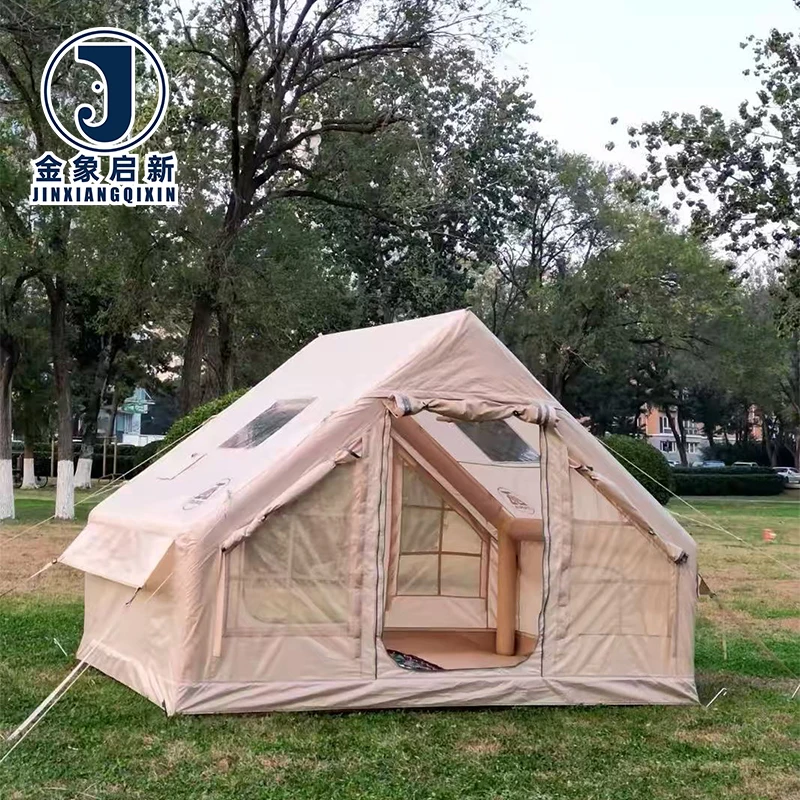
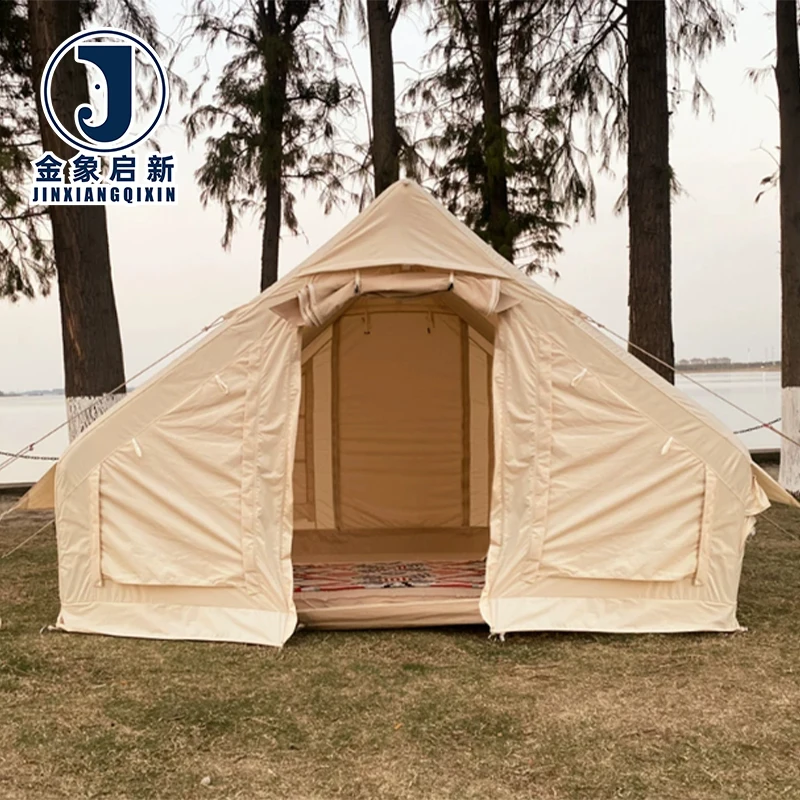
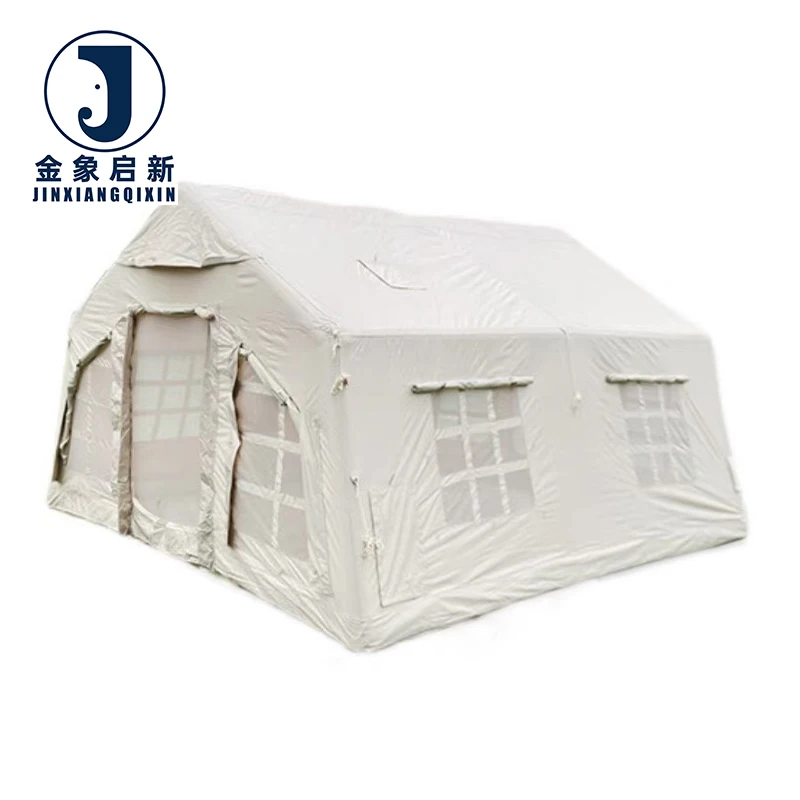
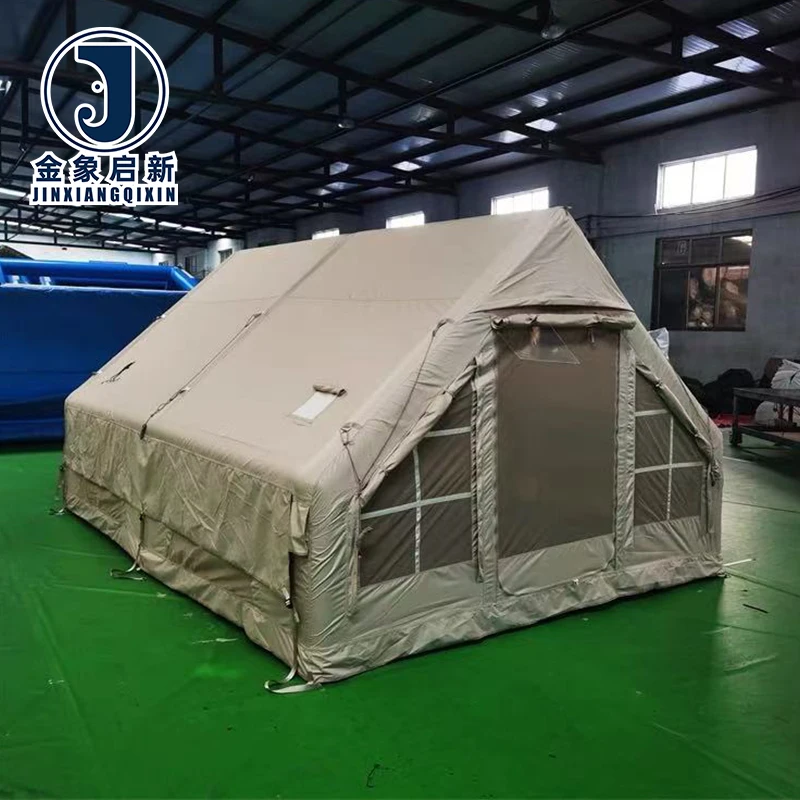
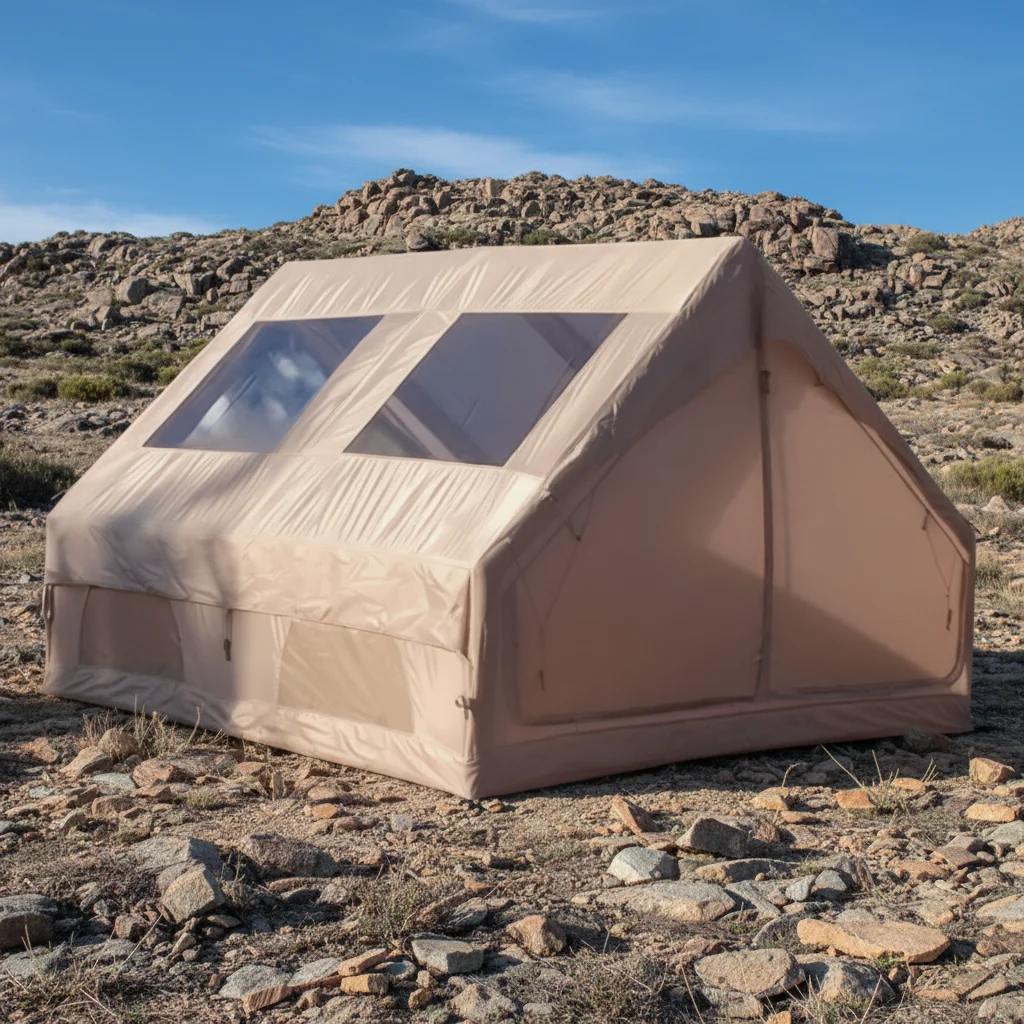
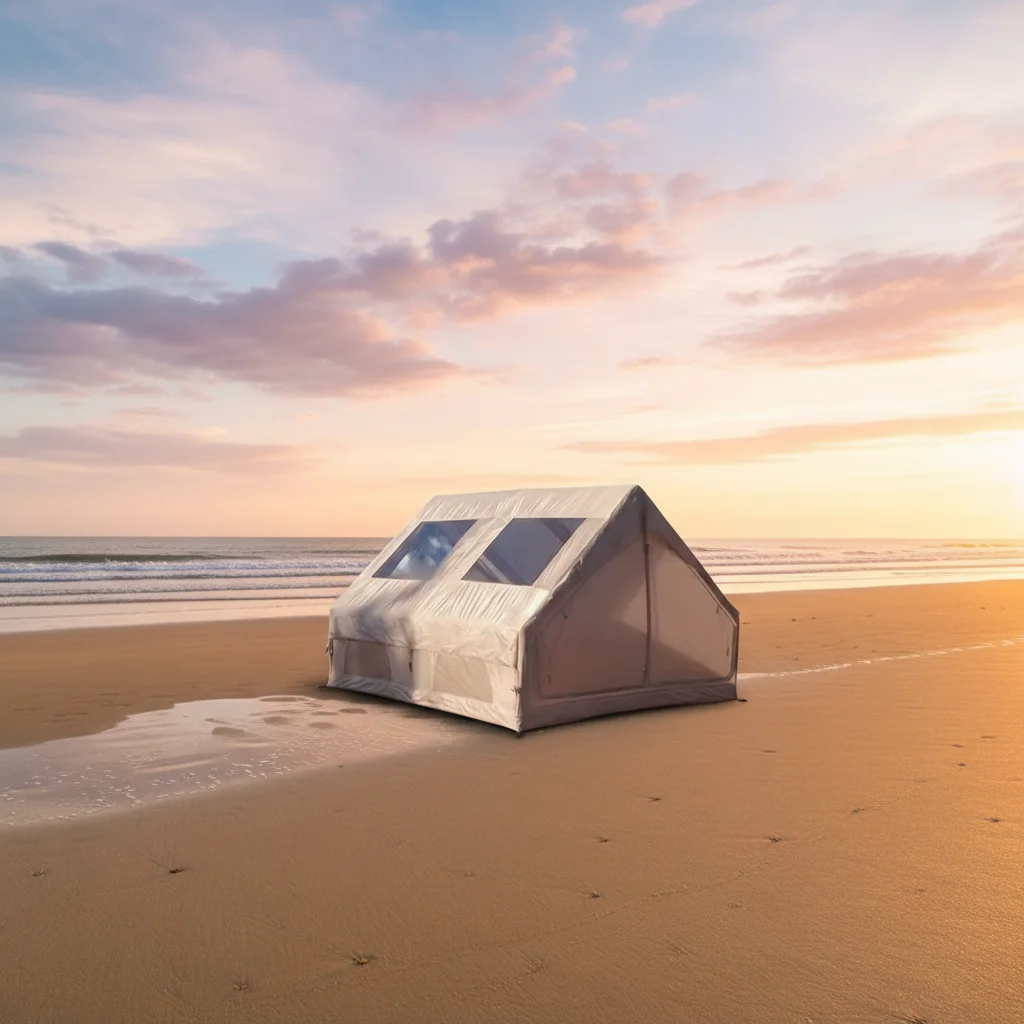
Deep Process Control Over Coating Adhesion — Every PVC inflatable tent undergoes mandatory inflation testing before shipment to verify structural integrity and deployment functionality in the field.
Technical Specifications
| Parameter | Value |
|---|---|
| Product Type | Inflatable Tent |
| Core Material | PVC waterproof fabric |
| Key Performance | Waterproof, UV-resistant, tear-resistant |
| Product Forms | Automatic opening, four-season design, single layer construction, extended type |
| Customization | OEM & ODM customization, sample customization, pattern printing |
| Quality Control | Full-process inspection with dedicated QA & QC staff |
| Inflation Testing | Mandatory pre-shipment inflation test per unit |
| Standards | ISO9001, ISO14001, ISO45001, CE |
Application Suitability
| Application | Exposure & Requirement |
|---|---|
| Mining and tunnelling emergency shelters | Compliance-certified structures for rapid deployment in remote sites with limited infrastructure |
| Aviation and construction field operations | Temporary command centers and equipment shelters requiring quick inflation and teardown |
| Disaster relief and emergency response | Four-season rated structures enduring temperature fluctuations and sustained UV exposure |
| Remote project site accommodation | Extended outdoor deployment with waterproof and tear-resistant fabric performance |
Compliance Certification Gaps That Delay Specialist Projects
When an inflatable tent arrives at a mining or tunnelling site without the fire-retardant or anti-static certification the project safety plan demands, work stops until compliant documentation is produced or the structure is replaced. This gap between what was ordered and what arrived on site creates cascading delays across the entire project timeline. Certified PVC inflatable tent units must ship with verifiable test data matched to the specific compliance framework of the destination market. Procurement teams regularly discover that suppliers quote a tent as "fire retardant" without specifying which standard it meets, leaving site safety officers unable to approve installation [NEED_CITE: fire classification standards for temporary structures in mining environments]. The PVC inflatable tent supplied for industrial emergency use must carry documentation that aligns with the regulatory requirements of aviation, mining, or construction authorities before it leaves the factory floor.
Ventilation and Shelter Compliance for Hazardous Environments
Industrial sites operating under strict safety regimes need more than a waterproof cover. A PVC inflatable tent deployed in a mining or tunnelling operation must satisfy the fire-retardant and anti-static requirements written into the site ventilation and emergency shelter plan. The fabric specification, the inflatable bladder construction, and the automatic opening mechanism each carry compliance implications that must be documented before deployment begins.
Rapid Deployment Under Operational Pressure
Emergency response and specialist field operations measure shelter performance in minutes, not days. The automatic opening mechanism on this inflatable tent reduces the time between arrival and operational readiness, a factor that matters when disaster relief teams or construction crews need functional shelter immediately. Each unit is inflation-tested at the factory to confirm that the bladder system holds pressure and the structure achieves its intended geometry before it ships [NEED_CITE: inflation testing protocols for industrial temporary structures].
Reading the Material Specification Beyond the Headline Number
The PVC waterproof fabric used in this inflatable tent carries performance characteristics that interact with each other during field use. Waterproof performance depends on the coating weight and the integrity of the seam welding, not the base fabric alone. Tear resistance is governed by the denier of the base yarns and the density of the weave — a high GSM reading means little if the base fabric uses low-denier yarns in a loose weave. The UV-resistant treatment must be confirmed against a test standard relevant to the deployment climate; asking for the test report and matching it to your market requirements prevents unpleasant surprises months into outdoor exposure [NEED_CITE: UV degradation test methods for PVC coated fabrics]. The single layer construction of this tent relies on the coating performing multiple functions simultaneously — waterproofing, UV shielding, and surface durability — making the coating formulation and adhesion quality central to long-term field behaviour.
The Hidden Cost of Undocumented Inflatable Tent Specifications
A tent that inflates perfectly in the factory can behave differently at altitude or in sub-zero temperatures if the PVC formulation was not selected for those conditions. When batch-to-batch material consistency is not enforced, one unit in an order may pass site inspection while the next fails the same test. Welded seams on inflatable structures carry the full internal pressure load; if the welding parameters do not match the specific coating chemistry of that production batch, the seam becomes the failure point rather than the fabric itself [NEED_CITE: weld strength testing for PVC inflatable structures]. Colour variation between units in the same order signals inconsistent coating batches, which often correlates with variation in coating weight and performance properties.
Why Source This Inflatable Tent From Jinxiang
Nearly 30 years of continuous coated fabric production means the coating formulation, welding parameters, and inflation testing procedures have been refined through thousands of production cycles. Three full production lines with 36 sets of professional processing equipment give the factory capacity to handle bulk orders without subcontracting critical processes. The 10-person R&D team manages OEM and ODM customization directly, adjusting tent dimensions, material specifications, and pattern printing to match project requirements. Full-process quality inspection with dedicated QA and QC staff on site catches coating defects, seam weaknesses, and inflation failures before any unit is packed. Every inflatable tent ships with the ISO9001, ISO14001, ISO45001, and CE documentation required for compliance audits at the destination site.
Documentation & Verification
- Material specification sheet detailing PVC coating weight, base fabric denier, and weave density per production batch
- Fire-retardant and anti-static test reports matched to the certification framework specified in your purchase order
- Pre-shipment inflation testing record confirming structural integrity and deployment functionality for every unit
- ISO9001, ISO14001, ISO45001, and CE certification documents included with each shipment
- Batch-specific quality inspection report covering waterproof performance, tear resistance, and coating adhesion
Fabrication, Handling & Storage
- Weld temperature and dwell time must match the specific PVC coating formulation used on this inflatable tent batch
- Store rolled units vertically in a dry, shaded environment to prevent permanent creasing of the PVC waterproof fabric
- Avoid dragging the single layer PVC construction across abrasive surfaces during deployment to protect the coating
- Use only PVC-compatible cleaning agents to preserve the UV-resistant treatment on the fabric surface
- Inspect all welded seams before each inflation cycle, focusing on high-stress junction points near the base
Requesting a Specification for Your Project
Provide the intended deployment environment, the compliance standards your site safety plan references, and the quantity required so we can confirm material availability and lead time. Specify whether you need standard sizing or OEM and ODM customization including dimension adjustments and pattern printing. Indicate whether sample approval is required before bulk production proceeds.
Frequently Asked Questions
Q: What fire-retardant or anti-static certifications are available for inflatable tents used in mining or tunnelling?
A: We supply inflatable tents with fire-retardant and anti-static fabric options. The specific grade must match your site safety plan and local regulatory framework. Share the standard your project requires, and we will confirm the available grade and provide the corresponding test report with your shipment documentation.
Q: How is batch-to-batch material consistency ensured across large industrial orders?
A: Every production batch undergoes coating weight verification, colour matching, and inflation testing before dispatch. Our dedicated QA and QC staff inspect each unit against the batch specification sheet. This ensures that every PVC inflatable tent in your order performs identically regardless of production date.
Q: What UV-resistance test data supports the four-season outdoor deployment claim?
A: The UV-resistant treatment applied to our PVC waterproof fabric is available in different grades suited to varying exposure conditions. Request the test report for the grade applicable to your deployment climate, and we will provide data supporting the material performance for your specific environment.
Q: What OEM and ODM customization is available for size, printing, and material specifications?
A: Our 10-person R&D team handles custom tent dimensions, pattern printing, and material specification modifications. We develop samples for approval before bulk production. Provide your size requirements, branding specifications, and any special performance needs to receive a sample development timeline.
Q: What documentation is included with each shipment for site compliance audits?
A: Each shipment includes ISO9001, ISO14001, ISO45001, and CE certificates, a material specification sheet, a pre-shipment inflation testing record, and a batch-specific quality inspection report. Additional fire-retardant or anti-static test reports are included when those treatments are specified in the purchase order.