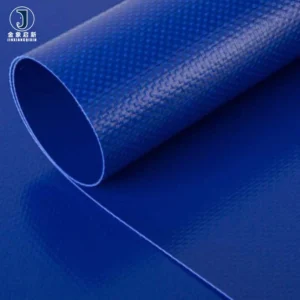


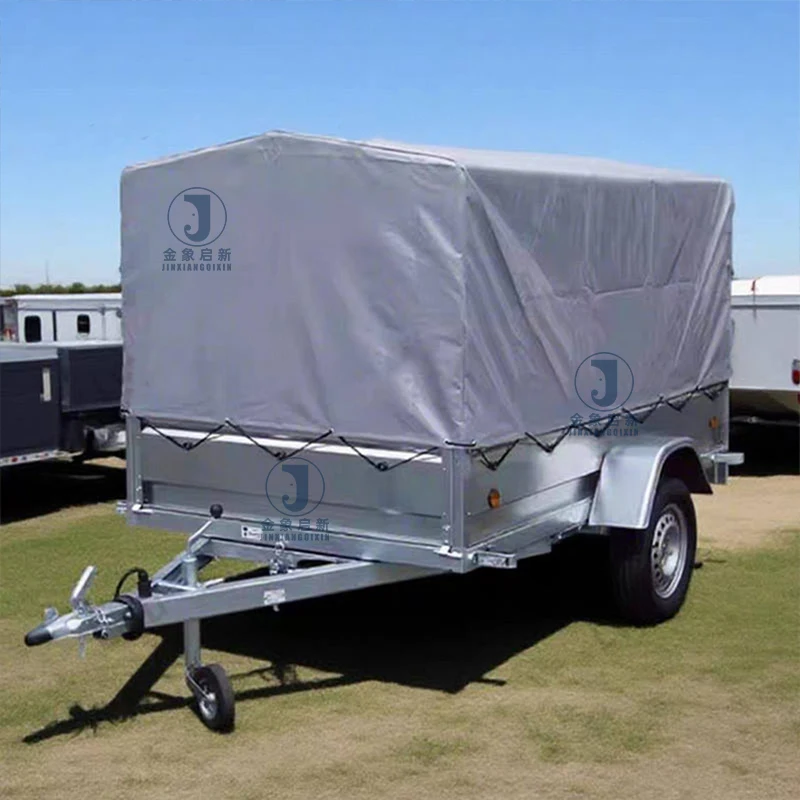
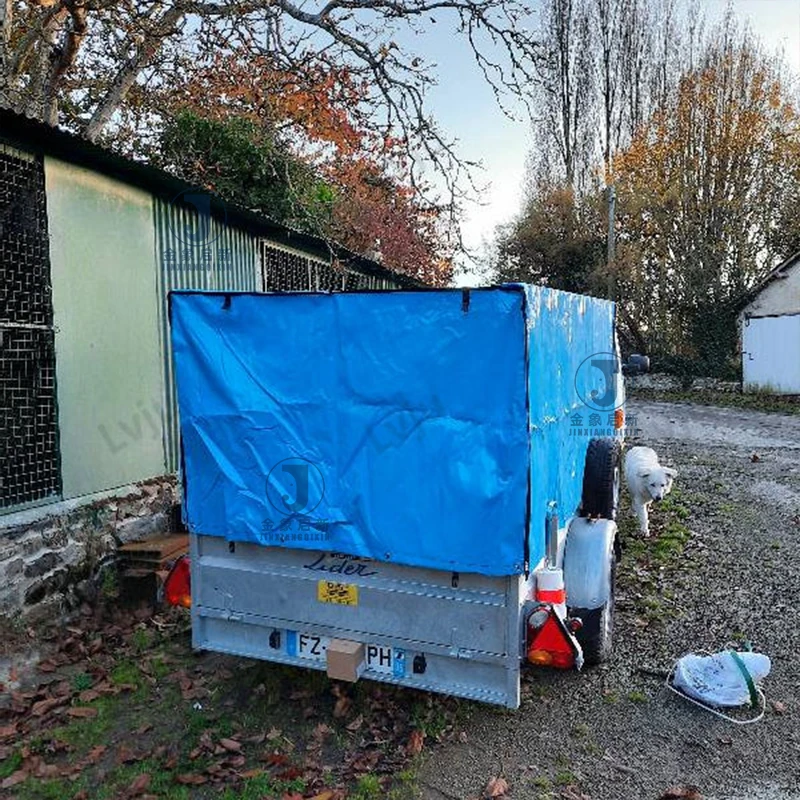
Deep Coating Process Control — Every roll of industrial ventilation fabric passes through multi-stage coating verification to ensure adhesion strength meets duct fabrication demands, with test reports supplied per shipment.
Technical Specifications
| Parameter | Value |
|---|---|
| Product Type | PVC Coated Tarpaulin |
| Base Material | High-strength polyester mesh fabric with PVC coating |
| Coating Method | Laminated technology & Hot-melt coating technology |
| Available Weight Grades | 350gsm / 420gsm / 500gsm / 550gsm / 600gsm / 750gsm |
| Available Thickness | 0.32mm / 0.35mm / 0.4mm / 0.45mm / 0.5mm / 0.65mm |
| Roll Dimensions | 2m × 75m or 2.1m × 50m |
| Colour Options | Blue / Red / Yellow / Light blue / Grey (Customized) |
| Key Features | Cold crack resistance, anti-mildew, waterproof, sunproof |
| Special Treatments | Flame retardant (grade not stated), anti-static (grade not stated), anti-cold, 3P |
| Certifications | ISO, CE |
Application Suitability
| Application | Exposure & Requirement |
|---|---|
| Mine and tunnelling ventilation ducts | Continuous pressurised airflow, suspended underground, fire-retardant compliance required |
| Aviation hangar air distribution | Indoor climate control ducts, anti-static surface specification, large diameter fabrication |
| Membrane and inflatable structures | Tensile load under inflation pressure, welded seam integrity, weather exposure |
| Temporary construction ventilation | Dust-laden airstreams, UV exposure on surface sections, frequent repositioning |
| Industrial exhaust and fume extraction | Chemical-laden airflow, heat proximity, anti-static discharge risk |
Why Ventilation Duct Fabric Fails at the Weld Line
Seam failure in pressurised ducts is rarely a fabric problem — it is a coating adhesion problem.
When a ventilation duct pressurises, the highest stress concentrates at the welded seam where two panels join. If the PVC coating does not bond to the polyester base with sufficient peel strength, the weld separates long before the fabric itself reaches its tensile limit. I have seen heavy-grade coated rolls fail at the weld line while the body fabric remained intact — the failure surface always shows clean polyester yarns with no coating residue, indicating poor adhesion at the manufacturing stage. Laminated and hot-melt coating methods differ significantly in how deeply the PVC penetrates the mesh structure, and this penetration depth directly determines whether a heat-welded seam will hold under sustained duct pressure. [NEED_CITE: tensile and tear test methods for coated fabrics per ISO 1421]
Coating Adhesion and Duct Fabrication Integrity
Laminated technology bonds the PVC film to the polyester mesh under heat and pressure, creating a uniform coating layer with consistent thickness across the roll width. For PVC Coated Tarpaulin fire retardant / anti-static / certified applications, this method delivers predictable heat-welding behaviour because the coating thickness does not vary from edge to centre. Hot-melt coating pushes liquid PVC into the mesh interstices, producing stronger mechanical anchoring but requiring precise temperature control during both manufacture and downstream welding.
Choosing the Right Grade for Airflow Pressure
Duct diameter and operating pressure determine which weight grade is appropriate. Smaller diameter ducts running at lower static pressure perform adequately with lighter grades, while large-bore mine ventilation systems operating at higher pressure demand heavier constructions. The 0.32mm to 0.65mm thickness range covers this spectrum, but thickness alone does not predict burst strength — the base fabric denier and weave density contribute equally to the duct’s pressure rating. Fabricators should match grade selection to both the pressure specification and the welding equipment capability. [NEED_CITE: ventilation duct pressure classifications for underground mining]
Understanding Weight, Base Fabric and Coating Balance
GSM measures total weight per square metre but combines two distinct components: the polyester base fabric and the PVC coating. A 750gsm fabric with a heavy coating over a light base mesh will have different tear propagation characteristics than a 550gsm fabric built on a denser, heavier yarn construction. Laminated coatings sit on the surface, so peel strength depends on bond quality rather than coating thickness. Hot-melt coatings penetrate deeper, improving peel strength but adding weight. For duct applications where welded seam integrity is critical, the coating-to-fabric ratio matters more than total GSM — a specification sheet should state both base fabric weight and coating weight separately to allow informed comparison.
The Cost of Specifying Without Test Documentation
A duct fabric specified as fire retardant without a stated grade creates compliance risk on site. Mining and aviation projects require documented proof of fire classification — a claim without a test report referencing a recognised standard leaves the contractor exposed during inspection. Similarly, anti-static treatment must be quantified by surface resistance measurement to confirm suitability for environments where static discharge poses ignition risk. Colour inconsistency between rolls in the same duct installation is immediately visible once fabricated and suspended, yet this defect only becomes apparent after fabrication labour has been spent. These failures trace back to procurement decisions made without requesting test documentation before order confirmation. [NEED_CITE: DIN 4102 fire classification for building materials]
Why Fabricators and Contractors Source This Material Here
Three full production lines with 36 sets of professional equipment support bulk roll volumes with consistent coating weight across the production run — critical when multiple rolls must weld identically on the fabrication floor.
A 10-person R&D team develops custom samples within days, allowing fabricators to trial weld parameters and confirm seam strength before committing to a production order.
Dedicated QA/QC inspection at every production stage means coating adhesion and weight are verified during manufacturing, not only at final dispatch — reducing the risk of weld-line surprises during duct fabrication.
ISO and CE certified production processes provide the documentation trail that mining and aviation contractors need for project compliance submissions.
Material specification sheets stating GSM, base fabric details, coating method, and applicable test reports travel with each shipment, giving fabricators the data they need to set welding machine parameters with confidence.
Documentation & Verification
- Material specification sheet stating exact GSM, base fabric construction, and coating method per roll
- Fire-retardant test report with grade and standard reference — available in flame retardant grades, confirm the grade required for your market
- Anti-static surface resistance measurement with stated test basis and measurement conditions
- Pre-shipment inspection record confirming weight and dimensional compliance before dispatch
- Certificate of origin and customs documentation package included with every shipment
Fabrication, Handling & Storage
- Heat-weld temperature must match coating method — laminated and hot-melt coatings require different platen settings for optimal seam strength
- Store rolls upright on cores to prevent flat-spotting and crease marks that affect weld quality
- Unroll and allow PVC coated fabric to acclimatise before fabrication, particularly in cold weather conditions
- Cut patterns should account for 2m or 2.1m roll widths to minimise longitudinal seams on large-diameter ducts
- Anti-mildew treatment maintains fabric integrity during humid storage between fabrication and site installation
- Cold crack resistance allows handling and fabrication in sub-zero workshop environments without coating damage
What We Need to Quote Accurately
Provide the duct diameter range, operating static pressure, and any fire-retardant or anti-static standards your project specification mandates. Confirm whether you require roll stock for in-house fabrication or finished duct sections, along with target roll widths and annual volume estimates. If colour matching across multiple rolls is critical for a visible installation, share your RAL or Pantone reference early so we can develop a sample for approval before production.
Frequently Asked Questions
Q: What fire-retardant grades are available and which standards do they meet?
A: Flame retardant treatments are available across the weight range, but the specific grade must be confirmed against your project standard such as M2, B1, or NFPA 701. Request the test report with the stated grade and standard before confirming your order so compliance documentation aligns with your site requirements.
Q: How is anti-static performance measured and certified for mining applications?
A: Anti-static treatment is applied during coating and measured by surface resistance testing. The measurement method and result value are documented on the test report. Confirm the resistance range your mine safety specification requires so we can match the treatment grade to your compliance threshold.
Q: Can you provide UV test reports if the duct has outdoor exposure?
A: Sunproof treatment is included in the standard specification. Where outdoor exposure is prolonged and project documentation demands a UV resistance test report, this can be arranged. Share the test standard your specification references so the correct report accompanies your shipment documentation.
Q: What GSM and thickness do you recommend for high-pressure ventilation ducts?
A: Higher operating pressure generally requires heavier grades from the available 350gsm to 750gsm range, but base fabric denier and weave density are equally important. Share your duct diameter and static pressure specification so we can recommend the grade that balances pressure resistance with fabrication weldability.
Q: Do you supply fabric certified for aviation or ATEX zone compliance?
A: Aviation and ATEX zone projects have specific documentation requirements for fire-retardant classification and anti-static surface resistance. We provide test reports and compliance certificates with each shipment — share your project specification so we can confirm documentation alignment before production.