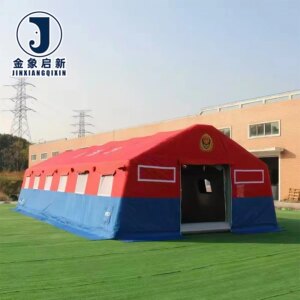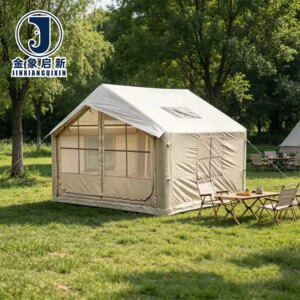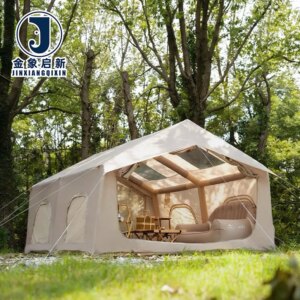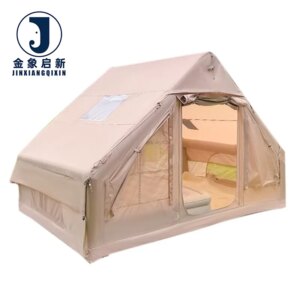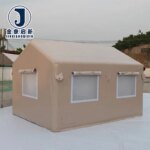
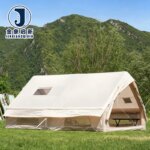
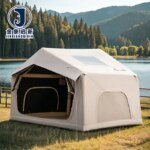
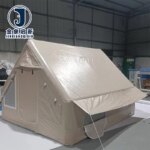
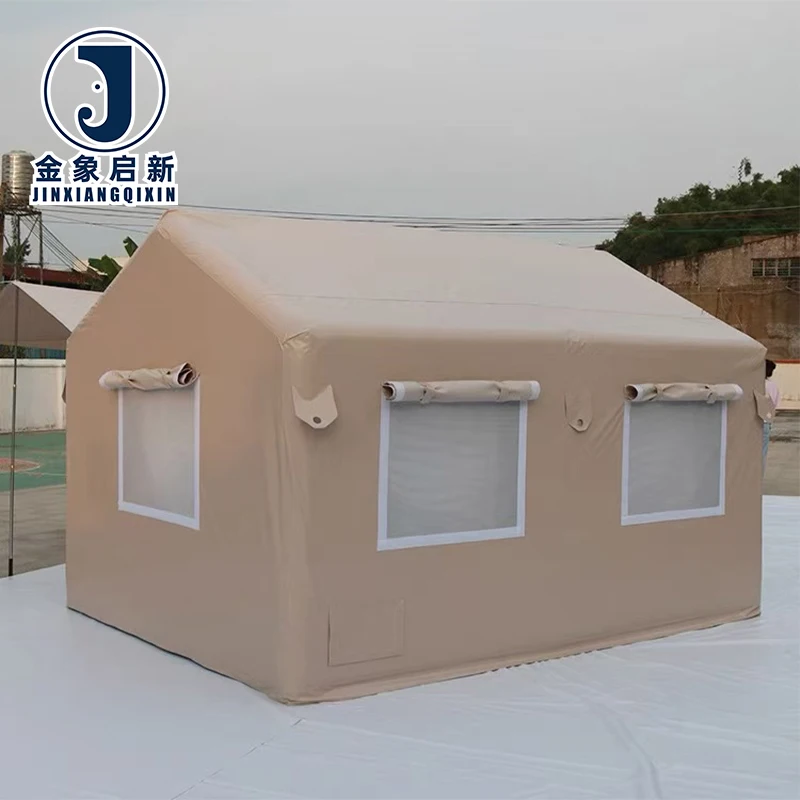
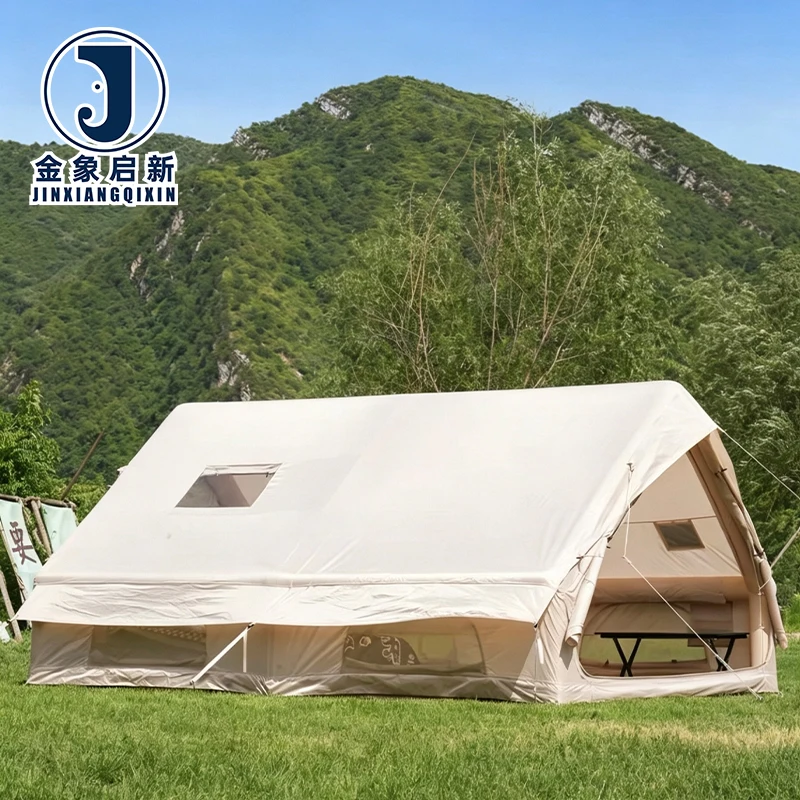
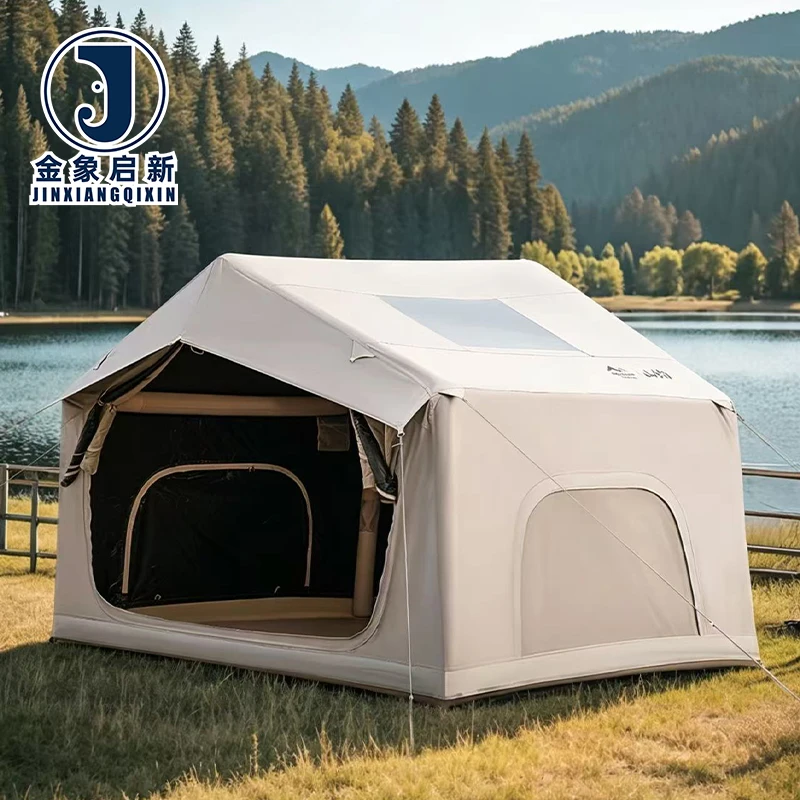
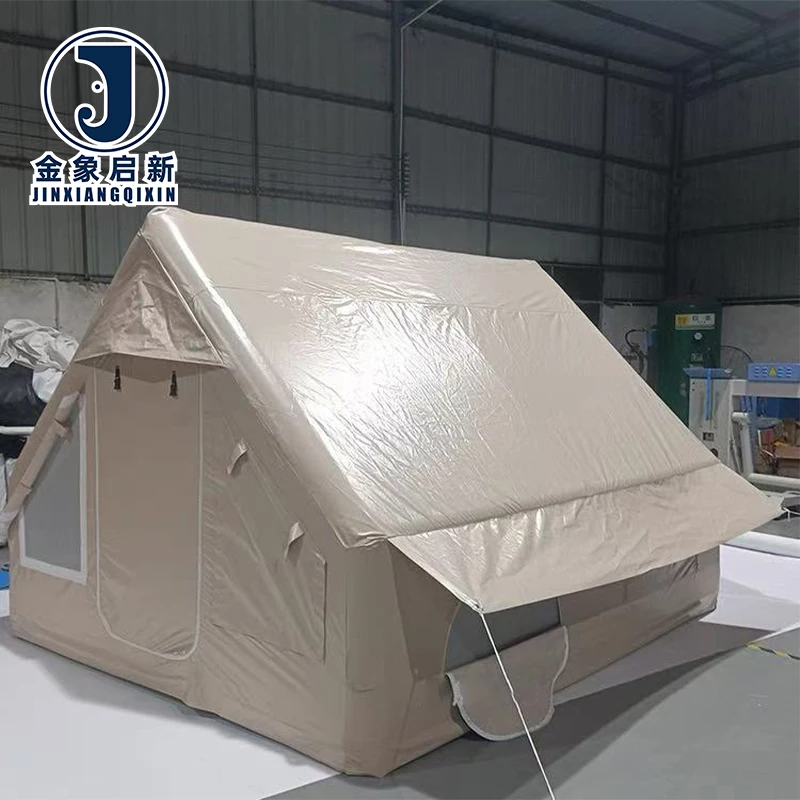
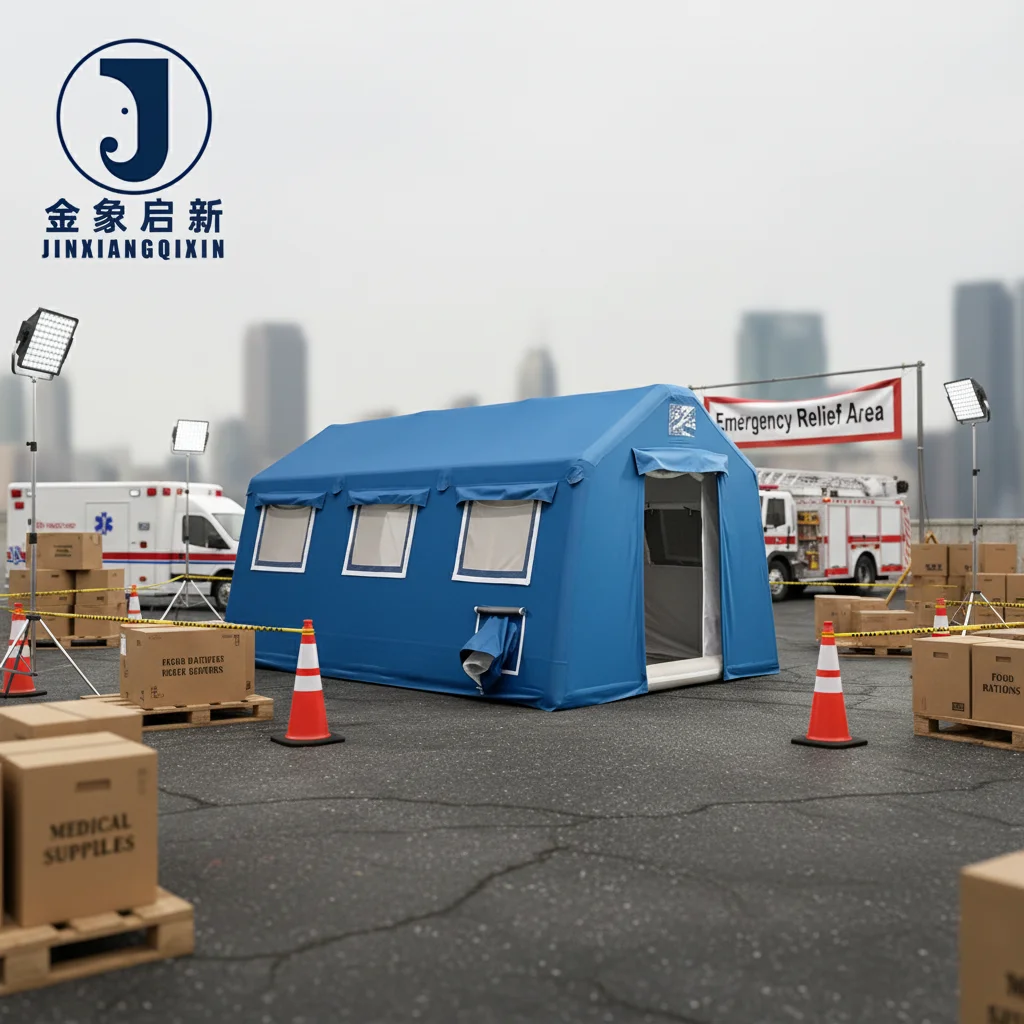
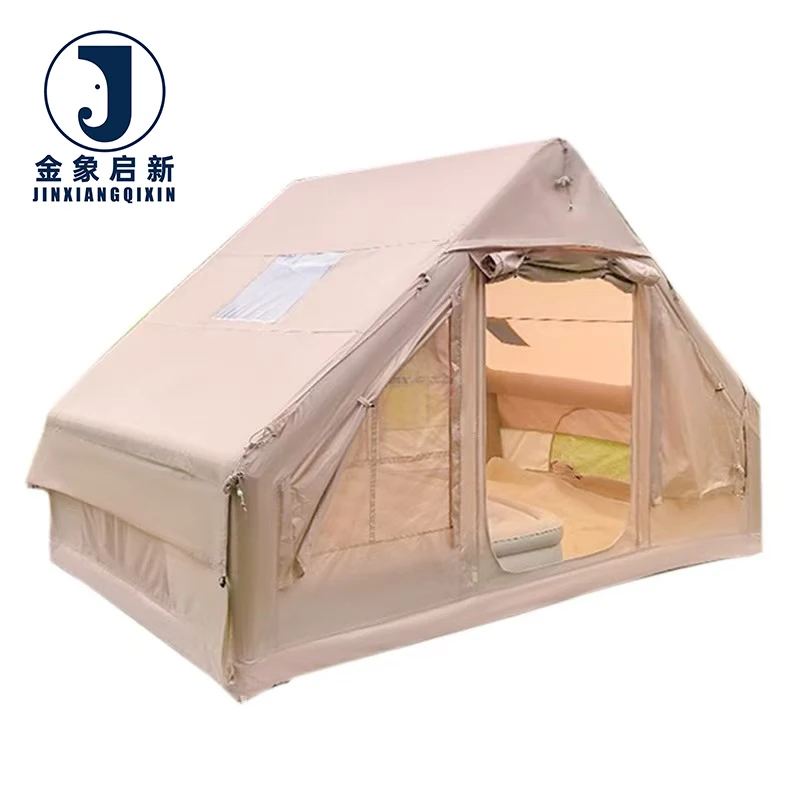
Technical Compliance Fabricated In-House — Our 10-person R&D team formulates fire-retardant and anti-static PVC coatings under ISO and CE systems, so inflatable tent fabric ships with test documentation your site audit demands.
Technical Specifications
| Parameter | Value |
|---|---|
| Product Type | Inflatable Tent |
| Core Material | PVC tarpaulin |
| Material Thickness Range | 0.4mm–1.2mm |
| Waterproof | Stated (test basis not stated in source) |
| UV-Resistant | Stated (test basis not stated in source) |
| Tear-Resistant | Stated (test basis not stated in source) |
| Flame Retardant | Available in flame retardant grades — confirm the grade required for your market |
| Anti-Static | Available in anti-static grades — confirm the standard required for your project |
| Opening Mechanism | Quick automatic opening |
| Season Rating | Four-season |
| Customizable Capacity | 2–8 persons |
| Customization Services | OEM & ODM (sample customization, pattern printing, material selection, product design) |
| Certifications | ISO9001, ISO14001, ISO45001, CE |
Application Suitability
| Application | Exposure & Requirement |
|---|---|
| Mining and tunnelling temporary shelters | Confined ventilation environments requiring fire-retardant certified fabric and anti-static compliance |
| Disaster relief rapid deployment | Time-critical inflation, repeated transport, four-season weather exposure |
| Construction site equipment storage | UV exposure, abrasion from loading and unloading, frequent relocation |
| Logistics field operations | Wind load on inflated structures, ground moisture, temperature fluctuation |
| Agricultural temporary workspace | Prolonged sun exposure, chemical contact from fertilisers, mechanical puncture risk |
| Emergency response operations | Rapid inflation under adverse conditions, compliance with incident command safety standards |
What Happens When Inflatable Shelter Fabric Fails Its Fire Audit
Certified inflatable tent fabric must ship with batch-specific test reports, not a generic certificate downloaded from a website.
Mining and tunnelling sites routinely reject inflatable shelters at the safety inspection because the supplier provided a blanket flame retardant claim without the grade or test method behind it. The shelter sits idle while procurement sources replacement material, and the project timeline slips. We have watched emergency deployment schedules stall for weeks over a missing test document [NEED_CITE: fire classification requirements for temporary industrial shelters].
Coating Formulation for Inflatable Tube Structures
Inflatable tent tubes undergo repeated expansion and contraction with every inflation cycle, placing demands on the PVC coating that static structures never encounter. The coating must maintain adhesion to the base fabric across this flex range without micro-cracking at the weld seams. Our PVC inflatable tent fabric is coated to match the structural behaviour of air-supported tubes, balancing flexibility with dimensional stability so the inflated form holds under wind load without excessive stretch.
Fire-Retardant and Anti-Static Compliance in Ventilated Environments
Temporary shelters on mining and construction sites operate within ventilation networks where fire propagation and static discharge carry real consequences. The PVC formulation can be compounded with fire-retardant additives and anti-static agents, but the critical step is testing the finished material — not just the raw chemical input — and documenting the result against the standard your jurisdiction enforces [NEED_CITE: anti-static testing standards for fabric in hazardous environments]. We supply Inflatable Tent Fabric fire retardant anti-static certified with reports aligned to your target market, so the compliance paperwork arrives with the fabric rolls.
Reading the Thickness Range Against Structural Load
Material thickness from 0.4mm to 1.2mm spans a broad structural range, and selecting the correct point within that range determines how the inflatable frame behaves under internal pressure and external wind load. Thinner gauges inflate quickly and pack compactly for disaster relief kits, while heavier gauges sustain higher inflation pressures and resist puncture from ground debris at construction sites. The base fabric denier and weave density interact with coating thickness to govern tear propagation — a thick coating over a loosely woven base will crack before it tears, while a dense base with moderate coating resists both puncture and tear spread. Choosing the correct combination requires knowing the inflation pressure the tube must hold, the maximum wind speed the structure will face, and how many inflation cycles the material must survive. Temperature range also matters: PVC softens in sustained heat and stiffens below freezing, which affects both inflation behaviour and seam integrity during deployment.
When the Wrong Specification Reaches the Site
A thickness chosen for weight savings rather than structural demand leads to tube deformation under wind load, and the shelter loses its shape before its rated service period ends. Inflatable tent fabric supplied without fire-retardant documentation gets rejected at the site gate, forcing emergency procurement at a premium. Colour variation across rolls in a multi-unit deployment becomes visible once the structures stand side by side, undermining the professional appearance a relief agency or contractor requires. Heat-welded seams on material not formulated for thermal bonding fail at the flex point, and the tube deflates under load [NEED_CITE: weld seam failure modes in PVC inflatable structures].
Why Procurement Teams Source Inflatable Fabric Here
Three full production lines and 36 sets of processing equipment handle bulk inflatable tent orders with reliable on-time delivery, avoiding the multi-month delays that stall project mobilisation. The 10-person R&D team develops material formulations and sample prototypes in-house, so a custom fire-retardant grade or anti-static treatment can be sampled and tested before bulk production commits. Every production stage carries dedicated QA/QC oversight, and 100% pre-shipment inspection catches thickness deviation, colour drift, and seam weakness before the rolls leave the facility. ISO9001, ISO14001, ISO45001 and CE certifications are maintained under the same management system, not sourced from third-party trading intermediaries. The PVC inflatable tent fabric you specify is the material that ships, with batch-level documentation to prove it.
Documentation & Verification
- Material specification sheet stating PVC composition, coating thickness and base fabric construction for each batch
- Fire-retardant and anti-static test reports matched to the target market regulation cited in your enquiry
- ISO9001, ISO14001, ISO45001 and CE certificates included in the shipment documentation package
- Pre-shipment inspection record covering dimensional accuracy, thickness verification and visual defect count
- Roll packing list with net weight, gross weight and roll identification for container loading reconciliation
- Certificate of origin and customs documentation prepared per destination country requirements
Fabrication, Handling & Storage
- Heat-weld seams at temperatures matched to the specific coating thickness to avoid delamination at tube flex points
- Reinforce inflation valve cut-outs with additional PVC patches to distribute stress across the 0.4mm–1.2mm material
- Store rolls upright on pallets in covered areas to prevent flat-spot deformation of the PVC coating surface
- Allow material to reach ambient temperature before unrolling in cold conditions to avoid coating micro-cracking
- Use mild detergent and soft brush for cleaning; avoid solvents that degrade the fire-retardant additive layer
- Patch field damage with compatible PVC adhesive and offcut material from the same production batch
What to Include in Your Inflatable Fabric Enquiry
Specify the inflation pressure your tube design requires, the fire-retardant grade or anti-static standard enforced at the deployment site, and the number of units in the project so we can confirm colour consistency across the full batch. Provide the target deployment temperature range and wind load expectations so the correct material thickness within the 0.4mm–1.2mm range is selected. Let us know whether you need rolls for your own fabrication line or finished cut-and-welded components, and whether pattern printing or branding is required on the external surface.
Frequently Asked Questions
Q: What fire-retardant grade and anti-static standard does the inflatable tent fabric meet?
A: The fabric can be produced in flame retardant and anti-static grades matched to your market requirements. We confirm the specific grade and test standard during the specification phase, then supply batch-level test reports with the shipment. Provide your jurisdiction’s compliance reference so we align the formulation and documentation to the correct standard.
Q: Can the fabric be customised for specific inflation pressure and structural load?
A: Yes. Material thickness from 0.4mm to 1.2mm is selected alongside base fabric density to match the inflation pressure and wind load your structure demands. Our R&D team develops sample prototypes for testing before bulk production, ensuring the chosen specification performs under your deployment conditions.
Q: How is material thickness verified and documented per batch?
A: Thickness is measured at multiple points across each roll during production and again during the 100% pre-shipment inspection. The inspection record included in your shipment documentation lists the measured values against the specification sheet. Any roll falling outside tolerance is rejected before packing.
Q: What certifications and test reports ship with each order?
A: Every shipment includes ISO9001, ISO14001, ISO45001 and CE certificates, a material specification sheet, fire-retardant and anti-static test reports where applicable, a pre-shipment inspection record, roll packing list and certificate of origin. All documents reference the specific production batch you receive.
Q: What is the sample development process and lead time for custom inflatable tent fabric?
A: Submit your application requirements, target compliance standards and preferred material thickness. Our R&D team develops a sample for your evaluation, typically within days for standard customisations. Once approved, the sample specification locks the production formula for the bulk order to ensure consistency.