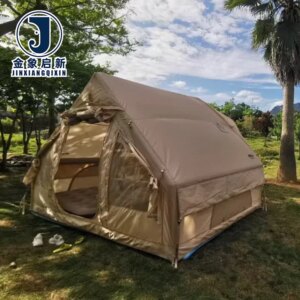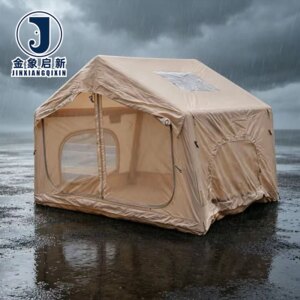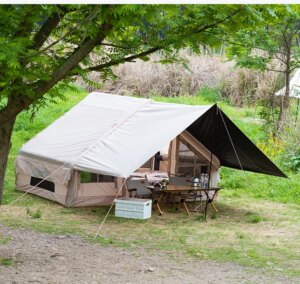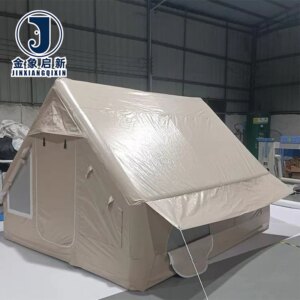
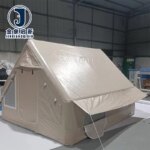

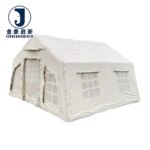
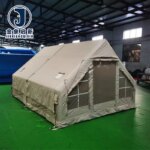
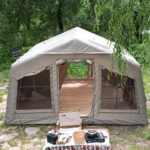

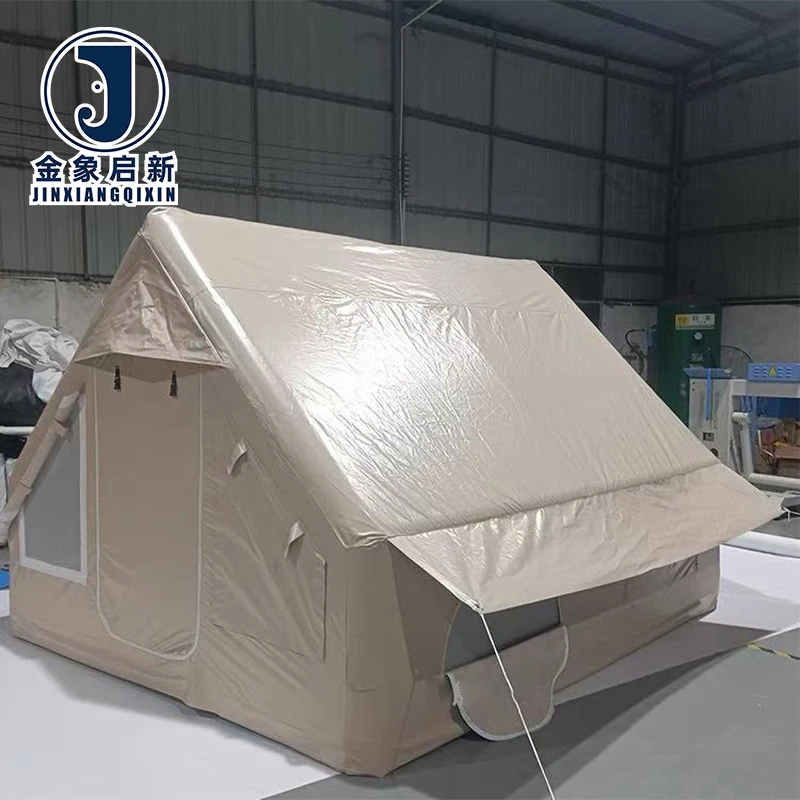
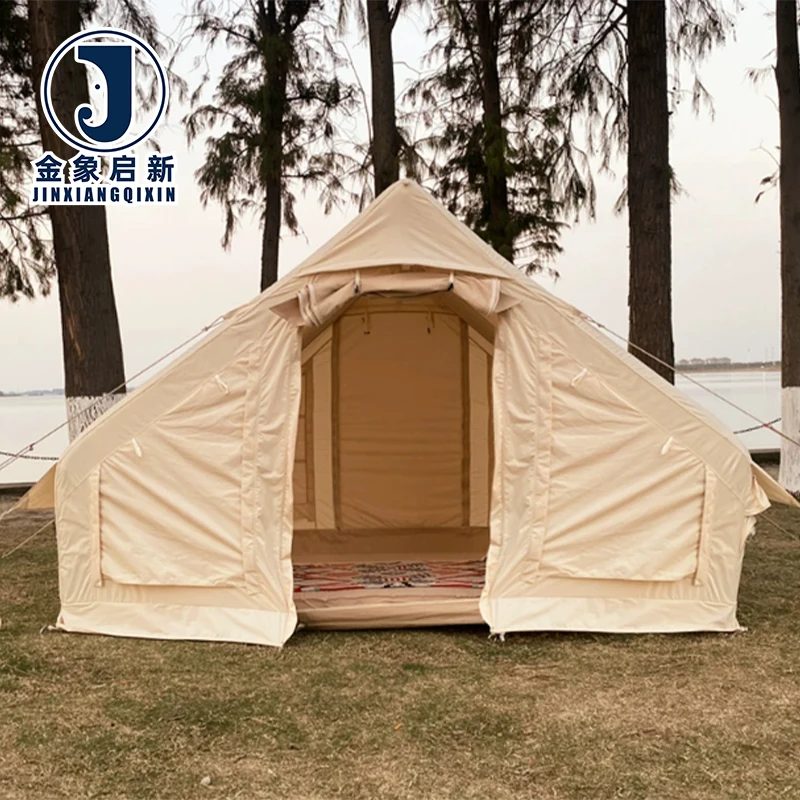
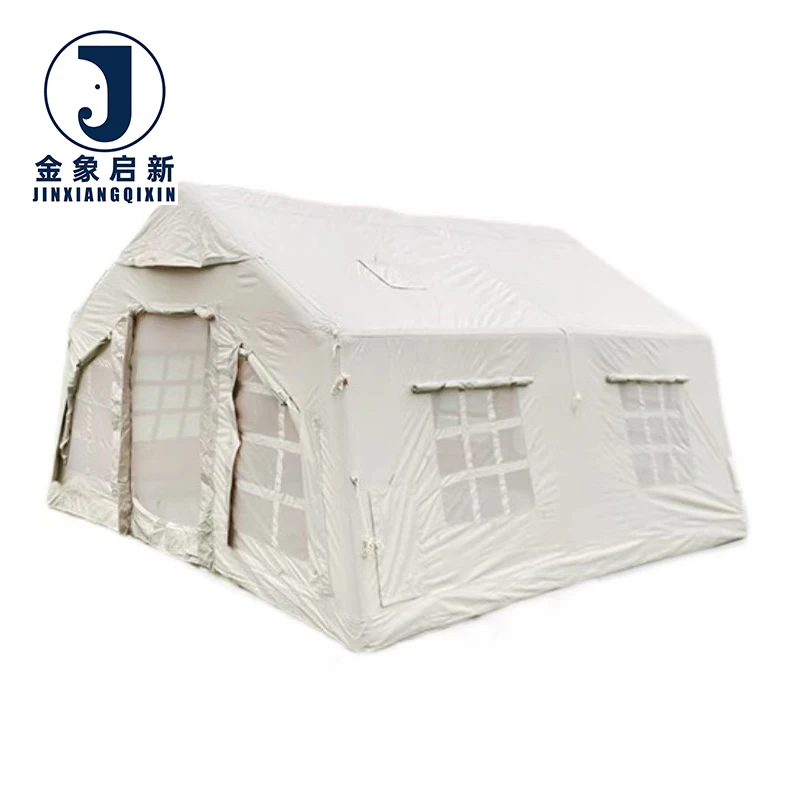
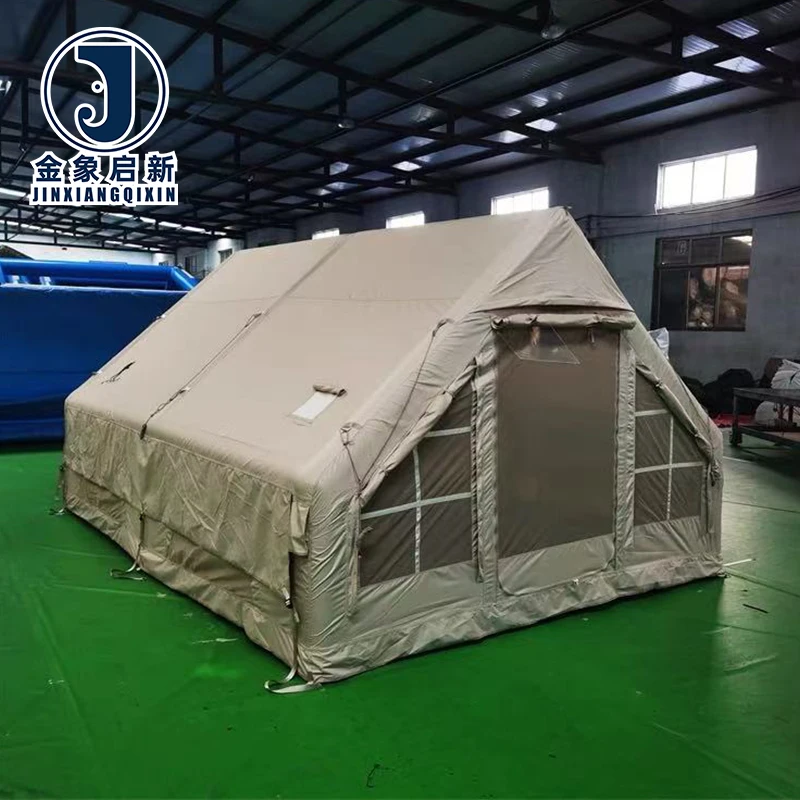

Coated fabric expertise — nearly 30 years of PVC coating process control applied to inflatable tent materials, ensuring every batch meets industrial safety compliance for mining, aviation and construction shelter deployments.
Technical Specifications
| Parameter | Value |
|---|---|
| Product Type | Inflatable Tent |
| Core Material | PVC tarpaulin |
| Fire-Retardant Treatment | Available in fire-retardant grades — confirm the grade required for your market (M2 / B1 / NFPA 701 / DIN 4102) |
| Anti-Static Treatment | Available with anti-static formulation — confirm surface resistance standard required for your deployment environment |
| Weather Protection | Waterproof, UV-resistant coating for all-season outdoor exposure |
| Structural Integrity | Tear-resistant base fabric supporting inflatable air-beam loads |
| Opening Mechanism | Quick automatic opening system |
| Season Rating | All-season deployment capability |
| Customization | OEM & ODM, sample customization, pattern printing |
| Production Capacity | 3 full production lines, 36 sets of processing equipment |
| R&D Support | 10 technicians for material selection and sample development |
| Quality System | Full-process QA & QC inspection, 100% pre-shipment check |
| Standards Held | ISO9001, ISO14001, ISO45001, CE |
Application Suitability
| Application | Exposure & Requirement |
|---|---|
| Mining and tunnelling inflatable shelters | Underground fire-risk zones requiring certified fire-retardant fabric, electrostatic discharge hazards in confined spaces, constant moisture and abrasion |
| Aviation ground support inflatable structures | Strict material traceability and certification audits, fuel vapour proximity requiring anti-static compliance, wind and UV exposure on open tarmac |
| Construction site crew accommodation | Extended outdoor weathering across seasons, site ignition sources nearby, compliance documentation required for safety officers before occupancy |
| Emergency response and disaster management shelters | Rapid deployment under time pressure, unpredictable field conditions, immediate safety compliance for temporary triage or command centres |
| Resource exploration field bases | Remote deployment with no grid power, extreme temperature swings, long-duration outdoor exposure without maintenance access |
Why "Fire-Retardant" Without a Grade Is a Compliance Trap
A fire-retardant claim without a test report referencing a recognised standard is worthless when a site safety auditor asks for documentation.
Inflatable shelters deployed on mining or construction sites sit close to ignition sources — welding operations, generator exhausts, temporary heating units. When a compliance officer requests the fire classification for your temporary structure, handing over a data sheet that simply says "fire-retardant" without citing DIN 4102, NFPA 701 or M2 will halt your deployment. I have watched entire inflatable shelter orders get rejected at site inspection because the fabric supplier never specified which fire-retardant standard was met. The PVC inflatable tent aftermarket supplier you choose must provide batch-level test documentation tied to a verifiable grade before the material ever reaches your site. [NEED_CITE: fire classification standards for temporary structures on industrial sites]
Matching the Fire-Retardant Grade to Your Market
Different jurisdictions enforce different fire safety classifications for temporary industrial structures. A PVC Inflatable Tent aftermarket supplier operating across multiple regions must understand that a B1 rating under DIN 4102 satisfies European construction site requirements, while NFPA 701 governs flame propagation for fabrics used in North American temporary shelters. Ordering fabric without specifying the target standard means you may receive material that passes one test but fails the audit in your actual deployment region. Confirm the exact grade before production begins — our R&D team formulates the PVC compound to match your specified standard and provides the corresponding test report with each batch.
Anti-Static Compliance in Hazard-Sensitive Environments
Mining ventilation zones, aviation fuel handling areas and certain chemical processing sites classify inflatable shelters as structures within electrostatic discharge risk zones. The anti-static treatment applied to PVC inflatable tent fabric must reduce surface resistivity to a level recognised by the site safety protocol. Without a documented surface resistance value tested to a named standard, compliance officers will reject the structure before inflation. Our technical team works with you to identify the required anti-static threshold for your operational environment, and each production batch carries the verification data your auditors need. [NEED_CITE: anti-static surface resistance standards for mining and aviation temporary structures]
How PVC Coating Weight and Base Fabric Determine Shelter Performance
The inflatable structure relies entirely on air pressure holding fabric under tension, which means the base fabric denier and weave density directly govern how well the shelter resists puncture and tear under load. A heavier PVC coating adds waterproofing durability and flame-retardant chemical loading capacity, but it also adds weight that the air beams must support. The balance between base fabric strength and coating weight determines whether the shelter maintains structural rigidity in wind or sags at the seams. Coating adhesion — governed by the lamination or knife-over-edge process used — affects how well welded seams hold when the inflatable beams flex repeatedly during inflation cycles and wind gusts. Surface finish, whether glossy or matte, influences cleaning ease in dusty mining environments and print adhesion for corporate branding or safety marking. Fire-retardant additives integrated into the PVC compound must be compatible with the coating method to ensure even distribution and consistent self-extinguishing behaviour across the entire fabric surface.
The Hidden Cost of Undocumented Material Specifications
A batch of inflatable tent fabric arrives on site and the safety officer requests the fire-retardant certificate — the supplier sends a generic document that does not reference the actual batch number or the specific grade tested. The shelter deployment is suspended until replacement documentation arrives, delaying your project timeline. Anti-static claims without measured surface resistance values create liability exposure if an electrostatic discharge incident occurs near flammable materials. I have seen inflatable shelter projects stall for weeks because the fabric specification sheet lacked the traceability that site compliance demanded. Ordering PVC inflatable tent aftermarket supplier material without insisting on batch-specific test reports means accepting this risk on every delivery. [NEED_CITE: compliance audit failures for temporary industrial structures due to missing material documentation]
What We Bring to Your Inflatable Shelter Project
Three full production lines and 36 sets of processing equipment give us the capacity to deliver inflatable tent fabric in the volumes that large-scale mining, aviation and construction projects require, without sacrificing batch consistency. Our 10-person R&D team develops material samples matched to your fire-retardant grade, anti-static threshold and custom sizing within days, not weeks. Dedicated QA and QC staff inspect every production stage from coating weight verification to final roll packing, ensuring the specification you approved is the specification you receive. ISO9001, ISO14001, ISO45001 and CE certifications underpin our quality system and ship as part of your documentation package. Nearly 30 years of PVC coated fabric production means we have encountered and resolved the exact compliance, consistency and performance challenges that inflatable shelter buyers face on industrial sites.
Documentation & Verification
- Material specification sheet stating fire-retardant grade and anti-static surface resistance per batch
- Batch quality inspection report with order-specific test data for traceability
- ISO9001, ISO14001, ISO45001 and CE certificates included with shipment
- Pre-shipment inspection record confirming PVC coating weight and base fabric integrity
- Certificate of origin and customs documentation for cross-border industrial procurement
Fabrication, Handling & Storage
- Heat-weld seams at temperatures matched to PVC coating thickness to prevent delamination under air-beam pressure
- Reinforce all air-beam anchor points with additional PVC patches to distribute inflation stress evenly
- Store rolls upright in climate-controlled conditions to prevent permanent creasing of coated surface
- Allow fabric to acclimatise before inflation in cold environments to maintain PVC flexibility
- Use only PVC-compatible cleaners to preserve fire-retardant additive concentration on the coating surface
What to Include in Your Enquiry
Provide your target deployment environment — mining, aviation, construction or emergency response — so we can recommend the appropriate fire-retardant grade and anti-static standard. Specify your required shelter dimensions and whether you need finished panels with welded seams or roll stock for your own fabrication. Confirm the compliance documentation your site safety officers require, including any market-specific fire classification standards. Let us know if pattern printing or custom colour is needed for corporate identification or site marking.
Frequently Asked Questions
Q: What fire-retardant certifications are available for this inflatable tent fabric?
A: We supply PVC inflatable tent fabric with fire-retardant treatment available across multiple classification systems including M2, B1, NFPA 701 and DIN 4102. The specific grade is confirmed against your target market requirements before production. Each batch ships with a test report referencing the applicable standard and batch number for full audit traceability.
Q: Can you provide anti-static test reports for explosive atmosphere deployments?
A: Yes. Anti-static formulation is available for mining and aviation inflatable shelter applications where electrostatic discharge poses a hazard. We work with you to identify the surface resistance standard required by your site safety protocol and include measured values on the batch inspection report supplied with every order.
Q: How do you verify material specifications match the quotation on arrival?
A: Every production batch undergoes 100% pre-shipment inspection by dedicated QA and QC staff. The batch quality inspection report includes PVC coating weight verification and base fabric integrity checks. This documentation ships with your order, allowing your receiving team to cross-reference delivered material against the original specification sheet.
Q: What customisation options exist for size, colour and branding?
A: Our 10-person R&D team supports OEM and ODM development including custom sizing, pattern printing and colour matching. Samples are developed within days for your approval before bulk production begins. We accommodate the dimensional requirements of your specific inflatable shelter design and corporate branding specifications.
Q: What documentation accompanies each shipment for compliance audits?
A: Each order ships with a material specification sheet, batch quality inspection report, ISO and CE certificates, pre-shipment inspection record and certificate of origin. All documents reference your order number for full traceability. We can provide additional documentation formats if your site compliance system requires specific report structures.