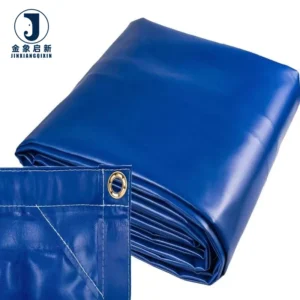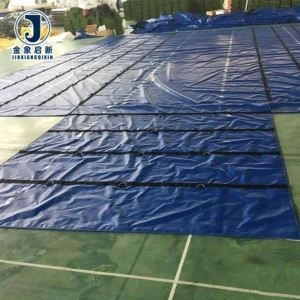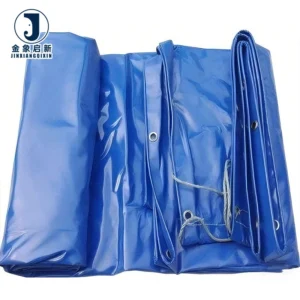
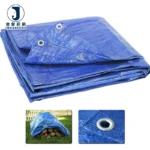
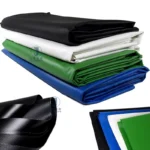
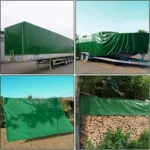
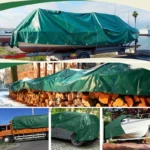
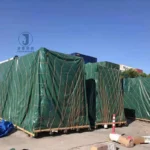
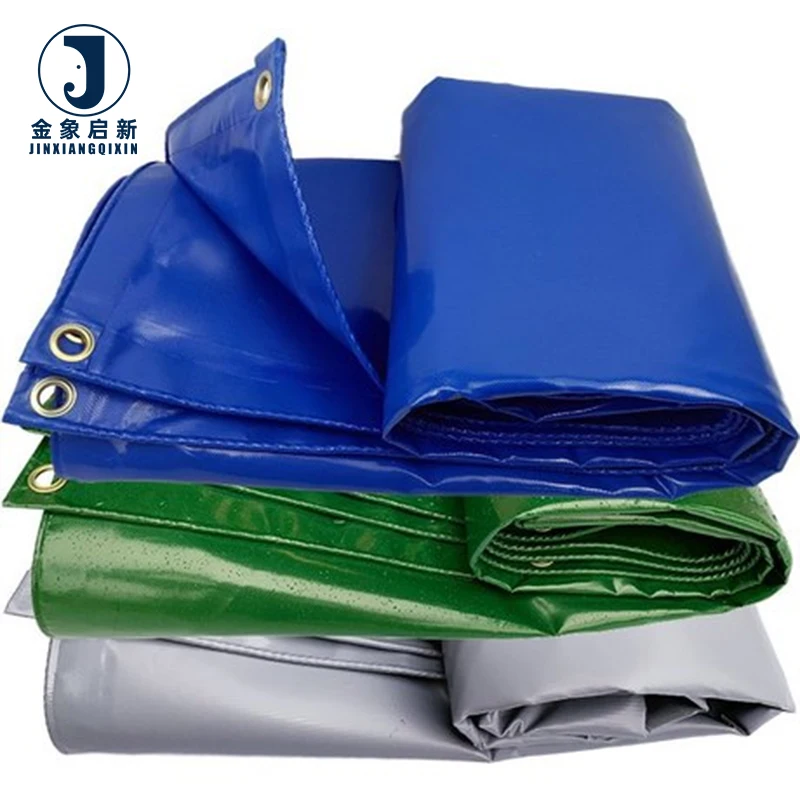
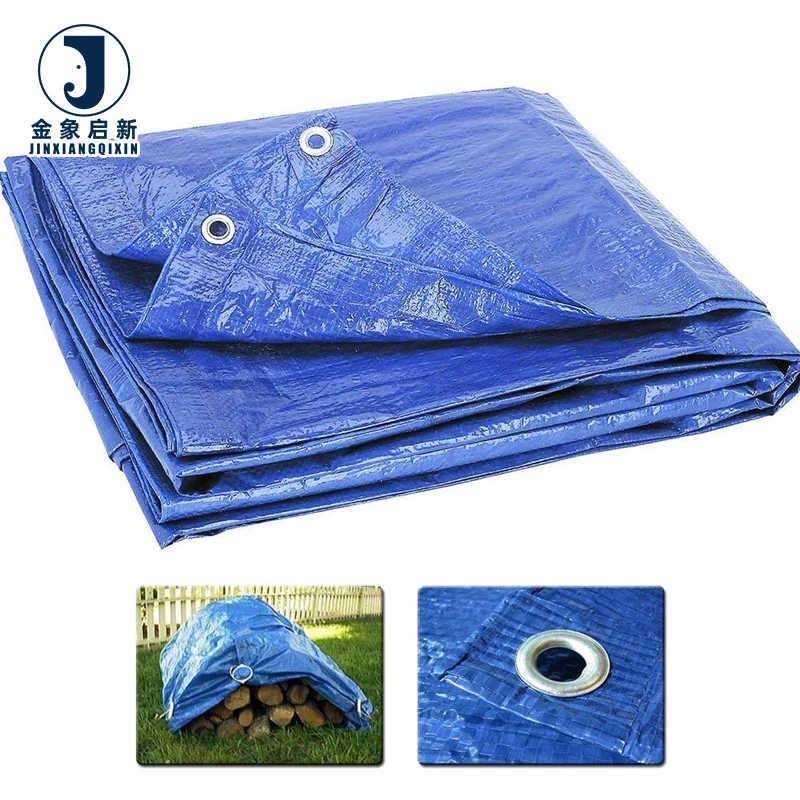
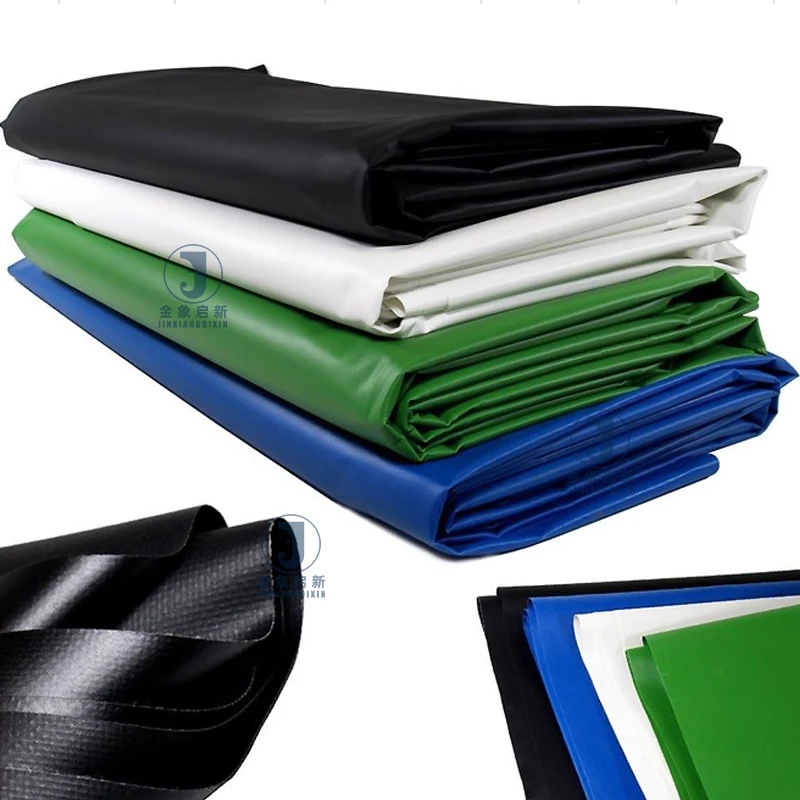
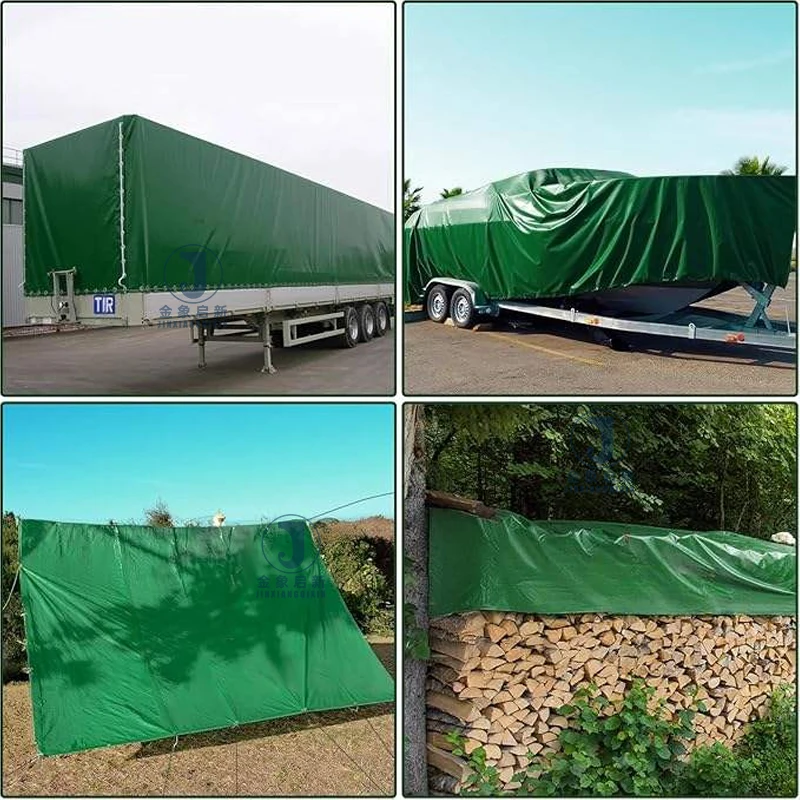
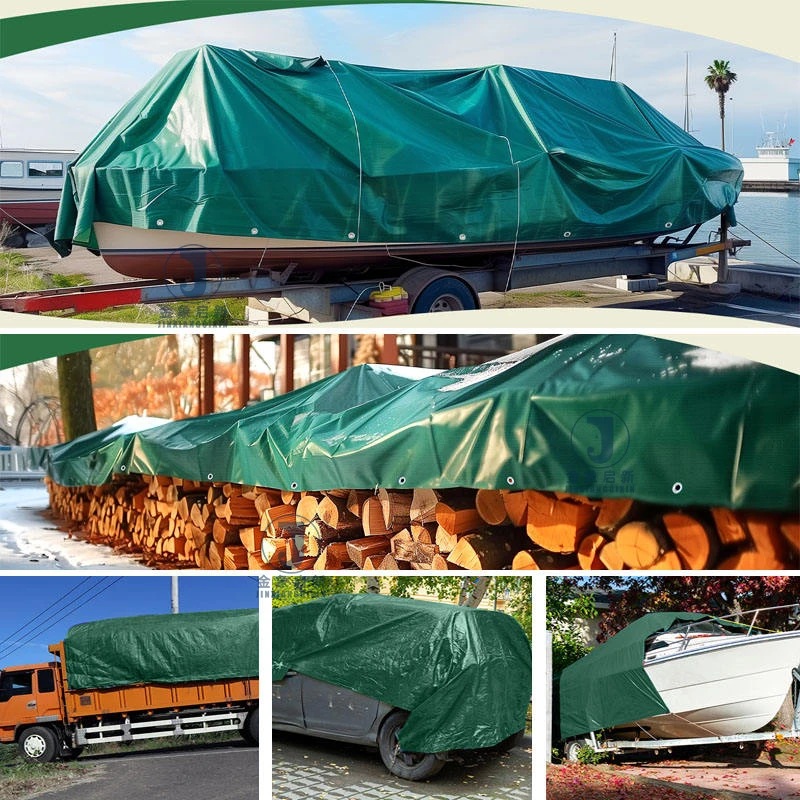
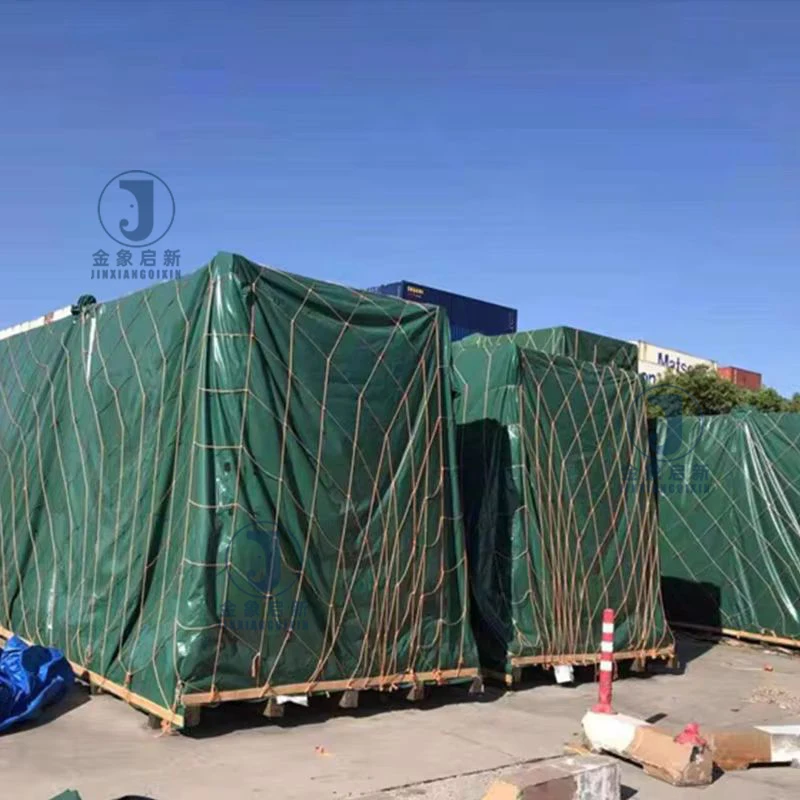
Coating Weight Control — Every roll of this fire retardant PVC coated fabric undergoes dedicated QA checks to verify coating weight and adhesion before it leaves the production line.
Technical Specifications
| Parameter | Value |
|---|---|
| Product Type | PVC Coated Tarpaulin |
| Base Fabric | Polyester |
| Yarn Count | 500D × 500D |
| Coating Material | PVC |
| Coating Method | Double-sided PVC coating |
| GSM Range | 450–900 g/m² (confirm the grade required for your project) |
| Flame Retardancy | Flame-retardant type customizable — confirm the grade required for your market |
| Anti-UV Treatment | Available — test basis to be confirmed per target market |
| Waterproof Performance | Fully waterproof coated construction |
| Surface Characteristics | Smooth and soft surface with a leather-like texture |
| Abrasion Resistance | Very strong |
| Repairability | Repairable by hot air welding |
| Certifications | ISO, CE (product-level certificates available on request) |
Application Suitability
| Application | Exposure & Requirement |
|---|---|
| Mining ventilation duct | Continuous airflow, abrasive dust, underground fire and anti-static compliance |
| Tunnelling ventilation systems | Confined-space fire safety regulations, mechanical drag from support structures |
| Aviation ground support ducting | Strict flame retardancy standards, fuel vapour exposure, frequent relocation |
| Membrane and inflatable structures | Sustained tension, wind loading, weather exposure, certified fire performance |
| Specialist industrial covers | Chemical splash, abrasion from equipment movement, flame contact risk |
Why "Flame Retardant" on a Data Sheet Means Nothing Without a Test Report
A PVC coated tarpaulin labelled flame retardant must carry a test report mapped to the fire classification your site or jurisdiction demands.
Purchasing teams across mining, aviation, and tunnelling regularly receive fabric described as flame retardant with no supporting documentation. When the site safety officer asks for the grade, the supply chain stalls. I have reviewed procurement records where the absence of a verified fire classification delayed ventilation commissioning by weeks [NEED_CITE: fire classification standards for underground mining ventilation duct materials]. The PVC coated tarpaulin fire retardant grade must be confirmed against the specific regulation — whether that is a mining authority standard, an aviation ground-handling requirement, or a building membrane fire code.
Ventilation Duct Performance Under Mining and Tunnelling Conditions
Underground ventilation ducts endure constant mechanical abrasion against tunnel walls, roof bolts, and support frames. The 500D × 500D polyester base fabric in this PVC coated tarpaulin provides a dense woven grid that resists tear propagation when the duct surface is dragged or punctured. Double-sided PVC coating encapsulates the yarn intersections, preventing dust ingress and maintaining duct integrity across extended runs.
Compliance Documentation for Aviation and Specialist Structures
Aviation ground support ducts and specialist membrane structures operate under strict regulatory oversight. Fire-retardant grades must align with the authority governing the installation site. This PVC coated tarpaulin is available in flame-retardant types that can be matched to project specifications, with test reports provided so that compliance officers can verify performance before installation. Anti-static treatment is also available where underground or fuel-adjacent environments require surface resistivity control.
How Base Fabric, Coating Weight, and Yarn Count Interact
The 500D × 500D yarn count defines the denier of both warp and weft threads in the polyester base. Higher denier means thicker individual yarns, which directly influence tensile strength and resistance to tear initiation. Coating weight — expressed in GSM — adds mass and thickness but does not independently determine strength. A 900 g/m² fabric with a loose weave may tear more easily than a 650 g/m² fabric with a tight weave [NEED_CITE: tensile and tear test methods for coated fabrics per ISO 1421]. Double-sided PVC coating ensures the fabric is sealed on both faces, improving weld adhesion and preventing moisture from reaching the polyester core. The smooth, leather-like surface finish supports clean hot-air welding and reduces dirt accumulation on duct exteriors.
What Happens When Ventilation Duct Fabric Fails Specification
Specifying PVC coated fabric without verifying the fire classification against site regulations can result in failed inspections and work stoppages. I have seen projects where duct fabric arrived without the required anti-static certification, forcing the contractor to remove installed sections and reorder compliant material [NEED_CITE: anti-static requirements for underground mining ventilation systems]. Colour inconsistency between rolls in the same shipment becomes visible once ducts are hung in sequence, though this matters less underground than in above-ground membrane structures where aesthetics are part of the design brief. Weld failures at flex points occur when hot-air welding parameters do not match the coating thickness, leaving the seam — not the fabric — as the weakest link.
Why Technical Buyers Source This Fabric Here
Our three full production lines and 36 sets of professional equipment allow us to run dedicated batches of fire-retardant PVC coated tarpaulin without cross-contamination from non-treated grades. The 10-person R&D team develops samples within days, adjusting flame-retardant type and anti-static treatment to match the compliance framework you specify. Dedicated QA/QC at every production stage ensures coating weight and adhesion are verified per roll before shipment, not sampled from a batch average. Pre-shipment inspection covers 100 percent of rolls, checking surface consistency, coating integrity, and dimensional accuracy. Documentation packages include the test reports and certificates your compliance team requires — not generic statements that leave the buyer chasing paper.
Documentation & Verification
- Material specification sheet stating base fabric denier, coating weight, and treatment grades for each roll
- Fire-retardant test report matched to the classification standard required by your project
- Anti-static surface resistance test data where underground or aviation compliance demands it
- Pre-shipment inspection record confirming coating adhesion and dimensional accuracy per roll
- ISO and CE certificates covering the production facility and quality management system
Fabrication, Handling & Storage
- Hot-air welding temperature and speed must be matched to the PVC coating thickness to prevent seam delamination
- Duct panels should be welded rather than sewn where fire classification must be maintained across the entire assembly
- Store rolls upright on pallets to prevent creasing that can weaken the PVC coating at fold lines
- Deploy cold-stored rolls gradually to avoid low-temperature cracking during unrolling in winter conditions
- Field repairs use hot-air welding patches of matching PVC coated tarpaulin grade and flame-retardant type
- Avoid solvent-based cleaners on the smooth PVC surface; mild detergent preserves coating integrity
Before You Request a Quote
Share the ventilation duct diameter, run length, and airflow requirements so we can recommend the appropriate GSM and base fabric construction. Specify the fire classification and anti-static standards that apply at your installation site. Indicate whether you need rolls for your own fabrication or pre-cut panels with welded seams, and confirm the colour or any surface marking requirements for the project.
Frequently Asked Questions
Q: Which flame retardant grades are available for mining ventilation duct compliance?
A: This PVC coated tarpaulin is available in customizable flame-retardant types. The specific grade must be matched to the mining authority or project specification governing your site. We provide test reports for the selected grade so your safety team can verify compliance before installation. Confirm the required standard at the inquiry stage.
Q: Is anti-static certification available for underground ventilation applications?
A: Yes, anti-static treatment can be applied to meet the surface resistivity requirements of underground mining and tunnelling environments. Test data documenting the anti-static performance is included in the shipment documentation package. Specify the standard your project references so we can align the treatment and reporting.
Q: What hot-air welding parameters suit this fabric for duct construction?
A: Welding temperature and speed depend on the specific GSM grade selected from the 450–900 g/m² range. Heavier grades require higher heat input and slower travel speed to achieve full coating fusion at the seam. We supply recommended welding parameters with each material batch based on the coating weight confirmed during production.
Q: Can I order custom widths for large membrane or inflatable structure panels?
A: Custom widths and lengths are available to reduce the number of welded seams in large panels. The 10-person R&D team develops samples to confirm dimensional accuracy and treatment performance before full production. Confirm the required panel dimensions and any fire classification so the correct grade is produced.
Q: How do you ensure roll-to-roll consistency across a multi-roll duct order?
A: Every roll undergoes 100 percent pre-shipment inspection covering coating weight, surface consistency, and dimensional accuracy. A pre-shipment inspection record is provided with the shipment, documenting the verification results for each roll. This prevents the batch variation issues that cause visible differences once ducts are installed in sequence.