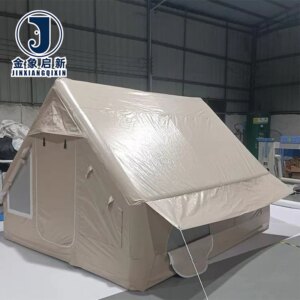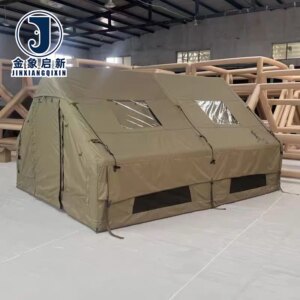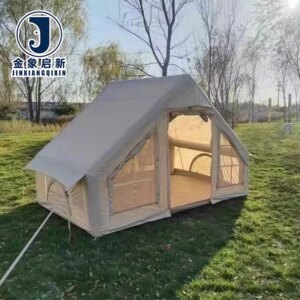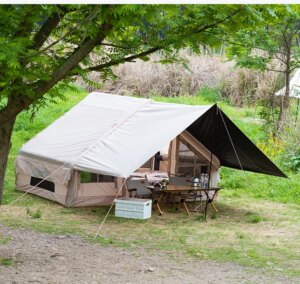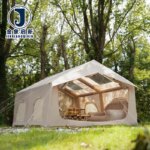
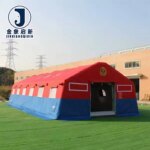
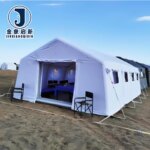


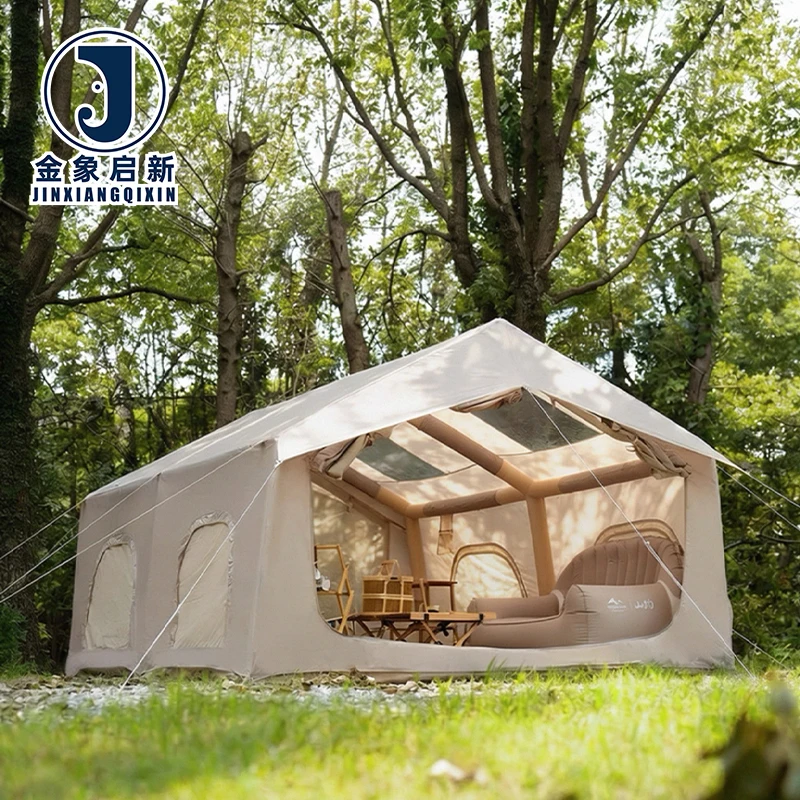
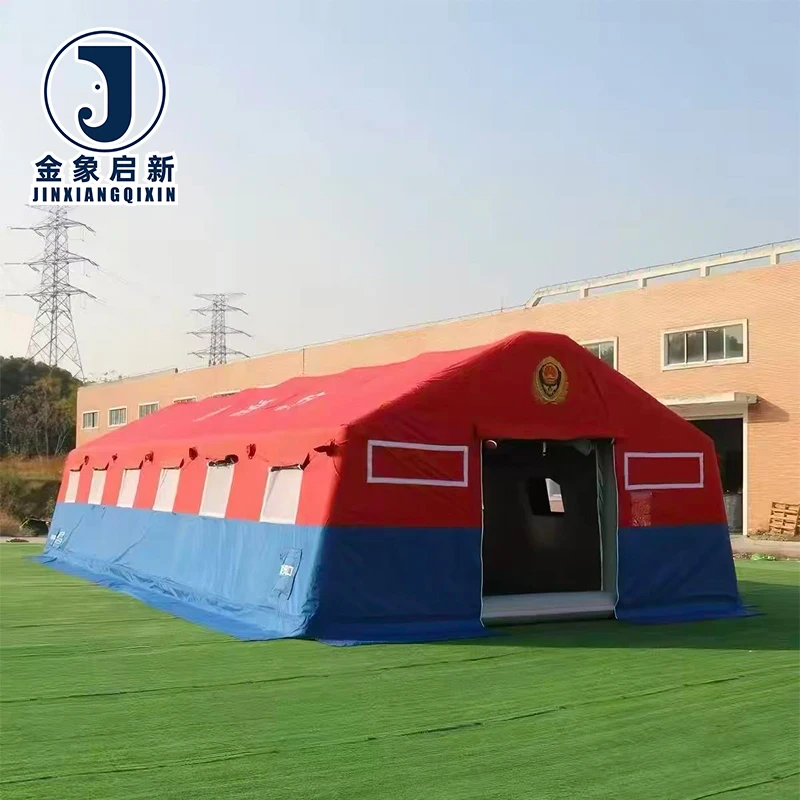
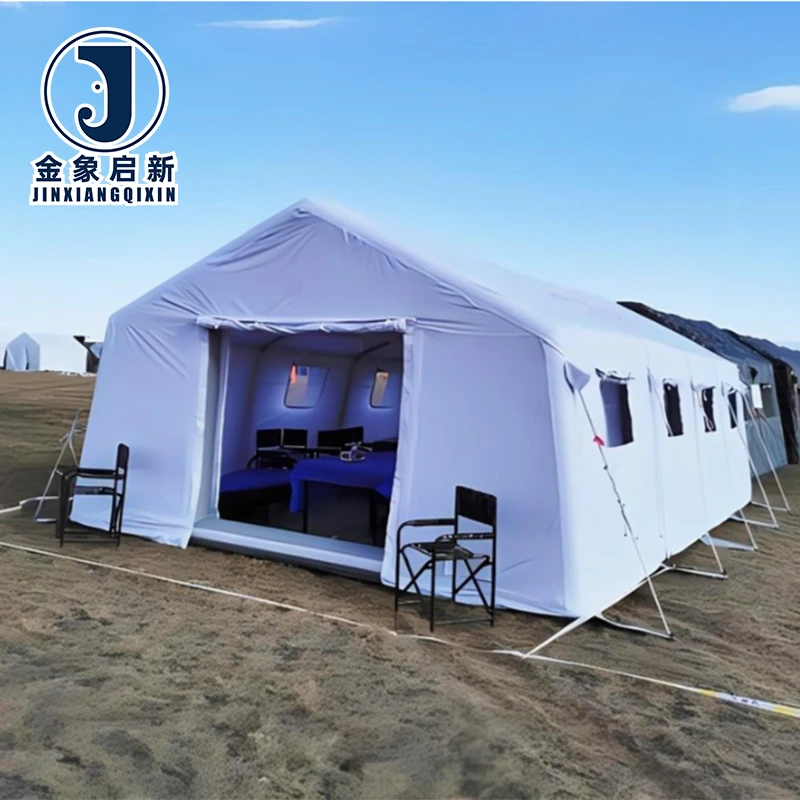
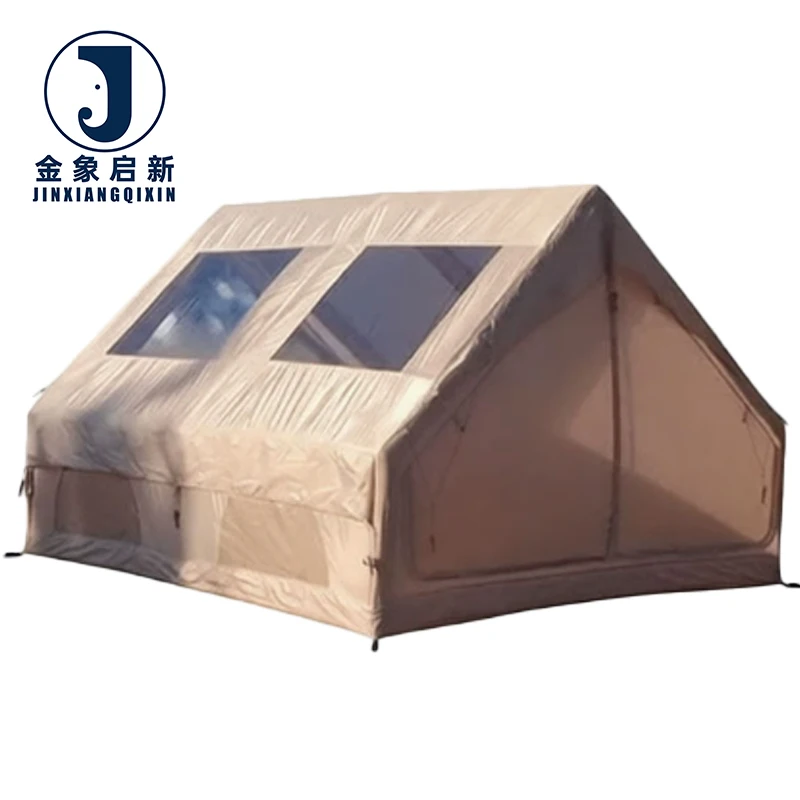
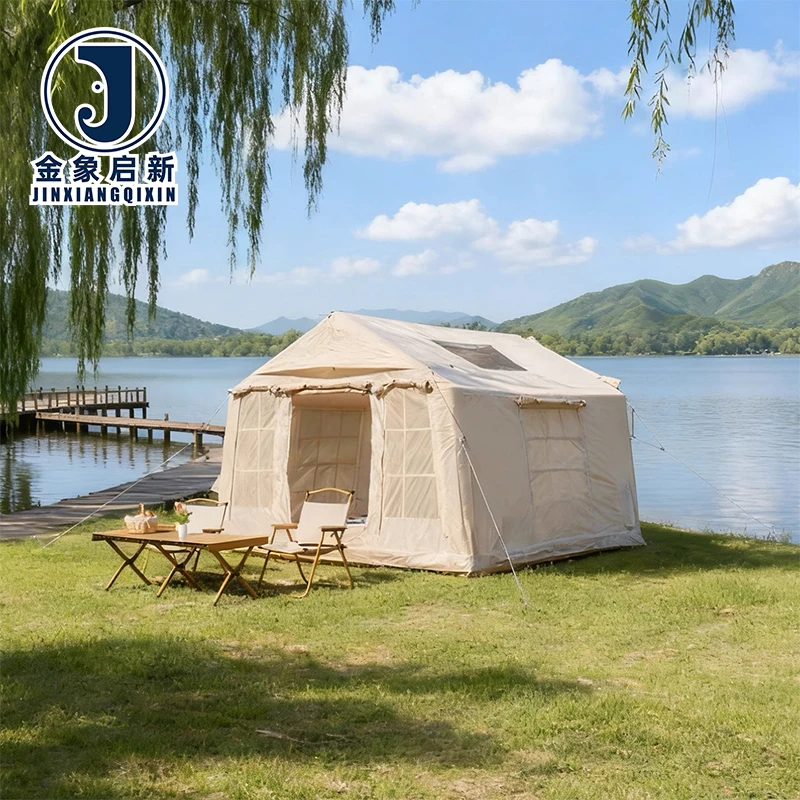

Deep process control — Nearly 30 years focused on coated fabric with full oversight of PVC coating adhesion, weight consistency, and fire-retardant treatment traceability across every batch of inflatable tent fabric we produce.
Technical Specifications
| Parameter | Value |
|---|---|
| Product Type | Inflatable Tent |
| Core Material | PVC Tarpaulin |
| Waterproof | Yes |
| UV-resistant | Available with UV treatment — confirm the grade required for your market |
| Tear-resistant | Yes (test standard not stated in source) |
| Fire-retardant | Available in flame retardant grades — confirm the grade required for your market |
| Anti-static | Available with anti-static treatment — confirm surface resistance standard required |
| Product Form | Inflatable structure with quick automatic opening |
| Capacity | 2-3 Person |
| Season Rating | Four-season |
| Customization | OEM & ODM (sample customization, pattern printing) |
| Standards | ISO 9001, ISO 14001, ISO 45001, CE |
Application Suitability
| Application | Exposure & Requirement |
|---|---|
| Mining and tunnelling temporary shelter | Dust ingress, confined space fire risk, anti-static compliance for underground environments |
| Aviation ground support structures | Tarmac UV exposure, wind loading, strict fire-retardant certification for airside operations |
| Disaster relief rapid deployment | Extreme weather variability, repeated inflation cycles, transport abrasion during logistics |
| Temporary construction workspace | Equipment impact, weld spatter proximity, seasonal temperature fluctuation |
| Emergency supply storage | Moisture protection, secure enclosure, rapid erection by non-specialist personnel |
What "Fire Retardant" Means When No Grade Is Named on the Inflatable Tent
A fire-retardant claim without a test standard is a liability, not a specification.
When procurement teams request an Inflatable Tent fire retardant certified product, they often receive a data sheet that says "flame retardant treated" without naming the classification system — DIN 4102 B1, NFPA 701, M2, or another standard. Site safety auditors in mining, aviation, and construction environments reject material on this basis alone. [NEED_CITE: fire classification systems for temporary industrial structures] The consequence is a stalled project mobilisation, a re-tender, and weeks of delay while compliant fabric is sourced. The inflatable tent fabric must carry a traceable test report that names the grade, the standard, and the batch — nothing less satisfies a site safety file.
Certified Compliance for Airside and Underground Environments
Industrial and specialist structure contractors specify fire-retardant and anti-static PVC inflatable tent material because the deployment environment demands documented compliance. Aviation ground support structures operate under airside fire codes that name specific test methods, and underground mining shelters must meet anti-static surface resistance thresholds to prevent electrostatic discharge near ventilation intake points. Our PVC tarpaulin base is available in flame retardant grades with anti-static treatment — we supply the test report that matches your contract specification.
Rapid Deployment Without Compromising Technical Documentation
The quick automatic opening inflatable structure design enables single-operator deployment, which matters when disaster relief timelines are measured in hours. Yet speed of erection must not come at the expense of compliance paperwork. Each batch of Inflatable Tent fire retardant certified fabric leaves our facility with a documentation package that supports site safety audits, regulatory inspections, and insurance assessments. [NEED_CITE: documentation requirements for temporary industrial shelter compliance] The four-season waterproof and UV-resistant construction performs across climate zones, but it is the paperwork trail that gets the structure approved on site.
Reading the Specification Sheet Beyond the Headline Claims
The PVC tarpaulin core material provides the structural membrane, and its coating weight, base fabric denier, and weave density together determine how the inflatable structure behaves under wind load and repeated inflation cycles. A heavier base fabric with a tight weave resists tear propagation at seam junctions where inflation stress concentrates. The coating method — whether knife-coated or laminated — directly influences weld strength and long-term adhesion under thermal cycling. Fire-retardant and anti-static treatments are applied during the coating stage, and their effectiveness depends on uniform distribution across the full fabric width. Surface finish, whether glossy or matte, affects both cleaning behaviour in dusty mining environments and the adhesion of printed branding for event logistics applications.
The Cost of Specifying on Claim Rather Than Test Report
We have seen inflatable membrane structures arrive on mining sites only to be rejected at gate inspection because the anti-static certificate referenced a different product family than the material delivered. Batch-to-batch traceability prevents this failure. When fire-retardant grades are not matched to the specific standard named in the project contract, the entire shelter inventory becomes non-compliant and must be replaced — a cost that far exceeds the margin saved on the original purchase. [NEED_CITE: compliance rejection rates for uncertified temporary structures in extractive industries] Colour variation between rolls in a single order also forces rework when multiple inflatable units are deployed side by side at a disaster relief staging area.
Why Specialist Structure Contractors Source Here
Our 10-person R&D team handles material selection, custom sizing, and sample development for inflatable tent projects that fall outside standard catalogue dimensions. Three full production lines and 36 sets of professional equipment provide the capacity for bulk orders while maintaining batch consistency across rolls. Dedicated QA and QC at every production stage means fire-retardant and anti-static treatment levels are verified before the fabric reaches the welding table. Samples for custom requirements are developed within days, allowing specification approval before mass production commits material and lead time. Nearly 30 years of coated-fabric process control underpins every roll we dispatch.
Documentation & Verification
- Material specification sheet stating PVC base fabric denier, coating weight, and treatment parameters for your inflatable tent order
- Fire-retardant and anti-static test reports issued per batch with order-number traceability
- ISO 9001, ISO 14001, ISO 45001, and CE certificates included in the shipment documentation package
- Pre-shipment inspection record confirming dimensional accuracy and seam weld integrity before dispatch
- Certificate of origin and customs support documentation for cross-border project logistics
Fabrication, Handling & Storage
- Heat-weld seams at manufacturer-recommended temperature to preserve fire-retardant treatment integrity at PVC inflatable tent junctions
- Store rolls vertically on pallets to prevent permanent creasing that weakens the PVC tarpaulin coating layer
- Allow cold-transport rolls to reach ambient temperature before unrolling to avoid low-temperature cracking of the coated surface
- Use PVC-compatible cleaners only; solvent-based agents degrade the anti-static treatment on the inflatable tent fabric membrane
- Inspect weld lines at inflation stress points before each deployment cycle to catch early delamination
How to Structure Your Enquiry
Provide the fire-retardant classification and anti-static surface resistance standard your project contract requires, along with the deployment environment — airside, underground, or open-site disaster relief. Specify whether you need roll stock for your own fabrication or finished inflatable tent units with custom sizing and pattern printing. Indicate annual volume and target delivery windows so we can allocate production line capacity and confirm lead time against your project mobilisation schedule.
Frequently Asked Questions
Q: What fire-retardant and anti-static certifications do your inflatable tents carry, and can you provide batch-specific test reports?
A: Our PVC inflatable tent fabric is available in fire-retardant and anti-static grades. We supply test reports that name the specific classification standard and surface resistance value, issued per batch with order-number traceability. Confirm the exact standard your project requires — such as DIN 4102, NFPA 701, or a site-specific mining regulation — and we will match the treatment and documentation accordingly.
Q: How quickly can customized samples be developed for non-standard sizes or printed branding?
A: Our R&D team develops custom inflatable tent samples within days of specification approval. This covers non-standard dimensions, pattern printing, and material grade selection. Sample review allows you to verify seam weld integrity, colour accuracy, and inflation behaviour before committing to full production volume.
Q: How do you ensure colour consistency and seam weld strength across rolls in a large-volume order?
A: Every production run undergoes in-process QA checks at the coating and welding stages. We verify colour match across rolls in the same order and test weld strength at stress concentration points before dispatch. The pre-shipment inspection record documents these results and accompanies your shipment.
Q: Can the inflatable structure be engineered to integrate with your industrial ventilation duct systems for combined shelter-and-airflow solutions?
A: Yes. Our technical team can engineer inflatable tent structures with integrated duct connection points for mining and tunnelling applications where temporary shelter and ventilation must operate as a single system. Provide your airflow requirement and duct diameter specification, and we will develop a combined solution with matching fire-retardant and anti-static certification across both components.