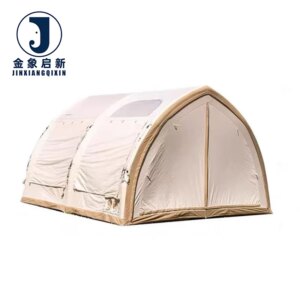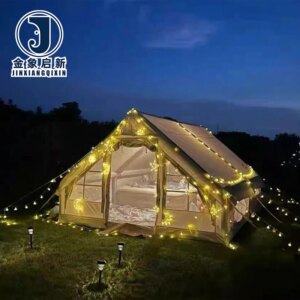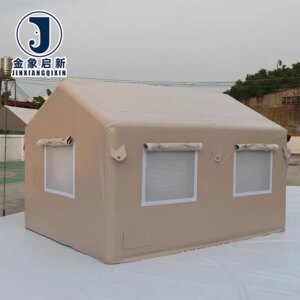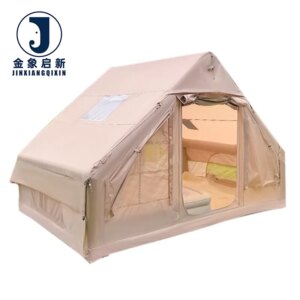


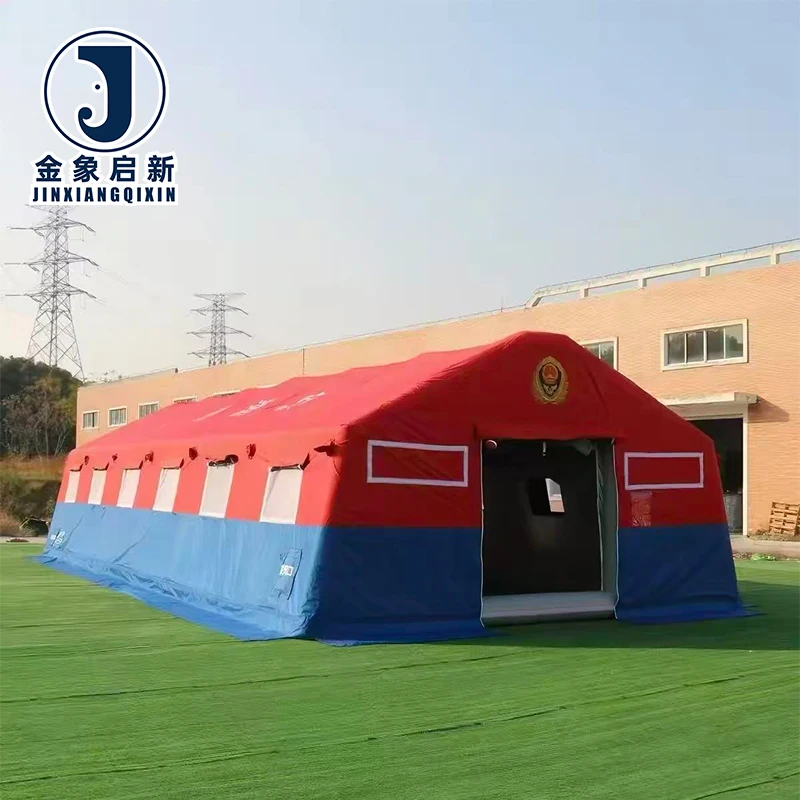
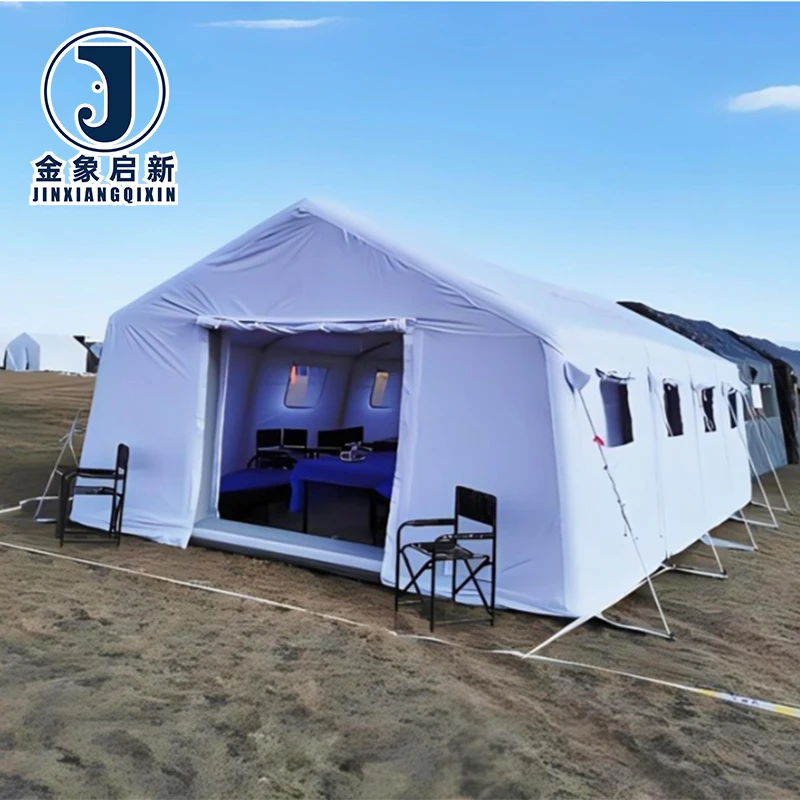
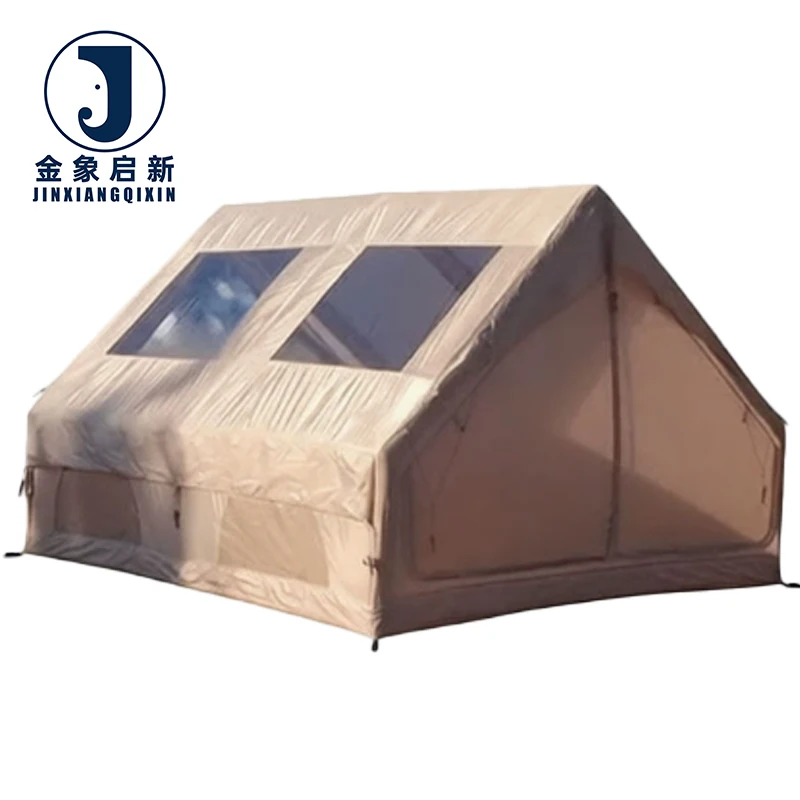
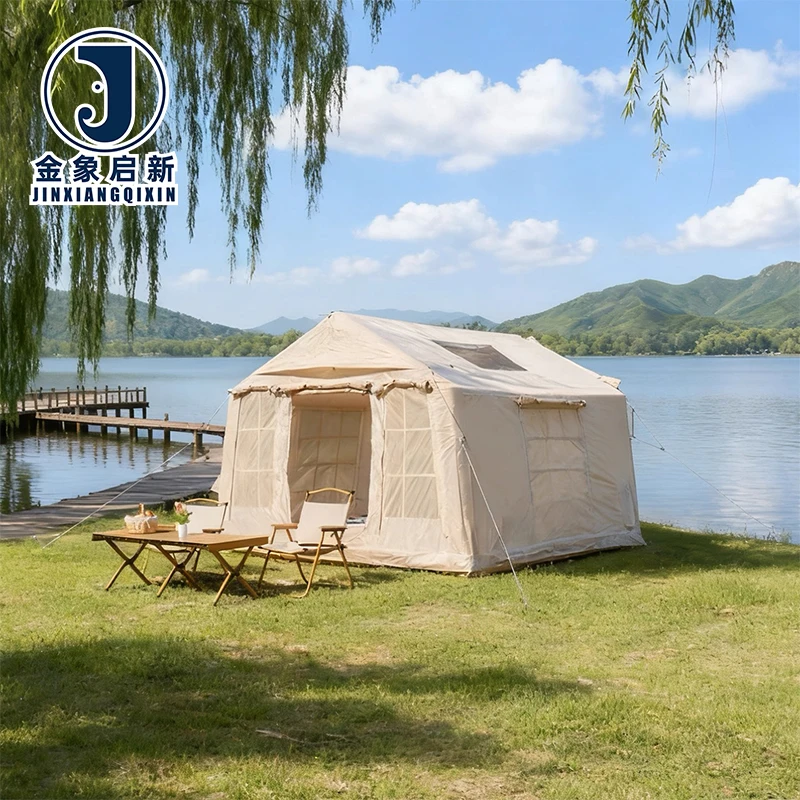

Deep Process Control — Nearly three decades of coated fabric production yields consistent PVC inflatable tent material with verifiable fire-retardant and anti-static certification documentation for every batch shipped.
Technical Specifications
| Parameter | Value |
|---|---|
| Product Type | PVC Inflatable Tent |
| Core Material | PVC Tarpaulin |
| Capacity | 2–3 Person |
| Design Rating | Four-season |
| Fire-retardant | Yes (grade not stated — confirm the grade required for your market) |
| Anti-static | Yes (surface resistance or standard not stated — request test report) |
| Waterproof | Yes (performance claimed, test basis not stated) |
| UV-resistant | Yes (test basis not stated — request UV test data) |
| Tear-resistant | Yes (test standard not stated) |
| Customization | OEM & ODM, sample customization, pattern printing |
| Compliance | ISO 9001, ISO 14001, ISO 45001, CE |
Application Suitability
| Application | Exposure & Requirement |
|---|---|
| Disaster relief operations | Rapid deployment, extreme weather exposure, repeated inflation cycles |
| Emergency response centers | Continuous occupation, fire safety compliance, anti-static for sensitive equipment |
| Temporary construction site shelters | UV exposure, abrasion from site handling, wind load on inflatable beams |
| Mining and tunnelling ventilation shelters | Fire-retardant compliance underground, anti-static in explosive atmospheres |
| Outdoor event logistics | Weather resistance, quick setup and teardown, repeated transport and storage |
| Equipment protection | Waterproof barrier, tear resistance during rigging and positioning |
Why "Fire Retardant" on a Data Sheet Means Nothing Without a Grade Behind It
A fire-retardant claim only protects your project when it is backed by a named standard and a batch-specific test report.
Too many inflatable structure projects fail site inspection because the fabric certificate says "fire retardant" but names no standard — and the inspector requires compliance with NFPA 701, DIN 4102 B1, or a local building code. Without that grade, the inflatable tent fabric cannot be approved for occupied use, and the entire deployment is halted. Buyers who specify fire-retardant PVC inflatable tent material for mining, aviation or disaster relief must confirm the exact classification their jurisdiction demands before committing to production. [NEED_CITE: DIN 4102 fire classification for building materials]
Compliance Documentation Determines Whether Your Structure Passes Inspection
Inflatable shelters used in mining, aviation ground support and emergency relief are subject to site-specific safety audits. The PVC inflatable tent fabric must carry fire-retardant and anti-static certification that aligns with the regulatory framework of the operating region. Our material ships with test reports referencing the applicable standard, so your compliance file is complete before the structure inflates on site.
Anti-Static Performance in Explosive and Sensitive Environments
Static charge accumulation on PVC surfaces creates ignition risk in underground mining and fuel-adjacent aviation operations. Inflatable structure fabric must demonstrate controlled surface resistance to prevent discharge events. We supply anti-static grades with documented surface resistance values — request the test report tied to your batch order to confirm suitability for your operational environment. [NEED_CITE: anti-static testing methods for PVC coated fabrics in mining applications]
Four-Season Design for Extended Outdoor Deployment
Emergency shelters and temporary workspaces often remain deployed through shifting weather conditions. The PVC tarpaulin core is formulated for four-season use, carrying waterproof and UV-resistant treatments to maintain structural integrity and surface condition across temperature variation and solar exposure. This matters for disaster relief agencies that cannot predict how long a field hospital or supply depot must remain operational.
Understanding What the Specifications Actually Mean for Field Performance
The PVC tarpaulin base provides the structural backbone of every inflatable beam and panel. Fire-retardant additives are compounded into the coating layer — the specific grade determines whether the material self-extinguishes, resists ignition, or merely slows flame spread, and each market requires a different classification. Anti-static treatment modifies surface conductivity to dissipate charge rather than accumulate it, critical for environments where spark ignition is unacceptable. Tear resistance depends on the base fabric weave and denier working together with the coating adhesion; a heavy coating on a weak base fabric will crack before the fabric tears. The four-season rating reflects formulation choices that prevent low-temperature embrittlement and high-temperature softening across a wider operating range than standard single-season PVC. Waterproof performance relies on complete coating coverage and sealed weld seams at every inflation chamber junction. [NEED_CITE: tensile and tear test methods for coated fabrics per ISO 1421]
The Real Cost When Specification Gaps Surface After Delivery
When fire-retardant grade is assumed rather than verified, the structure may be refused at site handover — forcing removal, replacement and project delay at full cost to the contractor. Anti-static properties that are claimed but undocumented create liability exposure in mining operations where regulatory audits carry shutdown penalties. Colour inconsistency across rolls becomes visible once inflatable panels are erected side by side, requiring selective panel replacement that delays deployment. Weld seams that fail during inflation testing because the coating formulation was incompatible with the heat-seal temperature waste both material and site mobilisation time. [NEED_CITE: common failure modes in PVC inflatable structure fabrication and deployment]
Why Technical Buyers Source This Material From Jinxiang
Three decades of PVC coated fabric production means the coating formulation, base fabric selection and fire-retardant compounding are controlled in-house rather than outsourced to compounders. The 10-technician R&D team develops custom inflatable structure samples within days, including pattern printing and application-specific sizing, so you validate performance before committing to volume. Three full production lines with 36 sets of professional equipment maintain capacity for bulk orders without sacrificing the coating consistency that inflatable structures demand. Every roll undergoes dedicated QA/QC inspection at each production stage with 100% pre-shipment verification against the specification sheet. ISO 9001, ISO 14001, ISO 45001 and CE certification underpin the quality management system, and all documentation is prepared to support customs clearance and site compliance audits.
Documentation & Verification
- Material specification sheet confirming PVC tarpaulin base fabric, coating method and treatment grades for your inflatable tent order
- Fire-retardant and anti-static test reports linked to your specific batch order number
- ISO 9001, ISO 14001, ISO 45001 and CE certificates provided before contract signing
- Pre-shipment inspection record verifying roll-to-roll colour and coating consistency
- Roll packing list and certificate of origin for customs and site compliance documentation
Fabrication, Handling & Storage
- Confirm heat-seal temperature range for the specific fire-retardant PVC coating grade before welding inflatable beam seams
- Store rolls upright on pallets to prevent compression creasing that weakens the PVC coating layer
- Allow material to acclimatise to ambient temperature before unrolling in cold conditions to avoid surface cracking
- Use compatible PVC adhesive for field repairs on inflatable chamber weld lines and panel punctures
- Pattern printing adhesion must be verified on sample before committing to full production run
What to Include in Your Enquiry
Provide the deployment environment and regulatory jurisdiction so we can recommend the correct fire-retardant and anti-static grade for your inflatable structure. Specify required dimensions, capacity, and whether you need finished inflatable units or roll stock for your own fabrication. Confirm colour, pattern printing requirements and expected annual volume to support accurate lead time and pricing guidance.
Frequently Asked Questions
Q: What fire-retardant certifications does the inflatable tent fabric carry?
A: Our PVC inflatable tent fabric is available in fire-retardant grades aligned with international standards. The specific grade depends on your market requirements — NFPA 701, DIN 4102, or local building codes. Request a sample with the test report tied to your batch so your compliance team can verify alignment before production commitment.
Q: Can you customize size and pattern printing for inflatable structure projects?
A: Yes, our 10-person R&D team handles OEM and ODM customization including custom sizing, pattern printing and application-specific modifications. We develop samples within days so you can approve dimensions, colour accuracy and print adhesion before mass production begins on your inflatable tent order.
Q: How do you verify anti-static performance for mining and aviation applications?
A: Anti-static PVC inflatable tent fabric is supplied with surface resistance test data linked to your batch. Mining and aviation contractors should specify the compliance standard required by their site safety officer so we match the treatment grade and provide documentation for regulatory audit purposes.
Q: What documentation accompanies each shipment for site compliance?
A: Each dispatch includes a material specification sheet, fire-retardant and anti-static test reports, ISO and CE certificates, pre-shipment inspection records, roll packing list and certificate of origin. This documentation package supports both customs clearance and on-site safety audit requirements for your inflatable structure deployment.