
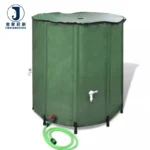
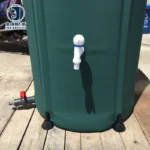
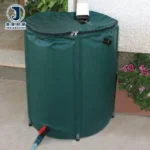
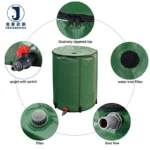
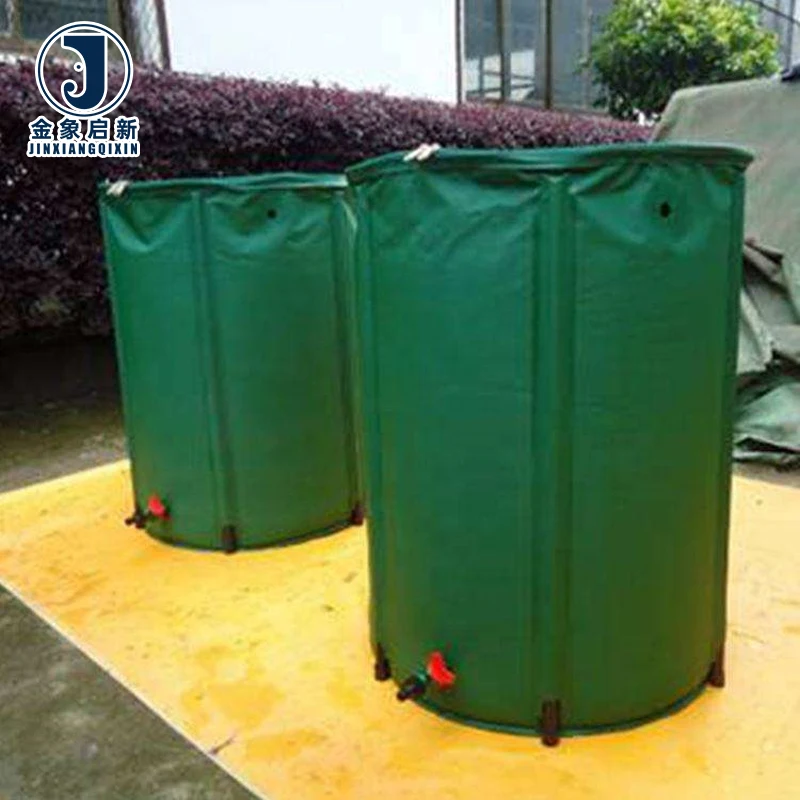
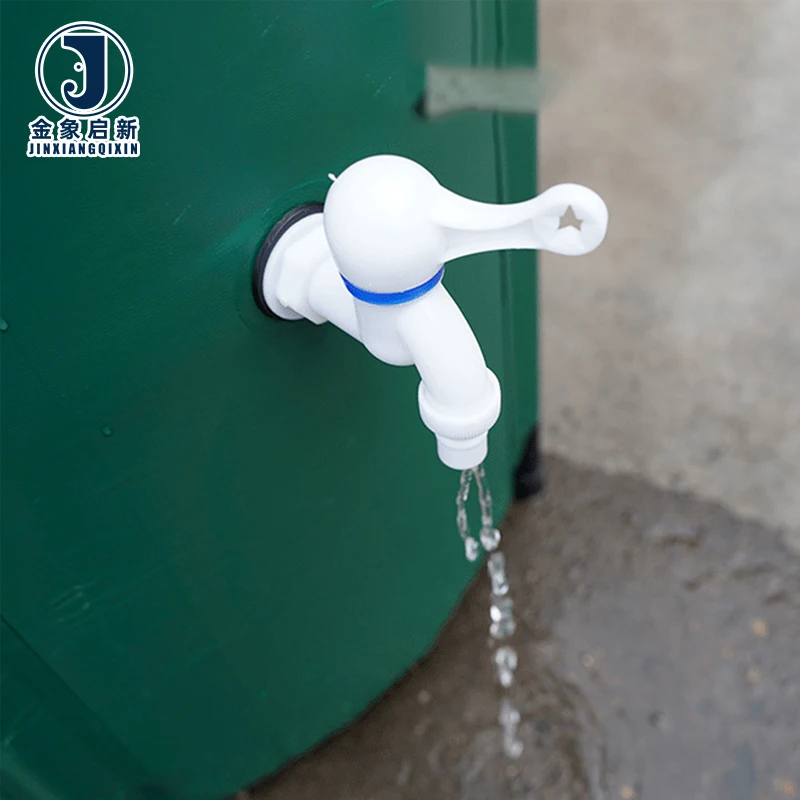
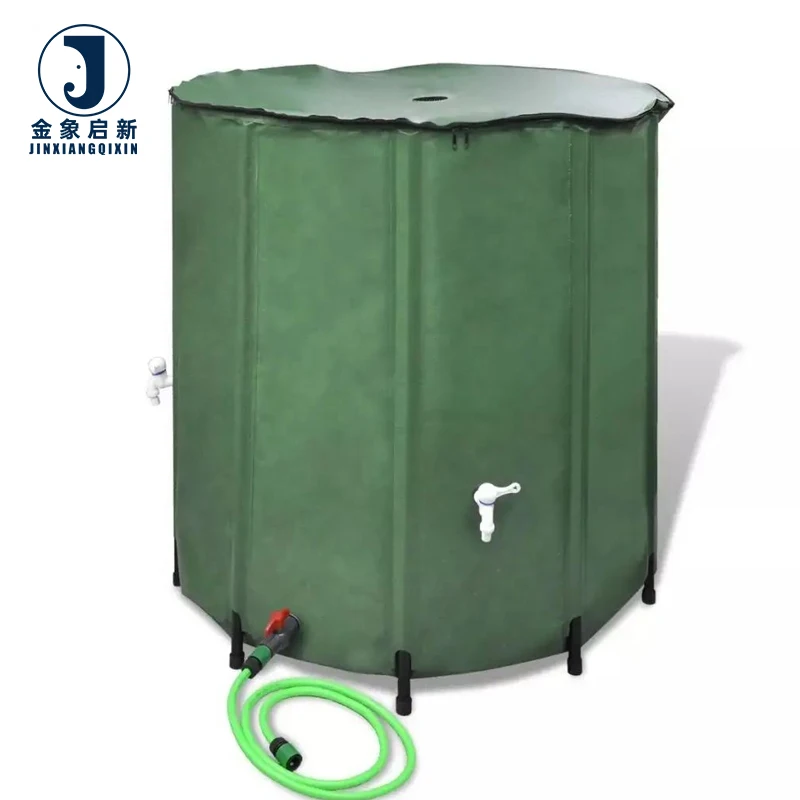
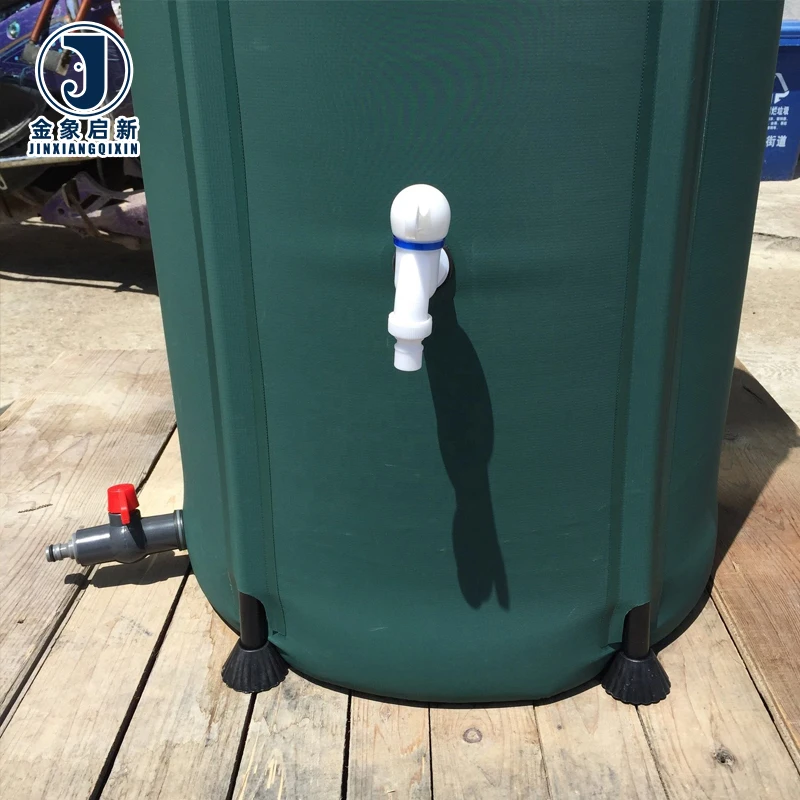
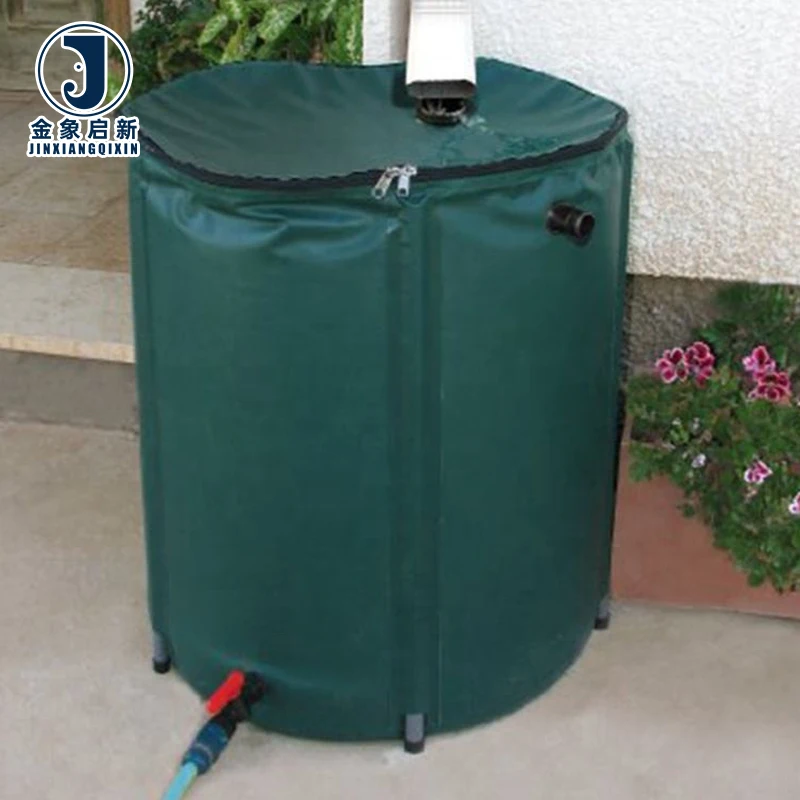
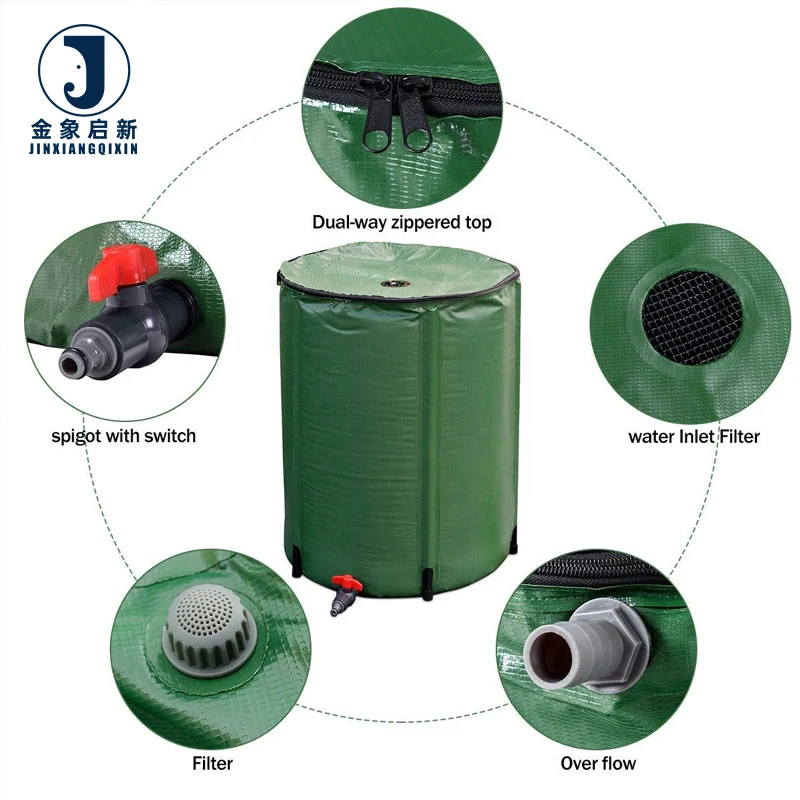
Coating Adhesion Control — Nearly 30 years of PVC coating process expertise ensures every water storage bladder maintains long-term seam integrity and waterproof performance under sustained liquid pressure.
Technical Specifications
| Parameter | Value |
|---|---|
| Product Type | PVC Tarpaulin Water Tank |
| Capacity | 750L |
| Coating Material | PVC Tarpaulin |
| Waterproof | Yes |
| UV-Resistant | Yes (test basis available on request) |
| Mildew-Proof | Yes |
| Collapsible | Yes |
| Assembly State | Foldable / Portable |
Application Suitability
| Application | Exposure & Requirement |
|---|---|
| Rainwater harvesting systems | Continuous outdoor UV exposure, seasonal temperature cycling, prolonged water contact |
| Garden and agricultural irrigation | Repeated filling and draining cycles, ground-level abrasion, biological growth risk |
| Hydroponic water reservoirs | Constant liquid containment, nutrient solution compatibility, indoor or greenhouse placement |
| Industrial water containment | Remote site deployment, temporary storage needs, transport and relocation demands |
| Emergency water supply | Rapid deployment, collapsible storage between uses, portable transport requirements |
Why Coating Delamination Is the Real Threat to Water Bladders
Seam and coating separation under hydrostatic pressure causes more field failures than punctures.
When a flexible PVC water storage bladder sits full for weeks, the sustained hydrostatic load pushes outward on every welded joint. If the coating adhesion was not controlled during manufacturing, the PVC layer begins to separate from the base fabric at the seams. The leak appears far from the weld line, making it difficult to diagnose and repair on site. [NEED_CITE: coating adhesion test methods for flexible PVC fabrics per ISO 2411] Most buyers focus on base fabric denier and never verify how well the coating bonds to it. A collapsed bladder on a job site means lost water, lost time, and replacement logistics that dwarf the unit cost.
Collapsible Design for Rapid Site Deployment
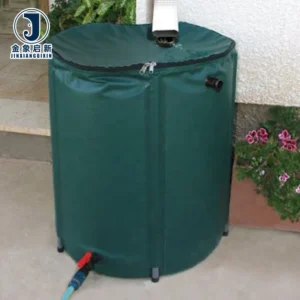
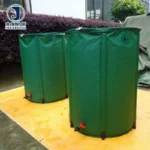
Rigid tanks demand permanent placement and heavy transport logistics. This PVC tarpaulin water tank folds flat when empty, allowing compact shipping and rapid on-site unfolding. Agricultural operators installing seasonal rainwater harvesting systems can deploy multiple units in a single day without crane equipment or concrete pads. The flexible construction conforms to uneven ground surfaces, reducing the need for extensive site preparation before filling begins.
Welded Seam Integrity Under Hydrostatic Load
Every seam on a water storage bladder is a potential failure point when full. The welding process must achieve coating-to-coating fusion across the entire joint length, not just surface bonding. Jinan Jinxiang operates dedicated hot-air and high-frequency welding equipment across three full production lines, with in-process QA checking each weld zone before the bladder moves to the next station. [NEED_CITE: high-frequency welding parameters for PVC coated fabrics] This controlled approach prevents the common failure where seams peel apart under sustained water pressure while the surrounding fabric remains intact.
Understanding Material Choices for Liquid Containment
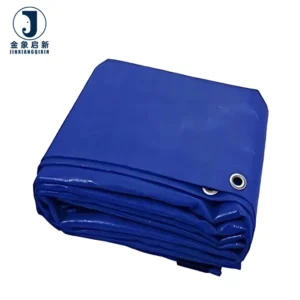
The PVC tarpaulin construction provides fully waterproof containment without requiring secondary liners. The coating weight and base fabric density work together to resist both puncture from ground debris and deformation under full load. Mildew-proof treatment on the fabric surface prevents biological growth that would otherwise contaminate stored rainwater and degrade the material over time. UV-resistant treatment extends the service life when the bladder remains outdoors through multiple seasons, though specific test basis documentation is available on request to confirm suitability for your climate zone. The collapsible nature of the material also means it can be drained, cleaned, and stored flat between uses without permanent space commitment.
The Hidden Cost of Underspecifying Water Storage Fabric
Choosing a lighter-grade PVC tarpaulin to reduce initial cost often results in early seam failure or coating delamination when the bladder operates at full capacity. The hydrostatic pressure at the base of a 750L column places sustained stress on every lower weld. Fabric that lacks adequate coating adhesion will separate at these stress points, typically after weeks rather than months of service. [NEED_CITE: hydrostatic pressure effects on flexible membrane containment] Replacement in the field requires draining, removing, and redeploying an entirely new unit, multiplying the original savings in labour and downtime. Mildew contamination in underspecified fabric also forces early disposal when stored water quality degrades beyond acceptable limits for irrigation or industrial use.
Why Source Water Bladders from Jinan Jinxiang
Deep process control over PVC coating weight and adhesion means every bladder is built on fabric with verified coating-to-fabric bond strength. Three full production lines with 36 sets of professional equipment support consistent output across bulk orders without sacrificing individual unit inspection. The 10-person R&D team handles custom capacity development, allowing buyers to specify dimensions outside the standard range for unique site constraints. Dedicated QA/QC inspects every welded seam at flex and load-bearing zones before any bladder leaves the facility. Sample development within days enables buyers to verify material, weld quality, and fitting placement before committing to full production runs.
Documentation & Verification
- Material specification sheet stating base fabric type, PVC coating material, and capacity rating
- UV-resistance test report supplied where applicable to the specified treatment grade
- 100% pre-shipment inspection record covering every welded seam and fitting point
- Roll packing list and certificate of origin prepared for export customs clearance
Fabrication, Handling & Storage
- Hot-air weld temperature and speed calibrated to the PVC tarpaulin coating weight for consistent fusion
- Fold bladders flat along factory crease lines to avoid creating permanent stress points in the PVC coating
- Store collapsed units in dry, shaded conditions to preserve mildew-proof surface treatment before deployment
- Use mild, non-solvent cleaners on the PVC surface to avoid degrading the UV-resistant treatment layer
- Inspect all welded seams after initial fill and retouch any micro-leaks before full-capacity loading
Requesting a Quotation for Your Project
Provide your target capacity, intended application, and site exposure conditions so the material specification can be matched to your requirements. Confirm whether UV-resistance documentation or specific mildew-proof certifications are needed for your market’s regulatory compliance. Indicate whether standard dimensions within the 100L to 1000L range suit your layout, or if custom sizing is necessary for your installation footprint.
Frequently Asked Questions
Q: How is the PVC coating adhesion verified to prevent delamination under sustained water pressure?
A: Coating adhesion is controlled through process parameters during manufacturing and verified through peel testing at the production stage. Each bladder undergoes seam weld inspection at load-bearing zones before shipment. If your application involves prolonged full-capacity storage, request the specific adhesion test data to confirm the material suits your hydrostatic load requirements.
Q: What UV-resistance test basis supports the outdoor exposure claim?
A: UV-resistant treatment is applied during the coating process to extend outdoor service life. The specific test basis and exposure ratings are available upon request with documentation. Buyers in high-UV climate zones should confirm the treatment grade matches their regional solar exposure conditions before placing bulk orders.
Q: How are welded seams inspected to prevent leakage at stress points?
A: Every welded seam receives visual and pressure-based inspection during the 100% pre-shipment quality check. Inspectors focus on flex zones and lower load-bearing joints where hydrostatic pressure concentrates. Any seam showing incomplete fusion or surface irregularity is reworked or the unit is rejected before packing.
Q: Can custom capacities and dimensions be developed beyond the standard range?
A: The R&D team develops custom-sized bladders based on your site layout and volume requirements. Provide your target dimensions, filling and draining frequency, and any fitting placement needs. Samples are produced within days for approval before full production begins, with minimums depending on the complexity of the custom specification.
Q: What certifications and documentation ship with each bladder for regulatory compliance?
A: Each shipment includes a material specification sheet, pre-shipment inspection record, packing list, and certificate of origin. UV-resistance test reports and compliance documentation are supplied where applicable to the specified treatment grade. Confirm your destination market’s requirements at the inquiry stage so all necessary paperwork is prepared before dispatch.