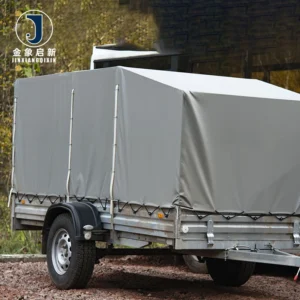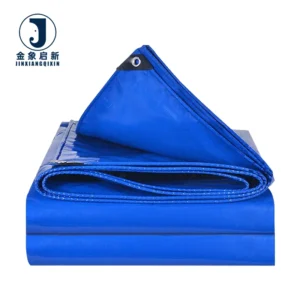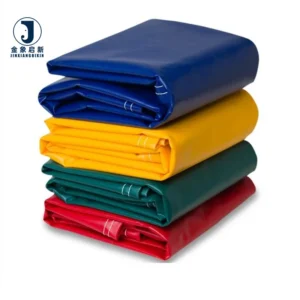


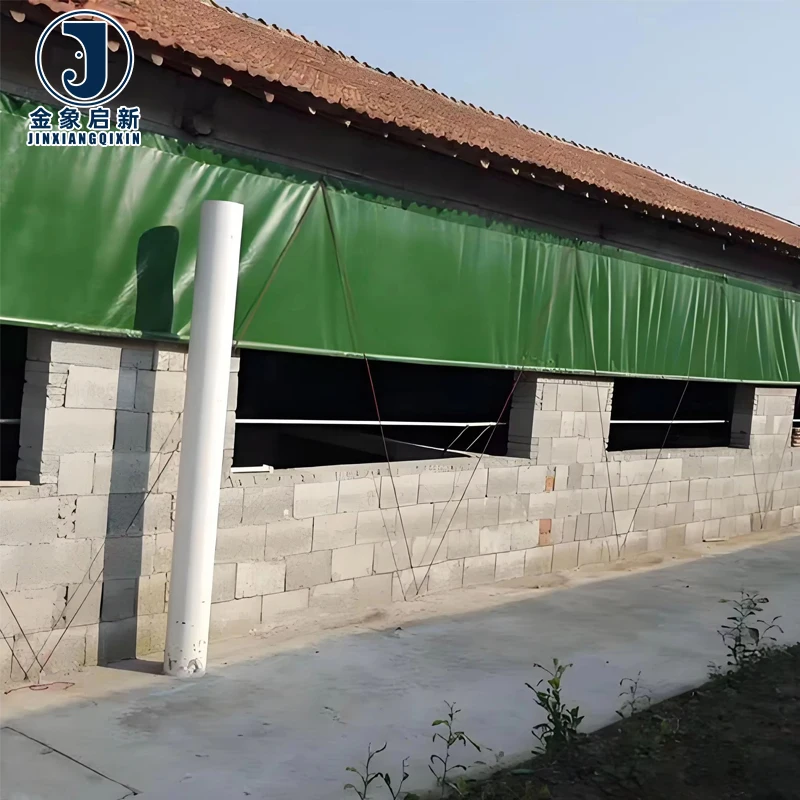
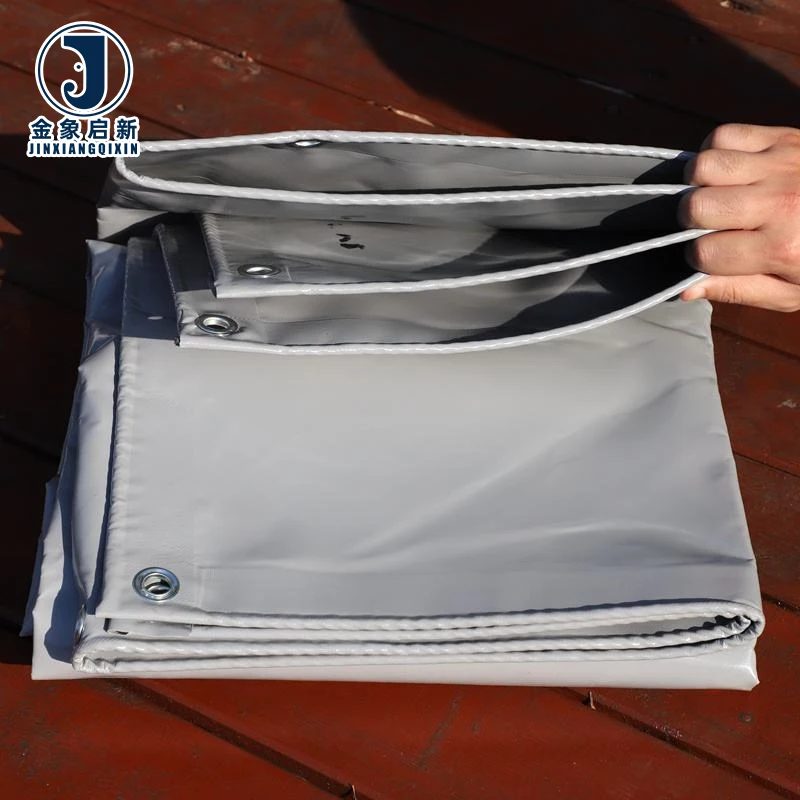
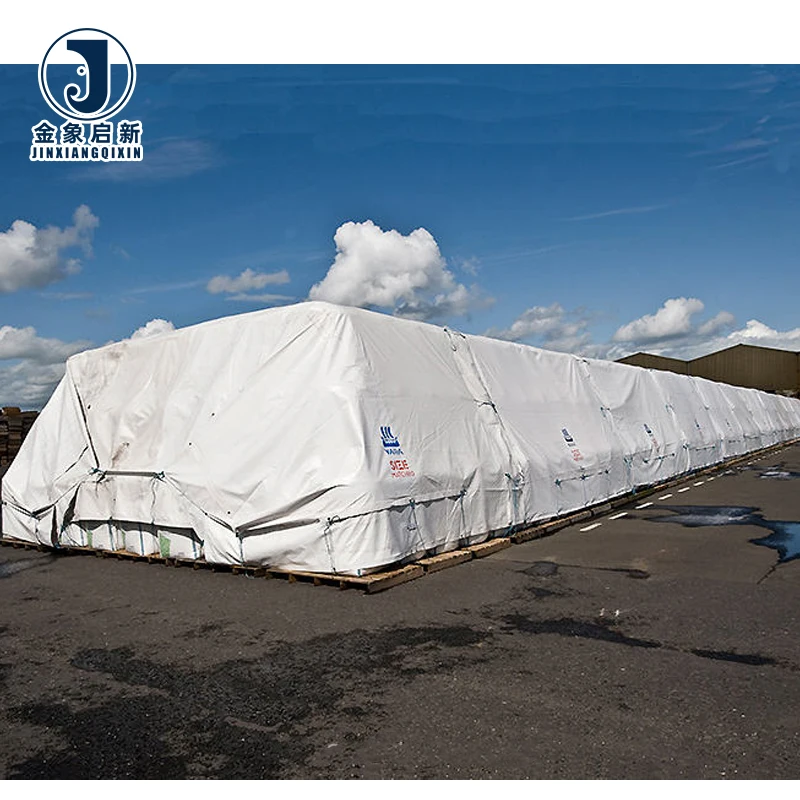
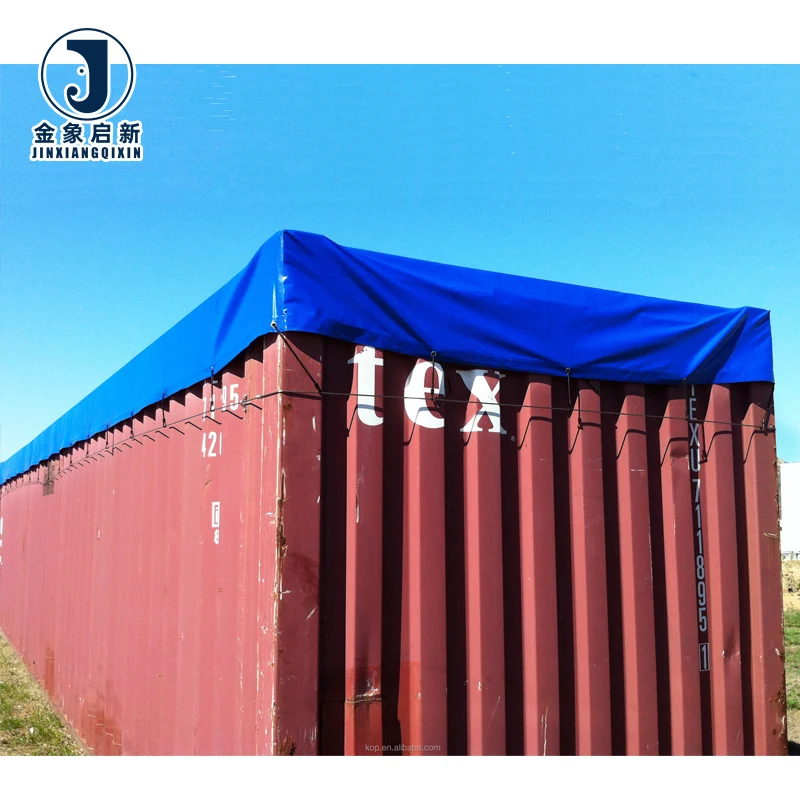
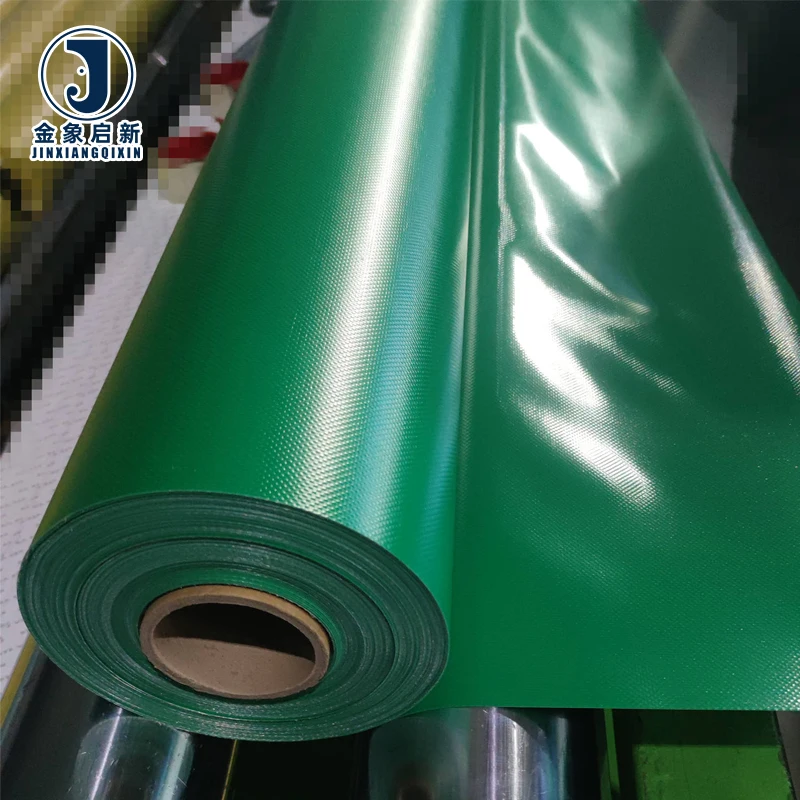
Process-Controlled Coating — Lamination and hot melt coating methods applied to high-tenacity polyester base fabrics, with dedicated QA at every production stage ensuring adhesion consistency across every roll of PVC coated fabric shipped.
Technical Specifications
| Parameter | Value |
|---|---|
| Product Type | PVC Coated Tarpaulin Fabric |
| Base Fabric Denier | 500D, 1000D, 500D–2000D |
| Coating Material | PVC |
| Coating Method | Lamination technology and hot melt coating technology |
| Total Thickness | 0.35–0.45 mm / 0.70–1.0 mm / 1.2–1.5 mm |
| Weight (GSM) | 400–500 / 700–1000 / 1100–1500 (range covers product family — confirm the grade for this item) |
| Tensile Strength (Warp/Weft) | 1500–2000 / 1200–1800 N/5cm (medium) · 2000–2500 / 1800–2200 N/5cm (heavy) · 2500–3000 / 2200–2800 N/5cm (super heavy) |
| Treatment Options | Flame retardant (grade not stated — confirm the grade required for your market), anti-static (standard not stated), cold resistant cracking, mold proof, UV resistant (test basis not stated) |
| Welding Tear Strength | Excellent (test standard not stated) |
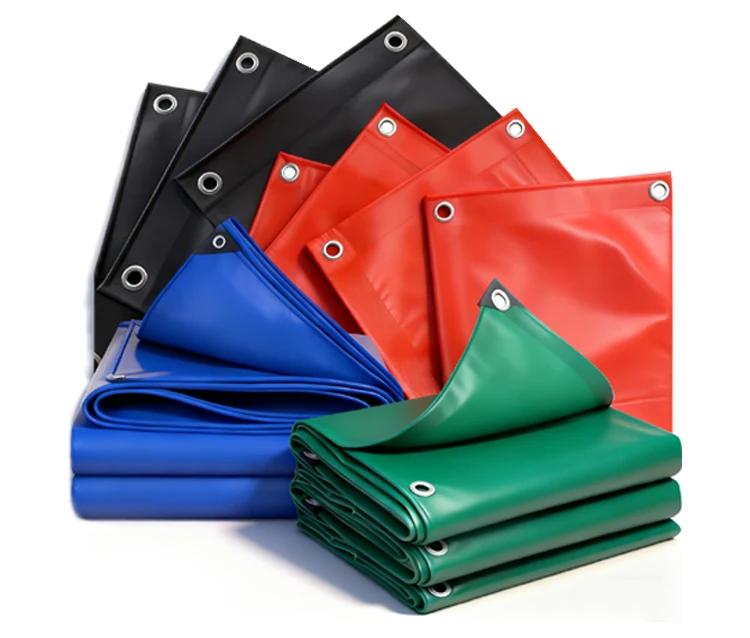
| Color Options | Blue, Blue/Orange, Green, Grey, Black, Clear, Grey/Green, Orange, or custom |
| Standards Referenced | ISO, CE |
Application Suitability
| Application | Exposure & Requirement |
|---|---|
| Underground mine ventilation ducts | Continuous high-velocity airflow, confined-space fire codes, airborne particulate abrasion, mandatory fire-retardant and anti-static compliance |
| Aviation hangar membrane structures | Large unsupported spans, wind load cycling, UV exposure, fire classification for building materials |
| Tunnelling ventilation tubes | Confined humid environments, high static pressure, mechanical contact with rock surfaces, flame propagation prevention |
| Industrial pipe canopy covers | Chemical splash exposure, thermal cycling, sustained UV, structural tension loads at attachment points |
| Temporary industrial enclosures | Rapid deploy and strike cycles, weather sealing, compliance with site-specific fire safety specifications |
| Inflatable structure membranes | Internal pressure retention, repeated inflation cycles, seam integrity under biaxial stress |
What "Fire Retardant" Means When No Grade Is on the Certificate
Specifying PVC coated fabric for ducts or membrane structures without a named fire classification is a compliance risk, not a material choice.
Ventilation duct fabric installed underground or in aviation facilities must meet specific fire-retardant and anti-static classifications before the site inspector signs off. We have seen rolls arrive on site with a generic "flame retardant" label and no test report referencing a recognised standard — the result is a failed inspection, work stoppage, and material that must be stripped out and replaced. For mining and tunnelling operations, the fire classification required often differs from what building membrane codes demand, and anti-static surface resistance thresholds vary by jurisdiction [NEED_CITE: fire classification standards for ventilation duct fabrics in underground mining]. Confirming the exact grade and test standard your market mandates before production begins eliminates this exposure entirely.
Coating Technology and Its Effect on Duct Performance
The coating method directly determines how well PVC coated fabric holds up under the biaxial stress of inflated ducts and tensioned membranes. Hot melt coating technology drives PVC into the interstices of the high-tenacity polyester base yarn, creating a mechanical bond that resists delamination when the fabric flexes under positive or negative pressure cycles. Lamination technology bonds pre-formed PVC films to the base fabric under heat and pressure, producing a more uniform surface thickness that suits large-panel membrane welding. Selecting between the two methods depends on whether your primary load case is cyclic inflation or static tension.
Base Fabric Density and Structural Load Matching
The denier of the polyester base yarn — from 500D through to 2000D — sets the ceiling for tensile and tear performance before any coating is applied. In high-pressure ventilation ducts, warp yarns carry the longitudinal load from air velocity and duct weight, while weft yarns resist circumferential expansion. A mismatch between base fabric density and the duct’s operating static pressure leads to progressive yarn displacement at welded seams [NEED_CITE: relationship between base fabric denier and tensile strength in coated technical textiles]. Matching denier and knit density to the airflow pressure specification is a structural engineering decision, not a cost optimisation.
Reading the Specification Sheet Beyond GSM
Weight per square metre is often the first number buyers check, but it tells only part of the story for PVC coated fabric used in technical applications. A 1100–1500 g/m² super heavy-duty grade achieves its tensile figures through a combination of 500D–2000D base yarn density and the mass of PVC coating applied — the coating contributes to weight but the base fabric carries the structural load. Thickness readings of 1.2–1.5 mm at this grade indicate substantial coating build, which improves puncture resistance at contact points but also increases roll weight and handling difficulty on site. Coating method further separates two fabrics of identical GSM: hot melt coated material typically shows higher peel strength at welded seams than laminated fabric of the same weight, because the coating penetrates rather than sitting on the yarn surface [NEED_CITE: peel strength comparison between hot melt and lamination coated polyester fabrics].
The Cost of Specifying the Wrong Grade for the Application
Installing a medium-duty 400–500 g/m² fabric in a high-pressure mine ventilation duct leads to premature failure at welded seams, because the base fabric density cannot sustain the cyclic pressure load. Conversely, specifying a super heavy 1100–1500 g/m² grade for a temporary enclosure that does not require that structural capacity adds unnecessary weight, complicates handling, and increases fabrication time without delivering measurable performance benefit. Fire-retardant and anti-static treatments requested without a named grade create a different failure mode: the fabric passes internal QA but does not satisfy the inspector on site because the test report references a standard the local authority does not recognise. Every grade selection error traces back to incomplete specification at the inquiry stage [NEED_CITE: common causes of coated fabric specification failure in industrial ventilation projects].
Why Source This Fabric Here
Nearly three decades of focused production on coated fabric means process parameters for lamination and hot melt coating are controlled rather than adjusted per batch. Three full production lines and 36 sets of professional equipment provide the capacity to run multiple roll orders with consistent coating weight and colour match across the batch. A 10-person R&D team develops samples within days when your project demands a specific denier, treatment combination, or width that is not in standard stock. Dedicated QA and QC at every production stage, concluding with 100 percent pre-shipment inspection, catches GSM deviation and coating adhesion issues before rolls leave the facility. Material specification sheets and test documentation ship with the order, not after a follow-up email.
Documentation & Verification
- Material specification sheet stating base fabric denier, coating method, and GSM grade for the rolls supplied
- Test report for flame-retardant and anti-static properties matched to the production batch
- 100 percent pre-shipment inspection record with in-process QA documentation at each stage
- Certificate of origin and customs documentation supporting export clearance
- Roll packing list with individual roll weight and dimensions for receiving verification
Fabrication, Handling & Storage
- Hot air welding parameters must be adjusted for coating thickness — 0.35–0.45 mm medium grades require lower temperature than 1.2–1.5 mm super heavy grades
- Rolls should be stored upright on end cores to prevent flat-spotting and permanent creasing of the PVC coating surface
- Cold resistant cracking treatment allows transport and unrolling in low temperatures without coating fracture
- Anti-static treated fabric should be tested with a surface resistance meter after fabrication to confirm continuity across welded seams
- UV resistant grades require acrylic topcoat verification before selecting solvent-based cleaners for field maintenance
Requesting a Technical Quotation
Provide the operating static pressure and airflow volume for duct applications, or the span and wind load for membrane structures, so we can recommend the base fabric denier and coating weight combination. Specify the fire-retardant classification and anti-static standard your local authority requires, along with the target market, so that test reports reference the correct framework. Confirm whether you need rolls in stock widths or custom widths, and indicate the total linear metre requirement to determine production scheduling.
Frequently Asked Questions
Q: What fire-retardant grades and test standards do you certify to for mining and aviation duct applications?
A: We supply PVC coated fabric with flame-retardant treatments and issue test reports matched to the batch. The specific grade and test standard depend on your market’s regulatory framework — mining ventilation codes differ from aviation building classifications. Provide the standard your site inspector requires, and we will confirm whether our treatment and documentation align before production begins.
Q: How is anti-static performance measured and what surface resistance range do you guarantee?
A: Anti-static treatment is available for duct and membrane applications where electrostatic discharge is a hazard. The surface resistance value and measurement method depend on the standard your project specifies. Share the required resistance range or test standard at inquiry stage, and we will supply the corresponding test report with each shipment batch.
Q: What base fabric denier and coating weight combinations do you recommend for high-pressure ventilation ducts?
A: High static pressure ducts typically require heavy or super heavy-duty base fabrics in the 1000D to 2000D range with corresponding higher GSM grades. The exact combination depends on duct diameter, operating pressure, and whether the installation is permanent or relocatable. We review your pressure specification and recommend a denier and coating weight pairing that maintains seam integrity under cyclic loading.
Q: Can you supply test reports for UV and flame-retardant treatments with each shipment batch?
A: Yes. When UV resistant or flame-retardant treatment is specified on the order, the corresponding test report is included in the shipment documentation. Reports reference the batch produced and are issued alongside the material specification sheet and pre-shipment inspection record. Confirm the required test standard at inquiry so that documentation matches your compliance framework.
Q: How do you ensure colour consistency across multiple rolls for large membrane structures?
A: Colour matching is controlled during the compounding stage before coating. For membrane projects requiring multiple rolls, all material is produced in a single batch run to maintain consistency. Pre-shipment inspection includes a visual colour comparison across rolls, and any deviation detected at this stage is corrected before dispatch rather than discovered on site during panel installation.