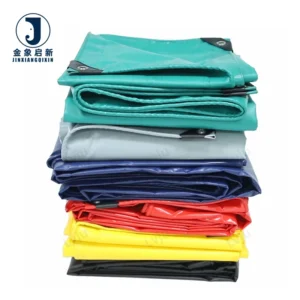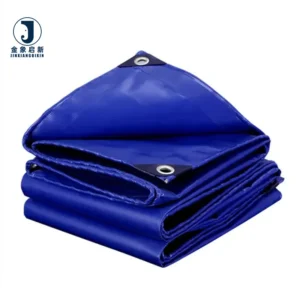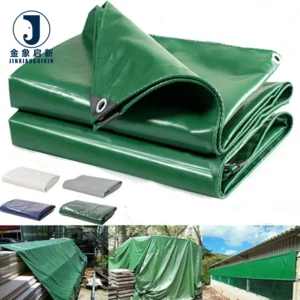

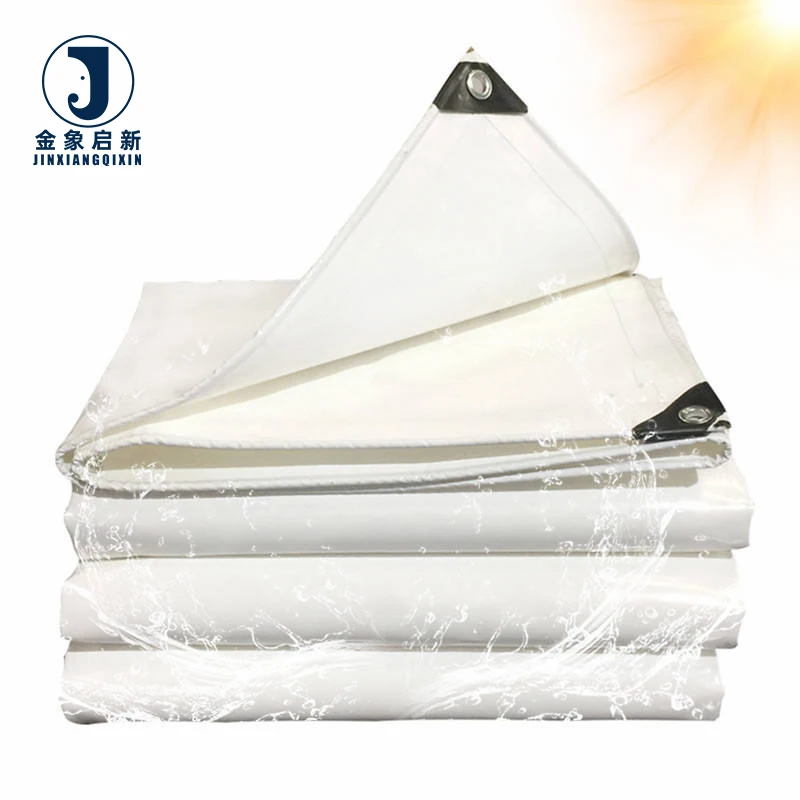
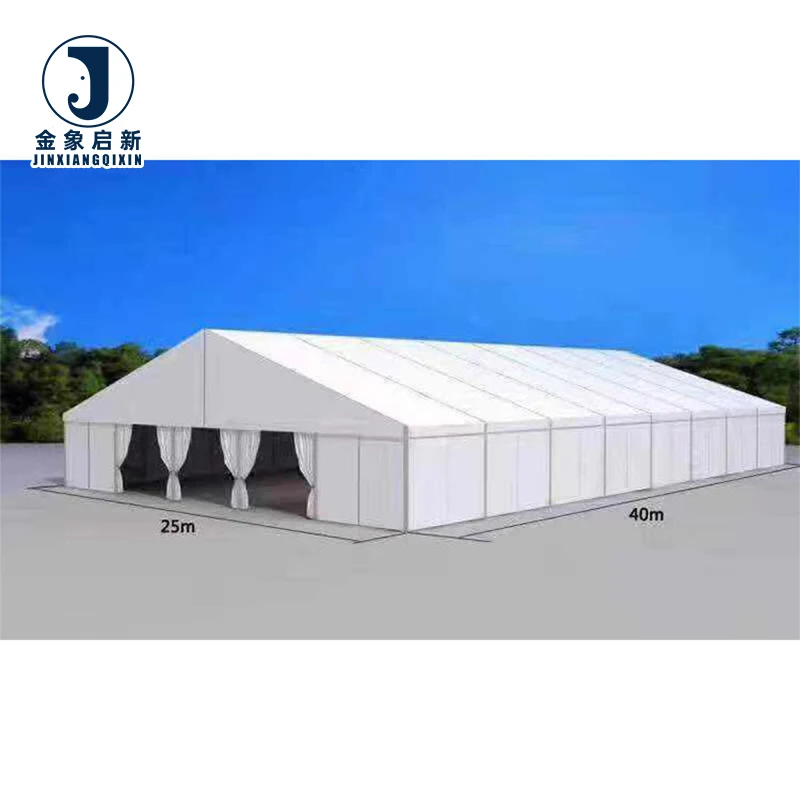
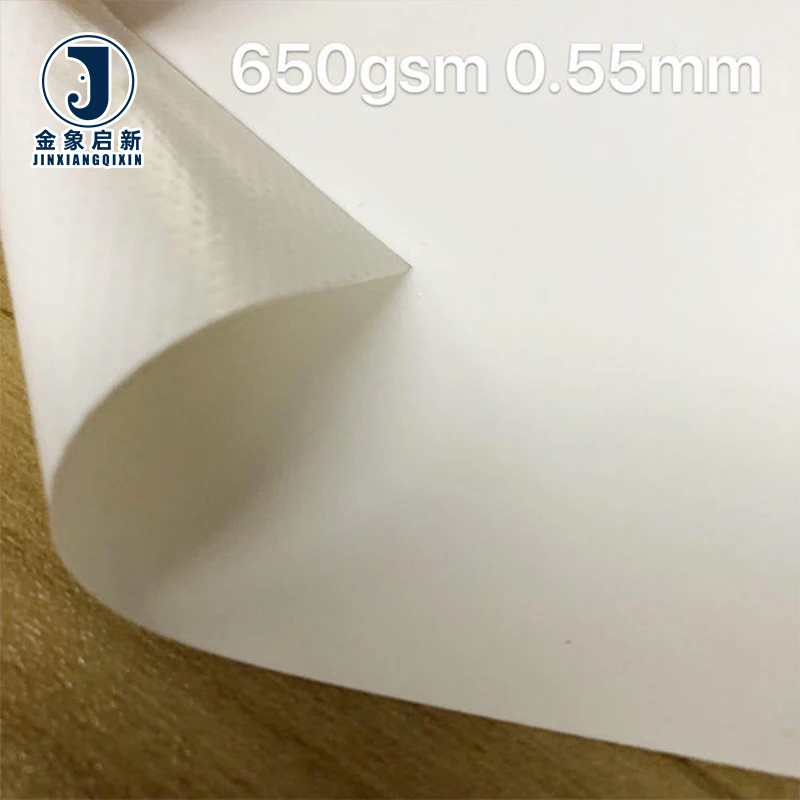
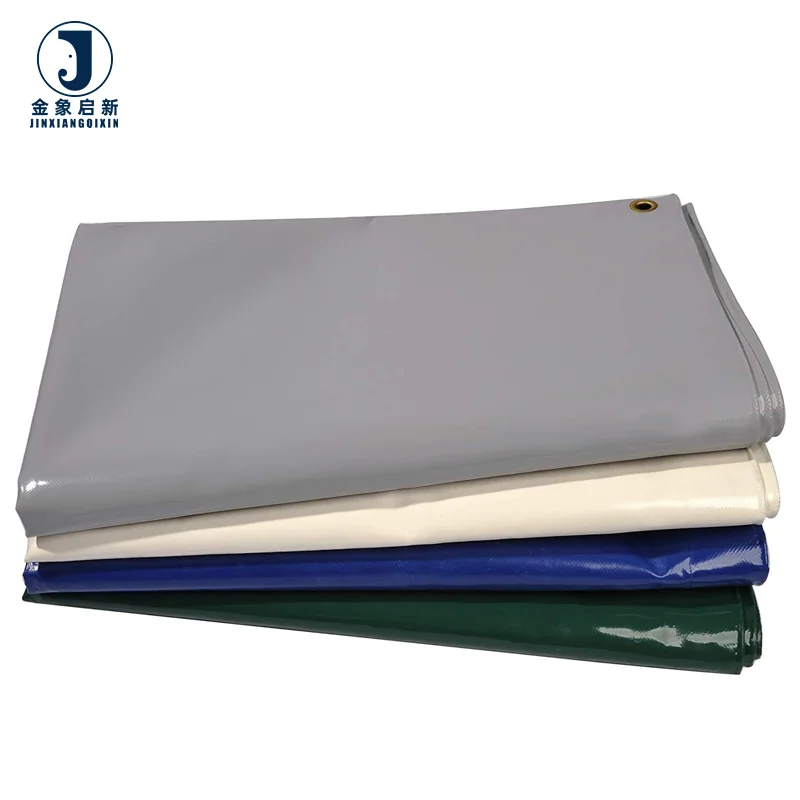
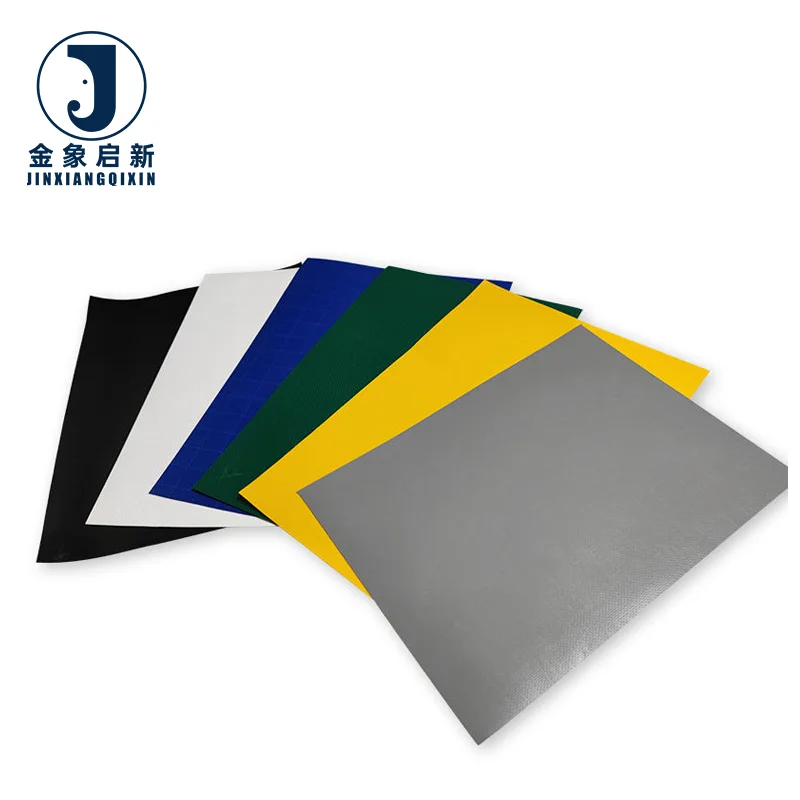
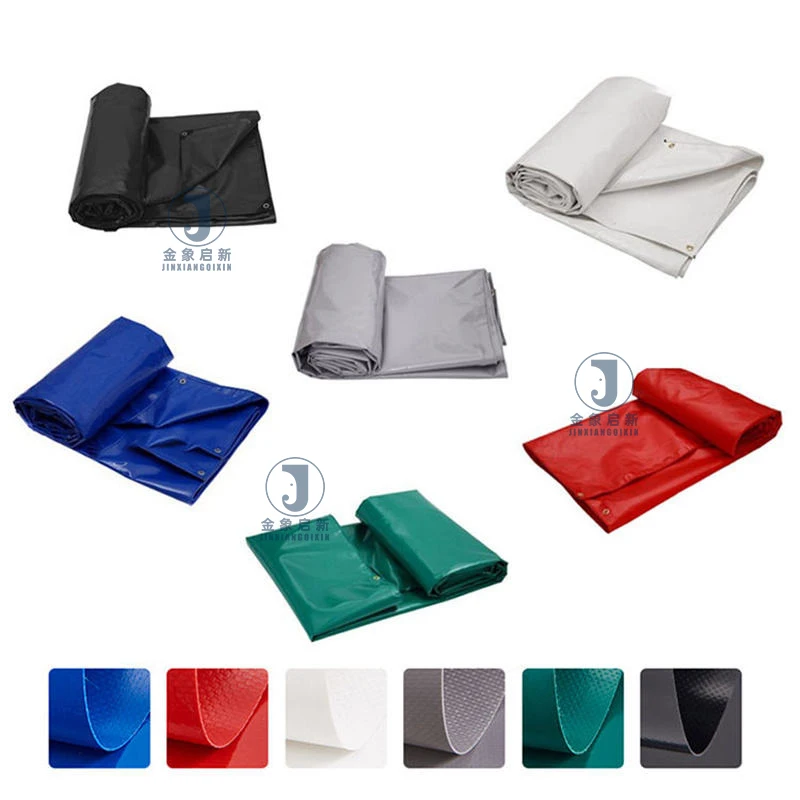
Deep Process Control Over Coating — Hot-melt coating lines produce PVC coated tarpaulin with verifiable adhesion and consistent GSM across every roll for specialist ventilation and membrane applications.
Technical Specifications
| Parameter | Value |
|---|---|
| Product Type | PVC Coated Tarpaulin |
| Base Fabric | High-strength polyester mesh fabric |
| Coating Material | PVC |
| Coating Method | Laminated technology & Hot-melt coating technology |
| Weight Options | 350gsm / 420gsm / 500gsm / 550gsm / 600gsm / 750gsm |
| Thickness Options | 0.32mm / 0.35mm / 0.4mm / 0.45mm / 0.5mm / 0.65mm |
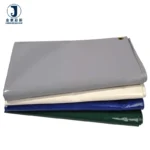
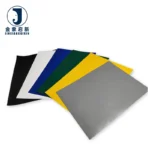
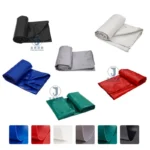
| Color Options | Blue / Red / Yellow / Light blue / Grey (Customized) |
| Surface Finish | Available in glossy and matte |
| Roll Size Options | 2m width × 75m length / 2.1m width × 50m length |
| Temperature Range | -70°C to +100°C |
| Special Treatments | Flame retardant (grade not stated in source — confirm required standard), Anti-static (grade not stated in source — confirm surface resistance target), Anti-cold, Anti-mildew |
| Cold Crack Resistance | Functional down to -70°C |
| Standards | ISO and CE certified production |
Application Suitability
| Application | Exposure & Requirement |
|---|---|
| Mining ventilation ducts | Continuous airflow, particulate abrasion, mandatory fire-retardant and anti-static compliance underground |
| Tunnelling exhaust ducting | High humidity, chemical exposure from blasting residues, confined-space fire safety regulations |
| Aviation ground support ducts | Jet blast proximity, fuel vapour environment, strict anti-static and flame-retardant certification |
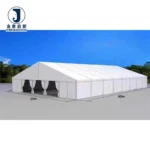
| Membrane and inflatable structures | Constant tensile load, UV exposure, wind uplift, weld seam integrity under dynamic stress |
| Temporary industrial enclosures | Weather exposure, dust containment, rapid deployment and repeated folding |
What Compliance Documentation Should Accompany Every Roll of Fire-Retardant PVC Coated Tarpaulin?
Certified test reports mapped to your site’s regulatory framework — not a generic data sheet.
Ventilation duct and specialist fabric often arrives on site with nothing more than a supplier declaration stating "flame retardant" or "anti-static" without any verifiable test result behind the claim. Mining and tunnelling safety officers reject material that cannot demonstrate compliance with the specific standard enforced in their jurisdiction, halting installation and delaying project milestones. A PVC coated tarpaulin fire retardant / anti-static / certified specification is only as reliable as the documentation that travels with it [NEED_CITE: fire classification standards for flexible fabric in underground and aviation environments].
Coating Adhesion and Weld Integrity for Duct Fabrication
Hot-melt coating technology bonds the PVC layer into the polyester mesh rather than sitting on the surface, creating a unified structure that resists delamination when heat-welded. For ventilation duct fabrication, this matters because every longitudinal and circumferential seam must hold under positive and negative pressure cycles without peeling. Laminated technology supplements this by ensuring consistent coating weight distribution, which directly affects how predictably the material responds to high-frequency or hot-air welding equipment on the shop floor.
Temperature Extremes in Specialist Deployment Environments
The functional range from -70°C to +100°C means this PVC coated tarpaulin fire retardant / anti-static / certified material remains flexible in arctic mining ventilation and stable near heat-generating industrial equipment. Anti-cold treatment prevents the coating from becoming brittle and cracking at low temperatures, which is critical for above-ground duct runs in continental winter climates. At the upper boundary, the coating retains dimensional stability without softening or tackiness that would attract dust and compromise airflow quality [NEED_CITE: cold crack testing methodology for PVC coated fabrics].
Reading the Specification Sheet Beyond GSM
Weight in gsm tells you how much material is present but not how it is distributed between base fabric and coating. A 550gsm grade with a heavier base fabric denier will show higher tensile and tear resistance than one where most of the weight comes from coating thickness alone. The high-strength polyester mesh base provides the structural skeleton; the PVC coating delivers waterproofing, chemical resistance, and weldability. Hot-melt coating penetrates the mesh interstices, improving peel strength compared to simple knife-over-roll application. Surface finish — glossy or matte — influences cleaning behaviour and how well printed markings adhere for duct identification on site.
The Hidden Cost of Specifying Without Verification
When fire-retardant grade is claimed but not backed by a batch-specific test report, the material may pass visual inspection yet fail the compliance audit that occurs after installation. Anti-static surface resistance that drifts outside the specified range can create ignition risk in fuel-vapour or coal-dust environments. Colour variation between rolls in a single membrane structure order becomes visible once panels are heat-welded side by side, forcing costly panel replacement. Welded seams that fail before the fabric itself indicates a mismatch between the coating formulation and the welding parameters used [NEED_CITE: weld strength testing for coated technical textiles per ISO 1421].
Why Technical Buyers Source This PVC Coated Tarpaulin Here
Three full production lines with 36 sets of professional equipment support the volume consistency that mining and tunnelling projects demand across multiple duct runs. A 10-person R&D team handles material selection and sample development so that fire-retardant and anti-static treatments are matched to your specific regulatory environment before production begins. Dedicated QA/QC at every production stage with 100% pre-shipment inspection means each roll is verified against the stated specification before it leaves the facility. Samples are developed within days for custom requirements, allowing fabricators to run weld trials and confirm compatibility with their equipment before committing to a production order. Nearly 30 years of focused coated-fabric production underpins the process control that keeps GSM, coating adhesion, and treatment performance consistent from first roll to last.
Documentation & Verification
- Material specification sheet stating exact GSM, base fabric denier, coating weight, and treatment applied for this PVC coated tarpaulin fire retardant / anti-static / certified order
- Fire-retardant grade test report (e.g. M2 / B1 / NFPA 701 / DIN 4102) supplied per batch — confirm target market requirement before ordering
- Anti-static surface resistance measurement and test certificate matching site specification
- Pre-shipment inspection record with 100% inspection and roll-level traceability before dispatch
- ISO and CE certificates, certificate of origin, and customs documentation included with each shipment
Fabrication, Handling & Storage
- Hot-air or high-frequency welding parameters should be tested on sample pieces of the selected gsm grade before full duct production
- Store rolls horizontally on padded racking to prevent permanent creasing in the polyester mesh base fabric
- Unroll and allow the PVC coated tarpaulin to acclimatise before fabrication when transported in sub-zero conditions
- Use compatible PVC-based repair patches and solvent cement for field repairs on duct seams and membrane punctures
- Plan cutting layout around the 2m or 2.1m roll width to minimise transverse welds in long duct sections
- Clean glossy finish surfaces with mild detergent; avoid abrasive pads that damage the coating layer
Requesting a Specification Match for Your Project
Provide the fire-retardant standard enforced at your site (e.g. DIN 4102 class, NFPA 701, or local mining regulation), the required anti-static surface resistance range, and the target GSM for your duct or membrane design. Specify whether you need roll stock in standard widths or finished panels with welded seams and edge reinforcement. Share your annual volume and preferred colour reference so we can confirm batch consistency and lead time.
Frequently Asked Questions
Q: Which fire-retardant grades are available and how do they map to mining or aviation regulations?
A: Flame retardant treatment is available in multiple grades. The correct grade depends on your jurisdiction — European mining sites often require M2 or B1 per DIN 4102, while aviation ground support may reference NFPA 701. Confirm the specific standard with your safety officer before ordering, and the matching test report will accompany your shipment.
Q: How is anti-static performance measured and what values can be certified?
A: Anti-static performance is measured by surface resistance in ohms per square. The target value depends on your site specification — underground mining typically requires a defined range to prevent spark ignition. Request the test certificate for the exact surface resistance achieved on your production batch before dispatch.
Q: What is the welding behaviour of hot-melt coated PVC for duct fabrication?
A: Hot-melt coating penetrates the polyester mesh, producing strong peel adhesion at welded seams. This supports both high-frequency and hot-air welding methods used in duct and membrane fabrication. We recommend running weld trials on sample pieces to dial in temperature and dwell time for your specific equipment.
Q: How are GSM and coating weight verified before shipment?
A: Every roll undergoes 100% pre-shipment inspection where GSM is measured and recorded against the specification stated on your quotation. The inspection record accompanies the shipment, providing roll-level traceability and confirming the material matches the agreed weight and coating thickness.
Q: What documentation package accompanies each shipment for site audit?
A: Each consignment ships with a material specification sheet, fire-retardant and anti-static test reports where applicable, pre-shipment inspection record, ISO and CE certificates, certificate of origin, roll packing list, and customs support documents — everything needed for compliance verification on site.