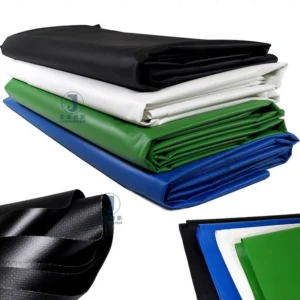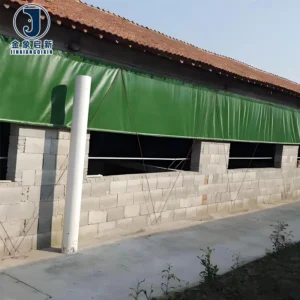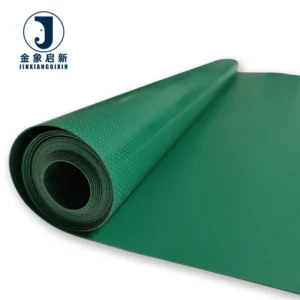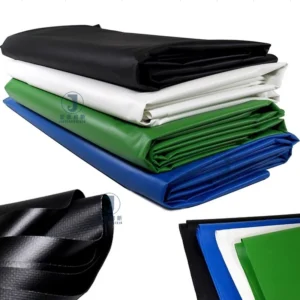

Hot-melt coating expertise — Laminated and hot-melt coating technology supporting strong adhesion and welding integrity for duct construction and specialist membrane fabrication across multiple weight grades.
Technical Specifications
| Parameter | Value |
|---|---|
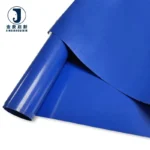
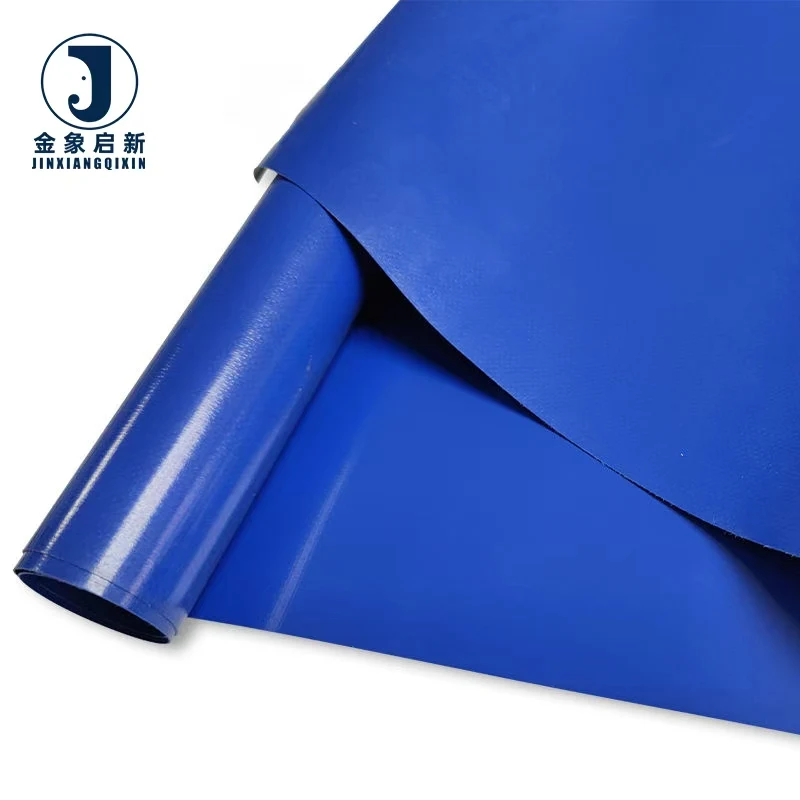
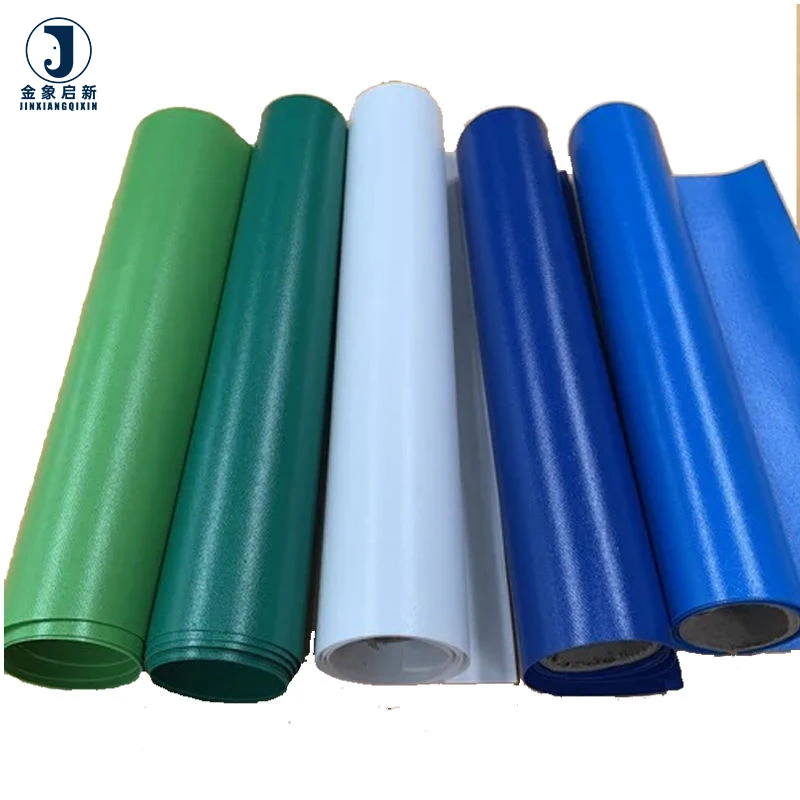
| Product Type | PVC Coated Tarpaulin Roll |
| Base Fabric | High-strength polyester mesh fabric |
| Coating Material | PVC |
| Coating Method | Laminated technology & Hot-melt Coating technology |
| Weight Options | 350gsm, 420g, 500gsm, 550gsm, 600gsm, 750gsm |
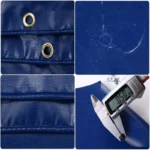
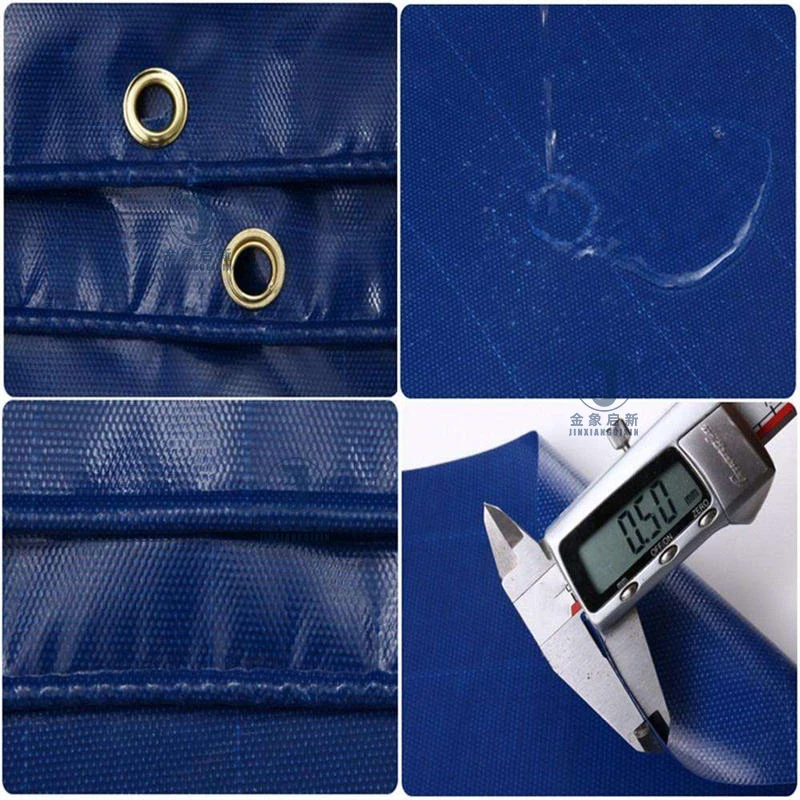
| Total Thickness | 0.32mm, 0.35mm, 0.4mm, 0.45mm, 0.5mm, 0.65mm |
| Roll Width | 2m / 2.1m |
| Roll Length | 75m (for 2m width) / 50m (for 2.1m width) |
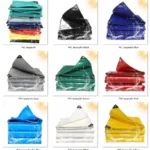
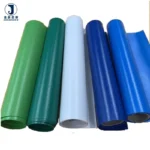
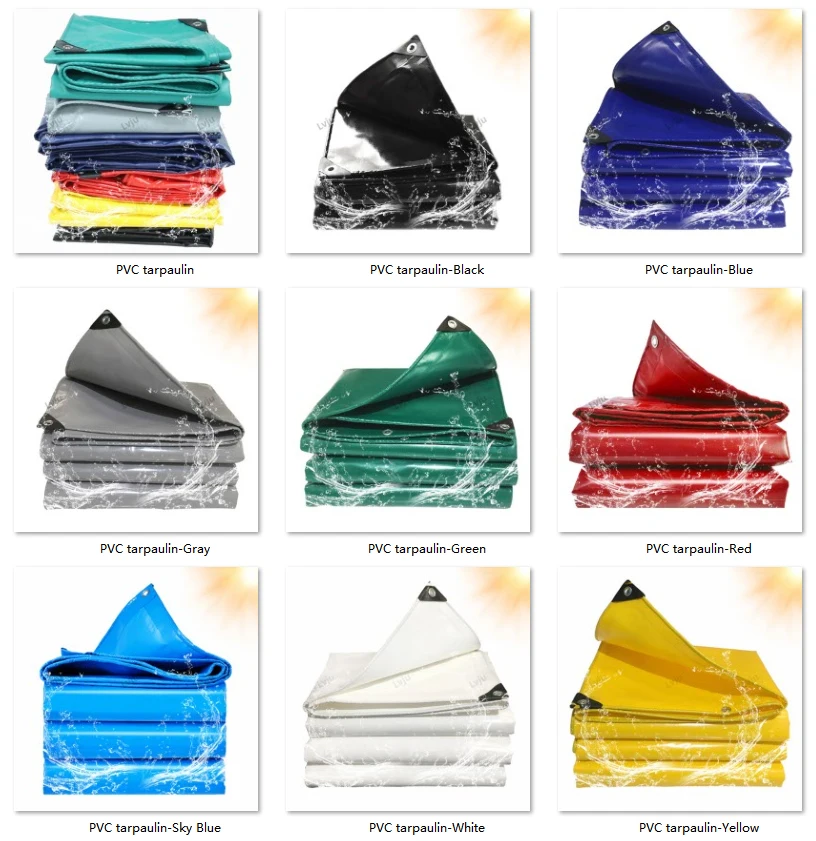
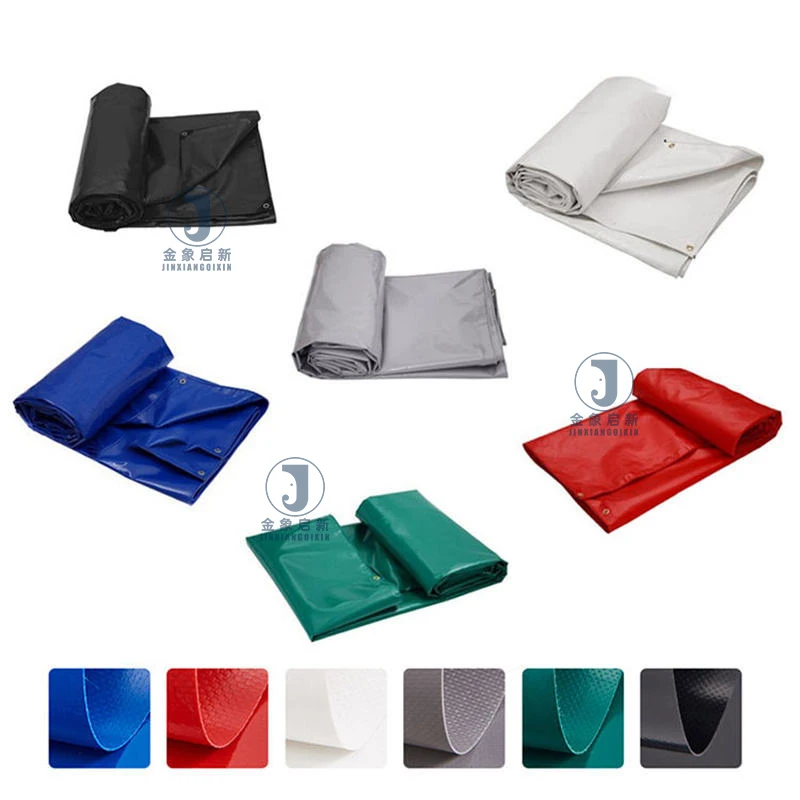
| Colour Options | Blue, Red, Yellow, Light blue, Grey (custom colours available) |
| Flame Retardant | Available — confirm the grade required for your market |
| Anti-Static | Available — confirm the surface resistance standard for your site |
| Cold Crack Resistance | Stated — suitable for sub-zero or high-altitude deployment |
| Anti-Mildew | Stated |
| Waterproof | Fully waterproof coated construction |
| Custom Printing | Available on request |
Application Suitability
| Application | Exposure & Requirement |
|---|---|
| Mining ventilation duct | Continuous abrasion from particulate-laden airflow, mandatory fire-retardant and anti-static compliance, flex fatigue at coupling joints |
| Tunnelling air supply | High humidity, rock dust exposure, confined-space fire safety requirements, repeated duct extension and retraction |
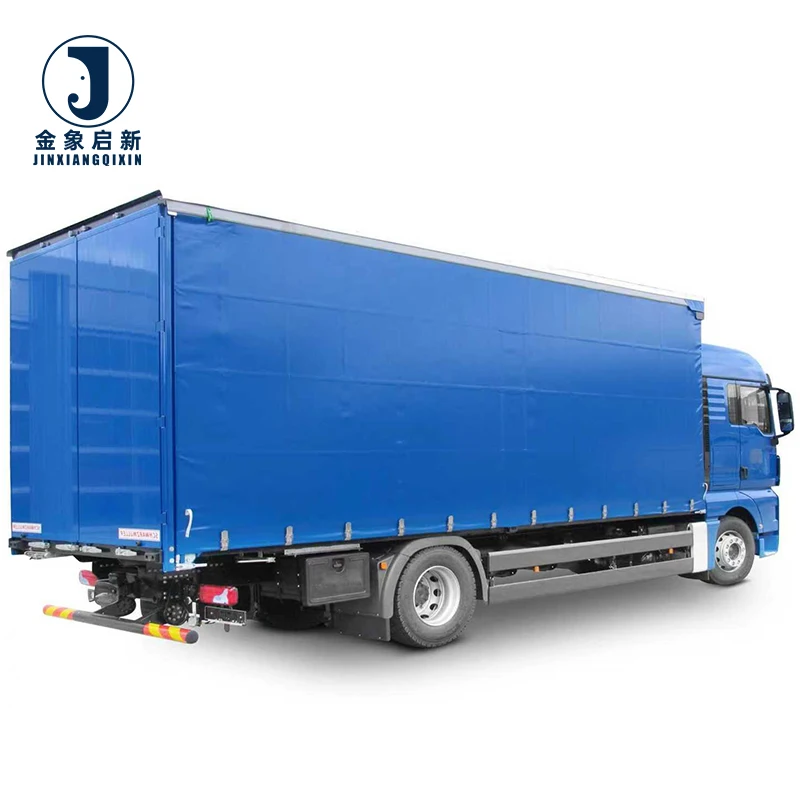
| Aviation hangar enclosure | Large-span temporary membrane, wind loading, UV and weather exposure, rapid deploy and demount cycles |
| Inflatable structure membrane | Internal pressure retention, seam weld integrity under constant stress, public assembly fire code compliance |
| Industrial shelter cover | Chemical-laden atmosphere, thermal cycling, mechanical abrasion from equipment movement beneath |
Why Ventilation Duct Fabric Fails When Compliance Is Assumed But Not Documented
A duct that burns or accumulates static charge underground is a liability, not a ventilation solution.
Specifying a PVC coated tarpaulin roll for mining or tunnelling ventilation without verifying the fire-retardant grade and anti-static test report is a common gap. Fabric may arrive labelled "flame retardant" yet carry no documentation that satisfies the site safety officer or the regulatory inspector. Underground operations cannot proceed without certified compliance, and a shipment that lacks the correct test report can halt an entire project mid-installation. [NEED_CITE: fire classification standards for underground ventilation materials]
Matching Airflow Demand to Fabric Weight and Thickness
Ventilation duct diameter and fan pressure determine the mechanical load on the fabric. Heavier grades such as 600gsm or 750gsm provide higher tensile capacity for large-diameter ducts operating under sustained positive pressure, while lighter grades like 350gsm or 420g suit smaller auxiliary ducts in temporary runs. Selecting the correct weight prevents ballooning, sagging and eventual seam separation at coupling points. Hot-melt coated grades deliver stronger inter-layer adhesion than laminated-only construction, which matters when the duct fabricates into long continuous runs that flex under fan pulsation.
Cold Crack Resistance in Sub-Zero and High-Altitude Sites
Underground mines at elevation and open-pit operations in continental winters expose PVC coated tarpaulin roll material to temperatures well below freezing. Standard plasticised PVC becomes brittle and cracks when flexed in cold conditions, creating air leaks that compromise ventilation volume. Cold crack resistant formulations maintain flexibility at low temperatures, preserving duct integrity through repeated coupling, uncoupling and storage cycles. [NEED_CITE: cold crack test methods for flexible PVC coated fabrics]
How Coating Technology Affects Weld Strength in Duct Fabrication
Laminated technology bonds the PVC film to the polyester mesh under heat and pressure, producing a cost-effective material suited to general covering applications. Hot-melt coating penetrates the mesh interstices more deeply, creating a stronger mechanical bond that resists delamination during high-frequency welding. When fabricating spiral or longitudinal duct seams, hot-melt coated fabric typically yields a weld that fails at the base fabric rather than at the coating interface — a critical distinction for ducts that must hold pressure continuously. The choice between laminated and hot-melt construction should align with the duct’s operating pressure, diameter and expected service cycle.
The Cost of Specifying the Wrong Grade or Treatment
Ordering a PVC coated tarpaulin roll without confirming the fire-retardant grade against local mining regulations can result in the entire duct run being rejected at site inspection. Similarly, anti-static treatment applied without a documented surface resistance value leaves the buyer exposed in environments where electrostatic discharge could ignite airborne dust or methane. Fabric that arrives without cold crack resistance in a sub-zero deployment may crack during the first winter storm, forcing emergency replacement and unplanned ventilation downtime. [NEED_CITE: electrostatic discharge hazards in underground mining ventilation]
Why Procurement Verification Matters Here
Each roll leaves the production line after a dedicated QA process covering coating weight, adhesion strength and treatment verification. The 10-person R&D team develops samples within days for custom GSM, colour or treatment requirements so buyers can confirm compliance before committing to a bulk run. Three full production lines and 36 sets of professional equipment maintain batch consistency across multi-container orders, ensuring the fire-retardant grade and anti-static value tested on the sample are the same values delivered in the shipment. Pre-shipment inspection covers every roll before dispatch.
Documentation & Verification
- Material specification sheet stating GSM, base fabric denier, coating method and treatment type per roll
- Fire-retardant test report aligned to the mining or tunnelling standard required by the site authority
- Anti-static surface resistance measurement recorded against the applicable standard for the deployment environment
- Pre-shipment inspection record with roll-by-roll weight and dimension check before container loading
- ISO and CE certificates included with packing list and certificate of origin for customs clearance
Fabrication, Handling & Storage
- Hot-melt coated grades weld reliably at standard high-frequency settings; adjust dwell time for 750gsm thickness
- Laminated rolls require lower weld energy to avoid base fabric scorch on 350gsm and 420g grades
- Store rolls upright on pallets to prevent flat-spot creasing across the 2m or 2.1m width
- Allow cold-stored rolls to acclimatise before unrolling to prevent coating micro-cracking
- Use PVC-compatible solvent cleaners only; aggressive alkalis may degrade anti-mildew treatment
- Cut panels with allowance for weld overlap; hot-melt coating supports strong spiral seam joints
Request a Specification Match for Your Project
Provide the duct diameter, operating pressure and the fire-retardant or anti-static standard your site requires. Confirm whether you need rolls at standard 2m or 2.1m width, or a custom width for specific panel dimensions. State your annual volume and whether you require samples for compliance testing before the production run.
Frequently Asked Questions
Q: What fire-retardant grade and test standard does the fabric carry for mining and tunnelling compliance?
A: Fire-retardant treatment is available across the 350gsm to 750gsm range, but the specific grade depends on the standard your site authority mandates. Request the applicable test report during the sample stage so the grade can be verified against local mining or tunnelling regulations before bulk production begins.
Q: What is the anti-static surface resistance value and which standard does it meet?
A: Anti-static treatment is offered as a special option. The surface resistance value and the test standard it meets must be confirmed against your project’s compliance requirements. Share the relevant standard at inquiry stage so the treatment can be formulated and documented accordingly.
Q: How does hot-melt coating affect weld strength when fabricating air ducts or inflatable structures?
A: Hot-melt coating penetrates the polyester mesh more deeply than laminated-only construction, producing stronger inter-layer adhesion. This translates to weld seams that typically fail at the base fabric rather than at the coating interface, supporting reliable pressure retention in fabricated ducts and membrane panels.
Q: How is cold crack resistance tested and what temperature range does it cover?
A: Cold crack resistance is stated as a feature of this fabric range. The specific test method and temperature threshold should be confirmed with the sample documentation so the material can be matched to the lowest ambient temperature expected at the deployment site.
Q: What roll widths and GSM grades are available for custom duct diameters and membrane panel sizes?
A: Rolls are supplied at 2m width in 75m lengths or 2.1m width in 50m lengths. GSM options span 350gsm, 420g, 500gsm, 550gsm, 600gsm and 750gsm. Custom widths and lengths can be developed during the sample stage to optimise cutting yield for specific duct or panel dimensions.