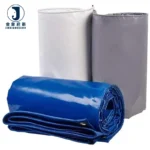
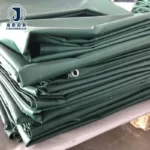
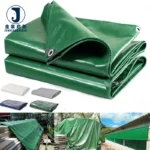
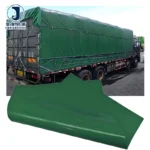
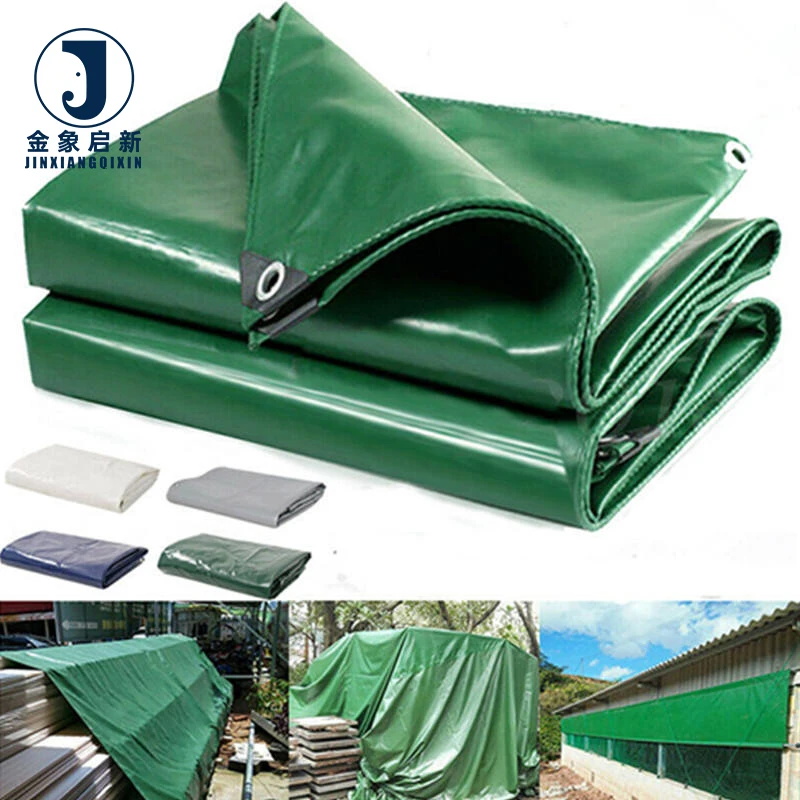
Proven Coating Control — Nearly 30 years focused on PVC coated fabric gives us deep process control over coating weight, adhesion, and flame-retardant formulation on every roll we produce.
Technical Specifications
| Parameter | Value |
|---|---|
| Product Type | PVC Tarpaulin Roll |
| Coating Material | PVC |
| Waterproof Construction | Yes |
| Anti-Shrink Performance | Yes |
| Flame Retardant Grade | Available in flame retardant grades — confirm the grade required for your market |
| UV Treatment | Available with anti-UV treatment — confirm the test basis required for your application |
| Application Grade | Industrial heavy-duty |
| Standards | ISO, CE |
Application Suitability
| Application | Exposure & Requirement |
|---|---|
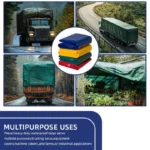
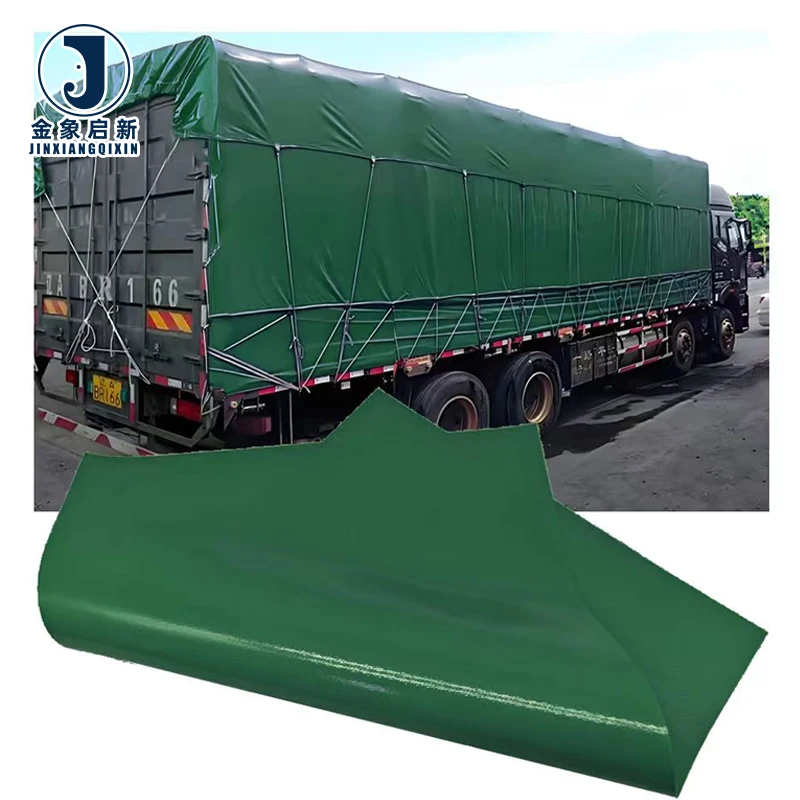
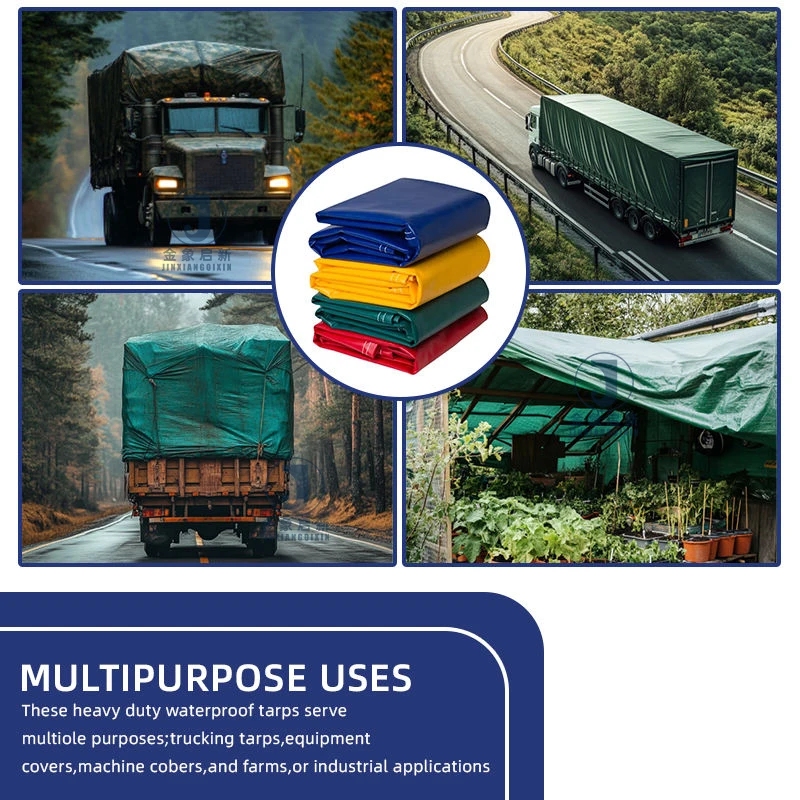
| Truck and trailer side curtains | Constant flexing at load points, road spray, abrasion from tie-downs, UV exposure on highway routes |
| Lorry load protection covers | Weather cycling, wind flap stress, mechanical contact with cargo edges |
| Tent and temporary structure covers | Prolonged sunlight, rain ingress prevention, fire safety compliance at event or work sites |
| Industrial equipment covers | Outdoor storage exposure, dust and moisture ingress, handling abrasion during removal and replacement |
What "Flame Retardant" Means Without a Verified Grade
Fire safety claims on a datasheet carry no weight on a job site without a test report naming the standard and classification.
Fleet operators and tent fabricators regularly receive PVC coated tarpaulin roll stock labelled "flame retardant" only to discover at the inspection stage that no test documentation accompanies the shipment. The material may have been treated, but without a classification tied to a recognised standard — such as DIN 4102, NFPA 701, or a local building code — the fabric cannot be signed off by the site safety officer. This delays projects and forces emergency re-sourcing. [NEED_CITE: fire classification standards for textile materials in transport and temporary structures]
The gap between a claim and a verified grade is where most compliance failures originate. A PVC tarpaulin roll destined for a mining site ventilation curtain or a public event tent must meet the specific fire classification that the jurisdiction enforces, not a generic supplier assurance. We address this by requiring the buyer to state the target standard at the inquiry stage, then providing the corresponding test report with the shipment documentation.
Why Base Fabric Construction Determines Curtain Lifespan
The side curtain on a truck or trailer cycles through thousands of flex events every week — opening at loading docks, billowing under highway wind loads, and absorbing tie-down tension at securing points. The base fabric denier and weave density inside this PVC tarpaulin roll determine how well the material resists tear propagation at those stress concentrations. A loosely woven base may accept coating adequately but will allow a small puncture to spread into a full-length split under repeated mechanical stress.
Coating Adhesion and Weld Integrity at Flex Points
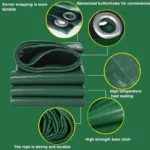
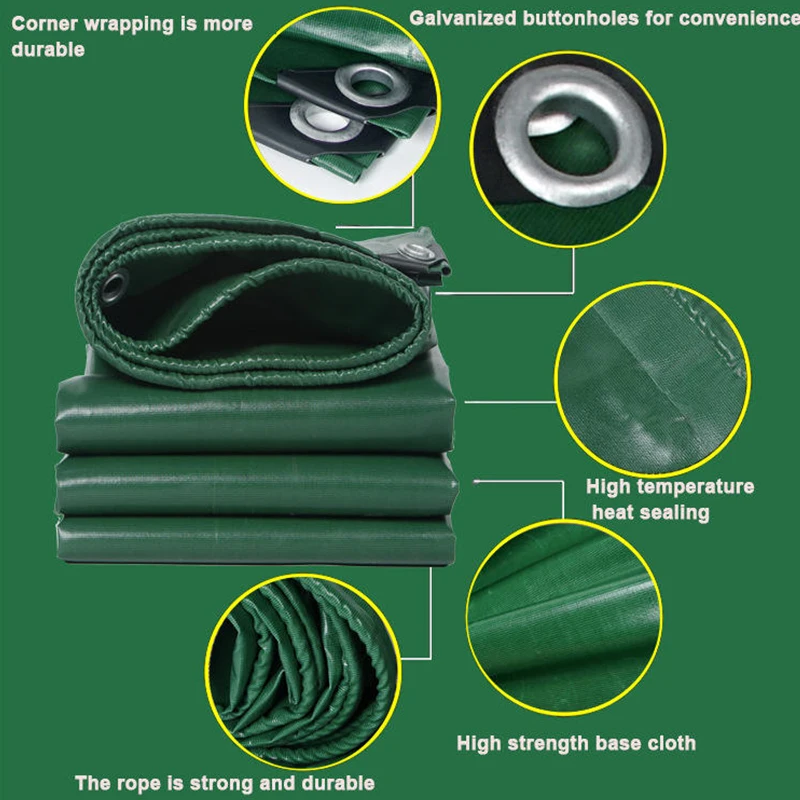
When a side curtain flexes under load, the welded seams experience peel forces that test the bond between the PVC coating and the base fabric. Poor adhesion causes the coating to delaminate at the seam before the fabric itself reaches its tensile limit. The PVC coating weight and the adhesion process used during manufacturing directly govern whether a welded seam survives the service life of the curtain or becomes the first failure point. This PVC coated tarpaulin roll is produced with controlled coating adhesion to support reliable heat-welded seam performance in fabricator workshops. [NEED_CITE: peel strength and weld integrity test methods for PVC coated fabrics]
How GSM, Coating Weight, and Base Fabric Interact
GSM alone tells a buyer very little about how a PVC tarpaulin roll will perform in service. A 650 GSM fabric with a heavy coating but a low-denier base may resist abrasion well yet tear easily at a cut edge. Conversely, a lighter coating over a high-density woven base can deliver strong tensile and tear figures while remaining flexible enough for daily curtain operation. The coating method — whether knife-over-roll, laminating, or calendering — affects not only the surface finish but also the peel strength, which in turn determines how well the material holds a welded seam. Buyers specifying this PVC coated tarpaulin roll should request the full material specification sheet showing base fabric denier, weave count, and coating weight separately, rather than relying on GSM as the sole indicator. Anti-shrink treatment further ensures that dimensional stability is maintained through temperature cycling, preventing the fabric from pulling away from fixed frame attachments on trucks and tent structures.
The Hidden Cost of Unverified Specifications
A roll that arrives lighter than the GSM stated on the quotation does not just underperform — it shifts the entire cost burden downstream. Fabricators who have already cut, welded, and installed the material face rework that far exceeds the original purchase saving. Colour variation between rolls in a single order becomes visible only after installation, when adjacent panels on a fleet trailer show mismatched tones in daylight. Flame-retardant material supplied without the required certification forces the contractor to halt work until documentation is resolved, often under contractual penalty. [NEED_CITE: common causes of coated fabric specification disputes in B2B procurement] These failures are preventable when the buyer and supplier agree on verified specifications — including GSM tolerance, colour reference, and test documentation — before production begins rather than discovering gaps at the receiving dock.
Why Fabricators Source This PVC Tarpaulin Roll Here
Our three full production lines and 36 sets of professional equipment allow us to run bulk roll orders with consistent output scheduling, so fabricators receive material on the timeline their workshop depends on.
A 10-person R&D team handles material selection, custom width development, and sample production, enabling buyers to confirm coating weight, colour, and finish before committing to a full container order.
Dedicated QA/QC at every production stage means that each PVC coated tarpaulin roll is checked against the agreed specification during coating, winding, and packing — not just sampled at the end.
Pre-shipment inspection covers every roll in the order, with verification records documenting weight, colour, and surface quality before the container is sealed.
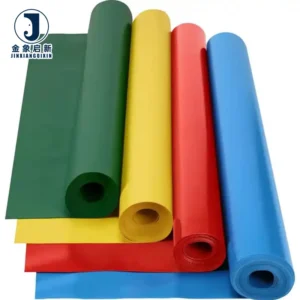
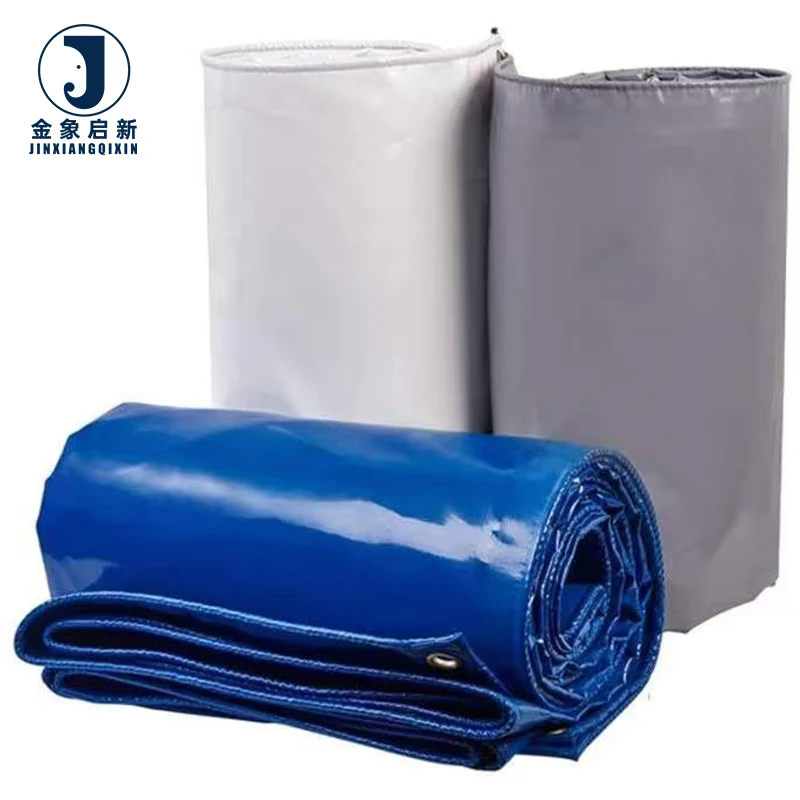
Custom widths, colours, and pattern printing are developed through a structured sample approval process, reducing the risk of batch-to-batch inconsistency across repeat orders.
Documentation & Verification
- Material specification sheet stating GSM, base fabric denier, and coating weight for every roll shipped
- Flame-retardant test report naming the standard and classification, matched to the buyer’s stated requirement
- UV treatment test basis documented with exposure rating where anti-UV treatment is specified
- Pre-shipment inspection record verifying weight, colour, and surface quality on a roll-by-roll basis
- Roll packing list with individual roll identification for traceability at the receiving warehouse
- Certificate of origin and customs documentation supporting import clearance at destination
Fabrication, Handling & Storage
- Heat-weld seams using temperature and dwell settings matched to the PVC coating weight for full peel strength
- Reinforce tie-down and eyelet zones with additional fabric layers to distribute load across the base weave
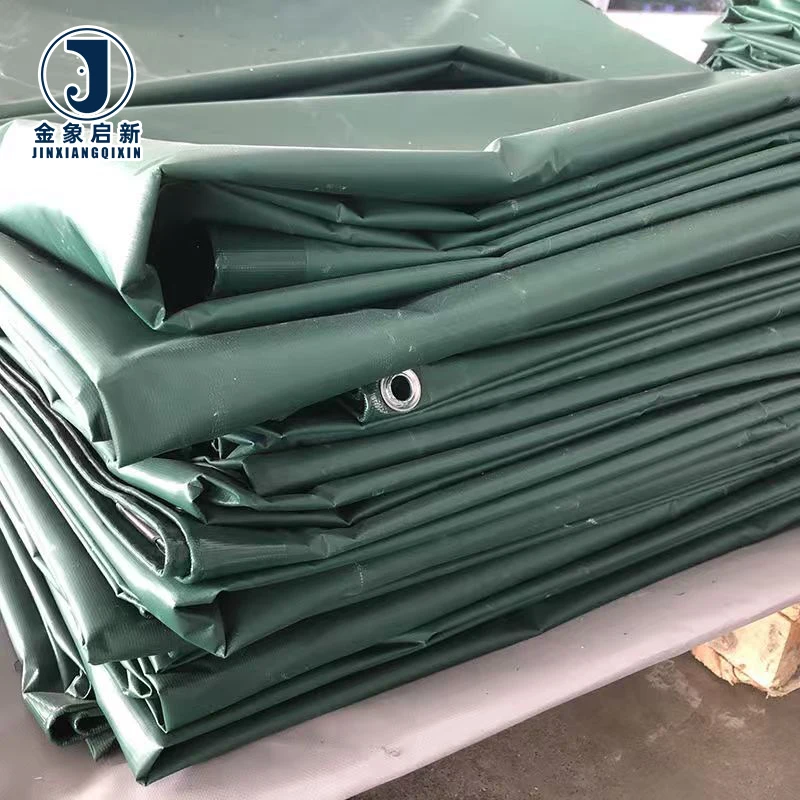
- Store rolls upright on pallets in a covered area to prevent edge crushing and permanent surface creasing
- Unroll and allow material to acclimatise before fabrication in cold weather to avoid coating stiffness and cracking
- Use mild detergent and soft brush for cleaning; avoid solvent-based agents that attack the PVC coating surface
- Plan cut patterns across the roll width to minimise offcut waste and reduce the number of welded joins per curtain panel
How to Specify Your Roll Requirement
Tell us the end-use application — truck side curtain, tent cover, or industrial protective cover — along with the environmental exposure the fabric will face, including UV intensity, temperature range, and fire safety classification required by your local jurisdiction. Provide your required roll width, target GSM range, colour reference, and estimated annual volume so we can recommend the appropriate base fabric and coating configuration. If you need finished panels cut to specific trailer dimensions rather than roll stock, share the panel sizes and reinforcement requirements so we can include fabrication details in the quotation. Requesting a sample roll or swatch set before placing the full order allows your workshop to verify weld parameters and colour approval in advance.
Frequently Asked Questions
Q: What flame-retardant standard does the PVC tarpaulin meet for truck curtain applications?
A: We supply flame-retardant grades aligned to standards commonly required in transport and temporary structure markets. The specific classification depends on your destination jurisdiction and site safety requirements. State the standard you need at the inquiry stage, and we will confirm availability and provide the matching test report with your shipment documentation.
Q: How is UV resistance tested and what is the rated exposure duration?
A: Anti-UV treatment is available on this PVC coated tarpaulin roll for applications with prolonged sunlight exposure. The test basis and rating depend on the specific formulation selected for your order. We document the UV treatment specification on the material sheet and can provide the corresponding test data when you confirm the exposure requirements for your market.
Q: Can roll width and length be customised for specific side curtain dimensions?
A: Yes. We develop custom widths and roll lengths through our R&D team, and a sample is produced for your approval before full-scale manufacturing runs. This process ensures that the roll dimensions match your fabrication layout, reducing waste and the number of welded joins needed per curtain panel.
Q: How is batch-to-batch colour consistency controlled across multiple rolls?
A: Every roll in an order is checked against the approved colour reference during pre-shipment inspection. Our QA process verifies colour consistency across the production run so that panels hung side by side on a fleet trailer present a uniform appearance. We recommend approving a physical sample before production to lock the colour standard.
Q: What documentation is included for fire safety compliance at the destination site?
A: Each shipment of flame-retardant PVC tarpaulin roll includes a test report naming the applicable standard and classification, a material specification sheet, a pre-shipment inspection record, and a packing list with roll-level traceability. These documents support site safety audits and compliance verification at your destination market.