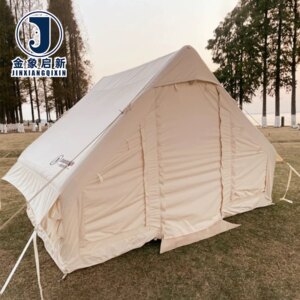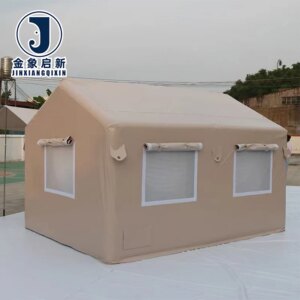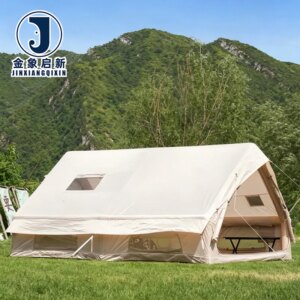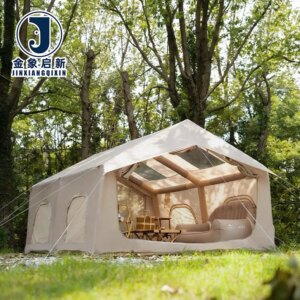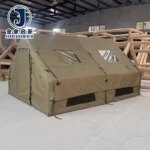
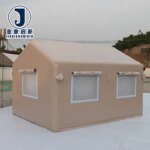
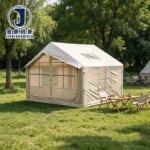
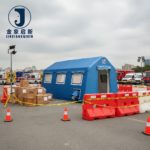
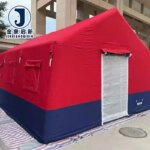
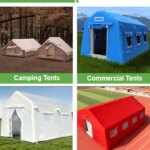
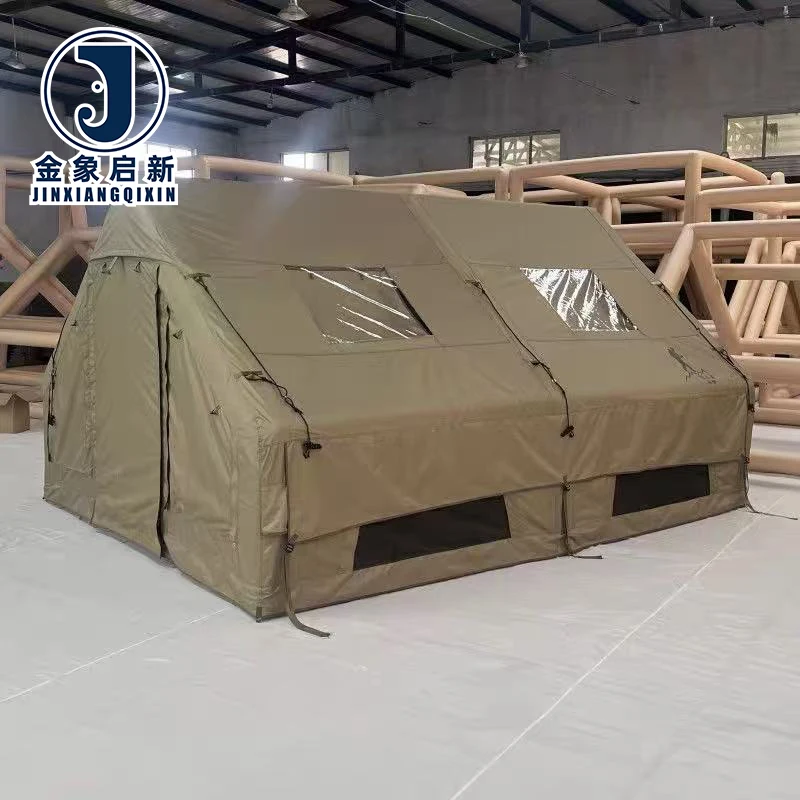
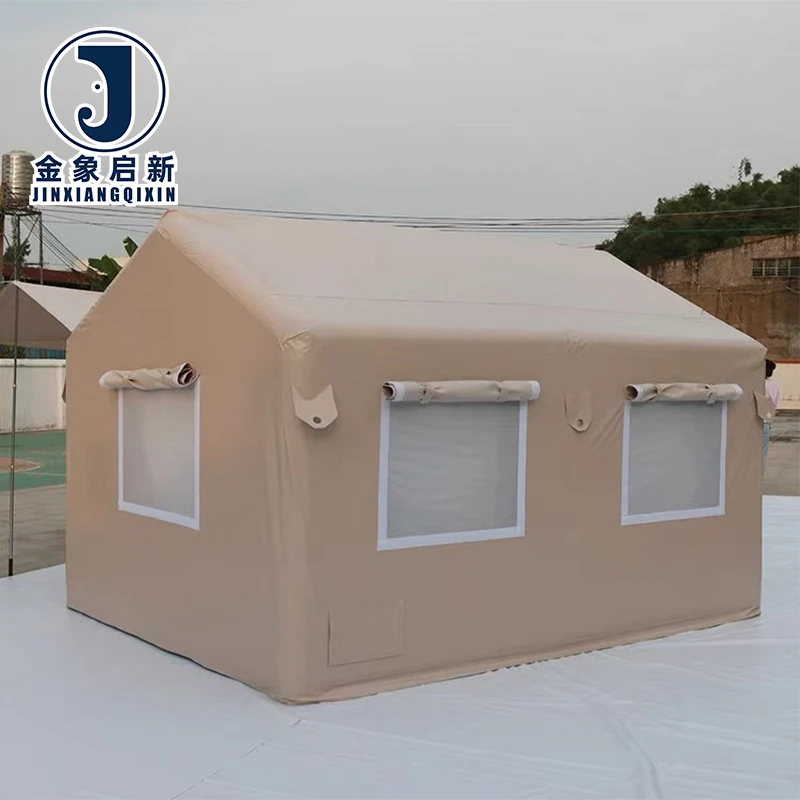
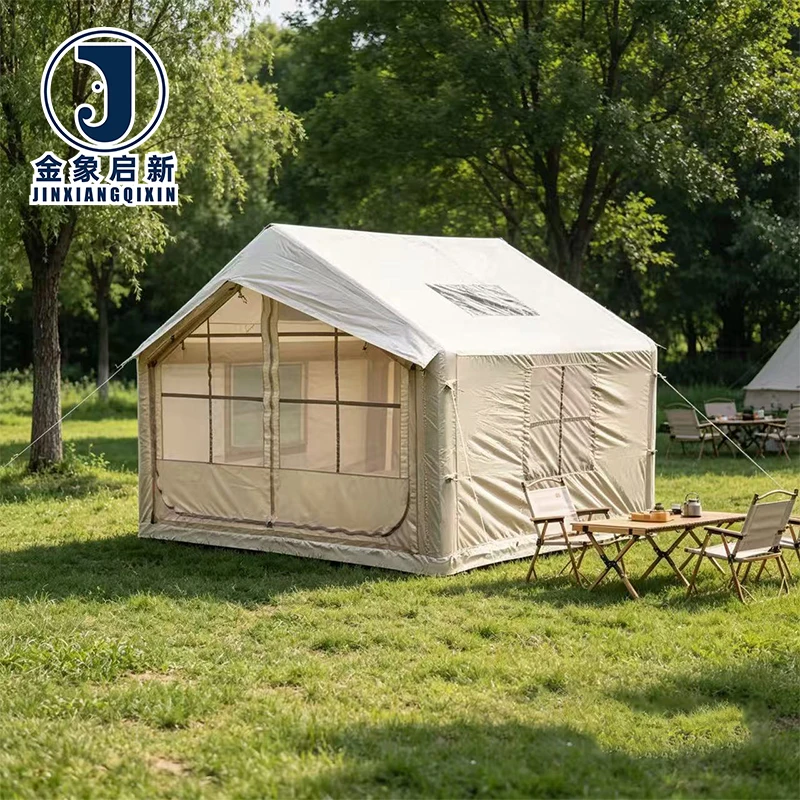
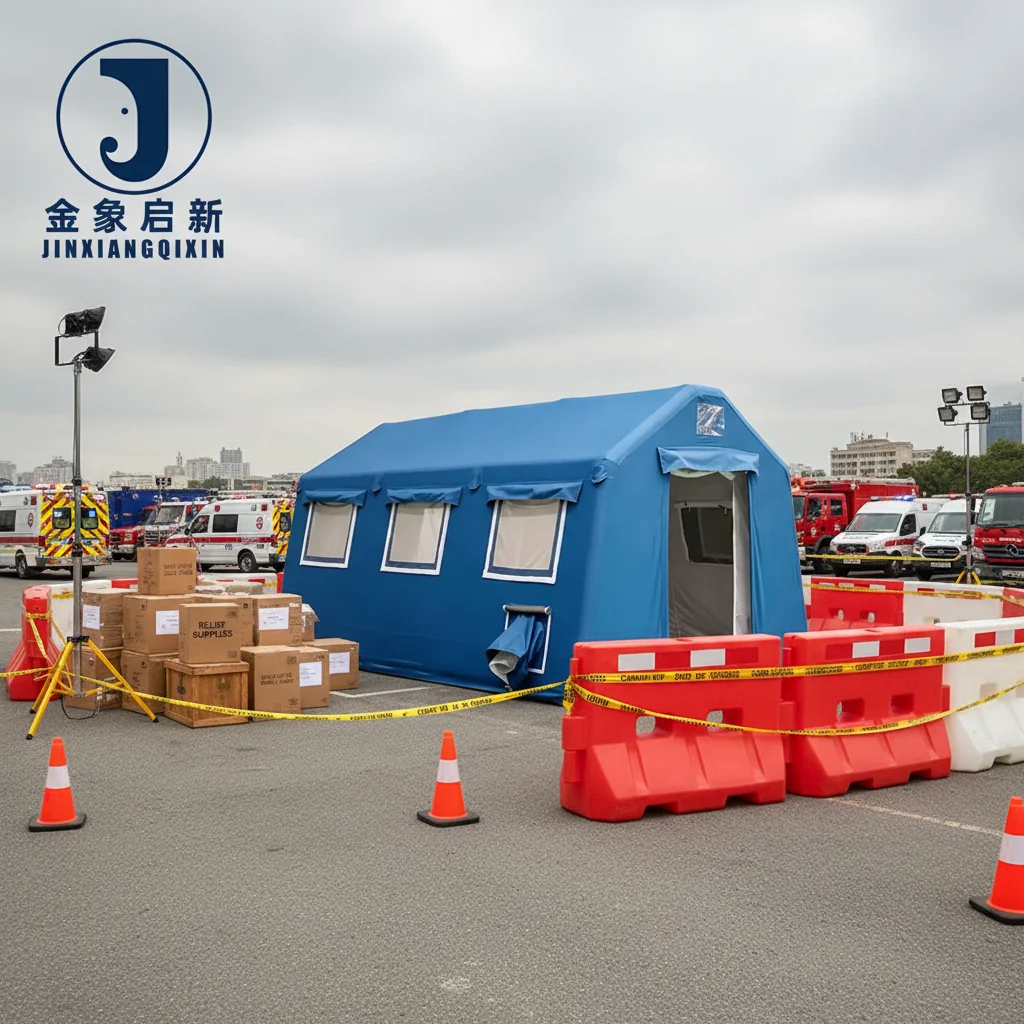
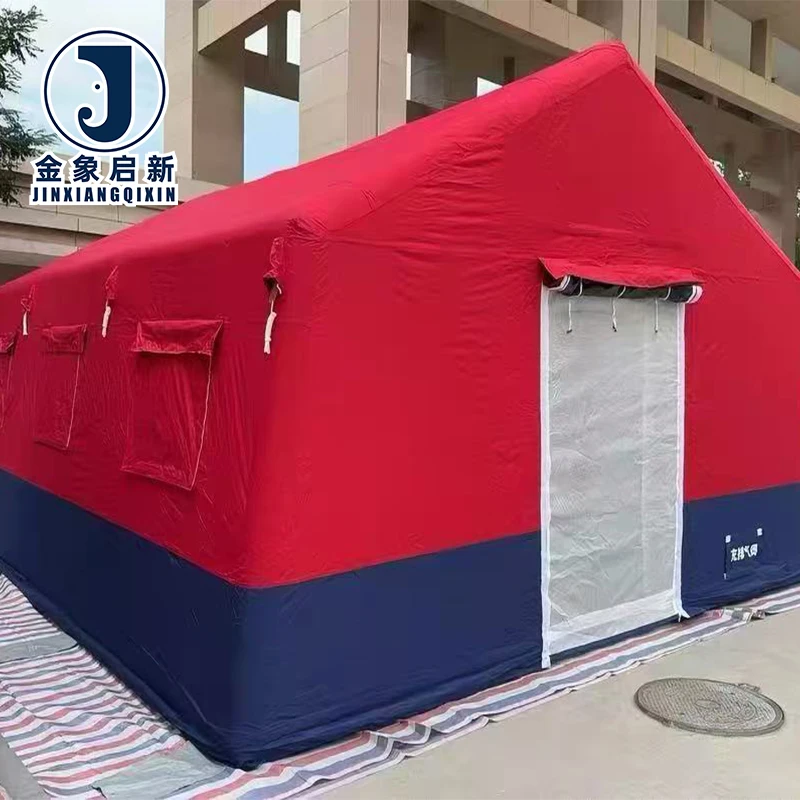
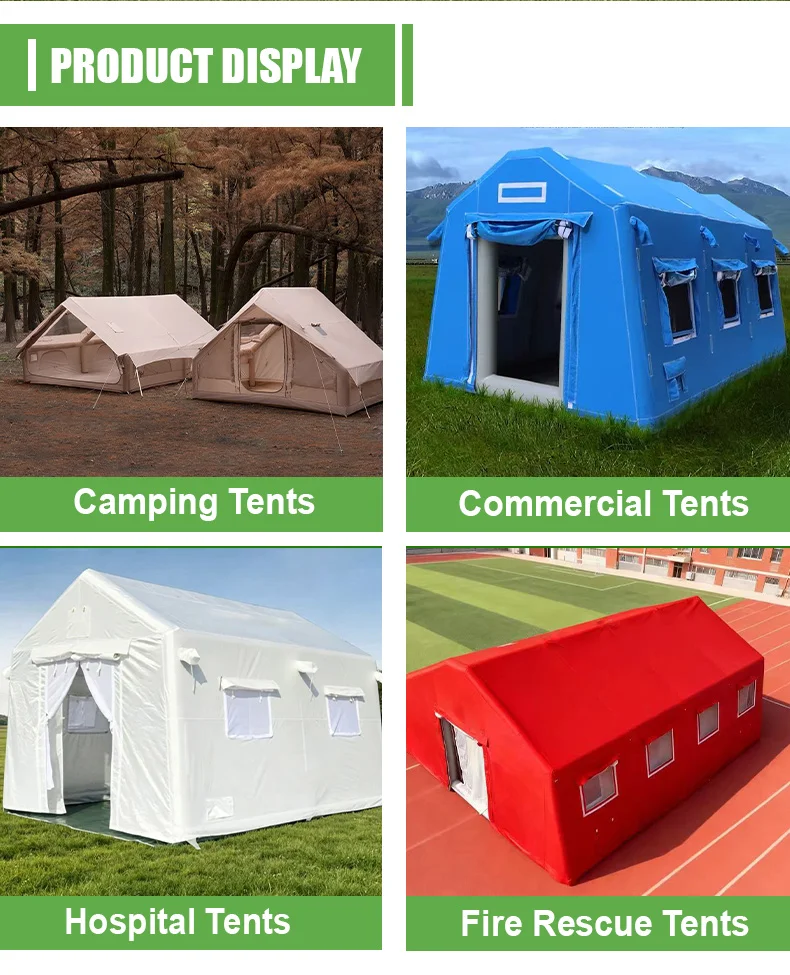
Deep process control over coating weight and adhesion — nearly 30 years focused on coated fabric, translated into consistent PVC tarpaulin quality across every inflatable tent unit we produce for disaster relief and remote site deployment.
Technical Specifications
| Parameter | Value |
|---|---|
| Product Type | Inflatable Tent Fabric |
| Core Material | PVC Tarpaulin |
| Product Form | Inflatable structure, single layer construction |
| Key Performance | Waterproof, UV-Resistant (test basis not stated in source), Tear-Resistant, Quick Automatic Opening |
| Customization | OEM & ODM (sample customization, pattern printing) |
| Standards | ISO9001, ISO14001, ISO45001, CE |
| Quality Control | Full-process inspection, dedicated QA & QC on site, 24-hour inflation test before shipment |
| R&D Team | 10 technicians supporting sample development and material selection |
Application Suitability
| Application | Exposure & Requirement |
|---|---|
| Temporary site offices at remote construction projects | Wind load, solar exposure, repeated inflation cycles, ground abrasion at base |
| Equipment storage in disaster recovery zones | Heavy rain, standing water, rapid deployment demand, secure weatherproof enclosure |
| Mobile command centers for infrastructure maintenance | Extended continuous inflation, interior climate retention, frequent relocation |
| Temporary warehousing during logistics operations | Large-volume cover, dust and moisture ingress prevention, forklift proximity |
| Commercial emergency preparedness shelters | Standby storage, instant inflation on demand, multi-scenario versatility |
Why Material Certification Matters More Than Claimed Performance for Inflatable Shelters
Suppliers frequently claim UV-resistant or flame-retardant treatment without a test result to support it — a gap that becomes a compliance liability the moment an inspector arrives on site.
When sourcing a custom inflatable shelter for disaster relief or remote construction, the difference between a documented material grade and a vague marketing statement determines whether the structure passes site inspection or gets rejected after deployment. We have encountered inflatable tent projects where the buyer assumed anti-UV protection was included based on the quotation wording, only to discover that no test report existed for the coating formulation used. The result is a structure that degrades under prolonged solar exposure far earlier than the project timeline demands [NEED_CITE: UV degradation test methods for PVC coated fabrics].
How Quick Automatic Opening Changes Deployment Logistics
In disaster recovery and emergency response scenarios, the speed at which a shelter becomes operational directly affects mission timelines. Our inflatable tent structures use engineered air-beam geometry and high-frequency welded seams that allow a single unit to reach full inflation and structural rigidity within minutes, eliminating the need for pole assembly or multi-person rigging. This matters most when response teams arrive at sites with limited personnel and must establish command centers or equipment shelters before weather conditions deteriorate.
Airtight Seam Integrity Under Continuous Field Pressure
Every seam on our inflatable structures is joined using high-frequency welding rather than adhesive bonding or stitch-and-seal methods. The welded junction creates a homogeneous bond between PVC tarpaulin layers that matches or exceeds the base fabric tensile properties. Before any unit ships, it undergoes a 24-hour inflation test under controlled conditions — a protocol that reveals micro-leaks at valve interfaces and seam intersections that shorter tests miss. This testing discipline is what separates a shelter that holds pressure through its entire service deployment from one that requires mid-operation re-inflation [NEED_CITE: high-frequency welding seam strength testing for coated fabrics].
Decoding the PVC Tarpaulin Specification Sheet
The waterproof performance of an inflatable tent depends on the coating integrity across the entire PVC tarpaulin surface, not just the base fabric weave density. A tightly woven polyester scrim provides the tear-resistant skeleton, but it is the PVC coating weight and adhesion to that scrim that determines long-term water resistance and structural airtightness. When coating adhesion is insufficient, delamination begins at stress concentration points — typically where the inflatable beam curves or where anchoring hardware transfers load to the fabric.
Single layer construction in our inflatable structures is a deliberate engineering choice that balances portability with structural capacity. A single PVC tarpaulin layer, correctly specified for weight and tensile strength, inflates to a rigid form without the dead weight and packing volume that double-wall constructions impose. This is particularly relevant when shelters must be air-freighted or carried into terrain where vehicle access is restricted.
UV-resistant treatment, when applied to the PVC coating formulation, protects against polymer chain breakdown caused by sustained solar radiation. We supply inflatable tent fabric with UV-resistant coating — buyers should confirm the specific test standard required for their regional compliance framework, as UV performance classifications vary between markets [NEED_CITE: ISO 4892 accelerated weathering standards for PVC].
The Hidden Cost of Overlooking Batch-Specific Inspection
Specifying the correct PVC tarpaulin grade on paper means little if the manufactured batch does not match. We have documented cases where inflatable structures failed during deployment not because the specification was wrong, but because the coating weight on the received material fell below the agreed GSM. A batch-specific quality inspection report, generated against the actual production roll used for your order, is the only reliable verification. Without it, seam strength, inflation pressure retention, and tear resistance all become variables rather than constants [NEED_CITE: ISO 1421 tensile and tear test methods for coated fabrics].
When tear-resistant performance is claimed without a documented test basis, the inflatable shelter may withstand initial deployment but fail when subjected to the accidental impacts common in construction zones — dropped tools, shifting equipment loads, or contact with sharp anchoring stakes. Verifying tear strength data before confirming a bulk order eliminates this risk.
What Our Production Discipline Brings to Your Inflatable Shelter Order
Three full production lines and 36 sets of professional processing equipment give us the capacity to handle bulk inflatable tent orders while maintaining batch-to-batch consistency — critical when multiple units deploy to the same disaster zone and must perform identically.
A 10-technician R&D team manages material selection, sample development, and pattern printing customization, meaning your OEM or ODM requirements move from concept to pre-production sample without leaving our facility.
Dedicated QA and QC staff inspect every production stage, culminating in a 24-hour inflation test and 100% pre-shipment inspection record for each unit — not a sampling protocol, but individual unit verification.
Deep process control over PVC coating weight and adhesion, developed across nearly 30 years of coated fabric manufacturing, is embedded in how we formulate and apply each coating layer to the base scrim.
ISO9001, ISO14001, ISO45001, and CE certifications are maintained as active management systems, not wall decorations, and documentation ships with every order.
Documentation & Verification
- Material specification sheet stating PVC tarpaulin coating weight, base fabric type, and colour reference per inflatable tent order
- Batch-specific quality inspection report covering dimensional verification, seam strength, and waterproof performance data
- ISO9001, ISO14001, ISO45001, and CE certification copies included with each shipment
- 24-hour inflation test record documenting pressure retention results for every individual unit
- Pre-production sample approval record retained against the bulk order for material traceability
Fabrication, Handling & Storage
- High-frequency welding parameters must match PVC tarpaulin coating formulation to achieve full seam adhesion without surface scorch
- Store deflated inflatable structures in dry, ventilated conditions to prevent moisture entrapment between PVC tarpaulin folds
- Avoid dragging single layer PVC tarpaulin units across abrasive ground surfaces during deployment to protect coating integrity
- Use PVC-compatible cleaners only — solvent-based agents can dissolve the coating and compromise waterproof performance
- Field repair of minor punctures requires PVC tarpaulin patch material with matching coating weight for consistent bond strength
Requesting a Specification That Matches Your Deployment Scenario
To ensure the Inflatable Tent manufacturer provides a structure matched to your operational needs, share the specific environmental exposure conditions — wind zone classification, expected solar duration, and ground surface type at the deployment site. Confirm whether your regional market requires documented UV-resistant or flame-retardant test reports for temporary structure compliance. Specify the required dimensions, quantity, and whether pattern printing or branding customization is needed for identification purposes.
Frequently Asked Questions
Q: How do I verify the PVC tarpaulin material quality on arrival?
A: Each custom inflatable shelter ships with a batch-specific quality inspection report detailing coating weight, material thickness, seam strength data, and waterproof performance verification. We recommend cross-referencing the report values against your purchase order specification upon receipt. Our 100% pre-shipment inspection ensures the documentation reflects the actual unit delivered, not a generic product family average.
Q: What test basis supports the UV-resistant treatment claim?
A: UV-resistant treatment is incorporated into the PVC tarpaulin coating formulation during production. However, acceptable test standards vary between regional markets and compliance frameworks. We recommend specifying the exact UV test standard required by your project authority at the inquiry stage so the correct formulation and corresponding test report can be prepared with your order documentation package.
Q: How does the custom sizing and pattern printing process work?
A: Our R&D team develops a pre-production sample based on your dimensional drawings and branding requirements. Once the sample is approved for fit, seam configuration, and print accuracy, bulk production proceeds using identical PVC tarpaulin material and processing parameters. Sample lead time is typically measured in days, and minimum order quantities are confirmed at the quotation stage based on your specification.
Q: How is airtight seam integrity verified before shipment?
A: Every inflatable tent unit undergoes high-frequency welding at all seam junctions, followed by a 24-hour inflation test under controlled conditions. This extended pressure test identifies micro-leaks at valve interfaces and welded intersections that shorter inspections miss. A documented test record accompanies each unit, providing traceable evidence that the structure held specified inflation pressure throughout the full test duration.
Q: What documentation is included with each inflatable tent order?
A: Every shipment includes a material specification sheet, batch-specific quality inspection report, 24-hour inflation test record, ISO9001, ISO14001, ISO45001, and CE certification copies, a pre-production sample approval record, and a packing list. This documentation package provides full material traceability by order number and supports compliance verification at your deployment site or during third-party inspection.