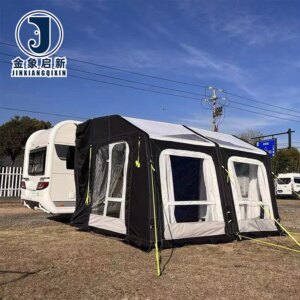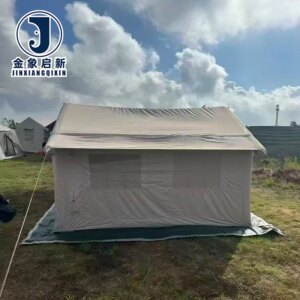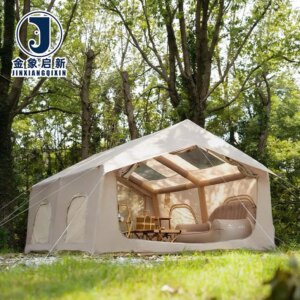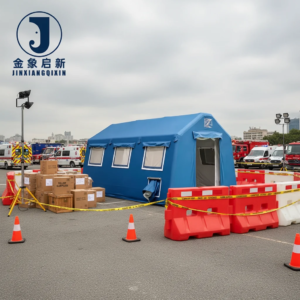
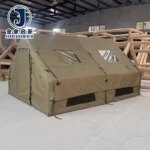
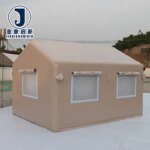
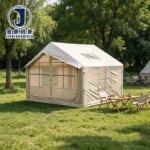
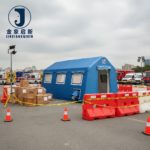
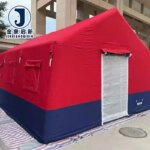

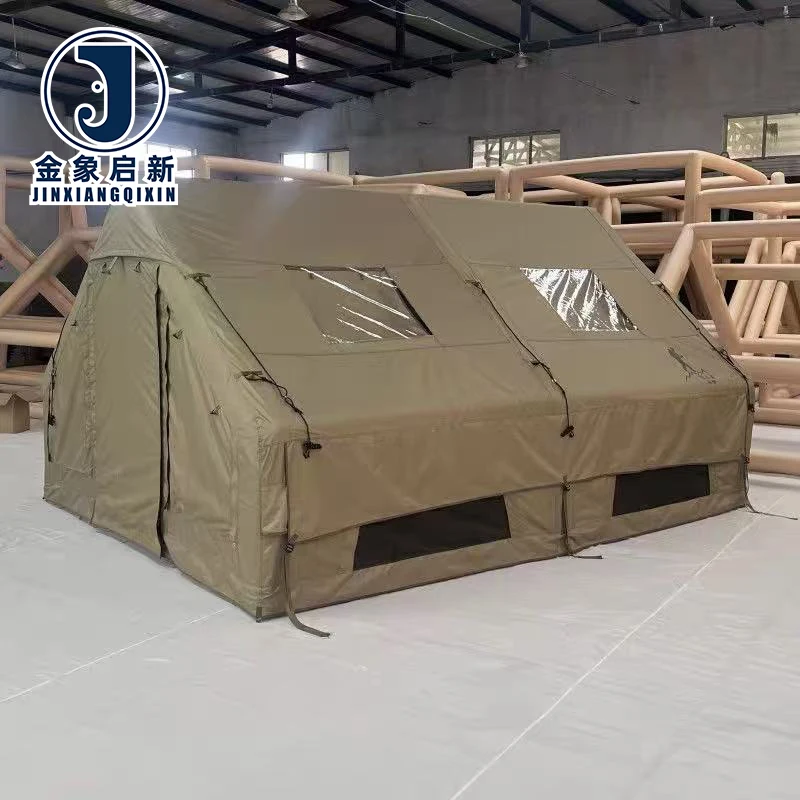
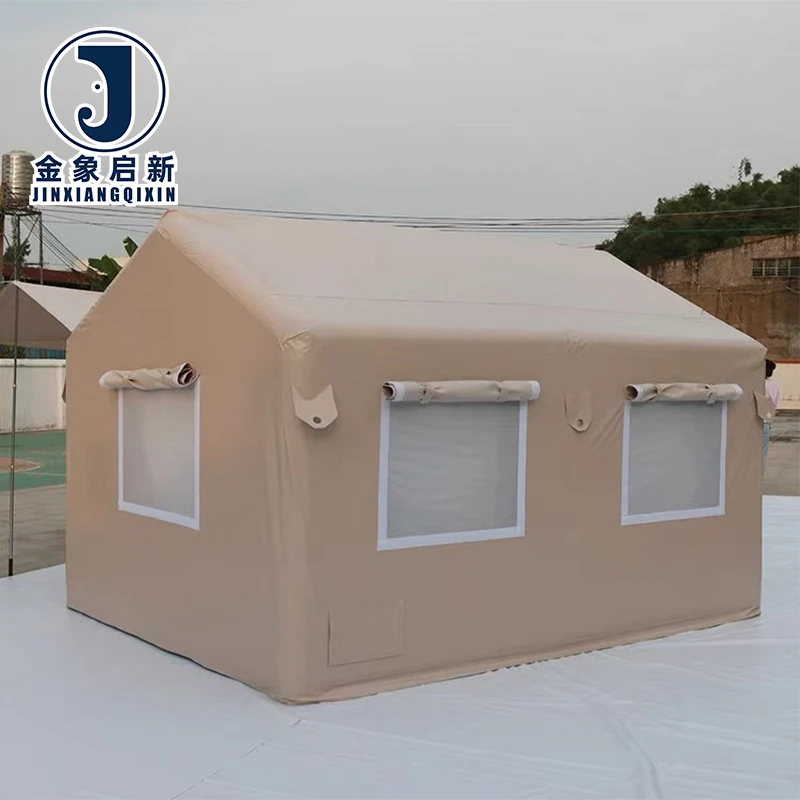
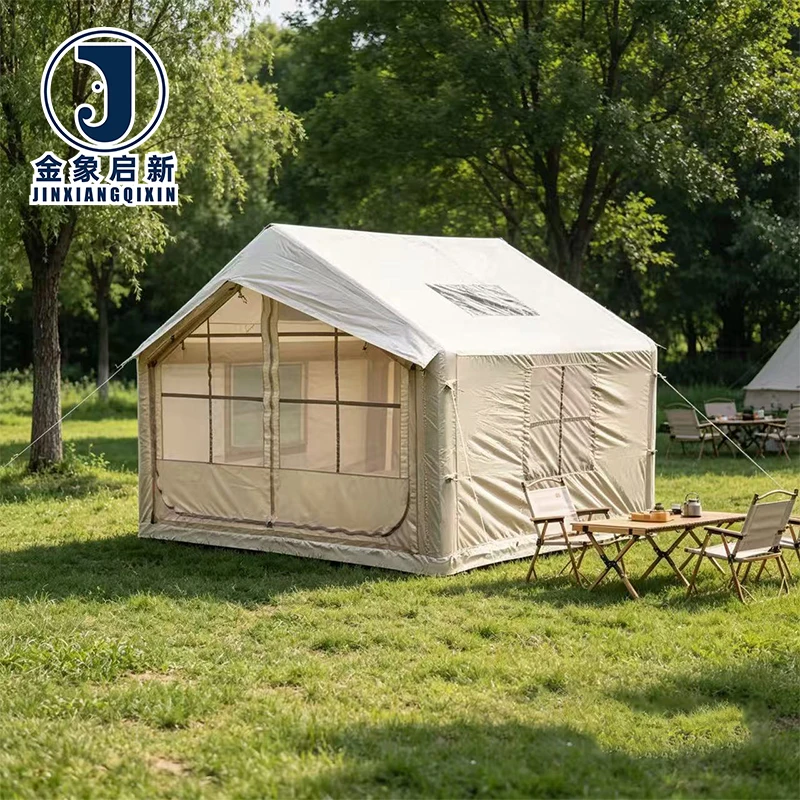
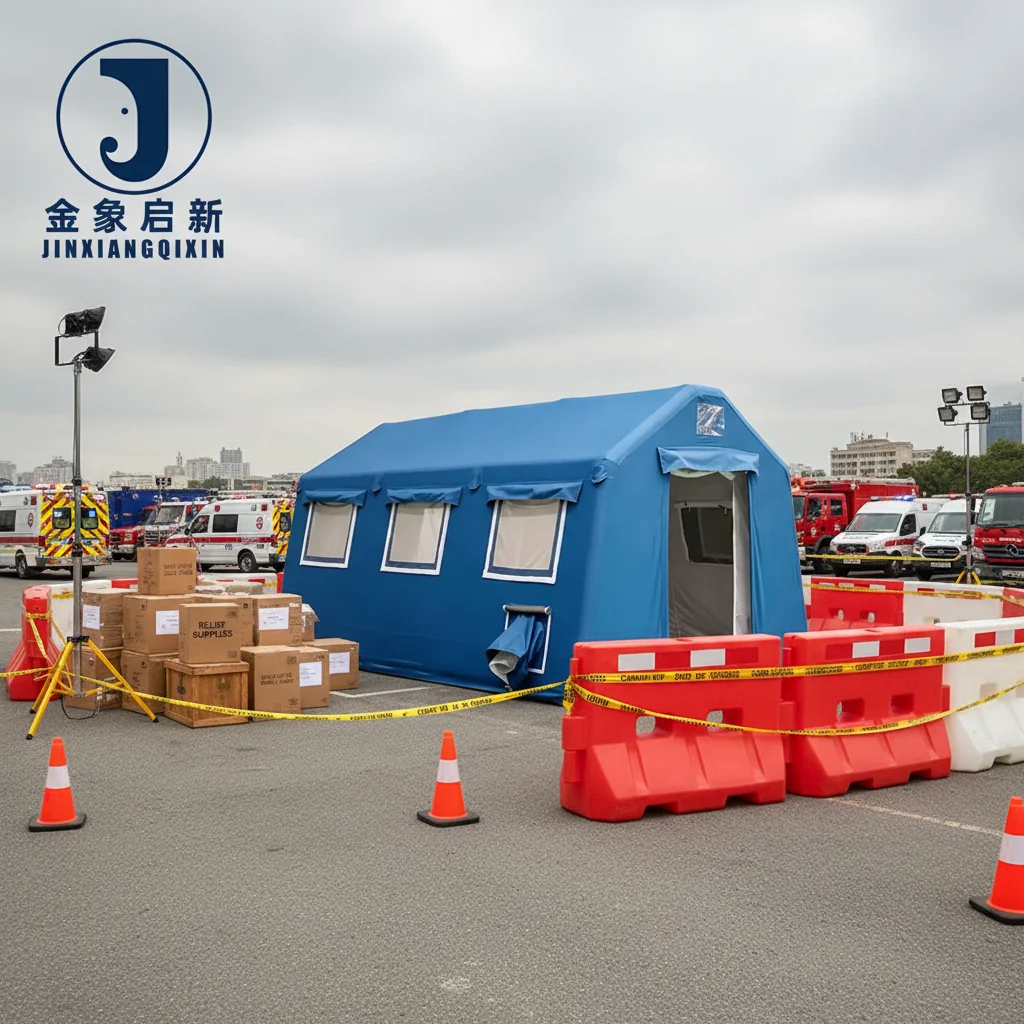
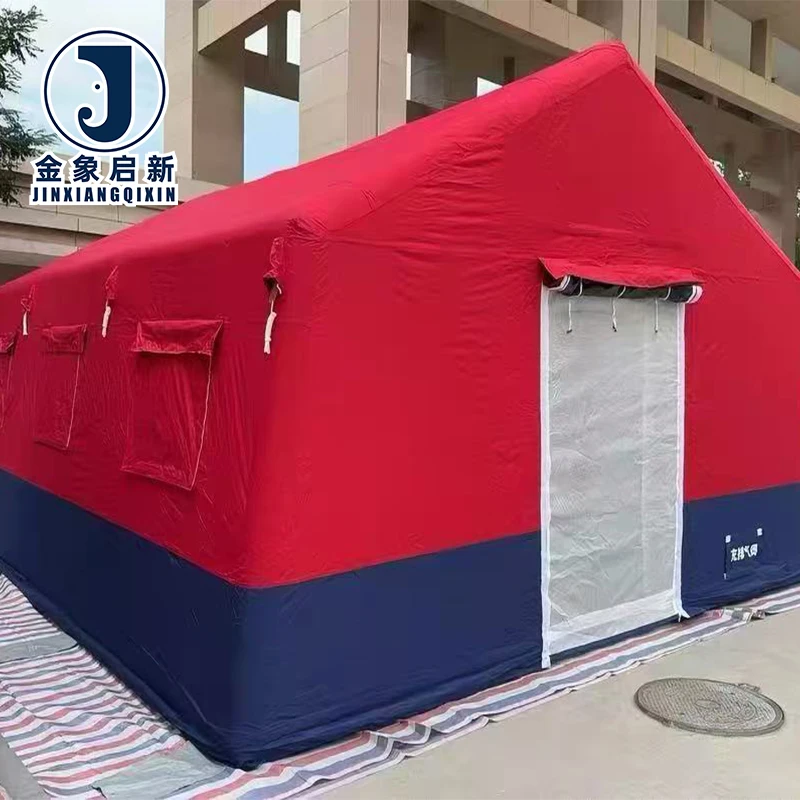
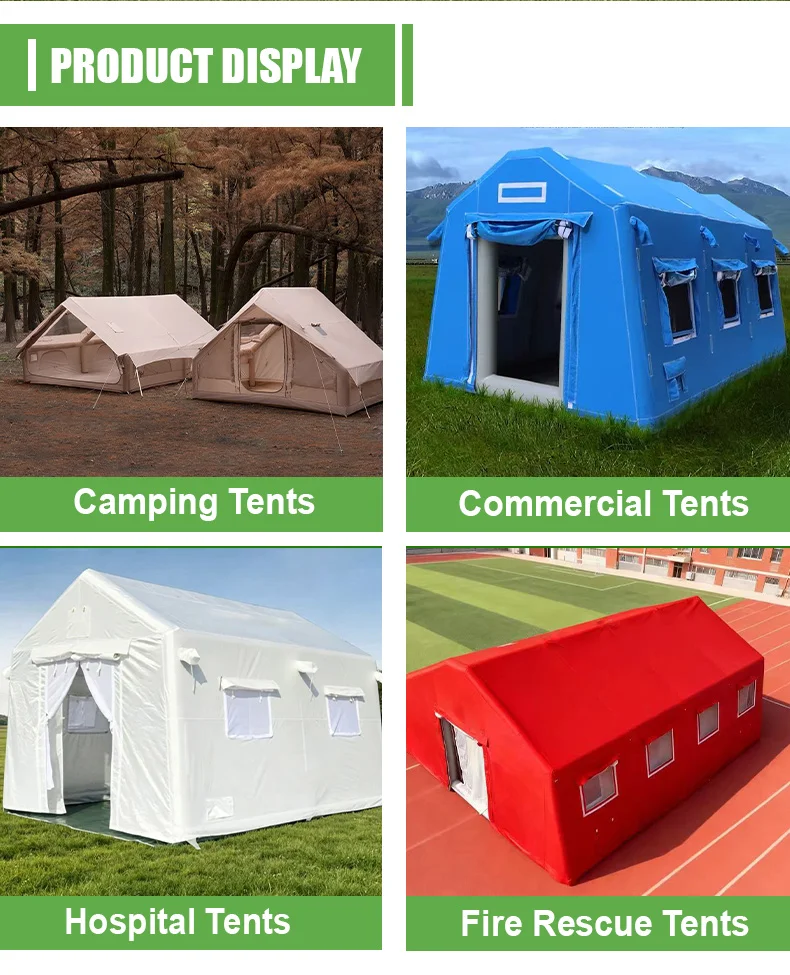
Process-Controlled Air Integrity — every inflatable shelter undergoes 24-hour inflation testing with traceable pressure records, ensuring airtight seam performance across production batches.
Technical Specifications
| Parameter | Value |
|---|---|
| Product Type | Inflatable Tent |
| Core Material | PVC Tarpaulin |
| Product Forms | Inflatable structure with single layer construction |
| Key Performance | Waterproof, UV-Resistant (test basis not stated in source), Tear-Resistant, Quick Automatic Opening |
| Season Rating | Four-season |
| Flame Retardant Grade | Available on request — confirm the grade required for your market |
| Anti-Static | Available on request — confirm the certification required for your site |
| Customization Service | OEM & ODM (sample customization, pattern printing) |
| Quality Control | 24-hour inflation test before shipment; pressure testing on every finished shelter |
| Standards | ISO9001, ISO14001, ISO45001, CE |
Application Suitability
| Application | Exposure & Requirement |
|---|---|
| Temporary site offices at remote construction projects | Wind loading, rain ingress, daily inflation/deflation cycles, ground abrasion |
| Mobile command centers for infrastructure maintenance | Rapid deployment under emergency timelines, repeated relocation, generator-powered blower operation |
| Equipment storage facilities in disaster recovery zones | Prolonged UV exposure, standing water, forklift and personnel traffic at entry points |
| Temporary warehousing during logistics operations | Large-span coverage without internal supports, dust and weather sealing for sensitive cargo |
| Commercial emergency preparedness deployments | Four-season weather swings, storage in compressed state between uses, multi-year shelf life without material degradation |
Why Inflation Test Duration Decides Shelter Reliability
The difference between an inflatable tent that holds pressure through a storm and one that sags within hours comes down to seam testing discipline, not fabric thickness alone.
A 24-hour continuous inflation test with documented pressure readings separates field-ready shelters from workshop prototypes.
Procurement teams sourcing inflatable structures for disaster relief or remote site operations regularly encounter units that pass a quick benchtop air check yet develop slow leaks at high-frequency welded joints once subjected to thermal cycling and wind-driven flex. Without a sustained pressure hold under monitored conditions, seam porosity and valve-seat integrity remain unverified. [NEED_CITE: high-frequency welding parameters for PVC-coated inflatable structures]
Rapid Deployment Without Compromised Air Retention
Single-layer inflatable construction reduces packed volume and deployment time while still requiring absolute airtight integrity at every welded seam. The quick automatic opening feature depends entirely on the blower achieving target pressure before air escapes through micro-leaks in the weld zone. This Inflatable Tent manufacturer builds each air beam as a sealed pressure vessel, treating seam continuity as the governing design constraint rather than an afterthought. Every custom Inflatable Tent leaves production with a pressure trace confirming the structure held target pressure across a full thermal cycle.
OEM and ODM Scope for Project-Specific Dimensions
The 10-technician R&D team develops sample units with custom dimensions, entry configurations, and pattern printing before bulk production begins. This matters for mobile command centers where partition layouts must match communication equipment footprints, or disaster relief shelters where internal volume must accommodate standardized medical cot spacing. [NEED_CITE: pneumatic structural design standards for temporary shelters] Pattern printing and colour matching are validated at sample stage so that batch-to-batch visual consistency is locked before the production run commits.
How PVC Tarpaulin Construction Governs Field Performance
PVC tarpaulin as the core membrane material delivers waterproof continuity across the entire inflated envelope — there is no stitched needle path for water to track through. The single-layer construction concentrates engineering attention on coating adhesion to the base fabric, because any delamination under inflation pressure creates a failure point that double-layer designs might mask. Tear resistance in PVC-coated fabrics depends on the interplay between base fabric denier, weave density, and coating penetration into the yarn interstices, not on coating weight alone. Specifying by GSM without confirming base fabric construction can lead to selecting a material that inflates cleanly but tears under point loading from guy-line attachment or debris impact. [NEED_CITE: tensile and tear test methods for coated fabrics per ISO 1421]
The Cost of Undocumented Seam Integrity
When an inflatable tent deflates unexpectedly at a disaster relief staging area, the consequence extends far beyond re-inflation downtime — medical triage workflows halt, equipment is re-exposed to weather, and the deploying agency’s credibility with coordinating bodies erodes. Most field failures trace to weld-line porosity that was never caught because the supplier’s quality protocol ended at visual inspection rather than sustained pressure verification. Batch inconsistency in seam strength means one unit performs flawlessly while the next develops a slow leak in identical conditions. [NEED_CITE: weld seam failure modes in inflatable PVC structures]
Why This Production Facility Supports Your Inflatable Tent Program
Three full production lines and 36 sets of professional processing equipment provide the capacity to fulfil multi-unit orders without outsourcing seam welding to secondary workshops where process control diverges. Dedicated QA and QC staff conduct inspection at every production stage rather than sampling only finished goods, catching coating adhesion issues before they become sealed seams. The 10-person R&D team handles material selection, pattern development, and dimensional engineering in-house, so sample approval reflects actual production capability rather than a separate prototyping process. Full-process quality inspection with 100% pre-shipment verification means the documentation accompanying your shipment reflects the specific units in that container.
Documentation & Verification
- Material specification sheet stating PVC tarpaulin composition, base fabric details, and coating weight
- UV-resistance test basis documentation — request the applicable standard before order confirmation
- Batch-specific inspection report covering dimensional verification, seam strength, and waterproof performance
- 24-hour inflation test record traceable by order number for every inflatable unit shipped
- ISO9001, ISO14001, ISO45001, and CE certificate copies included with shipment documentation
Fabrication, Handling & Storage
- High-frequency weld parameters must match the PVC tarpaulin coating thickness to achieve full seam fusion without burn-through
- Store deflated units in dry, shaded conditions to prevent UV exposure from degrading the PVC coating during shelf life
- Avoid folding inflatable beams at identical crease points across storage cycles to prevent coating fatigue cracks
- Use only PVC-compatible cleaning agents on the tarpaulin surface to avoid plasticizer extraction and coating embrittlement
- Inspect valve seats and blower connection points before each deployment to confirm gasket integrity
What to Include in Your Enquiry
Provide the intended application scenario — whether disaster relief staging, remote construction site office, or logistics warehousing — along with expected deployment frequency and storage duration between uses. Specify any flame-retardant or anti-static certification your site regulations mandate, including the applicable standard designation. Confirm whether you require custom dimensions, pattern printing, or colour matching so the R&D team can develop a production-accurate sample before quoting bulk volumes.
Frequently Asked Questions
Q: How is UV-resistance tested and what exposure duration is supported?
A: UV-resistance performance depends on the additive package specified for your PVC tarpaulin batch. Test basis and supported exposure duration are documented per formulation. Request the applicable test standard and results before confirming your order, as requirements vary significantly between temperate and tropical deployment zones.
Q: What flame-retardant grades are available for inflatable tent fabric?
A: Flame-retardant grades are formulated to match specific market standards. The applicable grade depends on your regional fire code and end-use classification. Confirm the standard your project requires — such as B1, M2, or NFPA 701 — and the production team will match the PVC formulation and supply the corresponding test report.
Q: How do you ensure airtight seam integrity across production batches?
A: Every finished inflatable shelter undergoes a 24-hour inflation test with pressure monitoring before shipment. High-frequency welded seams are inspected for continuity, and each unit’s pressure hold record is logged against its order number. This protocol verifies that seam integrity meets specification regardless of batch size or production schedule.
Q: What OEM and ODM customization options are available?
A: The R&D team develops custom dimensions, entry configurations, partition layouts, pattern printing, and colour matching. Sample units are produced and approved before bulk commitment. This ensures that custom specifications for your Inflatable Tent manufacturer order reflect actual production output, not theoretical drawings.
Q: What documentation ships with each inflatable tent order?
A: Each shipment includes a material specification sheet, batch-specific quality inspection report, 24-hour inflation test record, ISO and CE certificate copies, and a packing list. If flame-retardant or anti-static certification applies to your order, the corresponding test report is also included for compliance verification at receiving inspection.