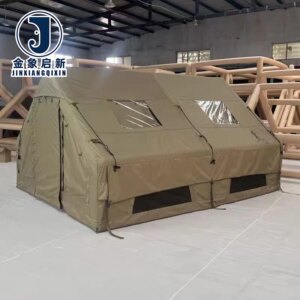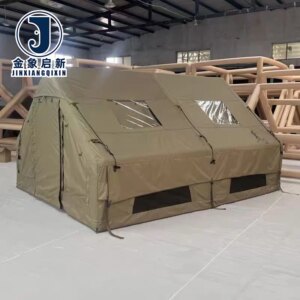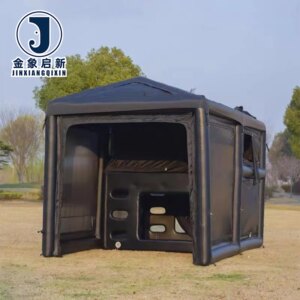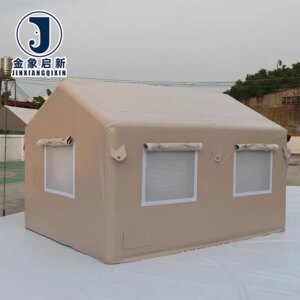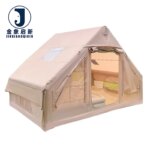
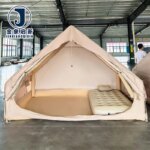
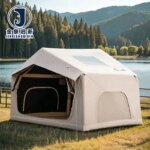
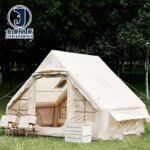
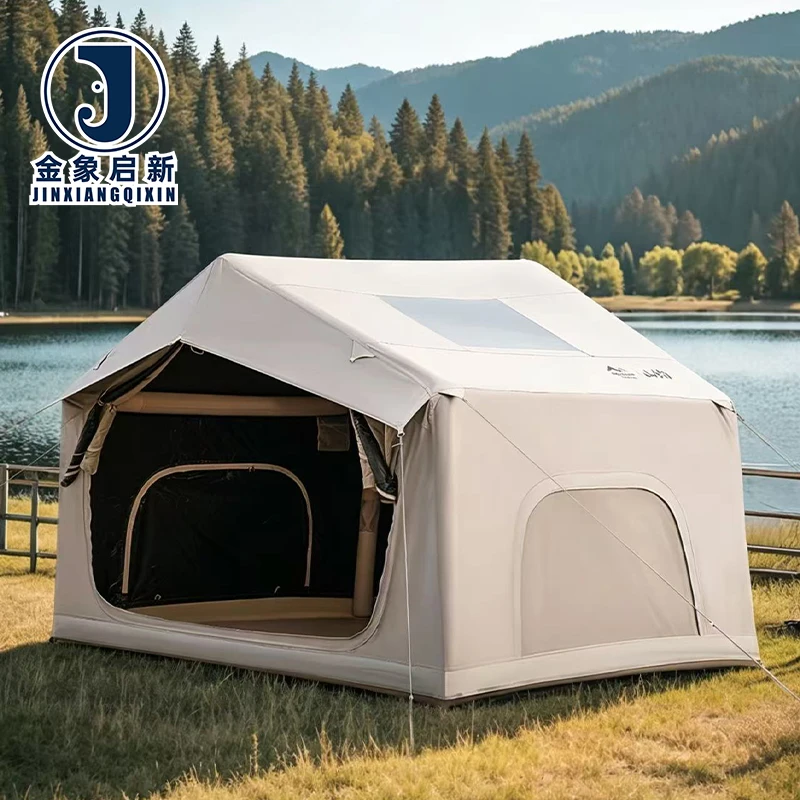
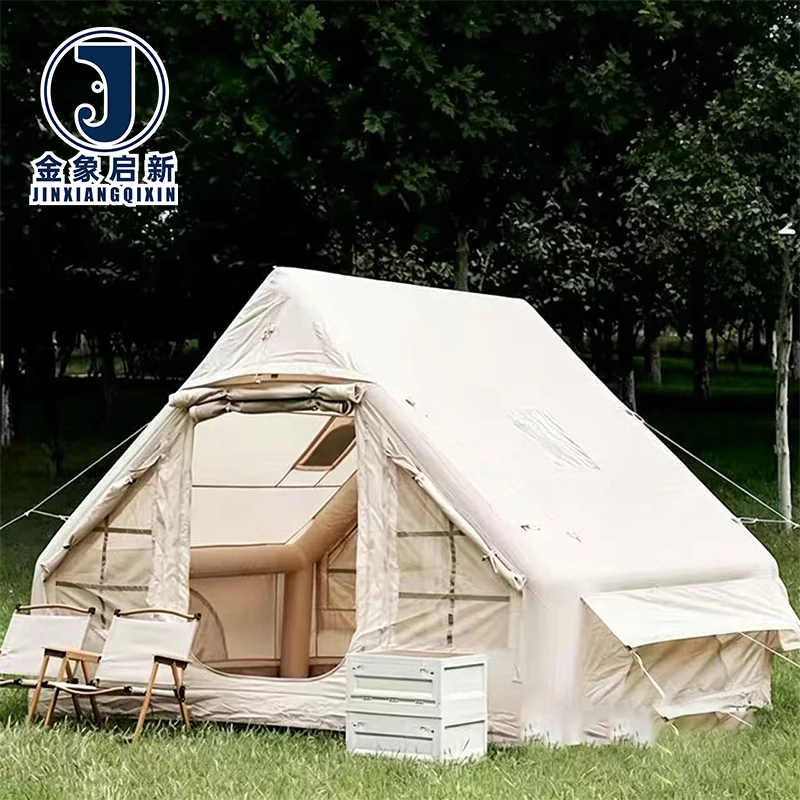
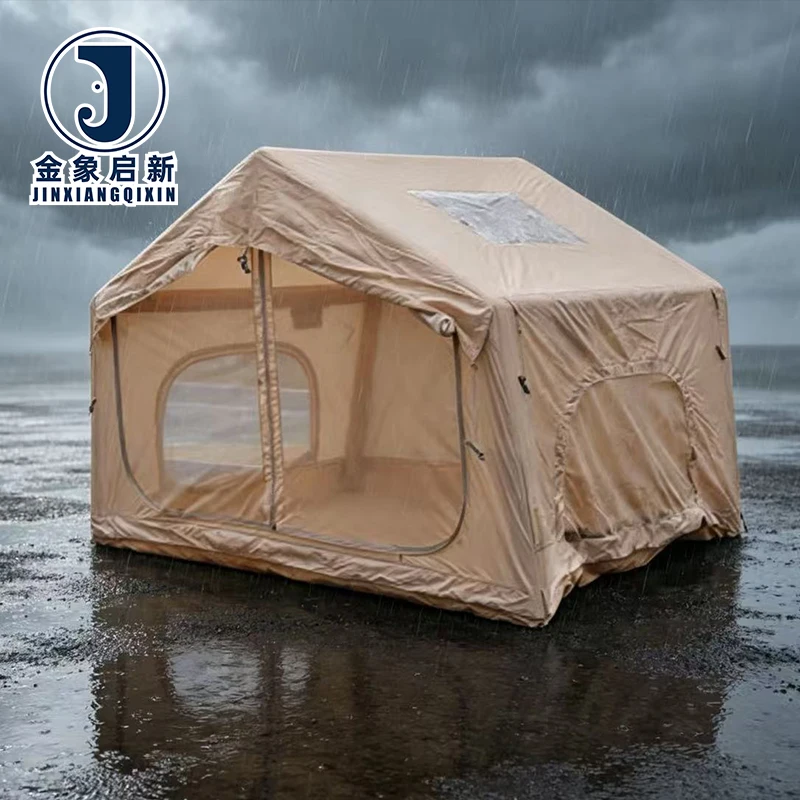
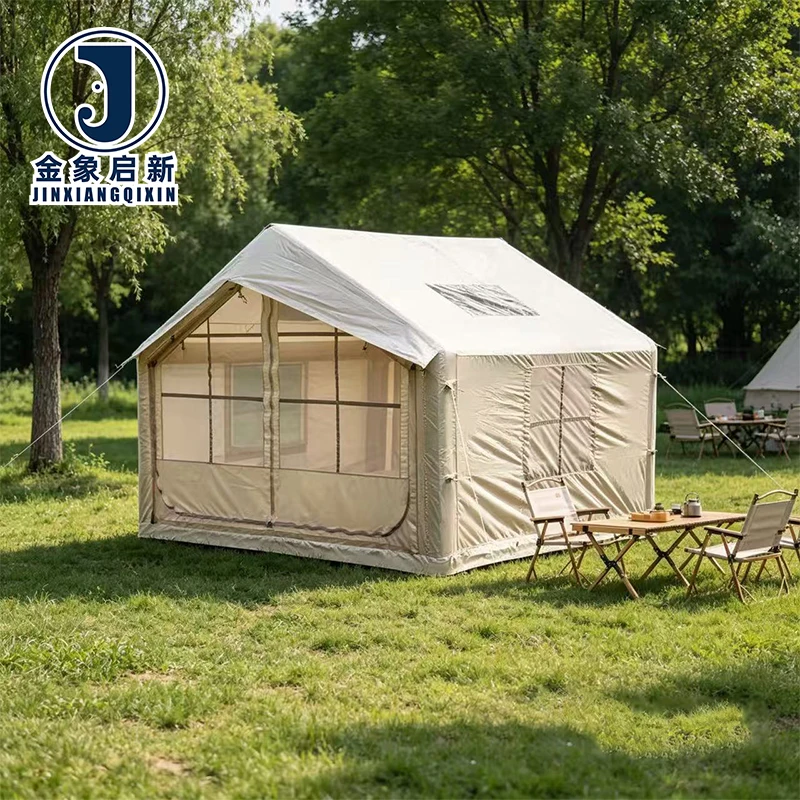
Coating Expertise — Nearly three decades focused on PVC coated fabrics, with process control over coating weight and adhesion validated through batch-specific testing before every shipment.
Technical Specifications
| Parameter | Value |
|---|---|
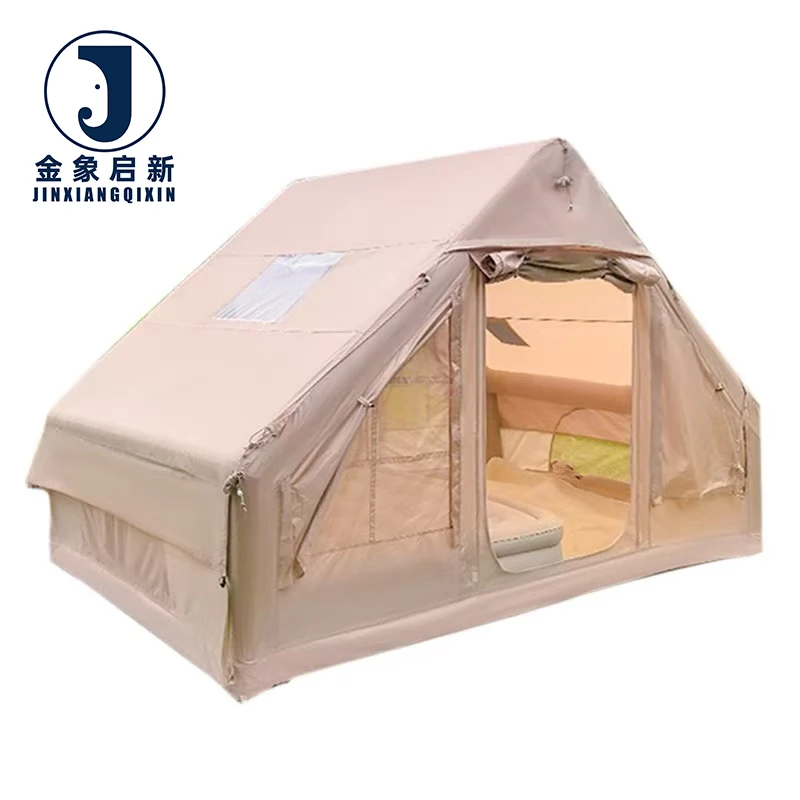
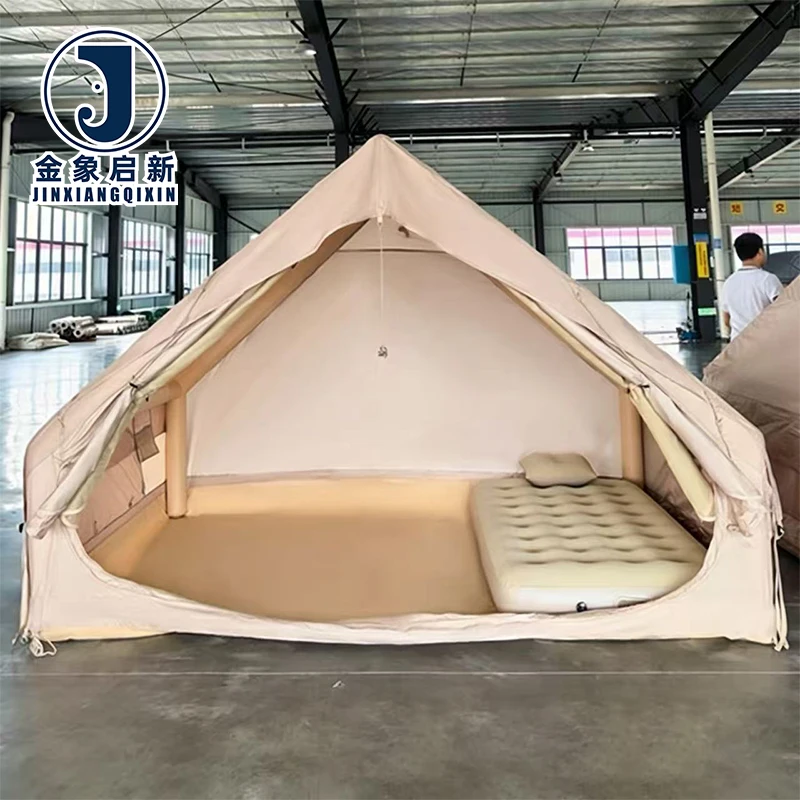
| Product Type | Inflatable Tent |
| Core Material | PVC Coated Fabric |
| Waterproof Rating | ≥10,000mm water column |
| UV Resistance | 4000 hours accelerated aging |
| Tear Strength | ≥300N |
| Deployment Cycles | 500+ cycles (automatic opening mechanism) |
| Design | Four-season, single layer construction |
| Customization Options | Custom sizing up to 5m length, Pantone color matching, logo printing |
| Flame Retardant Grade | Available in flame retardant grades — confirm the grade required for your market |
| Certifications | ISO9001, ISO14001, ISO45001, CE |
Application Suitability
| Application | Exposure & Requirement |
|---|---|
| Temporary site offices at construction projects | Weather exposure, frequent deployment, structural stability under wind load |
| Equipment storage shelters for logistics operations | Moisture ingress protection, UV degradation resistance, puncture risk from stored goods |
| Mobile command posts for industrial events | Rapid inflation cycles, surface abrasion from ground contact, visual branding requirements |
| Emergency outdoor trip rapid deployment shelters | Extreme temperature swings, repeated packing and unpacking, minimal setup time |
Why Ventilation and Inflatable Structure Fabric Fails Compliance Audits
Certified inflatable tent fabric eliminates the documentation gap that stalls site approvals.
Procurement teams for mining, aviation and specialist construction projects routinely specify fire-retardant and anti-static inflatable structures, only to discover at delivery that the supplied fabric lacks the test reports the site safety officer requires. The structure passes visual inspection but fails the compliance audit because the mill certificate does not match the specification on the purchase order. Inflatable Tent Fabric fire retardant / anti-static / certified must carry batch-specific documentation that aligns with the target market’s regulatory framework, not a generic statement of compliance. [NEED_CITE: fire safety classification standards for temporary industrial structures]
Coating Formulation for Air-Retaining Structures
Inflatable structures demand a PVC coating that maintains airtight integrity across hundreds of inflation cycles while resisting the mechanical stress of folding and unfolding. The coating must bond to the base fabric strongly enough to prevent delamination at the seam lines, where internal pressure concentrates during deployment. Inflatable Tent Fabric fire retardant / anti-static / certified requires consistent coating adhesion across the full roll width to avoid weak points that compromise structural stability.
Seam Integrity Under Internal Pressure
Heat-welded seams on inflatable tents carry the full internal air pressure, making seam strength equal to or greater than fabric strength in determining service life. The welding temperature and dwell time must match the specific coating formulation to achieve full fusion without degrading the PVC layer. Poorly matched welding parameters produce seams that peel under pressure, leading to deflation during use. [NEED_CITE: hot air welding parameters for PVC coated technical textiles]
Understanding the Relationship Between Tear Strength and Structural Reliability
Tear strength measured at ≥300N indicates the fabric’s resistance to crack propagation once a puncture or cut initiates. In inflatable applications, a small surface puncture from sharp ground debris can rapidly extend under the biaxial stress of internal air pressure if the base fabric lacks adequate tear resistance. The base fabric denier and weave density work together with the coating to arrest tear propagation — coating weight alone does not determine this performance. A heavier coating on a loosely woven base fabric may show high tensile values but poor tear performance because the yarns pull apart rather than sharing load across the weave structure. Accelerated UV aging validated at 4000 hours provides confidence for extended outdoor deployment, but the relationship between UV stabilizer concentration and long-term color retention depends on pigment loading and surface treatment.
The Cost of Specifying Without Verification
Accepting a quotation based on stated performance without requesting the supporting test report creates exposure that surfaces only at the compliance stage. A fire-retardant claim without a grade tied to a recognized standard means the site safety team cannot confirm whether the fabric meets local regulations, forcing removal and replacement of an installed structure. Color variation between production rolls becomes visible when panels are joined side by side on a large inflatable, requiring selective cutting that wastes material and delays completion. Weld failures at flex points during inflation cycles indicate a mismatch between the fabric’s coating formulation and the welding equipment settings used during fabrication. [NEED_CITE: ISO 1421 tensile and tear test methods for coated fabrics]
Why Procurement Teams Source This Fabric Here
Deep process control over PVC coating weight and adhesion means every roll meets the specification stated on the purchase order, verified through in-process quality checks rather than post-production sampling alone. Three full production lines and 36 sets of professional equipment support volume orders for Inflatable Tent Fabric fire retardant / anti-static / certified without compressing lead times at the expense of consistency. A 10-person R&D team handles custom sizing up to 5m, Pantone color matching, and logo printing, producing digital prototypes and physical samples before bulk production begins. The 7-stage inspection protocol covers tensile strength, seam integrity, and pressure retention analysis specific to inflatable applications. Documentation packages include ISO9001, ISO14001, ISO45001 and CE certificates, with technical reports available in English, Spanish and French for multinational project requirements.
Documentation & Verification
- Batch-specific quality certificate detailing waterproof, UV and tear test results shipped with every order
- ISO9001, ISO14001, ISO45001 and CE certificates included for project compliance submission
- Material specification sheet stating coating type, base fabric construction and color reference
- Technical documentation available in English, Spanish and French for global project teams
- Pre-shipment inspection record confirming roll count, width, length and visual quality
Fabrication, Handling & Storage
- Heat welding parameters must match the PVC coating formulation to prevent seam delamination under internal pressure
- Store rolls horizontally on padded racks to avoid permanent creasing that weakens the coating at fold lines
- Clean surfaces with mild detergent only — solvent-based cleaners degrade the PVC plasticizer and reduce UV stabilizer effectiveness
- Allow fabric to reach ambient temperature before unrolling in cold conditions to prevent coating micro-cracking
- Field repairs require compatible PVC adhesive and patch material matching the coating weight to maintain airtight integrity
Requesting a Specification Match
Provide the deployment environment, expected inflation cycle frequency, and the fire safety or anti-static classification required by the site authority. Specify whether you need rolls at standard width or custom dimensions up to 5m, and whether Pantone color matching or logo printing applies. Indicate annual volume to confirm production scheduling and whether physical samples are needed before bulk confirmation.
Frequently Asked Questions
Q: Which fire safety classifications are available for this inflatable tent fabric?
A: The fabric is available in flame retardant grades aligned with major international standards. The specific grade must be confirmed against your site’s fire safety regulations before production, as requirements vary between mining, aviation and construction applications. We provide the corresponding test report with each batch shipment to support your compliance documentation.
Q: How do you ensure anti-static compliance for mining inflatable structures?
A: Anti-static treatment is applied during the coating process and verified through surface resistivity testing. The test result is documented on the batch quality certificate. Confirm your site’s specific resistivity threshold with your safety officer, and we will align the formulation to meet that requirement before production begins.
Q: What does the 4000-hour UV aging result mean for outdoor service life?
A: The 4000-hour accelerated aging test validates the UV stabilizer package under controlled laboratory conditions, providing a basis for comparing formulations. Actual outdoor service life depends on latitude, altitude, seasonal exposure and orientation. We recommend this test result as a procurement benchmark rather than a direct year-equivalent prediction.
Q: Can I order custom sizes and printed branding for specialist inflatable shelters?
A: Custom sizing is available up to 5m length, with Pantone color matching and logo printing handled by the in-house R&D team. Digital prototypes are produced for approval before physical sampling, and a physical sample is confirmed before bulk production to ensure the print registration and color match meet your specification.
Q: How is batch-to-batch consistency maintained across large orders?
A: Each production run follows a 7-stage inspection protocol covering tensile strength, seam integrity, pressure retention, and visual quality. The batch-specific quality certificate documents the test results for that production run, allowing you to verify consistency against previous deliveries and your original purchase specification.