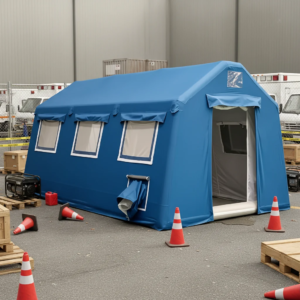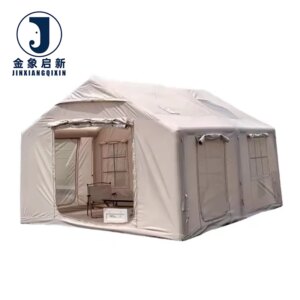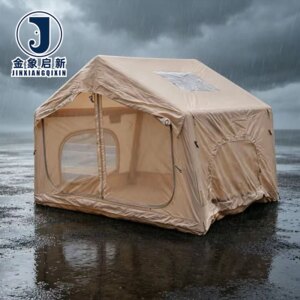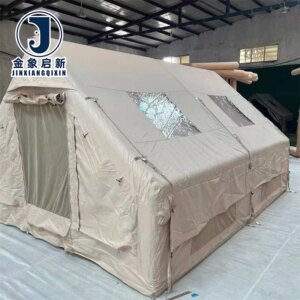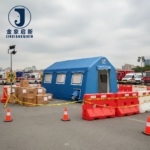
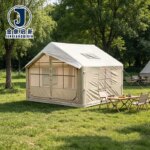
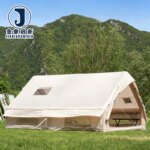
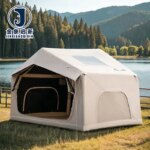
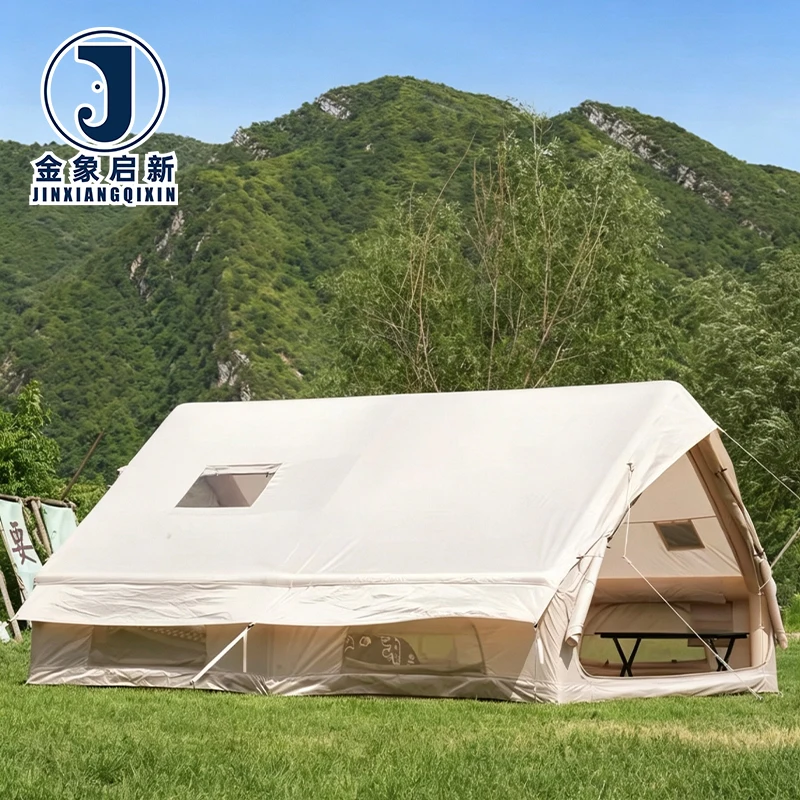
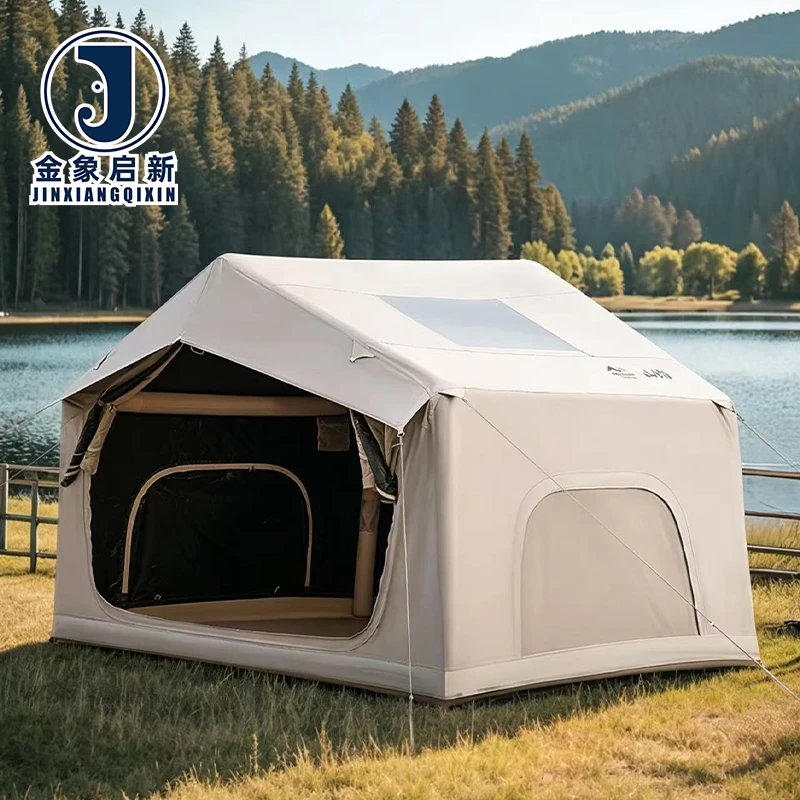
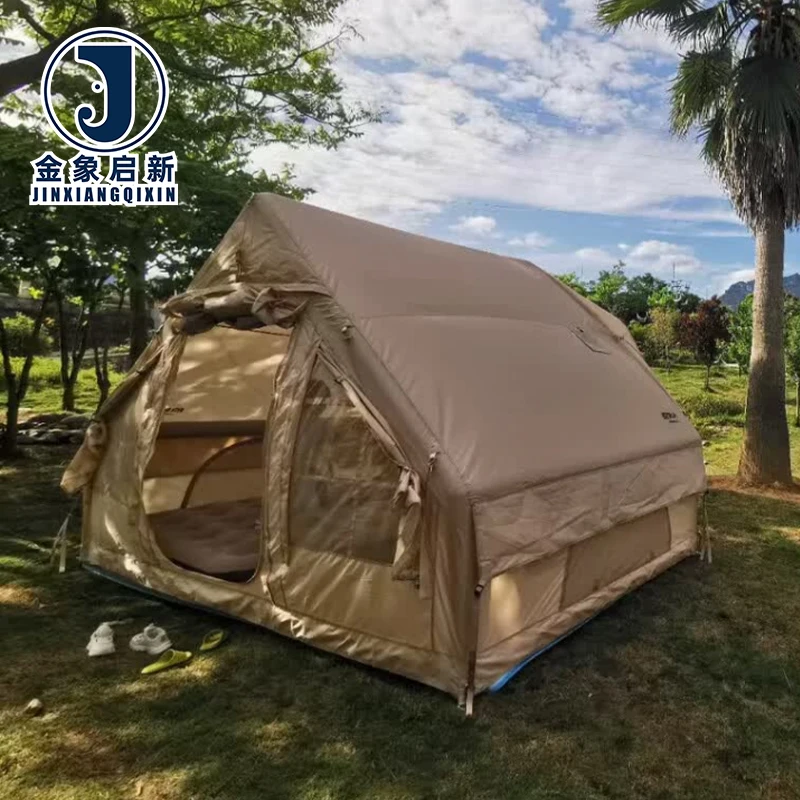
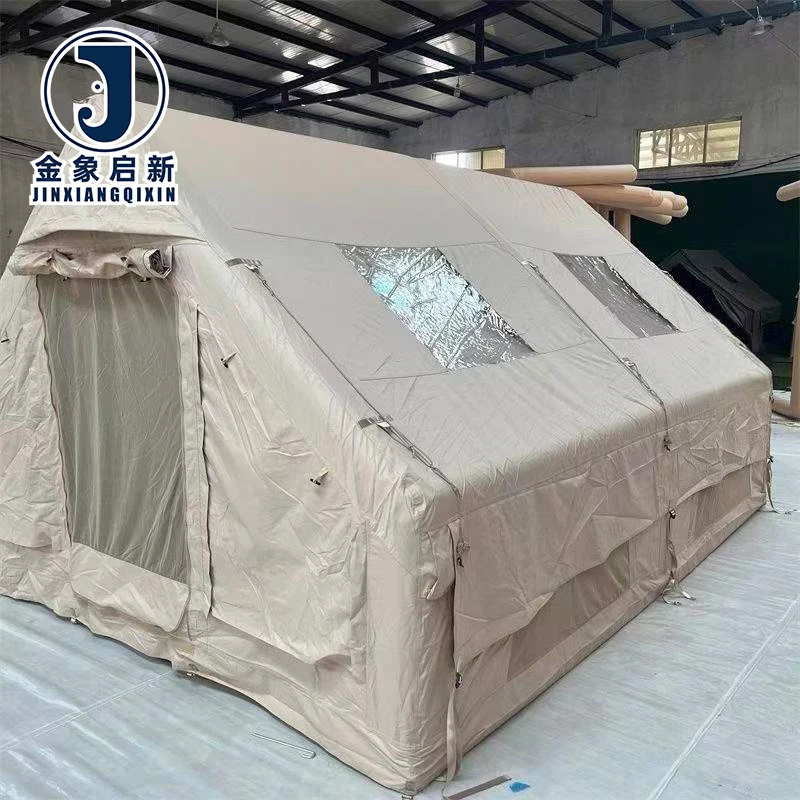
Coated Fabric Expertise — nearly 30 years of PVC coating process control applied to inflatable structure membranes, ensuring every roll meets stated weight, adhesion, and waterproof performance.
Technical Specifications
| Parameter | Value |
|---|---|
| Product Type | Inflatable Tent |
| Core Material | PVC tarpaulin |
| Waterproof Rating | >3000mm |
| Construction | Single layer |
| Design | 4-season |
| Opening Mechanism | Quick automatic opening (inflatable) |
| UV Treatment | UV-resistant (test basis not stated in source) |
| Flame Retardant Grade | Available in flame retardant grades — confirm the grade required for your market |
| Anti-Static | Available on request — confirm compliance requirements for your site |
| Weight (GSM) | Not stated in source |
| Base Fabric Denier | Not stated in source |
| Temperature Range | Temperature-resistant for high and low temperature environments (specific values not stated in source) |
| Color | Custom colour available — confirm reference |
| Customization | Size adjustment, colour, pattern printing, logo, OEM & ODM |
| Production Lines | 3 full production lines |
| Processing Equipment | 36 sets of professional processing equipment |
| R&D Team | 10 technicians |
| Sample Lead Time | 7-10 business days |
| Production Lead Time | 15-20 business days |
| Quality Control | Full-process inspection, inflation testing, waterproof performance testing, tensile strength measurements, seam integrity verification |
| Standards | ISO 9001, ISO 14001, ISO 45001, CE |
Application Suitability
| Application | Exposure & Requirement |
|---|---|
| Temporary site offices at construction projects | Wind loading, rain, UV exposure, repeated inflation and deflation cycles, crew traffic at entry points |
| Mobile equipment shelters for outdoor events | Rapid deployment and teardown, sun and precipitation exposure, branding and signage visibility |
| Auxiliary storage facilities for logistics operations | Weather protection for stored materials, airtight membrane integrity, forklift proximity abrasion risk |
| Rapid deployment commercial shelters | All-weather resistance, 4-season temperature fluctuation, structural stability under wind load |
Why Inflatable Structure Fabric Fails Before the Project Ends
Most inflatable membrane failures trace back to unverified material claims at the procurement stage, not to the fabric itself.
Contractors deploying inflatable structures on active construction sites or mining operations frequently discover after installation that the PVC inflatable tent fabric they received lacks the fire-retardant or anti-static certification the site safety officer requires. The structure is already inflated, the crew is inside, and the compliance audit is tomorrow. This is not a rare event — it is a recurring pattern across industrial and mining sites where membrane structures are treated as temporary and therefore exempt from documentation standards. [NEED_CITE: fire safety compliance requirements for temporary membrane structures on regulated sites]
When the PVC inflatable tent fabric arrives without a batch-specific inspection report, there is no way to confirm whether the waterproof rating, tensile strength, or seam integrity was actually tested on the material in hand. Procurement teams end up requesting re-tests at their own cost, delaying the project timeline and eroding trust with the client.
Fire-Retardant Certification Gaps on Regulated Sites
Mining, aviation, and large-scale construction projects enforce strict fire classification standards for any temporary enclosure. When the PVC inflatable tent fabric is supplied without a documented flame-retardant grade, the entire structure may be rejected at the site safety inspection. The cost is not only the fabric replacement — it includes downtime, re-installation labour, and potential penalties from the project owner.
Buyers specifying inflatable structure fabric for regulated environments must confirm the exact fire classification required by their jurisdiction before placing the order. The available flame-retardant grades vary by market, and third-party testing at accredited laboratories can be arranged to match the project specification. [NEED_CITE: fire classification standards for temporary fabric structures in industrial environments]
Airtightness and Pressure Retention Under Temperature Swings
A 4-season inflatable membrane structure must hold internal pressure through wide temperature ranges. PVC becomes less flexible in cold conditions and softer in high heat, both of which affect airtightness at the welded seams. Single-layer construction reduces transport weight for rapid site relocation, but it places the entire burden of pressure retention on the base fabric and its seam integrity.
Every unit undergoes inflation testing and pressure-retention verification before dispatch, confirming that the PVC inflatable tent fabric maintains its structural shape across the stated temperature range. This pre-shipment protocol catches seam leaks and coating delamination issues that would otherwise surface only after the structure is deployed on site.
Reading the Specification Sheet Beyond GSM
GSM alone does not predict how an inflatable membrane will perform under wind load or repeated inflation cycles. The base fabric denier and weave density determine tensile and tear strength, while the coating method and weight govern waterproof performance and weld adhesion. A lighter base fabric with a heavy coating may show high GSM but fail at the seam when the structure flexes.
The single-layer PVC tarpaulin construction in this product is designed to balance durability with weight efficiency for transport and rapid deployment. The >3000mm waterproof rating addresses prolonged exposure to rain and ground moisture, while the UV-resistant treatment is intended for extended outdoor service — though the specific test basis for UV performance should be confirmed for projects requiring documented sun-exposure durability data. [NEED_CITE: relationship between base fabric denier and tensile strength in coated PVC fabrics]
The Hidden Cost of Unverified Seam Integrity
Inflatable structures depend entirely on welded seams to hold internal air pressure. When seam integrity is not tested before shipment, the failure point almost always appears at the highest stress location — typically where the membrane curves or where attachment points concentrate load. A seam that fails on site means the structure deflates, work stops, and the repair must be done under field conditions that rarely match factory standards. [NEED_CITE: common failure modes in welded seams of inflatable PVC structures]
The batch-specific quality inspection protocol includes seam integrity verification alongside tensile strength measurements and waterproof performance testing. This multi-point check ensures that the welded joints in the PVC inflatable tent fabric perform as a system with the base material, not as the weakest link.
Why Procurement Teams Source Inflatable Fabric Here
The 10-person R&D team develops custom-sized inflatable membrane samples within 7-10 business days, allowing contractors to validate fit and inflation performance before committing to full production.
Three full production lines and 36 sets of professional processing equipment support batch volumes required for large-scale commercial and industrial deployments without sacrificing per-roll quality control.
Full-process inspection with dedicated QA and QC staff covers every production stage, from raw PVC coating weight verification through to final inflation testing and seam integrity checks before dispatch.
Material specification sheets, batch-specific inspection reports, and ISO 9001, ISO 14001, ISO 45001, and CE certificates are included with every shipment, closing the compliance documentation gap that causes site rejections.
Documentation & Verification
- Material specification sheet confirming PVC base fabric, coating weight, and waterproof test results per shipment
- Batch-specific quality inspection report covering inflation testing, tensile measurements, and seam integrity data
- ISO 9001, ISO 14001, ISO 45001, and CE certificates included with dispatch documentation
- Third-party laboratory test reports for fire-retardant or anti-static grades available upon request
- Pre-shipment inspection record verifying waterproof rating and pressure retention performance
- Roll packing list with colour reference and custom print specifications confirmed
Fabrication, Handling & Storage
- Weld temperature and dwell time must match the single-layer PVC construction to avoid coating burn-through at seams
- Store rolls flat or vertically supported to prevent creasing that weakens the PVC coating at fold lines
- Use compatible PVC adhesive for field repairs on the UV-resistant surface to maintain coating adhesion
- Allow cold-stored membrane fabric to reach ambient temperature before inflation to preserve seam flexibility
- Pattern printing and logo application should be verified against the surface finish for ink adhesion durability
- Cut panels with allowance for welded seam overlap to maintain airtightness at structural joints
Before You Request a Quote
Provide the intended deployment environment, including wind and snow load expectations, so the correct base fabric and PVC coating weight can be recommended. If the inflatable membrane structure will be used on a regulated site such as mining or aviation, specify the fire-retardant or anti-static grade required by your local authority. Confirm whether you need the PVC inflatable tent fabric supplied as finished, welded panels or as roll stock for in-house fabrication, and indicate any colour, pattern printing, or logo requirements for the project.
Frequently Asked Questions
Q: What fire-retardant certification does this inflatable fabric carry, and can it meet specific mining or aviation compliance standards?
A: Flame-retardant grades are available for this PVC inflatable tent fabric, but the specific grade must match your market’s regulatory requirements. Mining and aviation sites often require independent third-party testing at accredited laboratories. Confirm the exact fire classification standard your project demands, and the appropriate test report can be arranged before production begins.
Q: What is the UV treatment basis for this PVC inflatable fabric, and how is long-term sun exposure performance verified?
A: The PVC inflatable tent fabric includes UV-resistant treatment designed for extended outdoor deployment. However, the specific test basis and exposure duration data are not stated in the source documentation. For projects requiring verified UV performance data, request third-party testing that matches the climate conditions and expected service duration of your installation site.
Q: What welding and seam techniques are recommended for inflatable tent structures, and how is seam integrity tested before shipment?
A: Hot-air welding and high-frequency welding are the standard techniques for single-layer PVC tarpaulin inflatable structures. Every unit undergoes inflation testing and pressure-retention verification before dispatch, with seam integrity checked at stress concentration points. Field repairs should use compatible PVC welding methods to maintain airtightness and structural performance at the repaired joint.
Q: What customization options are available for commercial inflatable structure orders, and what are the lead times?
A: Size adjustment, colour customization, pattern printing, and logo application are all available through OEM and ODM processes. The 10-person R&D team develops samples within 7-10 business days for approval. Full production lead time is 15-20 business days after sample confirmation. Custom colour matching and print proofs are verified before the production run begins to ensure batch consistency.
Q: Can this inflatable fabric be supplied with anti-static treatment and certification for use in mining or tunneling environments?
A: Anti-static treatment is available on request for the PVC inflatable tent fabric intended for mining, tunneling, or other environments where static discharge poses a hazard. The specific anti-static grade and certification must align with the compliance standards enforced at your site. Confirm the required standard with your safety officer before ordering, so the correct treatment and documentation are included with the shipment.