

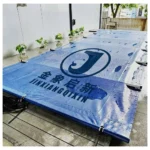

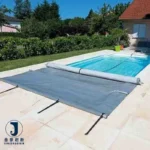
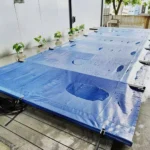
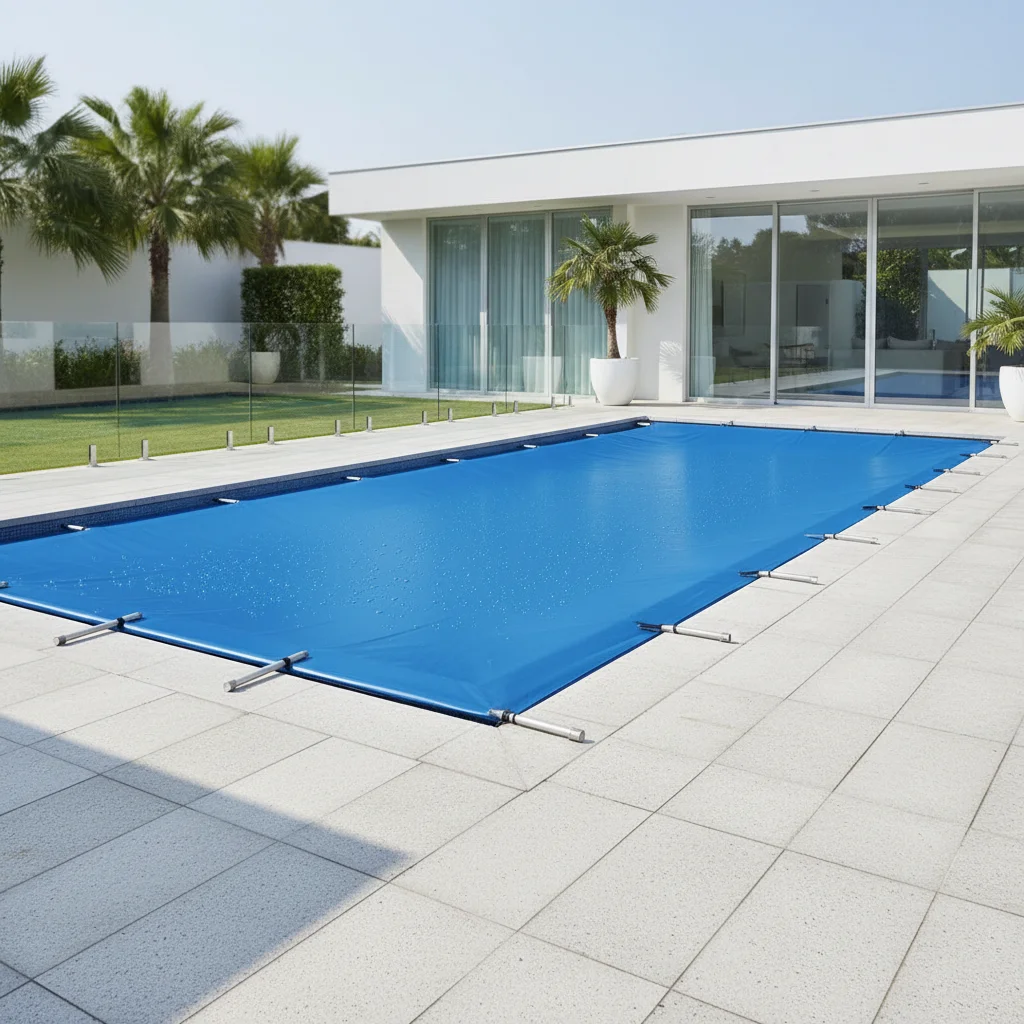
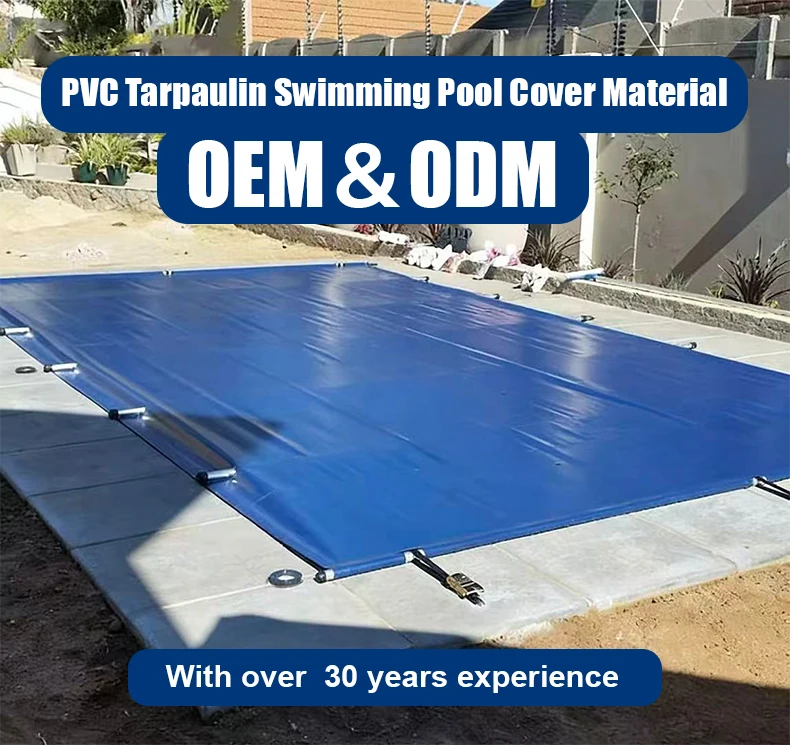
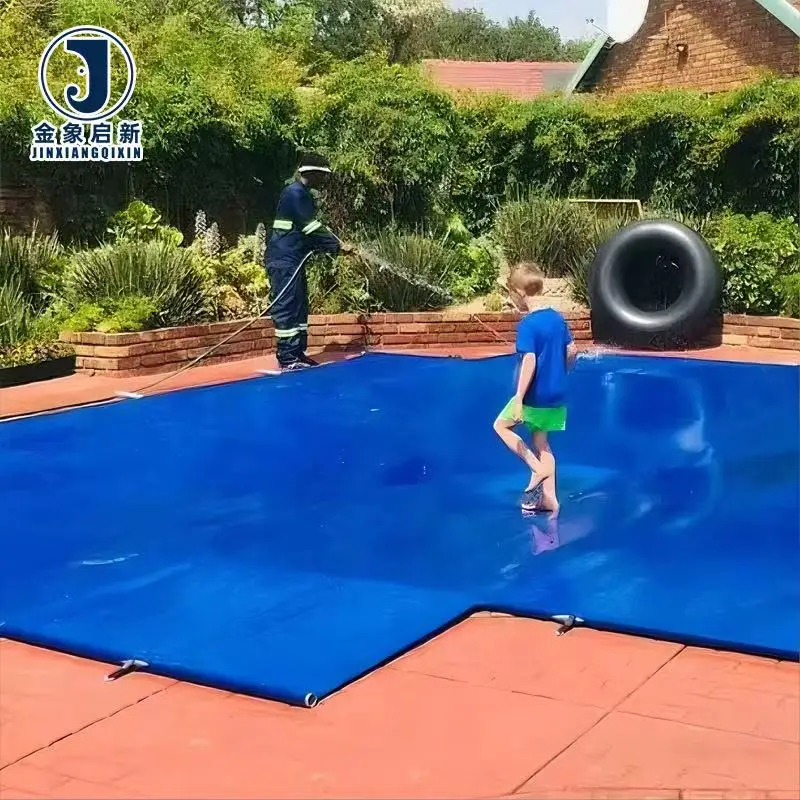
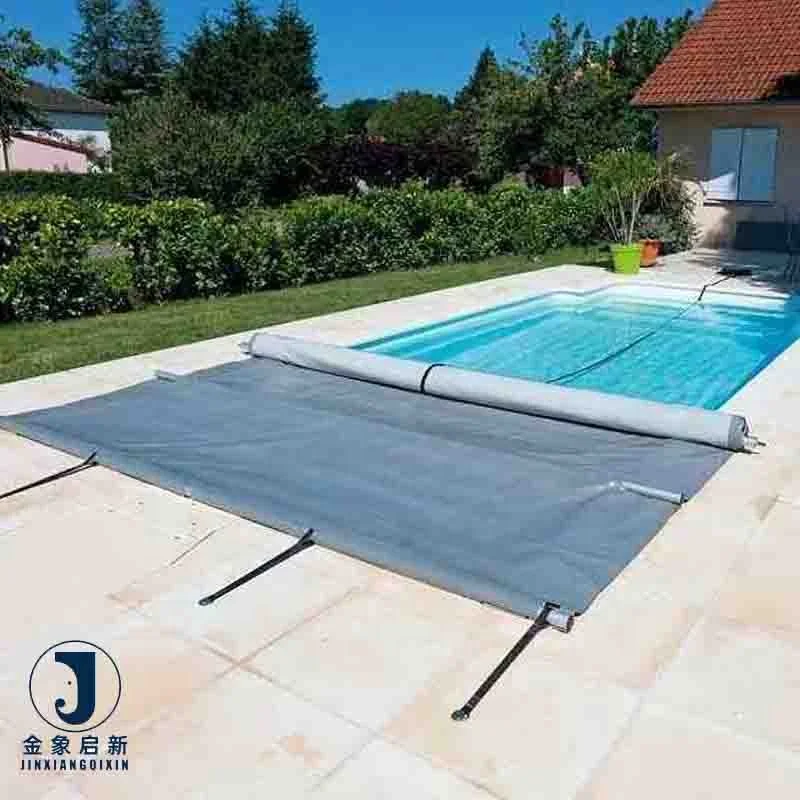
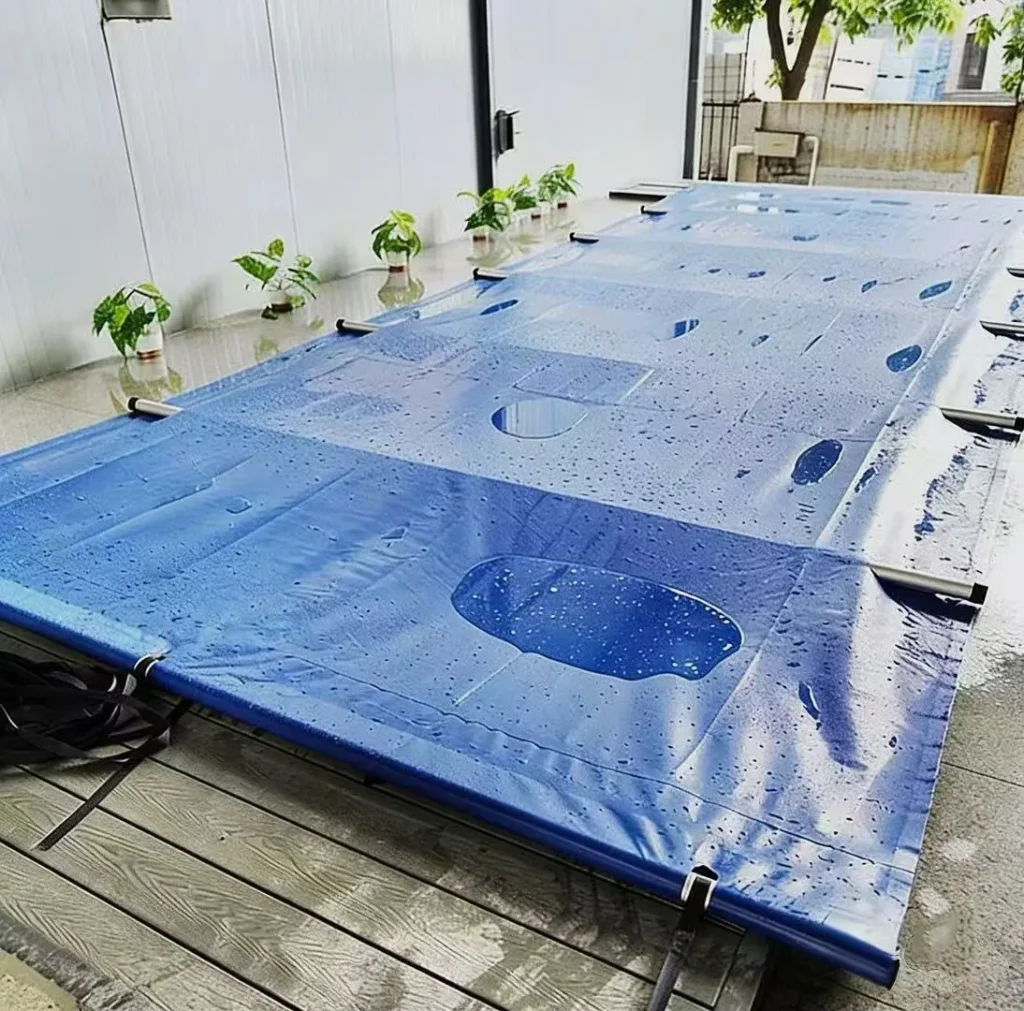
[Roll-to-Roll Consistency] — Every batch of PVC Coated Tarpaulin Roll is held to strict coating-weight tolerance before dispatch, so ventilation duct fabricators receive uniform material from first metre to last.
Technical Specifications
| Parameter | Value |
|---|---|
| Product Type | PVC Coated Tarpaulin Roll |
| Base Fabric | High-strength polyester mesh fabric |
| Coating Technology | Laminated Technology & Hot-melt Coating Technology |
| Weight Options | 350gsm / 420gsm / 500gsm / 550gsm / 600gsm / 750gsm |
| Thickness Options | 0.32mm / 0.35mm / 0.4mm / 0.45mm / 0.5mm / 0.65mm |
| Roll Size Options | 2m width × 75m length / 2.1m width × 50m length |
| Colour Options | Blue, Red, Yellow, Light blue, Grey (Customized) |
| Surface Finish | Standard coated (glossy or matte finish available) |
| Service Life Expectancy | 3–7 years under normal circumstances |
| Special Treatments Available | Flame retardant (grade not stated in source), Anti-static (test basis not stated in source), Anti-cold, Anti-mildew |
| Certification | ISO, CE |
Application Suitability
| Application | Exposure & Requirement |
|---|---|
| Mining & Tunnelling Ventilation Duct | Continuous forced-air pressure, flex under pulsation, underground abrasion, mandatory fire and static compliance |
| Membrane & Inflatable Structures | Sustained tension loads, wind-driven billowing, UV and weather exposure, airtight welded seams |
| Aviation Hangar Ducting | Regulatory fire classification, low-smoke requirements, large-diameter fabrication |
| Industrial Pool & Tank Lining | Permanent water immersion, chemical contact from treatment agents, puncture risk from substrate |
| Inflatable Dewatering Bags | Repeated deployment and recovery, muddy and abrasive site conditions, weld integrity under load |
Why "Flame Retardant" Without a Test Report Is a Liability on Site
PVC coated tarpaulin rolls specified for underground ventilation or aviation ducting carry strict fire-classification mandates, yet fabricators often receive material with no supporting documentation. A flame-retardant claim without a named grade and test basis cannot satisfy a site inspector or a regulatory audit.
When a mining contractor installs duct that lacks the required fire classification, the entire run may be ordered removed — costing not just the fabric but the labour, downtime and delayed production schedule. Anti-static requirements present the same exposure: without a measured surface-resistance value, the duct cannot be cleared for zones where combustible dust or methane is present [NEED_CITE: fire and anti-static classification frameworks for underground ventilation materials]. The safe specification path is to name the exact standard your jurisdiction demands and require the matching test report before the order ships.
Coating Adhesion and Duct Fabrication Behaviour
Hot-melt coating and laminated technology bond the PVC layers to the high-tenacity polyester mesh under controlled heat and pressure, producing a unified structure rather than a surface film. For ventilation duct fabrication, this adhesion quality matters most at the welded seams, where the flex load concentrates every time the duct pressurises and cycles down. If the coating delaminates at the weld zone, the seam becomes the weakest link long before the base fabric reaches its tensile limit.
Fabricators working with PVC Coated Tarpaulin Roll for technical duct applications report that hot-melt coated stock holds a cleaner weld bead with less rework on high-frequency welding rigs. Consistent coating thickness across the roll width means welding parameters set on the first panel carry through to the last, reducing scrap and downtime on long production runs.
Selecting GSM for Duct Diameter and Static Pressure
Ventilation duct diameter and the static pressure of the fan system together determine the tensile load the fabric must carry in continuous service. Smaller-diameter ducts operating at moderate pressure may perform adequately at 350gsm or 420gsm, while large-diameter forcing ducts in deep-level mining — where fan pressures are substantially higher — typically require 550gsm and above to resist billowing, seam stress and fatigue cracking over the service interval.
Thickness correlates with GSM but should not be treated as a substitute for it. A 0.4mm fabric may achieve its thickness through a heavier base weave or a heavier coating, and these two constructions behave differently under weld heat and long-term tension [NEED_CITE: relationship between base fabric denier and tensile performance in coated technical textiles]. Always request the material specification sheet that breaks out base fabric weight and coating weight separately.
How Weave Density and Coating Weight Interact
The high-strength polyester mesh fabric used in these PVC Coated Tarpaulin Rolls provides the structural skeleton; the PVC coating provides waterproofing, chemical resistance and the weldable surface. Tensile strength is governed primarily by the denier and weave density of the polyester yarns, while tear propagation resistance depends on how tightly those yarns are locked by the coating penetration.
Laminated and hot-melt coating technology forces PVC into the mesh interstices under heat, which improves the lock and limits tear spread. Coating weight adds mass and abrasion resistance but also stiffness — a factor that matters when duct sections must be folded for transport and redeployed underground. Choosing the right GSM grade therefore involves balancing tear resistance against handling weight and fold stiffness for the specific deployment cycle your operation demands.
The Hidden Cost of Specifying on Colour Alone
When buyers select ventilation duct fabric based on colour match or a single GSM figure without verifying the underlying construction, the consequences surface months into service. A lighter base fabric coated to hit the target GSM may pass a weight check on arrival yet fail prematurely at the flex points where the duct pulsates. Anti-mildew treatment claimed without documentation becomes visible as fungal staining on duct runs in humid underground conditions, triggering replacement schedules the project budget never anticipated.
Batch colour variation between rolls in the same shipment presents a different kind of cost on membrane structures: when panels installed side by side show a visible shade difference, the client may reject the entire installation on aesthetic grounds alone [NEED_CITE: batch colour consistency standards in coated fabric procurement]. The remedy is straightforward — request a roll-by-roll inspection record and colour-reference swatches before dispatch, not after.
Why Technical Buyers Source This Fabric Here
Three full production lines and 36 sets of professional equipment allow bulk orders of PVC coated tarpaulin roll to run on dedicated lines, keeping lead times predictable even when custom widths or GSM grades are specified. A 10-person R&D team handles material selection, sample development and treatment formulation, so when a mining contractor needs a specific fire-retardant grade, the sample stage resolves the question before production begins.
Dedicated QA/QC inspection at every production stage — not just a final spot-check — catches coating-weight drift and colour variation within the run, not after the rolls are packed. Pre-shipment inspection covers 100% of the order, and every roll ships with documentation traceable to its production batch [NEED_CITE: in-process quality control practices for coated technical fabrics]. Samples for custom GSM, width or treatment requirements are typically developed within days, shortening the approval cycle on time-sensitive projects.
Documentation & Verification
- Material specification sheet detailing base fabric denier, coating weight and stated GSM for each roll
- Test report for flame retardant or anti-static grades where applicable to your site compliance
- Pre-shipment inspection record confirming weight verification per roll against quoted GSM
- Roll packing list with individual roll numbers traceable to production batch
- ISO and CE certificates supporting the quality management framework
- Certificate of origin and customs documentation for export clearance
Fabrication, Handling & Storage
- Set high-frequency weld temperature to match the 0.32mm–0.65mm coating range to avoid base-fabric scorch
- Allow hot-melt coated rolls to acclimatise to workshop temperature before welding to prevent cold-crack at seams
- Store rolls upright on pallets to prevent flat-spot compression marks on the coating surface
- Use UV-stable thread for any sewn reinforcement patches on flame retardant or anti-static specified panels
- Clean coated surfaces with neutral-pH detergent only to preserve the anti-mildew treatment layer
- Plan panel nesting on 2m or 2.1m roll widths to minimise offcut waste on large duct sections
Before You Enquire
To specify the right PVC coated tarpaulin roll for your application, share the duct diameter, operating static pressure and the fire or anti-static classification your jurisdiction mandates. If you are fabricating membrane or inflatable structures, provide panel dimensions and whether you require roll stock or finished cut-to-size panels. Confirm your target market so the correct test standard can be matched to your compliance documentation.
Frequently Asked Questions
Q: How are fire-retardant grades verified against local mining or aviation compliance standards?
A: Fire-retardant grades are available on request, but the specific grade must be matched to your jurisdiction’s requirement — for example, a mining authority may mandate a different classification than an aviation hangar standard. Provide the exact standard name in your enquiry so the correct test report can be produced and supplied with the shipment.
Q: What is the test basis for anti-static surface resistance in technical fabrics?
A: Anti-static treatment is available, though the test basis and surface-resistance value must be confirmed against your site’s safety classification. Underground operations typically require measured resistance within a defined range, so share your regulatory requirement early in the specification process to ensure the correct formulation.
Q: How does hot-melt coating technology improve weld and seam behaviour in duct fabrication?
A: Hot-melt and laminated coating penetrates the polyester mesh under heat and pressure, creating a unified structure that holds a consistent weld bead on high-frequency rigs. This reduces delamination risk at flex points and means welding parameters remain stable from the first panel to the last across a production run.
Q: Can custom widths and GSM grades be produced for specialist membrane structures?
A: Custom widths and GSM grades from 350gsm through 750gsm are available, subject to minimum order quantities. The R&D team develops samples within days, allowing you to confirm weight, thickness and colour before full production is committed.
Q: How is batch consistency maintained for large-scale technical fabric orders?
A: Every roll undergoes in-process QA at each production stage and 100% pre-shipment inspection covering weight, coating uniformity and colour. Rolls are assigned traceable batch numbers so the inspection record and packing list correspond exactly to what arrives at your facility.