

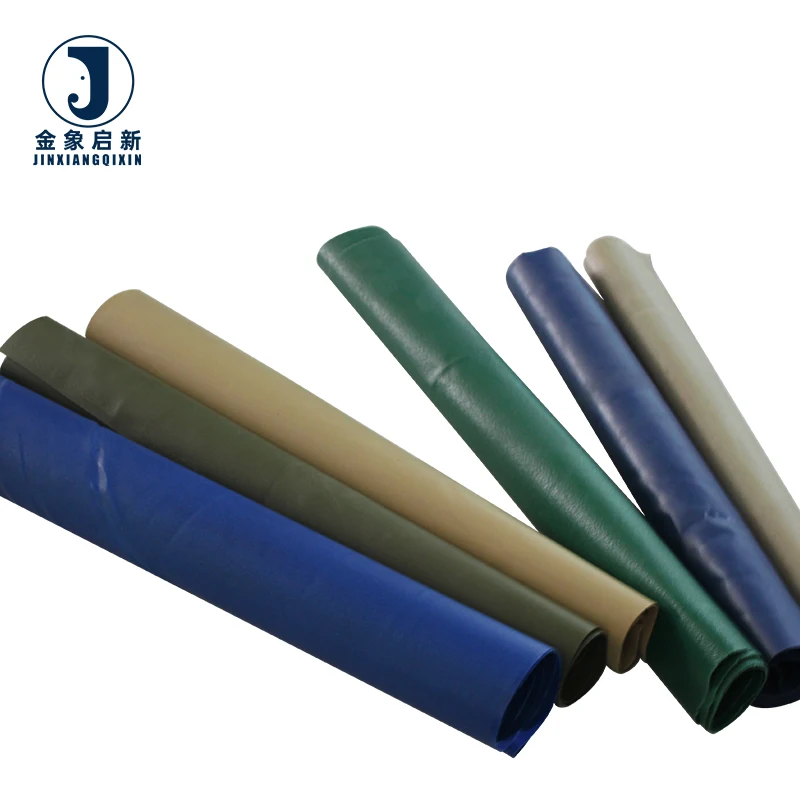
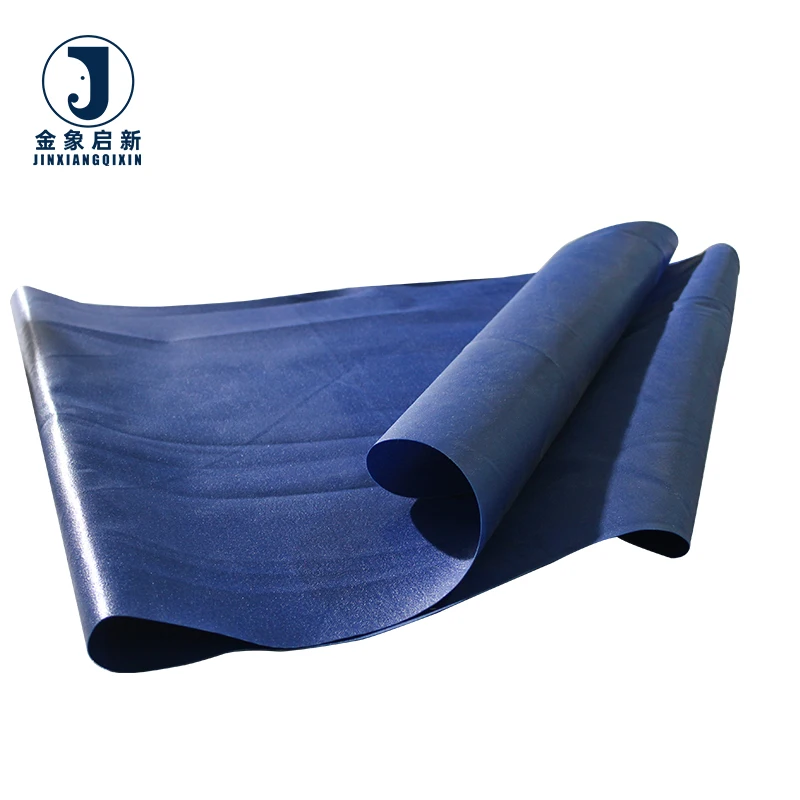
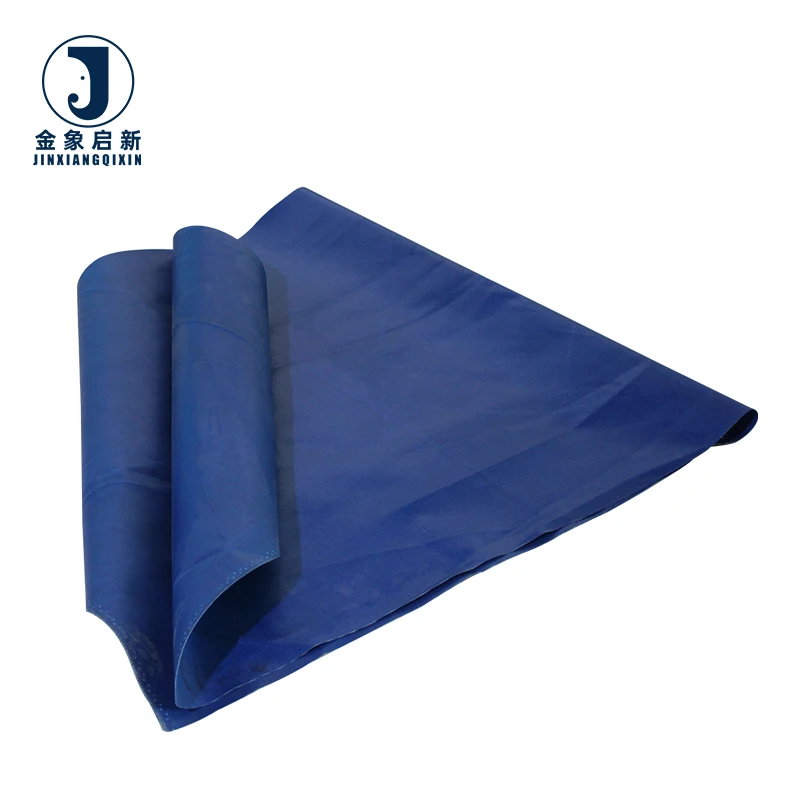
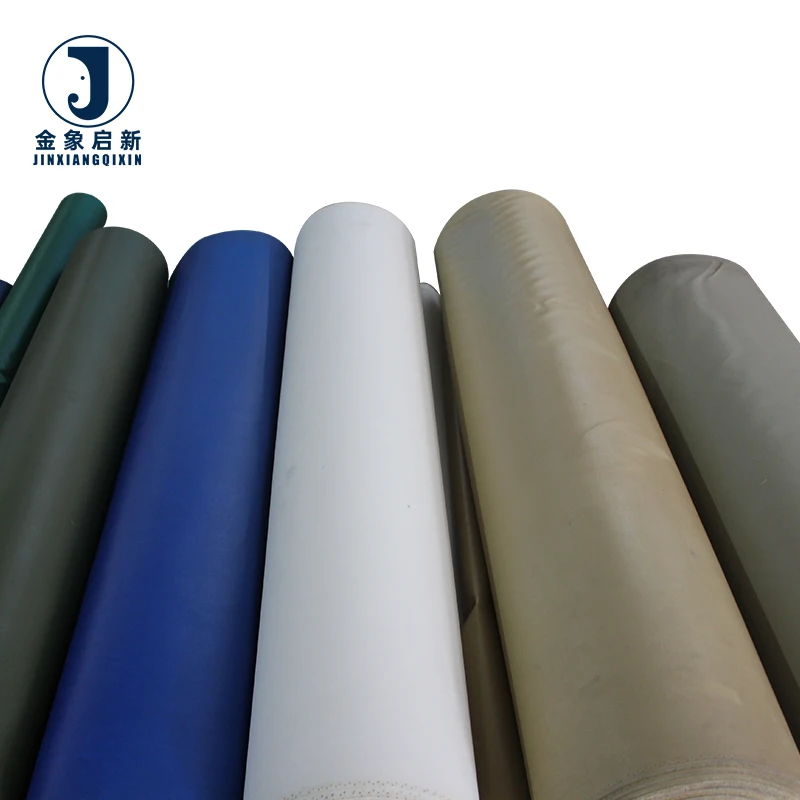
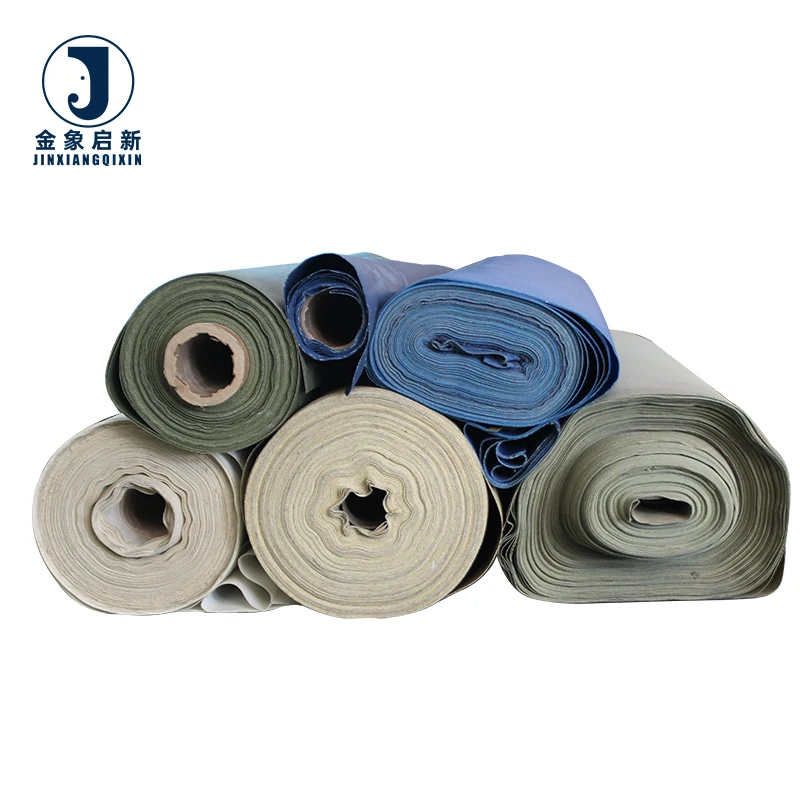
Coated Fabric Process Control — three full production lines and 36 sets of professional equipment producing PVC coated tarpaulin fabric with documented batch-to-batch consistency for ventilation duct and membrane structure contractors.
Technical Specifications
| Parameter | Value |
|---|---|
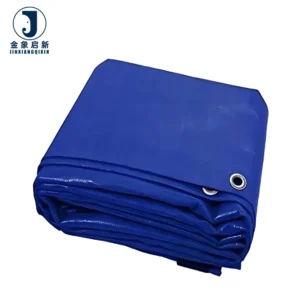
| Product Type | PVC Coated Tarpaulin Fabric |
| Base Fabric | High-strength polyester mesh fabric |
| Coating Material | PVC |
| Coating Method | Laminated technology & Hot-melt Coating technology |
| Weight Options | 350gsm / 420gsm / 500gsm / 550gsm / 600gsm / 750gsm |
| Thickness Options | 0.32mm / 0.35mm / 0.4mm / 0.45mm / 0.5mm / 0.65mm |
| Available Widths | 2m / 2.1m |
| Roll Length | 75m (2m width) / 50m (2.1m width) |
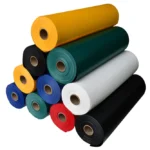
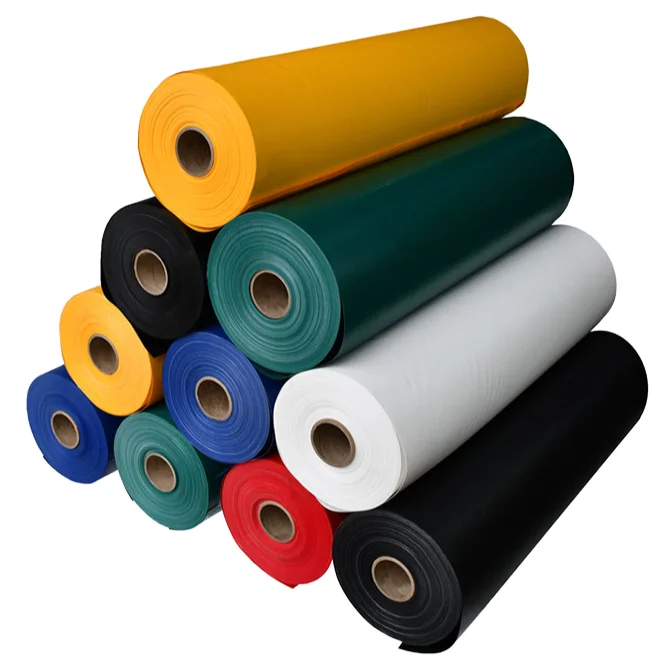
| Colour Options | Blue / Red / Yellow / Light blue / Grey (Customized) |
| Key Features | Cold Crack Resistance, Anti-Mildew, Anti-Static treatment (grade not stated), Waterproof, Sunproof (test basis not stated) |
| Flame Retardant | Available in flame retardant grades — confirm the grade required for your project |
| Service Life | 3–7 years under normal circumstances (source value — verify against manufacturer catalog) |
| Standards | ISO, CE |
Application Suitability
| Application | Exposure & Requirement |
|---|---|
| Mining and tunnelling ventilation ducts | Underground airflow, dust ignition risk, mandatory fire-retardant and anti-static site compliance |
| Aviation ground-support ducting | Temporary ventilation in hangar and ramp environments, regulatory fire classification required |
| Inflatable and membrane structures | Structural tensile loads, wind uplift, welded seam integrity under flex |
| Specialist enclosures and temporary buildings | Weather exposure, rapid deployment, site-accepted fire documentation |
| Industrial air duct fabrication | Hot-air or high-frequency welding, static dissipation in dust-laden atmospheres |
What "Certified" Means When the Test Report Does Not Match Your Roll
A certificate on file is not proof that the roll on your site meets the specification.
Ventilation duct and membrane structure projects regularly specify PVC Coated Tarpaulin Fabric fire retardant anti-static certified requirements, yet the material arrives with documentation that references a different batch, a different product grade, or a test standard that the site inspector does not recognise. The result is a rejected delivery, a stalled installation, and weeks of delay while replacement fabric is sourced and retested [NEED_CITE: fire classification compliance for industrial ventilation duct materials]. When the fire-retardant grade or anti-static surface resistance cannot be verified against the roll label, the entire duct run or structure envelope becomes a liability. Jinan Jinxiang addresses this gap by supplying material test documentation matched to the dispatched batch, so the compliance trail is unbroken from production line to site acceptance.
Hot-Melt Coating Adhesion for Welded Duct Seams
Ventilation duct fabrication depends on welded seams carrying the full structural and pressure load. Hot-melt coating technology produces a PVC layer that bonds directly into the polyester mesh substrate, creating a coating-to-fabric interface that resists delamination when high-frequency or hot-air welding is applied at seam junctions. This adhesion behaviour is critical in mining and tunnelling duct applications where negative pressure cycles and physical contact with tunnel walls place repeated stress on every longitudinal seam. Laminated technology is also available across the range for applications where a different balance of flexibility and weld strength is required. Confirm the coating method that matches your fabrication process before committing to a full production run.
Anti-Static Compliance in Dust-Laden Ventilation Environments
Underground mining and certain aviation maintenance environments require duct fabric that dissipates static charge to prevent ignition of combustible dust or solvent vapour. PVC coated tarpaulin fabric in this range is available with anti-static treatment, but the surface resistance value and the test standard it satisfies must be confirmed against your site regulation before ordering [NEED_CITE: anti-static surface resistance standards for mining ventilation duct fabric]. Request a test report that states the measured surface resistance in ohms and references the applicable mining or aviation standard. Without this documentation, the duct installation will not pass site safety inspection regardless of the fabric’s physical performance.
Reading GSM, Base Fabric Denier, and Coating Weight Together
Weight in GSM is the most frequently quoted parameter in coated fabric procurement, yet it tells only part of the story. Two PVC coated tarpaulin rolls at 550gsm can differ significantly in tensile and tear performance if one uses a heavier base fabric with lighter coating and the other reverses that ratio. The high-strength polyester mesh base in this range provides the structural backbone; the PVC coating adds tear containment, weld surface, and environmental protection. Hot-melt coating penetrates the mesh interstices more deeply than simple lamination, improving adhesion strength at the cost of a stiffer hand feel. Selecting the right GSM grade therefore requires matching base fabric denier and coating weight to the mechanical demands of your duct or membrane application — not choosing the lightest option that meets a minimum GSM threshold [NEED_CITE: tensile and tear test methods for coated fabrics per ISO 1421]. Thickness values from 0.32mm to 0.65mm across the weight range reflect this interplay between yarn mass and coating build.
The Hidden Cost of Specifying on GSM Alone
When a ventilation duct or membrane structure specification calls out only a GSM value without defining base fabric denier, coating method, or fire-retardant grade, the supplier ships the cheapest combination that meets the weight. The fabric may pass incoming inspection on a scale, yet fail during welding because the coating adhesion is marginal, or fail site fire inspection because the flame-retardant test was performed on a different product grade. Colour inconsistency between rolls compounds the problem on visible membrane structures, where panels installed side by side reveal shade variation that no amount of site lighting can hide [NEED_CITE: batch colour consistency in PVC coated fabric production]. These failures are not material defects in the traditional sense — they are specification gaps that allow the wrong product to be supplied against a vague requirement.
Why Technical Fabric Buyers Source This Range
Ninety-one hundred and eighty square metres of production floor with three dedicated lines means PVC coated tarpaulin fabric for duct and membrane applications runs on equipment calibrated for coating weight consistency, not repurposed from general-purpose tarpaulin production. A ten-person R&D team handles material selection and sample development, producing sample rolls within days so you can weld-test and verify fire documentation before authorising bulk. Dedicated QA/QC at every production stage catches GSM drift and coating adhesion variation before the roll reaches packing. ISO and CE certification covers the management system behind the product, not just the finished goods. The documentation package — specification sheet, test reports, pre-shipment inspection record — travels with every dispatch, giving site inspectors the compliance evidence they require without a separate request cycle.
Documentation & Verification
- Material specification sheet stating confirmed GSM, base fabric denier, and coating weight for the grade you ordered
- Fire-retardant and anti-static test reports referenced to the dispatched batch number
- ISO and CE certificates current for the production period of your rolls
- Pre-shipment inspection record confirming weight and visual quality per roll
- Certificate of origin and customs documentation included in the shipping package
- Roll packing list matching labels on each physical roll for site receiving checks
Fabrication, Handling & Storage
- Hot-air welding temperature and speed must be calibrated to the confirmed coating method — hot-melt and laminated surfaces respond differently
- High-frequency welding suits the high-strength polyester mesh base; test seam peel strength before production runs
- Store rolls upright on end-caps to prevent flat-spotting that distorts the 2m or 2.1m width during unrolling
- Allow cold-stored rolls to reach ambient temperature before unrolling to protect cold crack resistance integrity
- Cut patterns should account for the 75m or 50m roll length to minimise transverse welds in long duct sections
- Anti-static treated surfaces require solvent-free cleaning agents to preserve surface resistivity over service life
Before You Request a Quote
Technical fabric procurement starts with the compliance requirement, not the price per kilogram. Provide the fire-retardant classification and anti-static standard your site or market demands, the duct diameter or membrane panel dimensions that determine your required width and roll length, and the annual volume that governs production scheduling. If your project demands a colour outside the standard Blue, Red, Yellow, Light blue, or Grey range, state the reference so a sample can be developed. Confirming these points at inquiry stage avoids specification mismatches that delay production and site acceptance.
Frequently Asked Questions
Q: What fire-retardant test standard does the fabric meet, and is a test report supplied per batch?
A: PVC coated tarpaulin fabric in this range is available in flame retardant grades for ventilation duct and membrane structure use. The specific test standard — such as DIN 4102, NFPA 701, or a local mining regulation — must be confirmed at inquiry stage. A test report matched to the dispatched batch number is supplied with every shipment so site inspectors can verify compliance against the physical roll labels.
Q: What anti-static surface resistance value is achieved, and which standard does it satisfy?
A: Anti-static treatment is available for environments where dust ignition or electrostatic discharge is a compliance requirement. The achieved surface resistance value and the applicable mining or aviation standard are stated on the batch test report. Request this documentation during sampling to confirm it meets your project specification before bulk production is authorised.
Q: How is hot-melt coated fabric welded for duct and membrane seams?
A: Hot-melt coating penetrates the polyester mesh interstices, producing strong adhesion at high-frequency and hot-air weld junctions. Welding temperature, speed, and pressure must be calibrated to the specific coating method and GSM grade. We recommend producing test seams on sample material and measuring peel strength before committing to full duct or membrane fabrication.
Q: Can custom width and roll length be supplied for duct fabrication?
A: Custom widths and roll lengths beyond the standard 2m and 2.1m options are available for duct and membrane projects. Lead time and minimum order quantity depend on the requested specification and production schedule. Submit your required dimensions at inquiry stage so the R&D team can confirm feasibility and produce a sample roll for your approval.
Q: How is cold crack resistance tested, and what minimum temperature is supported?
A: Cold crack resistance is a stated feature of this PVC coated tarpaulin fabric range, relevant for underground mining and cold-climate membrane installations. The specific minimum service temperature depends on the confirmed GSM grade and coating formulation. Request the cold crack test result for your selected grade to verify it covers the lowest ambient temperature at your project site.