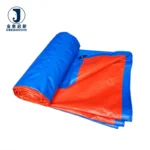
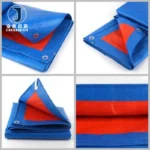
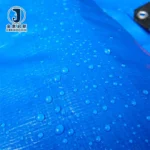
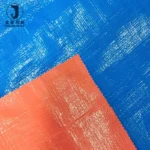

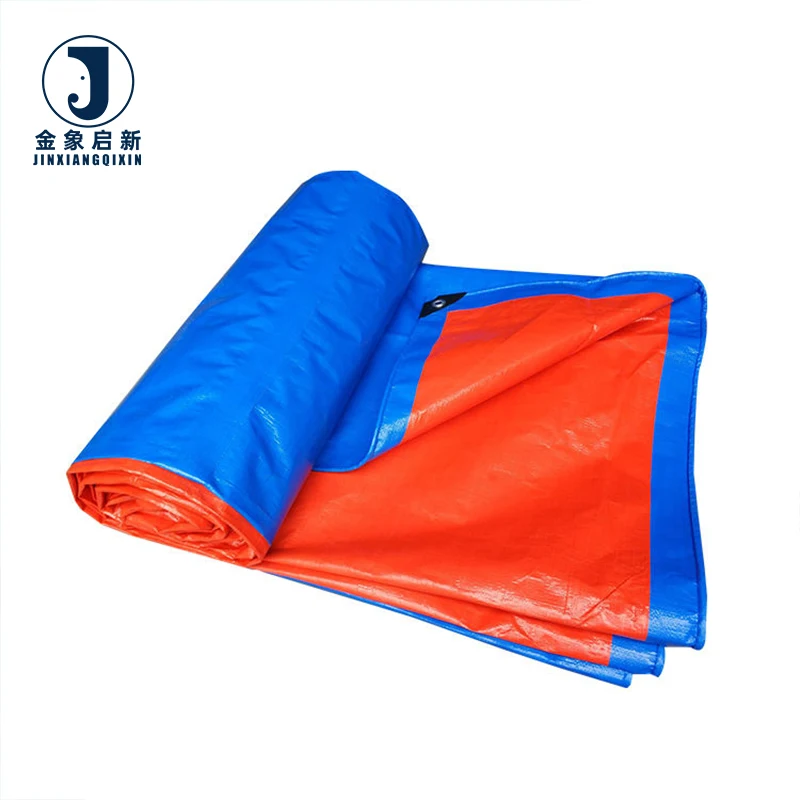
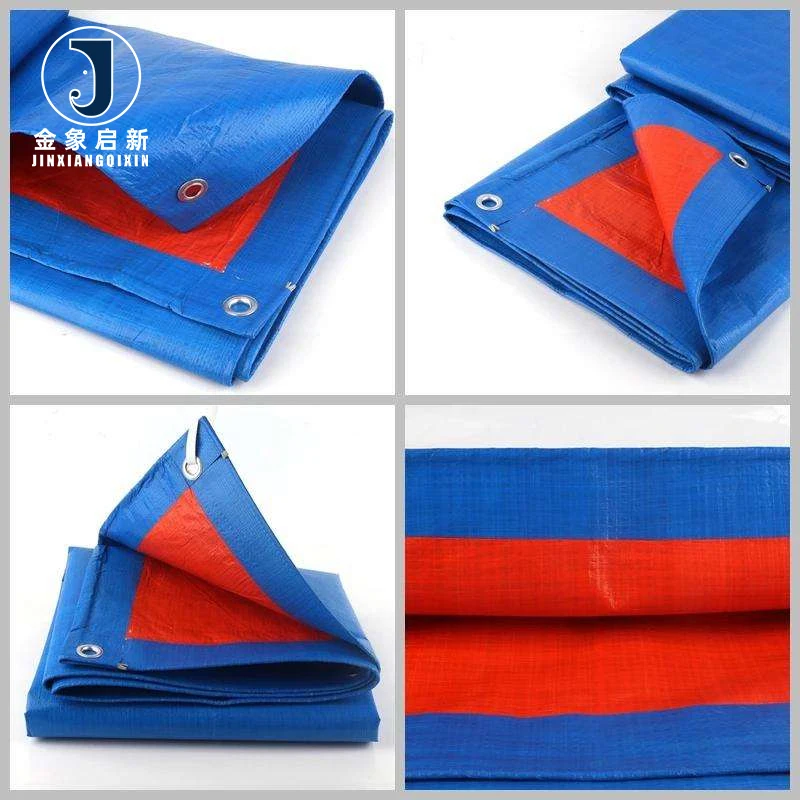
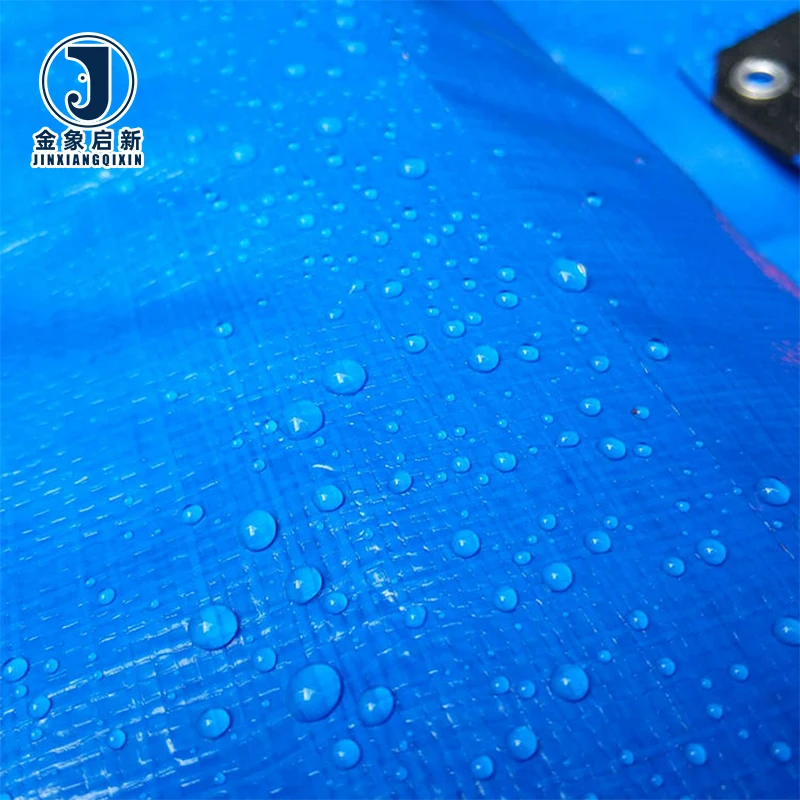
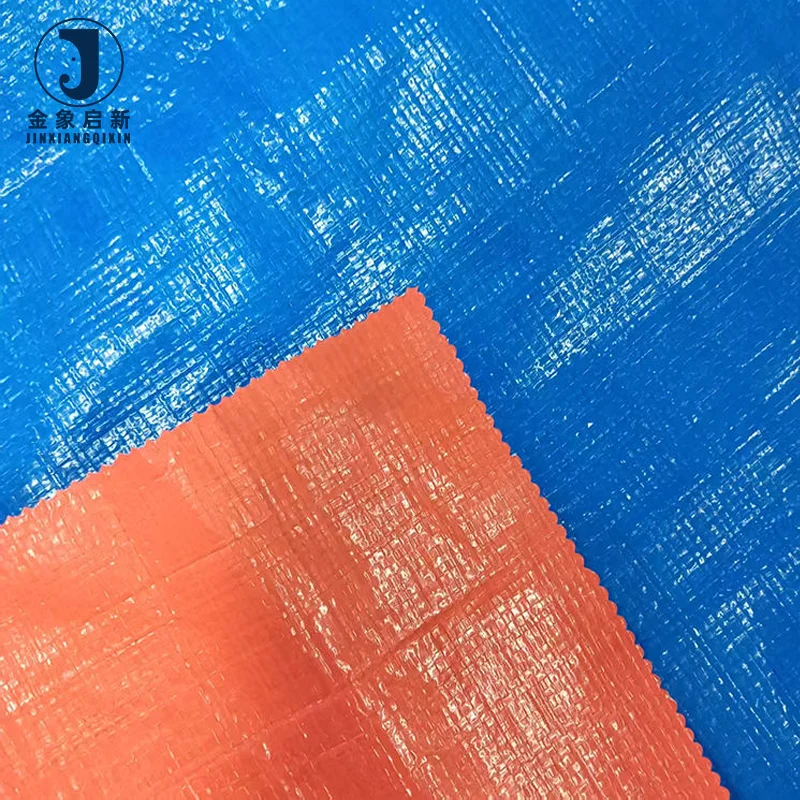
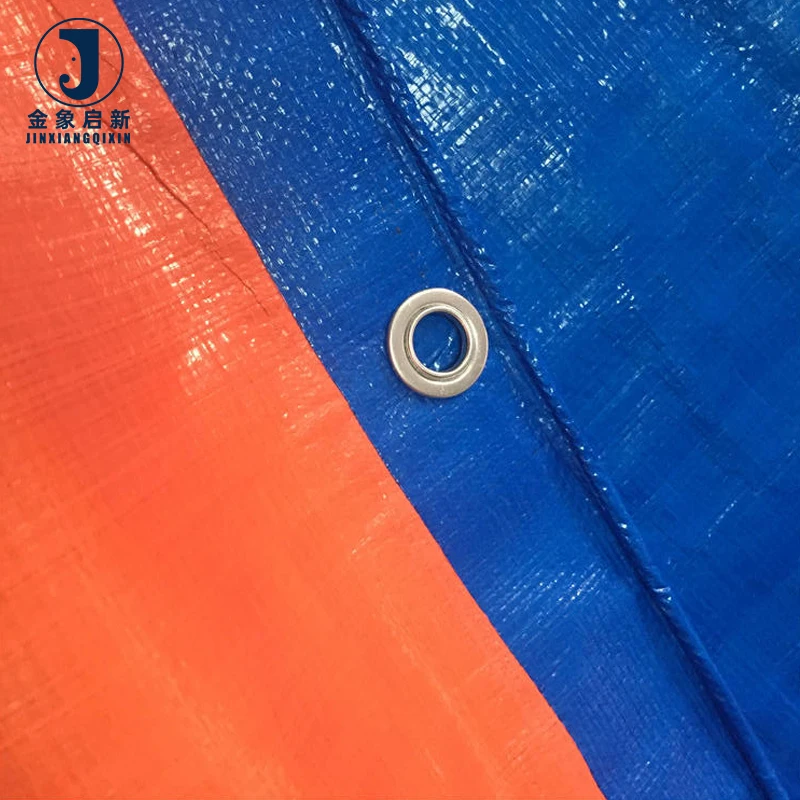
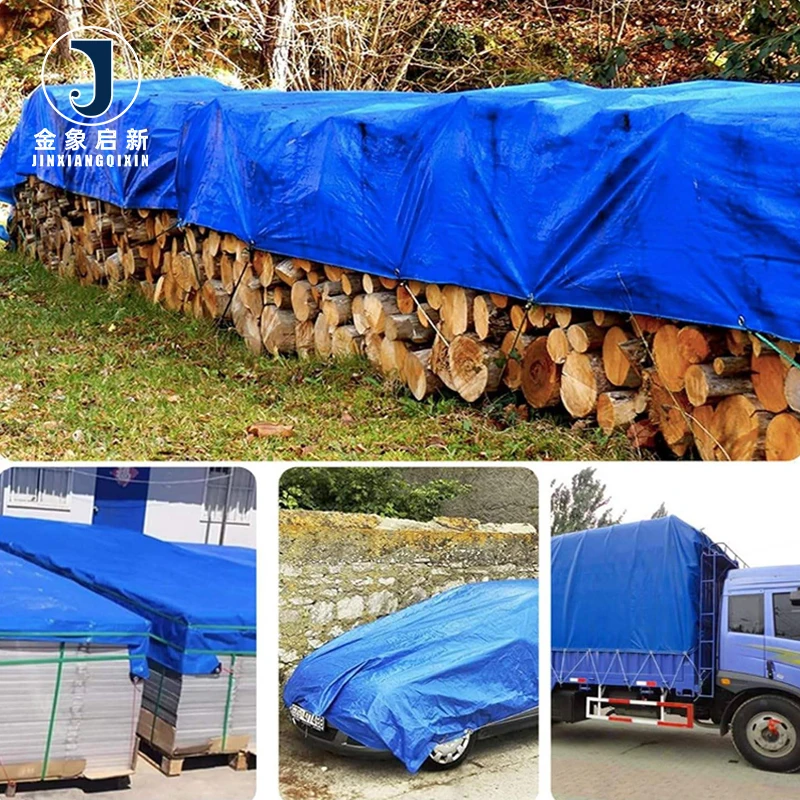
Deep process control over coating adhesion and weight — verified on every PE Tarpaulin roll or sheet before dispatch, supporting consistent fire-resistant and UV treatment performance for demanding site specifications.
Technical Specifications
| Parameter | Value |
|---|---|
| Product Type | PE Tarpaulin |
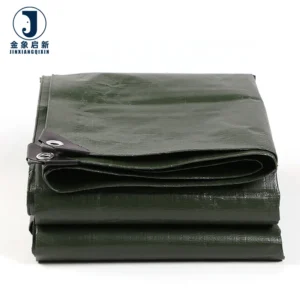
| Material | HDPE woven fabric with LDPE coating on both sides |
| Density (Mesh Count) | 6×6 to 16×16 mesh |
| Weight (GSM) | 50 g/m² to 300 g/m² |
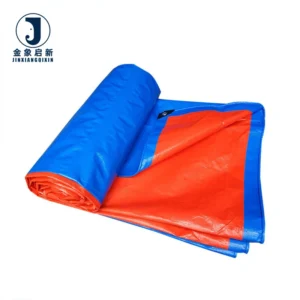
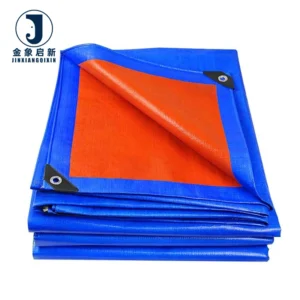
| Color Options | Blue, Orange, White, Black, Grey, Yellow, Green, Red, or custom |
| Custom logos and company information; reinforced strip option | |
| Sheet Size | 2×3, 3×4, 3×5, 4×5, 5×6, 6×8, 10×10, 10×12, 12×14 m or custom dimensions |
| Roll Size | 100 m per roll or custom length |
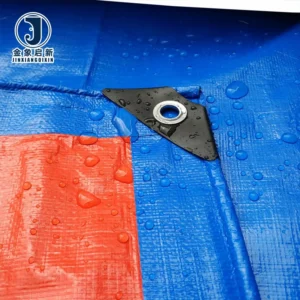
| Edge Making | PP rope hem on all edges; black plastic triangle reinforcement at corners |
| Eyelets | Rustproof aluminum, spaced every 1 m or 1.5 m or per requirement |
| Special Treatment | Fire resistant / UV protection available (grade not stated in source / test basis not stated in source) |
| Standards | ISO, CE (company certification) |
Application Suitability
| Application | Exposure & Requirement |
|---|---|
| Mining & tunnelling site enclosures | Fire-sensitive environment, dust containment, ventilation-adjacent use, mandatory fire-resistant compliance |
| Construction ventilation ductwork covers | Airflow barrier integrity, site debris exposure, flame safety near hot work zones |
| Temporary specialist structure covers | Wind load on eyelet and hem points, UV exposure, waterproof performance over extended deployment |
| Equipment and pallet protection on site | Abrasion from loading and unloading, puncture risk from sharp edges, weather exposure |
What Fire-Resistant PE Tarpaulin Compliance Actually Requires on Site
A fire-resistant claim without a documented grade and test standard is a liability, not a protection.
Mining and tunnelling sites routinely reject deliveries when the PE Tarpaulin fire retardant documentation does not match the specification written into the project safety plan. We have seen contractors forced to strip and replace entire temporary enclosures because the supplier provided a generic "fire resistant" statement without a test report tied to a recognised standard [NEED_CITE: fire classification standards for temporary site enclosures]. The cost of replacement material is secondary — the real expense sits in project downtime and safety audit failures. Specifying the exact grade your site requires before ordering eliminates this exposure entirely.
Fire-Resistant Treatment Documentation for Specialist Environments
When a site safety officer asks for the fire classification of your PE Tarpaulin, a supplier data sheet that simply reads "fire resistant" does not pass inspection. The treatment must be mapped to a specific test standard — and that mapping must be documented per batch, not just claimed at the catalogue level. Our approach is to confirm the exact fire-resistant grade your project specification calls for before production begins, then supply the corresponding test documentation with the shipment.
UV Protection and Environmental Durability on Extended Deployments
Temporary enclosures and ventilation-adjacent covers on mining or construction sites face sustained solar exposure that degrades untreated polyethylene rapidly. UV protection treatment is available for this PE Tarpaulin range, but the test basis and expected performance duration must be defined at the inquiry stage — not assumed from a generic product description [NEED_CITE: UV degradation test methods for polyethylene woven fabrics]. Confirming the UV test standard upfront ensures the material you receive matches the environmental conditions your site will impose over the deployment period.
Reading the Specs: Mesh Density, Coating Weight and Structural Integrity
The 6×6 to 16×16 mesh density range in this HDPE woven base fabric directly governs how the material behaves under tensile and tear load — but mesh count alone does not determine performance. The dual-side LDPE coating fills the weave interstices and locks the yarns in position, contributing to both waterproof integrity and dimensional stability. A higher mesh count with insufficient coating weight produces a stiff fabric that cracks at fold lines, while a lower mesh count with heavy coating gives flexibility but lower tear resistance. The GSM range from 50 g/m² to 300 g/m² reflects different balances of these two factors, and selecting the right grade depends on whether your application prioritises wind load resistance, puncture protection or flexibility for repeated folding and deployment.
The Cost of Underspecified Material on Specialist Projects
Choosing a PE Tarpaulin based on the lowest GSM quotation without verifying the coating-to-base-fabric ratio leads to material that fails at stress points long before the project timeline ends. Eyelets pull through under-meshed fabric when wind loads spike. Welded or heat-sealed seams separate when the coating adhesion is insufficient for the base fabric density [NEED_CITE: coating adhesion and seam strength in coated polyethylene fabrics]. Fire-resistant treatment applied to an underspecified base fabric may not achieve the stated grade under real fire conditions. These failures are not random — they trace directly back to a specification that was never verified against physical test data before the order was placed.
Why Technical Buyers Source This PE Tarpaulin Here
Dedicated QA and QC at every production stage means the GSM on your PE Tarpaulin order is verified against the material specification sheet before any roll leaves the factory — not estimated from a production run average.
A 10-person R&D team handles custom sizing, treatment selection and sample development, so fire-resistant grade requirements and non-standard sheet dimensions are addressed during the specification phase rather than discovered as problems at delivery.
Three full production lines with 36 sets of professional equipment support bulk roll and sheet orders with on-time delivery, even when custom widths or treatments extend normal lead times.
100% pre-shipment inspection covers weight verification, mesh count confirmation, eyelet spacing, hem reinforcement integrity and colour consistency across every roll or bale in your order.
Documentation & Verification
- Material specification sheet stating exact GSM, HDPE base fabric mesh count and LDPE coating type per roll
- Fire-resistant treatment test report linked to specific grade and standard, confirmed per batch
- Pre-shipment inspection record with weight and dimensional verification against order specification
- Certificate of origin and customs documentation included with every international dispatch
- Roll packing list with individual roll identifiers for traceability on site
Fabrication, Handling & Storage
- Heat-seal LDPE-coated surfaces at manufacturer-recommended temperature to avoid coating delamination at seam lines
- Rustproof aluminum eyelets at 1 m or 1.5 m spacing distribute tie-down load across the PP rope hem
- Store rolls horizontally on pallets to prevent creasing that weakens the HDPE woven base fabric
- Avoid dragging cut sheets over abrasive surfaces — the LDPE coating protects the weave but can score under point load
- Clean with mild detergent; solvent-based cleaners may degrade the LDPE coating surface over repeated use
- Allow cold-stored rolls to reach ambient temperature before unrolling to prevent coating micro-cracking
Requesting a Specification That Matches Your Site Requirements
Tell us the fire-resistant grade or standard your project specification references, the deployment environment and expected exposure duration, and the sheet dimensions or roll quantities you need. If your site requires anti-static treatment alongside fire-resistant performance, include that in your initial inquiry so we can confirm treatment compatibility and documentation scope before sampling begins.
Frequently Asked Questions
Q: What fire-resistant grades are available and how do they map to mining or tunnelling requirements?
A: Fire-resistant treatment is available for this PE Tarpaulin range, but the specific grade must be confirmed against your project specification before production. Different mining and tunnelling jurisdictions reference different test standards, so we need your exact requirement to supply the correct treatment and matching test documentation with your order.
Q: How is UV protection performance verified before shipment?
A: UV protection treatment is available on request, and the test basis is confirmed at the inquiry stage based on your deployment duration and environment. We supply the relevant test documentation with the shipment so your site compliance team has verifiable evidence rather than an unsupported product claim.
Q: How do you verify GSM matches the quoted specification on arrival?
A: Every roll and sheet undergoes weight verification during our 100% pre-shipment inspection, checked against the GSM stated on your material specification sheet. The inspection record ships with your order, giving you documented proof that the material received matches the material quoted.
Q: Can sheet sizes and eyelet spacing be customised for site-specific tie-down configurations?
A: Yes. Standard sheet sizes range from 2×3 m to 12×14 m, and custom dimensions are available. Eyelet spacing defaults to 1 m or 1.5 m intervals in rustproof aluminum, but can be adjusted to match your tie-down configuration and wind load calculations.
Q: What documentation package ships with the order for compliance audits?
A: Each dispatch includes a material specification sheet, pre-shipment inspection record, roll or bale packing list, certificate of origin, and where applicable, fire-resistant or UV treatment test reports. This documentation package is structured to support site safety audits and project compliance reviews.