
Precision Coating Control — Nearly 30 years of focused coated fabric production delivering verified GSM accuracy and coating adhesion across every roll of PE tarpaulin shipped for industrial ventilation and specialist technical applications.
Technical Specifications
| Parameter | Value |
|---|---|
| Product Type | PE Tarpaulin |
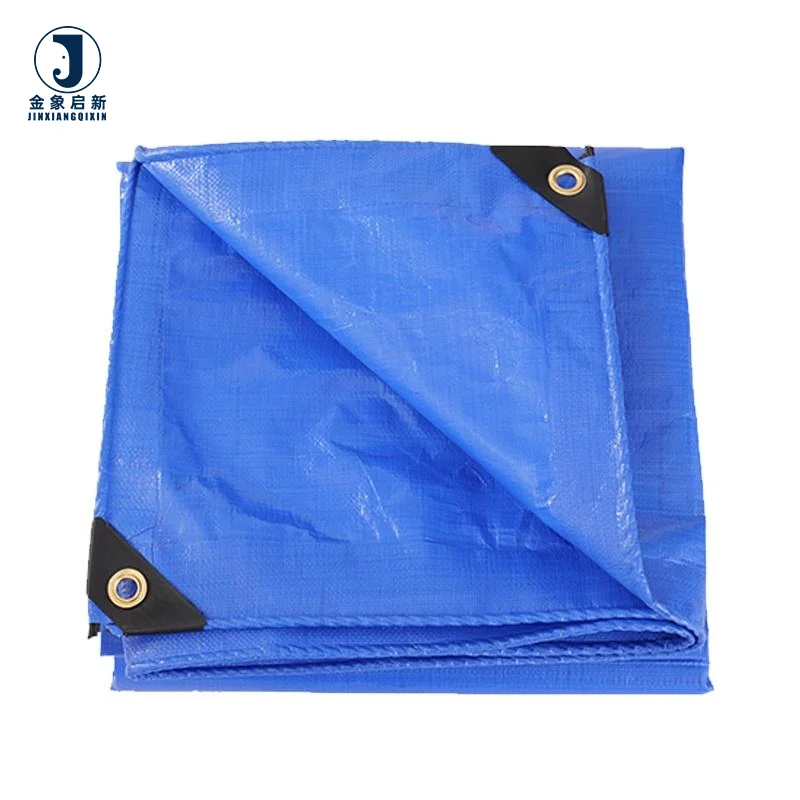
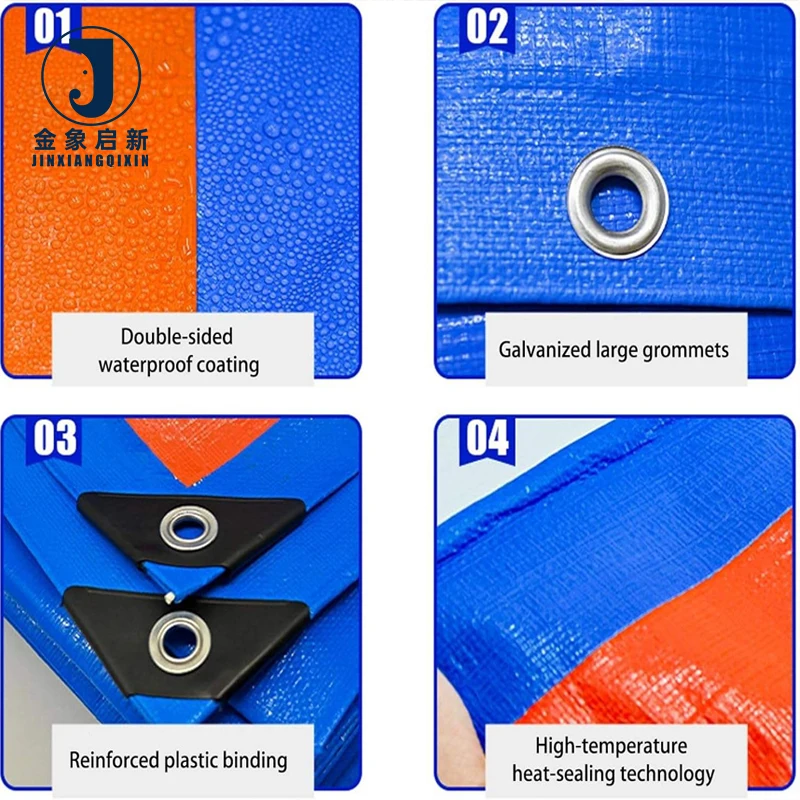
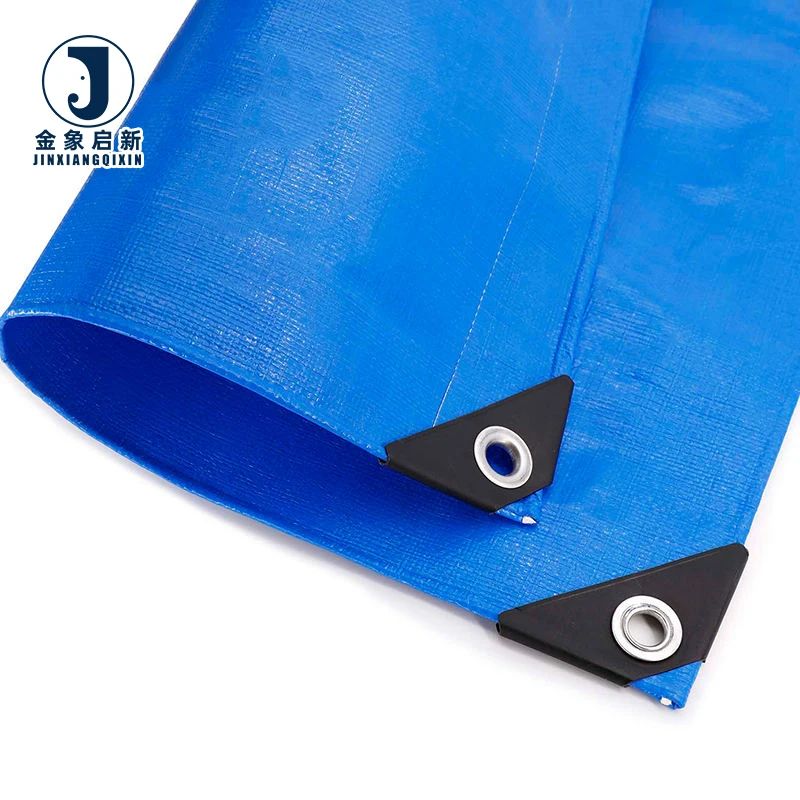
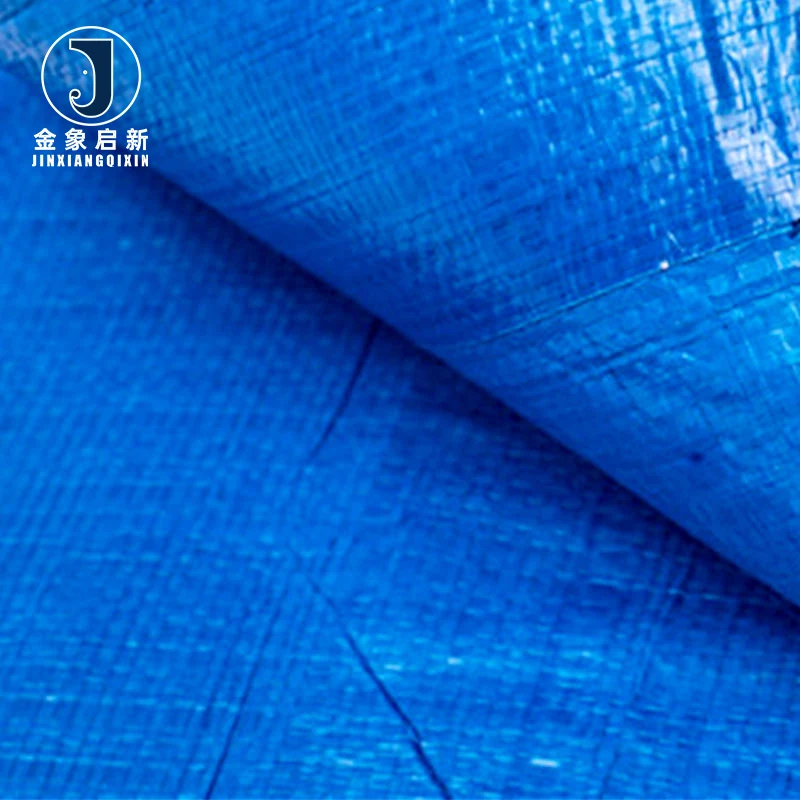
| Material | HDPE weaving with LDPE lamination on both sides |
| Weight (GSM) | 50 g/m² ~ 220 g/m² (confirm the grade for this item) |
| Total Thickness | 0.2 mm – 0.4 mm (8 mil – 16 mil) |
| Knitting Density (Lightweight) | 8×8 |
| Knitting Density (Medium) | 10×10 |
| Knitting Density (Heavy-duty) | 12×12 |
| Tensile Strength (Lightweight) | Meridian 300–500 N/5cm / Latitude 250–450 N/5cm (test basis not stated) |
| Tensile Strength (Medium) | Meridian 500–800 N/5cm / Latitude 400–700 N/5cm (test basis not stated) |
| Tensile Strength (Heavy-duty) | Meridian 900–1200 N/5cm / Latitude 700–1000 N/5cm (test basis not stated) |
| Roll Width | 6 ft, 8 ft, 10 ft, 12 ft / 2 m, 4 m, 6 m |
| Roll Length | 100 yards, 100 meters, or custom |
| Finished Tarpaulin Sizes | 2×2 m to 8×10 m |
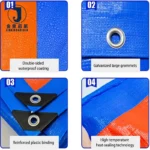
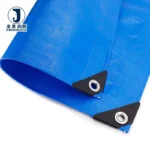
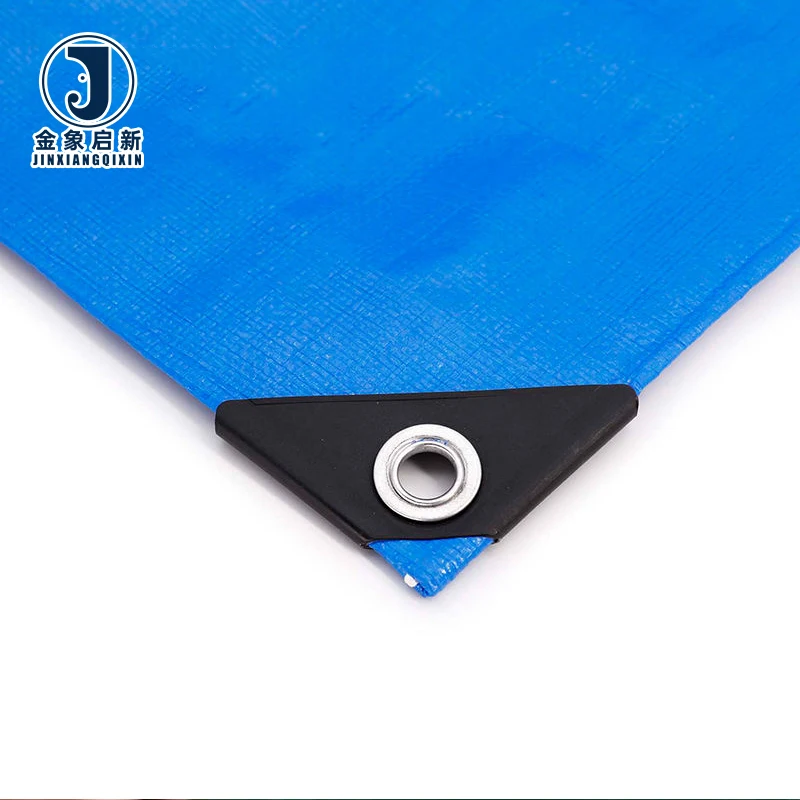
| Eyelet Configuration | Galvanized eyelets every 3 ft or 1 m interval |
| Edge Reinforcement | PP rope in hem on all four edges |
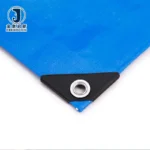
| Corner Reinforcement | Reinforced plastic corners |
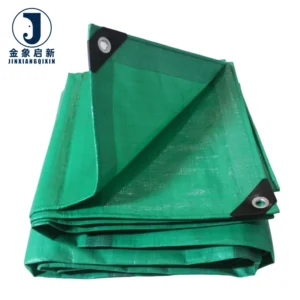
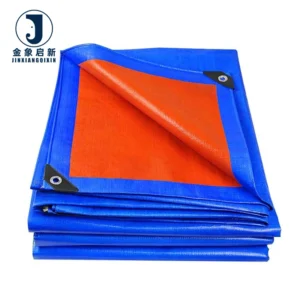
| Available Colors | Blue, Blue/Orange, Green, Grey, Black, Clear, Grey/Green, Orange, or custom |
| UV Treatment | Available (test basis not stated — confirm requirement) |
| Fire-Retardant Treatment | Available (grade and test standard to be confirmed at inquiry stage) |
| Anti-Static Treatment | Available (surface resistance level and test method to be confirmed) |
| Key Features | Waterproof, mildew proof, anti-aging, washable, tear resistant |
| Certifications | ISO, CE |
Application Suitability
| Application | Exposure & Requirement |
|---|---|
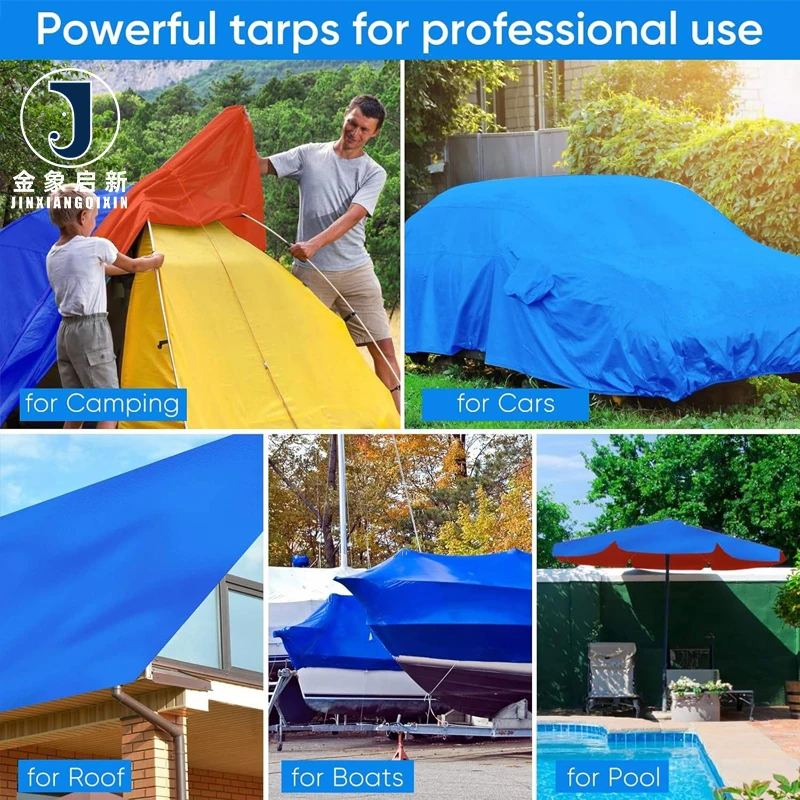
| Mining and tunnelling ventilation duct | Continuous airflow, confined space fire compliance, rock dust abrasion, anti-static dissipation for gas environments |
| Aviation ground ventilation systems | Fuel-adjacent anti-static mandates, certified flame-retardant fabric, flexible duct routing around aircraft structures |
| Construction site ventilation enclosures | Dust containment, temporary semi-permanent ducting, wind and rain exposure, site safety inspection requirements |
| Membrane and inflatable structure fabric | Tension loading, UV exposure, wind flutter, air-holding integrity for semi-permanent enclosures |
| Industrial protective ground sheets | Equipment traffic, soil chemistry, water pooling, puncture from aggregate and sharp substrate |
Why "Fire-Retardant" Without a Test Report Is a Compliance Risk for PE Tarpaulin
Specified fire performance means nothing if the roll arrives without a test certificate the site inspector will accept.
Ventilation duct fabric in mining or aviation environments must meet jurisdiction-specific fire classification before installation. Procurement teams regularly receive PE Tarpaulin fire retardant rolls described as "flame retardant" on the quotation, only to discover no test report accompanies the shipment. The site safety officer rejects the material, the project timeline stalls, and replacement lead times compound the delay [NEED_CITE: fire classification standards for ventilation duct materials in underground mining]. Fire-retardant and anti-static treatments are available across the GSM range — confirm the grade and test standard required for your jurisdiction before placing production.
Ventilation Duct Fabrication Demands More Than Waterproof Integrity
PE Tarpaulin destined for mining and tunnelling ventilation ducts must satisfy two non-negotiable requirements beyond basic weather protection: fire-retardant classification accepted by the relevant mine safety authority, and anti-static surface properties that prevent charge accumulation in combustible atmospheres. The HDPE woven base with dual-side LDPE lamination provides the structural substrate, but the treatment chemistry applied during or after coating determines whether the finished PE Tarpaulin fire retardant fabric passes the required bench test. Available fire-retardant grades and anti-static options should be confirmed against your project specification at the inquiry stage, with test documentation committed before production begins.
Airflow, Flex Cycles, and the Seam Integrity Question
Ventilation ducts in tunnelling and construction environments flex with every fan cycle and shift with ground movement. The welded seams connecting duct sections and branch take-offs experience repeated mechanical stress that tests the bond between LDPE lamination layers and the HDPE woven core. When coating adhesion is insufficient, seam failure appears as delamination along the weld line well before the base fabric reaches its tensile limit [NEED_CITE: welded seam peel strength testing for coated technical fabrics]. The three-tier knitting density structure — 8×8, 10×10, and 12×12 — allows specification of a base fabric whose tensile capacity matches the mechanical demands of the duct geometry and operating pressure.
Reading GSM, Density, and Tensile Values Together
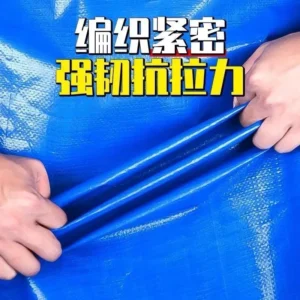
GSM alone tells you how much material is present per square meter, but it does not predict how the fabric behaves under load. A 220 g/m² PE tarpaulin woven at 12×12 density with high-denier HDPE yarn delivers substantially different tensile and tear behaviour than a 220 g/m² sheet woven at 8×8 with finer yarn and thicker LDPE lamination compensating for weight. The knitting density determines how load distributes across the weave: denser constructions resist tear propagation because the load transfers across more yarn intersections before a rip extends. Tensile strength values listed — Meridian 900–1200 N/5cm and Latitude 700–1000 N/5cm for heavy-duty grades — reflect this combined effect of yarn denier, weave density, and lamination bonding. Specifying PE Tarpaulin fire retardant fabric for duct applications requires matching all three variables to the duct diameter, fan pressure, and flex cycle expectation rather than selecting on weight alone.
The Hidden Cost of Undocumented Treatment Grades
A ventilation duct installed in an underground mine without verified anti-static surface resistance poses an ignition hazard in gas-bearing strata. When treatment claims lack a supporting test report, the entire installation fails the pre-commissioning safety audit, requiring full removal and replacement. Colour inconsistency across rolls in the same shipment creates visible variation once duct sections are installed adjacent to one another on a construction site [NEED_CITE: batch colour consistency standards for architectural membrane fabrics]. Welded seams that separate before the fabric reaches its rated service life point to inadequate lamination adhesion rather than base fabric deficiency — a failure mode that appears at flex points where the duct bends around structural supports or branch connections.
Why Procurement Teams Source PE Tarpaulin Here
Three full production lines and 36 sets of professional equipment handle bulk ventilation duct fabric orders with on-time delivery consistency for project-scheduled sites. A 10-person R&D team develops custom-width rolls and colour-matched samples within days, allowing duct fabricators to verify material behaviour before committing to production volume. Every roll undergoes 100% pre-shipment inspection with documented weight and dimension verification against the purchase specification, so the GSM stated on the quotation matches what arrives at the fabrication shop. Deep process control over LDPE lamination weight and coating adhesion, built over nearly 30 years of coated fabric production, ensures welded seams in PE Tarpaulin fire retardant duct material hold through flex cycles. ISO and CE certified production with full customs and compliance documentation supports international project delivery across mining, aviation, and construction sectors.
Documentation & Verification
- Material specification sheet stating exact GSM, HDPE base fabric construction, and LDPE coating weight for each roll
- Test report for fire-retardant grade and anti-static surface resistance confirming the standard applicable to your jurisdiction
- Pre-shipment inspection record documenting verified weight, dimensions, and colour consistency per roll
- ISO and CE certificates, certificate of origin, and customs documentation accompanying every dispatch
- Roll packing list with individual roll identification for traceability through fabrication and installation
Fabrication, Handling & Storage
- Heat-weld PE Tarpaulin at temperatures matching LDPE lamination melt point; test seam peel strength before full production runs
- Store rolls horizontally on padded racks to prevent LDPE coating compression marks at the support contact points
- Space galvanized eyelets at intervals matching the duct support bracket spacing to distribute mechanical load evenly
- PP rope reinforced hems should be double-stitched or heat-sealed at termination points to prevent unraveling under tension
- Cut and fabricate in temperatures above the LDPE embrittlement threshold to avoid micro-cracking at fold lines
- Use non-solvent cleaners on the LDPE surface to preserve any applied fire-retardant or anti-static treatment integrity
Specifying for Your Ventilation or Technical Fabric Project
Provide the ventilation duct diameter, operating fan pressure, and the fire-retardant or anti-static classification mandated by your site authority so the correct GSM grade and treatment can be matched. Confirm whether roll stock or pre-cut finished sizes are required, and specify the roll width that minimises off-cuts for your fabrication pattern. If colour matching to existing duct infrastructure or site branding is required, request a sample approval step before bulk production of PE Tarpaulin fire retardant or anti-static material begins.
Frequently Asked Questions
Q: How do I verify the GSM matches the quotation on arrival?
A: Every roll ships with a pre-shipment inspection record documenting verified weight per square meter against the stated specification. You can conduct independent GSM sampling on receipt and cross-reference with the inspection document. If any discrepancy is found, the documentation trail supports a direct technical review with the production team before fabrication begins.
Q: What fire-retardant grade and test standard applies to my jurisdiction?
A: Fire-retardant grades are available for PE Tarpaulin fire retardant applications, but the required standard varies by jurisdiction and site authority — mining operations, aviation facilities, and construction projects each reference different classification systems. Provide your project specification or site safety standard at inquiry stage so the appropriate test report can be arranged before production.
Q: What anti-static surface resistance level is available and how is it tested?
A: Anti-static treatment options exist for PE Tarpaulin destined for combustible atmospheres, but the target surface resistance value depends on your site’s gas management plan. Specify the required resistance range and preferred test method during inquiry so the treatment formulation and verification testing align with your compliance audit requirements.
Q: Can width, roll length, and eyelet spacing be customised for duct fabrication?
A: Roll widths up to 6 m and custom roll lengths are produced to order, allowing duct fabricators to specify dimensions that minimise material waste. Eyelet spacing and PP rope hem reinforcement can be configured to match your duct support bracket layout and tie-down requirements, subject to minimum order confirmation.
Q: What documentation ships with each roll to support site compliance audits?
A: Each dispatch includes a material specification sheet, fire-retardant and anti-static test reports where applicable, pre-shipment inspection records, ISO and CE certificates, certificate of origin, and customs documentation. These documents are formatted to satisfy the technical submittal requirements typical of mining, aviation, and construction project compliance reviews.