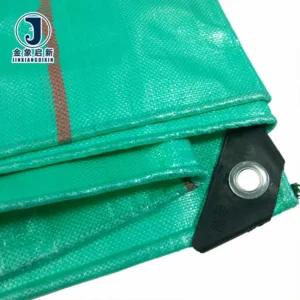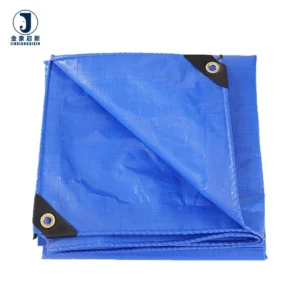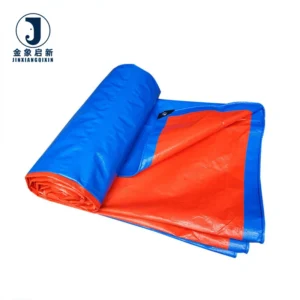
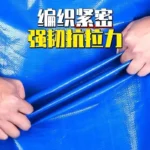
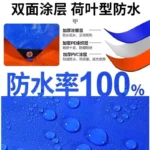
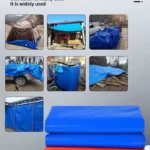
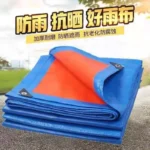
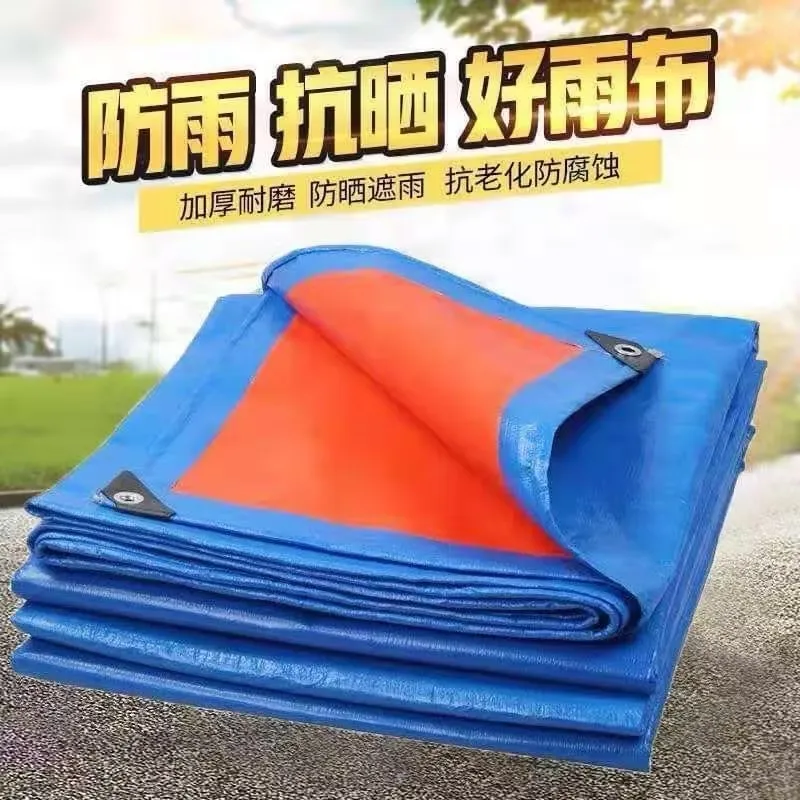
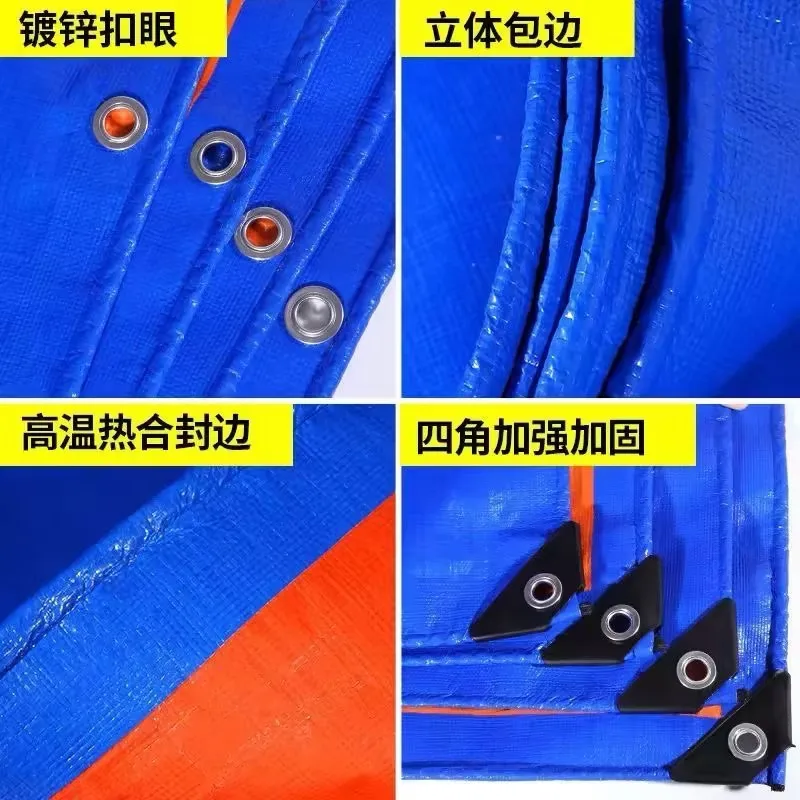
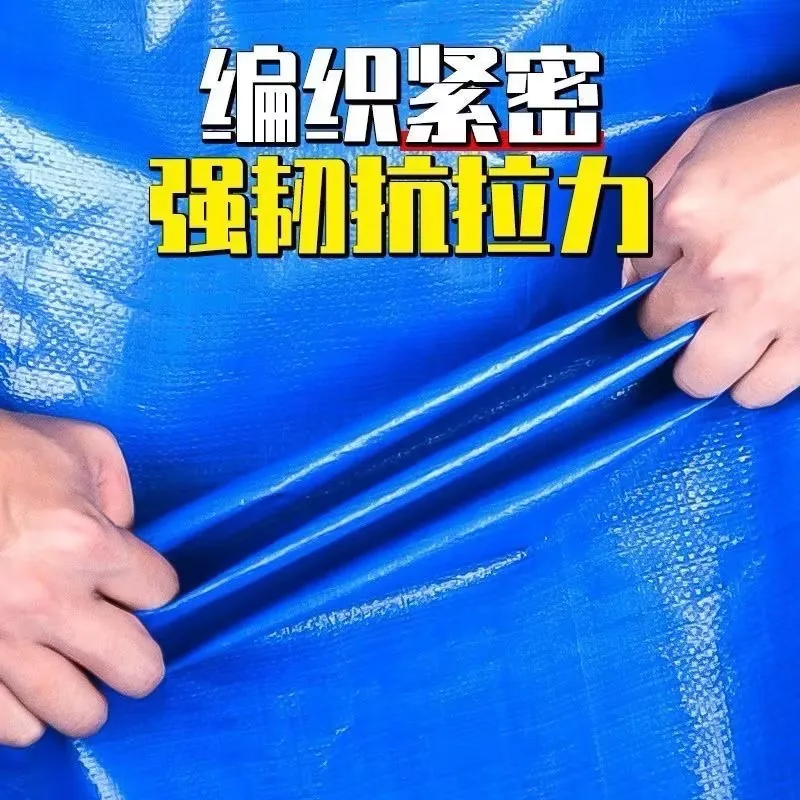
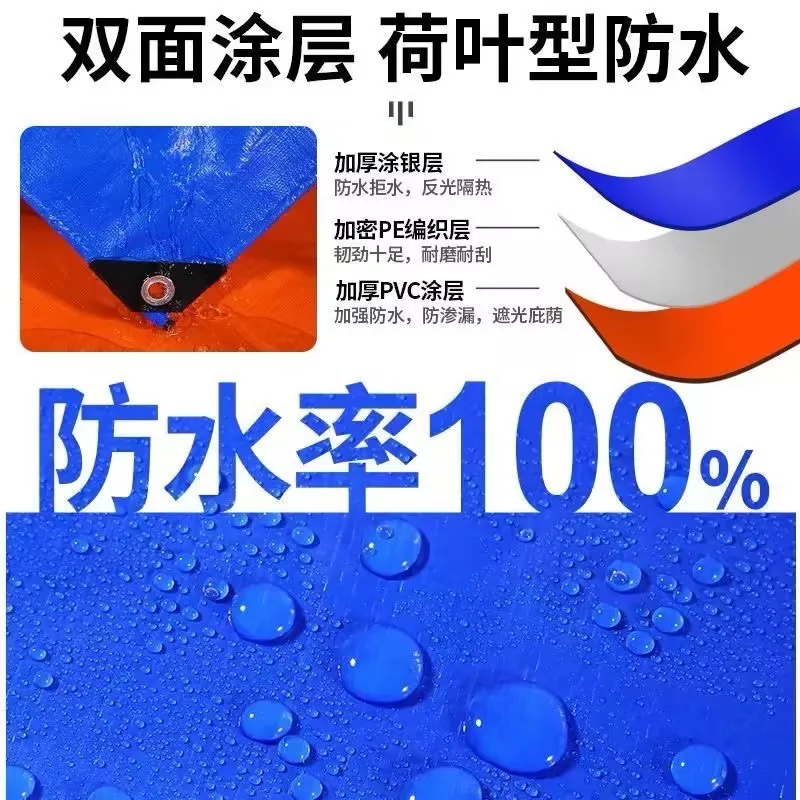
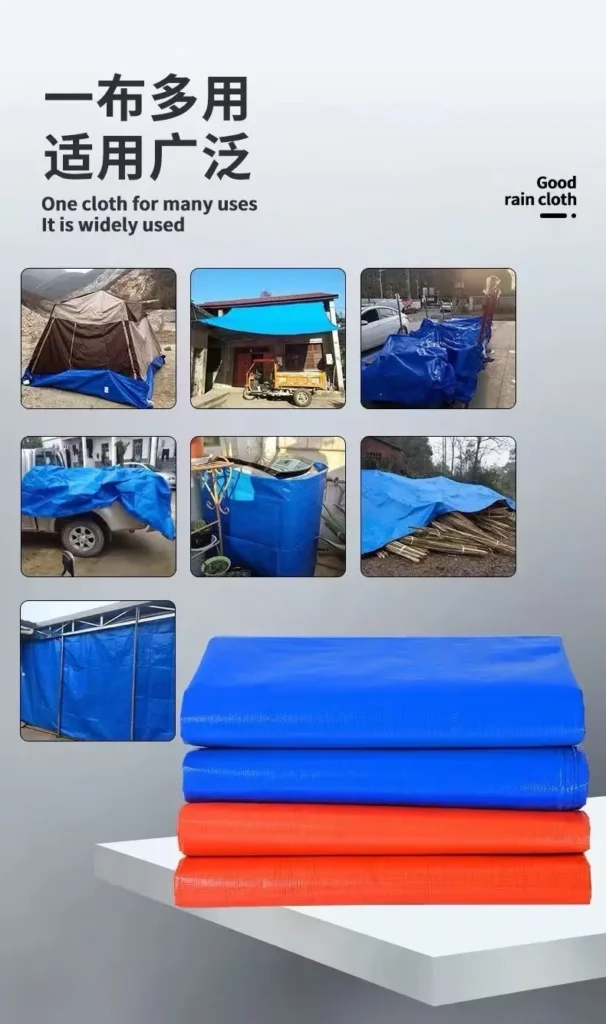
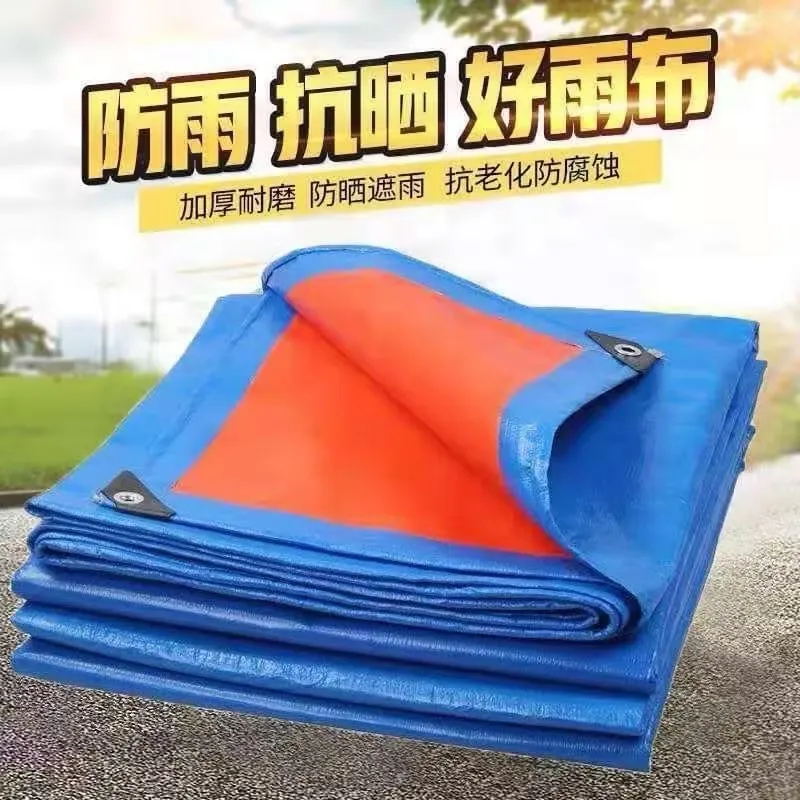
Coated Fabric Process Control — nearly 30 years focused on PE and PVC coating, with deep oversight of adhesion and weight consistency applied to every roll leaving our lines.
Technical Specifications
| Parameter | Value |
|---|---|
| Product Type | PE Tarpaulin |
| Coating Material | PE (Polyethylene) |
| Waterproof | Yes |
| UV Treatment | Anti-UV (test basis not stated) |
| Weight (GSM) | Medium Weight |
| Color | Blue |
| Assembly State | Finished cut-to-size with eyelets |
| Certification | ISO, CE |
Application Suitability
| Application | Exposure & Requirement |
|---|---|
| Outdoor awning | Prolonged UV exposure, rain, wind load at mounting points |
| Shade sail | High tension stress, sun degradation, corner reinforcement needs |
| Canopy cover | Standing water pooling, thermal expansion and contraction |
| Pet and dog house cover | Abrasion from animal contact, ground moisture, frequent repositioning |
| Construction site shelter | Dust ingress, temporary weather barrier, rough handling by crews |
What "Anti-UV" Actually Means Without a Verified Test Report
We provide the test basis for any treatment claim — or we do not make the claim.
Many PE tarpaulin purchases fail not because the fabric was inherently weak, but because the UV stabiliser package was declared on the quotation and never verified upon arrival. Medium-weight PE tarpaulin used in continuous outdoor shading applications degrades predictably when UV absorber concentration is insufficient for the stated exposure duration [NEED_CITE: UV weathering test methods for polyethylene coated fabrics]. Buyers specifying PE tarpaulin for ventilation and technical fabric applications often discover after installation that the coating chalks, embrittles, and cracks far earlier than expected. This is rarely a base polymer issue — it is a treatment verification gap.
Coating Integrity for Outdoor Structures
When PE tarpaulin for ventilation and technical fabric applications is deployed as an awning or shade sail, the coating must remain bonded to the base fabric under repeated thermal cycling. Daytime heating softens the polyethylene layer while nighttime cooling contracts it, generating shear stress at the interface. Our coating process controls the temperature profile and dwell time to ensure the PE penetrates the weave rather than sitting as a surface film, reducing delamination risk at flex points and hem lines.
Load Paths and Reinforcement Placement
Cut-to-size PE tarpaulin fitted with eyelets must distribute wind load from each tie-down point into the base fabric without tearing. The eyelet spacing and hem fold width directly determine how much localised stress the fabric can absorb before failure initiates. For canopy and shade sail installations where corner tension is concentrated, reinforced hems and closely spaced eyelets at load-bearing edges prevent the most common field failure — tearing radiating outward from the grommet hole [NEED_CITE: tensile load distribution at eyelet points in coated fabric structures].
Weight, Density, and What Medium Grade Actually Delivers
GSM alone does not define how a PE tarpaulin performs under load. A medium-weight grade achieves its tensile and tear resistance through the combination of base fabric denier, warp and weft thread count, and coating weight. The coating fills the interstices of the woven structure, locking fibres in place and preventing tear propagation. When a buyer receives material lighter than the quoted GSM, it is almost always the coating weight that has been reduced, which means the fabric loses waterproof integrity at crease points before the base weave itself shows wear.
The Cost of Under-Specifying Treatment Grades
When flame retardant or anti-static treatment is claimed on a PE tarpaulin order but no test report accompanies shipment, the consequences surface at site inspection. Mining and tunnelling ventilation ducts fabricated from material that fails a fire classification test cannot be installed — the entire batch is rejected and the project schedule absorbs the delay [NEED_CITE: fire retardant compliance requirements for underground ventilation ductwork]. For outdoor awning and shade sail buyers, colour inconsistency across rolls in the same order becomes visible only after panels are hung side by side, forcing a full re-order and re-installation at the buyer’s expense.
Why Source PE Tarpaulin Through This Production Line
Three full production lines and 36 sets of professional equipment handle bulk PE tarpaulin orders with consistent on-time dispatch, whether you require cut-to-size finished covers or full roll stock. A dedicated 10-person R&D team manages material selection and sample development, producing custom samples within days so you can verify hand feel, colour, and weldability before committing to a production run. Every roll passes 100% pre-shipment inspection with weight verification against the stated specification, catching GSM deviations before they leave the factory rather than after they arrive at your warehouse. ISO and CE certified processes ensure documentation packages are complete for compliance-driven projects.
Documentation & Verification
- Material specification sheet stating GSM, base fabric construction, and PE coating type
- UV treatment test report provided where anti-UV grade is specified at inquiry
- Pre-shipment inspection record confirming 100% QA check before dispatch
- ISO and CE certificates included for compliance documentation packages
- Roll packing list with individual roll weight and dimensions for receiving verification
Fabrication, Handling & Storage
- Heat sealing medium-weight PE tarpaulin requires controlled temperature to avoid melting through the coating at weld seams
- Eyelet insertion at hem lines should align with base fabric warp threads for maximum pull-out resistance
- Store PE tarpaulin rolls upright on end caps to prevent permanent crease marks across the coating surface
- Avoid dragging finished cut-to-size covers over abrasive ground during installation to protect the PE coating face
- Clean with mild detergent only — solvents degrade the polyethylene coating and compromise waterproof performance
What to Include in Your PE Tarpaulin Inquiry
To ensure the specification we recommend matches your exposure conditions and structural requirements, provide the intended application, expected wind and UV load, and whether the installation is temporary or semi-permanent. If your project requires fire retardant or anti-static compliance, state the standard your site mandates so we can confirm whether the available grade satisfies it. Specify whether you need finished cut-to-size covers with defined eyelet spacing, or roll stock for your own fabrication line, and indicate your target colour and annual volume so we can advise lead time and batch consistency.
Frequently Asked Questions
Q: What anti-UV test report is available to verify the treatment claim on PE tarpaulin?
A: Anti-UV treatment is available as an option on our PE tarpaulin range. The specific test basis — including accelerated weathering hours and retention percentage — is confirmed at inquiry based on the grade you select. We do not publish a blanket UV claim without the supporting test report attached to your order documentation.
Q: How do I verify the GSM weight matches my PE tarpaulin quotation on arrival?
A: Every roll undergoes weight verification against the stated medium-weight specification during our 100% pre-shipment inspection. A pre-shipment inspection record is included with your shipment. We recommend sampling upon receipt using a calibrated scale and comparing against the documented GSM value on the packing list.
Q: Can I order PE tarpaulin in custom cut sizes with specific eyelet spacing?
A: Yes. Our production lines handle both roll stock and finished cut-to-size PE tarpaulin with custom eyelet placement. Provide your panel dimensions, eyelet diameter, spacing interval, and hem fold width. Samples are developed within days so you can confirm the reinforcement layout before production begins.
Q: How is colour consistency maintained when ordering multiple PE tarpaulin rolls?
A: Batch colour consistency is controlled through standardised pigment dosing and in-process comparison against a colour reference standard. When multiple rolls are required for side-by-side installation, specify this in your inquiry so production scheduling keeps your order within a single coating run.
Q: Is PE tarpaulin suitable for ventilation duct and technical fabric applications?
A: PE tarpaulin is used in certain technical fabric applications where polyethylene coating properties meet the project specification. For ventilation duct installations requiring verified fire retardant or anti-static certification, confirm the compliance standard your site mandates so we can advise whether PE or an alternative coating material is the correct choice.