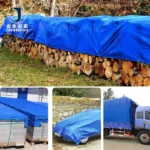
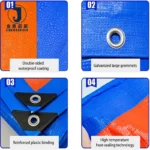
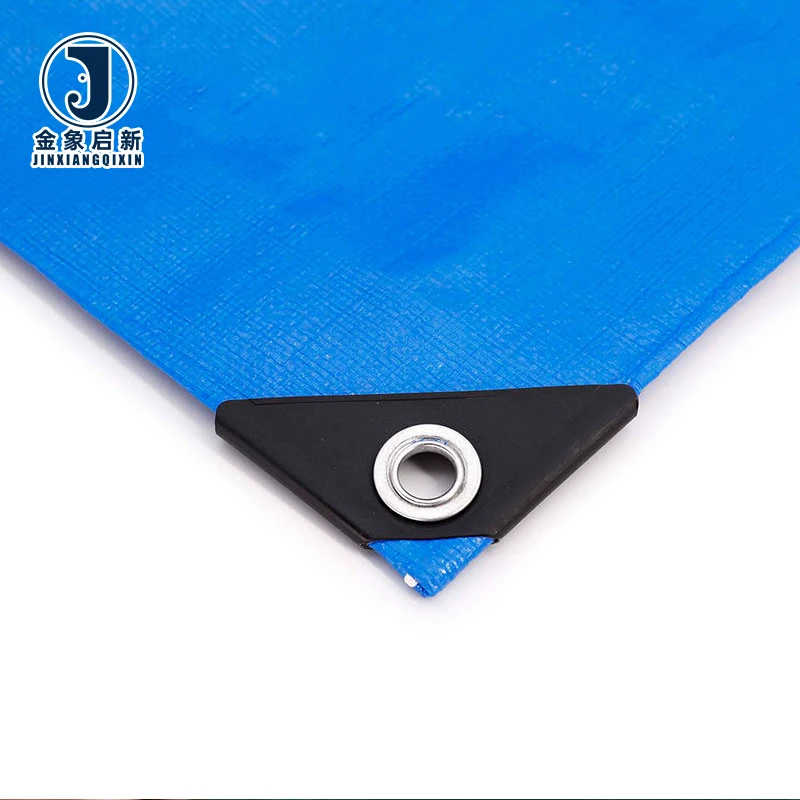
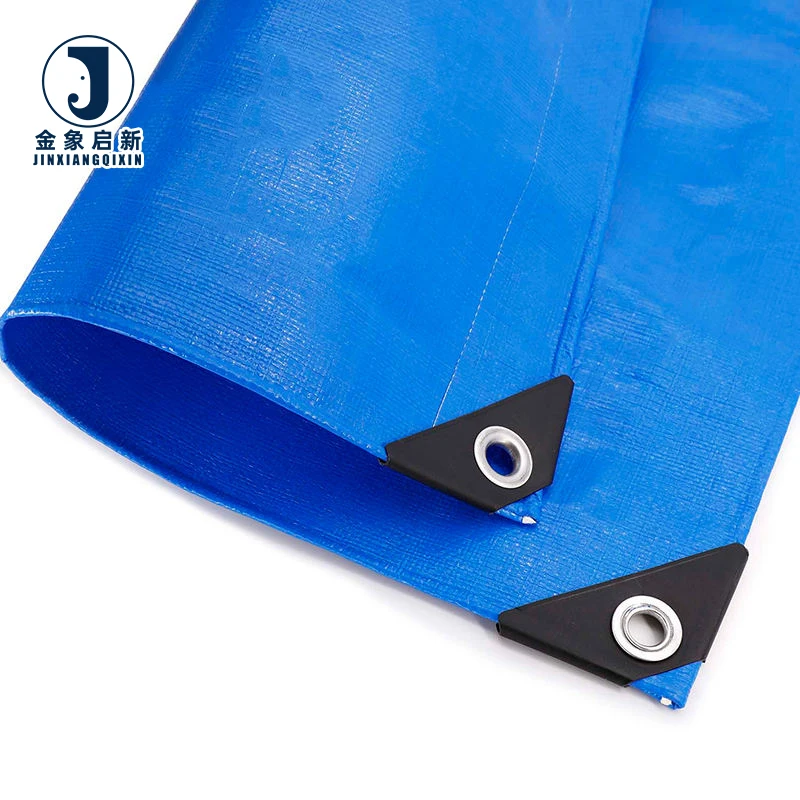
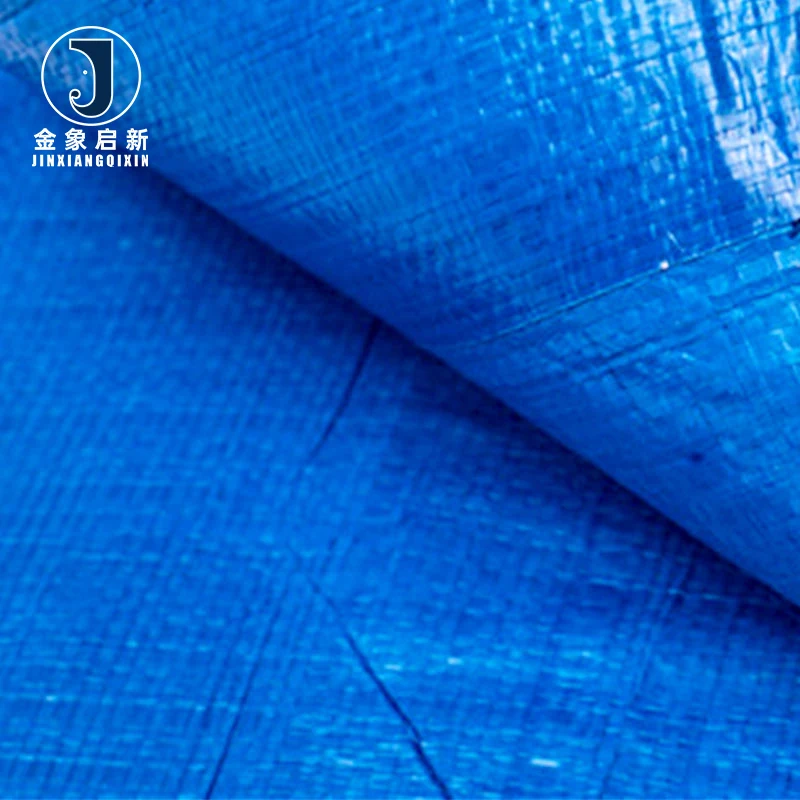
Process-Controlled HDPE Weave — Nearly 30 years focused on coated fabric gives us deep control over lamination adhesion and additive formulation, applied here to every roll of PE tarpaulin we produce.
Technical Specifications
| Parameter | Value |
|---|---|
| Product Type | PE Tarpaulin |
| Material | HDPE weaving with LDPE lamination on both sides |
| Weight Range | 50gr/m² ~ 220gr/m² (confirm the grade for your application) |
| Total Thickness | 0.2–0.4 mm / 8 mil–16 mil / Custom |
| Roll Width Options | 6ft, 8ft, 10ft, 12ft, 2m, 4m, 6m |
| Roll Length Options | 100 yards, 100 meters, or custom |
| Finished Sheet Sizes | 2×2m through 8×10m and custom cuts |
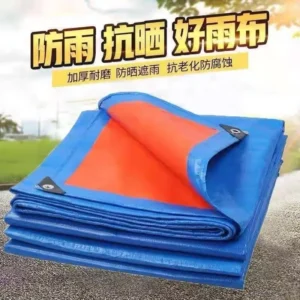
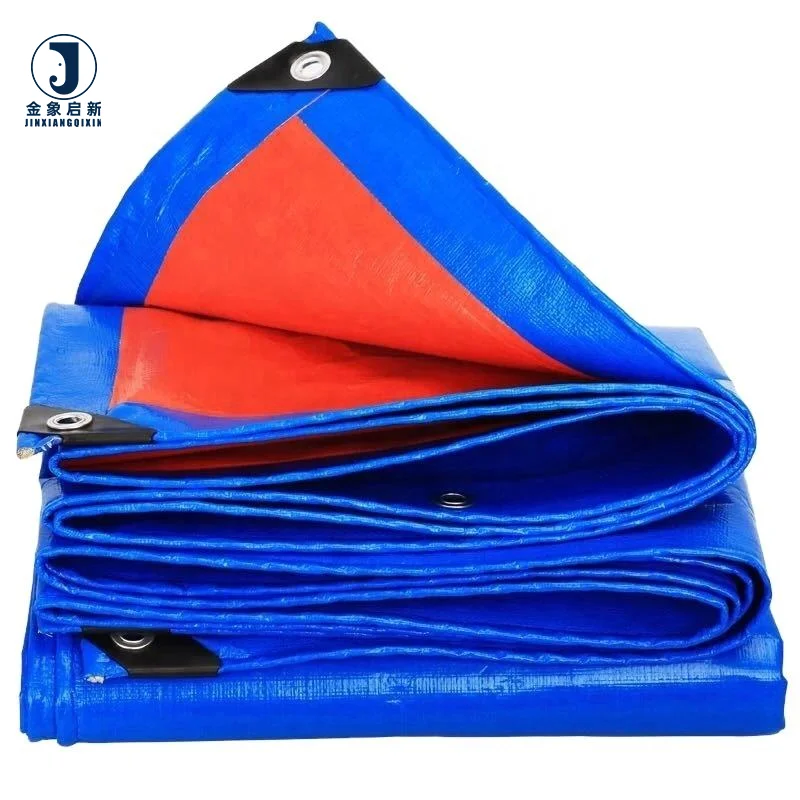
| Color Options | Blue, Blue/Orange, Green, Grey, Black, Clear, Grey/Green, Orange, or custom |
| Edge Reinforcement | All four edges reinforced with PP rope in hem |
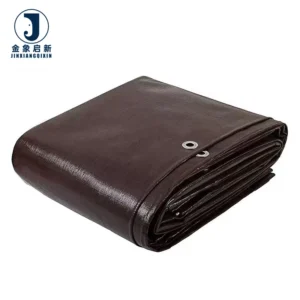
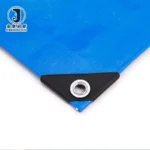
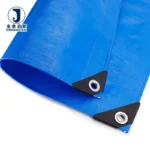
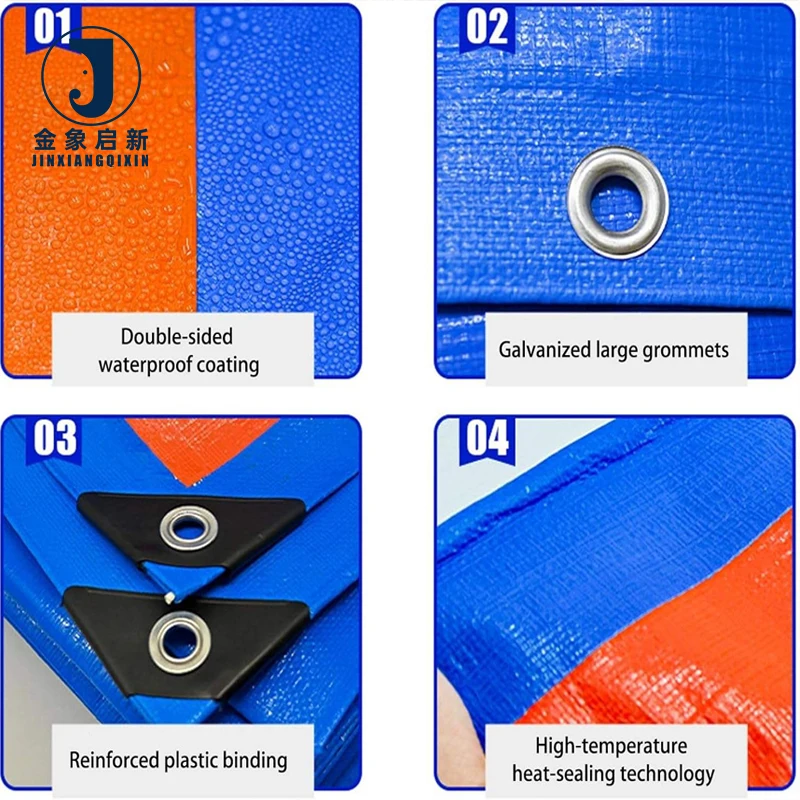
| Eyelet Specification | Galvanized eyelets every 3ft or 1 meter interval |
| Corner Reinforcement | Reinforced plastic corners |
| Treatments | Anti-UV (test basis not stated), Anti-aging with anti-oxidants, Mildew proof, Acid and alkali resistance |
| Certifications | ISO, CE |
Application Suitability
| Application | Exposure & Requirement |
|---|---|
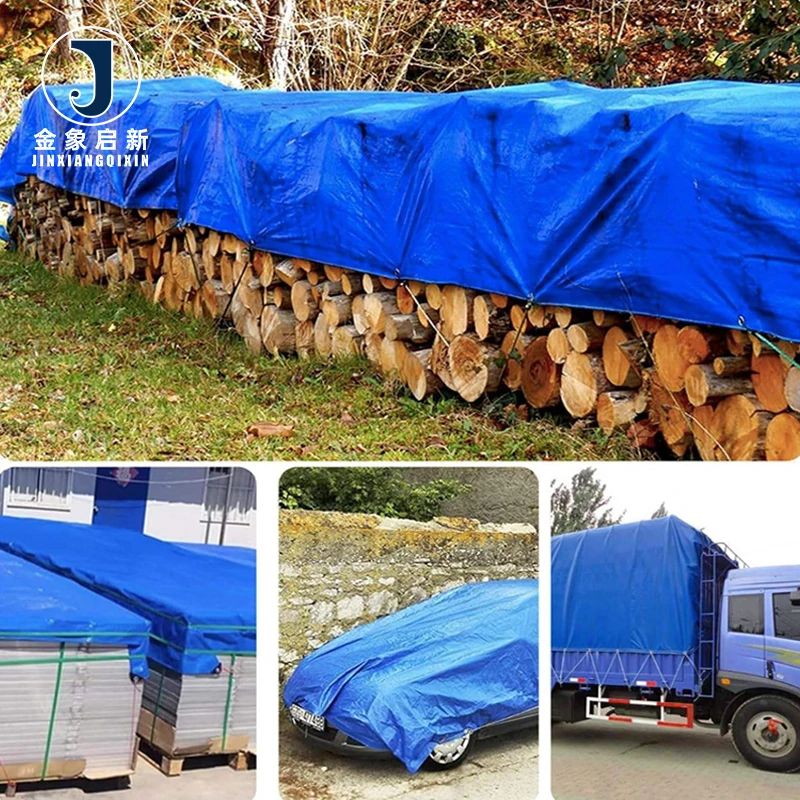
| Scaffolding enclosure on construction sites | Wind-driven rain, UV exposure, repeated installation and removal cycles, debris impact |
| Mining and tunnelling ventilation ducting | Fire-retardant compliance, anti-static demand, continuous airflow abrasion, confined-space safety codes |
| Specialist membrane and inflatable structures | Air-holding integrity, seam weld strength, weather resistance over extended deployment |
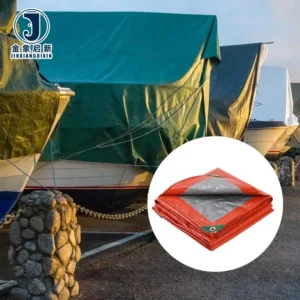
| Equipment and stockpile covers on site | Direct water contact, dust containment, UV degradation, acid and alkali residues from stored materials |
| Agricultural pond and reservoir lining | Permanent water immersion, soil chemistry interaction, puncture risk from substrate |
Why PE Tarpaulin Supplied Without Fire-Retardant Certification Fails on Regulated Sites
A PE tarpaulin fire retardant grade must be documented, not just claimed — site inspectors accept test reports, not verbal assurances.
Mining and tunnelling contractors regularly face shutdowns when the ventilation duct material arrives without the certification the site safety plan demands. The PE tarpaulin may look correct, feel correct, and carry a quotation line that says "flame retardant," but without a test report tied to a recognised standard, the material cannot be installed in a regulated environment. We see this pattern repeat across projects where procurement and compliance are handled separately [NEED_CITE: fire classification standards for ventilation materials in underground mining].
Ventilation Duct Compliance Starts at Material Selection
For mining, tunnelling, and aviation applications, the PE tarpaulin fire retardant specification must align with the local regulatory framework before production begins. Available in flame retardant grades — confirm the grade required for your market and we will supply the corresponding test documentation. Anti-static treatment is also available for environments where spark prevention is mandatory. The critical point is that both properties need verified test results, not just formulation claims on a data sheet.
Specialist Membrane and Inflatable Fabric Demands
Inflatable structures and membrane buildings place unusual demands on coated fabric. The material must hold air under pressure, resist UV degradation over continuous outdoor exposure, and maintain weld seam integrity at stress points. Our HDPE woven base with dual-side LDPE lamination provides the structural foundation for these applications. Custom width and length options allow panels to be cut with minimal joining, reducing the number of welded seams that represent potential failure points [NEED_CITE: tensile and tear test methods for coated fabrics per ISO 1421].
How GSM and Weave Density Interact to Determine Real-World Performance
The weight range from 50gr/m² to 220gr/m² covers fundamentally different use cases, and GSM alone does not determine how the fabric behaves under load. A heavy GSM achieved through thick LDPE lamination on a loosely woven HDPE base will resist water but may tear easily along the weave. Conversely, a tighter HDPE weave with moderate coating weight delivers better tear propagation resistance at a lower total GSM. The 0.2–0.4 mm thickness range reflects this balance between coating build and base fabric density. For scaffolding covers that face repeated handling and wind snatch loads, the weave density matters more than the coating thickness. For pond liners sitting in permanent water contact, coating integrity and lamination adhesion take priority. Always request the base fabric denier and weave count alongside the GSM figure to make an informed comparison.
What Happens When Colour Consistency Is Not Controlled Across Rolls
When multiple PE tarpaulin rolls arrive on site with visible colour variation between them, the entire installation can be rejected — especially on scaffolding wraps and building covers where panels hang side by side in public view. This is not a cosmetic issue; it signals inconsistent additive dosing during lamination, which often correlates with uneven UV stabiliser distribution. The result is that some panels degrade faster than others, creating a patchwork of failure points across what was supposed to be a uniform protective cover [NEED_CITE: additive migration and dispersion variance in polyethylene lamination].
Why Procurement Teams Source This PE Tarpaulin From Jinxiang
Our three full production lines and 36 sets of professional equipment support bulk roll orders with consistent output across the entire batch. The 10-person R&D team handles material selection and sample development, producing samples within days when custom width, colour, or treatment formulations are required. Every roll passes through dedicated QA/QC at each production stage with 100% inspection before shipment — weight, dimensions, and visual consistency are all checked. ISO and CE certified processes back the production workflow, and we provide the full documentation package that regulated sites demand.
Documentation & Verification
- Material specification sheet stating GSM, base fabric weave, lamination type, and colour reference for every batch
- Test report for UV and flame-retardant grades where applicable, matched to the standard your market requires
- ISO and CE certificates accompanying each shipment for site compliance submission
- Pre-shipment inspection record with roll-by-roll weight and dimensional verification
- Roll packing list and certificate of origin for customs clearance
Fabrication, Handling & Storage
- Heat welding parameters must match the LDPE lamination thickness — test weld on scrap before production seaming
- Galvanized eyelets at 3ft or 1m intervals require reinforced PP rope hem to distribute tie-down load evenly
- Store rolls upright on pallets to prevent flat-spot deformation across the 6ft to 6m width range
- Unroll in temperatures above freezing to avoid LDPE lamination cracking at the fold line
- Clean with mild detergent only — solvent-based cleaners can degrade the anti-oxidant additive package
Before You Request a Quote
Tell us the specific application and the environmental conditions the fabric will face, including any fire-retardant or anti-static standards your site mandates. Provide the required roll width and estimated annual volume so we can confirm production scheduling. If you need finished cut sizes rather than roll stock, share the exact dimensions and eyelet spacing. We will respond with a specification recommendation, lead time, and sample arrangement for your approval before production.
Frequently Asked Questions
Q: How is the GSM of each PE tarpaulin roll verified before it ships?
A: Every roll is weighed and measured during pre-shipment inspection. The actual GSM is calculated from the measured weight and dimensions, then compared against the quoted specification. Rolls that fall outside the agreed tolerance are held and not dispatched. We provide the inspection record with your shipment documentation so you can cross-check on arrival.
Q: What fire-retardant grades are available for PE tarpaulin used in mining ventilation?
A: We offer PE tarpaulin in flame retardant grades — confirm the grade required for your market and jurisdiction. Once you share the specific standard your site safety plan references, we will formulate accordingly and supply the matching test report. Anti-static treatment can be combined with flame retardancy for underground applications where both properties are mandatory.
Q: Can you match colour consistently when I order multiple rolls across different production runs?
A: Yes. We use controlled additive dosing during LDPE lamination and maintain colour reference records for each order. When you reorder, we produce against the stored reference to minimise variation. We still recommend requesting a sample from the new batch for visual approval before full production, especially for high-visibility installations like scaffolding wraps.
Q: What is the lead time for custom width or non-standard roll lengths?
A: Lead time depends on the specific width, treatment formulation, and order volume. Custom widths outside the standard 6ft to 6m range require line adjustment and scheduling. We confirm the exact lead time at the quotation stage once your full specification is locked in. Samples for custom requirements are typically developed within days to keep your project timeline moving.
Q: How do I specify anti-aging treatment for long-term outdoor exposure?
A: Our PE tarpaulin includes anti-oxidants added during lamination to slow degradation from UV and thermal exposure. The anti-UV treatment is available with test documentation — specify the test standard your project requires and we will supply the report. Share your expected exposure duration and climate zone so we can recommend the appropriate formulation level.