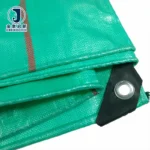
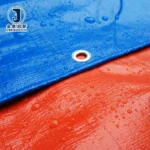
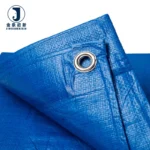
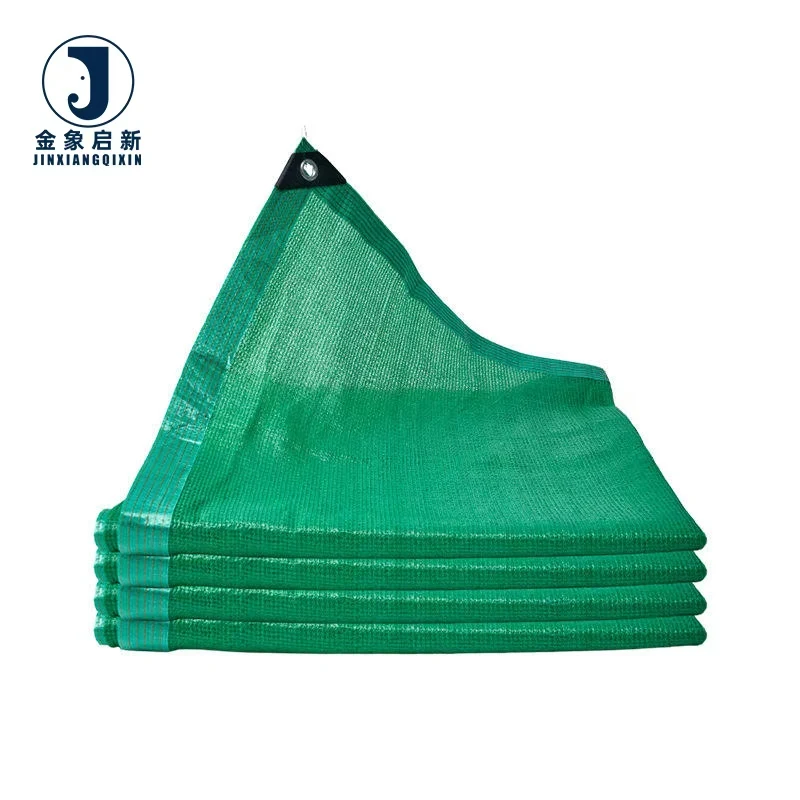

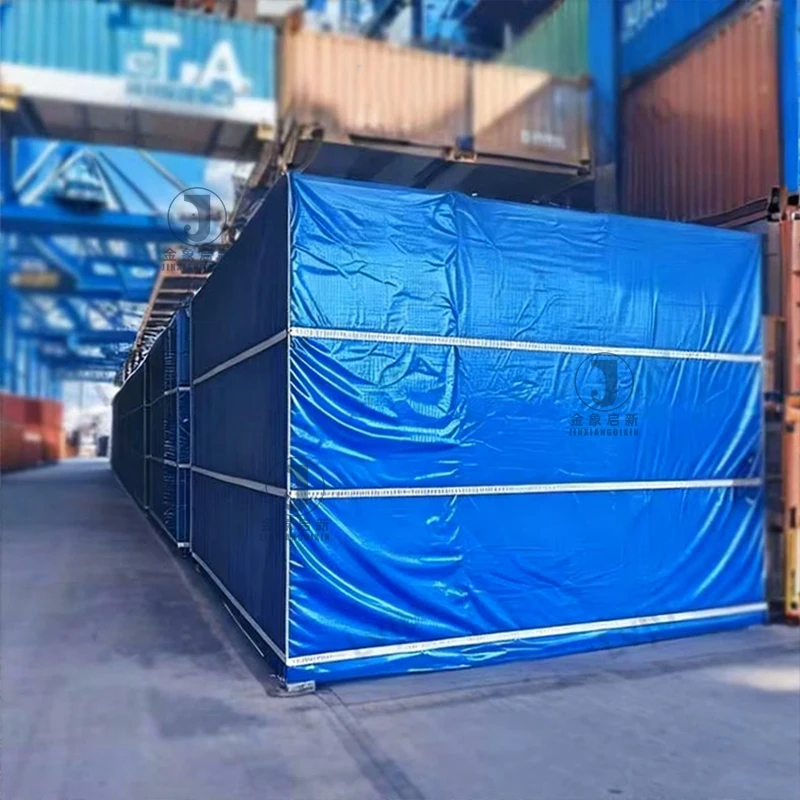
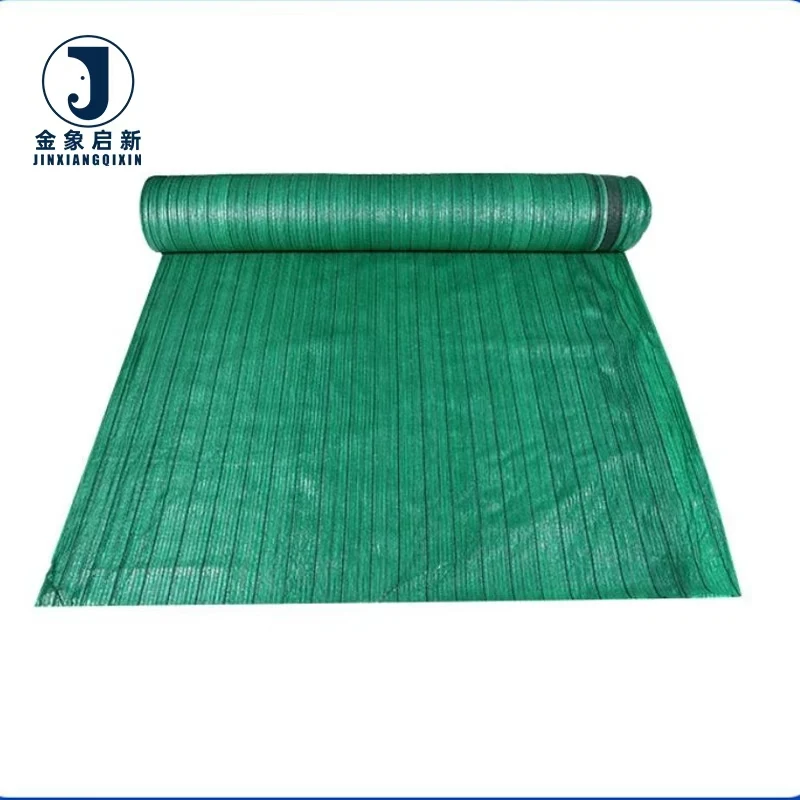
Process Control Over Lamination Adhesion — Jinxiang maintains dedicated QA at every production stage to verify HDPE weave density and LDPE coating weight, ensuring each roll of PE tarpaulin for industrial and agricultural ventilation duct and specialist covers meets the stated specification before dispatch.
Technical Specifications
| Parameter | Value |
|---|---|
| Product Type | PE Tarpaulin Roll / Finished PE Tarpaulin |
| Material | HDPE weaving with LDPE lamination on both sides |
| Base Fabric | HDPE woven |
| Coating Material | LDPE |
| Weight (GSM) | 50gr/m2 ~ 220gr/m2 available (confirm grade for this item) |
| Total Thickness | 0.2-0.4mm / 8 mil-16 mil / Custom |
| Mesh Count Options | 6×6, 6×7, 7×7, 7×8, 8×8, 9×9, 8×10, 10×10, 12×12, 14×14, 14×16 |
| Density-to-GSM Mapping | 6×6/6×7 → 50–60 gsm; 7×7/7×8 → 60–80 gsm; 8×8/9×9 → 80–90 gsm; 8×10 → 90–100 gsm; 10×10 → 100–120 gsm; 12×12 → 120–150 gsm; 14×14 → 150–250 gsm; 14×16 → 250–300 gsm (source value — verify against manufacturer catalog) |
| Roll Width | 6ft, 8ft, 10ft, 12ft or 2m, 4m, 6m |
| Roll Length | 100 yards, 100 meters, or as per buyer’s wish |
| Finished Size Examples | 2x2m, 3x3m, 3x5m, 4x4m, 4x5m, 4x6m, 4x8m, 4x10m, 5x5m, 5x6m, 5x8m, 5x10m, 6x6m, 6x8m, 6x10m, 8x10m, etc. |
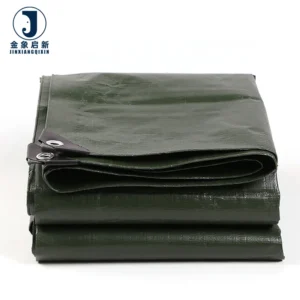
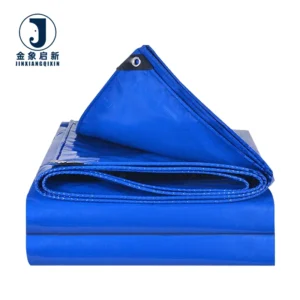
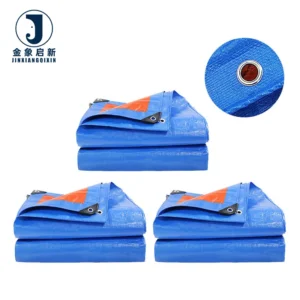
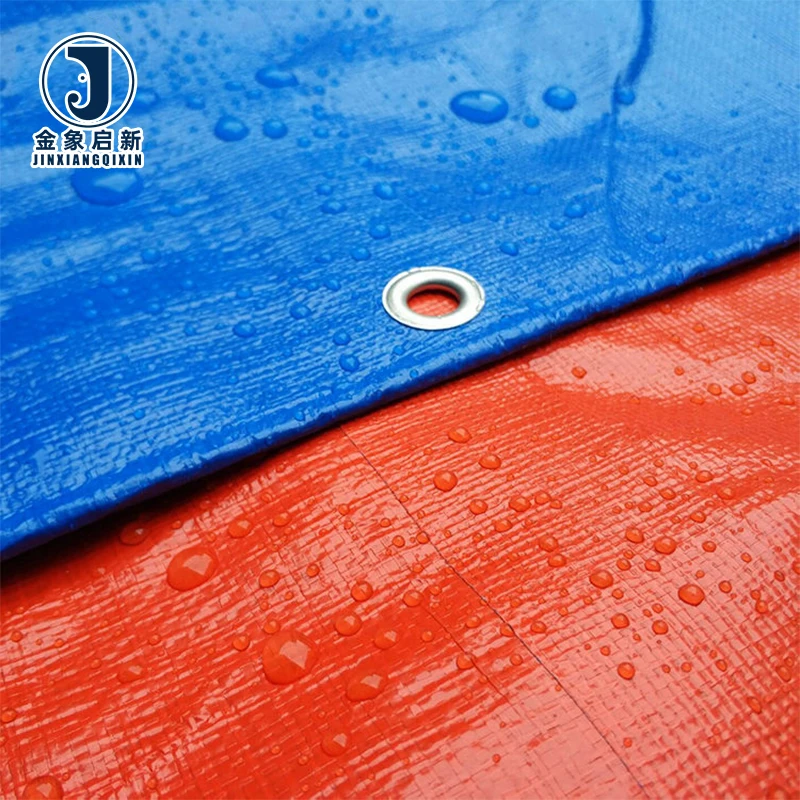
| Color | Blue, Blue/Orange, Green, Grey, Black, Clear, Grey/Green, Orange, or any other color |
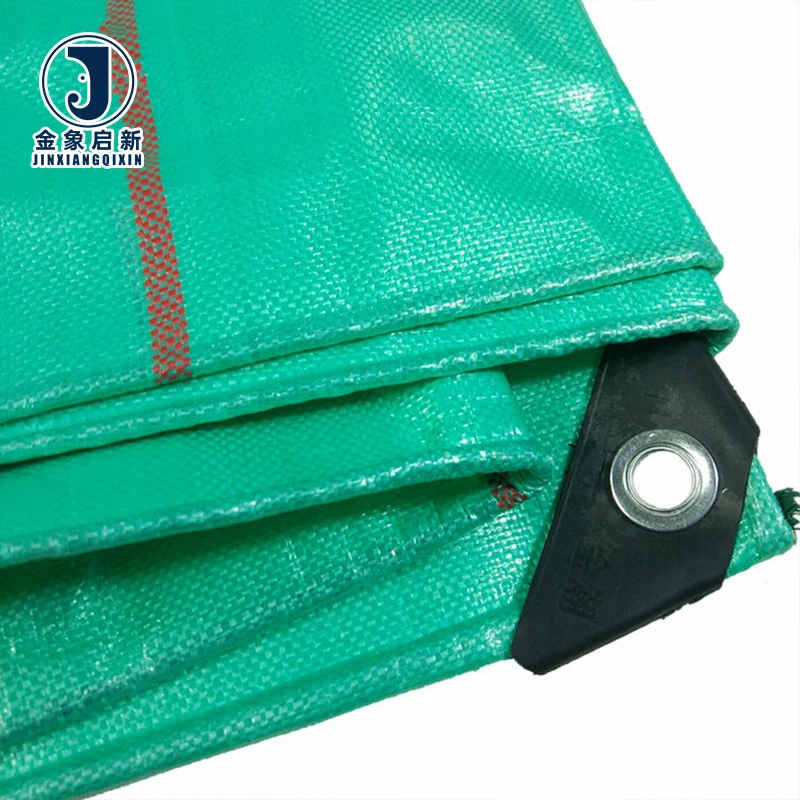
| Edge Reinforcement | All four edges reinforced with PP rope in hem |
| Eyelet Options | Galvanized eyelets every 3ft or 1 meter interval |
| Corner Reinforcement | Reinforced plastic corners |
| UV Treatment | Available (test basis not stated in source) |
| Waterproof | Yes |
| Key Features | Waterproof, washable, tear resistant, weather proof, sunproof, mildew proof, anti-aging |
| Flame Retardant Grade | Not stated in source — available in flame retardant grades, confirm the grade required for your site |
| Tensile Strength | Not stated in source |
| Tear Strength | Not stated in source |
| Certification | ISO and CE referenced at company level |
Application Suitability
| Application | Exposure & Requirement |
|---|---|
| Ventilation duct outer wrapping — mining and tunnelling | Continuous airflow, dust and moisture ingress, fire-retardant or anti-static compliance required on site |
| Temporary air barrier fabric — underground construction | Pressure differential across fabric, puncture from sharp rock and tools, low-light handling |
| Construction site material covers and scaffolding sheeting | UV exposure, wind uplift on large panels, rain and debris accumulation |
| Agricultural stockpile covers — hay, cotton, timber | Extended weather exposure, mildew risk under trapped moisture, tie-down stress from wind |
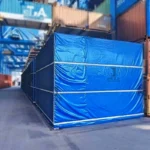
| Truck, container and boat covers during transport | Road abrasion at flex points, UV and rain, secure tie-down through eyelets under dynamic load |
| Home and garden — furniture, gazebo, pool covers | Seasonal UV and rain, repeated folding and storage, aesthetic colour consistency |
When the Ventilation Duct Arrives Without the Certification Your Site Demands
A fire-retardant or anti-static claim means nothing unless the supplier can produce the test report that matches the compliance standard your mining or tunnelling site requires.
Mining and tunnelling contractors regularly specify ventilation duct with flame-retardant or anti-static treatment, only to discover on arrival that the fabric has no supporting documentation. The duct goes up, the site inspector asks for the certificate, and work stops until a compliant replacement arrives. PE Tarpaulin for industrial and agricultural ventilation duct and specialist covers must be sourced with the specific grade verified before production begins — not after the container is on the water. [NEED_CITE: fire-retardant and anti-static compliance requirements for underground ventilation duct in mining operations]
Jinxiang addresses this by requiring the buyer to state the compliance standard at inquiry stage. Where a flame-retardant grade is applicable, the quotation references the specific grade, and the test report is included in the pre-shipment documentation package. If the grade has not been confirmed, production does not proceed on the assumption that standard PE will pass.
HDPE Weave Density as the Foundation for Airflow Containment
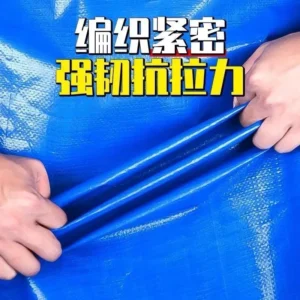
The base fabric of this PE tarpaulin is HDPE woven at mesh counts ranging from 6×6 through 14×16. A tighter weave at 14×16 produces a denser substrate that resists puncture from sharp rock edges in tunnelling environments and contains airflow with less leakage through the fabric body. Lighter weaves at 6×6 or 7×7 are suited to temporary covers where flexibility and lower weight take priority over tear propagation resistance. The PE Tarpaulin for industrial and agricultural ventilation duct and specialist covers must be selected by matching the weave density to the mechanical stress of the specific installation, not by choosing the lowest GSM that fits the budget.
LDPE Lamination and Coating Weight on Both Sides
Double-side LDPE lamination seals the HDPE weave, making the fabric fully waterproof and blocking moisture ingress that would otherwise degrade the base yarn over time. The lamination process also determines how well the fabric holds a welded seam — a critical factor when duct sections are joined on site or when large covers are fabricated from multiple panels. Consistent coating weight across both faces prevents one side from delaminating before the other, a failure mode that typically appears first at high-stress tie-down points.
Reading GSM and Mesh Count Together for Duct Fabric Selection
GSM alone does not define how a PE tarpaulin will perform under load. A 90 gsm fabric at 8×10 mesh distributes yarn differently than a 90 gsm fabric at 9×9 mesh, producing different tear propagation behaviour and surface smoothness. For ventilation duct wrapping, surface smoothness affects airflow efficiency and dust accumulation; for construction covers, it affects how water sheets off the panel. Selecting the right grade means specifying both the target GSM and the preferred mesh count, then verifying both on the material specification sheet before production. [NEED_CITE: relationship between mesh count, GSM and tensile performance in HDPE woven fabrics]
The total thickness range of 0.2–0.4 mm (8–16 mil) corresponds to the selected GSM and mesh combination. Thicker lamination adds puncture resistance but also increases roll weight and stiffness, which matters when the fabric must be handled underground in confined tunnel sections. Roll widths up to 6 m allow wide single-piece panels that reduce the number of field-welded seams on large duct runs or scaffolding enclosures.
What Happens When the Spec Does Not Match the Installation
A PE tarpaulin ordered at a lighter GSM than the installation demands will show early failure at tie-down eyelets, where dynamic wind load concentrates stress on a fabric that lacks the tear strength to resist propagation from the eyelet hole outward. In mining ventilation, an under-specified duct wrap may tear under sustained airflow pressure, forcing unplanned replacement that halts production. Batch colour variation across rolls in the same order becomes visible once the fabric is installed side by side on scaffolding or as adjacent pond liners, triggering a site-level aesthetic rejection even when the material is functionally sound. [NEED_CITE: common failure modes of under-specified PE tarpaulin in industrial cover applications]
Welded seams on PE tarpaulin fail when the lamination coating weight is insufficient for the heat-seal parameters used during fabrication. The seam peels before the fabric body reaches its tensile limit, leaving a gap at exactly the point where the load flexes most. This is a coating-adhesion issue rooted in the production process, not a design flaw in the cover geometry.
Why Source This PE Tarpaulin Through Jinxiang
Jinxiang has focused on coated fabric for nearly 30 years, building process control over coating weight and lamination adhesion that directly affects how well a PE tarpaulin holds a welded seam in the field. Three full production lines and 36 sets of professional equipment support bulk capacity with reliable on-time delivery, so ventilation duct wrapping orders for large tunnelling projects ship on schedule. A 10-person R&D team handles material selection, custom sizing and sample development, delivering samples within days when a contractor needs to confirm that a specific mesh count and GSM combination suits the site conditions. Dedicated QA and QC at every production stage, with 100% inspection before shipment, means GSM and coating weight are verified against the specification sheet — not assumed from the production run average. ISO and CE certification at company level supports documentation requirements for international mining and construction projects.
Documentation & Verification
- Material specification sheet stating GSM, base fabric HDPE weave, LDPE coating and colour reference per roll
- GSM verified at pre-shipment inspection against the quoted weight with 100% inspection record
- UV treatment test report supplied where applicable, confirming test basis before the order ships
- Certificate of origin, ISO and CE certificates included in the shipping documentation package
- Roll packing list detailing roll count, dimensions and net weight for container loading planning
- Fire-retardant or anti-static test report provided when the specified grade has been confirmed at inquiry
Fabrication, Handling & Storage
- Weld LDPE-laminated seams at temperatures suited to the selected GSM to avoid delamination at stress points
- Space galvanized eyelets at 1 m intervals and reinforce with PP rope hem to distribute tie-down load evenly
- Store rolls on flat pallets away from direct sunlight to prevent UV degradation before installation
- Unfold finished covers in moderate temperatures to avoid creasing the HDPE base fabric at stiff folds
- Clean with mild detergent and soft brush to preserve the LDPE lamination surface without abrasion
- Cut panels using the full roll width to minimize field-welded seams on large ventilation duct runs
Before You Request a Quotation
Provide the installation environment — underground tunnel, open construction site, agricultural stockpile — along with any fire-retardant or anti-static compliance standard your site requires. Specify the target GSM and mesh count, or describe the mechanical stress so Jinxiang’s R&D team can recommend the appropriate grade. State the roll width, length and colour needed, and confirm whether you require finished cut sizes with eyelets and reinforced hems or roll stock for your own fabrication.
Frequently Asked Questions
Q: How does Jinxiang verify that the GSM on the quotation matches the fabric on arrival?
A: Every roll undergoes 100% pre-shipment inspection where GSM is measured against the material specification sheet. The inspection record travels with the shipping documentation, so you can cross-reference the stated weight with the actual measured value before the container leaves the factory.
Q: Is the UV treatment backed by a test report or only a quotation claim?
A: Where UV treatment is specified, Jinxiang provides a test report confirming the treatment basis at the quotation stage. If your climate zone or site exposure demands a specific test standard, state it during inquiry so the correct grade is applied and documented.
Q: Which fire-retardant or anti-static grades can be supplied for mining ventilation duct?
A: Flame-retardant grades are available — the specific grade must be confirmed at inquiry to match your site’s compliance standard. Once confirmed, the grade is stated on the quotation and supported by a test report included in the pre-shipment documentation.
Q: How is batch colour consistency controlled across multiple rolls in the same order?
A: Production QA monitors colour at every stage, and rolls in the same batch are inspected side by side before packing. The colour reference is stated on the material specification sheet, and any variation outside the accepted range is flagged before dispatch.
Q: Can I order custom roll widths and lengths alongside finished cut sizes in one shipment?
A: Yes. Jinxiang’s R&D team handles custom width, length and finished size development. Provide your container loading plan and required dimensions at inquiry so the production schedule accommodates both roll stock and fabricated covers in the same order.