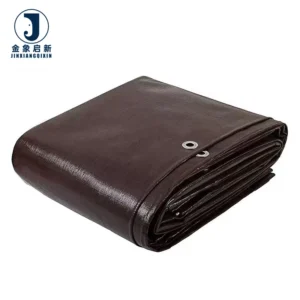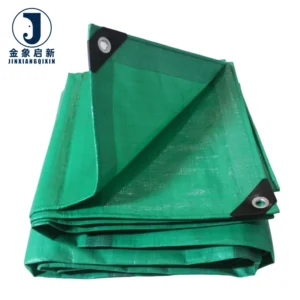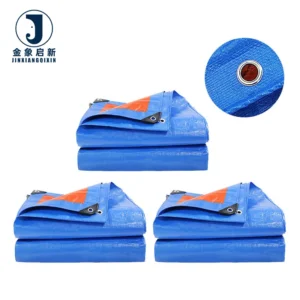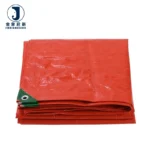

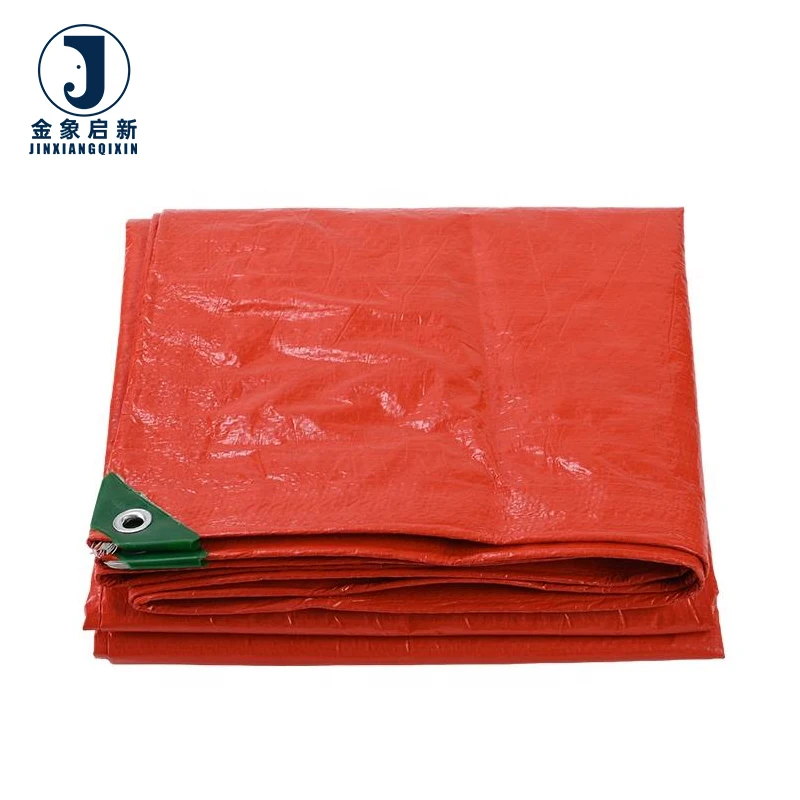
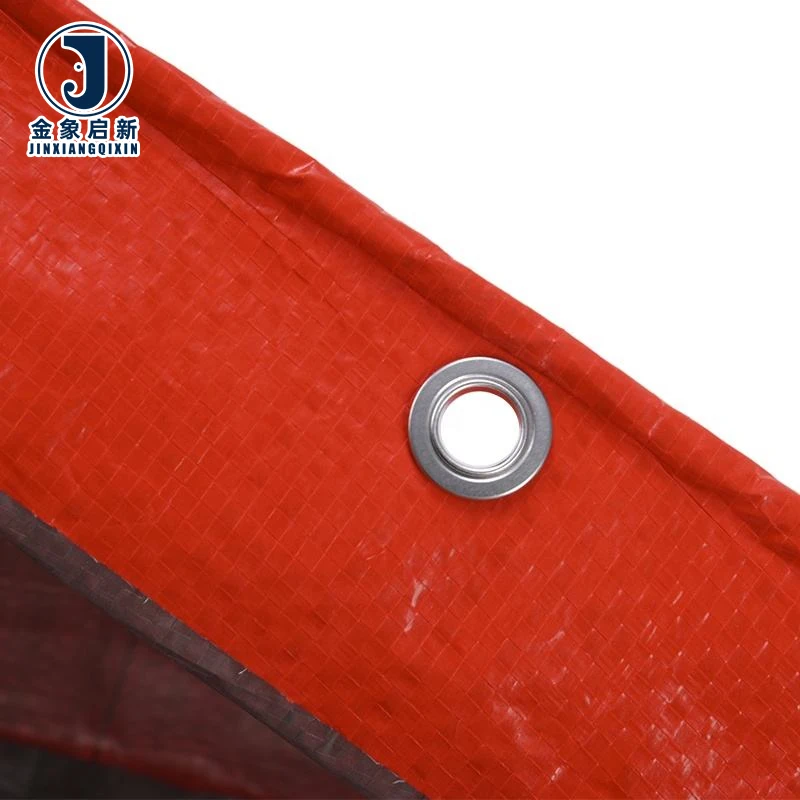
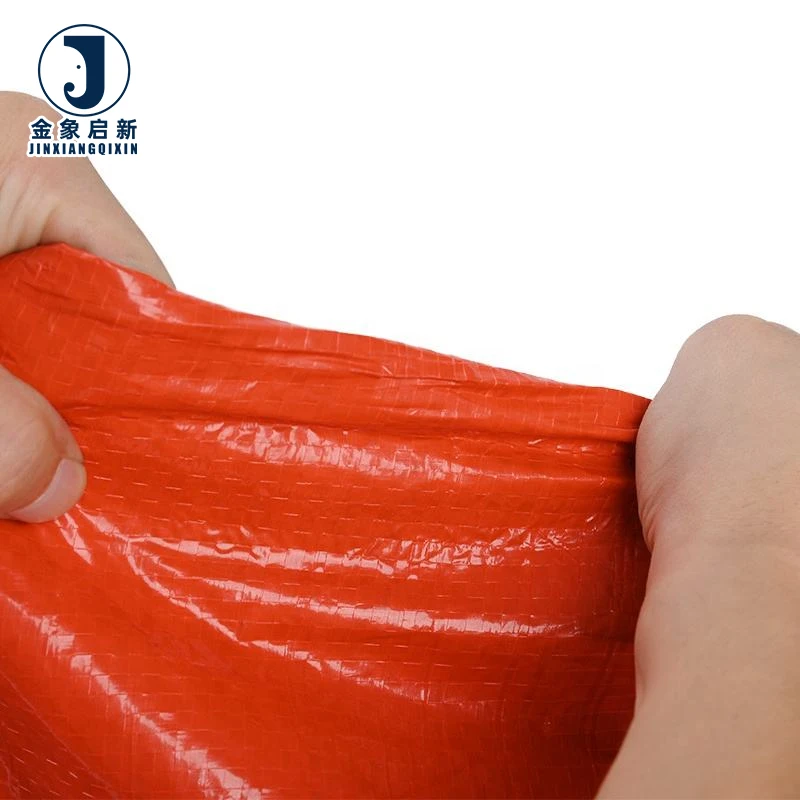
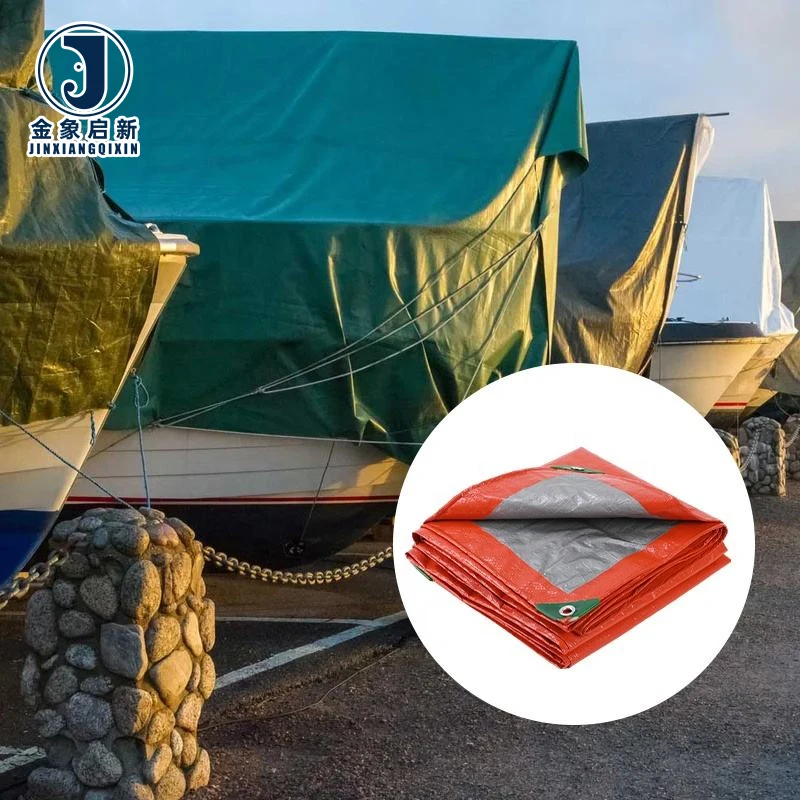
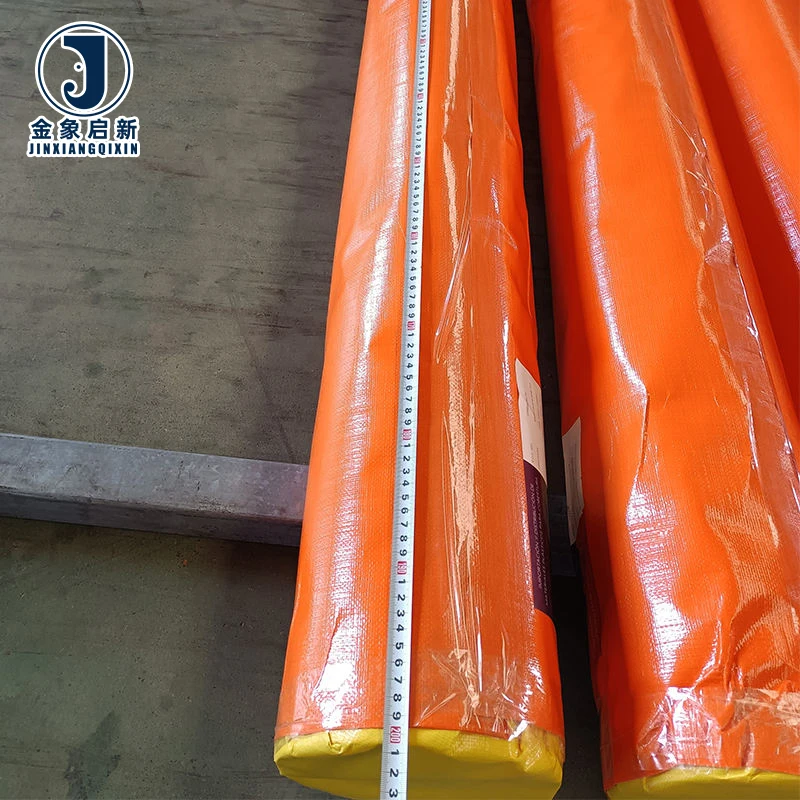
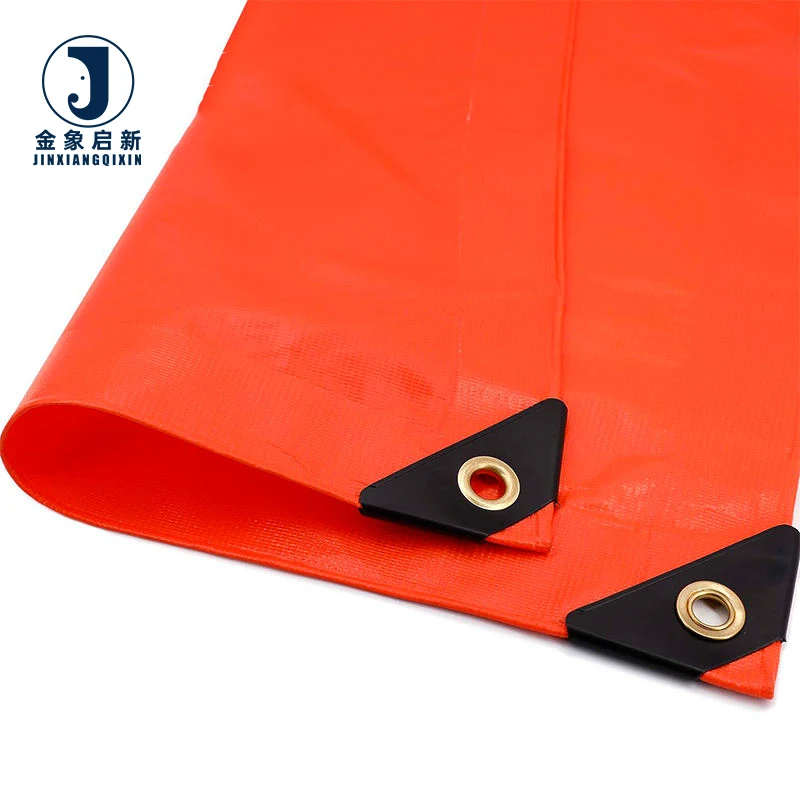
Coated Fabric Process Control — Nearly 30 years of focused production on coated technical fabrics, with dedicated QA at every stage ensuring PE tarpaulin grades meet site compliance documentation requirements.
Technical Specifications
| Parameter | Value |
|---|---|
| Product Type | PE Tarpaulin |
| Material | Polyethylene |
| Weight (GSM) | 40g~500g/m2 (range covers product family — confirm the grade for this item) |
| Thickness (mm) | 0.18-0.22 (lightweight) / 0.22-0.28 (medium) / 0.30-0.35 (heavy-duty) |
| Knitting Density | 8×8 (lightweight) / 10×10 (medium) / 12×12 (heavy-duty) |
| Tensile Strength (N/5cm) | Meridian 300-500 / Latitude 250-450 (lightweight); Meridian 500-800 / Latitude 400-700 (medium); Meridian 900-1200 / Latitude 700-1000 (heavy-duty) (test standard not stated) |
| Color | Custom color |
| Size | Custom size |
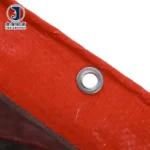
| Eyelet Spacing | 39.4 Inches (Center To Center) |
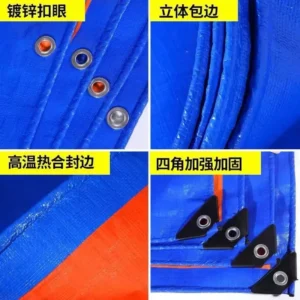
| Waterproof | Double waterproof surfaces, reinforced corner |
| UV Treatment | Available (test basis not stated) |
| Anti-Mildew | Mildew proof and anti-aging (test basis not stated) |
| Standards | ISO 14001, ISO 45001, CE |
Application Suitability
| Application | Exposure & Requirement |
|---|---|
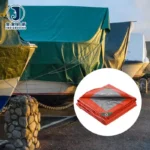
| Mining and tunnelling site equipment covers | Constant abrasion from rock dust, heavy machinery contact, moisture ingress; must align with ventilation duct fire safety documentation |
| Temporary enclosure fabric for construction ventilation zones | Wind load on large unsupported spans, UV exposure during multi-month deployments, need for airflow containment integrity |
| Protective covers for membrane and inflatable structure components | Tension stress at anchor points, prolonged sun exposure, requirement for surface consistency across adjacent panels |
| Stockpile covers deployed alongside ventilation duct runs | Water pooling on flat sections, forklift and boot traffic at edges, need for compliance-matched material certification |
What Compliance Documentation Means When PE Tarpaulin Meets Ventilation Ductwork on Site
A ventilation duct that passes fire inspection is only half the system if the adjacent PE cover fabric cannot produce matching test documentation.
Mining and tunnelling contractors routinely specify fire-retardant or anti-static ventilation duct to meet site safety regulations, yet the PE tarpaulin used for equipment covers, stockpile protection, and temporary enclosures on the same site often arrives without equivalent certification paperwork. The result is a compliance gap that surfaces during audits — the duct passes, but the cover material beside it cannot be verified. PE Tarpaulin for ventilation and technical fabric applications must be specified with the same documentation rigour as the duct itself, and that means requesting test reports tied to the exact grade supplied, not a generic product family claim. [NEED_CITE: fire safety compliance requirements for temporary fabric structures on mining sites]
Aligning Cover Material with Ventilation System Compliance
When a mining or tunnelling project specifies ventilation duct with fire-retardant or anti-static properties, every fabric component in the immediate work zone comes under the same regulatory scrutiny. PE Tarpaulin for ventilation and technical fabric applications functions as the protective layer over sensitive equipment, the enclosure around ventilation junctions, and the cover on material stockpiles adjacent to duct runs. If the cover fabric lacks the test documentation to prove it matches the duct specification, the entire system fails the compliance check.
Selecting the correct grade starts with understanding the exposure severity. Lightweight grades suit short-term indoor enclosures where fire risk is managed by other systems. Heavy-duty grades are necessary for extended outdoor deployment in environments where the fabric must withstand mechanical damage, sustained UV, and potential contact with ignition sources. The weight range from 40g~500g/m2 covers this spectrum, but the specific grade for each project must be confirmed against the site’s regulatory framework and the ventilation duct certification already in place. [NEED_CITE: regulatory frameworks for fire classification of construction and mining site fabrics]
Tensile Data and Structural Load on Temporary Enclosures
Temporary enclosures built around ventilation zones experience sustained wind load, particularly on tall unsupported spans where the fabric acts as a partial windbreak. The tensile strength data — ranging from Meridian 300-500 / Latitude 250-450 N/5cm in lightweight grades up to Meridian 900-1200 / Latitude 700-1000 N/5cm in heavy-duty grades — provides a basis for structural assessment before installation. These values, measured per 5cm strip width, indicate how the fabric behaves under the constant tension that temporary enclosures impose on their anchor points and fixings.
For membrane and inflatable structure components, the relationship between knitting density and tensile performance becomes critical. A 12×12 heavy-duty knit distributes load across more yarn intersections than an 8×8 lightweight weave, reducing the risk of tear propagation from a single puncture or anchor point failure. The thickness progression from 0.18-0.22mm through to 0.30-0.35mm correlates with this density increase and the corresponding rise in overall material stiffness. [NEED_CITE: tensile and tear test methods for coated fabrics per ISO 1421]
Reading GSM, Density and Tensile Together
GSM alone does not predict how a PE tarpaulin will perform under site conditions. A fabric at the heavier end of the range may achieve its weight through coating thickness rather than base fabric density, which means tensile and tear resistance could be lower than expected for the stated GSM. The knitting density figures — 8×8, 10×10, or 12×12 — describe how many yarns per unit area form the structural skeleton of the fabric, and it is this skeleton that carries the mechanical load.
Coating adds waterproofing and surface protection, but it is the base fabric that determines how the material responds to tension, puncture, and tear propagation. A heavy-duty 12×12 knit with high meridian tensile values will resist tear spread from a damaged eyelet far better than a fabric of identical GSM built on a lighter base weave with thicker coating. For technical applications where the fabric is part of a compliant system — deployed alongside certified ventilation duct in mining or tunnelling environments — understanding this relationship prevents specification errors that only become visible when the material is under load on site.
The Cost of Misaligned Documentation Between Duct and Cover
When ventilation duct arrives with full fire-retardant or anti-static certification but the PE tarpaulin used for adjacent covers and enclosures does not, the compliance failure is not limited to the cover material. Site inspectors assess the entire system, and a documentation gap on one component can trigger re-inspection of the full installation. This means project delays, potential removal of already-installed cover fabric, and re-procurement under urgent timelines — conditions that rarely produce better specification decisions.
Batch inconsistency compounds the problem. If cover fabric colour varies between rolls installed side by side on a visible site enclosure, or if the GSM stated on the quotation does not match the material delivered, the credibility of the entire procurement package is undermined. Pre-shipment inspection with 100% coverage and verified documentation per roll is the control point that prevents these failures from reaching the site. [NEED_CITE: pre-shipment inspection standards for industrial coated fabrics]
Production Controls Behind Every Roll Dispatched
Three full production lines and 36 sets of professional equipment support the bulk capacity needed for large-scale mining and tunnelling projects, where ventilation duct and cover fabric must arrive on a coordinated schedule. This production infrastructure enables consistent output across multiple rolls in a single order, reducing the batch-to-batch variation that causes colour mismatch and weight discrepancy on site.
A 10-person R&D team handles material selection and sample development, ensuring the PE tarpaulin grade specified matches the project’s technical requirements before production begins. Samples are developed within days for custom requirements, allowing contractors to verify material suitability against their ventilation duct specification before committing to full order quantities.
Dedicated QA/QC operates at every production stage, with 100% inspection before shipment. Each roll is verified against the stated specification, and the inspection record travels with the shipment documentation so that site receiving teams can confirm compliance on arrival without waiting for separate correspondence.
ISO and CE certification underpins the quality management system, and material specification sheets are produced per order stating GSM, base fabric, coating type, and colour reference for traceability.
Documentation & Verification
- Material specification sheet stating GSM, base fabric type and coating for every roll or cut piece in the shipment
- UV and flame-retardant test reports supplied where applicable, matched to the grade confirmed for the project
- Pre-shipment inspection record with roll-by-roll verification included in dispatch documentation
- ISO and CE certificates available as part of the shipment package for site compliance audits
- Certificate of Origin and customs support documentation provided for cross-border procurement
Fabrication, Handling & Storage
- Heat welding parameters must be adjusted to the specific thickness grade, from 0.18mm lightweight to 0.35mm heavy-duty, to prevent seam failure before fabric wear
- Reinforced corners and 39.4-inch eyelet spacing distribute tie-down loads, but grommet insertion must avoid cutting through the high-density knit structure
- Rolls should be stored horizontally on racking to prevent flat-spotting on the polyethylene coating surface, which can cause visible creasing when deployed
- Cold-weather deployment requires gradual unrolling to allow the PE material to reach ambient temperature before tensioning across frames or anchor points
- Field repairs on double waterproof surfaces require compatible PE tape or welding — solvent-based adhesives may not bond to the coated surface
- Custom size cutting should account for the fabric’s meridian and latitude tensile direction to align stronger axis with primary load paths
Requesting a Specification Match for Your Project
To specify PE Tarpaulin for ventilation and technical fabric applications accurately, provide the ventilation duct certification standard already specified on your project — this allows us to align the cover material test documentation to the same compliance framework. Include the exposure conditions for each cover or enclosure application, the required weight grade or performance tier, and the dimensions needed so that we can confirm production feasibility and lead time for your site schedule.
Frequently Asked Questions
Q: How is GSM verified on arrival against the quotation for PE tarpaulin orders?
A: Each roll undergoes 100% pre-shipment inspection where actual weight is measured against the stated GSM. The inspection record is included with the shipment documentation, so your receiving team can cross-reference the delivered material against the quotation immediately on arrival without needing to request separate verification from the supplier.
Q: Can PE tarpaulin be supplied with flame-retardant certification matching the ventilation duct on site?
A: Flame-retardant grades are available, and test reports can be supplied where applicable to match the compliance standard required by your project. The specific grade must be confirmed during the specification stage so that the documentation aligns with your ventilation duct certification and satisfies site inspector requirements.
Q: What UV test basis supports the anti-aging claim for long-term outdoor installation?
A: UV treatment is available across the product range, but the test basis varies by grade and must be confirmed for your specific project requirements. Request the test report for the grade you are specifying so that you have documented evidence of UV performance suitable for your deployment duration and exposure conditions.
Q: What documentation is included with shipment to support site compliance audits?
A: Shipments include a material specification sheet per roll, pre-shipment inspection records, ISO and CE certificates, and where applicable, UV or flame-retardant test reports. Certificate of Origin and customs documentation are also provided, giving your site compliance team a complete paperwork package for audit purposes.