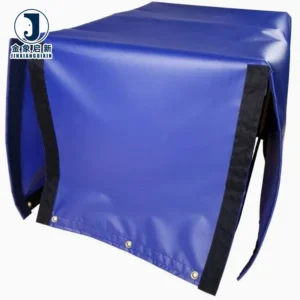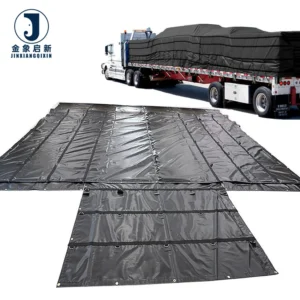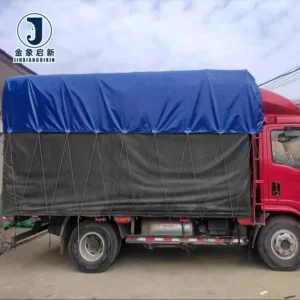


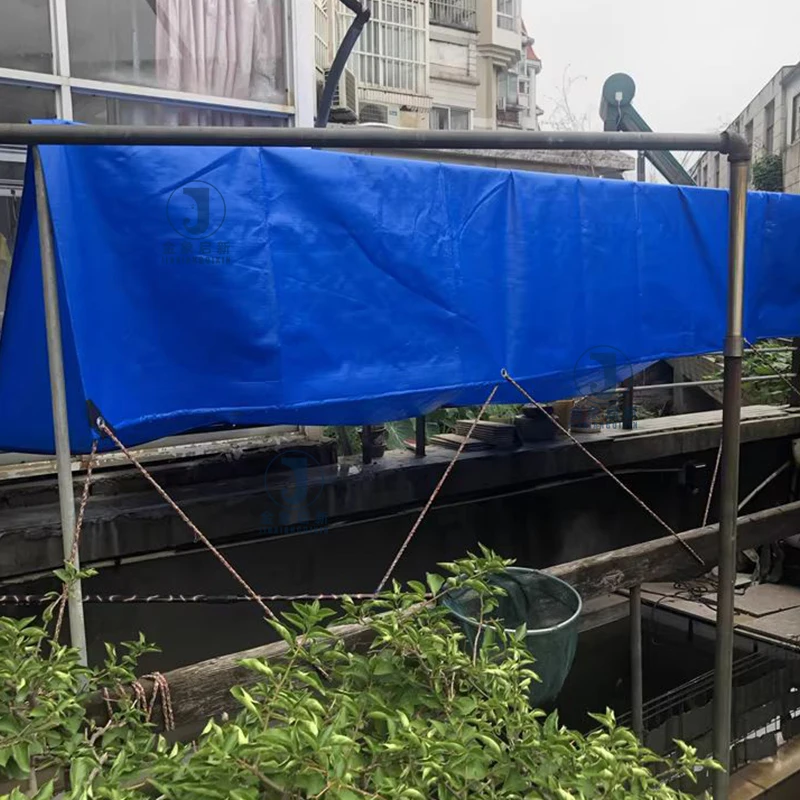
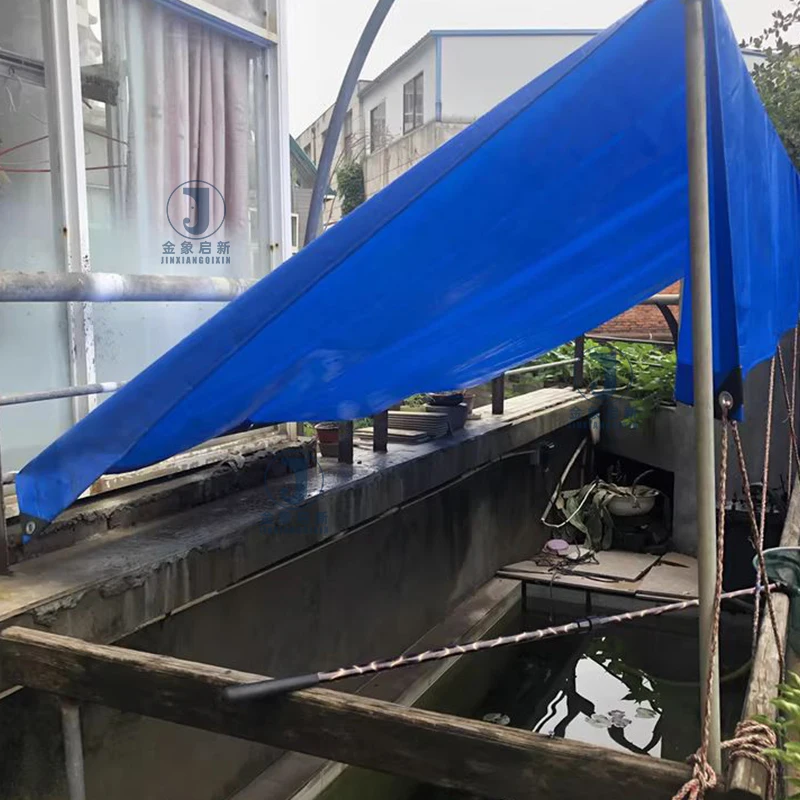
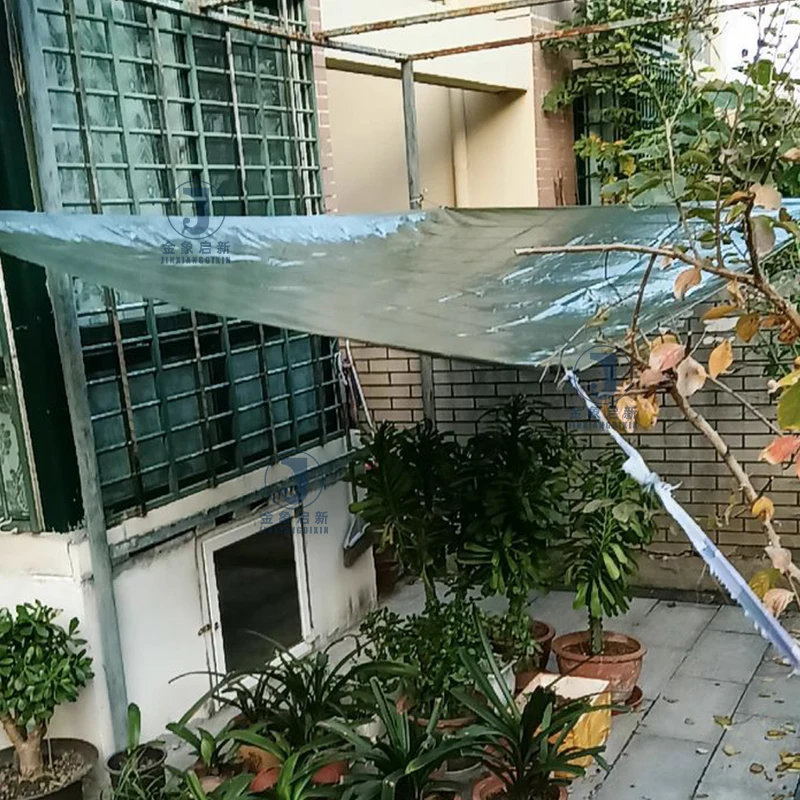
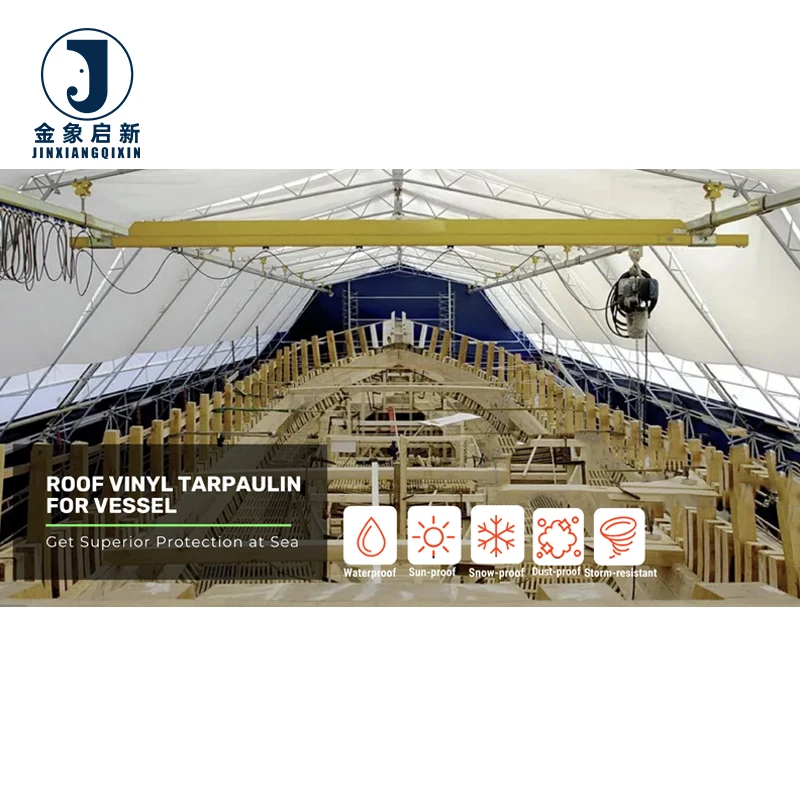
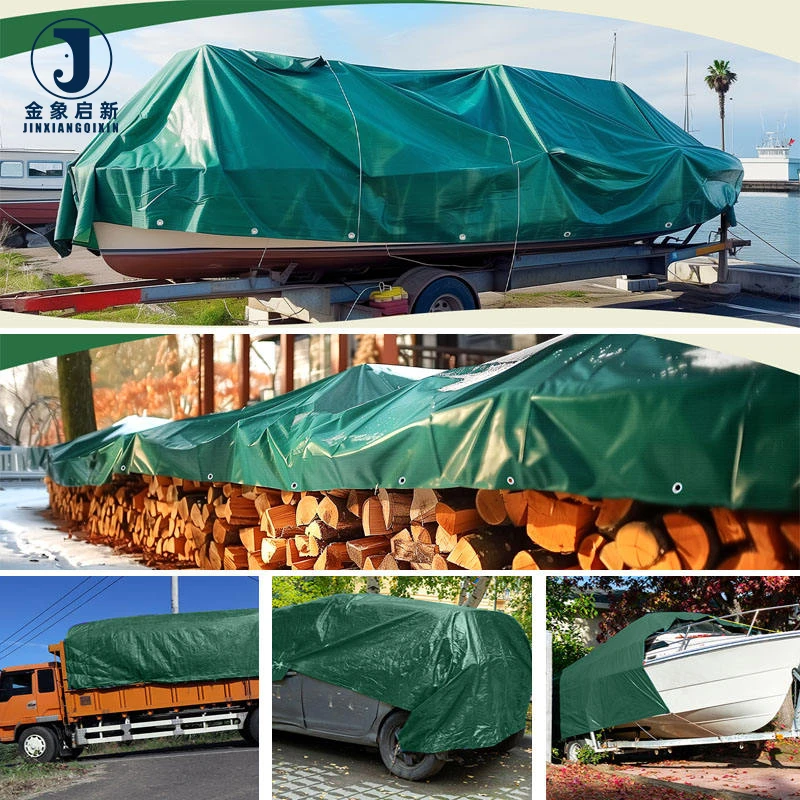
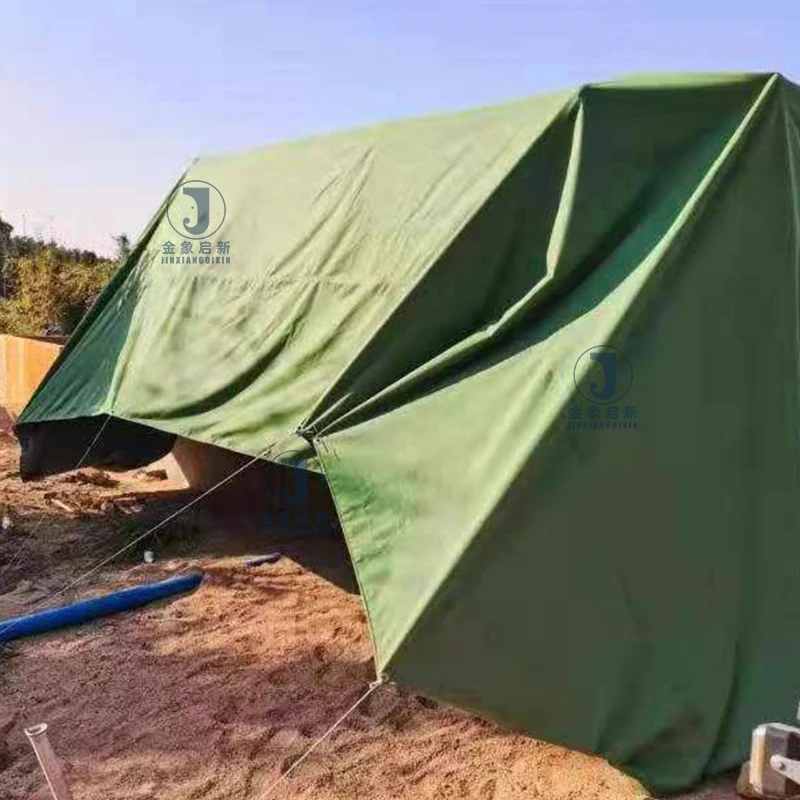
Process-Controlled Output — Every roll of PE tarpaulin for truck cover leaves the facility with verified GSM, base fabric density, and lamination weight recorded per batch, ensuring the specification you approve is the specification you receive.
Technical Specifications
| Parameter | Value |
|---|---|
| Product Type | PE Tarpaulin for Truck Cover |
| Material | HDPE weaving with LDPE lamination on both sides |
| Thickness | 0.18–0.35 mm |
| Weight (GSM) | 80–240 g/m² |
| Knitting Density | 8×8 / 10×10 / 12×12 |
| Tensile Strength (N/5cm) | Meridian 300–1200 / Latitude 250–1000 |
| Width Options | 6ft, 8ft, 10ft, 12ft, 2m, 4m, 6m or custom |
| Length Options | 100 yards, 100 meters or custom |
| Color Options | Blue, Blue/Orange, Green, Grey, Black, Clear, Grey/Green, Orange or custom |
| Edge Reinforcement | PP rope in hem on all four edges |
| Eyelets | Galvanized, every 3ft or 1 meter interval |
| Corner Reinforcement | Reinforced plastic corners |
| Key Features | Waterproof, washable, tear resistant, weather proof, UV treatment available, mildew proof, anti-aging |
| Standards | ISO, CE |
Application Suitability
| Application | Exposure & Requirement |
|---|---|
| Truck tarpaulin | Constant flexing at tie-down points, road abrasion, UV and weather exposure, wind lift at speed |
| Industrial protective covering | Warehouse dust, forklift contact, chemical splash resistance, repeated handling |
| Transportation tarpaulin | Multi-modal transit vibration, load shifting, puncture from irregular cargo edges |
| Agricultural stock covering | Moisture ingress prevention, mildew resistance, seasonal UV load, wind tension |
Why Stated GSM Without Verification Is a Risk for Transport Covering
A quoted weight is only meaningful when confirmed by measurement at every production stage.
PE tarpaulin aftermarket supplier claims frequently cite a GSM figure on the quotation that does not survive arrival inspection. When the delivered fabric is lighter than agreed, tensile capacity drops proportionally, and the cover fails first at the flex points where tie-downs concentrate load [NEED_CITE: tensile and tear test methods for coated fabrics per ISO 1421]. For truck and transport operators, this gap between stated and actual weight translates into premature seam splitting and eyelet pull-through under highway wind loads.
Lamination Integrity Under Transport Stress
The HDPE woven base provides the structural skeleton, while the LDPE double-side lamination seals the weave and distributes point loads across the fabric plane. When lamination weight is controlled per production run rather than averaged across a product family, the resulting PE tarpaulin aftermarket supplier output maintains consistent tear initiation resistance from the first meter to the last on each roll. This matters most at the reinforced hem where PP rope and galvanised eyelets transfer tie-down forces into the fabric body.
Weave Density and Directional Strength Progression
Three knitting density tiers — 8×8, 10×10, and 12×12 — correspond to increasing meridian and latitude tensile values across the 80–240 g/m² range. The 8×8 construction suits lightweight seasonal covers where handling ease outweighs long-term abrasion exposure. The 12×12 grade addresses heavy-duty transport applications where load shifting and repeated tension cycling demand higher directional strength [NEED_CITE: relationship between mesh count and directional tensile performance in woven PE fabrics]. Selecting the correct density tier prevents over-specifying on lightweight routes and under-specifying on long-haul corridors.
Reading the GSM-to-Strength Relationship Correctly
Weight alone does not predict field performance in truck covering applications. A 150 g/m² fabric woven at 10×10 with balanced lamination may outperform a heavier sheet that concentrates coating mass on one side while leaving the reverse weave exposed. The meridian-to-latitude tensile ratio — ranging from 300/250 N/5cm at the light end to 1200/1000 N/5cm at the heavy end — reveals how the HDPE yarn distribution handles biaxial loading when a cover is tensioned across an irregular load profile [NEED_CITE: ISO 1421 tensile testing protocol for coated and laminated fabrics].
The Hidden Cost of Specification Drift
When a roll arrives lighter or thinner than the approved sample, the consequences compound downstream. Galvanised eyelets punched into underweight fabric pull through under tie-down tension within the first few loading cycles. Lamination that is too thin on the underside allows moisture to migrate through the weave, defeating the waterproof claim and promoting mildew on the cargo side. Colour inconsistency between rolls in the same order becomes visible the moment two panels are installed side by side on a trailer [NEED_CITE: batch colour consistency standards in laminated PE tarpaulin production]. These failures are specification failures, not material failures.
Why Procurement Confidence Starts Here
Three full production lines and 36 sets of professional equipment allow bulk capacity to be scheduled without compressing QC checkpoints on your PE tarpaulin aftermarket supplier order. A dedicated QA/QC process runs at every production stage, with 100% inspection before shipment — not a sampling protocol that leaves roll-to-roll variation undetected. The 10-person R&D team handles custom width, colour matching, and sample development so that specialist requirements are confirmed before production begins rather than corrected after delivery. ISO and CE certification underpins the documentation chain, and a pre-shipment inspection record accompanies every dispatch so that what was quoted is what arrives.
Documentation & Verification
- Material specification sheet stating confirmed GSM, HDPE base fabric density, and LDPE coating weight per roll
- Pre-shipment inspection record with weight verification measured against the quoted GSM before dispatch
- UV treatment test report available for grades where treatment is specified and confirmed
- ISO and CE certificates included with each shipment batch
- Roll packing list identifying each roll by weight, width, length, and colour reference
Fabrication, Handling & Storage
- Heat sealing parameters must account for the LDPE lamination melt range to avoid delamination at seam lines
- Galvanised eyelets at 1m intervals require reinforced plastic corners at high-tension pull points
- Store rolls upright on pallets to prevent permanent creasing across the 6m maximum width
- PP rope reinforced hems distribute tie-down loads; avoid point-loading eyelets without hem support
- Clean with mild detergent only; aggressive solvents degrade the LDPE lamination surface layer
- Unroll at ambient temperature; cold-stiffened fabric is prone to cracking at fold lines during handling
Requesting a Matched Quotation
Provide the trailer dimensions or cover size, the typical cargo profile, and the exposure conditions your fleet encounters so that the correct knitting density and GSM tier can be confirmed. If your operation requires UV treatment or specific colour consistency across multiple rolls, state the annual volume and colour reference up front. Indicate whether you need finished cut sizes with eyelets and edge reinforcement or roll stock for in-house fabrication.
Frequently Asked Questions
Q: How is GSM verified before shipment on each roll?
A: Every roll undergoes weight measurement during the 100% pre-shipment inspection process. The measured GSM is recorded on the inspection record and compared against the value stated on your quotation. Any deviation outside tolerance is flagged before dispatch, ensuring the PE tarpaulin aftermarket supplier delivers what was specified.
Q: What documentation supports UV treatment claims?
A: Where UV treatment is specified for your order, a test report confirming the treatment grade ships with the documentation package. This report is generated from samples taken during the production run, not from a generic product family certificate.
Q: Can custom widths and colours be supplied with batch consistency?
A: Custom widths up to 6m and specific colour references are available with defined minimums. Colour matching is controlled per production run to maintain roll-to-roll consistency, which is critical when multiple panels are installed adjacent on a single trailer or across a fleet.
Q: How are seams and edges reinforced for high-flex transport applications?
A: PP rope is inserted into the hem on all four edges before galvanised eyelets are punched at 1m or 3ft intervals. Reinforced plastic corners are added at stress concentration points. This combination distributes tie-down loads across the fabric plane rather than allowing point failure at individual eyelets.
Q: What information do I need to provide for a compliant site-specific cover?
A: Confirm the fire-retardant or anti-static grade your site or jurisdiction requires, along with the applicable test standard. This allows the correct treatment to be specified and the relevant test report to be included with your shipment documentation, avoiding site rejection on arrival.