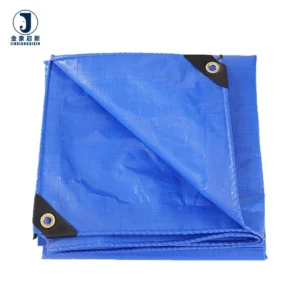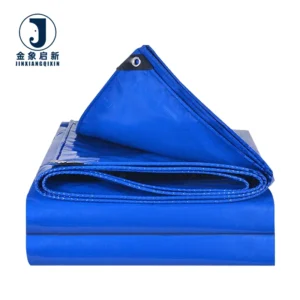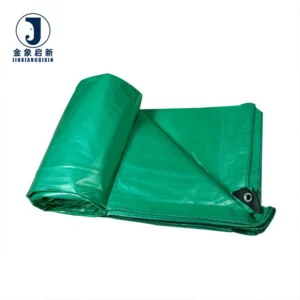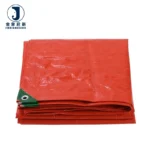
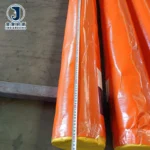

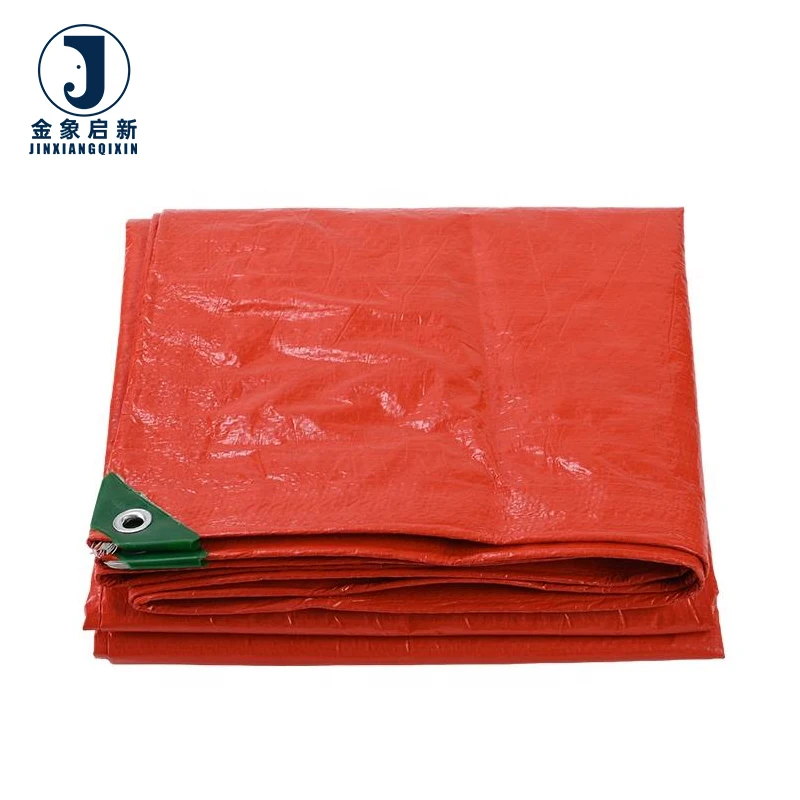
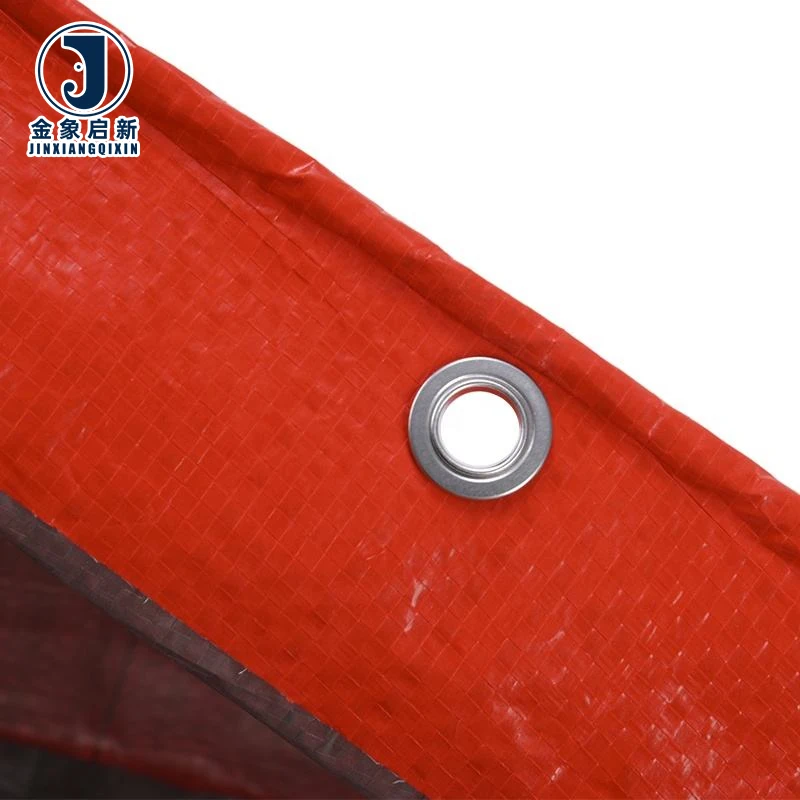
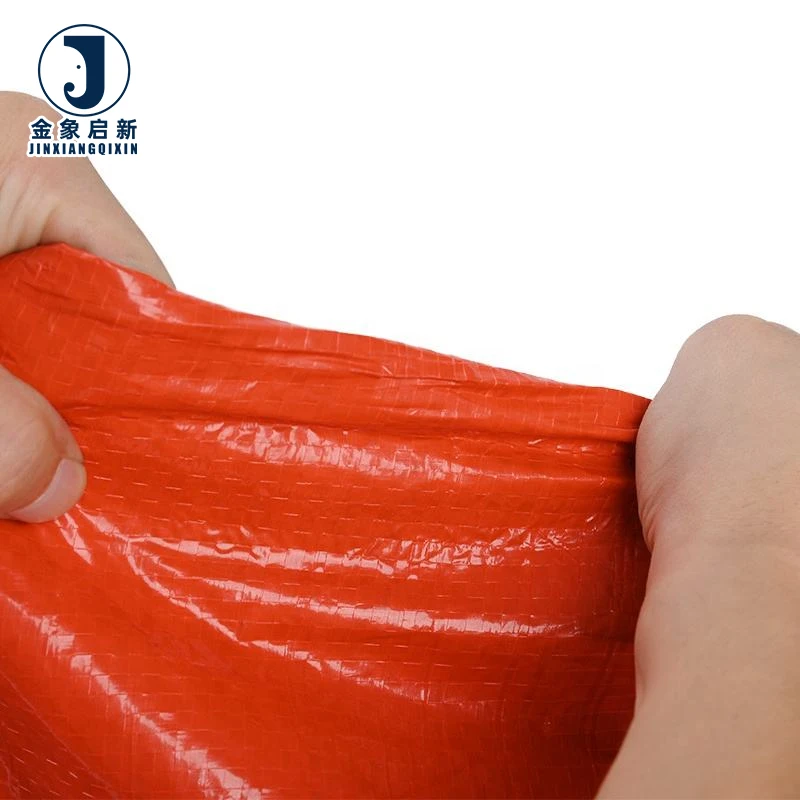
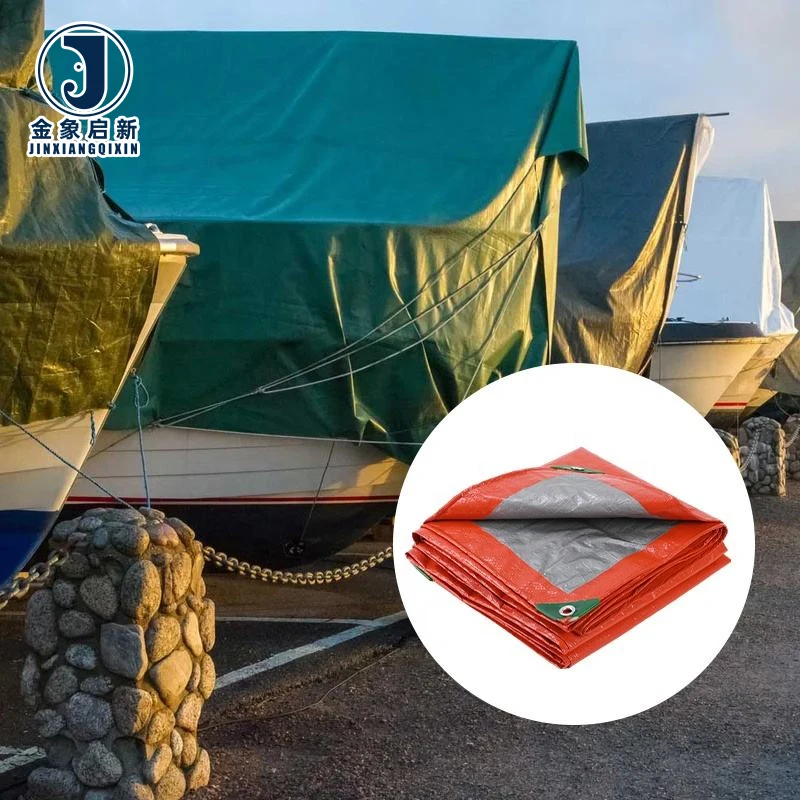
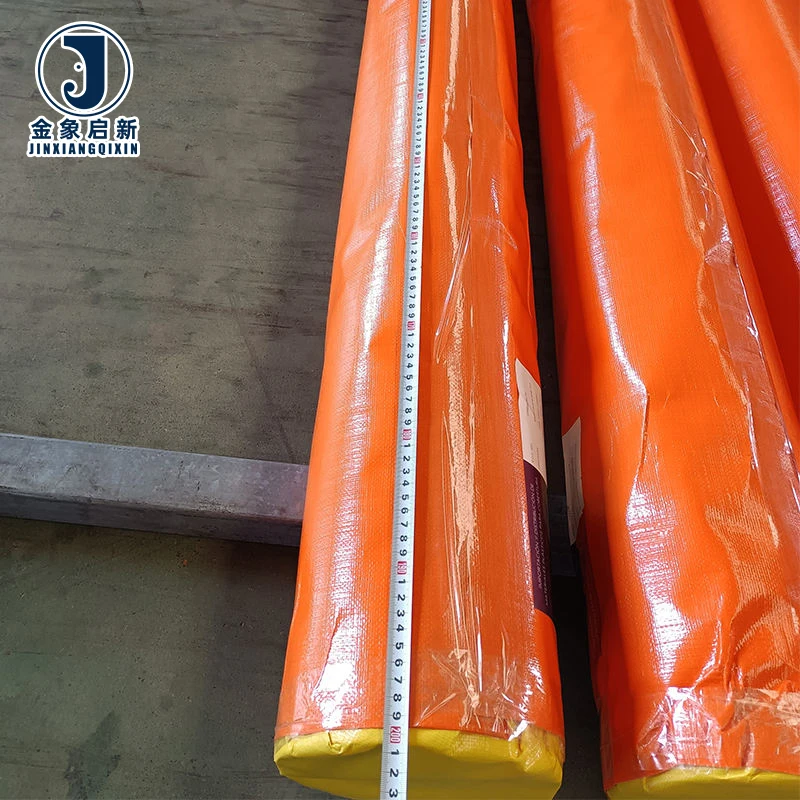
Traceable Coating Control — every PE tarpaulin roll carries a pre-shipment inspection record verifying GSM and mesh count against the quoted specification, eliminating arrival-weight disputes.
Technical Specifications
| Parameter | Value |
|---|---|
| Product Type | PE Tarpaulin |
| Material | Polyethylene (PE) |
| Weight Range | 40g~500g/m² (confirm the grade for this item) |
| Thickness | 0.18–0.35 mm |
| Knitting Density | 5×5 to 20×20 (8×8 / 10×10 / 12×12 available) |
| Tensile Strength (Meridian) | 300–1200 N/5cm (test basis not stated in source) |
| Tensile Strength (Latitude) | 250–1000 N/5cm (test basis not stated in source) |
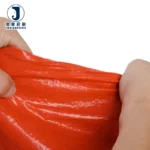
| Water Resistance | Double waterproof surfaces |
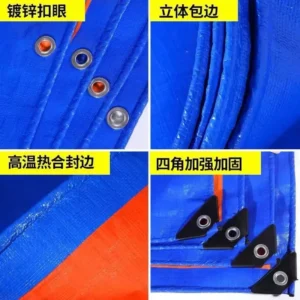
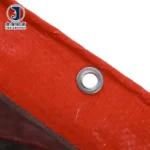
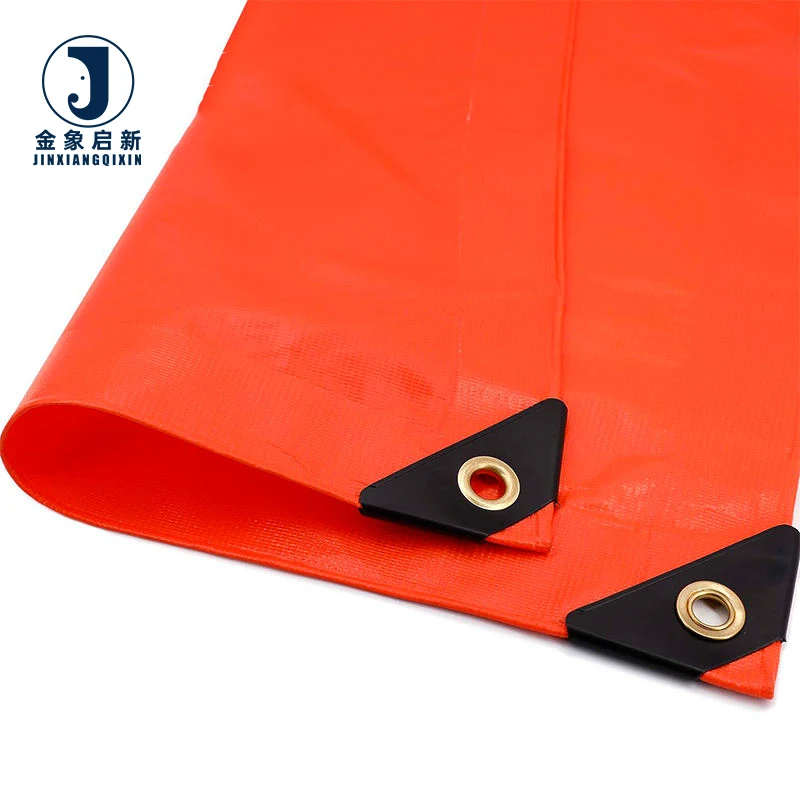
| Reinforcement | Reinforced corner |
| Eyelet Spacing | 39.4 Inches |
| Size | Custom size |
| Color | Custom color |
| UV Treatment | Available (test basis not stated in source) |
| Certifications | ISO 14001, ISO 45001, CE |
Application Suitability
| Application | Exposure & Requirement |
|---|---|
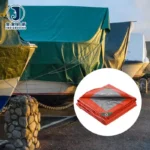
| Truck and trailer tarpaulin | Constant road vibration, flex at tie-down points, weather and UV exposure |
| Agricultural and aquaculture covers | Prolonged sun contact, moisture exposure, pond lining puncture risk |
| Warehouse and stockpile protection | Wind load on seams, dust ingress prevention, repeated folding |
| Industrial transport protection | Abrasion from machinery contact, load shifting, outdoor staging |
| Ventilation-adjacent protective covers | Airflow environments in mining and tunnelling, certified material compliance |
Why "GSM Quoted" Is Not the Same as "GSM Delivered"
Specified weight must be verified per roll before dispatch, not assumed from the quotation.
Technical buyers sourcing PE Tarpaulin for ventilation and technical fabric applications often face a familiar situation: the purchase order states one GSM, but the rolls arriving on site feel noticeably lighter. Without documented in-process weighing, the discrepancy surfaces only after installation — when covers sag under their own weight or fail at the seams under load. Weight drift across a production run compounds the problem when adjacent panels show visible tension differences. [NEED_CITE: ISO 1421 tensile and tear test methods for coated fabrics]
Ventilation-Adjacent Fabric Compliance for Mining and Construction
Ventilation duct installations in mining and tunnelling demand fire-retardant and anti-static certification for the primary duct fabric, but the protective covers and adjacent sheeting used on the same site often fall outside that formal specification. When inspectors extend their scope, uncertified PE tarpaulin on nearby staging areas can halt a compliance review. Confirming the fire-retardant grade required for your market before placing the order avoids costly mid-project material swaps.
Certification Documentation That Satisfies Site Auditors
Industrial sites increasingly require full traceability across every material delivered, not just the primary ventilation component. PE Tarpaulin for ventilation and technical fabric applications supplied with complete test reports and pre-shipment inspection records passes site audit checks without delay. The documentation package — covering material specification, weight verification, and certificate of origin — travels with each shipment so compliance officers can cross-reference on arrival. [NEED_CITE: DIN 4102 fire classification for building materials]
How Knitting Density and Weight Interact in PE Fabric
Mesh count and GSM together determine how the fabric behaves under tension and abrasion. A higher knitting density such as 12×12 distributes load across more yarns per square centimetre, which improves tear propagation resistance even when the overall GSM remains moderate. Conversely, a lighter 8×8 weave at the same GSM concentrates coating mass between fewer yarns, making the surface more prone to cracking at fold lines. Specifying both parameters independently — rather than relying on weight alone — gives fabricators predictable performance at stress points like reinforced corners and eyelet rows.
The Hidden Cost of Underspecified Protective Covers
When PE tarpaulin arrives with a lower GSM than ordered, the consequences compound quickly on a job site. Lighter material flexes more under wind load, accelerating fatigue at welded seams and reinforced corners. Panels that should sit taut against equipment frames instead billow and abrade against sharp edges. For transport fleets, undersized or underweight covers fail at tie-down points long before the expected replacement interval, forcing mid-route repairs and cargo exposure claims. [NEED_CITE: tarpaulin failure modes at welded seams under cyclic loading]
Why Procurement Teams Source PE Tarpaulin Here
Three full production lines and dedicated equipment sets support bulk roll output with consistent knitting density across batches, which matters when a single order spans multiple containers. The R&D team develops custom-sized samples within days, allowing technical buyers to verify fitment and weight before committing to a full production run. Every roll undergoes inspection at each production stage rather than only at final packing, catching coating weight deviations before they reach the warehouse. Material specification sheets accompany each shipment, stating base fabric, GSM, and coating details for traceability. QA documentation includes test reports for any specified UV or flame-retardant treatment, giving compliance-sensitive projects verifiable backing.
Documentation & Verification
- Material specification sheet stating GSM, mesh count, and coating weight per roll grade
- Pre-shipment inspection record confirming weight and dimension compliance before dispatch
- Test reports for UV and flame-retardant treatments where applicable to the order
- Certificate of origin and customs documentation for cross-border shipments
- Roll packing list enabling site receiving teams to reconcile quantity and grade on arrival
Fabrication, Handling & Storage
- Heat-weld seams using temperature settings matched to the specified coating thickness to avoid under-fusion at flex points
- Reinforce eyelet zones with additional PE patches, particularly on lighter grades below 120 GSM
- Store rolls upright on pallets to prevent flat-spot deformation across the full width
- Unfold stored covers in moderate temperatures to avoid crease cracking in cold-weather installations
- Clean surfaces with mild detergent only — aggressive solvents degrade the waterproof coating layer
What We Need to Quote Your PE Tarpaulin Order
To prepare an accurate specification, share your application environment, expected mechanical load at seams and tie-down points, and any fire-retardant or anti-static compliance your site mandates. Confirm whether you need finished cut-to-size covers or roll stock for in-house fabrication. Colour requirements, custom printing, and annual volume projections help us recommend the right knitting density and production scheduling.
Frequently Asked Questions
Q: How is GSM verified on arrival and what documentation supports the quoted weight?
A: Each roll is weighed during pre-shipment inspection, and the recorded value is documented on the inspection report that ships with the order. This allows your receiving team to cross-check arrival weight against the material specification sheet, ensuring the GSM matches what was quoted rather than relying on assumption.
Q: What fire-retardant or anti-static certifications are available for technical fabric orders?
A: PE Tarpaulin for ventilation and technical fabric applications can be produced in flame-retardant and anti-static grades — confirm the specific classification required for your market and site regulations. Test reports documenting the achieved grade are included with each certified shipment for auditor review.
Q: Can custom widths and colours be produced with batch consistency across rolls?
A: Multiple production lines handle custom widths and colour runs with controlled coating parameters to maintain consistency roll to roll. For large orders spanning several containers, the R&D team develops a reference sample first, then monitors colour and weight throughout the production run against that approved benchmark.
Q: What is the sample development process for specialist application requirements?
A: The R&D team prepares samples within days based on your specified GSM, knitting density, and treatment requirements. You review the sample for fitment, colour, and handling characteristics before approving the production run, reducing the risk of specification mismatch on the full order.
Q: How are welded seams tested to ensure they match or exceed fabric strength?
A: Welded seams are produced using temperature and pressure settings calibrated to the specific coating thickness of the grade ordered. In-process QA checks seam integrity at intervals during production, and the pre-shipment inspection record documents the results alongside the roll-level weight and dimension verification.