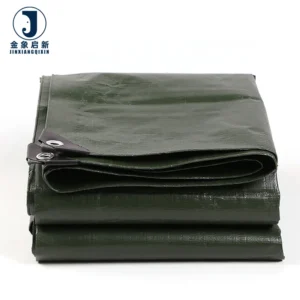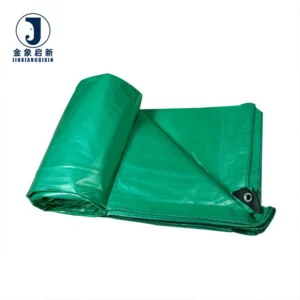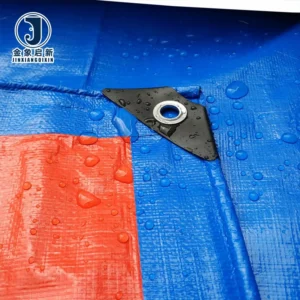
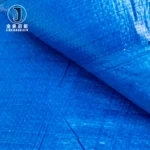
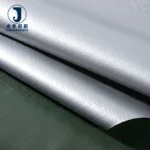
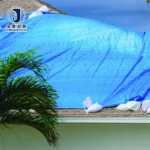
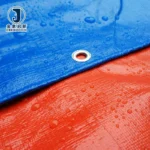
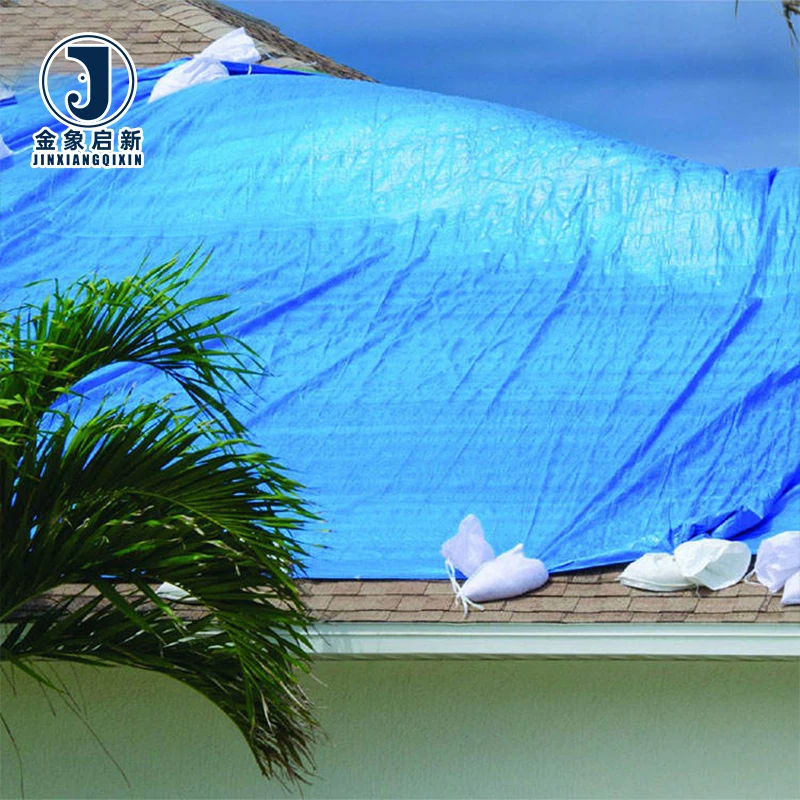

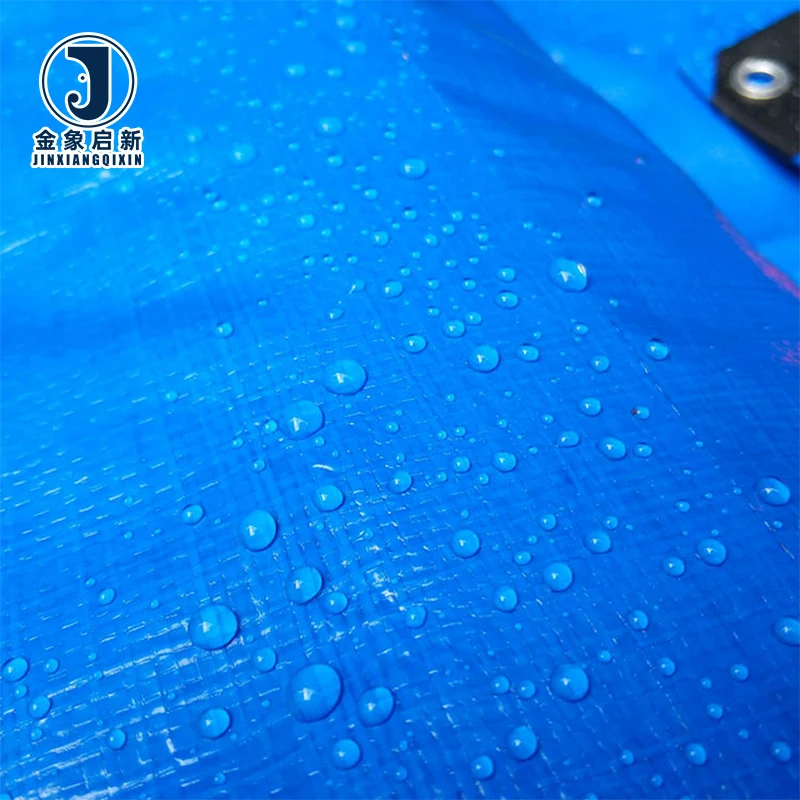
Verified Roll Weight — every roll of PE tarpaulin leaves our facility with a documented GSM check, so the weight you ordered is the weight you receive on the dock.
Technical Specifications
| Parameter | Value |
|---|---|
| Product Type | PE Tarpaulin Roll |
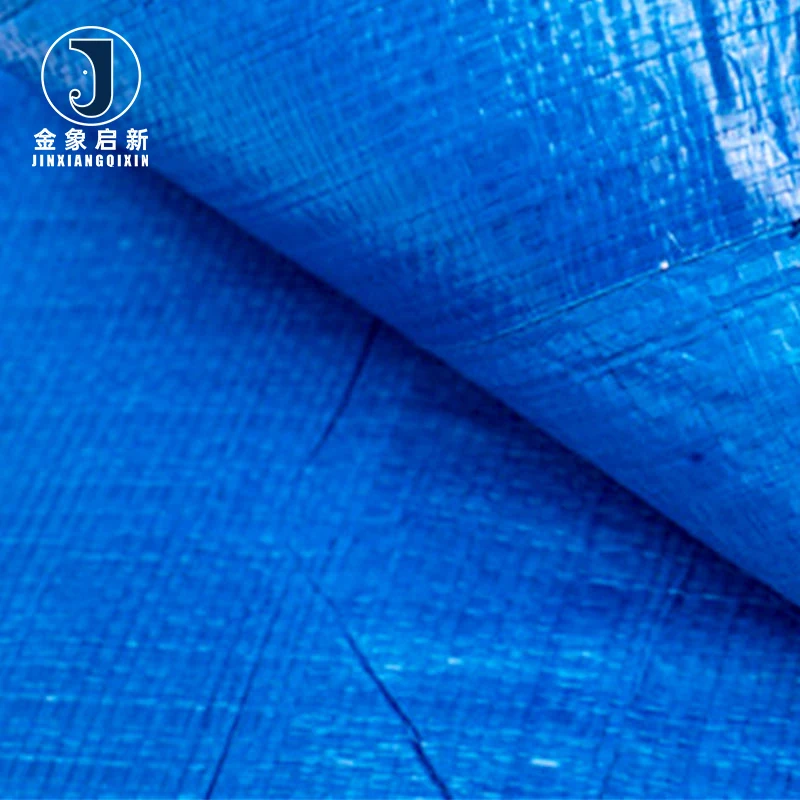
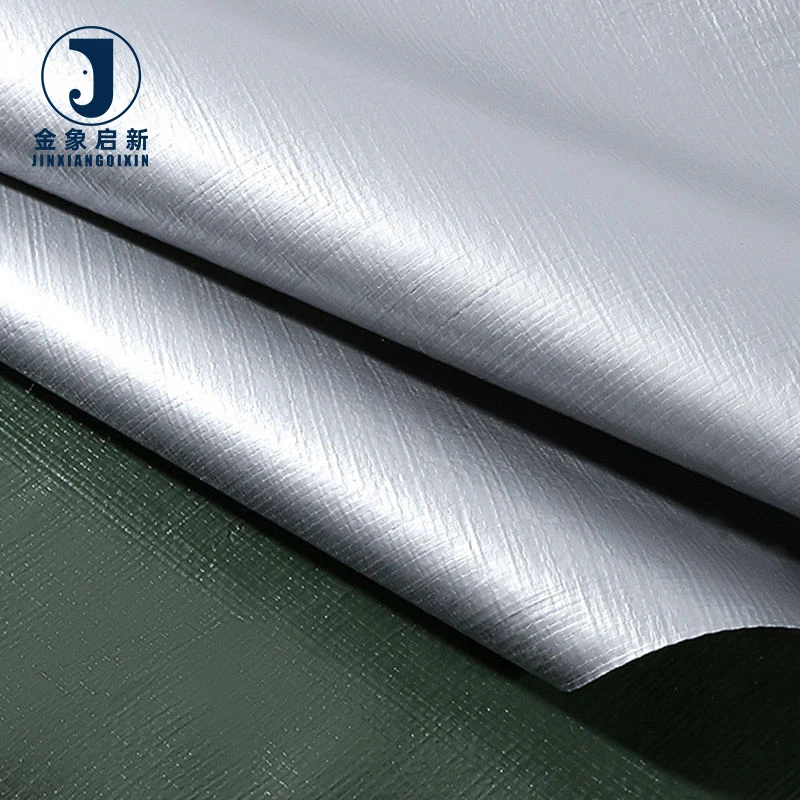
| Material | HDPE woven base with LDPE lamination on both sides |
| Fabric Weight Range | 45gsm – 400gsm (confirm the grade required for your application) |
| Total Thickness | 0.2–0.4 mm (8–16 mil) |
| Mesh Count Options | 6×6, 8×8, 10×10, 12×12, 14×14 |
| Roll Width Options | 6ft, 8ft, 10ft, 12ft, 2m, 4m, 6m |
| Roll Length Options | 100 yards, 100 meters, or custom |
| Colour Options | Blue, Blue/Orange, Green, Grey, Black, Clear, Grey/Green, Orange, or any Pantone colour |
| Flame Retardant Treatment | NFPA 701 available — confirm grade required for your jurisdiction |
| UV Treatment | UV stabiliser treatment available — test basis to be confirmed per grade |
| Waterproof | Yes, fully laminated construction |
| Anti-Mildew | Mildew-resistant and anti-aging additives available |
| Hemming | 4 cm hem margin, PP rope on all four sides |
| Eyelet Options | PC, brass, aluminum, or galvanized; spaced every 3ft or 1 meter |
| Corner Guards | PP or PE reinforced corners |
| Gussets | Available for heavy-duty grades |
| Finished Cut Sizes | 2×2m through 8×10m and custom dimensions |
| Printing | Custom brand printing available |
Application Suitability
| Application | Exposure & Requirement |
|---|---|
| Mining and tunnelling ventilation duct | Continuous forced airflow, underground fire-risk environment, anti-static and flame-retardant certification required on site |
| Membrane and inflatable structures | Sustained air pressure loading, UV exposure, wind-induced flexing at anchor points |
| Aviation ground support ducting | Fuel-adjacent environments, strict fire compliance, rapid deployment and teardown cycles |
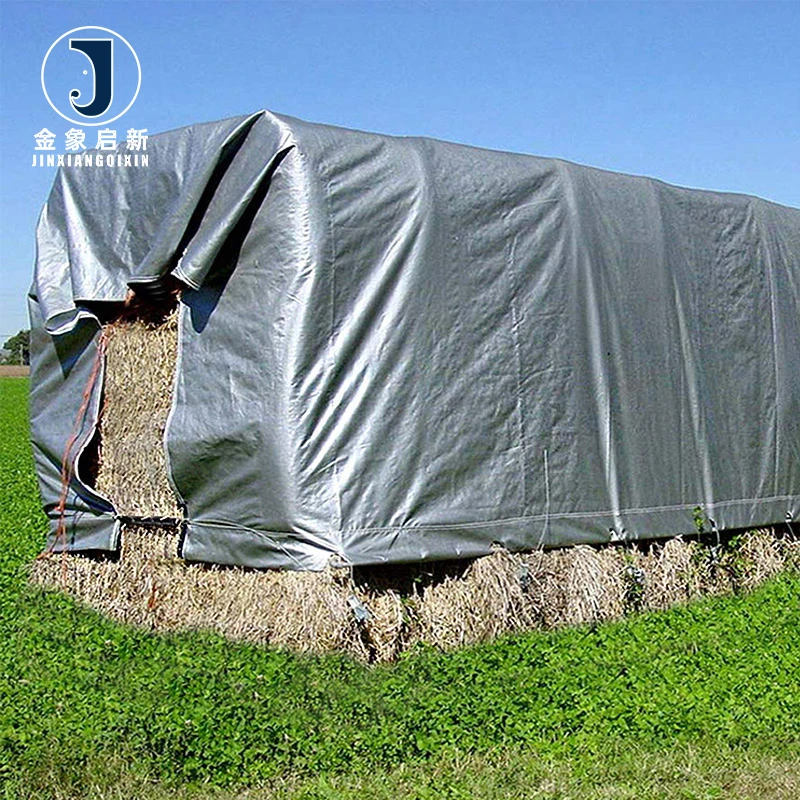
| Temporary site covers and enclosures | Weather exposure, mechanical abrasion from scaffolding and equipment contact |
| Agricultural and aquaculture pond liners | Permanent water contact, soil chemistry, puncture risk from substrate |
Why PE Tarpaulin Fire Retardant Certified Documentation Decides the Contract
A flame-retardant claim without a test report is a liability, not a specification.
When a ventilation duct or membrane structure fails site inspection because the fire certificate does not match the grade the safety officer specified, the entire installation halts. Contractors absorb the delay, the re-ship, and the compliance gap. I have seen projects stalled at handover because the PE tarpaulin fire retardant certified paperwork arrived weeks after the fabric itself — or never arrived at all [NEED_CITE: NFPA 701 flame propagation test protocol for flexible membrane materials].
The fix is not more marketing language on a data sheet. It is a test report that names the standard, references the batch, and travels with the shipment so the compliance officer can sign off before installation begins.
Fabric Selection Starts with the Compliance File, Not the Colour Card
For mining, tunnelling and aviation contractors, the first question on a membrane or duct material is never price per roll — it is whether the PE tarpaulin fire retardant certified grade satisfies the site safety plan. Underground ventilation duct must carry documentation that the local mining inspector recognises. Above-ground membrane structures for events or temporary warehouses need a classification the building authority will accept. Matching the correct flame-retardant treatment to the jurisdiction before production begins eliminates the most expensive failure mode in technical fabric procurement.
HDPE Weave and LDPE Lamination: What the Cross-Section Actually Does
The HDPE woven base provides the tensile skeleton; the LDPE lamination on both faces seals the weave and delivers waterproofing. In ventilation duct use, the lamination must hold against continuous positive or negative air pressure without delaminating at the seam. For inflatable structures, the same lamination must flex repeatedly at fold lines without cracking. The mesh count — from 6×6 up to 14×14 — directly controls the air permeability and the base fabric tear resistance [NEED_CITE: relationship between woven mesh density and tear propagation in laminated polyethylene fabrics].
Reading the Specification Sheet Beyond the GSM Number
GSM tells you mass per area, but two rolls with identical GSM can behave very differently under load. A 12×14 mesh at 180gsm has more yarn intersections per square metre than an 8×8 mesh at the same weight, giving it higher tear resistance but potentially lower drape. For duct fabrication, a tighter weave holds the air seal better at longitudinal seams. For pond liners, a heavier individual yarn denier resists puncture from sharp substrate. Total thickness — 0.2 to 0.4 mm across this range — correlates with stiffness and handling ease on site, not directly with long-term durability. UV stabiliser treatment, when specified, must be confirmed against the actual grade and tested exposure hours to be meaningful; a generic claim without a test basis offers no protection at all [NEED_CITE: UV degradation test methods for polyethylene laminated fabrics].
Roll width selection — 2 m, 4 m, or 6 m — determines how many longitudinal seams a duct or membrane will require. Fewer seams mean fewer potential failure points and less fabrication labour, but wider rolls demand heavier handling equipment on site and may exceed standard container internal width for shipping.
What Happens When the Specification Does Not Match the Application
Ordering a 6×6 mesh for a high-pressure ventilation duct means the lamination carries most of the air-seal load, and delamination at the welded seam becomes the first failure point rather than the fabric tearing. Specifying a flame-retardant grade that the local inspector does not recognise means the duct passes no site audit regardless of its actual fire performance. Colour inconsistency across rolls in the same shipment becomes visible the moment two panels hang side by side on a membrane structure, triggering a full visual rejection [NEED_CITE: batch colour consistency standards for architectural membrane fabrics].
Sourcing This PE Tarpaulin from Jinxiang
Three full production lines and 36 sets of professional equipment support bulk roll output with consistent lead times for PE tarpaulin fire retardant certified orders. A 10-person R&D team handles mesh count selection, lamination weight adjustment, and sample development so you confirm the specification before bulk commitment. Dedicated QA/QC stages with 100 percent pre-shipment inspection verify GSM, colour consistency, and coating adhesion on every roll. Samples for custom widths, Pantone colours, or printed branding are developed within days. Nearly three decades of coated fabric production inform the process controls that keep roll-to-roll weight and coating uniform across a multi-container order.
Documentation & Verification
- Material specification sheet stating GSM, mesh count, base fabric denier, and lamination type per roll batch
- Flame-retardant test report referencing NFPA 701 or the confirmed standard, shipped with the relevant batch
- UV treatment test data provided for grades where stabiliser treatment is specified
- Pre-shipment inspection record covering weight verification, colour check, and coating adhesion
- ISO and CE certificates plus certificate of origin included in every dispatch package
- Roll packing list with net weight and dimensions for customs and container loading plans
Fabrication, Handling & Storage
- Heat-seal temperature and dwell time must match the LDPE lamination thickness to prevent seam delamination on duct joints
- Eyelet spacing at 1 m intervals suits membrane tie-down; adjust closer for high-wind inflatable structures
- Store rolls horizontally on pallets to prevent permanent creasing in the 0.2–0.4 mm lamination
- Unroll in ambient temperature; cold-stiffened PE may crack at the fold line if forced open below freezing
- Clean with mild detergent only; solvents will degrade the LDPE surface and reduce water resistance
- Lay flat pattern pieces across the 4 m or 6 m width to minimise offcut waste on large membrane panels
What to Include in Your Enquiry
Provide the installation environment — underground, above-ground, coastal, or fuel-adjacent — so we can match the correct flame-retardant and anti-static treatment. Confirm the fire classification your local authority or site safety plan requires, along with the roll width and total linear metres needed. If the end use is duct fabrication, share the duct diameter and operating pressure so we can recommend the appropriate mesh count and lamination weight.
Frequently Asked Questions
Q: What fire-retardant grade does this PE tarpaulin carry and is NFPA 701 valid for my jurisdiction?
A: NFPA 701 treatment is available across the PE tarpaulin range. However, jurisdiction acceptance varies — some mining authorities require additional local classification. Share your site compliance requirement at enquiry stage and we will confirm whether NFPA 701 satisfies it or if an alternative test standard is needed before production begins.
Q: Can the anti-static treatment be certified for mining and tunnelling ventilation duct use?
A: Anti-static treatment can be applied to the PE tarpaulin for underground ventilation applications. The specific test method and resistance value required depend on the mining authority governing your site. Provide the compliance standard at enquiry and we will arrange the appropriate treatment and documentation for your shipment.
Q: How do I verify GSM and mesh count on arrival against the specification sheet?
A: Each shipment includes a pre-shipment inspection record documenting GSM and mesh count per roll. On receipt, you can cross-check by cutting a measured sample, weighing it, and counting the yarn intersections per square inch. Any discrepancy should be reported with photographs for immediate review and resolution.
Q: What roll width and length options are available for large-format duct and membrane fabrication?
A: Rolls are available in widths from 2 m up to 6 m and lengths of 100 yards, 100 meters, or custom. Wider rolls reduce longitudinal seams on large ducts and membranes, improving both fabrication speed and in-service air-seal integrity. Confirm the maximum roll weight your site handling equipment can manage before specifying.
Q: Do you supply material test reports and certificates of origin with every shipment?
A: Yes. Every dispatch includes the material specification sheet, flame-retardant or UV test report where applicable, ISO and CE certificates, certificate of origin, and the pre-shipment inspection record. These documents travel with the goods so your compliance team can verify before installation.