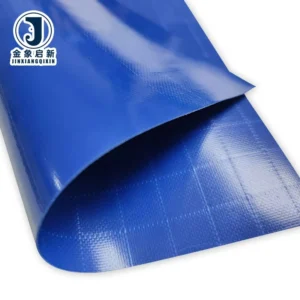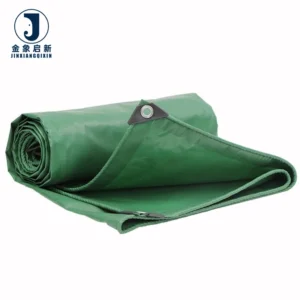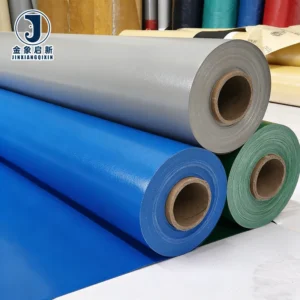

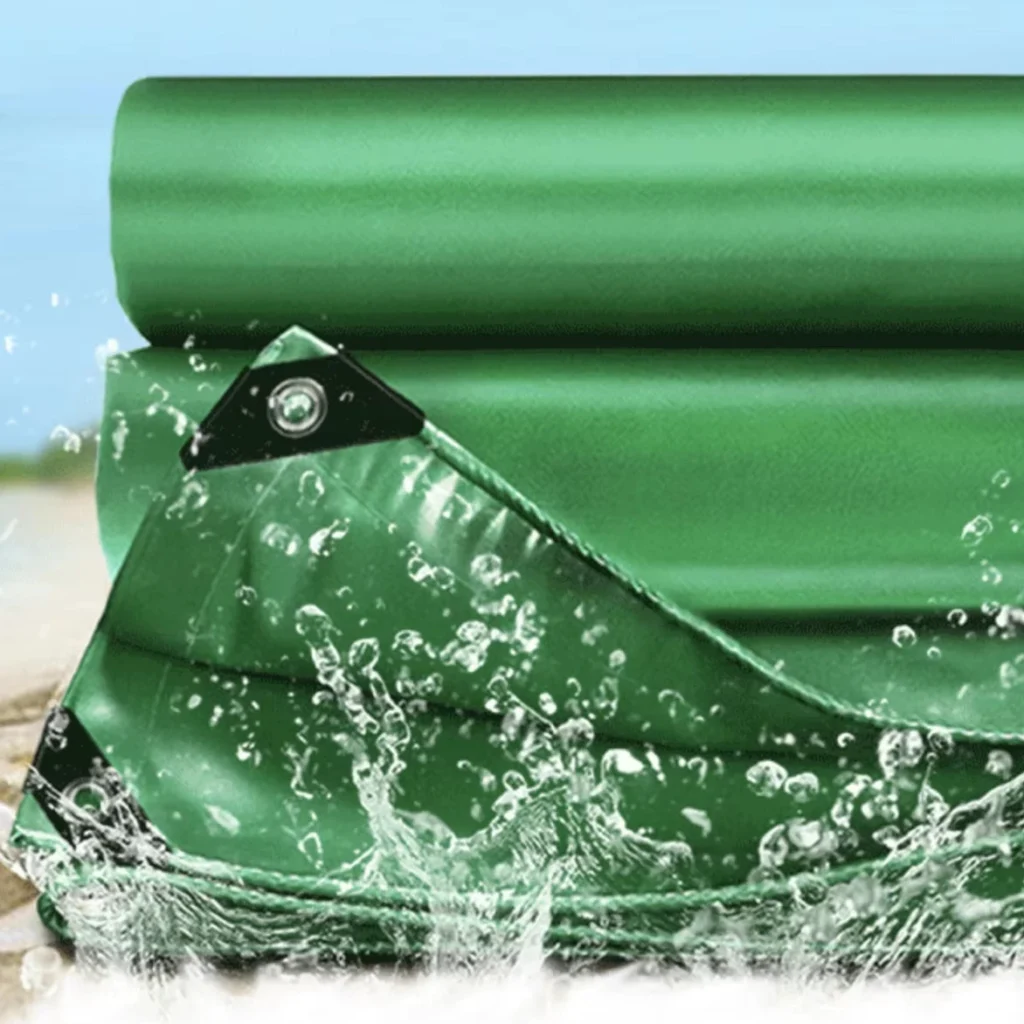
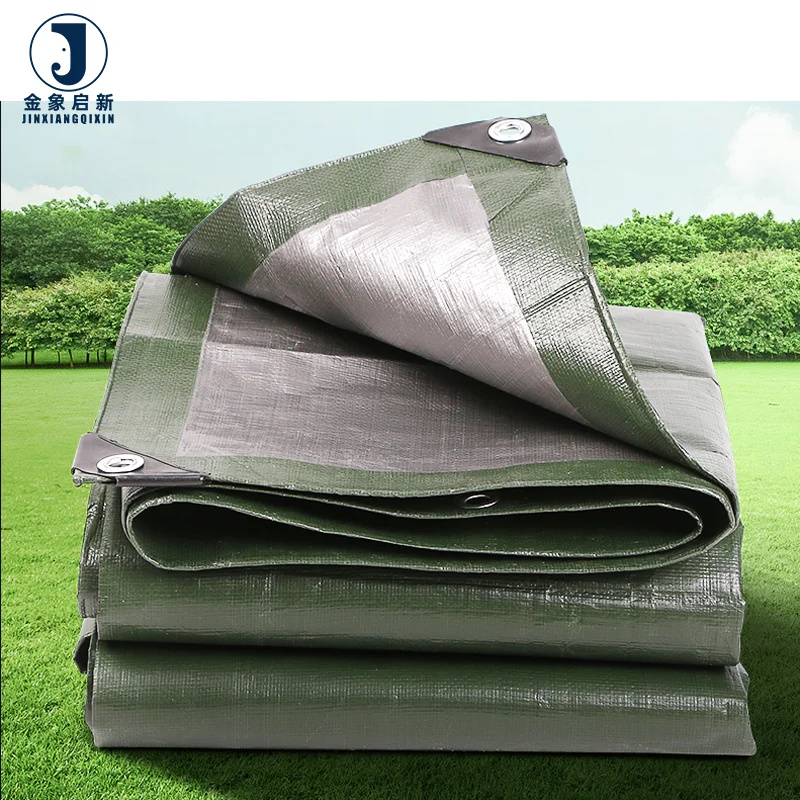
Precision-Coated Technical Fabric — our 0.3mm 400g PVC coated tarpaulin roll is built around deep process control over coating weight and adhesion, delivering the dimensional stability and weld integrity that ventilation duct and membrane structure contractors depend on.
Technical Specifications
| Parameter | Value |
|---|---|
| Product Type | PVC Coated Tarpaulin Roll |
| Base Fabric Denier | 500D-500D |
| Base Fabric Material | Polyester |
| Coating Material | PVC |
| Total Thickness | 0.3mm |
| Weight (GSM) | 400g |
| Finish | Blackout |
| Key Features | Water Resistant, Waterproof, Anti-UV (test basis not stated in source), Flame Retardant (grade not stated in source) |
| Standards | ISO (specific number not stated), CE (specific number not stated) |
Application Suitability
| Application | Exposure & Requirement |
|---|---|
| Inflatable and membrane structures | Continuous air pressure stress, UV exposure, light control through blackout capability |
| Aviation and construction ventilation duct | Airflow containment, fire-retardant compliance per site specification, flexing at duct joints |
| Mining and tunnelling enclosures | Underground moisture, particulate exposure, potential anti-static requirement for confined spaces |
| Specialist temporary shelters | Rapid deployment, weather exposure, repeated folding and unfolding |
What "Fire-Retardant PVC Fabric" Actually Means for Your Site Approval
Specify the exact test standard your project requires before committing to a roll order.
A quotation that simply states "flame retardant" without naming a grade creates risk at the inspection stage. We have seen ventilation duct and membrane structure projects stalled because the fabric certificate did not match the site’s mandated standard — the contractor ordered, the fabric arrived, and the site safety officer rejected it on day one. Confirming whether your market calls for NFPA 701, DIN 4102, M2, or B1 before the 400g PVC coated tarpaulin roll enters production eliminates that failure point. [NEED_CITE: fire classification standards for coated technical textiles in building and ventilation applications]
Dimensional Stability Under Duct and Structure Loads
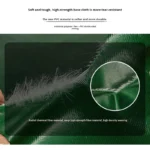
The 500D-500D polyester base fabric delivers the dimensional stability required when fabric is cut into duct sections or tensioned across a membrane frame. At 0.3mm total thickness, the material remains manageable for fabrication shops that weld seams and attach flanges, while the double-sided PVC coating ensures adhesion consistency across both faces. This balance matters most when the finished duct must hold shape under positive or negative air pressure without stretching at the seams.
Blackout Performance for Light-Sensitive Installations
Certain inflatable and membrane structure applications demand complete light blocking — from temporary medical shelters to photographic or media environments. The blackout finish of this PVC coated tarpaulin roll prevents light transmission through the fabric body, removing the need to laminate a secondary opacity layer. For contractors building specialist enclosures, this simplifies both the material specification and the fabrication process. [NEED_CITE: light transmission requirements for temporary specialist structure fabrics]
Reading the Specification Sheet Beyond GSM
The stated 400g weight sits on a 500D-500D polyester base — understanding why both numbers matter prevents misapplication. GSM alone reflects the combined mass of base fabric and coating; it does not isolate whether strength comes from yarn density or from coating thickness. A roll that achieves its weight primarily through heavy coating may resist abrasion well but show lower tear propagation resistance than one where the base yarn carries more of the load. The 0.3mm thickness places this material in a range suited to applications requiring flexibility during fabrication and installation, rather than the heavier grades used for permanent external cladding. Coating adhesion quality, controlled during the PVC application process, determines whether hot-air welded seams will match the base fabric strength — a critical factor where duct joints or structure seams carry the highest local stress.
The Cost of Wrong Grade Selection at Inspection
Selecting a ventilation duct fabric without confirming the fire-retardant grade against the site’s regulatory framework leads to rejection at commissioning, not at the quotation stage. Similarly, specifying anti-static performance for underground mining ventilation without obtaining the corresponding certification document means the fabric cannot be legally installed, regardless of its physical quality. Batch-to-batch colour variation across rolls destined for visible membrane panels forces contractors to sort and re-cut on site, consuming labour and material margin. [NEED_CITE: common causes of coated fabric rejection at project handover]
Why Technical Buyers Source This Roll Here
Our ten-person R&D team works directly with contractors to match the 400g PVC coated tarpaulin roll to specific compliance frameworks, developing samples that carry the correct test documentation before bulk production begins. Three full production lines with dedicated QA at each coating and laminating stage ensure that GSM, coating weight, and blackout consistency are verified roll by roll — not sampled from the first and assumed for the rest. Pre-shipment inspection records accompany every dispatch, giving the buyer traceable weight and width data per roll. Custom widths and colours are developed with sample approval before the production run, reducing the risk of specification mismatch on arrival. [NEED_CITE: tensile and tear test methods for coated fabrics per ISO 1421]
Documentation & Verification
- Material specification sheet stating exact 400g GSM, 500D-500D base, and PVC coating breakdown
- Flame retardant test report matched to your project’s required standard before order confirmation
- Pre-shipment inspection record with roll-by-roll weight and width verification data
- Certificate of origin and customs documentation for cross-border shipment clearance
Fabrication, Handling & Storage
- Hot-air welding parameters should be calibrated for 0.3mm PVC thickness to avoid coating burn-through at seams
- Store rolls upright on end caps to prevent flat-spot deformation of the 500D polyester base fabric
- Cut with sharp rotary blades to avoid fraying the 500D yarn ends, which compromises weld adhesion at edges
- Avoid prolonged compression stacking; 400g grade rolls can develop crease marks that show on membrane surfaces
- Clean with mild detergent only — aggressive solvents may degrade the PVC coating surface and blackout layer
Preparing Your Inquiry for Technical Fabric Supply
Provide the specific fire-retardant standard your project mandates, the total linear metres required, and the roll width your fabrication equipment accommodates. If the application involves underground mining or tunnelling ventilation, confirm whether anti-static certification is a compliance requirement. State whether you need raw roll stock for your own cutting or pre-cut panels to a defined pattern.
Frequently Asked Questions
Q: Which flame retardant standard should I specify for my ventilation duct project?
A: The required grade depends on your project’s jurisdiction and application. Common standards include NFPA 701 for North American sites, DIN 4102 B1 for European construction, and M2 for French-regulated projects. Provide your site’s mandated standard with your inquiry so the correct test report accompanies the 400g PVC coated tarpaulin roll shipment.
Q: How do I verify the 400g GSM when the rolls arrive?
A: Cut a measured sample from each roll, weigh it on a calibrated scale, and compare against the stated specification. Our pre-shipment inspection record provides roll-by-roll weight data so any discrepancy is identifiable before fabrication begins, preventing costly rework after cutting and welding.
Q: Is anti-static treatment available for mining ventilation duct use?
A: Anti-static treatment is available for specialist ventilation applications. Confirm the certification standard your mine site requires when placing your inquiry, as different jurisdictions mandate different test methods. The treatment and documentation must be specified before production to ensure compliance at delivery.
Q: What hot-air welding settings work best for this 0.3mm material?
A: Welding temperature, speed, and pressure should be calibrated to the 0.3mm PVC coating thickness on the 500D polyester base. We recommend running test welds on sample material to dial in parameters before committing to production joints. Overheating degrades the coating; insufficient heat produces weak seams that fail before the fabric body.
Q: Can I order custom roll widths for my membrane structure project?
A: Custom widths are available subject to minimum order quantities. Provide your required width and total linear metres with your inquiry. We develop a sample for approval before the production run, ensuring the 400g PVC coated tarpaulin roll meets your dimensional and performance requirements before bulk commitment.