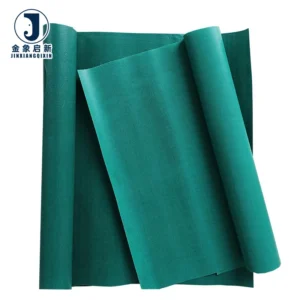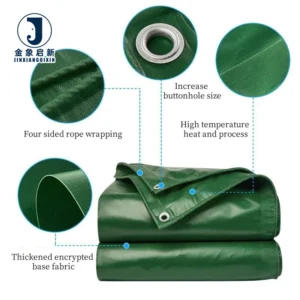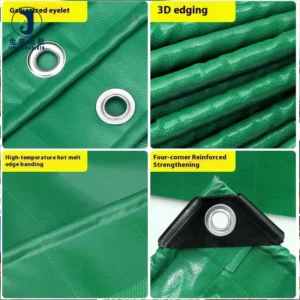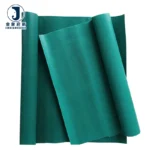
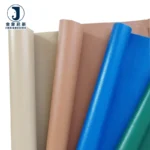
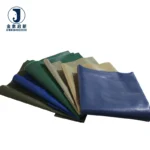
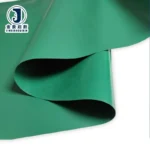

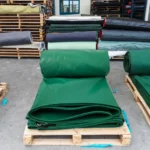
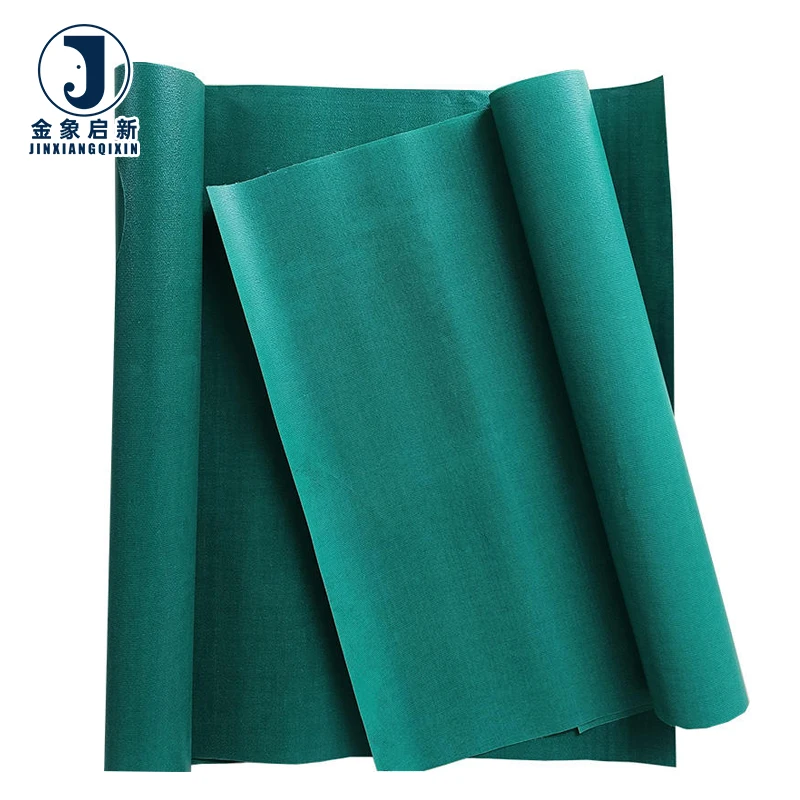
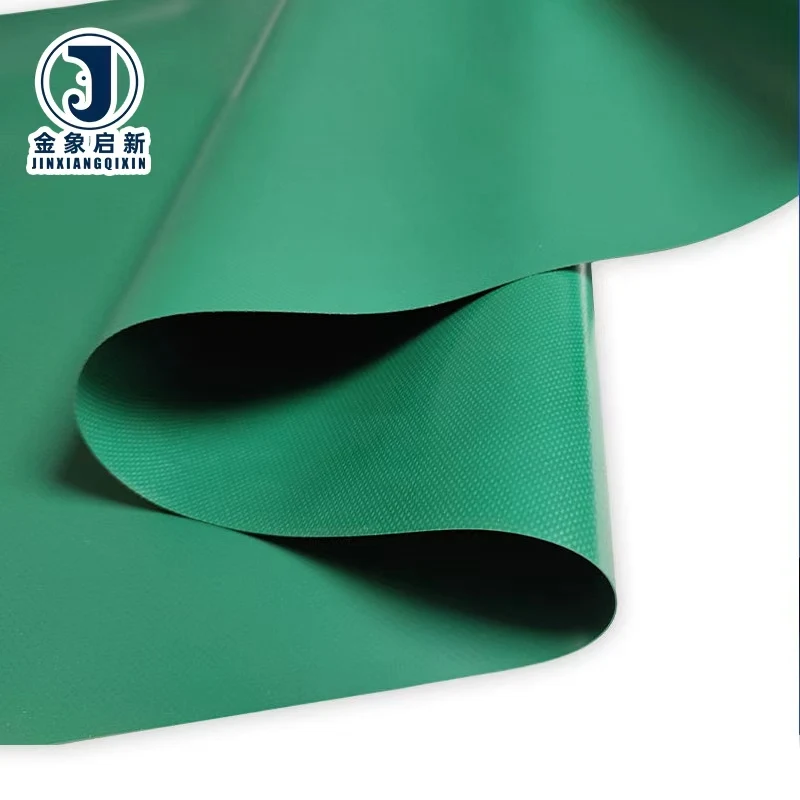
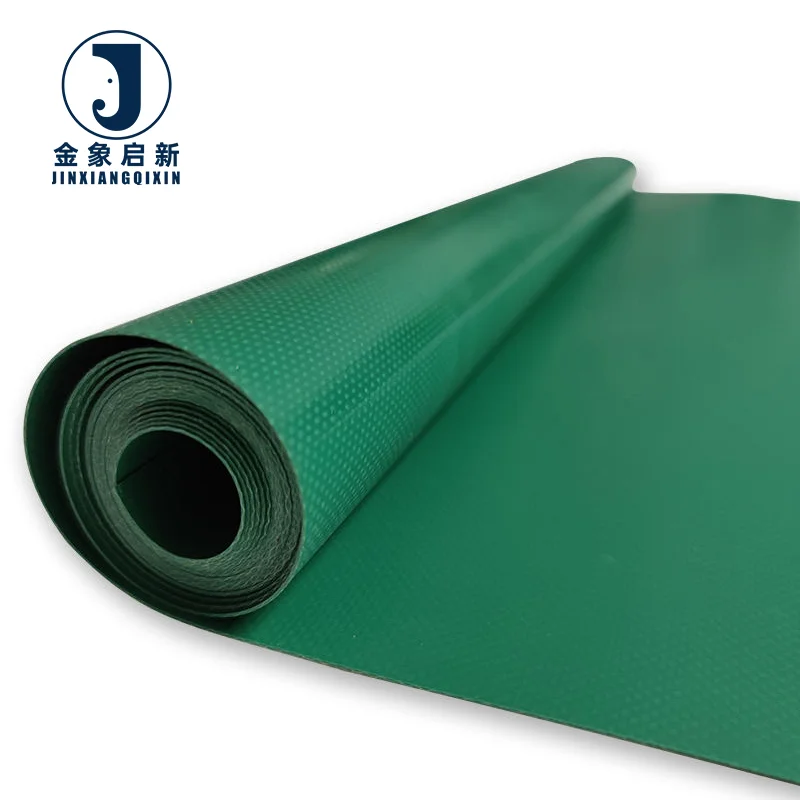
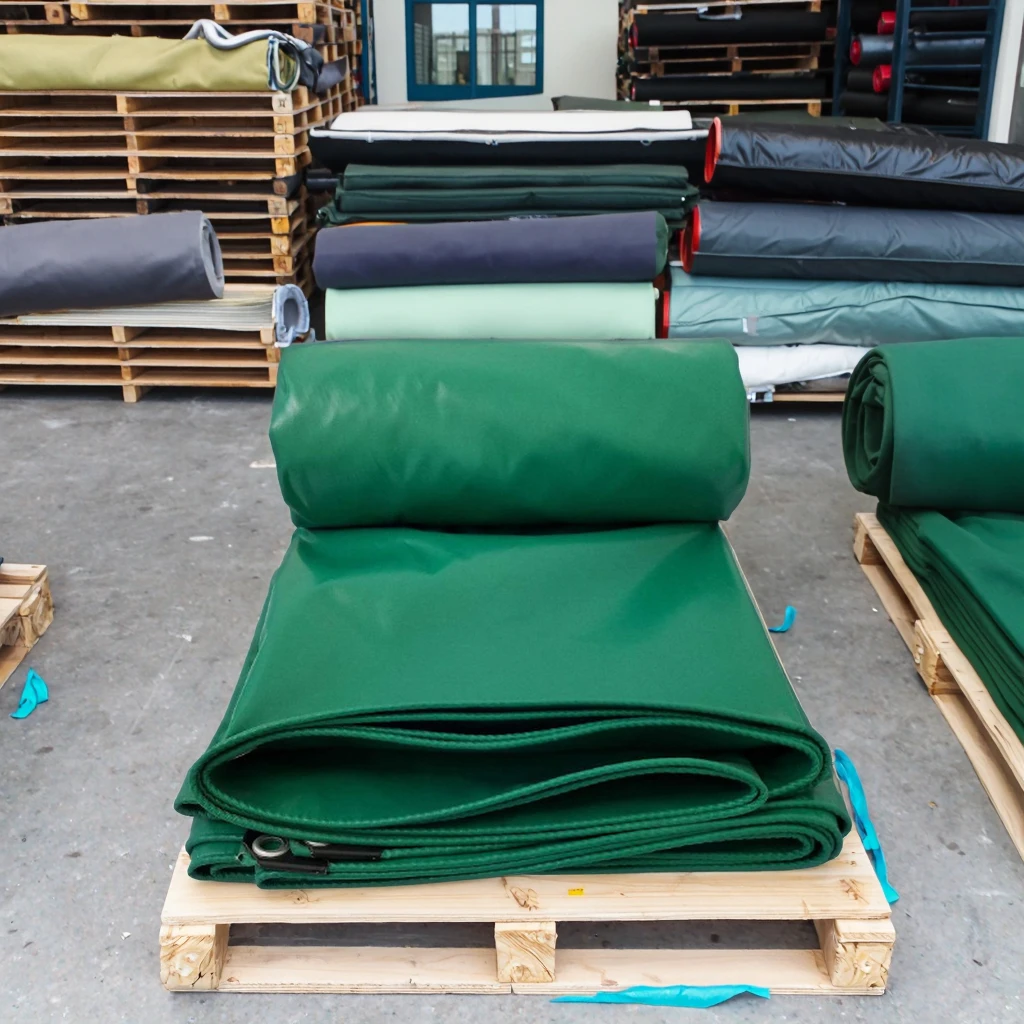
Verified GSM and coating adhesion — every roll undergoes 100% pre-shipment inspection to confirm weight matches the stated specification before dispatch.
Technical Specifications
| Parameter | Value |
|---|---|
| Product Type | PVC Coated Tarpaulin Roll |
| Material | PVC + High-strength polyester mesh fabric |
| Coating Method | Laminated technology & Hot-melt coating technology |
| Weight Options | 350gsm / 420gsm / 500gsm / 550gsm / 600gsm / 750gsm |
| Total Thickness | 0.32mm / 0.35mm / 0.4mm / 0.45mm / 0.5mm / 0.65mm |
| Roll Width | 2m / 2.1m |
| Roll Length | 75m (2m width) / 50m (2.1m width) |
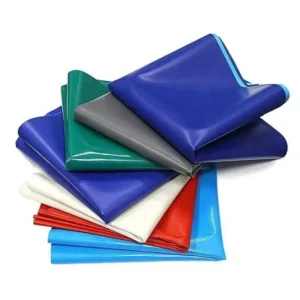
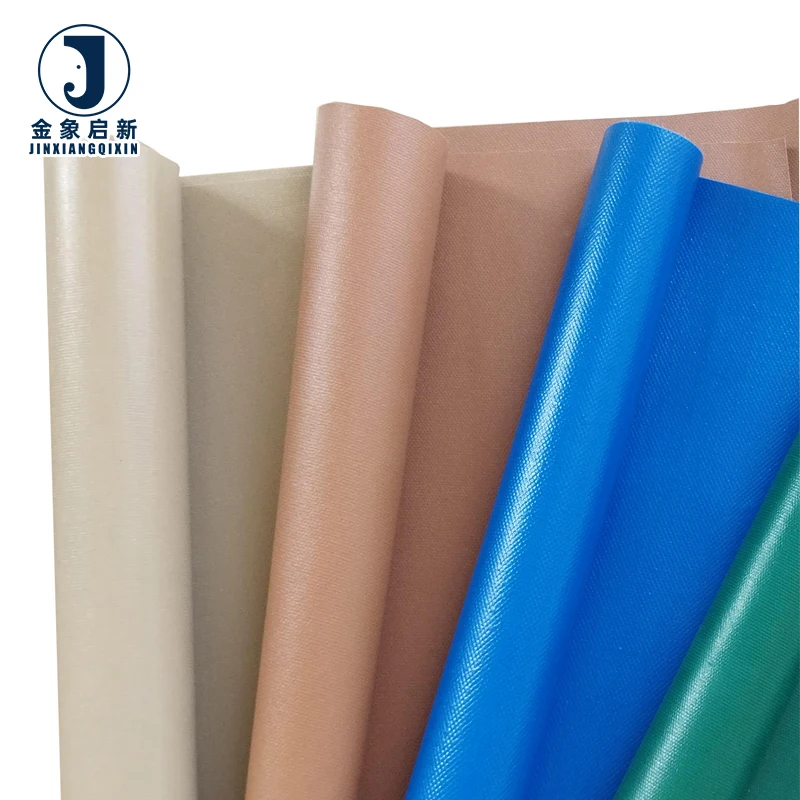
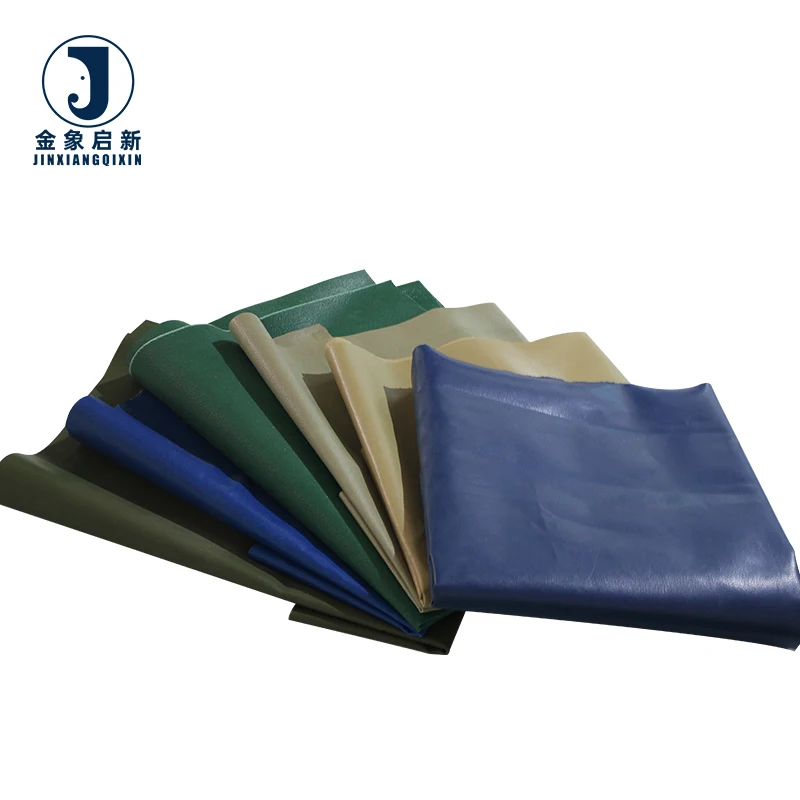
| Color Options | Blue / Red / Yellow / Light blue / Grey (Customized) |
| Flame Retardant | Available (grade not stated in source — confirm required standard) |
| Anti-Static | Available (test basis not stated in source — confirm surface resistance requirement) |
| Anti-Mildew | Yes |
| Cold Crack Resistance | Yes (test basis not stated in source) |
| Waterproof | Yes |
| Key Features | Anti-mildew, anti-cold, waterproof, color fastness rated at production |
Application Suitability
| Application | Exposure & Requirement |
|---|---|
| Mining & tunnelling ventilation duct | Subsurface environment requiring fire-retardant and anti-static certification for regulatory compliance |
| Inflatable & membrane structure fabric | Repeated inflation-deflation cycles, wind loading, UV and weather exposure |
| Aviation ground support ducting | Flame-retardant compliance for airfield operations, airflow containment, ground handling abrasion |
| Temporary industrial enclosure | Construction site dust and weather barrier, scaffolding wrap, wind and rain exposure |
| Equipment and plant covers | Static outdoor storage, UV and moisture exposure, periodic handling and repositioning |
What "Fire Retardant" Means Without a Grade Behind It
A PVC Coated Tarpaulin Roll fire retardant claim without a named standard is a liability on any regulated site. Specify the grade your project demands and require a matching test report before accepting delivery.
Mining ventilation specifications typically call for flame-retardant performance measured against recognized frameworks such as DIN 4102 or equivalent national standards. Aviation and tunnelling contractors face similar compliance gates. When a roll arrives without documentation tying it to the required grade, the entire duct run can be rejected at inspection — costing rework, downtime, and contract penalties [NEED_CITE: fire classification standards for industrial ventilation duct materials].
Coating Adhesion Determines Weld Integrity
Ventilation ducts fail most often at the seam, not the fabric body. Hot-melt coating technology bonds the PVC layer directly to the high-strength polyester mesh, producing adhesion levels that allow welded seams to match the parent material’s lifespan. Laminated technology is also available across the PVC Coated Tarpaulin Roll fire retardant range, offering an alternative bonding method suited to specific duct construction techniques. The choice between these coating methods influences heat-weld parameters, peel strength at the joint, and the overall consistency of seam performance across long production runs.
Anti-Static Treatment for Subsurface Compliance
Underground mining and tunnelling operations require ventilation duct surfaces that dissipate electrostatic charge to prevent ignition of suspended particulates. Anti-static treatment is available within this roll range — however, the surface resistance value and test basis must be confirmed against your site’s safety standard before ordering. Requesting the test report up front ensures the PVC Coated Tarpaulin Roll fire retardant or anti-static roll you receive matches the documented compliance requirement, rather than arriving with an unverified claim [NEED_CITE: anti-static performance measurement standards for mine ventilation ducts].
Reading GSM and Thickness Together
GSM alone does not define a coated fabric’s mechanical behaviour. A 550gsm roll with a dense polyester base will resist tearing differently than a 550gsm roll with a lighter base and heavier coating. The 0.32mm to 0.65mm thickness range across this product family corresponds to increasing PVC coating mass, which affects stiffness, weld temperature windows, and abrasion resistance. For duct fabrication, higher GSM and thickness generally improve puncture resistance during installation but reduce flexibility around bends. Matching the weight and thickness to the duct diameter and internal pressure ensures the fabric performs without over-specifying material that adds cost and handling difficulty.
The Cost of Batch Inconsistency Across Rolls
When multiple rolls in a single duct order vary in coating weight or colour, the problem becomes visible only during installation — panels hung side by side show shade shifts, and rolls that are lighter than specified produce thinner weld beads that fail under flexing. Coating consistency is controlled at the hot-melt and lamination stage, not at final inspection. A roll that measures correctly on a scale but carries uneven coating distribution will weld unpredictably, creating weak points that surface weeks after commissioning [NEED_CITE: coating weight variation impact on weld strength in PVC fabrics].
Why Source Certified Rolls Through This Supply Chain
Three full production lines and 36 sets of professional equipment support consistent output volume for bulk roll orders, reducing the risk of partial shipments delaying a duct installation programme. A 10-person R&D team handles material selection and sample development, allowing custom width or treatment specifications to be validated before full production runs. Dedicated QA/QC runs at every production stage with 100% inspection before dispatch, meaning each PVC Coated Tarpaulin Roll fire retardant or standard-grade roll ships with verified weight and coating data. Nearly 30 years of coated fabric process control underpins coating adhesion consistency — a factor that directly affects whether welded duct seams hold or delaminate under operational vibration. Sample development within days lets contractors confirm fabric hand, weld behaviour, and colour before committing to container quantities.
Documentation & Verification
- Material specification sheet stating GSM, base fabric construction, and coating method per roll
- Test report for flame-retardant or anti-static treatment matching the specified compliance standard
- Pre-shipment inspection record confirming weight verification against stated GSM before dispatch
- ISO and CE certificates alongside certificate of origin for customs clearance
- Roll packing list detailing roll count, dimensions, and net weight per shipment
Fabrication, Handling & Storage
- Hot-melt coated rolls require calibrated weld temperature and dwell time — test a sample strip before full production
- Store rolls upright on pallets to prevent compression creasing across the 2m or 2.1m width
- Allow cold-stored rolls to reach workshop temperature before unrolling to avoid coating micro-cracking
- Cut patterns from 75m or 50m lengths with nesting software to maximize yield and reduce waste seams
- Clean finished ducts with mild detergent only — aggressive solvents can degrade the PVC coating surface
Before You Enquire
Provide the ventilation duct diameter, operating pressure, and the fire-retardant or anti-static standard your site requires. Specify the roll width you need and whether custom colour matching is necessary for project identification. Confirm whether you require raw roll stock for your own fabrication or finished cut-to-size panels with welded seams.
Frequently Asked Questions
Q: What fire-retardant grade does the roll carry and will it match my site compliance standard?
A: Flame-retardant treatment is available across this roll range, but the specific grade must be confirmed against your market requirement — whether DIN 4102, NFPA 701, M2, or another framework. Request the test report for the exact batch before ordering so documentation matches the grade your inspector requires on site.
Q: How is anti-static performance measured and what surface resistance is guaranteed?
A: Anti-static treatment is offered as an option, with the surface resistance value dependent on the formulation applied. The measurement method and guaranteed range must be confirmed with the technical team against your site’s safety specification before production, ensuring the delivered rolls meet documented compliance thresholds.
Q: How is GSM verified on arrival and what documentation accompanies each roll?
A: Every roll undergoes 100% pre-shipment inspection with weight checked against the quoted GSM. Each shipment includes a material specification sheet, applicable test reports, pre-shipment inspection record, packing list, and certificate of origin — providing a complete traceable documentation package for site acceptance.
Q: What roll widths and lengths are available for duct fabrication?
A: Standard roll widths are 2m by 75m length and 2.1m by 50m length. Custom widths and lengths can be developed for specific duct diameters and fabrication layouts. Confirming your duct circumference and seam allowance early allows the production team to recommend the most efficient roll dimension for your cutting pattern.
Q: How are batch colour and coating consistency controlled across multiple rolls?
A: Colour and coating weight are managed at the hot-melt and lamination stage with in-process QA checkpoints. Multiple rolls within a single order are produced under the same batch parameters to maintain shade and weight uniformity. The pre-shipment inspection record documents per-roll verification before dispatch.