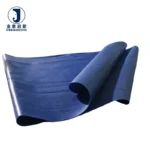

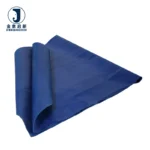
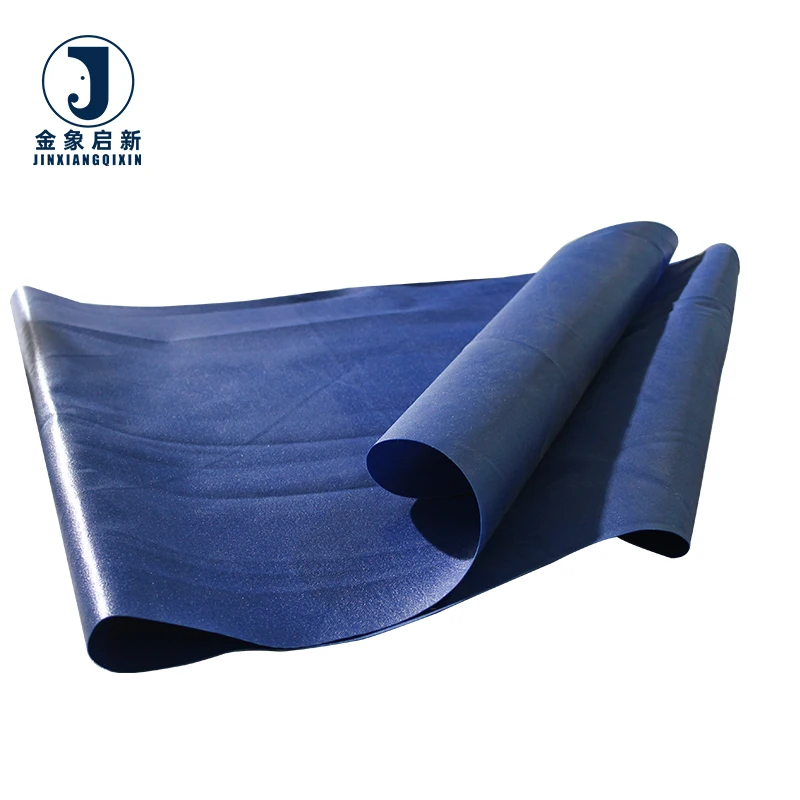
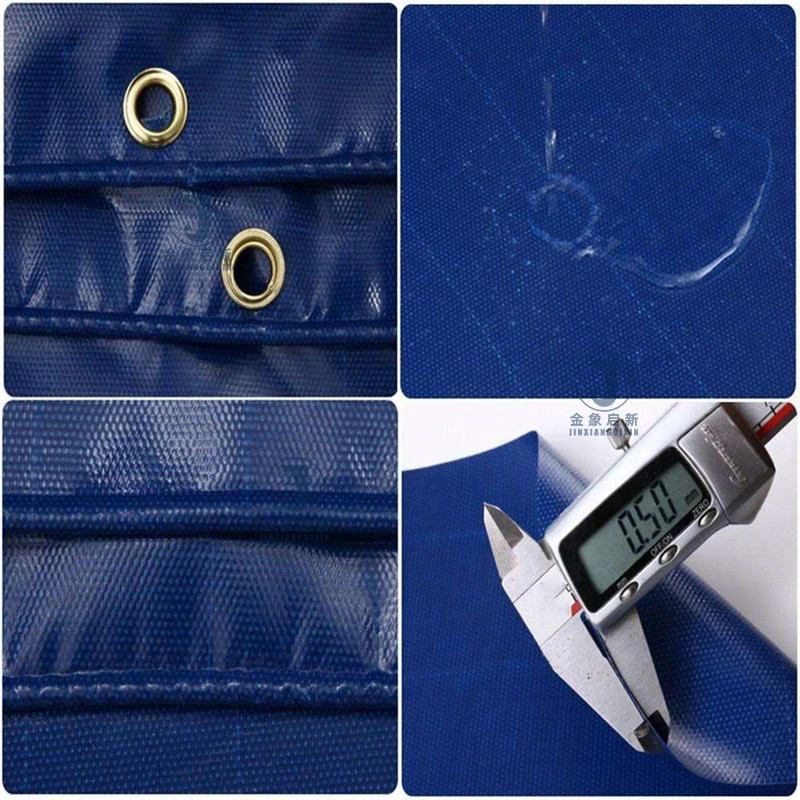
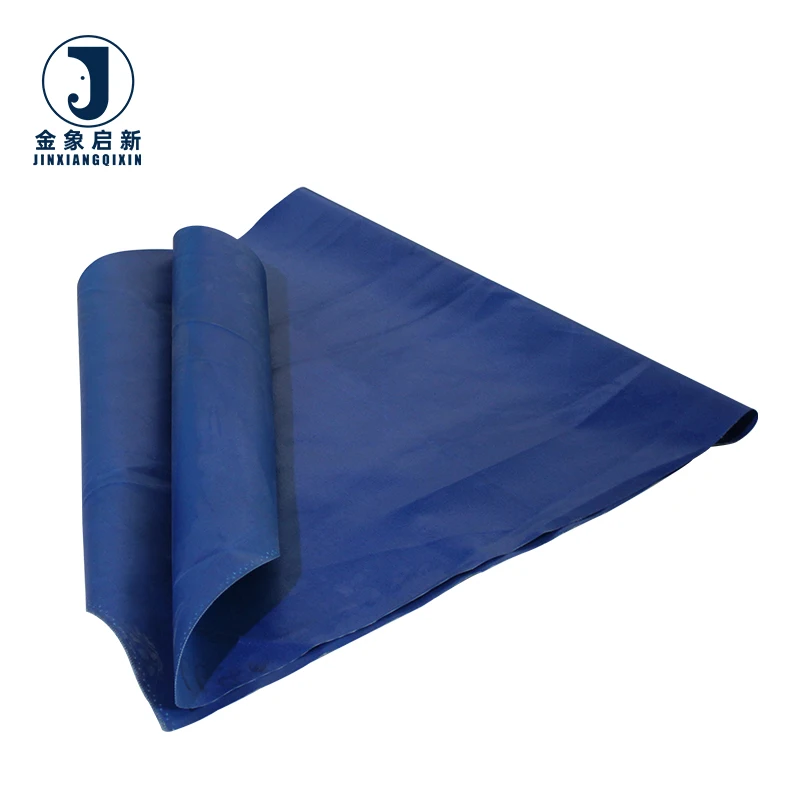
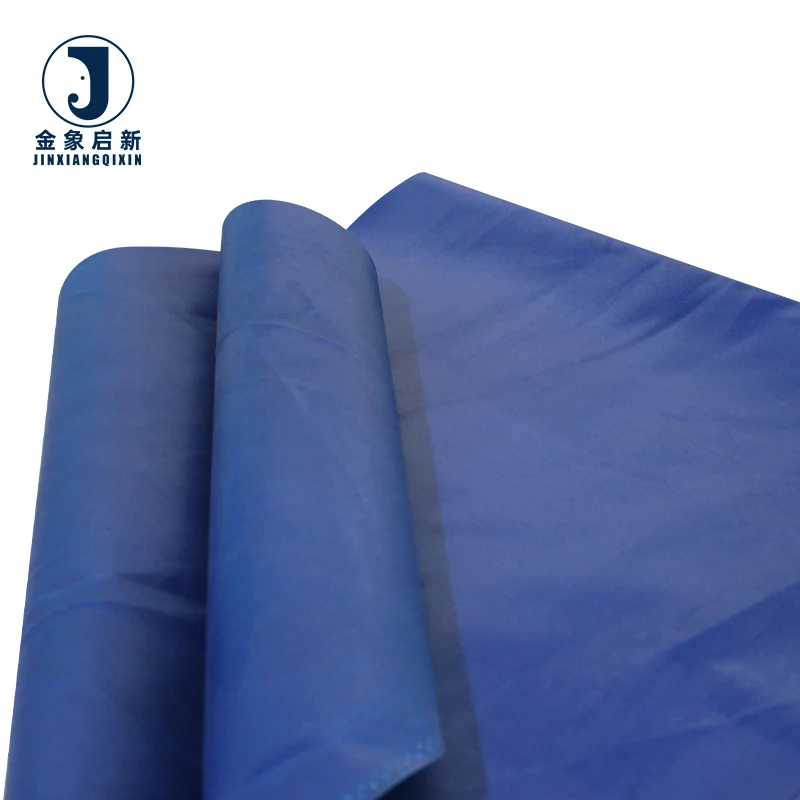
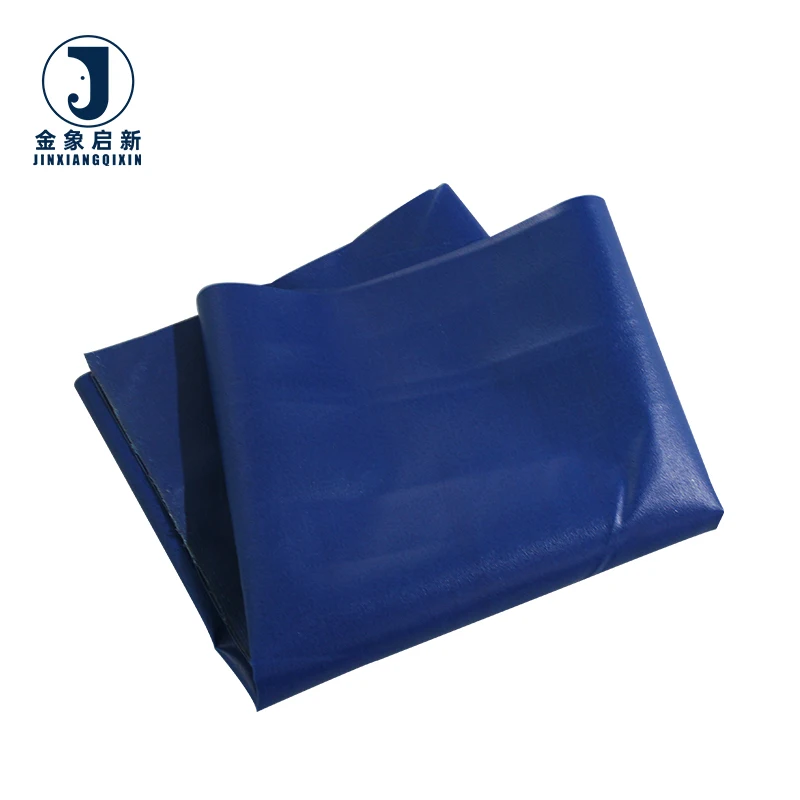
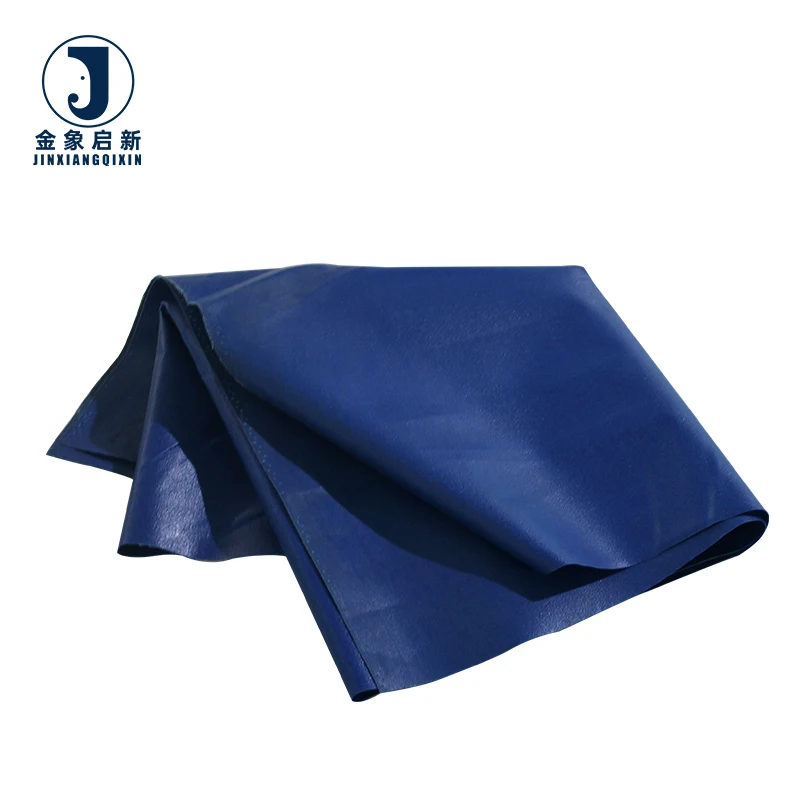
Process Control Depth — nearly 30 years of coating process refinement backing every roll of PVC Coated Fabric Tarpaulin shipped from Jinan Jinxiang’s facility.
Technical Specifications
| Parameter | Value |
|---|---|
| Product Type | PVC Coated Tarpaulin Roll |
| Weight (GSM) | 550g, 600g, 650g, 900 GSM options |
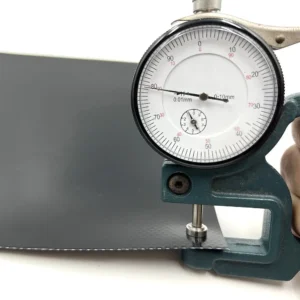
| Total Thickness | 0.2–0.4 mm (8–16 mil), custom available |
| Base Fabric | HDPE weaving (confirm base fibre against project spec) |
| Coating Material | PVC coating (LDPE lamination also listed — verify grade per order) |
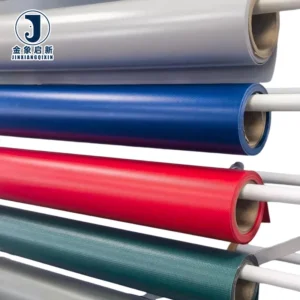
| Colour Range | Blue, Blue/Orange, Green, Grey, Black, Clear, Grey/Green, Orange, or custom |
| UV Treatment | Available (test basis not stated — request report) |
| Waterproof | Yes |
| Key Features | Tear resistant, weather proof, sunproof, mildew proof, anti-aging |
| Standards | ISO and CE certified facility |
Application Suitability
| Application | Exposure & Requirement |
|---|---|
| Truck side curtain and trailer cover | Constant flexing at load points, road debris abrasion, UV exposure in transit |
| Roof tent and awning fabric | Prolonged sun exposure, rain contact, repeated folding and deployment |
| Construction site equipment cover | Dust ingress, weather cycling, puncture from sharp edges on machinery |
| Industrial storage wrap | Moisture barrier, mildew in humid environments, long-term static load |
Why the GSM on the Quotation Does Not Guarantee Arrival Weight
The only defence against under-weight delivery is a pre-shipment inspection tied to the stated GSM with documented roll-by-roll sampling.
Technical buyers ordering PVC Coated Tarpaulin Roll stock frequently discover that the material arriving on the dock weighs less than the quoted grade. A roll specified at 650 GSM may arrive closer to a lower tier, reducing tensile capacity and shortening service life before anyone notices [NEED_CITE: coating weight verification methods for PVC tarpaulin per ISO 3801]. The problem compounds when fabricators weld seams based on expected thickness — a lighter coat means the heat input is too high, and the weld line becomes the first point of failure rather than the last.
How Base Fabric and Coating Weight Interact
The strength of any PVC Coated Tarpaulin Roll comes from the combination of base fabric denier, weave density, and coating mass — not from GSM alone. A tightly woven HDPE base with a lighter coat can outperform a loosely woven base with heavier coating in tear resistance. Buyers specifying fabric for truck side curtains should confirm both the base fabric construction and the coating weight as separate line items on the material specification sheet, since the ratio between them determines how the material behaves under the constant flex and road vibration of highway transport.
Coating Adhesion and Weld Behaviour
When PVC coating is applied to an HDPE woven base, the bond between coating and fibre must withstand both mechanical stress and the heat of fabrication. Delamination at the weld seam is a common field failure, particularly where the load flexes most — at the tie-down points and along the hem [NEED_CITE: peel strength test methods for coated fabric laminates]. Requesting a peel strength value alongside the GSM gives the fabricator confidence that the heat-weld parameters they use on the shop floor will produce a seam as strong as the parent fabric.
Reading the Specification Sheet Beyond GSM
Three parameters on the material spec sheet drive real-world performance more than any single number. First, the coating weight per side determines waterproofness and UV barrier thickness — a single-side coat figure hides whether the weather-facing side carries enough material. Second, the base fabric denier and thread count set the floor for tear propagation resistance; a higher denier yarn in the weft direction limits how far a puncture can spread under load. Third, total thickness measured in mil or mm correlates with stiffness and handling weight, which affects how the fabric drapes over a load or folds into a roof tent frame [NEED_CITE: relationship between GSM and tensile strength in coated technical textiles].
The Cost of a Specification Mismatch
Ordering a 550 GSM grade for an application that requires 900 GSM does not just mean the fabric is lighter — it means every downstream decision was based on a false assumption. The fabricator sets weld temperature and dwell time for the wrong thickness, the eyelet spacing is calculated for a lower tear load, and the finished cover fails at the first heavy wind. In ventilation and membrane structure applications, a grade mismatch can also mean the fire-retardant or anti-static certification does not cover the material actually supplied, halting a site inspection until replacement fabric arrives [NEED_CITE: fire-retardant certification requirements for construction ventilation ductwork].
Why Source This PVC Coated Tarpaulin Roll Here
- Three full production lines with 36 sets of professional equipment handle bulk roll orders with consistent coating weight across every roll in the shipment.
- A dedicated 10-person R&D team supports material selection, custom width, and sample development within days of specification confirmation.
- Every production stage includes QA checkpoints, with 100% inspection before dispatch — no roll ships without documented verification.
- Coating weight and adhesion are controlled in-house through nearly 30 years of process refinement on PVC and PE coated fabrics.
- Full documentation accompanies each shipment: material spec sheet, test reports where applicable, and pre-shipment inspection records.
Documentation & Verification
- Material specification sheet stating exact GSM, base fabric type, coating method, and colour reference per roll
- UV and flame-retardant test reports supplied when the selected grade includes those treatments
- Pre-shipment inspection record confirming weight and thickness against quoted values before dispatch
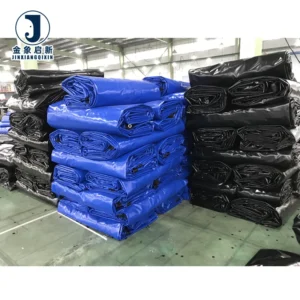
- Roll packing list with individual roll net weight, gross weight, and dimensions for container load planning
- Certificate of origin and customs documentation prepared for cross-border shipment
Fabrication, Handling & Storage
- Set weld temperature to match the specific GSM grade ordered — 550g and 900 GSM require different heat input profiles.
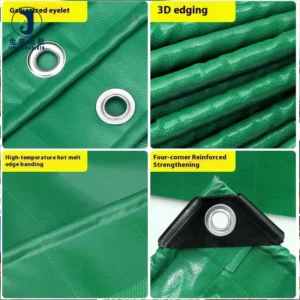
- Reinforce eyelet zones with additional PVC patches, especially on the lighter GSM options where tear load is lower.
- Store rolls upright on pallets to prevent flat-spot deformation across the coating surface.
- Allow cold-stored rolls to reach ambient temperature before unrolling to avoid cracking the PVC coat.
- Use non-solvent cleaners on the coated surface to preserve the anti-aging treatment layer.
What to Include in Your Enquiry
Specify the application environment — whether the fabric will serve as a truck side curtain under road vibration, a roof tent membrane under direct UV, or an equipment cover in a humid storage yard. Confirm your target market’s fire classification or compliance requirements so the correct treatment grade can be quoted. Provide the required roll width, colour reference, and estimated annual volume to receive accurate lead-time and pricing guidance.
Frequently Asked Questions
Q: How do I verify the GSM of each roll when the shipment arrives?
A: Cut a measured sample from each roll, weigh it on a calibrated scale, and compare against the stated GSM on the packing list. Jinxiang’s pre-shipment inspection records document this check before dispatch, giving you a baseline to compare against your own receiving inspection.
Q: Can you supply flame-retardant grades with a test report for my market?
A: Flame-retardant treatment is available across the PVC Coated Tarpaulin Roll range. Specify the fire classification standard required in your destination market — such as DIN 4102, NFPA 701, or local building code — and the matching test report will be included with the shipment documentation.
Q: What is the minimum order for a custom width or colour?
A: Custom widths and non-stock colours are produced on the same coating lines as standard grades. Minimum order quantities depend on the selected GSM and coating type. Provide your required width and colour reference to receive a quotation with the applicable minimum and lead time.
Q: How does PVC coating compare to PE coating for heat-welding fabrication?
A: PVC coating generally supports high-frequency and hot-air welding at predictable temperature windows. PE lamination requires different weld parameters and may not achieve the same peel strength at the seam. Confirm the coating type on the material specification sheet before setting your fabrication line parameters.
Q: How is batch-to-batch colour consistency controlled across multiple rolls?
A: Each production run references a defined colour standard. Rolls within a single order are produced in the same batch to minimise shade variation. For orders spanning multiple production runs, request a colour comparison record before shipment to confirm visual consistency across all rolls.