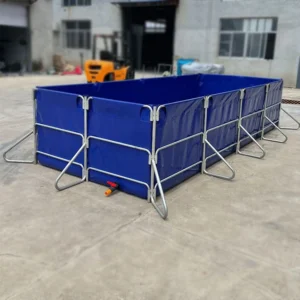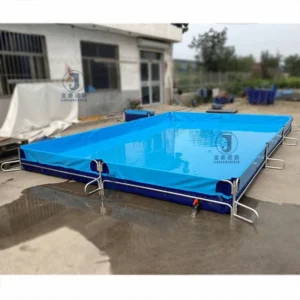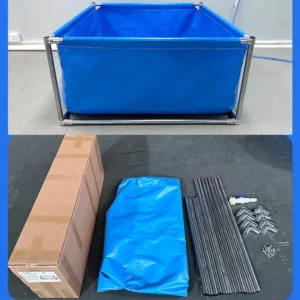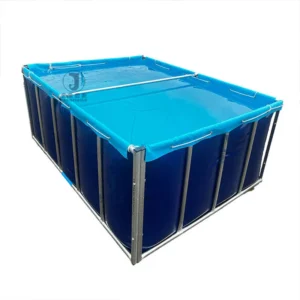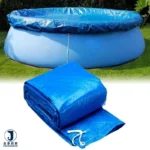
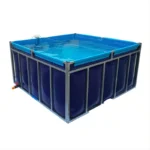
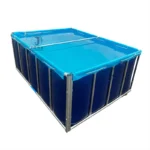
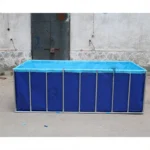

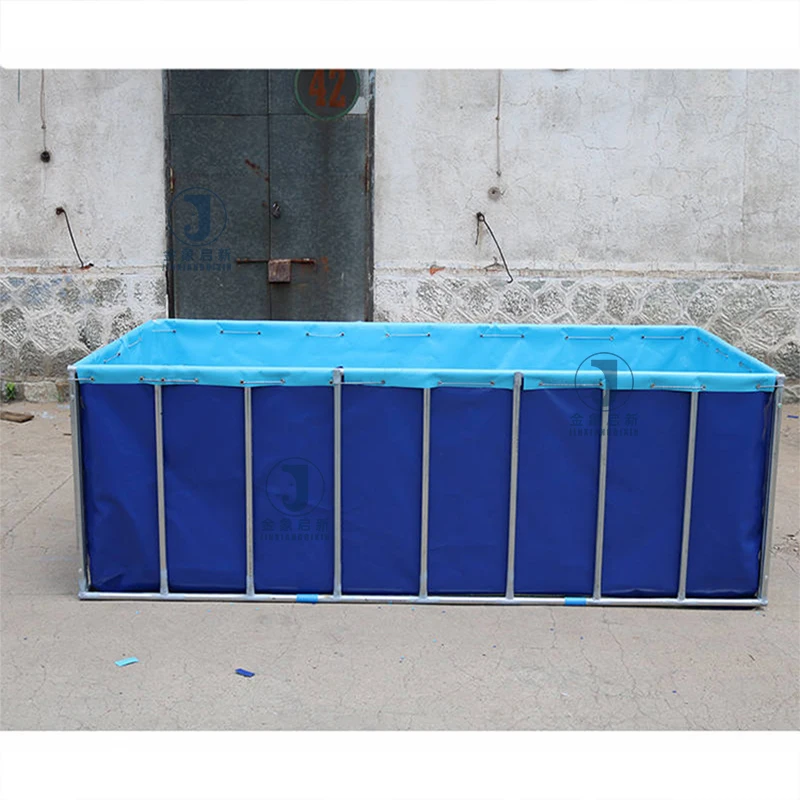
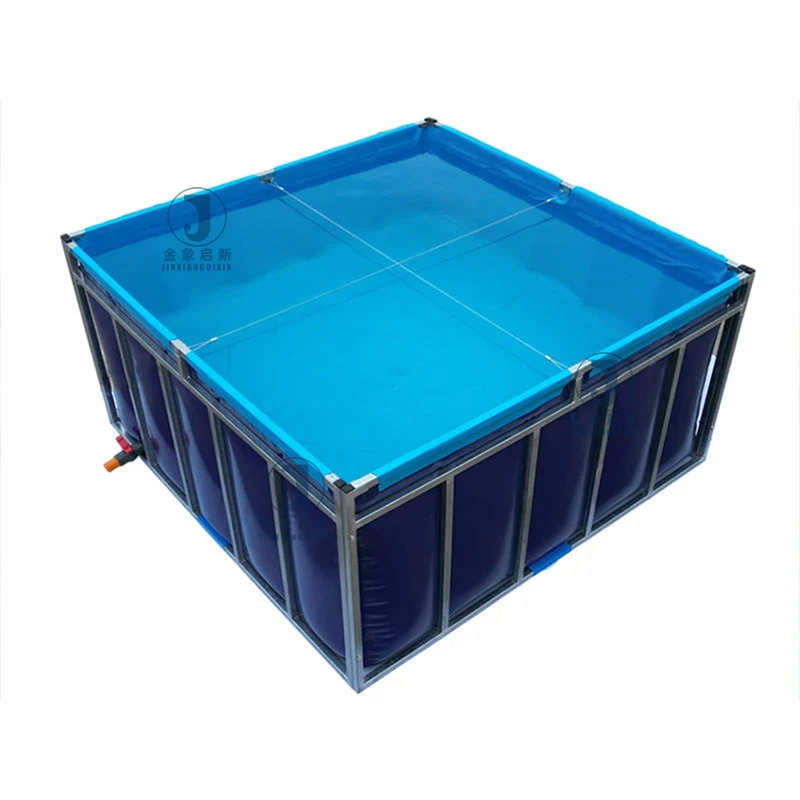
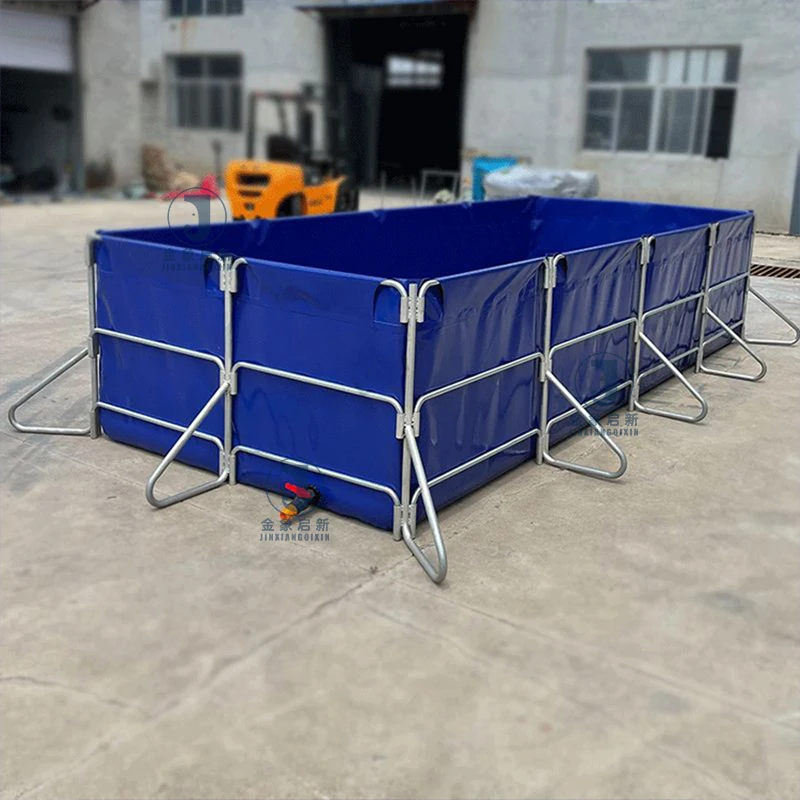
Coating Adhesion Control — Hot-melt coating and laminated technology ensures the PVC layer bonds securely to the polyester mesh, preventing delamination at welded seams during pond installation and long-term water immersion.
Technical Specifications
| Parameter | Value |
|---|---|
| Product Type | PVC Coated Tarpaulin for Pond Liner |
| Material | PVC + High-strength polyester mesh fabric |
| Coating Method | Laminated technology & Hot-melt Coating technology |
| Weight (GSM) | 350gsm / 420gsm / 500gsm / 550gsm / 600gsm / 750gsm |
| Total Thickness | 0.32mm / 0.35mm / 0.4mm / 0.45mm / 0.5mm / 0.65mm |
| Color Options | Blue, Red, Yellow, Light blue, Grey (Customized) |
| Roll Size | 2m × 75m / 2.1m × 50m |
| Finish Product Size | Custom items as per customer’s needs, or sold by inventory |
| Key Features | Waterproof, Cold Crack Resistance, Anti-Mildew, Anti-Static treatment (grade not stated), Sunproof (test basis not stated), Flame Retardant (special treatment available — grade not stated) |
| Certifications | ISO, CE |
| Service Life | 3–7 years under normal circumstances |
Application Suitability
| Application | Exposure & Requirement |
|---|---|
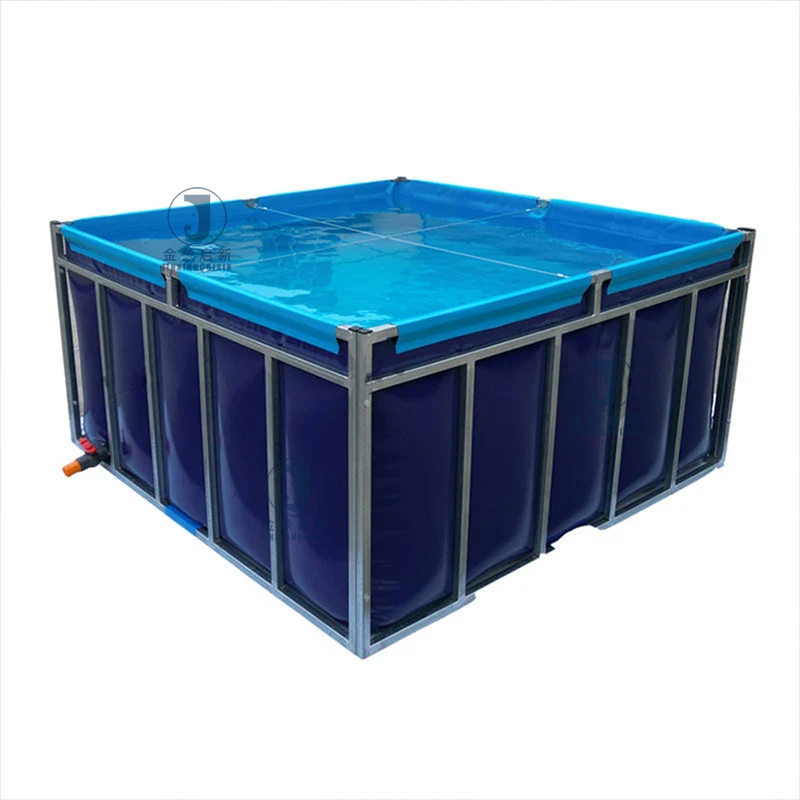
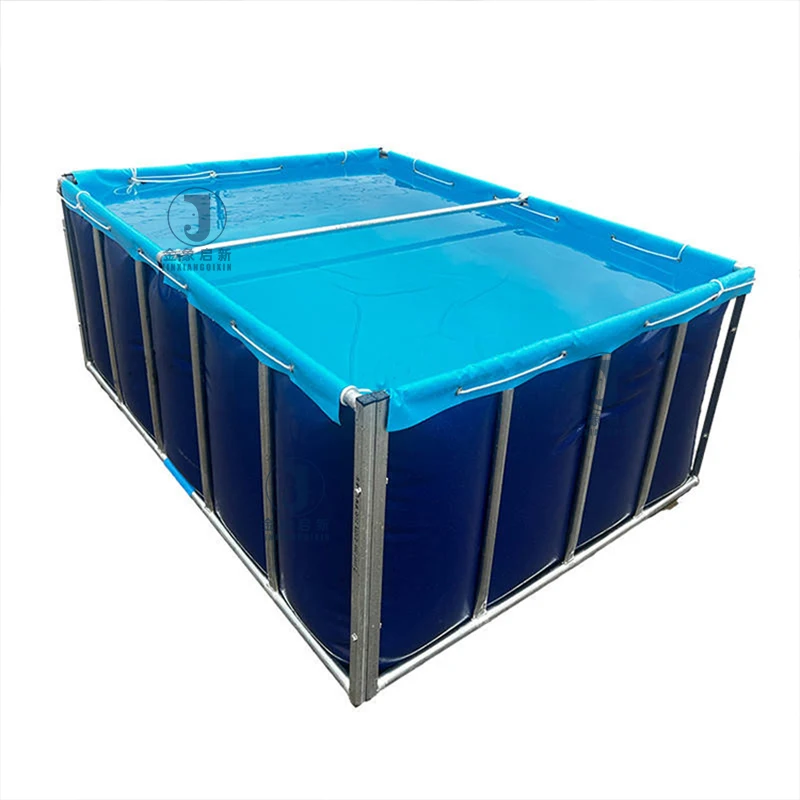
| Fish pond liner | Permanent water contact, soil chemistry exposure, puncture risk from rocky or uneven subsoil |
| Aquaculture reservoir | Standing water, algae and microbial growth, seasonal temperature swings |
| Agricultural irrigation pond | UV exposure, mechanical stress from water volume, long-term weathering |
| Tent and awning fabrication | Welded seams under tension, outdoor weather exposure, repeated assembly |
| Truck awning and cargo cover | Road abrasion, wind flex, UV and rain exposure |
Why Roll-to-Roll Colour Consistency Matters for Pond Projects
Every roll in your order must match — because pond liner panels sit side by side and colour variation is immediately visible after installation.
When a pond liner arrives with one roll noticeably lighter or darker than the next, the contractor faces an impossible choice: accept a patchwork appearance or reorder and delay the project. This happens more often than buyers expect, particularly when pigment batches shift between production runs. PVC coated tarpaulin roll fire retardant anti-static certified fabric must maintain uniform colour across the entire shipment [NEED_CITE: colour consistency test methods for coated PVC fabrics]. The visual defect does not affect waterproof performance, but it damages client confidence and triggers rejection on site.
Ventilation Duct and Inflatable Structure Fabrication
This PVC coated polyester fabric serves as the base material for inflatable membrane structures and technical ventilation ductwork. The hot-melt coating technology creates a bond between the PVC layer and the high-strength polyester mesh that resists separation during high-frequency welding. Fabricators working on membrane architecture projects can specify from 350gsm to 750gsm depending on structural load requirements, with thickness ranging from 0.32mm to 0.65mm. PVC coated tarpaulin roll fire retardant anti-static certified material is available for projects where fire classification or static dissipation is mandated by site safety regulations — confirm the specific grade required for your market before ordering.
Weld Integrity at the Seam Line
The weakest point in any pond liner or inflatable structure is the welded seam, not the field of the fabric. Hot-melt coated PVC tarpaulin delivers outstanding tearing strength for welding, meaning the coating fuses thoroughly at the joint rather than peeling away under stress. Laminated technology provides an alternative coating method suited to applications where cost and flexibility take priority over maximum peel strength [NEED_CITE: peel strength test methods for PVC coated fabrics per ISO 1421]. For pond liner installations where the fabric must conform to irregular subsoil contours, the adhesion between coating and base fabric determines whether the liner holds water for years or fails at the first seasonal temperature shift.
Reading the GSM and Thickness Together
GSM alone does not define how a pond liner will perform in the field. A 550gsm fabric with a tight polyester weave and hot-melt coating will resist puncture from rocky subsoil differently than a 550gsm fabric with a looser base construction and laminated coating. The total thickness — from 0.32mm at 350gsm up to 0.65mm at 750gsm — reflects the combined contribution of base fabric density and PVC coating weight. Thicker grades suit deep grow-out ponds where water pressure and mechanical stress are higher, while lighter grades work for shallow nursery ponds or temporary reservoirs. Cold crack resistance ensures the liner remains flexible in low temperatures without becoming brittle, and anti-mildew treatment prevents microbial degradation during continuous water immersion. Selecting the correct GSM-thickness combination requires matching the grade to pond depth, soil conditions, and expected service life.
What Happens When the Wrong Grade Goes Into the Ground
A pond liner that is too thin for the soil conditions will puncture during installation or degrade prematurely under water pressure. Conversely, specifying a 750gsm liner for a shallow nursery pond wastes material cost and makes the fabric harder to handle and weld on site. Colour variation between rolls forces contractors to reject shipments and delay project timelines. Welded seams that fail before the fabric itself degrades point to a coating-to-base-fabric adhesion problem — the liner material survives but the joints leak [NEED_CITE: common failure modes in PVC pond liner installations]. These problems surface after the liner is already in the ground, making remediation expensive and disruptive.
Why Procurement Teams Specify This Material
Three full production lines with 36 sets of professional equipment support bulk roll orders with consistent output, so lead times remain predictable for large pond and reservoir projects. The 10-person R&D team develops custom width and colour samples within days, allowing buyers to verify material properties before committing to a production run. PVC coated tarpaulin roll fire retardant anti-static certified grades are produced with dedicated QA/QC at every stage, and every roll undergoes inspection before shipment. Hot-melt and laminated coating options give fabricators the flexibility to match the coating method to their welding process and end-use requirements. Custom roll widths reduce the number of field welds on large pond installations, directly lowering the risk of seam failure.
Documentation & Verification
- Material specification sheet stating exact GSM, base fabric type, and coating method per roll
- Colour reference sample confirming batch consistency across the order
- Test report for flame retardant or anti-static grades where applicable to the project
- ISO and CE certificates included with every shipment
- Pre-shipment inspection record verifying weight and dimensions against the purchase order
- Roll packing list and certificate of origin for customs clearance
Fabrication, Handling & Storage
- Hot-air welding temperature must match the coating method — hot-melt coated rolls tolerate higher weld temperatures than laminated grades
- Store rolls upright on pallets to prevent flat-spot deformation on the PVC coating surface
- Unroll and allow the fabric to relax before welding, especially in cold conditions where cold crack resistance is critical
- Cut patterns to maximise material yield from the 2m or 2.1m roll width, reducing waste on large pond layouts
- Avoid dragging liner panels across rocky subsoil during installation to prevent puncture before water filling
- Clean surfaces with mild detergent only — solvents may degrade the PVC coating and anti-mildew treatment
Before You Request a Quote
Provide the pond depth, soil conditions, and climate zone so the correct GSM and thickness grade can be recommended. Confirm whether you need roll stock in standard 2m × 75m or 2.1m × 50m dimensions, or custom widths to minimise field welding on large installations. Specify any fire-retardant or anti-static certification required by local regulations for your market.
Frequently Asked Questions
Q: How do I choose the right GSM and thickness for my pond depth and soil conditions?
A: Shallow nursery ponds on smooth subsoil typically use lighter grades around 350gsm to 420gsm, while deep grow-out ponds with rocky or uneven ground require 550gsm to 750gsm for puncture resistance. Total thickness correlates with GSM — heavier grades provide thicker coating coverage and higher tensile strength. Submit your pond dimensions and soil survey data for a grade recommendation matched to your conditions.
Q: Can you produce custom roll widths to minimise field welding?
A: Custom widths beyond the standard 2m and 2.1m rolls are available to reduce the number of on-site welded seams. Fewer seams mean fewer potential leak points in the finished pond liner. The R&D team develops width samples within days for approval before full production. Provide your pond layout drawings so the optimal roll width can be calculated for maximum material yield.
Q: What test reports are available for UV resistance and anti-mildew treatment?
A: Anti-UV and anti-mildew treatments are applied during coating, and test reports can be supplied where specific standards apply to your project. State the relevant standard or performance requirement in your inquiry — for example, UV exposure duration or anti-mildew test method — so the correct documentation is prepared. PVC coated tarpaulin roll fire retardant anti-static certified grades carry additional test reports referencing the applicable fire or static classification.
Q: How do you ensure colour consistency across multiple rolls in one order?
A: All rolls in a single production batch use the same pigment formulation, and colour is verified during pre-shipment inspection against the approved reference sample. If your project requires panels installed side by side, note this in your order so rolls are allocated from a single dye lot. Batch-to-batch colour matching for repeat orders is confirmed through sample approval before production begins.
Q: What is the expected service life in full water immersion conditions?
A: Service life depends on GSM, coating method, water chemistry, and UV exposure at the installation site. Under normal circumstances the material is rated for 3–7 years. Hot-melt coated heavier grades with anti-mildew treatment generally outperform lighter laminated grades in continuous immersion. Submit your specific water conditions and climate data for a service life estimate aligned with your project requirements.