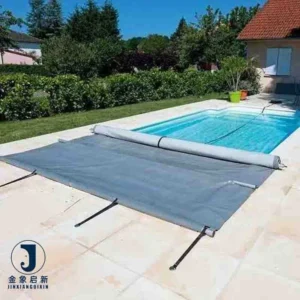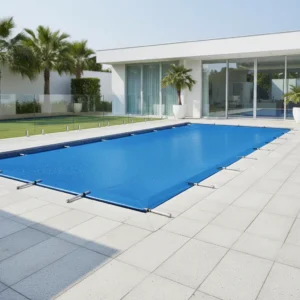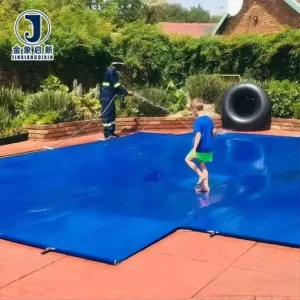
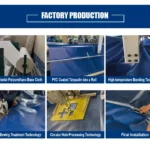
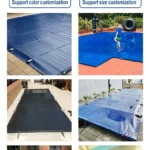
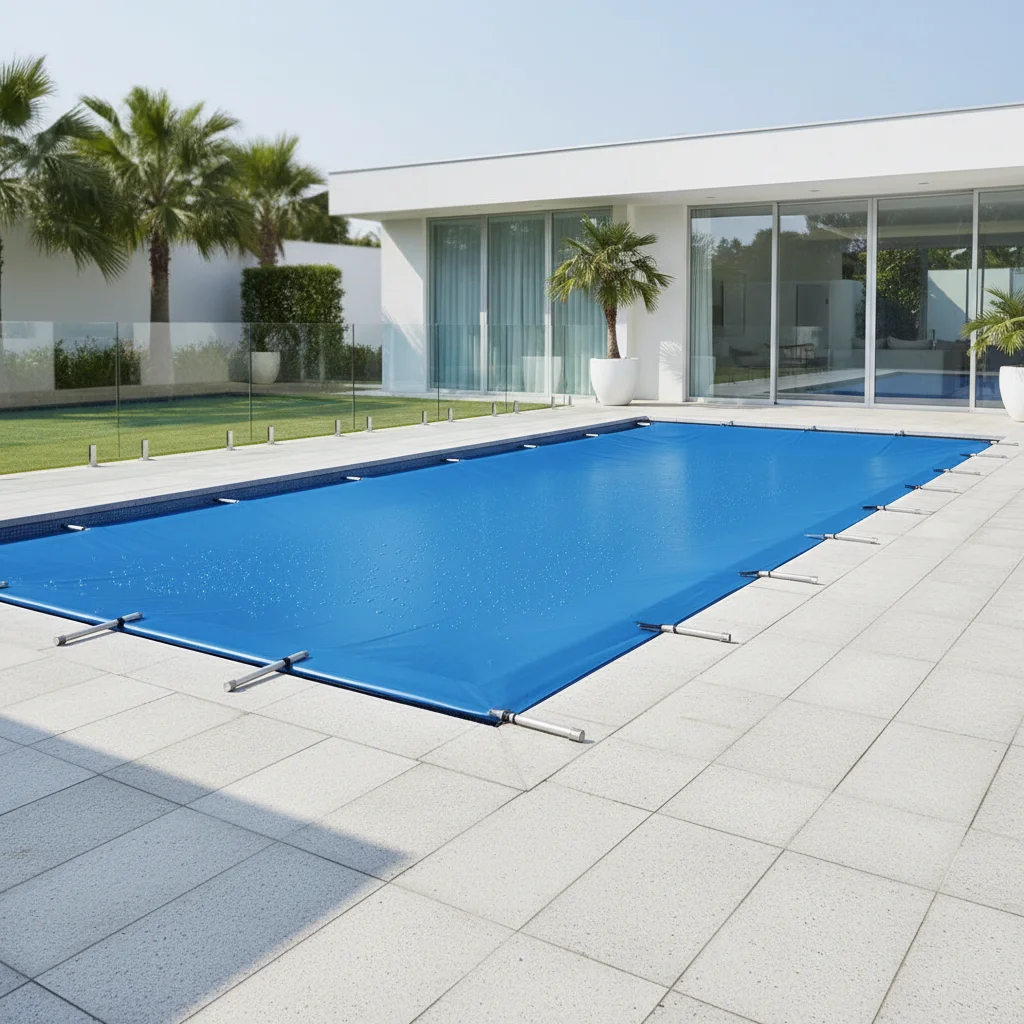
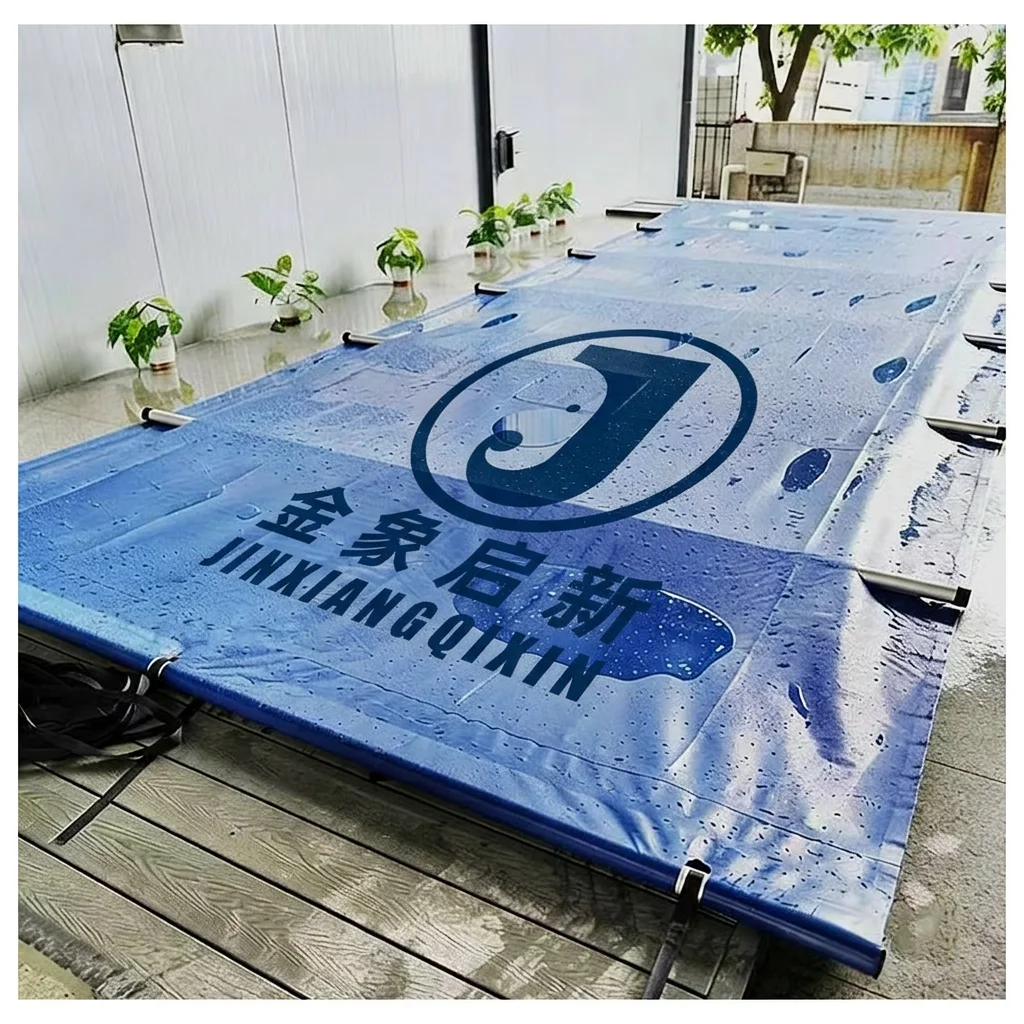
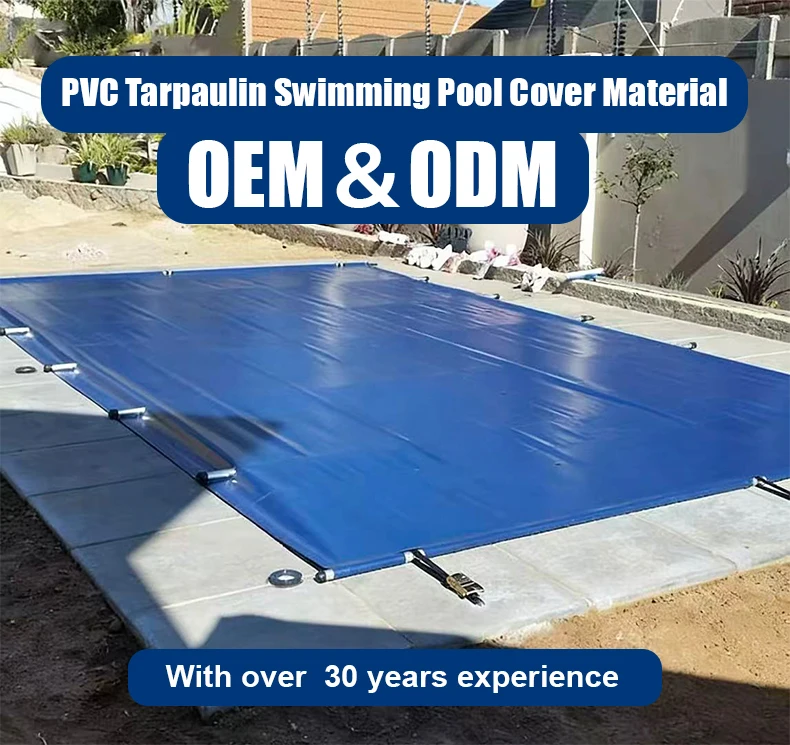
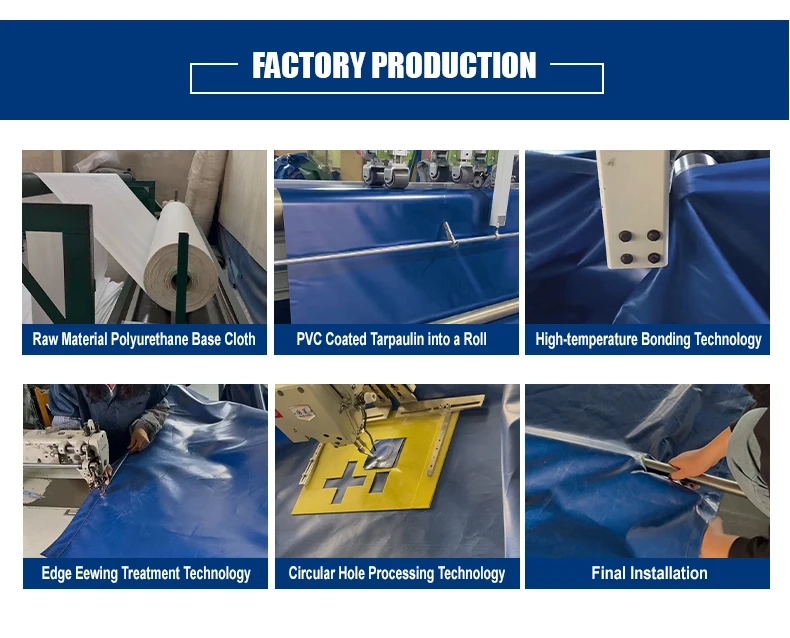
Coating Process Control — Three full production lines and 36 sets of equipment support verified GSM and colour consistency across every roll of PVC coated tarpaulin destined for awning, shade sail and canopy fabrication.
Technical Specifications
| Parameter | Value |
|---|---|
| Product Type | PVC Coated Tarpaulin |
| Coating Material | PVC |
| Waterproof Performance | Fully waterproof coated construction |
| UV Treatment | Anti-UV treatment available (test basis to be confirmed per order) |
| Flame Retardancy | Available in flame retardant grades — confirm the grade required for your market |
| Weight Grade | Medium weight (exact GSM confirmed on material specification sheet) |
| Base Fabric | High-tenacity polyester woven substrate |
| Surface Finish | Options in glossy or matte finish |
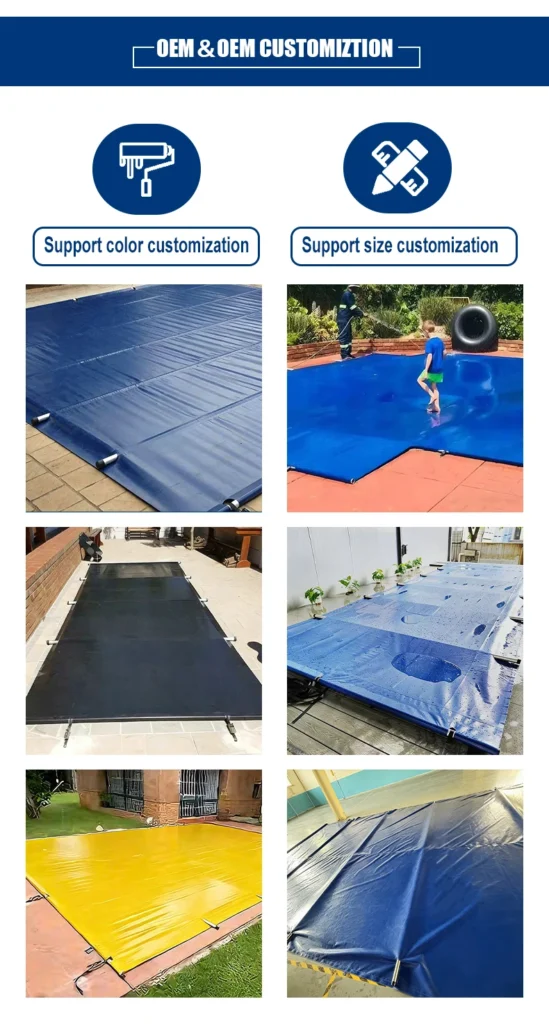
| Colour Range | Custom colour matching available (physical sample approval recommended) |
| Width Options | Supplied in custom widths to suit fabrication layout |
| Fabrication Compatibility | Heat welding and industrial sewing |
Application Suitability
| Application | Exposure & Requirement |
|---|---|
| Outdoor awning structures | Continuous UV exposure, rain load, wind-driven flexing at mounting points |
| Shade sail installations | High tensile stress at corner fittings, sustained sun exposure, colour consistency across adjacent panels |
| Canopy and temporary shelter | Weather cycling, pooled water drainage, repeated assembly and disassembly |
| Pet shelter and enclosure covers | Ground moisture contact, abrasion from contact surfaces, cleaning chemical exposure |
| Industrial equipment weather covers | Dust and moisture ingress prevention, tie-down strap abrasion, storage yard UV |
When "Anti-UV" Has No Test Data Behind It
Request the exposure test standard and duration before committing to bulk yardage.
Tarpaulin specified for shade sail or canopy use lives under direct sun for its entire service life. A quotation that states "anti-UV" without referencing a test method — such as ISO 4892 or an equivalent xenon-arc protocol — leaves the buyer carrying all the risk. PVC coated tarpaulin fabric that degrades prematurely will chalk, lose tensile strength, and become brittle at the weld lines long before the buyer expects a replacement cycle [NEED_CITE: ISO 4892 accelerated weathering methods for coated plastics]. This is not a cosmetic failure; it is a structural one that shows up after the fabric is already installed on a client’s building or event site.
Coating Adhesion and Weld Line Integrity
The point where most field failures originate in awning and shade sail applications is not the fabric body but the heat-welded seam. PVC coated tarpaulin relies on coating-to-substrate adhesion to transfer load across a weld. When adhesion is weak, the weld peels apart under the cyclical tension that a shade sail or retractable awning experiences in wind. Verifying peel strength data before specifying a grade prevents costly callback repairs after installation.
Roll-to-Roll Colour Consistency for Multi-Panel Structures
Shade sails and large canopy systems often require panels installed side by side, where even minor colour drift between rolls becomes immediately visible. Batch consistency is a function of coating-line process control — pigment dispersion, plastisol mixing ratios, and oven temperature profiles must remain stable throughout a production run [NEED_CITE: colour fastness and batch consistency standards for coated technical textiles]. Specifying a colour reference number and requesting a physical sample from the production batch before shipment protects against visible mismatch on the finished structure.
Reading GSM and Base Fabric Together
GSM alone tells a buyer very little about how a PVC coated tarpaulin will perform under load. A 550 GSM fabric built on a low-denier, high-density base may outperform a 650 GSM fabric on a coarse, open weave when it comes to tear propagation resistance. The polyester base fabric denier and the warp-weft thread count determine how a puncture or cut spreads under tension. For shade sail corner fittings that concentrate stress, base fabric construction is at least as important as total coated weight. Coating weight governs waterproofness and surface abrasion resistance, while the woven substrate governs structural load-bearing — both must be matched to the engineering demands of the specific application.
The Hidden Cost of Under-Specifying for Outdoor Structures
Selecting a lighter weight grade to save on material cost often results in early weld-line failure, accelerated UV degradation, and fabric tearing at reinforcement patches [NEED_CITE: field failure analysis of coated fabric structures under cyclic wind loading]. For awning fabricators, a warranty claim on a failed canopy costs far more in labour, reputation, and replacement material than the initial saving on a lighter grade. Colour inconsistency across rolls forces a fabricator to reject entire panels, waste cut material, and delay project delivery. Flame retardant certification gaps can halt a venue inspection, leaving a temporary structure idle and generating penalty costs until compliant documentation arrives.
Why Source This Fabric Here
Process control over coating weight and adhesion is maintained through dedicated QA checkpoints at each production stage, ensuring the PVC coated tarpaulin on arrival matches the specification sheet provided at quotation. The ten-person R&D team handles material selection, custom width configuration, and sample development, delivering prototypes within days for approval before bulk commitment. A 100% pre-shipment inspection protocol means every roll is checked for coating defects, colour consistency, and GSM conformance before packing. Three full production lines and 36 sets of professional equipment support volume orders with reliable scheduling, reducing the risk of project delays caused by supply bottlenecks. Decades of coated fabric specialisation translate into practical knowledge of which base fabric and coating combination suits each application, rather than a one-grade-fits-all approach.
Documentation & Verification
- Material specification sheet confirming exact GSM, base fabric denier, and coating weight for each roll
- UV test report stating the exposure standard and duration applied to the specific grade
- Flame retardant test certificate matching the classification required by the destination market
- Pre-shipment inspection record confirming GSM verification and visual quality per roll
- Roll packing list detailing net weight, dimensions, and colour reference per item
- Certificate of origin and customs documentation for international shipment clearance
Fabrication, Handling & Storage
- Heat-weld parameters must be adjusted to the specific PVC coating thickness to avoid incomplete fusion or burn-through
- Reinforcement patches at shade sail corners should be welded with compatible PVC film to maintain peel strength
- Store rolls vertically on end-caps to prevent flat-spot creasing that transfers into the finished canopy panel
- Allow cold-stored rolls to acclimatise to workshop temperature before unrolling to avoid coating micro-cracking
- Use mild, non-solvent cleaners on matte finish surfaces to preserve the low-gloss appearance over time
- Plan cutting layout around roll width to minimise off-cuts and reduce the number of welded seams in the final structure
What We Need to Quote Accurately
Provide the end-use application and the environmental conditions the fabric will face — sustained UV, wind load category, or proximity to heat sources. Specify the width, roll length, and annual volume you are planning to procure so we can confirm production scheduling and batch consistency across your order. If your market requires a specific flame retardant classification or documentation package for building inspection, state the standard so we can match the correct grade and supporting test reports.
Frequently Asked Questions
Q: How is the GSM of each roll verified before shipment?
A: Every roll undergoes a weight check against the stated GSM during pre-shipment inspection. The inspection record is included in the documentation package, so you can reconcile the material received with the specification sheet provided at quotation stage.
Q: Can I get a test report for UV resistance with my order?
A: UV test reports are available for grades that carry documented anti-UV treatment. Specify the exposure standard relevant to your market when inquiring, and the report confirming test method and duration will be supplied with your shipment documentation.
Q: What is the lead time for custom width or colour orders?
A: Custom width and colour production involves dedicated batch runs to maintain consistency. Typical multi-week lead times apply, confirmed at quotation stage once the colour sample has been approved and the roll dimensions are finalised.
Q: How do you ensure colour consistency across multiple rolls?
A: Colour consistency is maintained through controlled pigment dispersion and oven temperature profiles during coating. A colour reference number is assigned, and physical samples from the production batch can be sent for approval before the full order ships.
Q: What documentation arrives with each shipment?
A: Each shipment includes a material specification sheet, pre-shipment inspection record, roll packing list, certificate of origin, and any applicable test certificates for UV or flame retardant grades specified in the purchase order.