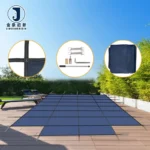
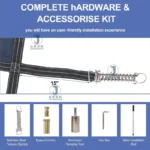
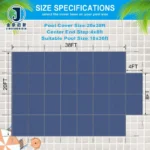
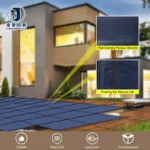
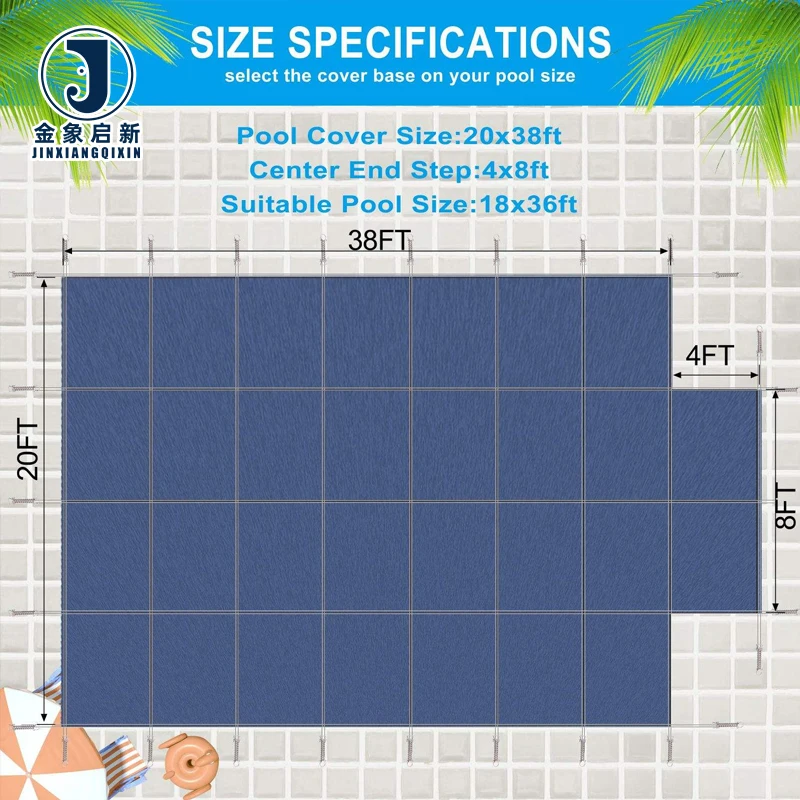
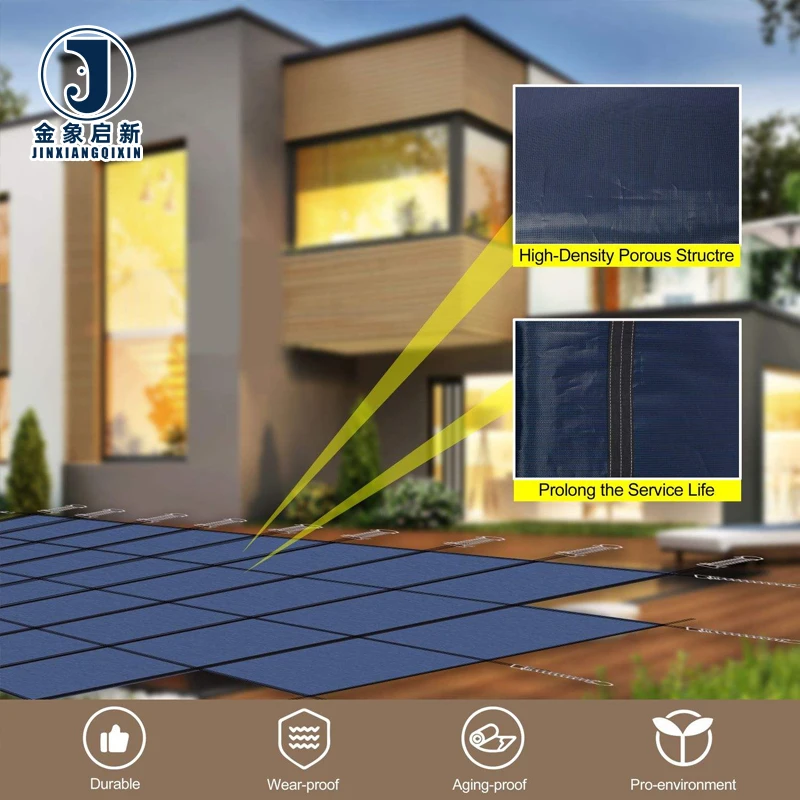
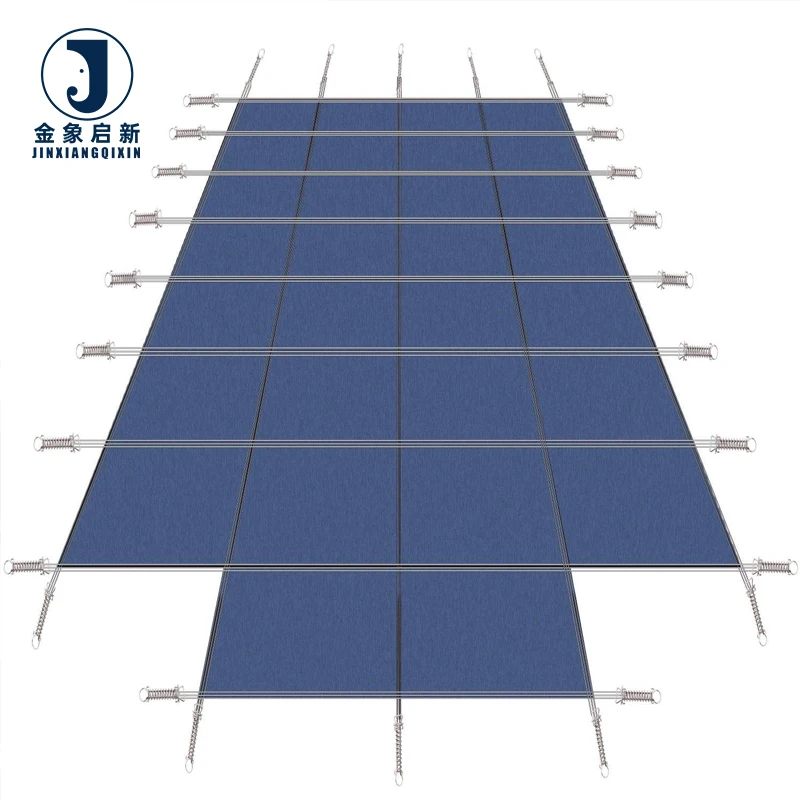
Process Control in Coated Fabric — nearly three decades focused on PVC coated polyester mesh, with QA checkpoints at every coating stage ensuring adhesion and weight consistency before the roll leaves the line.
Technical Specifications
| Parameter | Value |
|---|---|
| Product Type | PVC Coated Tarpaulin |
| Base Material | PVC + High-strength polyester mesh fabric |
| Coating Technology | Laminated technology & Hot-melt Coating technology |
| Weight Options | 350gsm / 420gsm / 500gsm / 550gsm / 600gsm / 750gsm |
| Thickness Options | 0.32mm / 0.35mm / 0.4mm / 0.45mm / 0.5mm / 0.65mm |
| Roll Width | 2m / 2.1m |
| Roll Length | 75m / 50m |
| Colour Options | Blue / Red / Yellow / Light blue / Grey (Customized) |
| Flame Retardant | Available as special treatment — confirm the grade required for your market |
| Anti-Static | Available — test basis to be confirmed per project specification |
| Key Features | Cold crack resistance, anti-mildew, waterproof, sunproof, best color fastness, outstanding tearing strength for welding |
| Standards | ISO / CE |
Application Suitability
| Application | Exposure & Requirement |
|---|---|
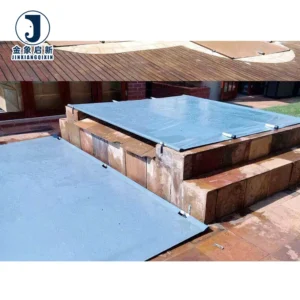
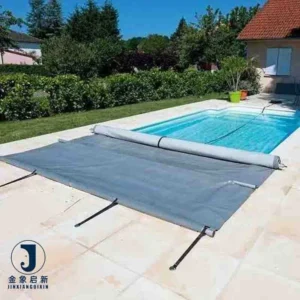
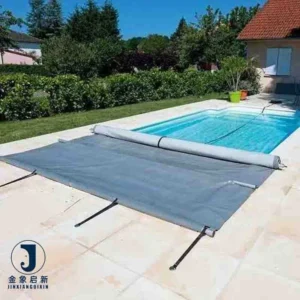
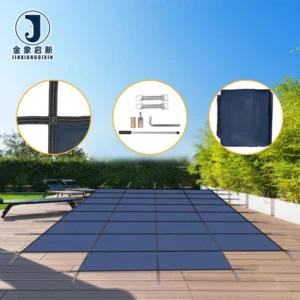
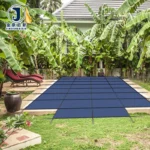
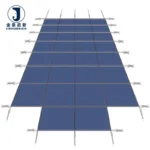
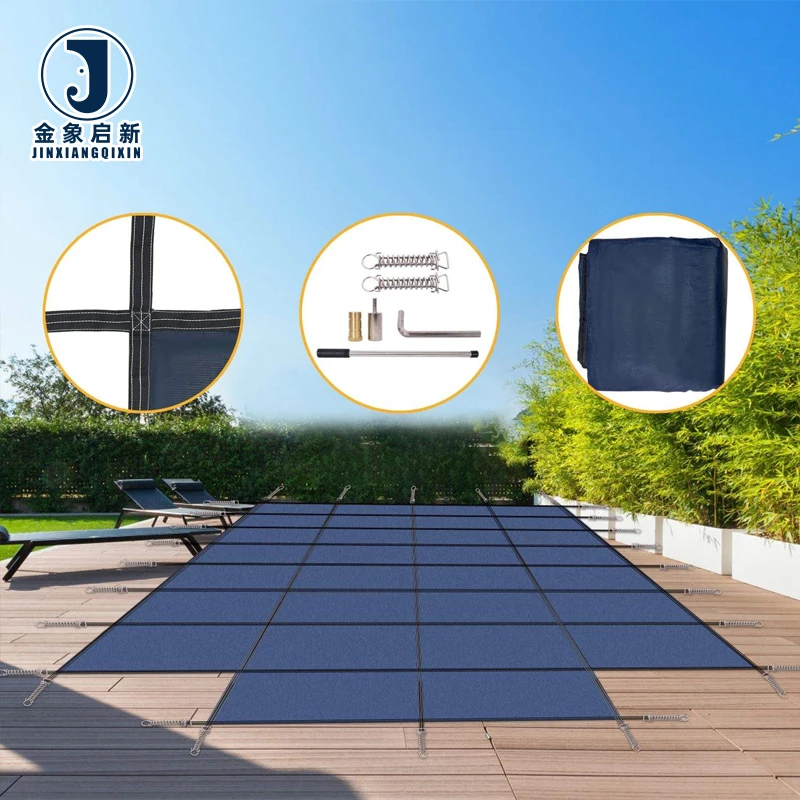
| Inground and above-ground pool safety covers | Permanent water contact, UV exposure, seasonal temperature swings, sustained tension from anchoring systems |
| Commercial pool enclosures and dome structures | Fire safety compliance for public assembly, continuous humidity, condensation drip, ventilation airflow |
| Fish tank and aquaculture containment | Constant water immersion, biological fouling, chemical treatment exposure, puncture risk from stock movement |
| Inflatable and membrane structures | Air pressure cycling, wind uplift, UV and thermal expansion, structural seam integrity |
| Tent and awning covers | Outdoor weathering, repeated folding and deployment, abrasion at frame contact points |
Why "Fire Retardant" Without a Grade Is Meaningless for Pool Enclosures
PVC pool cover material must match the fire classification your local authority enforces — a generic claim on a data sheet does not satisfy a building inspector.
When a commercial pool enclosure or indoor aquatic centre specifies a membrane fabric, the fire safety officer will ask for a test report tied to a recognised standard. I have seen projects stall at the inspection stage because the fabric supplier quoted "flame retardant" without providing documentation linked to a specific classification. The PVC Coated Pool Cover Fabric fire retardant certified grade you need depends entirely on whether your jurisdiction follows DIN 4102, NFPA 701, or a local building code equivalent. [NEED_CITE: DIN 4102 fire classification for building materials and membrane structures]
Without that paperwork, the installer absorbs the risk — and so does the facility owner.
Coating Technology That Holds the Fabric Together
The hot-melt coating and laminated technology used in this PVC coated tarpaulin creates a bond between the PVC layers and the high-tenacity polyester mesh base. This adhesion matters most at welded seams, where the coating must flow and fuse without delaminating from the yarn structure. Poor adhesion shows up as bubbling or peeling along the weld line after the first thermal cycle — a failure mode that compromises both waterproof integrity and structural tension in a pool cover application.
Fire-Retardant and Anti-Static Treatments for Regulated Sites
For indoor pool enclosures, mining-adjacent water containment, or any installation near electrical equipment, the fabric may need both flame retardant and anti-static properties. These treatments are available as special options — the specific grade and test basis must be confirmed against your project specification before production begins. [NEED_CITE: anti-static surface resistance standards for coated technical textiles] Ordering a PVC Coated Pool Cover Fabric fire retardant certified to the correct grade at the inquiry stage prevents costly re-sourcing later when the site auditor requests documentation.
Reading the Specification Sheet Correctly
Weight in GSM alone does not determine how a pool cover fabric performs under load. A 550gsm fabric with a dense base weave can outperform a 600gsm fabric with a looser yarn count, because the polyester mesh construction governs tensile and tear strength more directly than the coating weight. The laminated versus hot-melt coating method also influences peel strength — hot-melt coating typically delivers higher adhesion between the PVC and the mesh, which translates to better weld integrity when fabricators heat-seal overlapping panels. Thickness values from 0.32mm through 0.65mm correlate with both puncture resistance and flexibility: thinner grades suit applications requiring folding and seasonal removal, while heavier grades suit permanent installations where the cover remains under continuous tension. Roll widths of 2m and 2.1m determine how many welded seams a large pool cover will require, directly affecting fabrication time and potential failure points across the membrane surface.
What Happens When the Specification Does Not Match the Installation
A pool cover specified at a lighter GSM than the snow load or wind uplift demands will stretch beyond recovery at anchor points, leaving permanent deformation that allows water pooling. If the flame retardant grade on the quotation does not match what the local fire authority requires, the entire installation may fail inspection — meaning the cover comes down and the facility stays closed until compliant material arrives. Batch colour inconsistency across rolls becomes visible the moment panels are heat-welded side by side on a commercial enclosure, forcing the contractor to either accept an uneven appearance or reject the lot. [NEED_CITE: common causes of coated fabric failure in tensioned membrane installations] Welded seams that fail before the fabric body reaches its service limit point to a coating adhesion problem, not a strength problem — the mesh holds but the PVC layer separates at the joint.
Why Fabricators Source This Material Here
Deep process control over coating weight and adhesion comes from nearly 30 years of focused production on PVC coated polyester mesh, not from generic tarpaulin lines repurposed for pool cover grades. Three full production lines with 36 sets of professional equipment support batch volumes that maintain roll-to-roll consistency across a single order. The 10-person R&D team handles material selection and sample development for specific GSM grades, colour matches, and treatment combinations before a production run is committed. Dedicated QA and QC at every production stage, with 100 percent inspection before shipment, catches coating weight deviations and colour drift before rolls are packed. Samples for custom width, colour, or treatment requirements are developed within days, allowing fabricators to validate weld parameters and visual appearance before committing to bulk quantities. [NEED_CITE: ISO and CE certification scope for coated technical fabric manufacturing]
Documentation & Verification
- Material specification sheet stating exact GSM, base fabric construction, and coating weight per roll
- Test reports for flame retardant and anti-static grades where applicable to the project specification
- Pre-shipment inspection record confirming roll-to-roll colour consistency and coating adhesion
- Weight verification per roll against the stated GSM before dispatch
- Certificate of origin and full customs documentation for international shipment
Fabrication, Handling & Storage
- Heat-weld overlap seams using temperature profiles matched to the selected coating technology, whether laminated or hot-melt, to achieve full adhesion without scorching
- Store rolls upright on pallets in a dry environment to prevent compression marks on the PVC coating surface
- Allow cold-stored rolls to reach ambient temperature before unrolling to prevent coating crack at low-flex points
- Clean finished covers with mild detergent only — aggressive solvents may degrade the PVC coating and any applied anti-mildew treatment
- Plan panel layout around the 2m or 2.1m roll width to minimise weld seams across large pool cover installations
What to Include in Your Enquiry
Provide the specific fire classification or anti-static standard your local authority or site specification requires, along with the intended installation environment — indoor enclosure, outdoor seasonal cover, or permanent containment structure. Specify the GSM grade and thickness you have selected, or describe the load and exposure conditions so the appropriate grade from the available range can be recommended. Indicate whether you require roll stock for your own fabrication facility or finished cut-to-size panels, and note any colour or custom printing requirements alongside the estimated annual volume.
Frequently Asked Questions
Q: How do you verify the flame retardant grade against local fire safety requirements for pool enclosures?
A: Provide the specific standard your jurisdiction enforces — such as DIN 4102 or NFPA 701 — at the inquiry stage. We confirm which treatment grade meets that classification and supply the corresponding test report with your shipment. If your local authority requires a particular test method, share the reference so we match the documentation before production begins.
Q: What is the test basis for anti-static treatment and which surface resistance standard does it meet?
A: Anti-static treatment is available as a special option. The specific surface resistance value and test method depend on the grade applied. Share your project specification or the standard your site requires, and we will confirm the matching treatment with supporting test documentation before your order enters production.
Q: How do you ensure GSM and coating weight match the quotation on delivery?
A: Every roll undergoes weight verification against the stated GSM during pre-shipment inspection. We record actual values in the inspection report included with your documentation. If a roll falls outside the agreed tolerance, it is replaced before dispatch — not after you discover the discrepancy on your cutting table.
Q: What custom widths and roll lengths are available for pool cover membrane fabrication?
A: Standard roll widths are 2m and 2.1m with lengths of 50m and 75m depending on the width selected. Custom widths beyond these standard options can be discussed with our R&D team. Confirm your required dimensions and quantity at inquiry so we can advise feasibility, minimum order, and lead time for non-standard sizes.
Q: How is batch colour consistency controlled when ordering multiple rolls for a single installation?
A: Colour matching is monitored throughout the coating process, and all rolls within a single order are compared side by side during pre-shipment inspection. The inspection record documents visual consistency before packing. For projects requiring exact colour matching across multiple production runs, we recommend requesting a reference sample to hold on file.