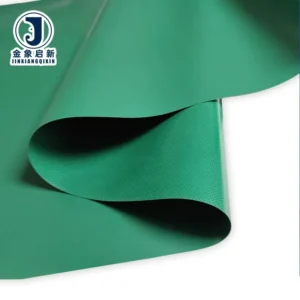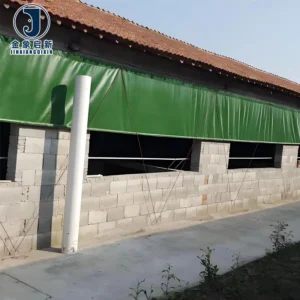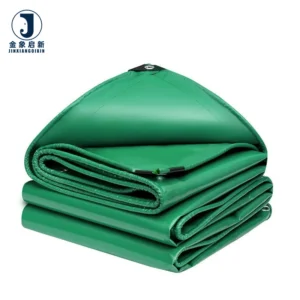
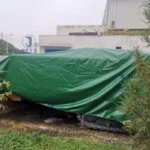
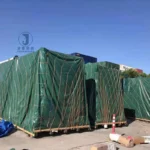
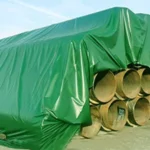
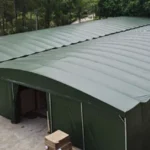
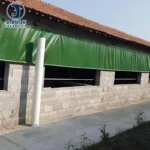
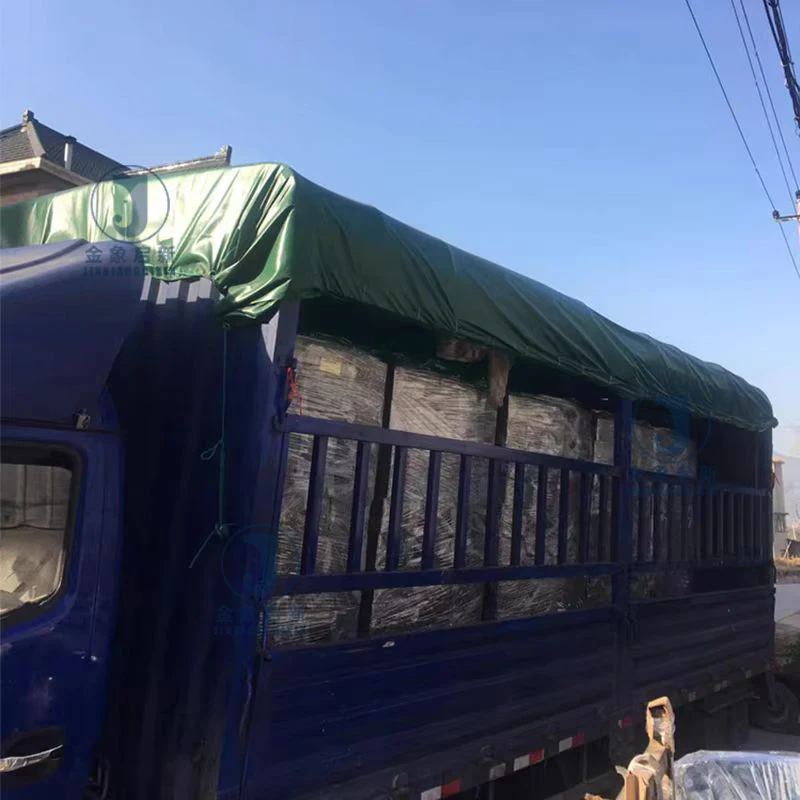
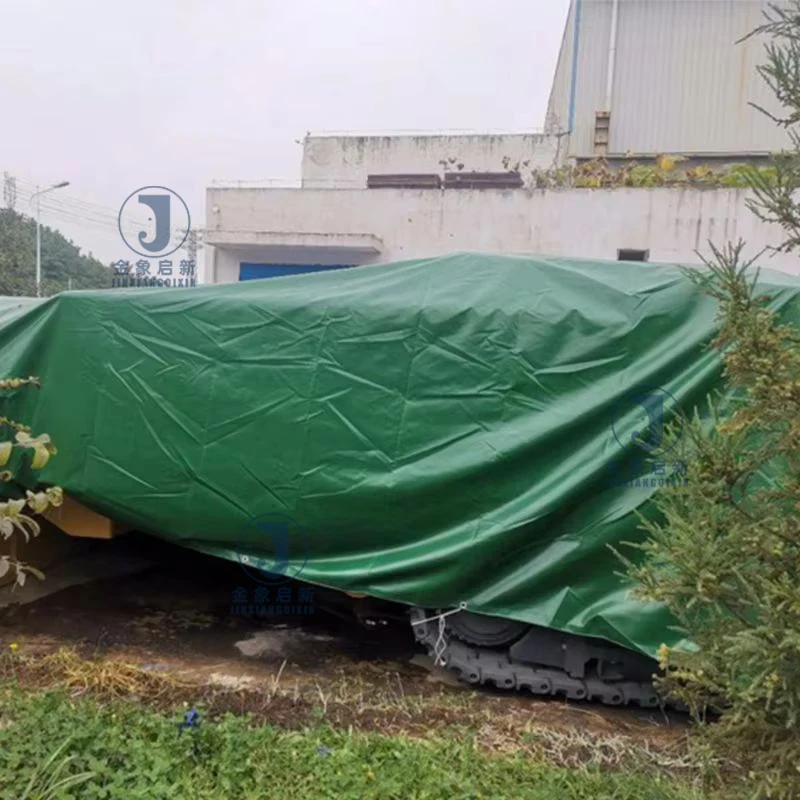
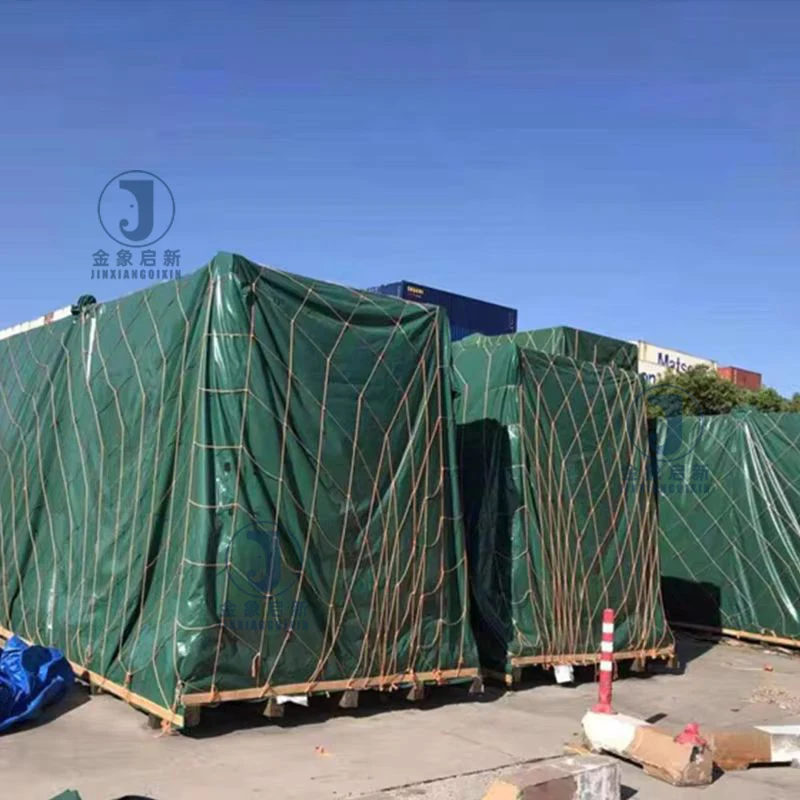
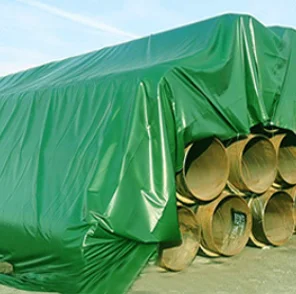
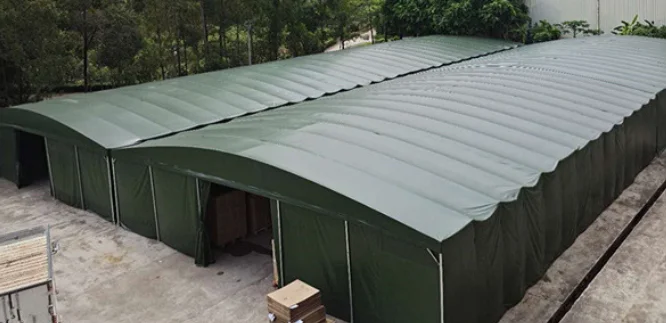
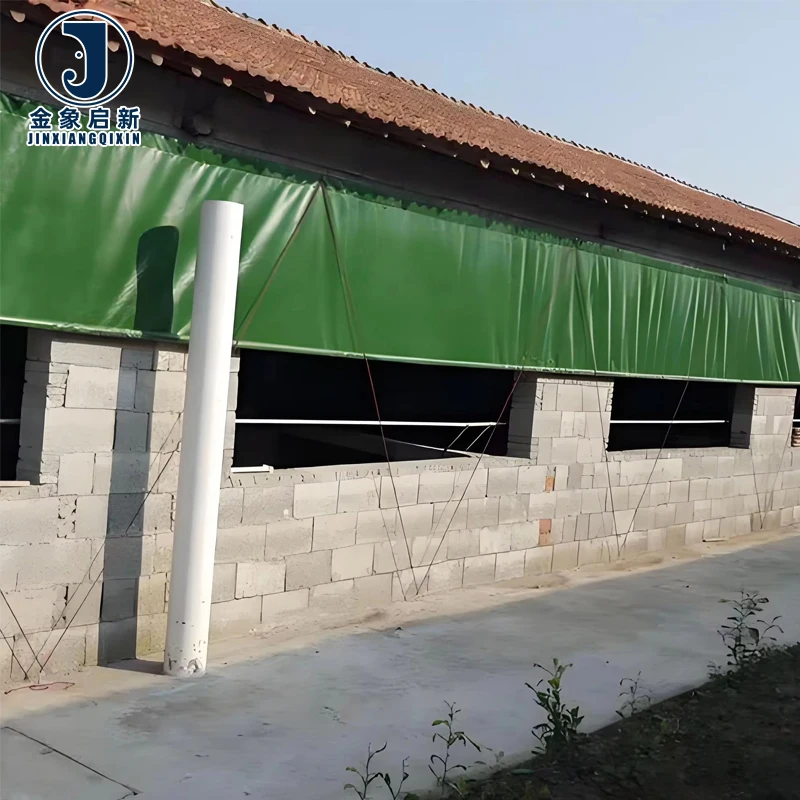
Deep process control over coating weight and adhesion — every roll of PVC coated tarpaulin for poultry farm use undergoes stage-by-stage QA with 100% pre-shipment inspection to ensure the material you specify is the material you receive.
Technical Specifications
| Parameter | Value |
|---|---|
| Product Type | PVC Coated Tarpaulin |
| Coating Material | PVC |
| Base Fabric | Warp knitted / woven plain |
| Waterproof | Yes — fully coated construction |
| Anti-Static | Available (test basis to be confirmed per order) |
| Tear Resistance | Stated (test basis to be confirmed per order) |
| Color | Customizable — confirm shades per project |
| Flame Retardant | Available in flame retardant grades — confirm the grade required for your market |
| Supply Format | Roll |
Application Suitability
| Application | Exposure & Requirement |
|---|---|
| Poultry broiler house side curtains | Constant moisture, ammonia-rich atmosphere, repeated roll-up flex cycles, wind load on large panels |
| Pig and sheep shelter enclosures | Direct animal contact, high-pressure washdown, mud and organic acid exposure, mechanical abrasion at fastening points |
| Agricultural ventilation ducts for enclosed livestock buildings | Internal air pressure, dust and methane accumulation requiring static control, continuous tension on duct seams |
| Temporary livestock handling tents | Rapid deployment and teardown, ground contact, UV and rain exposure during seasonal operations |
Why Anti-Static Claims Without Certification Put Livestock Operations at Risk
Request the test report before you approve the material — not after installation fails an audit.
Static charge buildup in enclosed poultry and pig housing is not a theoretical concern. Dust-heavy, low-humidity environments inside broiler houses create conditions where uncontrolled electrostatic discharge can interfere with automated feeding systems, stress livestock, and in methane-prone zones present a deflagration risk. When a PVC coated tarpaulin for poultry farm covers arrives without documented anti-static verification, the contractor assumes liability for any compliance gap. [NEED_CITE: IEC 61340 standard series for electrostatic control in industrial environments]
I have reviewed project specifications where the quotation listed "anti-static" as a feature, but the delivered roll carried no surface resistance reading and no test certificate. The farm operator only discovered this during a third-party safety audit, weeks after the enclosure was fully installed. Replacing curtain panels on an active broiler house means downtime, bird stress, and lost production cycles.
Duct Fabric That Meets the Compliance Paperwork on Site
Mining and tunnelling contractors know that the ventilation duct must carry the fire-retardant and anti-static certificate before it is hung underground. The same discipline now applies to intensive livestock agriculture. Agricultural ventilation ducts fabricated from this PVC coated tarpaulin can be supplied with documentation matching the compliance framework your site requires — confirm the specific standard before production begins.
Tarpaulin Rolls Built for Farm-Scale Fabrication
Purchasing by the roll gives agricultural contractors and fabricators control over panel dimensions, weld placement, and waste minimisation. This PVC coated tarpaulin for poultry farm applications ships in roll format with customizable width and length, so you cut panels to match the exact bay spacing of your livestock structure rather than adapting the building to standard tarp sizes.
Warp Knitted Base Fabric and Dimensional Stability Under Tension
The base fabric — warp knitted or woven plain — provides the structural backbone of the PVC coated tarpaulin for poultry farm installations. Warp knitted construction resists bias stretch, meaning side curtains and duct panels hold their shape under continuous wind load and mechanical tension. When livestock enclosure covers sag or distort over a season, the cause often traces back to a base fabric that lacked adequate dimensional stability for the span and fastening interval specified. [NEED_CITE: warp knitted versus woven base fabric performance in coated technical textiles]
Coating Adhesion and Welded Seam Integrity
PVC coating applied to the base fabric must bond fully — not just sit on the surface — for welded seams to perform. On farm enclosures, the highest stress concentrates where panels join: at door surrounds, curtain overlap points, and duct section connections. If coating adhesion is weak, the weld line peels before the fabric body shows any sign of fatigue. Every production run goes through in-process QA checks at the coating stage to verify adhesion before the roll proceeds to finishing.
Reading the Specification Sheet Beyond the Headline Numbers
Waterproof performance in a PVC coated tarpaulin depends on full-coverage coating, not a surface treatment that wears off after one washdown cycle. Tear resistance is governed by the interplay of base fabric denier, weave density, and coating penetration — a heavier coating on a low-denier base will not outperform a balanced construction at a lower overall weight. Anti-static performance, where required, must be specified as a target surface resistance range so the treatment formulation can be matched to the environment. Color customization across multiple rolls demands batch-level pigment control; visible shade variation between adjacent curtain panels on a long poultry house is an installation defect even if each individual roll meets tolerance.
The Cost of Undocumented Material Claims in Agricultural Projects
When anti-static treatment is claimed but unverified, the risk is not cosmetic — it is a compliance failure that can shut down an operating facility. When tear resistance is stated without a test method, the fabricator has no basis for calculating safety factors on panel spans and fastening intervals. Batch color inconsistency discovered during installation means either living with a patchwork appearance or ordering replacement rolls and absorbing the delay. These are not theoretical outcomes; they appear regularly in post-installation dispute records. [NEED_CITE: common causes of coated fabric failure in agricultural and industrial applications]
Why Fabricators Source This PVC Coated Tarpaulin from Jinxiang
Nearly 30 years of focused coated fabric production means process parameters for coating weight, adhesion, and curing are controlled from experience, not trial and error. Three full production lines and 36 sets of professional equipment support bulk roll orders with consistent on-time dispatch. A 10-person R&D team handles custom color matching, width specification, and sample development — samples for farm-scale projects are typically ready within days. Dedicated QA/QC runs at every production stage, and every roll receives 100% inspection before shipment, not spot-check sampling. ISO and CE certified production gives cross-border agricultural contractors the documentation foundation their import process requires.
Documentation & Verification
- Material specification sheet stating base fabric type, coating material, and treatment claims per roll
- Anti-static test report provided where applicable — confirm standard required for your market before ordering
- Pre-shipment inspection record covering coating adhesion, color consistency, and dimensional accuracy
- Roll packing list with individual roll identifiers for traceability on large farm projects
- Certificate of origin and customs documentation for cross-border agricultural equipment shipments
Fabrication, Handling & Storage
- Heat-weld seams using temperature and dwell settings matched to the PVC coating thickness — test welds on roll-end samples before production runs
- Store rolls horizontally on padded racks to prevent permanent creasing of the warp knitted base fabric
- Unroll and allow material to relax at ambient temperature before cutting, especially after cold-weather transport
- Use PVC-compatible cleaners only; solvent-based agents can degrade coating adhesion at welded seams
- Plan panel layout to place welded seams away from high-flex zones such as curtain roll-up edges and door surrounds
- Repair minor field damage with PVC-compatible adhesive patches applied to clean, dry surfaces
What We Need to Quote Your Project Accurately
Provide the application type — side curtain, enclosure cover, or ventilation duct — along with the environmental conditions the fabric will face, including washdown frequency and any static control requirements. Specify the roll width and length you need, or the finished panel dimensions if you require cut-to-size supply. Confirm your target market so we can identify the applicable flame retardant and anti-static standards. Let us know if you need a sample roll from the production batch for your own testing before full order commitment.
Frequently Asked Questions
Q: What anti-static standard can be certified for livestock farm environments?
A: Anti-static treatment is available for this PVC coated tarpaulin, but the specific surface resistance value and test standard depend on your market and application. Confirm the compliance framework your site requires — such as surface resistance range or a named standard — before production so the formulation and test certificate match your documentation needs.
Q: How do you ensure color consistency across multiple rolls for a large poultry house?
A: Color customization is managed at the batch formulation stage, with pigment ratios locked before production begins. For large enclosure projects requiring multiple rolls, request a pre-shipment sample from the production batch to verify shade match before the full order dispatches.
Q: Can I order custom width rolls to reduce on-site welding for farm covers?
A: Custom width and roll length are available to match your structure bay spacing and panel dimensions. Providing your exact panel layout allows us to recommend roll widths that minimise welded seams and material waste during fabrication.
Q: How should I verify coating adhesion and tear resistance when the rolls arrive?
A: The pre-shipment inspection record documents coating adhesion checks performed before dispatch. On receipt, peel a small test weld from the roll end and check for coating separation. If tear resistance documentation is required, request the test report specifying the method used — confirm this at the inquiry stage.