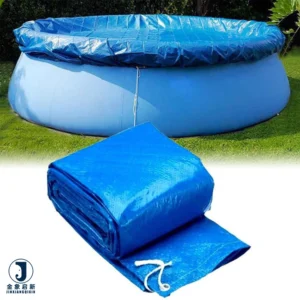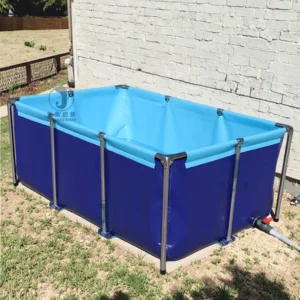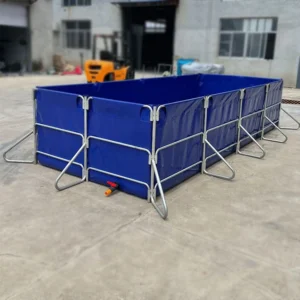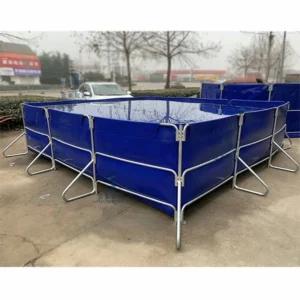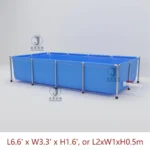
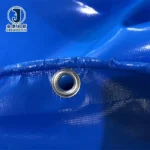

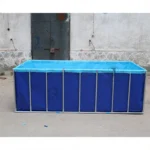
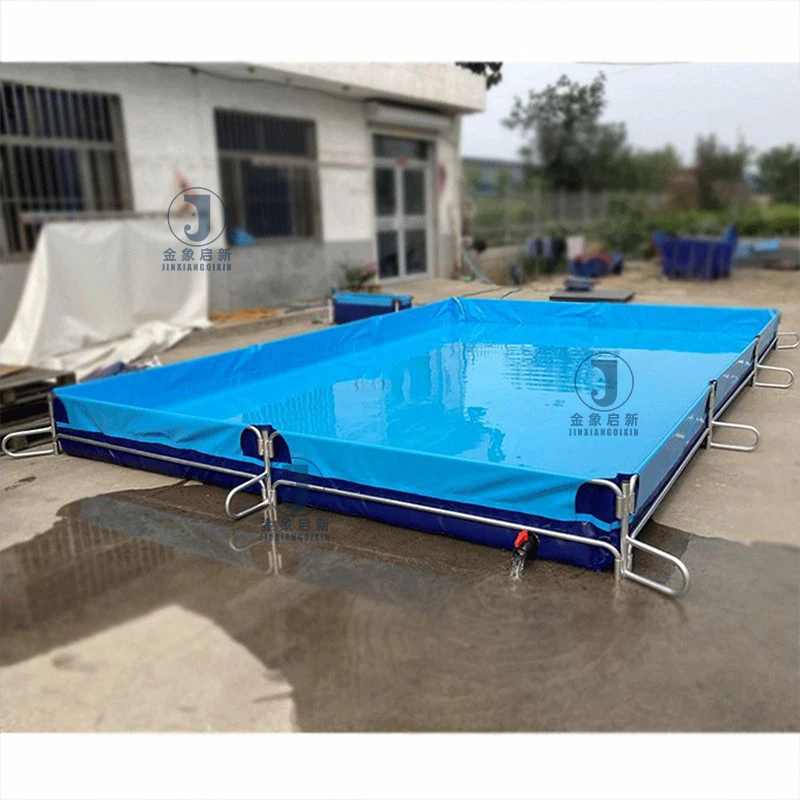
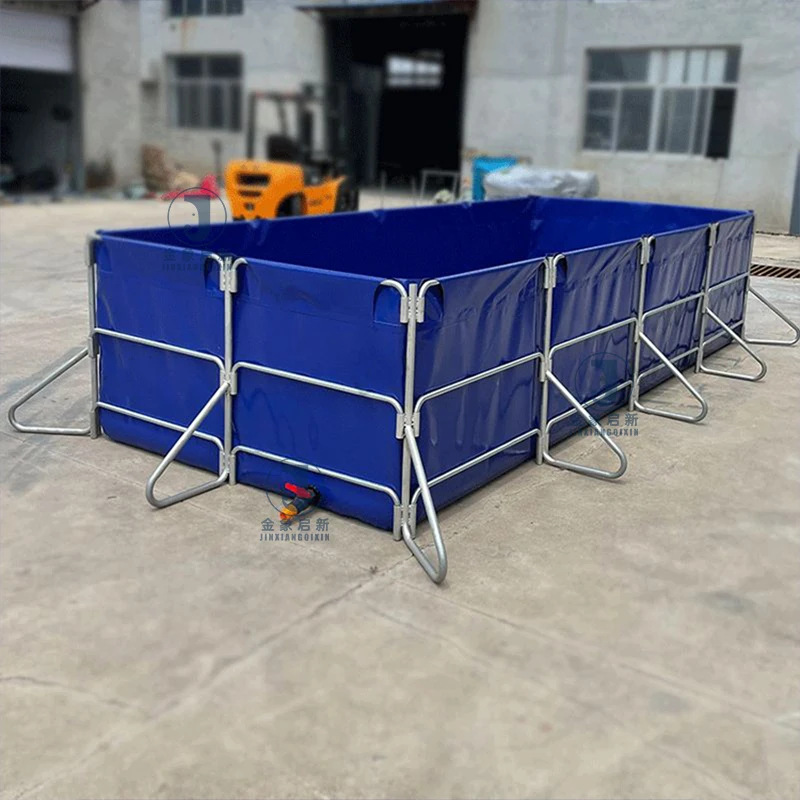
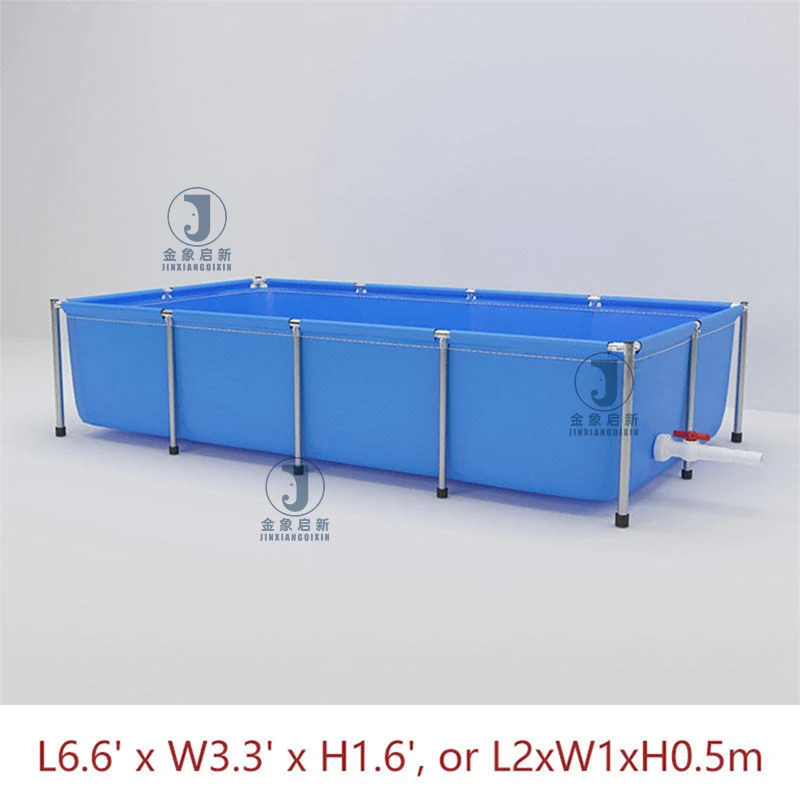
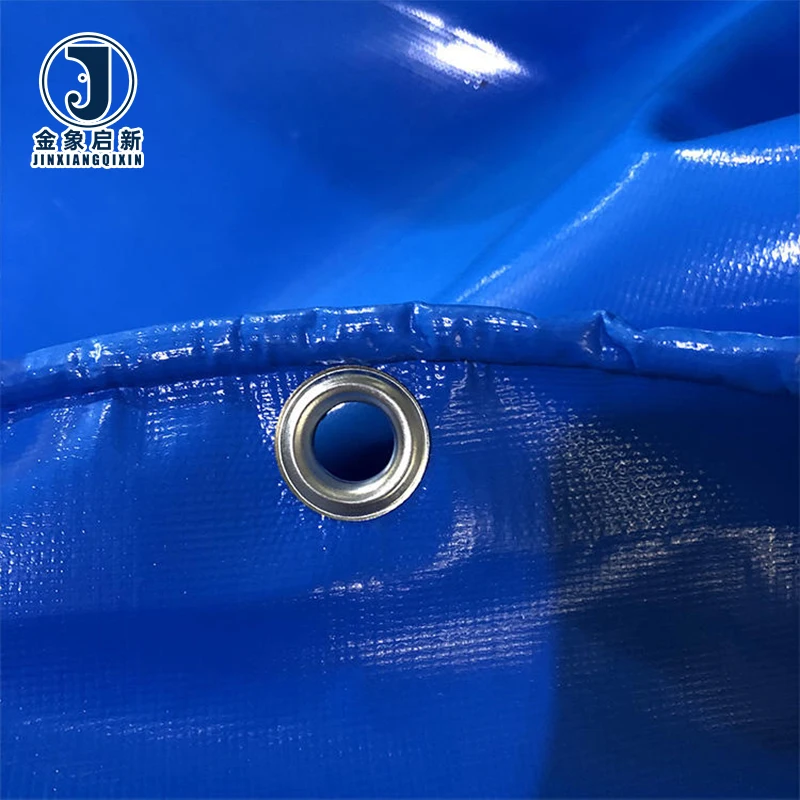
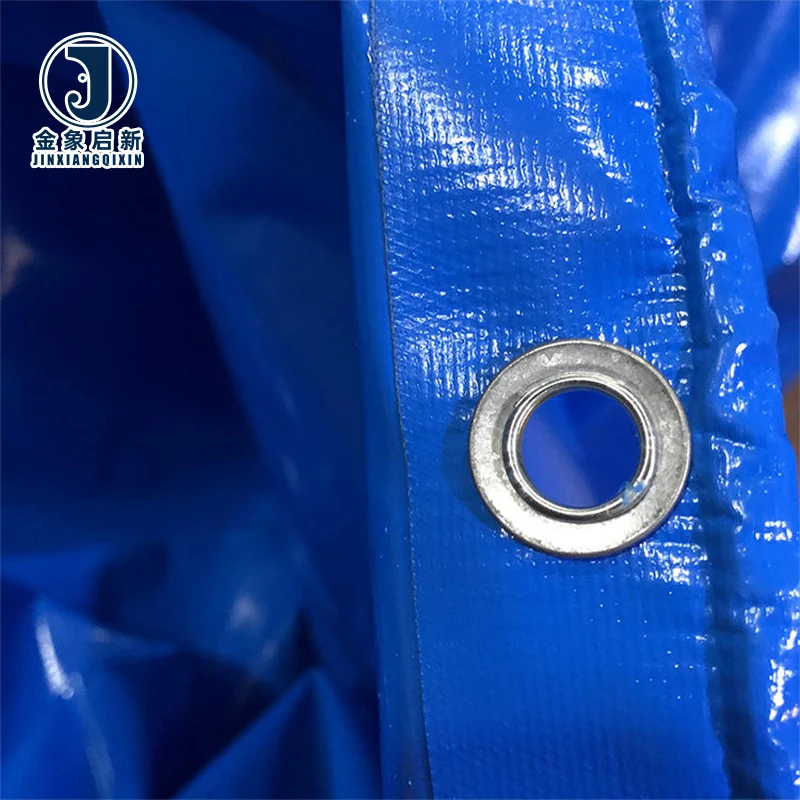
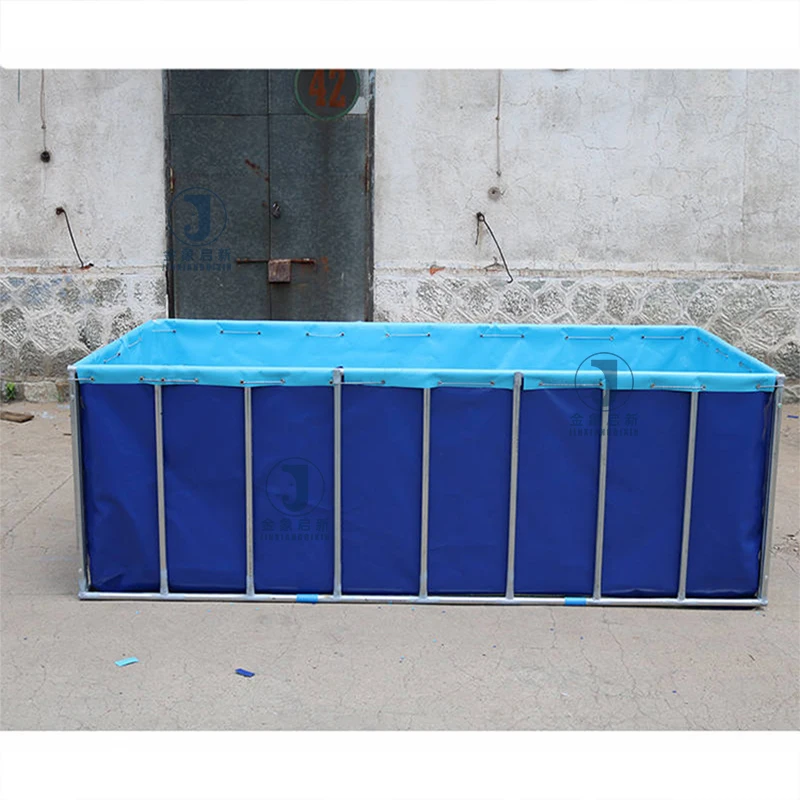
Process Control — Nearly three decades focused on coated fabric allows deep control over coating weight and adhesion consistency, applied here to PVC coated tarpaulin for fish tank and aquaculture containment.
Technical Specifications
| Parameter | Value |
|---|---|
| Product Type | PVC Coated Tarpaulin |
| Material | PVC + High-strength polyester mesh fabric |
| Coating Method | Laminated technology & Hot-melt Coating technology |
| Weight Options | 350gsm / 420gsm / 500gsm / 550gsm / 600gsm / 750gsm |
| Thickness Options | 0.32mm / 0.35mm / 0.4mm / 0.45mm / 0.5mm / 0.65mm |
| Roll Size | 2m × 75m / 2.1m × 50m |
| Finish Product Size | Custom cut to order or inventory stock |
| Color Options | Blue / Red / Yellow / Light blue / Grey (Customized) |
| Key Features | Waterproof, Anti-mildew, Cold Crack Resistance, Anti-Static treatment (grade not stated), Outstanding tearing strength for welding |
| Flame Retardant | Available in flame retardant grades — confirm the grade required for your market |
| Standards | ISO, CE |
Application Suitability
| Application | Exposure & Requirement |
|---|---|
| Fish pond liner | Permanent water immersion, soil chemistry contact, puncture risk from substrate |
| Flexible fish tank construction | Continuous hydrostatic pressure, welded seam integrity, UV exposure above waterline |
| Aquaculture reservoir cover | Weather exposure, wind load on seams, mildew in humid conditions |
| Agricultural water containment | Long-term water contact, temperature fluctuation, mechanical damage risk |
What Fire-Retardant and Anti-Static Certification Actually Means for Pond Liners
A certification is only valid if the test report matches the exact fabric grade you receive on site.
Procurement teams often specify PVC tarpaulin fish tank fabric fire retardant or anti-static on paper, then discover at installation that the documentation does not cover the specific roll batch delivered. Compliance-sensitive aquaculture installations — particularly those near electrical equipment or within enclosed structures — demand that the flame retardant grade and anti-static surface resistance are verified per shipment, not assumed from a generic catalog claim [NEED_CITE: fire classification testing standards for flexible PVC containment materials]. Without batch-level documentation, site inspectors reject the material and the project timeline collapses.
Coating Adhesion and Weld Integrity for Water Containment
Laminated and hot-melt coating technologies produce different adhesion profiles between the PVC layer and the polyester mesh base. For fish tank and pond liner applications where heat-welded seams carry continuous hydrostatic load, the tearing strength at the weld line matters more than the base fabric tensile value. This PVC tarpaulin fish tank fabric fire retardant option is engineered so that welded seams resist peeling under sustained water pressure, reducing the risk of liner failure at the most stressed joints.
Cold Crack and Mildew Resistance in Aquaculture Environments
Pond liners sit in contact with water year-round, often through freezing winters in temperate climates. Cold crack resistance prevents the PVC coating from becoming brittle and fracturing at low temperatures, while anti-mildew treatment addresses the biological growth that degrades fabric surfaces in permanently humid conditions. These properties are built into the coating formulation rather than applied as a surface dressing, which means they persist through seasons of continuous immersion.
Reading GSM and Thickness Together
Weight in grams per square metre and total thickness in millimetres are related but not interchangeable. A 550gsm PVC coated tarpaulin may achieve its mass through a denser base fabric weave, a heavier coating layer, or both — each producing different handling, flexibility, and weld behaviour. Thicker material at 0.5mm or 0.65mm suits deeper ponds where hydrostatic pressure is higher, while lighter grades at 350gsm and 0.32mm serve shallow nursery tanks or temporary covers [NEED_CITE: relationship between coated fabric GSM and hydrostatic resistance]. Always confirm which GSM and thickness combination matches the pond depth and structural support of your installation.
The Cost of Specifying the Wrong Grade
A liner specified too light for its pond depth will stretch under hydrostatic pressure, thinning the coating at stress points and accelerating wear. Colour variation between rolls ordered separately becomes visible once panels are welded side by side, forcing either acceptance of an inconsistent appearance or complete replacement. When anti-static treatment is required for installations near electrical systems but arrives without a supporting test report, the site cannot pass compliance inspection — delaying the project and triggering re-procurement [NEED_CITE: anti-static surface resistance testing for flexible PVC in containment environments]. These failures are specification errors, not manufacturing defects, and they are entirely avoidable with correct grade selection at the inquiry stage.
Why Source This Fabric Here
Three full production lines and 36 sets of professional equipment support bulk roll output with consistent coating weight across the entire order. A 10-person R&D team develops samples within days when custom width, colour, or brand printing is required for aquaculture installations. Dedicated QA and QC at every production stage catches GSM deviation and coating adhesion issues before rolls leave the factory. Material specification sheets, test reports for flame retardant and anti-static grades where applicable, and 100% pre-shipment inspection records ship with every consignment. Custom cut sizes and finished tank panels are produced in-house, eliminating the conversion markup from third-party fabricators.
Documentation & Verification
- Material specification sheet stating GSM, base fabric type, coating method, and colour reference per roll
- Flame retardant test report with grade and standard clearly stated where applicable to the ordered batch
- Anti-static surface resistance test documentation for compliance-sensitive aquaculture installations
- ISO and CE certificates included in the shipment documentation package
- Pre-shipment inspection record confirming weight and coating consistency before dispatch
- Certificate of origin and customs documentation for international aquaculture project shipments
Fabrication, Handling & Storage
- Heat-weld seams using temperature and speed settings matched to the selected GSM and coating method to ensure bond strength exceeds base fabric tear resistance
- Store rolls horizontally on pallets in a dry, shaded area to prevent creasing that weakens the PVC coating at fold lines
- Unroll and allow the fabric to relax at ambient temperature before welding, especially in cold conditions where stiffness affects seam alignment
- Use mild detergent and soft brush for cleaning installed pond liners to preserve the anti-mildew treatment in the coating layer
- Plan cutting layout across the 2m or 2.1m roll width to minimize waste and reduce the number of welded seams in the finished pond liner
- Patch field damage with compatible PVC repair adhesive and a fabric swatch from the same roll batch to maintain colour consistency
What to Include in Your Inquiry
Provide the pond dimensions, water depth, and whether the liner will sit on soil, concrete, or a frame — this determines the GSM and thickness grade required. State any fire-retardant or anti-static certification your local regulations demand so that the correct grade is quoted and tested before production. Confirm whether you need rolls for on-site fabrication or finished cut panels with welded seams, and indicate your colour and printing requirements if brand identification is part of the project specification.
Frequently Asked Questions
Q: What fire retardant grades are available for fish tank and pond liner fabric?
A: Flame retardant options are available across the PVC coated tarpaulin range. The specific grade — such as M2, B1, NFPA 701, or DIN 4102 — must be confirmed against your local regulatory requirement at inquiry stage so that the correct formulation is produced and a matching test report is issued with your shipment.
Q: How is anti-static surface resistance tested for containment applications?
A: Anti-static treatment is integrated into the coating formulation. Surface resistance is measured according to the relevant standard for your market and application environment. Request the specific test method and acceptable resistance range when inquiring, so the results align with your site compliance requirements.
Q: How do you verify GSM and coating consistency across rolls in the same order?
A: Every roll undergoes weight and coating inspection during production and again at the pre-shipment QA stage. The material specification sheet provided with your shipment states the verified GSM and thickness for each roll, ensuring batch-to-batch consistency for multi-roll pond installations.
Q: What welding methods work best with this PVC coated tarpaulin?
A: Hot-air welding and high-frequency welding both produce strong seams on this material. The polyester mesh base provides outstanding tearing strength at the weld line, meaning the seam resists peeling under hydrostatic pressure when welding parameters are correctly matched to the GSM and coating thickness.
Q: Can custom widths and colours be produced with consistent colour across a large order?
A: Custom widths, lengths, and colours are available with sample development completed within days. Colour reference is documented per order, and in-process QA monitors colour consistency across all rolls in the same production batch to prevent visible variation once panels are installed side by side.