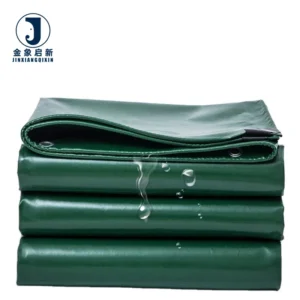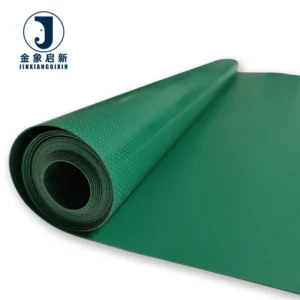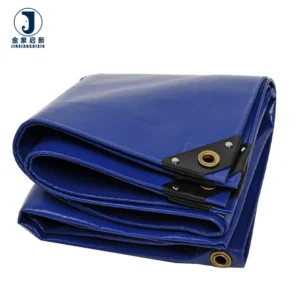
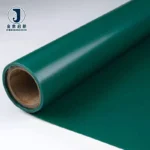
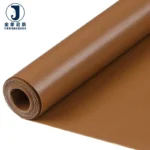
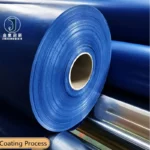

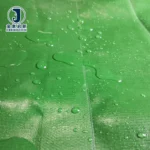
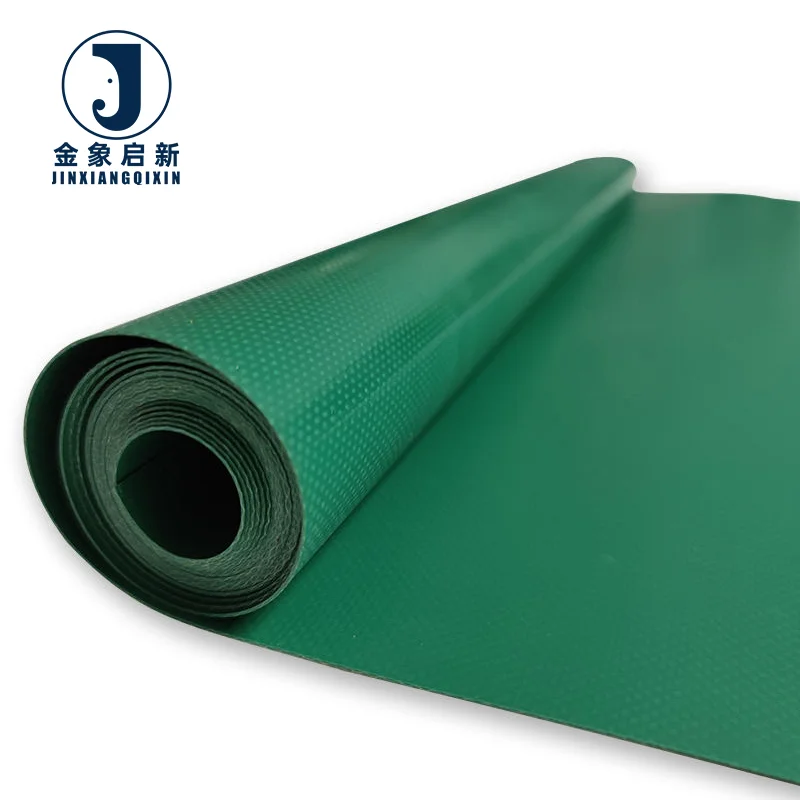
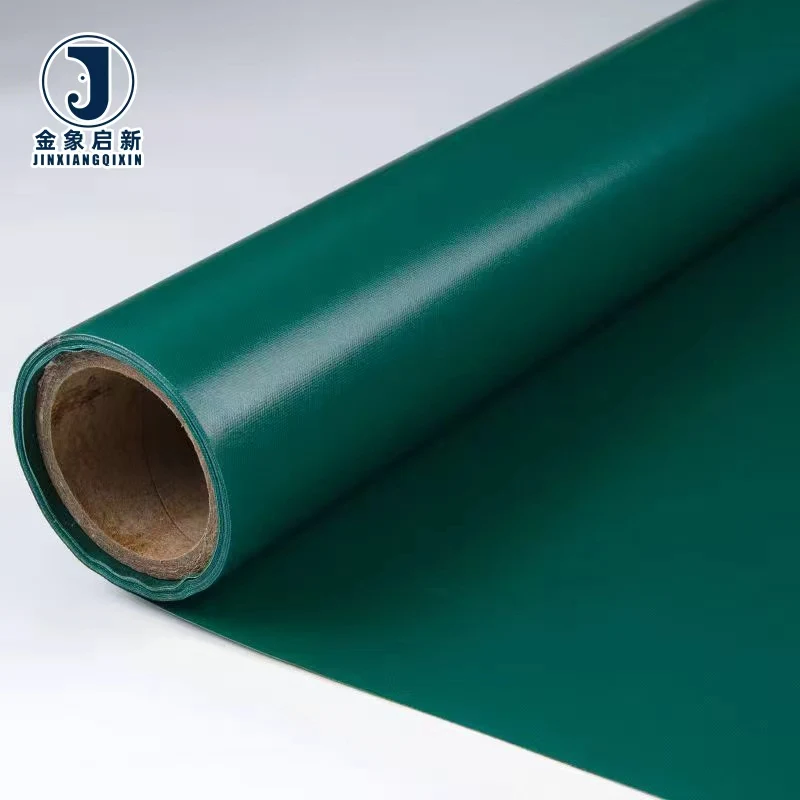
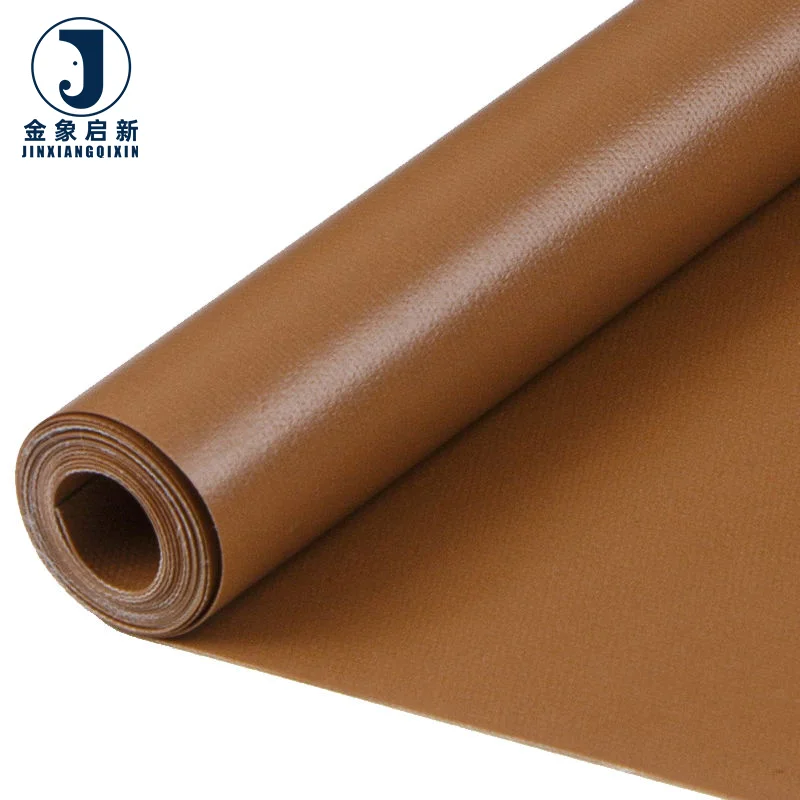
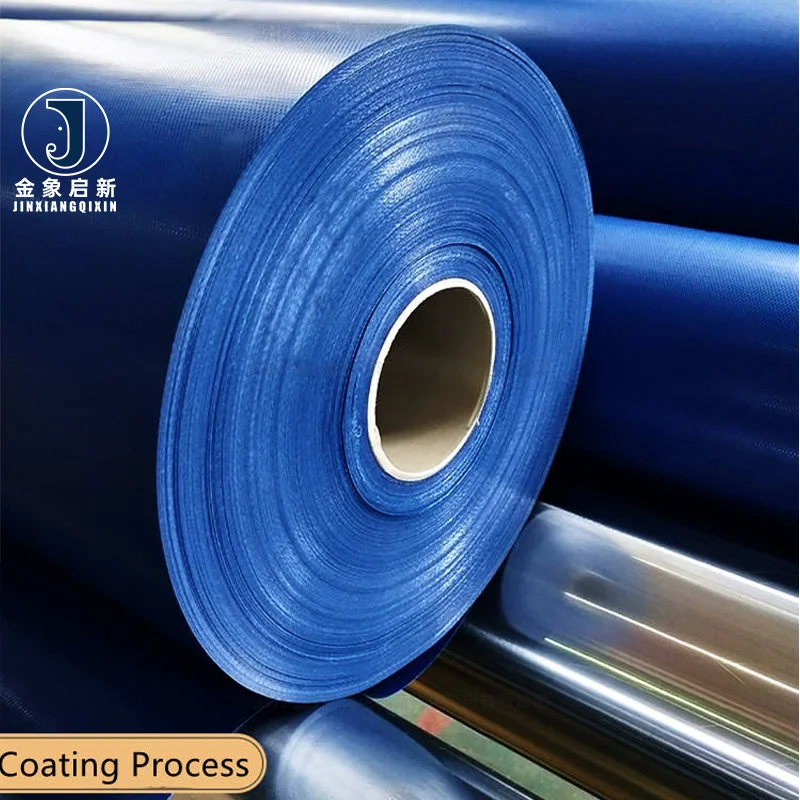
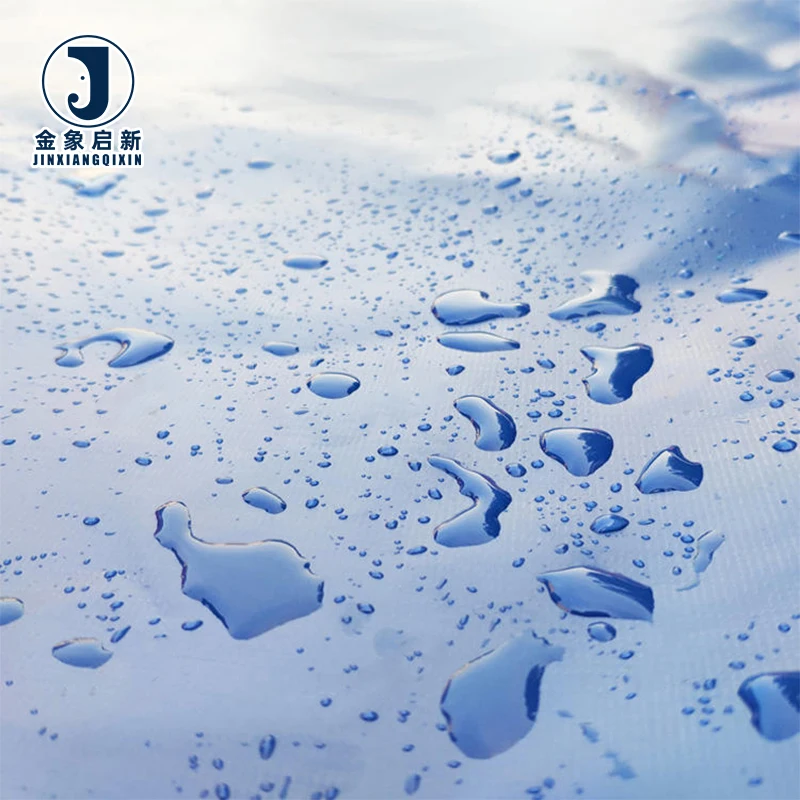
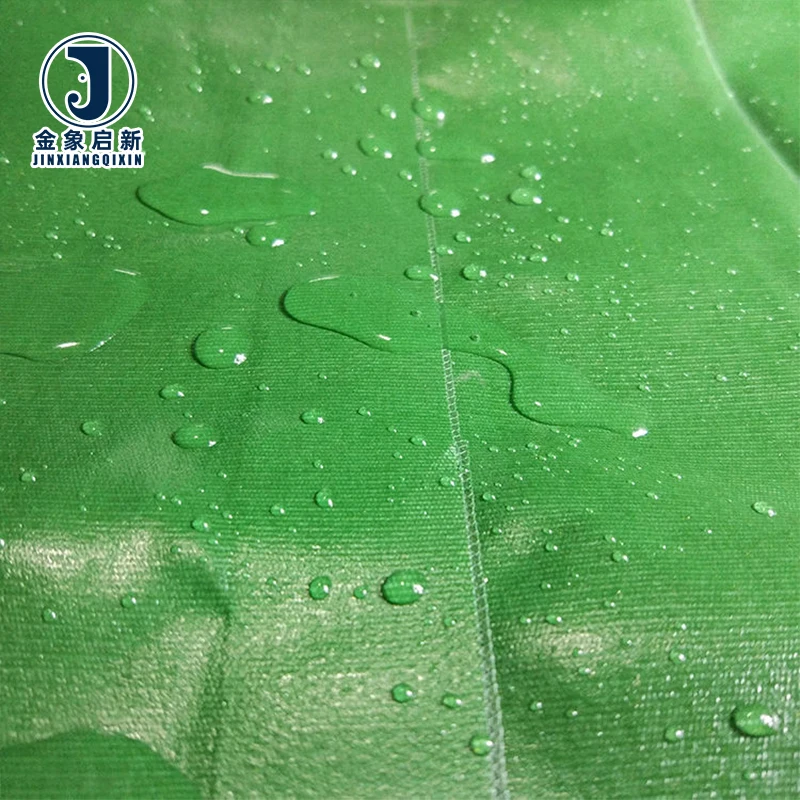
Process-Controlled Coating — three full production lines with dedicated QA at every stage ensure each PVC coated tarpaulin roll ships with verified GSM and documented flame-retardant compliance for your project specification.
Technical Specifications
| Parameter | Value |
|---|---|
| Product Type | PVC Coated Tarpaulin |
| Base Fabric Denier | 500D840D / 500D1000D / 1000D1000D / 1000D1300D / 1300D1300D / 1000D2000D |
| Mesh Count | 3019 / 2020 / 30*15 |
| Total Thickness | 0.29 mm / 0.32 mm / 0.38 mm / 0.44 mm / 0.46 mm / 0.55 mm / 0.65 mm |
| Coating Material | PVC |
| Base Material | Polyester |
| Tensile Strength (Warp) | 1650 N / 1800 N / 1850 N / 2050 N / 2500 N / 2550 N / 2750 N / 3900 N |
| Tensile Strength (Weft) | 1600 N / 1700 N / 1750 N / 1900 N / 2200 N / 2250 N / 2850 N / 3500 N |
| Weight (GSM) | 350 / 400 / 420 / 500 / 600 / 650 / 750 / 900 |
| Temperature Range | Brittle ≤ -50 ~ -60°C, Softening ≥ 80°C, Melting point 212°C |
| Density Parameter | 1.15 – 2.00 g/cm³ |
| Key Features | Water resistant, Anti-UV (test basis not stated in source), Flame retardant (grade not stated in source) |
| Edge Finishing | High-temperature heat-sealed seamless edge wrapping, 5 mm rope without splicing |
| Eyelet Options | 3 cm enlarged aluminium alloy buttonhole, reinforced corners |
| Packaging | Roll packing, bale packing, carton |
| Certification | ISO, CE |
Application Suitability
| Application | Exposure & Requirement |
|---|---|
| Mining and tunnelling ventilation duct | Continuous airflow, abrasive particulate, fire-retardant and anti-static compliance required underground |
| Aviation ground support ducting | Fuel vapour proximity, rapid deployment and teardown, certified flame-retardant grade |
| Inflatable and membrane structures | Sustained internal pressure, UV exposure, structural tensile demand at anchor points |
| Industrial air duct for construction sites | Temporary installation, dust and moisture exposure, compliance with site safety regulations |
| Temporary enclosure and shelter | Wind load, rain ingress, thermal fluctuation across seasons |
What "Certified" Really Means When You Specify Fire-Retardant Duct Fabric
A certificate without a matching test standard is a liability, not a compliance document.
Ventilation duct on a mining or tunnelling site must meet specific fire-retardant and anti-static requirements set by the project engineer or local regulator. Yet many PVC coated tarpaulin fire retardant / anti-static / certified shipments arrive on site with paperwork that references a generic "flame retardant" claim without citing the actual standard the project demands. The result is a failed inspection, work stoppage, and a replacement order on an emergency timeline — all at the contractor’s cost [NEED_CITE: fire safety compliance requirements for underground ventilation duct materials].
The gap between a quotation that says "flame retardant" and a test report that cites a recognised standard such as DIN 4102, NFPA 701 or M2 is where most procurement failures originate. Our PVC Coated Tarpaulin fire retardant / anti-static / certified range is available in multiple flame-retardant grades — confirm the grade required for your market and project specification before placing the order.
Base Fabric Architecture for Ventilation and Membrane Loads
The denier and weave of the polyester base fabric determine how the material behaves under the sustained internal pressure of an air duct or the point loads of a membrane anchor. Denier options span from 500D840D for lightweight duct applications to 1000D2000D for heavy-duty membrane structures where tensile demand is highest. Selecting the correct base fabric is the first engineering decision — coating weight alone cannot compensate for an underspecified base cloth when a duct flexes under negative pressure or a membrane panel catches wind load.
Coating Integrity at the Weld Line
Every ventilation duct and inflatable structure depends on hot-air-welded seams that must perform as reliably as the body fabric. The PVC coating formulation and weight directly influence weld temperature windows and peel strength after fabrication. Our PVC Coated Tarpaulin fire retardant / anti-static / certified material supports hot-air welding with consistent coating adhesion across the roll, reducing the risk of seam delamination at flex points where duct sections join or membrane panels overlap [NEED_CITE: hot air welding parameters for PVC coated polyester fabrics].
Reading GSM, Denier and Mesh Count Together
Weight in GSM tells you how much coating is applied per square metre, but it does not describe the structural skeleton underneath. Two fabrics rated at 650 GSM can have very different tear behaviour depending on whether the base is a 1000D1000D cloth at 2020 mesh or a 500D1000D cloth at 3019 mesh. The higher-denier yarn resists tear propagation more effectively, while the tighter mesh count distributes load across more yarn intersections. For ventilation duct that will be repeatedly deployed, collapsed and redeployed, the combination of denier, mesh and coating weight must be evaluated as a system — not as a single GSM figure on a quotation. Temperature range also plays a role: with a verified brittle point at ≤ -50°C and softening onset at ≥ 80°C, the material remains workable in cold-climate installations while maintaining dimensional stability in warm underground environments.
When the Wrong Grade Reaches the Site
A ventilation duct that fails a fire-retardant inspection does not just delay the project — it triggers a full material review, re-testing costs and potential contractual penalties. Similarly, an anti-static claim that lacks documented surface-resistance data becomes a compliance gap the moment an auditor asks for proof on a mining site [NEED_CITE: anti-static surface resistance testing for mining ventilation materials]. Batch colour inconsistency across rolls used in a visible membrane structure forces the contractor to either accept a patchwork appearance or replace sections at their own cost. Every one of these outcomes traces back to a specification that was not verified against documented test data before the material shipped.
Why Procurement Teams Source This Range Here
A 10-person R&D team handles material selection, sample development and custom sizing specific to your duct or membrane geometry, reducing trial-and-error on the fabrication floor. Three full production lines with 36 sets of professional equipment deliver bulk roll capacity with on-time scheduling that aligns to your project timeline. Dedicated QA and QC at every production stage with 100% pre-shipment inspection ensures the roll you receive matches the GSM and treatment specification you approved. Samples are developed within days for custom requirements, allowing your fabrication team to validate weld parameters and seam construction before the full order enters production.
Documentation & Verification
- Material specification sheet stating GSM, base fabric denier, coating weight and colour reference for each roll
- Fire-retardant test report citing the specific standard applicable to your target market
- Anti-static surface resistance documentation where required for underground and explosive atmosphere projects
- Pre-shipment inspection record verifying GSM and coating weight against the quotation
- Certificate of origin and customs documentation for international project sites
- Roll packing list matched to bill of lading for container-level traceability
Fabrication, Handling & Storage
- Hot-air weld temperature and speed should be calibrated to the specific PVC coating weight of the grade ordered
- Heat-sealed edge wrapping and 5 mm rope reinforcement carry tie-down loads at duct termination points
- Store rolls horizontally on pallets to prevent coating crease marks that become visible after installation
- Allow cold-stored rolls to acclimatise above 10°C before unrolling to avoid brittle-point cracking at ≤ -50°C
- Clean membranes with pH-neutral detergent only to preserve the PVC coating surface integrity
- Cut patterns with weld-seam allowance calculated to the chosen fabric thickness between 0.29 mm and 0.65 mm
Specifying for Your Project
Tell us the duct diameter, run length and operating pressure so we can recommend the denier and GSM grade that matches your structural demand. Share the fire-retardant standard and any anti-static requirement your project specification calls for, and we will supply the matching test documentation. Confirm whether you need full rolls for in-house fabrication or cut-to-size panels with welded seams and eyelet finishing ready for site installation.
Frequently Asked Questions
Q: Which fire-retardant grades are available and how do I match them to my market?
A: Our PVC Coated Tarpaulin fire retardant / anti-static / certified range is produced in multiple flame-retardant grades. The correct grade depends on your project specification and local regulatory framework — standards such as DIN 4102, NFPA 701 and M2 are common references. Share your target standard at enquiry stage and we will confirm availability and supply the matching test report with your shipment.
Q: Can I get documented anti-static compliance for mining and tunnelling applications?
A: Yes. Anti-static treatment is available for underground ventilation duct applications where surface-resistance data is required for safety audits. Specify the anti-static requirement when you enquire so the correct treatment is applied during production and the corresponding test documentation is included in your shipment package.
Q: How does hot-air welding perform on this PVC coated fabric?
A: The PVC coating supports hot-air welding with consistent adhesion across the roll. Weld parameters should be calibrated to the specific coating weight and thickness of the grade you order. We recommend fabricating a test seam from the sample we supply before full production to confirm temperature, speed and peel-strength results.
Q: What custom widths and roll lengths can I order?
A: Custom widths and roll lengths are available to match your duct circumference or membrane panel dimensions, reducing fabrication waste and on-site joining. Minimum order quantities and lead times vary by specification — confirm your required dimensions at enquiry stage and we will provide a quotation with production scheduling.
Q: How do you ensure colour consistency across multiple rolls in one order?
A: Colour matching is controlled through dedicated QA checks at each production stage. Every roll is inspected before shipment to confirm colour uniformity across the batch. For large projects requiring multiple production runs, we reference a master colour sample approved by your team to maintain consistency from the first roll to the last.