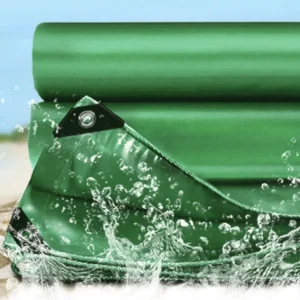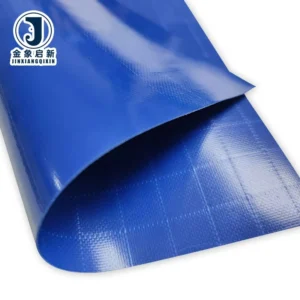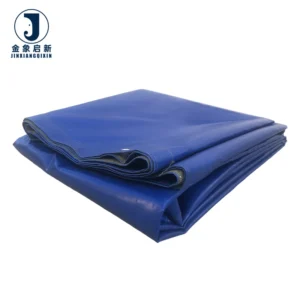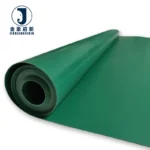
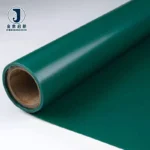
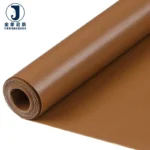
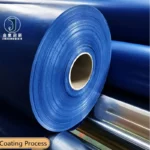

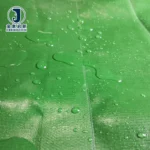
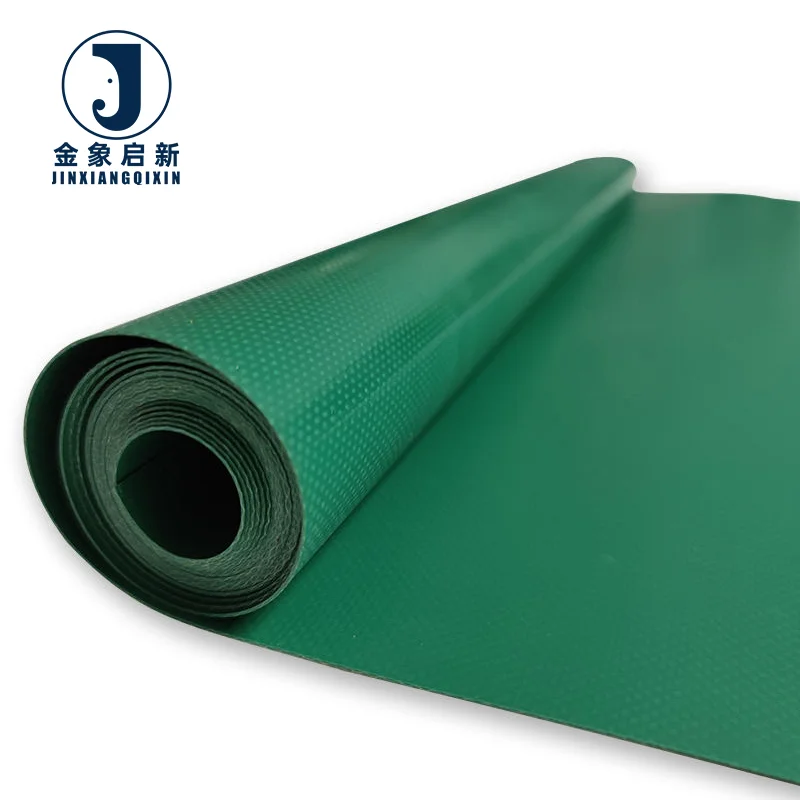
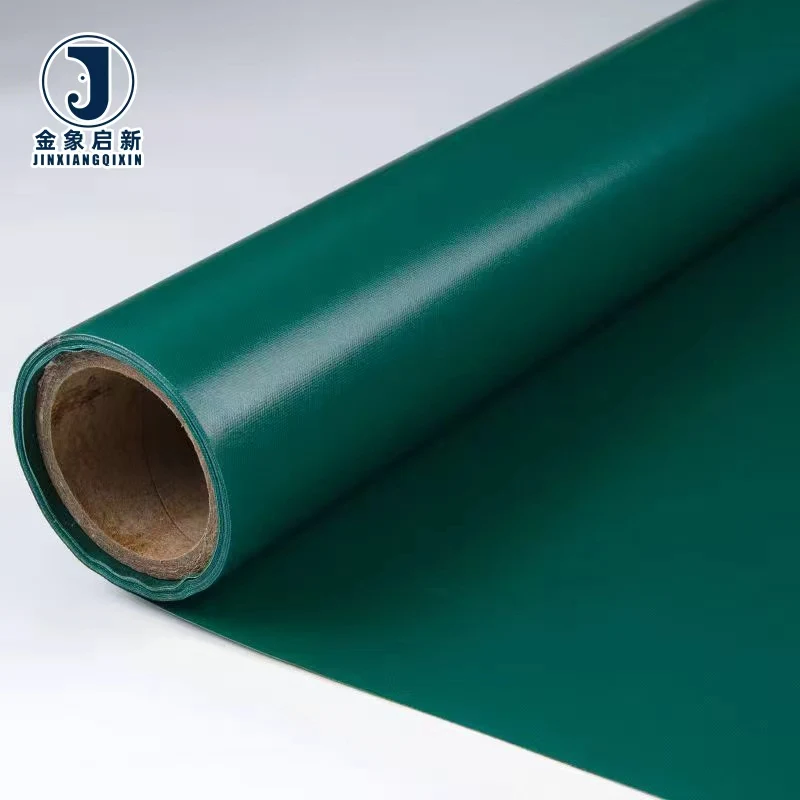
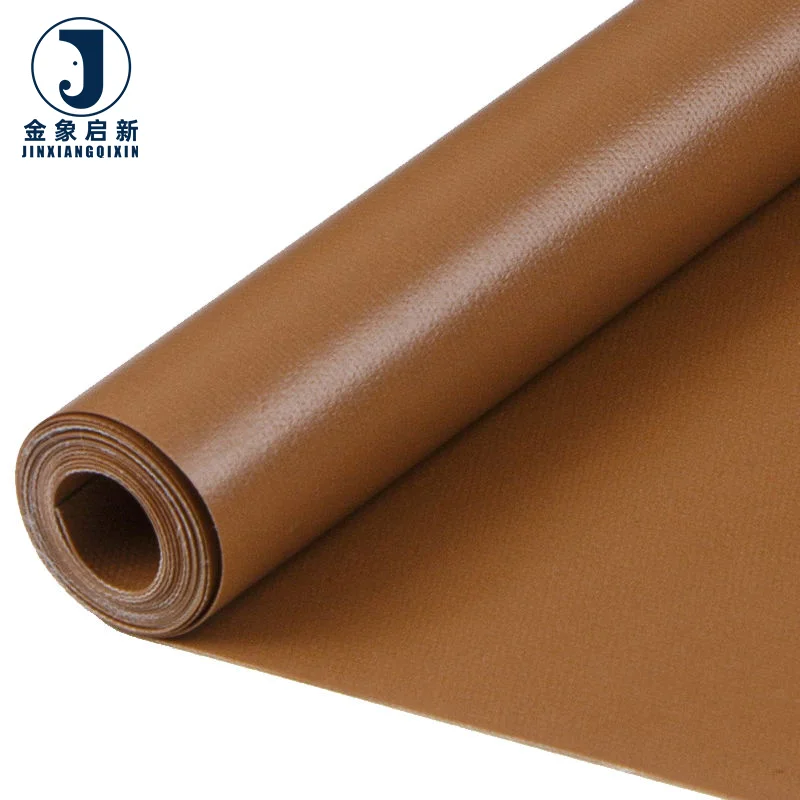
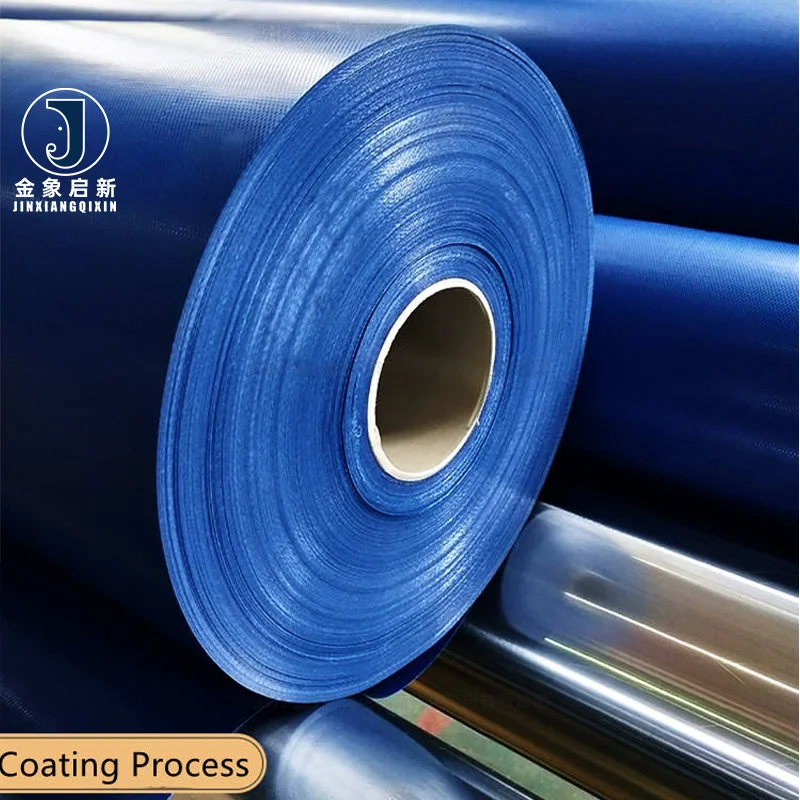
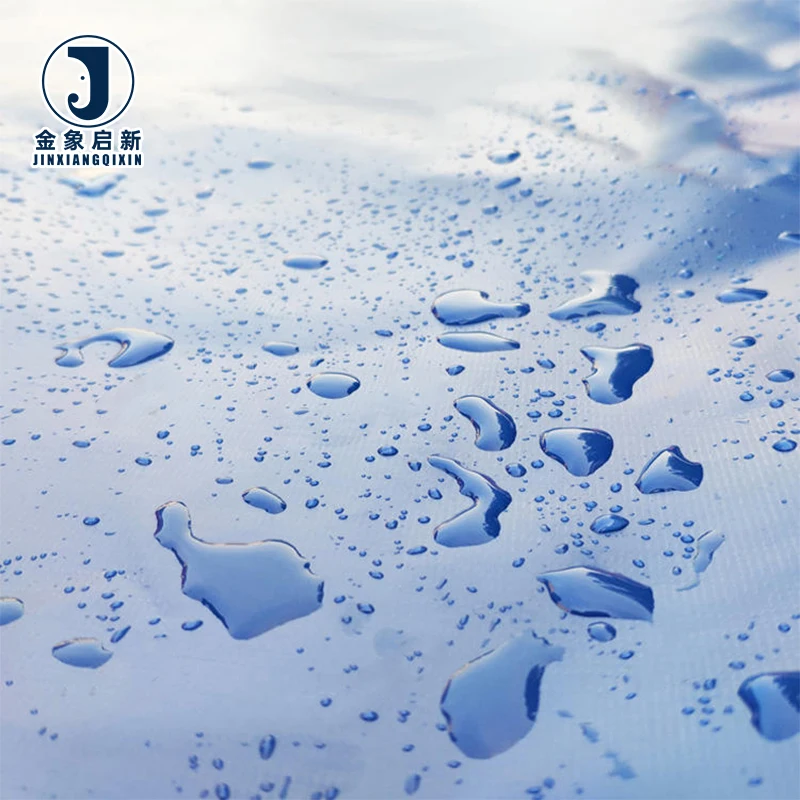
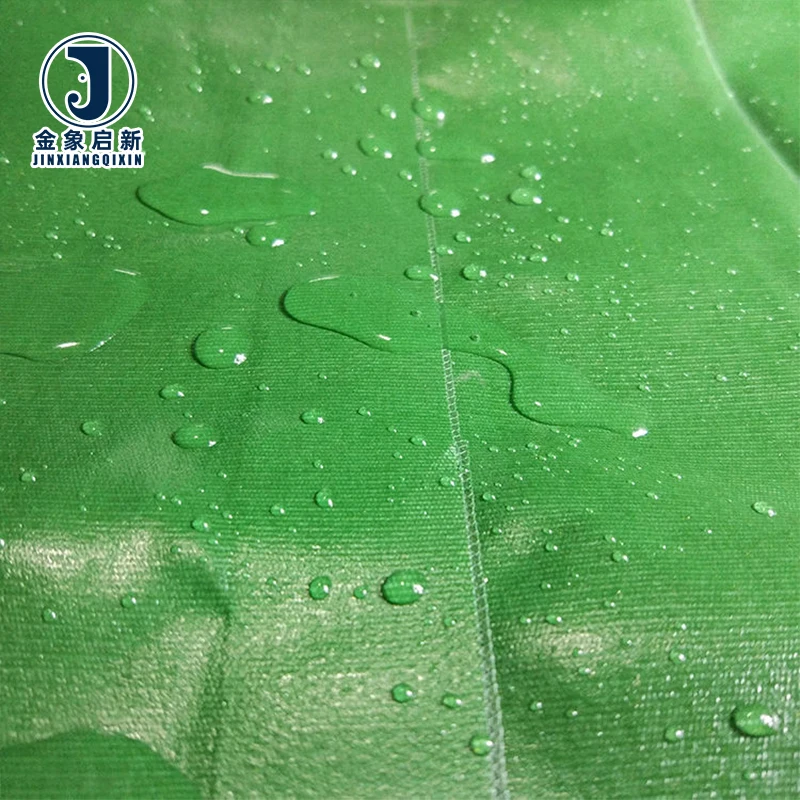
Process Control — Deep coating weight management across the 500D×1000D polyester base ensures areal density matches specification on every roll of this PVC coated tarpaulin industrial air duct and specialist fabric.
Technical Specifications
| Parameter | Value |
|---|---|
| Product Type | PVC Coated Tarpaulin Roll |
| Base Fabric Denier | 500D×1000D Polyester |
| Mesh Count | 30×19 |
| Weight (GSM) | 500 |
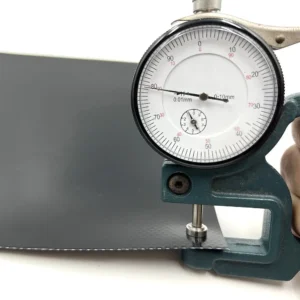
| Total Thickness | 0.38 mm |
| Tensile Strength (Warp) | 2050 N |
| Tensile Strength (Weft) | 1900 N |
| Coating Material | PVC |
| Base Fabric Material | Polyester |
| Key Features | Water resistant, waterproof, flame retardant (grade not stated), anti-UV (test basis not stated) |
| Brittle Temperature | ≤ -50 to -60 °C |
| Softening Temperature | ≥ 80 °C |
| Melting Point | 212 °C |
| Material Density | 1.15–2.00 g/cm³ |
| Edge Finishing | High temperature heat sealed seamless edge wrapping |
| Eyelet | 3 cm enlarged aluminum alloy buttonhole |
| Corner Reinforcement | Reinforced corners on all sides |
| Rope | 5 mm thick rope without splicing |
| Package Options | Roll packing, bale packing, carton |
| Standards | ISO, CE |
Application Suitability
| Application | Exposure & Requirement |
|---|---|
| Industrial shelter covers | Wind loading, UV exposure, thermal cycling — requires verified tensile strength and tear resistance |
| Ventilation ductwork (mining, tunnelling) | Constant airflow, abrasive particulate, fire safety compliance — requires flame retardant certification |
| Machine and equipment covers | Abrasion from contact, weather exposure — requires puncture resistance and waterproof coating integrity |
| Temporary warehouse structures | Structural tension, snow or rain load — requires verified GSM and weld seam strength at flex points |
| Awning and tent fabrication | Repeated folding, sun exposure — requires consistent roll-to-roll colour and surface adhesion |
Why GSM Alone Does Not Confirm Fabric Suitability for Ventilation and Shelter Use
Areal weight tells you how much material is on the roll, not how that material performs under tension, fire exposure or flexing.
Technical buyers sourcing PVC coated tarpaulin industrial air duct and specialist fabric often receive a quotation stating 500 GSM, only to find the delivered roll lighter than agreed or lacking the tensile values needed for structural shelter frames. The denier of the base yarn and the weave density together govern how that weight translates into real strength. A 500D×1000D polyester base with a 30×19 mesh count distributes load differently than a lighter denier at the same areal weight. When the specification sheet does not match the roll on arrival, the consequences surface at the weld line or under wind load — well after installation. [NEED_CITE: tensile and tear test methods for coated fabrics per ISO 1421]
Base Fabric Construction and What It Means for Structural Load
The 500D×1000D polyester base fabric uses a heavier weft yarn than warp, creating an asymmetric denier ratio. This construction directs higher tensile capacity along the weft direction, which matters when the fabric spans horizontally across shelter frames or wraps around ductwork under positive pressure. The 30×19 mesh count provides a tight enough weave for coating adhesion while allowing sufficient PVC penetration through the yarn intersections for mechanical bond strength.
Coating Thickness and Surface Integrity
At 0.38 mm total thickness, the PVC coating layer must fully encapsulate the base fabric without excessive buildup that would stiffen the material and cause cracking at low temperatures. The brittle temperature rating of ≤ -50 to -60 °C indicates the plasticiser formulation retains flexibility in cold environments, relevant for ventilation duct in high-altitude mining or outdoor shelter in winter conditions. [NEED_CITE: PVC plasticiser migration and low-temperature embrittlement in coated fabrics]
Specification Interpretation for Technical Buyers
GSM and thickness together reveal the coating-to-fabric ratio. A 500 GSM weight at 0.38 mm thickness suggests a moderately coated construction where the base fabric contributes a significant share of the total weight. This is favourable for tensile and tear performance because the polyester yarn carries structural load while the PVC coating provides waterproofing and surface protection. The warp tensile of 2050 N and weft tensile of 1900 N confirm that strength is relatively balanced across both directions, reducing the risk of directional failure when the fabric is cut and welded into non-rectangular shelter panels or curved duct sections. Temperature boundaries from ≤ -50 °C to ≥ 80 °C define the operational envelope — beyond the softening point, the PVC layer loses dimensional stability, which matters near heat-generating equipment in industrial settings.
The Hidden Cost of Underspecified Roll Stock
When PVC coated tarpaulin industrial air duct and specialist fabric arrives without verified fire-retardant documentation, the installation may pass initial inspection but fail at a regulatory audit, forcing a full tear-down and replacement. Colour variation between rolls in a single order becomes visible only after the panels are installed side by side on a shelter wall, requiring selective panel replacement to achieve a uniform appearance. Weld seams that fail before the fabric itself point to inadequate coating adhesion or incorrect heat-seal temperature settings during fabrication — a problem that surfaces at flex points where the load cycles most frequently. [NEED_CITE: weld seam failure modes in PVC coated polyester under cyclic loading]
Why Procurement Teams Source This Grade Here
Three full production lines with 36 sets of professional equipment support consistent output across the PVC coated tarpaulin industrial air duct and specialist fabric range, maintaining coating weight uniformity from the first roll to the last in a bulk order. A 10-person R&D team handles material selection and sample development, enabling specification matching before production begins rather than discovering a mismatch at delivery. Dedicated QA and QC at every production stage with 100% pre-shipment inspection catches GSM deviation, colour shift, and adhesion defects before rolls leave the facility. Samples are developed within days for custom requirements, allowing fabricators to run weld tests and confirm compatibility with their heat-seal equipment before committing to a production order.
Documentation & Verification
- Material specification sheet confirming 500 GSM, 500D×1000D base fabric and 0.38 mm thickness per roll
- Flame retardant test report supplied where applicable — confirm the standard required at inquiry stage
- Anti-UV test basis documented on request to support the performance claim
- Pre-shipment inspection record covering GSM verification, colour consistency and adhesion check
- ISO and CE certificates available to support compliance documentation
- Roll packing list with batch traceability for multi-roll orders
Fabrication, Handling & Storage
- Heat-seal temperature must match the 0.38 mm PVC coating thickness to avoid delamination at weld seams
- Reinforced corners and 3 cm aluminum eyelets distribute tie-down load across the 500 GSM fabric
- Store rolls upright on pallets to prevent compression marks on the PVC coating surface
- Allow rolls to acclimatise before unrolling in temperatures below the brittle threshold of -50 °C
- Use PVC-compatible cleaners to avoid degrading the plasticiser in the coating layer
- Plan panel layout to minimise cross-direction welds where tensile load is highest on shelter frames
What to Include in Your Specification Inquiry
Provide the intended application and exposure conditions — whether the fabric will serve as ventilation duct under positive pressure, industrial shelter under wind load, or equipment cover with abrasion contact. Specify the fire-retardant or anti-static standard your site requires so the correct grade and test documentation can be confirmed at quotation stage. Indicate roll width, colour requirements and whether you need the material supplied as roll stock or as finished cut panels with edge finishing and eyelets.
Frequently Asked Questions
Q: How is the 500 GSM weight verified before shipment?
A: Each roll is weighed and measured during 100% pre-shipment inspection. The actual areal density is recorded against the stated 500 GSM specification on the inspection record that accompanies the dispatch. Buyers may also request a sample for independent lab testing to confirm weight and tensile values against their own acceptance criteria.
Q: What flame-retardant standard does this grade meet?
A: Flame retardant treatment is available, but the specific grade depends on the formulation selected for your order. Confirm the standard required in your market — such as a building materials classification or mining ventilation fire code — at inquiry stage so the correct test report can be supplied with the shipment.
Q: How does the 500D×1000D base fabric affect tensile and tear performance?
A: The heavier weft yarn and 30×19 mesh count create a base fabric where the polyester yarn carries the majority of structural load. This construction provides balanced warp and weft tensile strength, reducing directional weakness when the fabric is cut into non-rectangular panels for shelters or ducts.
Q: What supports the anti-UV claim on this material?
A: Anti-UV treatment is included in the feature set, but the test basis is not stated in the standard specification. Accelerated weathering data or UV exposure test results can be provided on request — raise this requirement during the inquiry so the appropriate documentation is prepared before shipment.
Q: How are welded seam strengths ensured at flex points?
A: The high-temperature heat-sealed seamless edge wrapping and reinforced corners address the flex-point failure common in shelter and duct applications. The 0.38 mm coating thickness allows standard hot-air or wedge welding equipment to achieve full adhesion without burning through the PVC layer.